Click here to open 'USArmyGermany' frameset
KASSEL MISC. |
WALDAU AIRFIELD |
|
WALDAU KASERNE |
||
WILSON BARRACKS |
||
|

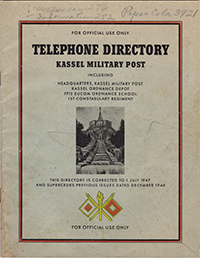 1. Kassel Military Post Telephone Directory, 1 July 1947 |
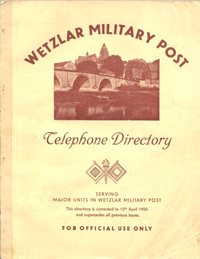 1. Wetzlar Military Post Telephone Directory, 15 April 1950 |
 |
|
||||
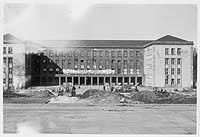 1. Army Hospital Kassel |
||||
| |
||||
|
||||
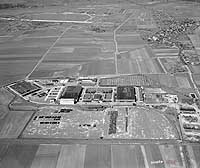 1. Kassel Ord Rebuild Shop, May 1950 |
||||
| |
||||
|
||||
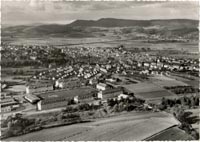 1. Kaserne at Eschwege in the early 1960s |
||||
|
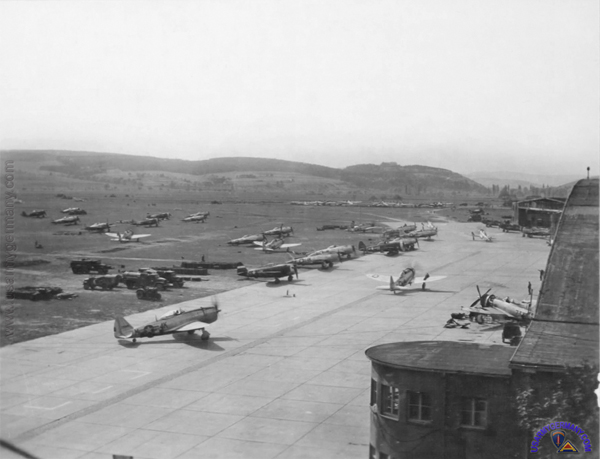 Fritzlar airfield and the 404th Fighter Group, April-May 1945 (National Archives) |
|---|
%20at%20Fritzlar%20Airfield%20post%20war%20Germany%20600.jpg) A C-47 SKYTRAIN parked in front of one of the hangars at Fritzlar AB, early post war period. Tower and operations building in background. |
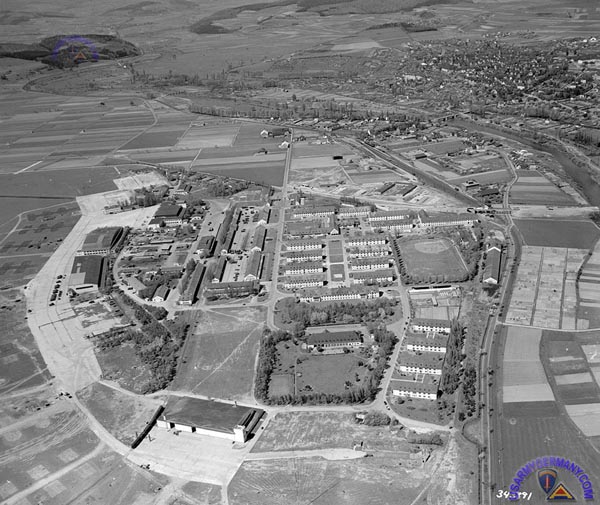 Fritzlar Kaserne, 1950 (Webmaster's collection) |
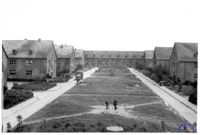 2. Fritzlar Kaserne, 1946 |
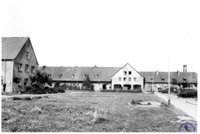 3. Fritzlar Kaserne, 1946 |
||
| |
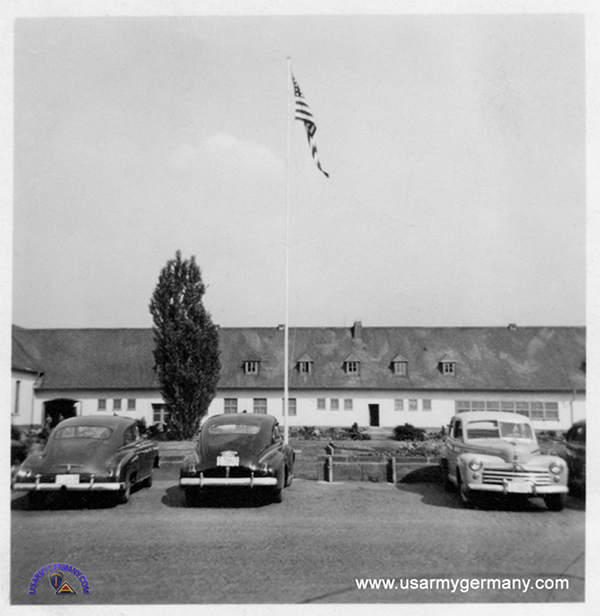 Fritzlar Kaserne, 1949-50 (Webmaster's collection) |
|---|
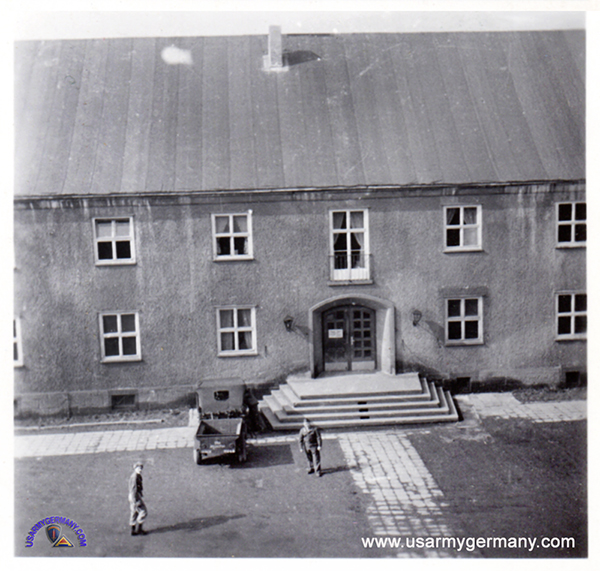
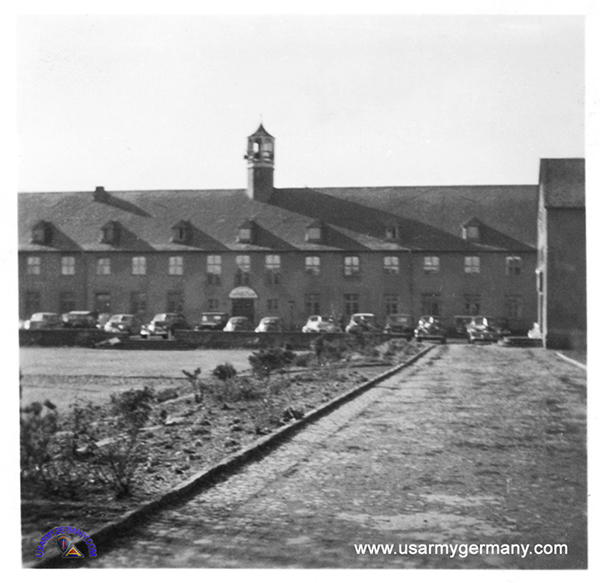 Regimental Headquarters?, Fritzlar Kaserne, 1949-50 (Webmaster's collection) |
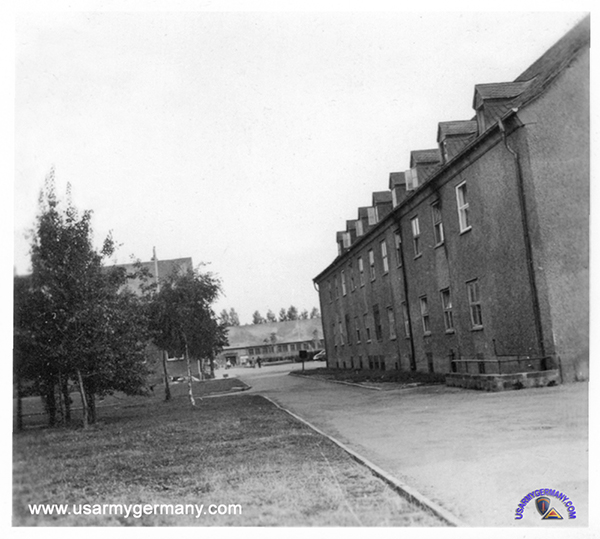 'Ace Of Clubs' EM Club, 1949-50 (Webmaster's collection) |
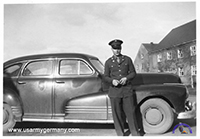
 'Ace Of Clubs' EM Club, 1949-50 (Webmaster's collection) |
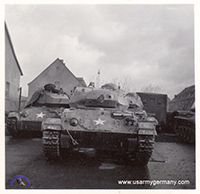
 3. |
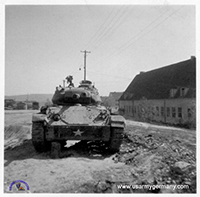
 4. |
 5. |
 6. |
 7. |
 8. |
 9. |
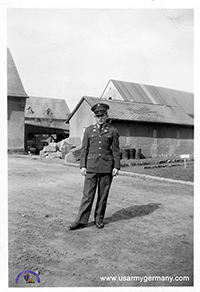 10. |
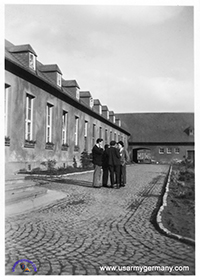 11. |
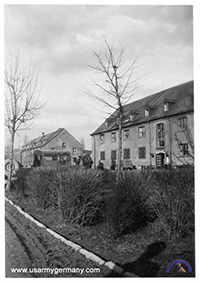 12. |
||
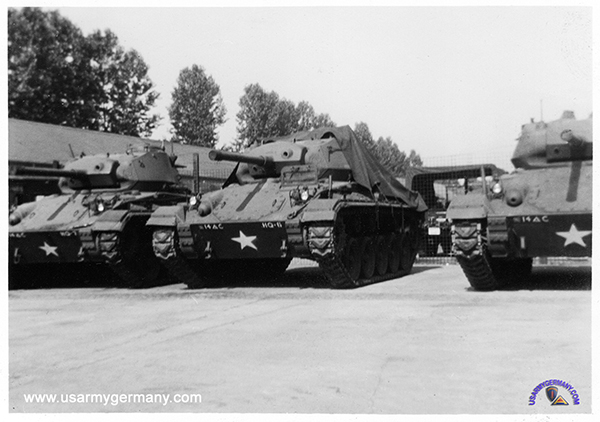
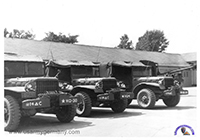
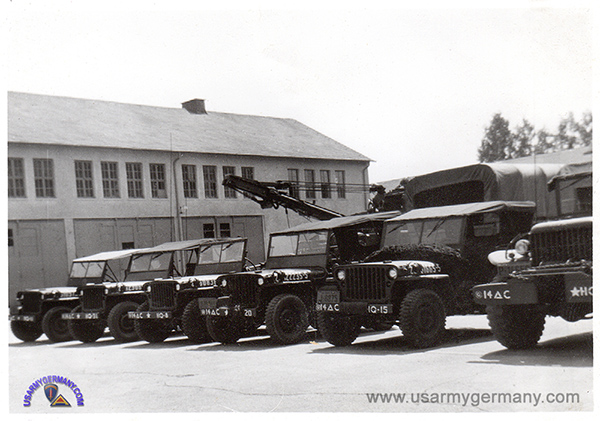 Motor pool, 1949-50 (Webmaster's collection) |
|---|
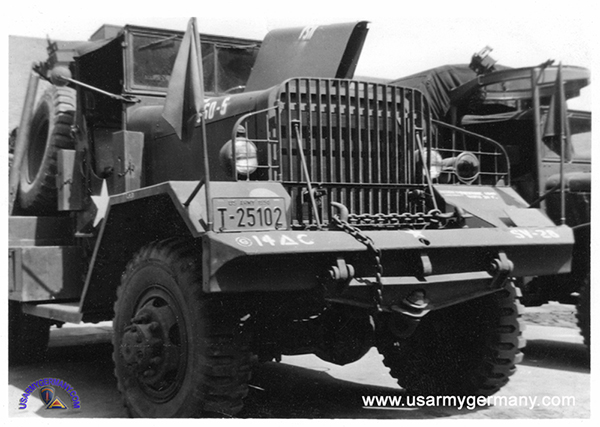 10-ton wrecker (Webmaster's collection) |
 Motor pool (Webmaster's collection) |
 13. |
 14. |
 15. |
|
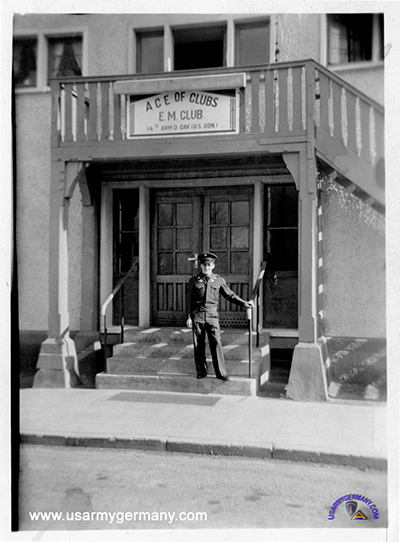 'Ace Of Clubs' EM Club, 1949-50 (Webmaster's collection) |
|---|
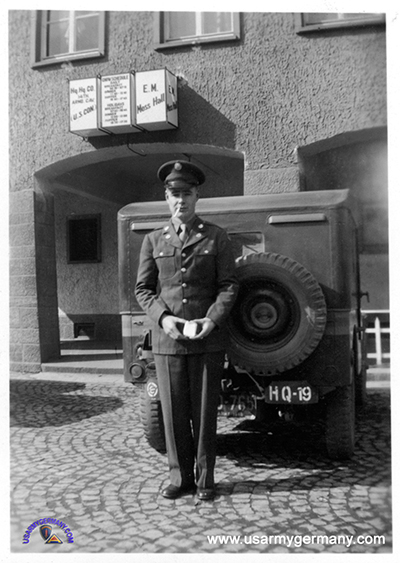 EM mess hall, 1949-50 (Webmaster's collection) |
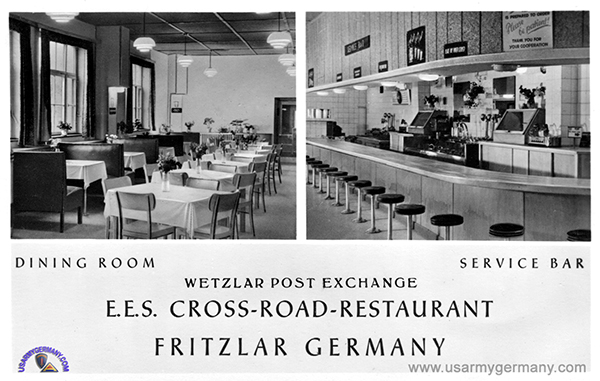 Fritzlar cafeteria, 1949-50 (Webmaster's collection) |
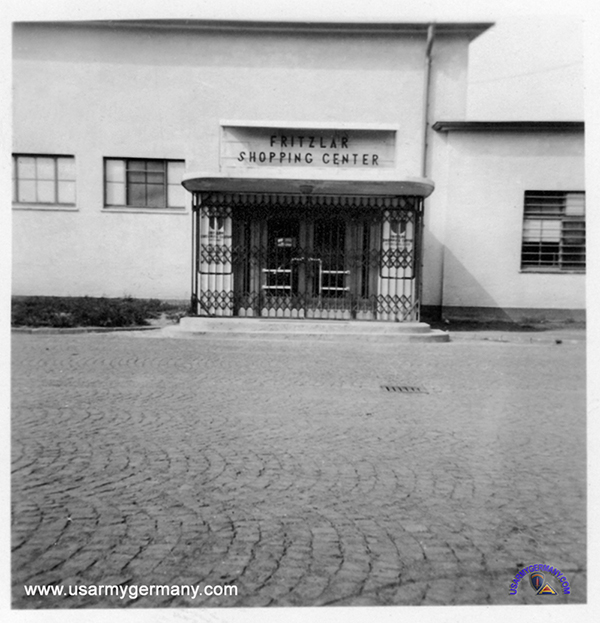 Fritzlar shopping center, 1949-50 (Webmaster's collection) |
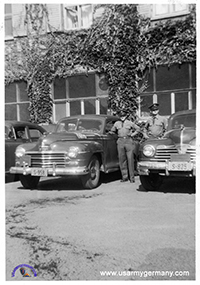
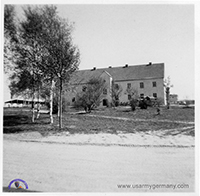
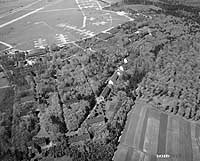
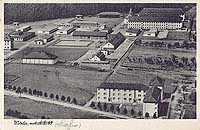
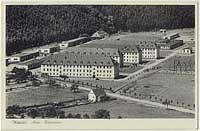
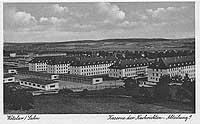
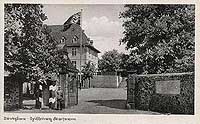
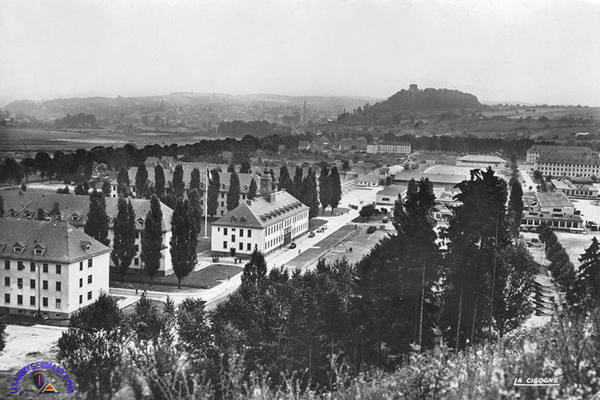 Lloyd Barracks, soon after the French Army took over in 1951 (French postcard) |
|---|
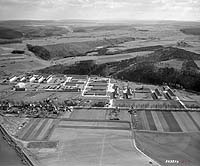 1. Aerial of Lloyd Barracks, 1950 |
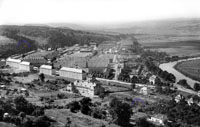 2. Aerial of Lloyd Barracks, early 1950s |
|||
|
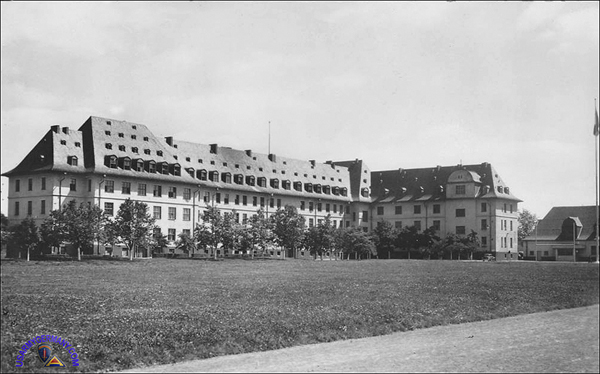 Gaffey Barracks, soon after the French Army took over in 1951 (French postcard) |
|---|
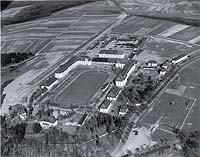 1. Aerial of Gaffey Barracks, 1950 |
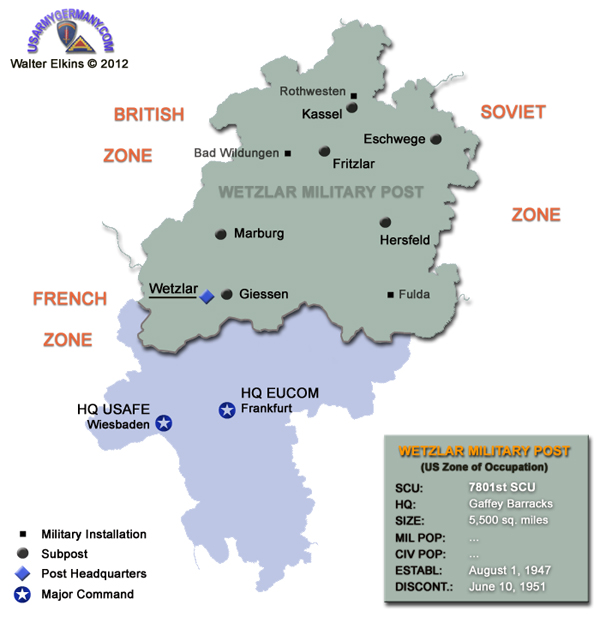
Map of Wetzlar Military Post (Walter Elkins)
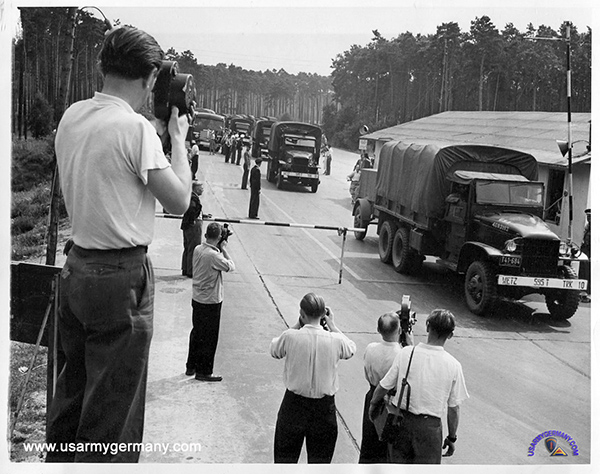
595th Trans Co (Wetzlar M/P) trucks cross into West Berlin at Check Point Bravo, 1949
| On August 1, 1947 the former military posts of Giessen, Fulda and Kassel were discontinued and their areas combined into a new post: Wetzlar Military Post. The new post, placed under the command of Col O.L. Davidson, has its headquarters at Gaffey Barracks in Wetzlar. It covers an area of 5,500 square miles, is divided into six subposts (Giessen, Marburg, Hersfeld, Fritzlar, Kassel and Eschwege) and is the only US military post in Germany that borders on the three other Allied Zones: British, French and Russian. The last three years have been spent rebuilding, consolidating and rehabilitationg the installations in the Wetzlar Post area. Today every building used by US troops, with the exception of certain storage buildings, is painted light buff with brick-red trim and green woodwork. With the exception of Kassel, all rebuilding projects have been completed. |
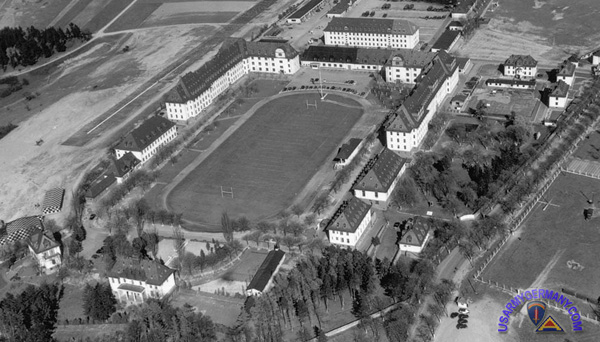
Gaffey Barracks, Hqs Wetzlar Military Post, 1950
 Headquarters, Wetzlar Military Post Headquarters, Eschwege Military Sub-Post Headquarters, Fritzlar Military Sub-Post Headquarters, Giessen Military Sub-Post Headquarters, Hersfeld Military Sub-Post Headquarters, Kassel Military Sub-Post Headquarters, Marburg Military Sub-Post Headquarters, Fulda Area Giessen QM Depot 1st Bn, 14th Armored Cavalary Regiment 24th Constabulary Squadron 27th Transportation Truck Battalion
57th Field Hospital 373rd Infantry Battalion
517th Field Artillery Battalion 601st Aircraft Control & Warning Squadron 7715th USAREUR Ordnance School 7720 Replacement Depot US High Commissioner For Germany (HICOG)
Headquarters, Wetzlar Military Post Headquarters, Eschwege Military Sub-Post Headquarters, Fritzlar Military Sub-Post Headquarters, Giessen Military Sub-Post Headquarters, Hersfeld Military Sub-Post Headquarters, Kassel Military Sub-Post Headquarters, Marburg Military Sub-Post Headquarters, Fulda Area Giessen QM Depot 1st Bn, 14th Armored Cavalary Regiment 24th Constabulary Squadron 27th Transportation Truck Battalion
57th Field Hospital 373rd Infantry Battalion
517th Field Artillery Battalion 601st Aircraft Control & Warning Squadron 7715th USAREUR Ordnance School 7720 Replacement Depot US High Commissioner For Germany (HICOG)Until recently, Bad Wildungen was the location of the American Red Cross headquarters for Europe.
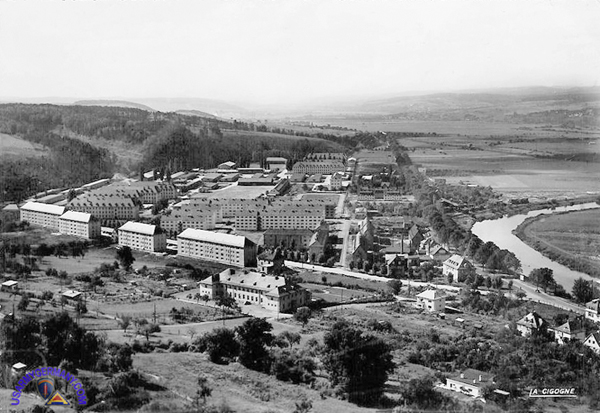
Lloyd Barracks, Wetzlar, early 1950s
| The Hotel Waldorf in Kassel, also known as the "Glashaus," is used as a transient billet for US servicemen. There is also a snack bar located in the hotel. |
The Wetzlar Review The Wetzlar Review, official publication of the Wetzlar Military Post has completed two years of operations. The post newspaper was first published Aug 9, 1947. Staff members are: John J. Hannon, editor (with the paper from the beginning); Brandon F. Timm, associate editor; and PFC Robert W. Mazurek. Maj William J. Delaney is the officer-in-charge. |
The Wetzlar Post highway patrol (detachment) marked its first anniversary with a gala dinner-dance at the Park Hotel. Commander of the patrol: 1st Lt Joseph T. LeNoir. Post Provost Marshal is Col L.M. Edelen. |
| FRANKFURT & WETZLAR MILITARY POSTS TO MERGE Frankfurt Military Post (FMP) will become the third largest post in area in EUCOM when it absorbs the present Wetzlar Military Post on or about June 10, 1951. The consolidation will give FMP an area of approx. 8,5000 square miles. Brig Gen Basil H. Perry, CO of the present FMP will continue as commander of the consolidated post. (Wetzlar Miliatry Post has been commanded by Col L.H. Slocum since August 1950.) In the consolidation, the number of Wetzlar sub-posts will be reduced from six to four: Kassel, Giessen, Hersfeld and Fulda. The present Fritzlar sub-post will merge into Kassel, and the present Eschwege sub-post will be consolidated with Hersfeld. In April 1951, the Wetzlar headquarters was moved (from Gaffey Barracks, Wetzlar) to Giessen pending the permanent Frankfurt-Wetzlar consolidation. |
WETZLAR MILITARY POST - PHASED OUT "Operation Turnover," the EUCOM-ordered program to phase out the Wetzlar Military Post and merge its area under the control of the Frankfurt Military Post, is in its third week. The program is scheduled to be completed by June 10. The biggest change that will be implemented is the planned enlarged role of Kassel as a subpost headquarters. The former Fritzlar subpost was discontinued yesterday and its area, personnel and equipment authorization and allowance have been shifted under the control of the Kassel subpost. Lt Col Leonard P. Daniels, former Fritzlar subpost commander will become the CO of the Kassel subpost. Another subpost affected by the changes is the former Eschwege subpost which also closed on June 1. Its area and functions have been moved under the Hersfeld subpost which is commanded by Maj William G. Phelps. Two other newly established/reorganized subposts that control the remaining area of the former Wetzlar Military Post are the Fulda subpost and the Giessen subpost. (Giessen recently took over jurisdiction of the former Marburg subpost.) Lt Col Eric E. Bischoff is the commander of the Fulda subpost; no one has yet been appointed as CO for Giessen. Additional changes on June 1: The Fritzlar motor pool No. 3 has been closed and relocated to replace Kassel motor pool No. 7. The Eschwege motor pool No. 6 has been discontinued. Fritzlar's Det F (7801st Station Complement Unit) has been absorbed into Det K at Kassel. The Wetzlar Military Post originally attained its present size, when the old Giessen, Fulda and Kassel military posts were merged into one military post on Aug 1, 1947. In April 1951, French troops took over two US kasernes in Wetzlar (Gaffey and Lloyd Barracks) under the terms of the Sept 6 (1950) Allied agreement providing for exchange of troops and headquarters. Military Post headquarters moved to Pendleton Barracks in Giessen at that time. |
|
As a child I was in a children's home in Hessisch Lichtenau - Fürstenhagen, from 1962 to 1975.
During this time we often had contact with the American soldiers from Rothwesten. They invited us to Rothwesten Kaserne for Christmas and Thanksgiving or visited us in the children's home.
One year "Santa Claus" even flew to us in a helicopter to give us presents :-)).
I would like to thank you today for all these encounters, the friendliness and the feeling of not being completely forgotten as an orphaned child.
I like to think back to these encounters, they brought me and the other children a lot of joy.
Source: The Front Line, March 16, 1946
Fritzlar Army Air Base, Island of Birdmen In Third Area, Alert To Occupation Duties By Tom Brown Front Line Staff Patrolling, aerial photography and the maintenance of a well-equipped fighter squadron is the peacetime function of the 366th Fighter Group and the 475th Service Group stationed at the Fritzlar Army Air Base about 10 miles from Division Headquarters at Bad Wildungen. To accomplish its peacetime mission the fighter group has scores of fighters ready for flight and a further number of planes in reserve. The 300 men assigned to the base form a skeleton crew of the 1400 required by the T/O for the organization. First Fighters in Normandy The 366th Fighter group moved onto the Fritzlar field in September 1945 [1][2] after fighting in six campaigns. The group was the first fighter unit to enter Normandy after D-day. Fritzlar Airfield, which was once a Luftwaffe fighter base, has been designated a permanent occupational installation and may soon become a European Air Transport Service Terminal. The runway, 5,000 feet long and 120 feet wide, is made of pierce planking and was built over the original German strip destroyed by the retreating Nazis. Three hangars are being used as repair shops. At present there is one theater, a swimming pool and a Red Cross Club on the base. The Red Cross Club, designed to serve all military personnel in the Fritzlar area, offers a craft shop, photographer's dark room and a snack bar which serves cake and cookies as well as coffee and donuts. Provisions For Families Elaborate plans for the arrival of American families are now being made. Living quarters for 60 or more families will be in seven apartment houses in Fritzlar, for which the Army is now negotiating. Two additional mess halls, a commissary to supply the families, another theater, a large gymnasium, two swimming pools, a recreation hall and a bowling alley are to be built soon. A church and a primary school are also planned for this spring. [1] Before arriving at Fritzlar, the Group had served at two other German air bases: Münster/Handorf, Germany, from 11 April to 24 June, 1945; and at Bayreuth/Bindlach, Germany, from 25 June to 13 September, 1945. [2] The Group consisted of the following fighter squadrons: 389th, 390th, and 391st. The Group and the subordinated squadrons were inactivated at Fritzlar on August 20, 1946. |
Source: EUCOM Medical Bulletin, June 1951
| EUCOM Headquarters announced recently that the Graf Haeseler Kaserne, Kassel, has been renamed Wilson Barracks in honor of Technician Fifth Grade Alfred L. Wilson, formerly of the Medical Detachment, 328th Infantry Regiment, 26th Infantry Division. |
Source: STARS & STRIPES, July 7, 1949
| The 386th Station Hospital in Kassel was closed in May 1947, although some activities of the hospital continued for awhile. The 388th Sta Hosp in Giessen now serves the Wetzlar Military Post area (in which Kassel is located). There is also the 25th General ispensary at Bad Wildungen which serves EUCOM personnel and their dependents. The Rothwesten Community Dispensary is the only medical facility left in the Kassel area. |
| Some history of the EUCOM Ordnance School can be found on the School Command, Europe Page. A history of a US Army ordnance activity at Hindenburg Kaserne in the early Occupation period (before the Ordnance school took over the installation in December 1946) can be found on two German websites: http://www.orion-werk.de/ & http://de.wikipedia.org/wiki/Orion-Werke |
Rothwesten Konversion - German page with some recent aerial shots of the Kaserne; page is from a commercial real estate company.
 |
Fliegerhorst Kassel-Rothwesten  - a very interesting page on Bernhard Weiss' Fliegerhorste website. Bernhard covers the history of the Fliegerhorst (German for "air base") from its construction in the 1930s to its recent closure as a military installation. Includes lots of great pictures! - a very interesting page on Bernhard Weiss' Fliegerhorste website. Bernhard covers the history of the Fliegerhorst (German for "air base") from its construction in the 1930s to its recent closure as a military installation. Includes lots of great pictures! |
||
|---|---|---|---|