Click here to open 'USArmyGermany' frameset
PASSAU MOTOR POOL |
REGENSBURG AIRFIELD |
|
|

| 1954 Topographical maps (AMS Series M841 - Sheets 6938 & , 7038 / 1:25 000) of Regensburg and surrounding area. |
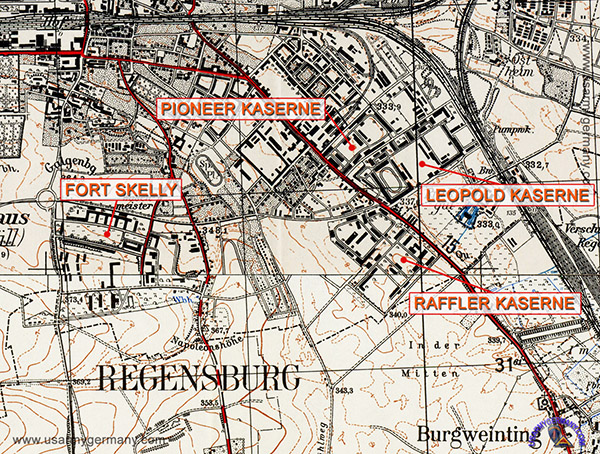
Southeastern Regensburg
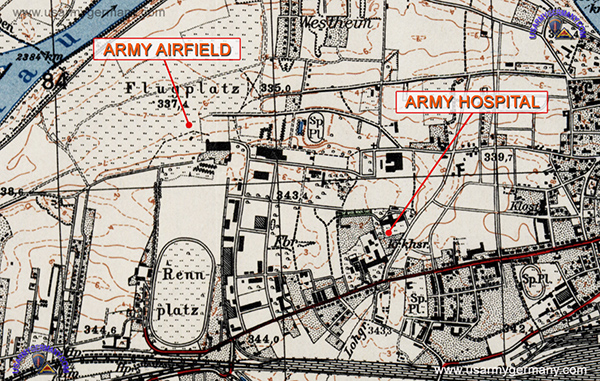
Western Regensburg
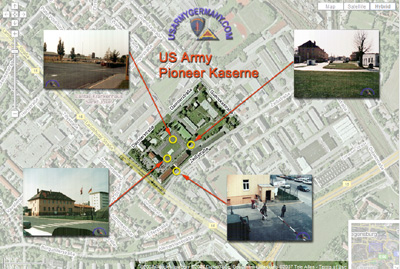
| 1960s Topographical maps of Regensburg and surrounding area. Legend: 1. Fort Skelly 2. Raffler Kaserne 3. Leopold Kaserne and Pioneer Kaserne 4. (US kaserne?) Need help in identifying/verifying the location of the various US Army kasernes in Regensburg - please contact me if you know where the facilities were located. Click on the thumbnail to view a larger format of the same map. NOTES: Georg Bauer, Germany, reports that Pioneer Kaserne was located on Landshuterstrasse, and that Picture #13 does show part of the Housing Area Don Henderson, stationed there from 1960 to 62 with the 508th MP Bn, provided the following input:  #1 on map is Leopold Kaserne (mostly German Troops)#2 Ft Skelly (all US Troops)#3 Raffler Kaserne (German troops and 508th motor pool)#4 Pioneer Kaserne - PX, EM Club, Officers Club and
BOQ. #1 on map is Leopold Kaserne (mostly German Troops)#2 Ft Skelly (all US Troops)#3 Raffler Kaserne (German troops and 508th motor pool)#4 Pioneer Kaserne - PX, EM Club, Officers Club and
BOQ. Ft Skelly was located just off of Landshuterstrasse.  Michael Ehrenreich, Germany, provides some more details: Michael Ehrenreich, Germany, provides some more details:here you get adresses of Regensburg Casernes, taken from Bundeswehr adress list, January 1989: RAFFLER Kaserne: Bajuwarenstrasse 2 (= northward) PRINZ LEOPOLD Kaserne: Zeissstrasse 4 (seems it was collocated with PIONIER Ksn., Daimlerstrasse) BAJUWAREN Kaserne: Bajuwarenstrasse 1 (=southward) NIBELUNGEN Kaserne: Carl-Maria-von-Weber-Strasse 5 so on your topo map 50.000 -- Prinz Leopold can be identified as Nr. 3, Nibelungen as Nr. 1, and Bajuwaren Nr. 2. Nr. 4 are the oldest kasernes, so called INFANTERIE Kaserne (built around 1890/1900) - northward KAVALLERIE Kaserne (completed 1915) - southward Additional information (in German): Wikipedia article |
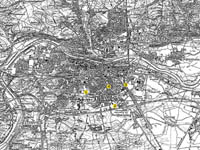 Regensburg (374 KB) |
 |
|
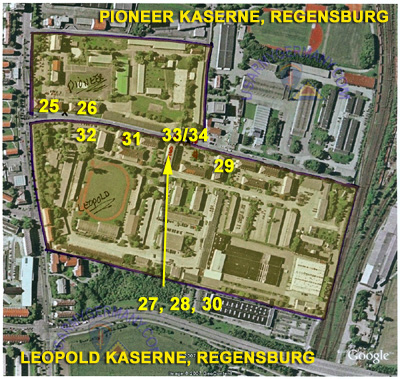
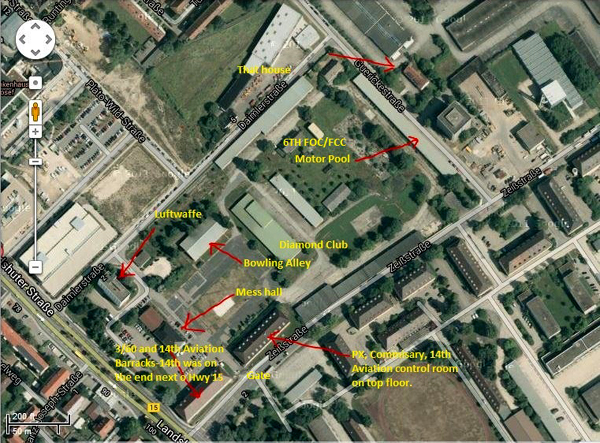 Layout of Pioneer Kaserne, Regensburg, 1960s/70s (GOOGLE Maps) |
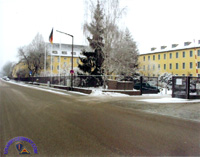
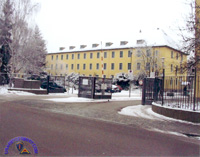
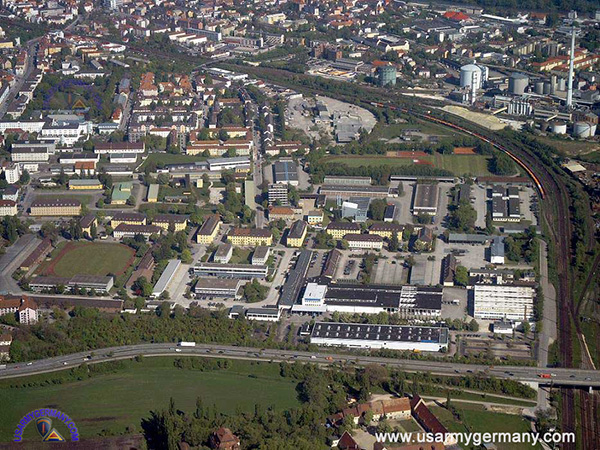 Former Pioneer Kaserne & Leopoldkaserne, 2005 |
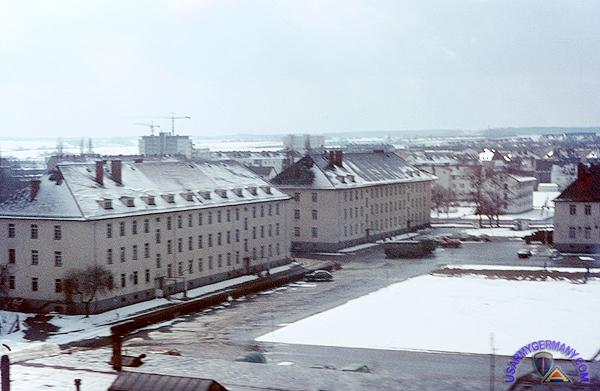 Aerial view of Pioneer Kaserne, Regensburg, early 1970s |
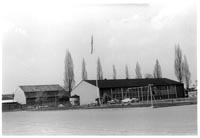 1. Pioneer Kaserne, Bowling alley |
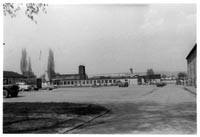 2. Pioneer Kaserne, Service club (a) |
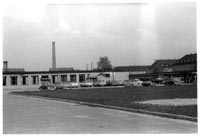 3. Pioneer Kaserne, Diamond Club (a) |
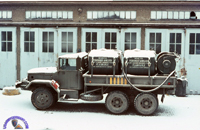
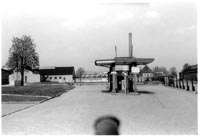 4. Pioneer Kaserne, POL filling station |
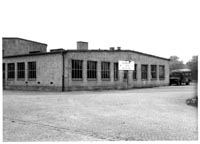 5. Pioneer Kaserne, Motor pool |
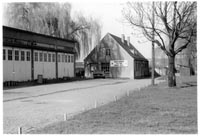 6. Pioneer Kaserne, Motor pool |
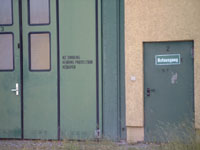
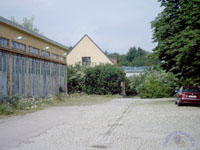 7. Pioneer Kaserne, former Motor pool, 2006 |
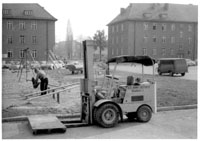 8. Pioneer Kaserne, Local national performs maintenance on a playground (b) |
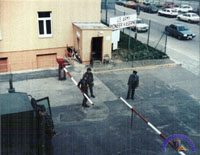 9. Main gate - entrance to US part of Pioneer Ksn |
 |
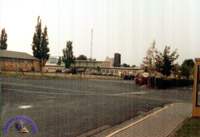
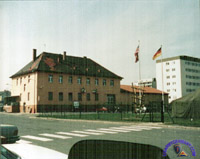
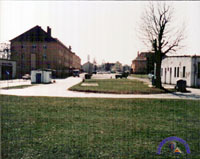
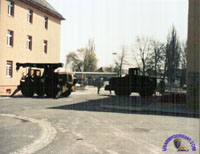
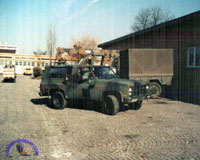
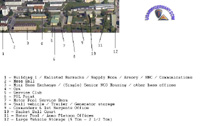
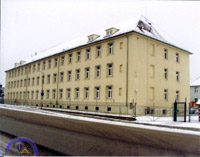
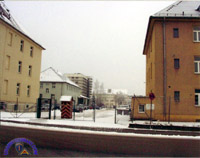
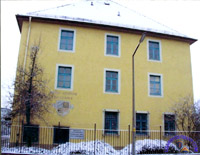
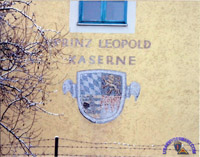
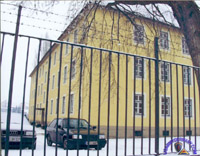
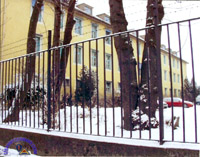
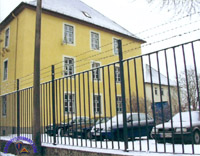
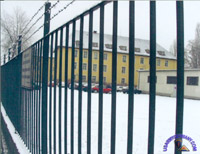
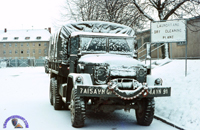
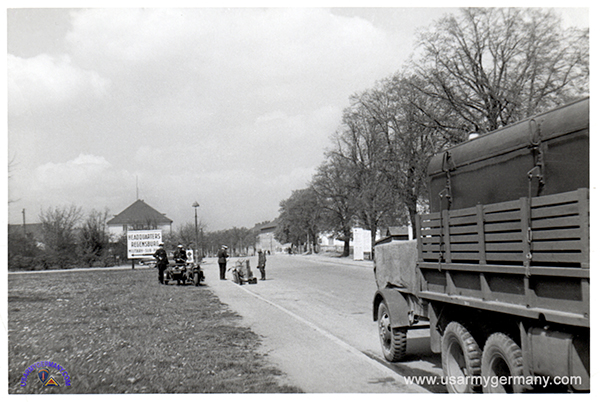 A radio truck of the 485th Engineer Bn parked along the road leading to US Army kasernes in Regensburg (Webmaster's collection) |
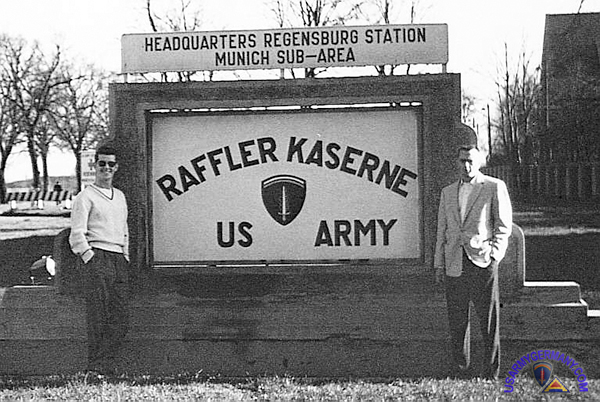 Sign in front of main gate, Raffler Kaserne, 1957 (Jim Westwick, on right) |
|
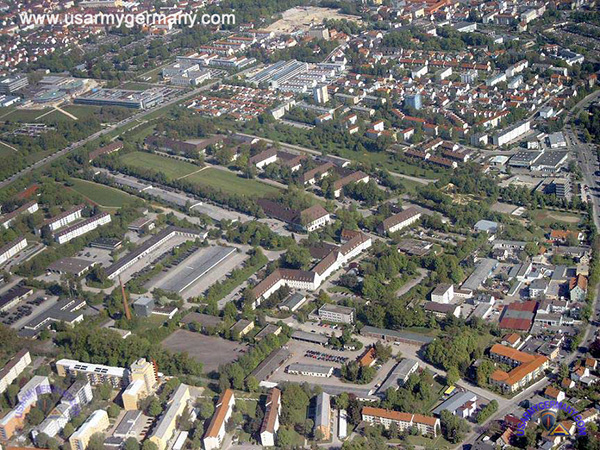 Former Fort Skelly (now Nibelungenkaserne), 2005 |
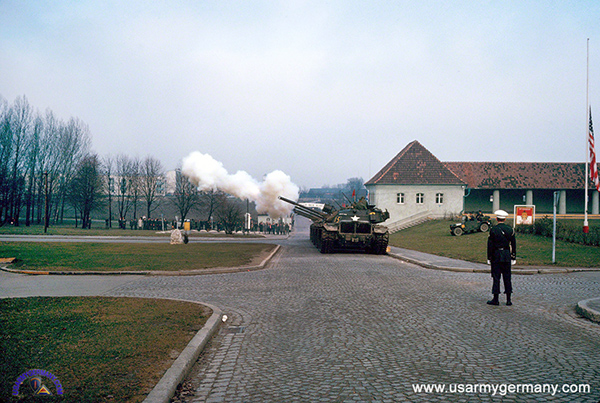 21-gun salute in tribute to President John Kennedy, Nov 1963 (Mike Dolan) |
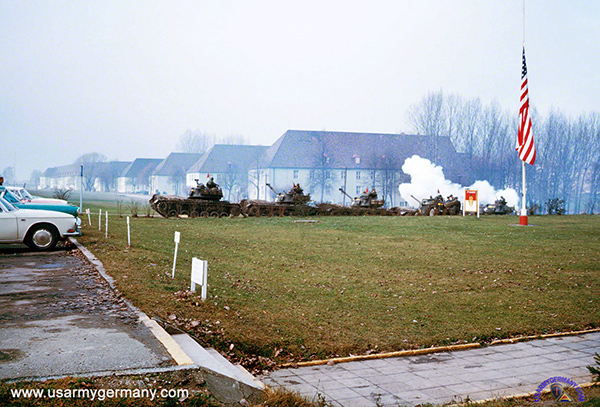 M-48's of Mike Company render 21-gun salute in front of Post Headquarters (Mike Dolan) |
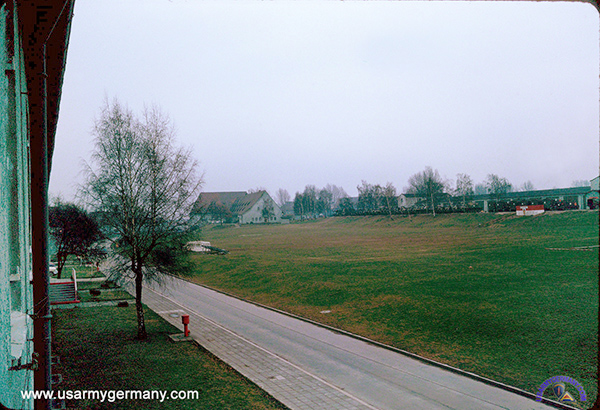 Fort Skelly, Regensburg, 1963 (Mike Dolan) |
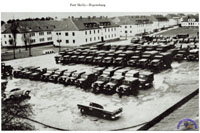 1. Fort Skelly?, late 1950s |
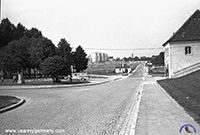 2. Main gate area |
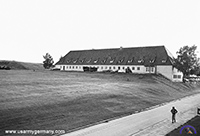 3. |
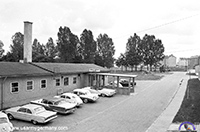 4. Rocker Club |
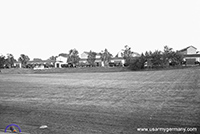 5. Motor pools |
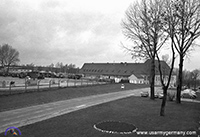 6. Motor park |
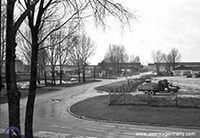 7. Fort Skelly |
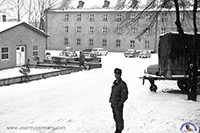 8. Mess hall |
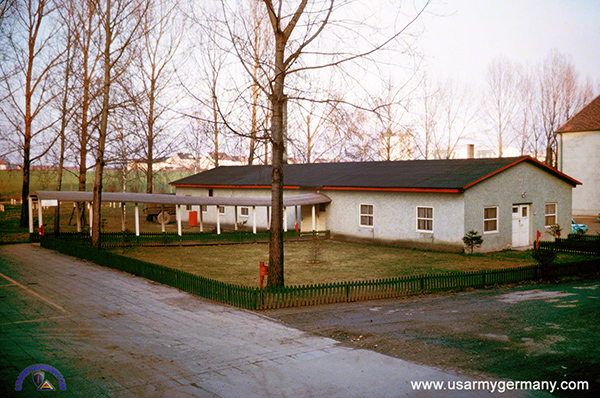 619th Engineer Company mess hall (Mike Dolan) |
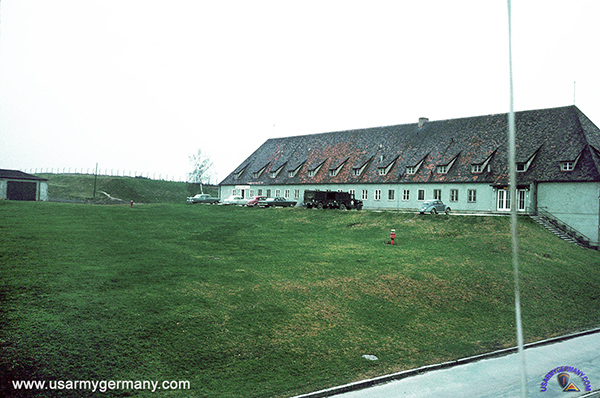 |
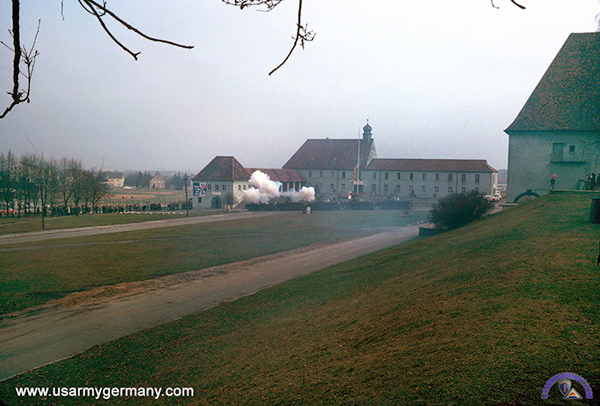 21-gun salute in honor of President Kennedy. Nov 1963 (Mike Dolan) |
|
|||||||||||||||||
Former Pioneer Kaserne & Leopoldkaserne, 2005 |
|||||||||||||||||
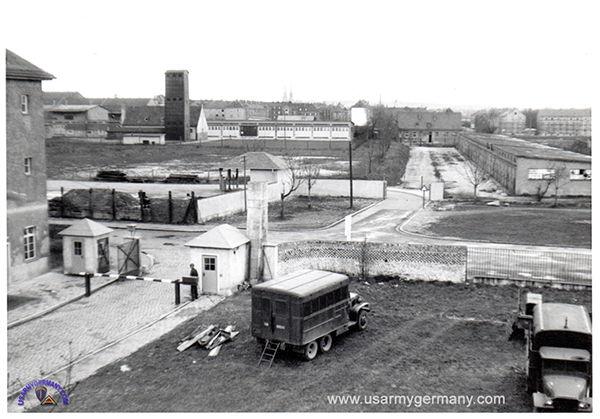 Leopold Kaserne, Regensburg, early 1950s (Webmaster's collection) |
|||||||||||||||||
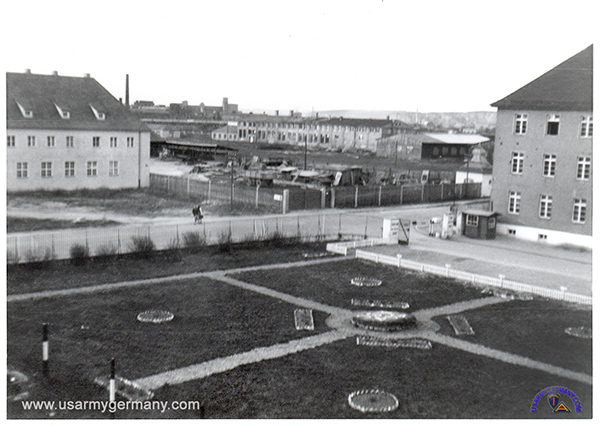 Leopold Kaserne, Regensburg, early 1950s (Webmaster's collection) |
|||||||||||||||||
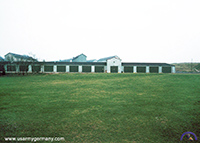
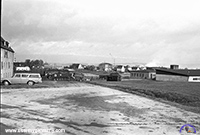
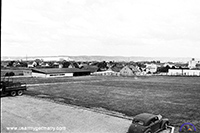
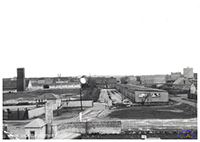
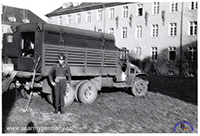 1. RATT Rig near Leopold Kaserne main gate |
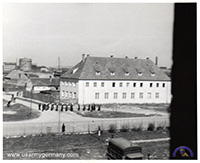
 2. Leopold Kaserne |
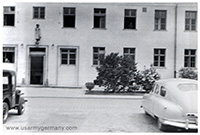
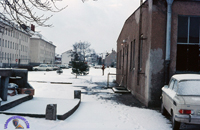
 3. Across the street from Leopold Ksn |
 4. Barracks bldg |
|
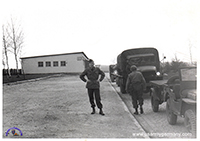 5. APO 205 in background |
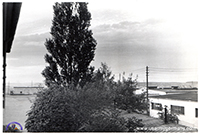 6. Shop area |
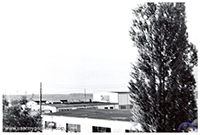 7. Shop area |
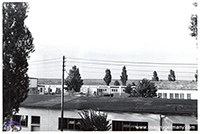 8. Shop area |
|
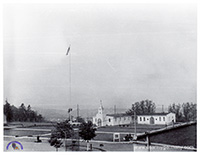 9. Post chapel |
||||
|
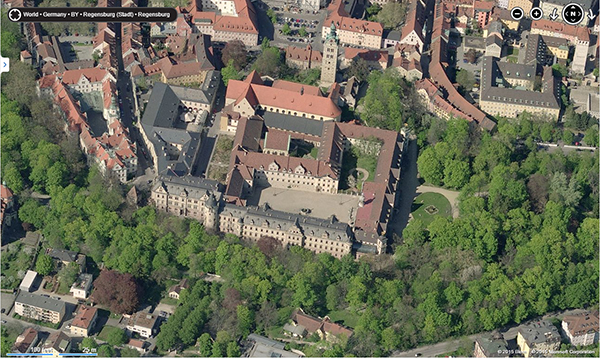 St. Emmeram Palace, Regensburg, served as Headquarters for Third US Army (only briefly) and then XII Corps during the early Occupation period (BING) |
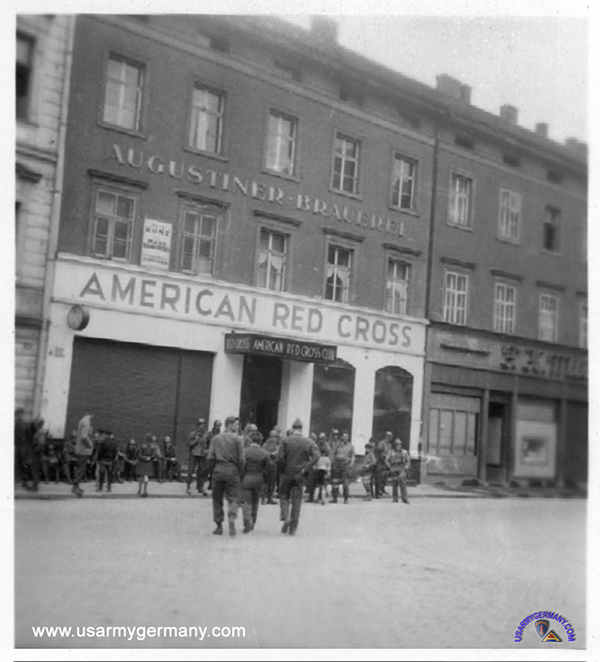 American Red Cross club in downtown Regensburg, 1945 (Webmaster's collection) |
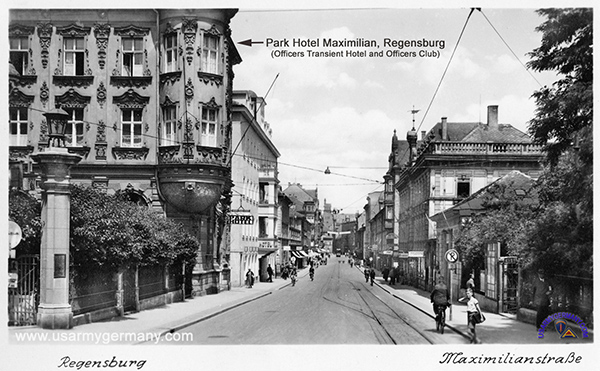 Officers Transient Hotel and Officers Club, Regensburg, early 1950s |
|
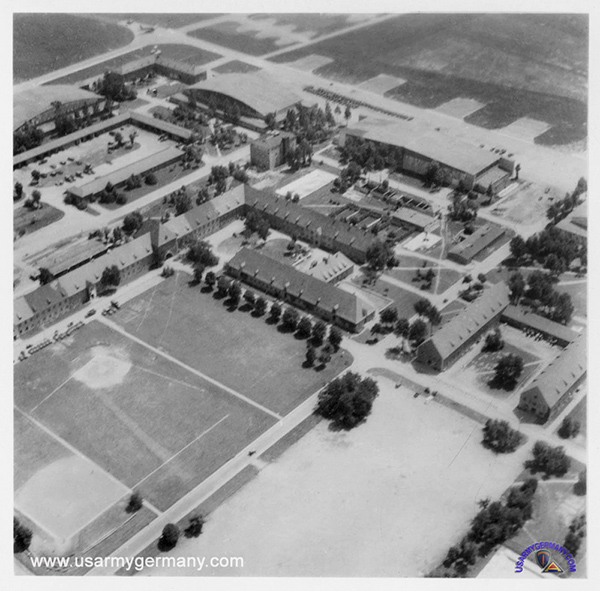 Mansfield Kaserne, Straubing, 1940s |
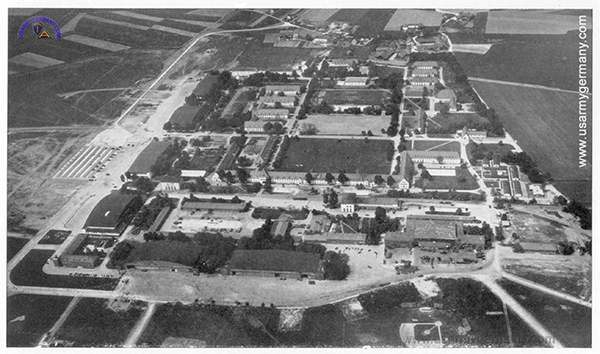 Mansfield Kaserne, Straubing, 1953 |
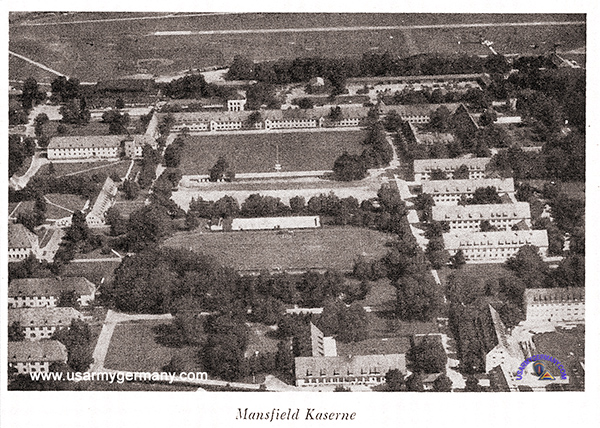 Mansfield Kaserne, Straubing, 1960 |
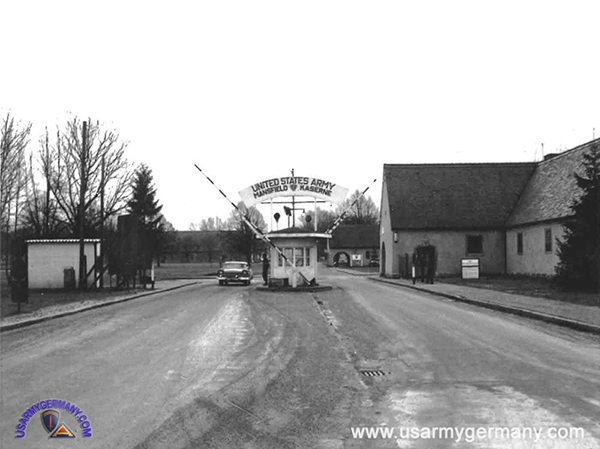 Main gate at Mansfield Kaserne, Straubing, early 1960s |
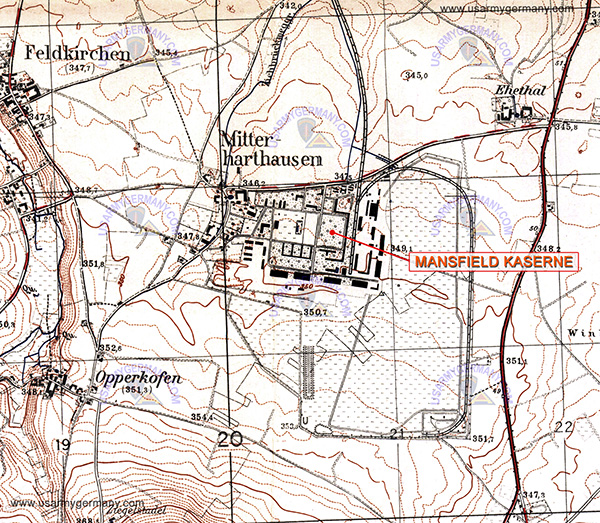 Topo map of Mansfield Kaserne area, 1952 (AMS M841) |
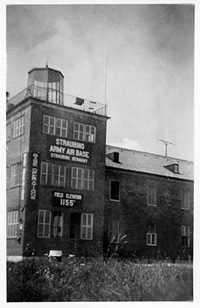 1. Tower, Straubing Army Air Base, 1946 |
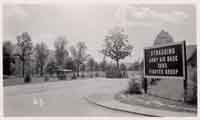 2. Straubing Army Air Base Main Gate, 1946 |
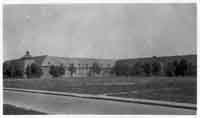 3. Barracks on Straubing Army Air Base, 1946 |
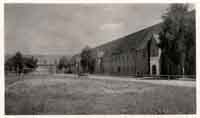 4. 396th Fighter Squadron Barracks, Straubing, 1946 |
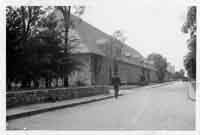 5. Officers Mess, Straubing Army Air Base, 1946 |
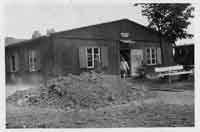 6. EM Mess, Straubing Army Air Base, 1946 |
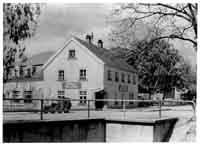 7. Straubing American Red Cross Club, 1946 |
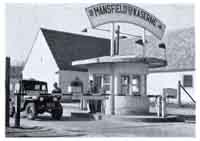 8. Mansfield Ksn Main Gate, 1953 |
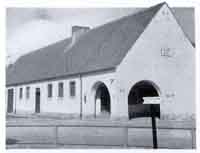 9. Guard House next to Main Gate, 1953 |
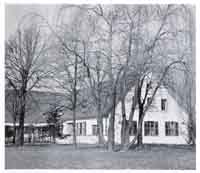 10. Mansfield Ksn Officers Club, 1953 |
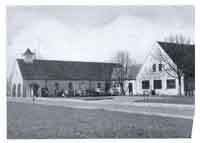 11. Post Chapel, 1953 |
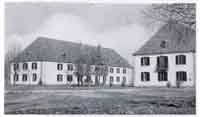 12. Bachelor Officers Quarters, 1953 |
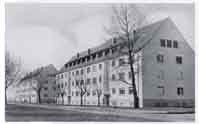 13. Dependent Quarters, 1953 |
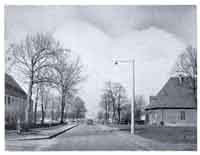 14. Main street on post, 1953 |
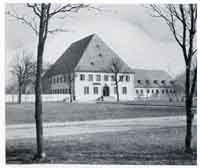 15. Service Club, 1953 |
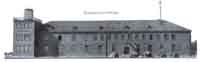 16. Headquarters Building, 1953 |
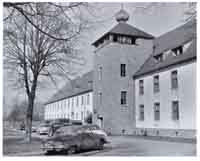 17. Hq Co, 1st Bn Building, 1953 |
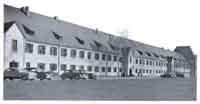 18. Co A and B Barracks, 1953 |
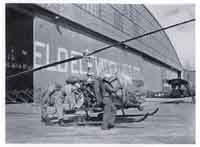 19. Aviation Section Hangar, 1953 |
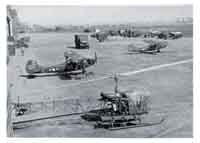 20. Regimental aviation, 1953 |
 Mansfield Kaserne, Straubing, 1963 (Mike Dolan) |
 Mansfield Kaserne, Straubing, 1963 (Mike Dolan) |
 Mansfield Kaserne, Straubing, 1963 (Mike Dolan) |
 Mansfield Kaserne, Straubing, 1963 (Mike Dolan) |
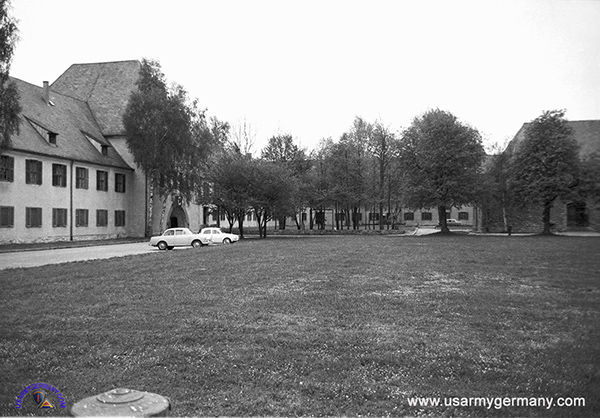 Troop "C" barracks on left (Mike Dolan) |
 21. View from Trp C tunnel |
 22. |
|||
 23. |
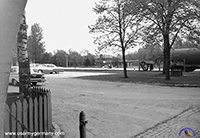 24. QM area |
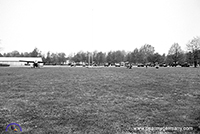 25. Static display area |
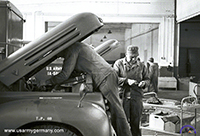 26. |
|
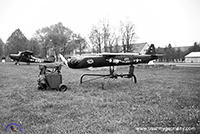 27. AN/USD-1 drone |
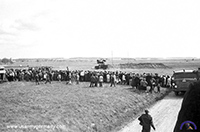 28. Airmobile demonstration |
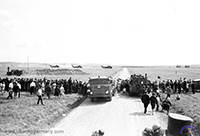 29. Airmobile demonstration |
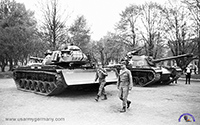 30. Static display |
|
|
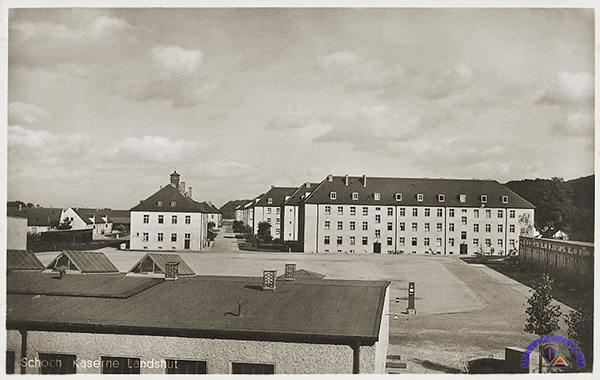 Schoch Kaserne, Landshut, pre-WWII (German postcard) |
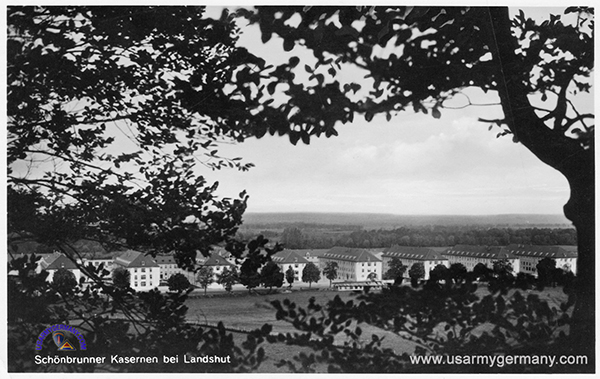 Schoch Kaserne, Landshut, pre-WWII (German postcard) |
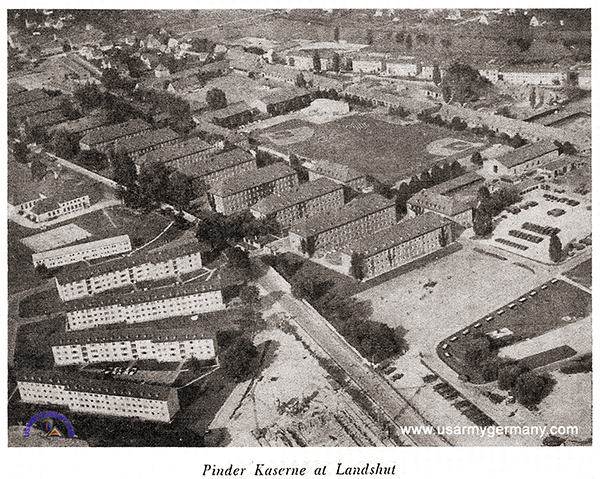 Pinder Kaserne, Landshut, 1960 |
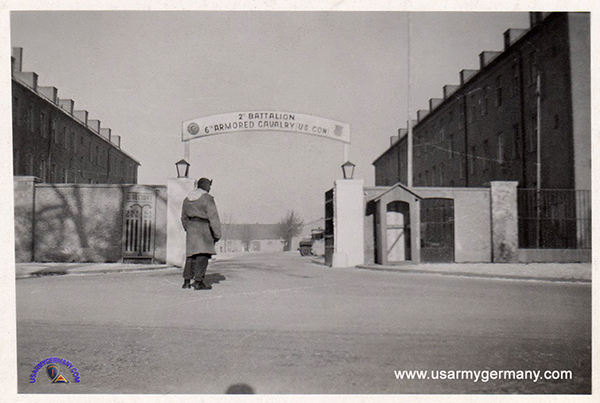 Main gate, Pinder Kaserne, Landshut, 1950 (Webmaster's collection) |
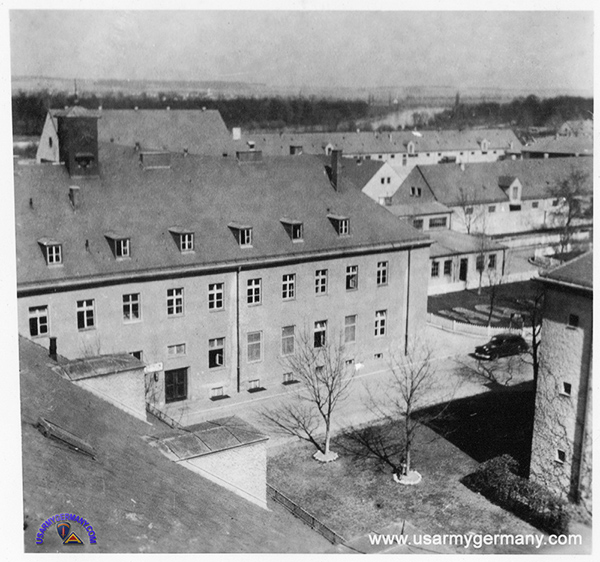 Pinder Kaserne, Landshut, 1948 (Webmaster's collection) |
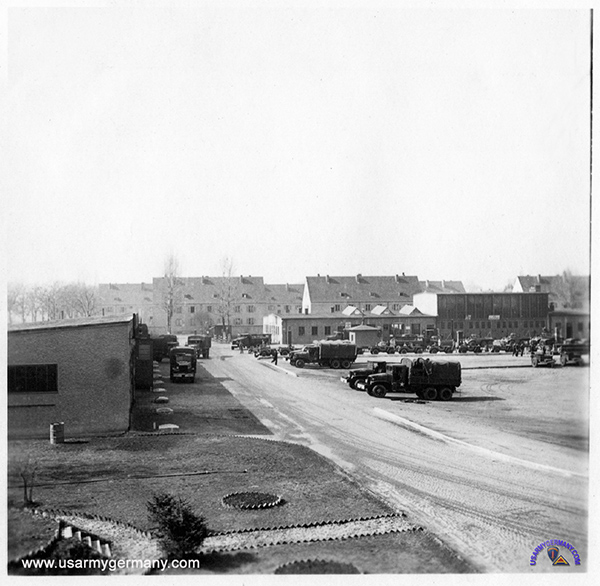 Motor pool, Pinder Kaserne, Landshut, 1948 (Webmaster's collection) |
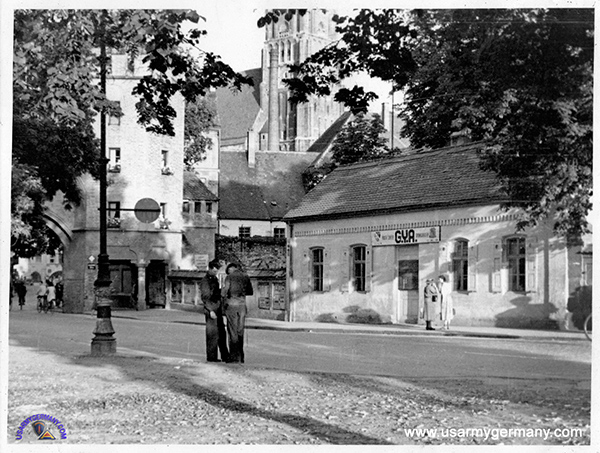 GYA Building in Landshut, 1948 (Webmaster's collection) |
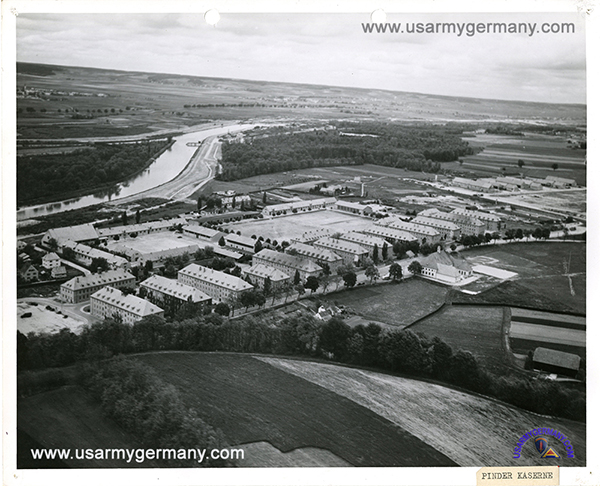
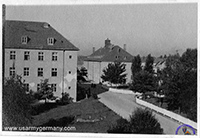
 1. Building with the small clock tower was the mess hall |
 2. 7th FA Battalion billets |
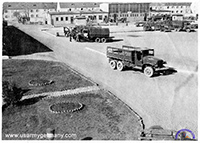 3. Motor pool |
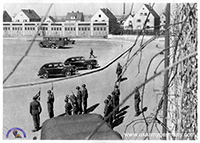 4. 7th FA Svc Btry formation |
|
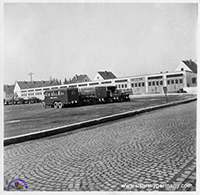 5. Sub-post vehicles |
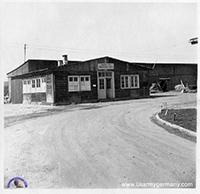 6. Construction Engineers |
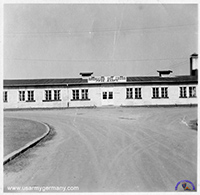 7. Red Cross Club |
||
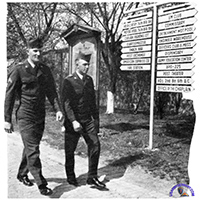 8. Directional signs, 1953 |
||||
|
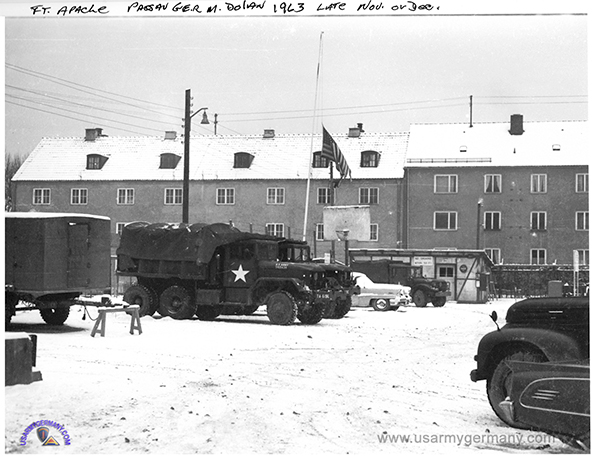 Fort May motor pool, Passau, late 1963 (Mike Dolan) (US flag still at half-staff after President Kennedy assassination in Nov 1963) |
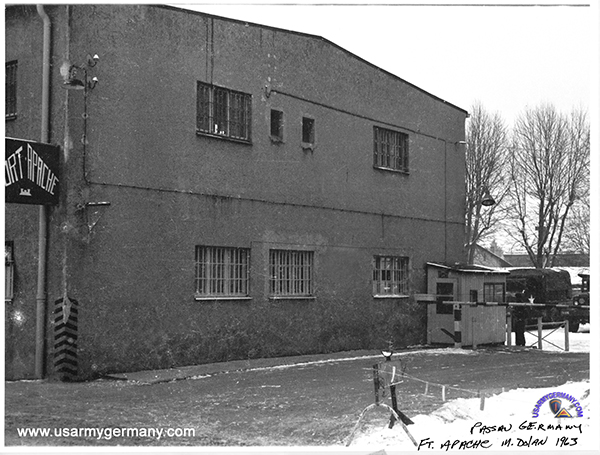 Entrance to Fort Apache, Passau, 1963 (Mike Dolan) |
|
||||
 A. Donau Kaserne |
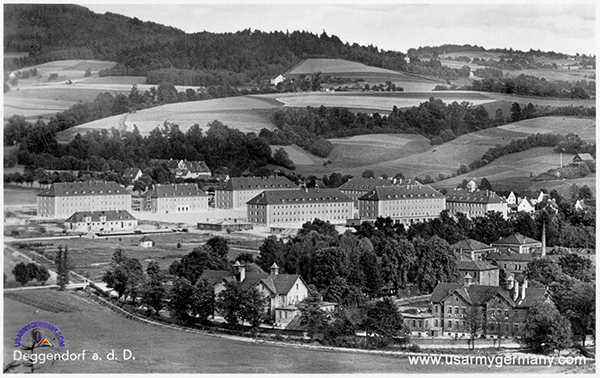 Fort May (Panzerjäger Kaserne), Deggendorf, pre-WWII (German postcard) (home to various US Constabulary units until 1950/51) |
|
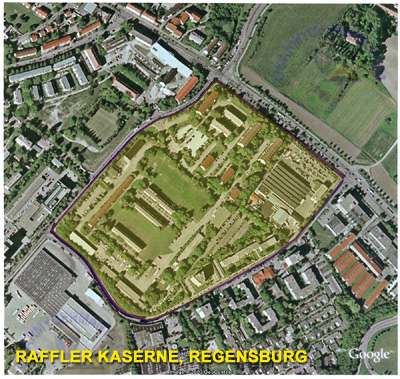 |
 |
|||
|
|
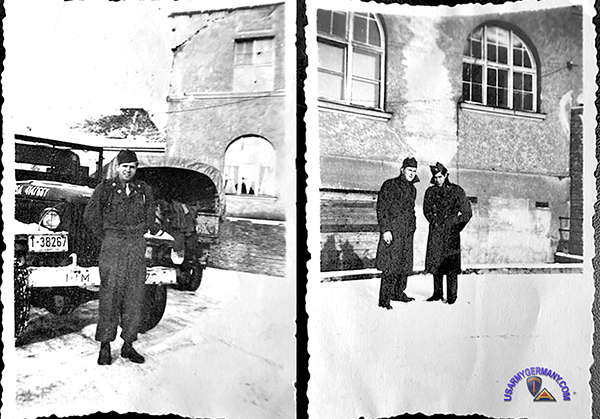 (Click on image for a slightly better resolution) |
| I am trying to get more information on where the 1st Medical Battalion would have been stationed in Regensburg from the end of WW2 to early 1947. My grandfather was a medic during this time and I have a few photos of him in the city but I am trying to see if I can pinpoint where exactly in Regensburg he may have been. Margaret Tanner |
CORRECTIONS & ADDITIONS: REGENSBURG KASERNES Section (Source: Email from Bill Miller, Pioneer Kaserne, Regensburg, 1964-Jan 1966) (a) Photo 8 & 9 show different angles of the Diamond Club. Pioneer Kaserne did not have gym facilities, we had to use the German's Leopold Kaserne across the street if we wanted to use gym facilities. Larry Swaboda, brother of the LA Angels' baseball player, Ron Swaboda, used the facilities frequently with a few of the other men in my unit. Most preferred to exercise in the Diamond Club. (b) Photo 13 The building on the left housed USAR Personnel, BOQ, administrative offices, and the PX. The building on the right housed the Seventh Army unit of Battery A, 6th Missile Battalion, 61st Artillery from 1964 until they pulled out, whenever that was. The photo is taken with the bowling alley behind the photographer and shows the main gate on Daimlerstrasse. The Army family housing is not in the photo but would be accessed by turning right as you left the Kaserne and one block west across Landshuterstrasse. Missing from the photos is the building that housed the Mess Hall and Army/Air Force motion picture theater (formerly the Officer's Club.)
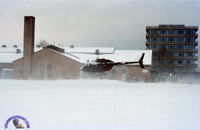
Comment about the helicopters at Fort Skelly. The 11th Cavalry would bring in their helicopters before they went on maneuvers and leave them idle for four to six hours before they moved out. Unfortunately their tanks would also sit around idling for the same time... the weary did not get any sleep.
PIONEER KASERNE Comments (Source: Mason Frichette, Pioneer Ksn, Oct 1968-July 1970) I happened across your site concerning Regensburg Installations (US installations in Germany). Under Corrections and Additions (b) it states that "The building on the right housed the Seventh Army unit of Battery A, 6th Missile Battalion, 61st Artillery from 1964 until they pulled out, whenever that was." I was stationed in Regensburg from October 1968 until July 1970 with B Battery, 6th Missile Battalion, 60th Artillery. It was definitely "B" and 60th, not A and 61st. I think A Battery was in Amberg; other 6/60 batteries were in Hohenfels and Grafenwöhr. Concerning B/6/60. I'm not saying it wasn't A Battery before I got there, only that during the time I was in. |
(Source: Email from Clarence Leist)
|
|||||||||
|
|||||||||
|
|||||||||
|
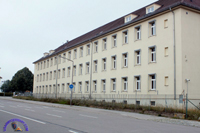
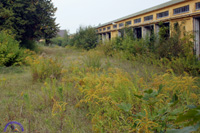
You can imagine how amazed I was to find the page, to see the hospital, and to learn a bit of its history.
What surprised me even more, after doing a bit of research, was to learn that those buildings, now remodeled and modernized, are still a working hospital complex run by the same group, the Barmherzigen Brüder. 74 years later, with some modifications, of course, it’s all still there, and I’m still here. Amazing, and for more reasons than you might imagine.
My father was Captain Donald E. Thomson. He had been the Fire Direction officer in the 915th Artillery Battalion, 359th Infantry Regiment, 90th Infantry Division from 1942 until the end of the war in 1945. After that, he was assigned to the American Constabulary in Regensburg, Germany. My mother joined him there in January, 1947. We also lived in Landshut and Straubing.
We returned to the US about the time of my 3rd birthday.
I did have a German nanny for a while, and she spoke to me in German. Being so young, I have no memories of that time, of course. But, when I returned to Germany in 1971 as the US Army’s Motor Officer, Support District Hessen, Frankfurt, I could still pronounce German fairly well, although I couldn’t understand a word of it, sadly.
I did enjoy Germany and the Germans a great deal. And, I’d love to be able to go back some day for a nice, long visit.
| I was the “garrison commander” at USAG Regensburg Garrison from mid-1964 until I ended my 2 years active duty in May 1965. Re: Photo 13 in the Regensburg photo section above, the playground being built by local workers was my initiative. The 11th Armored Cav. had rotated back to We had a problem with the small garrison. We had about 25 or so children in grades 1-6 and the parents did not like the idea of busing them to the nearest dependent school, which I believe was in Hohenfels, a good two hour ride on a bus each way. I convinced the Army school officials to let me build two classrooms for grades 1-3 and 4-6 in the building on the left, which also served as my HQ. We had about a dozen NCO’s, all experienced men, and at least 200 civilian employees so had no problem with doing the work necessary to prepare a school. Anyway, we built the school, including the playground you see. We had to coordinate helicopter landings with school play times because the same spot served both functions! I had quite a year and learned a great deal about dealing with the Army bureaucracy to get what my people needed and wanted. Then I left the Army for law school and have been practicing law in The NCO’s who were assigned to the garrison when I was the “commander” whom I remember were: MSG Pete KempenichSSGT Walter (?) Klein -
Sgt Klein had married a local lady and I believe planned to retire in SSGT Dickerson - SGT Dickerson also married a local lady.SGT SGT Natashay or Natashon - he ran the motor poolSGT CoxSGT Clifford ByceOne of our “fun” projects was building soccer fields in the surrounding villages. As is often the case, the administrative apparatus was about two steps behind the tactical units, so we had enough people to support the 3rd Squadron, 11th AC and just the missile battery and radar unit so we had people, equipment and time. Thus the “fussball” field effort. A local burgomeister would call us and we would dispatch a road grader, bulldozer etc and create a soccer field. We enjoyed lots of chicken dinners at village festivals as a result and the Army got lots of good PR. “Ross, what have you done about the cars” “ I guess any statute of limitations has long since passed, so that story can now be told. ADDITIONAL INFORMATION: I was reading Mr. Biscan’s message and recall a few details differently. One rather touching The next morning, all of the tanks were lined up in front of the Ft. Skelly looked just like it always did but I can’t see the damaged roof, which is why I asked whether the German gov’t had fixed it properly. My guess is they did at some point. The HQ building is along the short side on the lower right, the barracks are lined up on the right hand side of the parade ground and the motor pools were along the left. The land there is elevated above the parade ground but that is hard to see in the picture. My predecessor, plus the MP’s were at the opposite end of the parade ground from the HQ in the little building that shows in the photo. Behind all that was family housing and an ammo dump. |
Source: Email from Egolf Biscan, webmaster of Luftfahrtgeschichte Regensburg (translated by Walter Elkins).
| As far as I know,
the Leopold Kaserne was the first to be returned to the German government
(in the 1950s, for use by the newly formed Bundeswehr). I lived in
the area and used to play in the Leopold Kaserne gym as a young boy.
(Egolf's father worked for the US Army as a local national civilian.)
The Raffler Kaserne was returned to the Germans around 1959. The American Dependents School that was located there continued to be operated by the Americans for several years afterwards. In 1970, the Raffler Kaserne was divided into two separate sections by constructing a road right through it. The western section continued to be known as Raffler Kaserne. The much larger eastern section became the Bajuwaren Kaserne (as it is known still today). I believe Fort Skelly was returned to the Germans around 1965 and renamed as Nibelungen Kaserne. I am not quite sure about the date. The Pioneer Kaserne continued to be used by the Americans for quite some time. I believe that the last unit was moved to Hohenfels about 5 ro 6 years ago. Besides the kasernes, there was also an army airfield behind the Raffler Kaerne that he visited frequently. He also remembers seeing L-19's, as well as helicopters, land at Fort Skelly. His greatest memories are of the annual July 4th fire works at Fort Skelly. |
| INFORMATION
REQUEST As part of his research on the early post-WWII days of civilian aviation in the Regensburg area, Mr. Biscan is looking for information on Capt. Joseph S. Wolfinger who served as commander of the Regensburg Army Airfield (Messerschmittflugplatz) in the 1953 timeframe. Capt Wolfinger is credited with having played an important role in helping the Germans in the formation of the Regensburg Light Air Sporting Club (a glider organization). He originally gave the local population permission to use the airfield for their model airplane club and later for glider flights. For more information, click here. If you have information on Capt Wolfinger or the early days of Army Aviation in the Regensburg area, please contact Mr. Egolf Biscan or myself. |
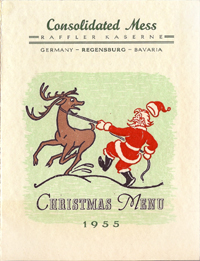
| (Source: Christmas Menu 1955, issued by the Raffler Kaserne Consolidated Mess, via William Beumer) | ||||
|
||||
| LANDSHUT INSTALLATION | ||||
 |
||||
| 1958 | ||||
| (Source: Email from Gary Magruder) | ||||
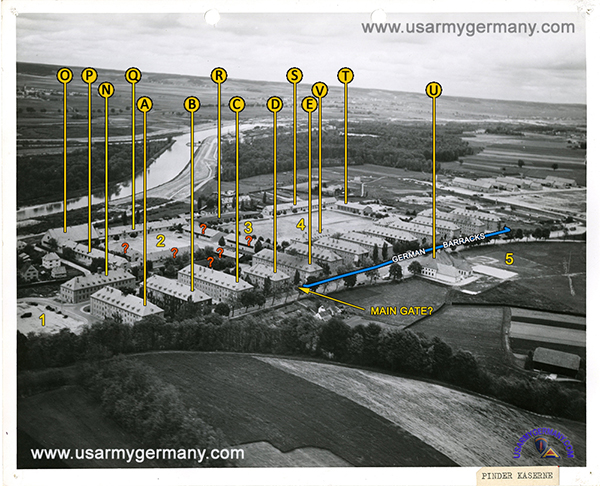
| I was a US Army dependent living in Landshut July 1958 - Sept 1962. I can tell you that the small building labelled with the 2nd question mark from the right was a coal storage hut. The coal serviced a physical plant operation that was located in the several-story deep sub-basement of the building labelled “E”. From 1958-1962, the US Army Military Police unit was located at the Main Gate end of that building. The US Army Post Office was located at the other end of the building on the 1st floor (my father, Capt. James C. Magruder (AG Corps) was the Postmaster while stationed there). The Physical Plant (heating and power production) was operated by German civilians. Daredevil dependents like myself would challenge our courage by sneaking into the coal storage building, climb down the coal piles to the point where small coal cars on a small set of tracks were located to transfer coal beneath the street above and into the furnace/powerplant area under Building "E". There’s an identical coal storage building in the picture at the far end of the parade field just to the right of building "T". In my time, just beyond that building was the fenced boundary of the German military base. The "T" building shown was no longer there in 1958, replaced by a fairly good sized movie theatre. Oh, the "U" building was mostly used as the Officer’s Club, while the closest wing of the building served as the post chapel, as well as occasional playhouse for amateur theatre productions. To this day, I (and my friends) wondered why the coal storage building was on the American side of the fence (?). It definitely solely served the German facility, because it too had an underground coal transport "train" that went south under the boundary fence toward a German army's building with its own basement power/heating plant. It took ALOT of nerve for us American kids to sneak very far down THAT track !!! |
||||
| 1960 | ||||
| (Source: Guestbook entry by Ed Wilson) | ||||
| Wow, a shock to discover you heard of Landshut. My dad was in 2nd Bn 11th ACR the Black Horse. He spent a lot of time doing border guard. I have alot of fond memories of Landshut being a small kaserne. Everyone was like family it seems. My mom and I arrived in Landshut on 7th June 60. We lived in Shoenbrunn Housing across from the kaserne on Niedermeyer Strasse. I went to a small American school there; they had grades 1st thru 8th grade. I attended the 7th and 8th grade there. Those in 9th - 12th grade went to Munich High School. On Pinder Kaserne we had a PX, commissary, tailor shop, snack bar, movie theater, bowling alley and american youth association where we had fun and dances. Also there was a boy scout troop there where I joined the boy scouts. The kids I hung around with played baseball, softball, walked down town to buy lemonada and fire crackers. Oh yes there was an officers club. nco club and enlisted club. Sadly to say the old school I went to, the American Elementary, was demolished years ago and a German apartment complex is there now. But they kept the old playground open so the German kids could play there. While in Landshut we moved from Shoenbrunn Housing to the housing area next to the school called Neidermeyer Housing. We lived facing neidermeyer and a block down from the school. Shoenbrunn and Niedermeyer housing is still there of course, apartments for the German citizens they upgraded them put balconies on them and painted the building. Shoenbrunn housing was small only about 4 24-family building also 6 separate officer apts. Niedermeyer was a much larger housing area. I know Pinder was returned to the German army in 1965 and the 11th ACR went to Fort Riley, Kansas where they prepared to go to Nam. I was on the Babe Ruth baseball team there and we traveled to other kasernes and played ball with those kids ....went to a lot of German fests back then and those German carnivels. I returned to Landshut to visit in 1977 while I was in the Army stationed at Nurnburg. Course the kaserne belonged to the Germans but I visited the housing areas and the school which was still there before it was torn down. I still (visit) Landshut on Google Maps....the kaserne now is German industry stores and shops soccer fields and parks. I had no idea there was a HAWK det there from the 1960s to '80s. When I visited Landshut they would not let me into the kaserne ....but I did visit the gasthaus there lol. Love the German food and their sweet cakes. Oh yes, we also rode to "strass" often - electric driven busses. |
||||
| PASSAU INSTALLATION | ||||
| 1948 | ||||
| (Source: STARS & STRIPES, Feb 8, 1948) | ||||
| The 1190th Labor Supervision Co, commanded by Capt Robert Iman, is located at Passau. | ||||
| 1952 | ||||
| (Source: STARS & STRIPES, Feb 24, 1952) | ||||
| Two peices of commercial property have been derequisitioned and returned to German ownership. The first was a hotel (unnamed in the article) that was formerly used by the International Refugee Organization. The other property was a former Army motor pool which was adjacent to the Wentan Industries manufacturing plant. (The release of this property will allow Wentan Industries to expand by hiring an additonal 250 employees.) Can anyone provide details on the motor pool mentioned in this article? |
||||
| (Source: STARS & STRIPES, Sept 14, 1952) | ||||
| The Passauer Wolf Hotel in Passau was returned to its German owners during a recent formal derequisitioning ceremony held in that city. Lt Col Frederick C. Skillman, Jr., CO of the Straubing Subpost presided over the ceremony. Who has information on the Passauer Wolf hotel and what it was used for by the US Army during the Occupation period? |
||||
| 1954 | ||||
| (Source: STARS & STRIPES, May 2, 1954) | ||||
| The VII Corps CG, Maj Gen Henry I. Hodes, recently visited the Passau Detachment of Company B, 485th Engr Cbt Bn. (Webmaster note: according to a Feb 1955 article in the S&S, the unit was still in Passau in 1955 but now part of Co B, 237th Engr Cbt Bn.) Who knows where in Passau the Detachment was located? |
||||
| 1956 | ||||
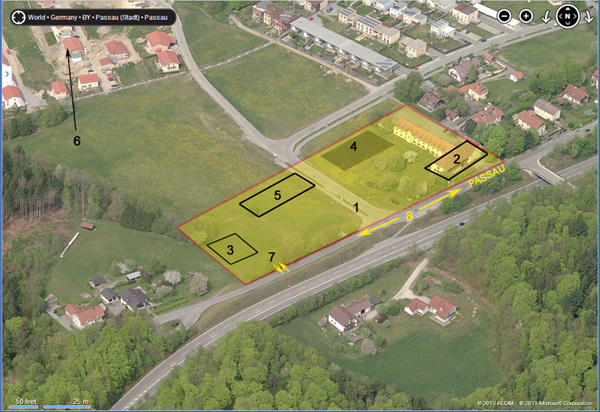
| (Source: Email from Bill Beumer, Passau Det, Co B, 237th Engr Bn) | ||||
| It's been awhile since I last looked at the 237th Engr Bn. page on the site. See where someone wanted to know the location of B Co's Detachment in Passau. Went to Google Earth and got a picture. It was located west of town. Have drawn an outline where it was located and how in was laid out in the 1956-57 time frame. As best as I can remember. Has been 57 years and a lot of water under the bridge since than. Still a few familiar landmarks so made it easier to location. I believe it had been some sort of small German Airfield during WW2. When we were in town and would get a Taxi to go back to camp we would tell the driver to take us to the Flugplatz. They all knew where we wanted to go. Wish I had been more interested in the history of the base. Hope this will be of some help....Regards....Sp3 Bill Beumer formerly of 237th Engr,Bn.(C) B Co. HQ platoon, Passau, Germany |
||||
| Related Links: Pioneer Kaserne (Regensburg) Facebook Page 368th Fighter Group Tribute (includes information and images from their stay at Straubing Army Air Base in 1945/46) Mansfield Kaserne, 11th ACR Photo Album, 1959-62 11th Armored Cavalry Regiment, Page 1 - Straubing, Landshut and Regensburg from 1957 to 1964. (Page 3 - Fulda Gap from 1972 to 1994) Aviation Company, 11th ACR - a web site dedicated to the soldiers of Aviation Company, 11th Armored Cavalry, Straubing, Germany, and their families and friends. Army Aviation in Regensburg - a page (German language) by Egolf Biscan who is documenting the aviation history of Regensburg. |