| If you do NOT see the Table of Contents frame to the left of this page, then Click here to open 'USArmyGermany' frameset |
||||||||||||||||||||||||||||||
|
320th ASA Battalion |
||||||||||||||||||||||||||||||
|
|
||||||||||||||||||||||||||||||
|
||||||||||||||||||||||||||||||
|
|
||||||||||||||||||||||||||||||
| 312th Army Security Agency Battalion | ||||||||||||||||||||||||||||||
| 312th Communications Reconnaissance Battalion | ||||||||||||||||||||||||||||||
| 1955 - 1956 | ||||||||||||||||||||||||||||||
| In June 1955, the 312th Communication Reconnaissance Bn was activate and assigned to Bad Aibling Kaserne in Bad Aibling, Germany. When the Austrian peace treaty was signed in September 1955, the majority of ASA troops that had been stationed in Austria were reassigned to Bad Aibling. With their arrival, the 312th CR Bn was formed with these personnel and from elements of the 328th ASA Company already stationed at Bad Aibling. The newly formed battalion absorbed the previous mission and functions of the deactivated HQ Army Security Agency, Austria. The 312th CR Bn had operational detachments located in Germany, Austria (only temporarily until all US troops left Austria) and Italy. On 1 July 1956, the 312th CR Bn was redesignated as the 312th ASA Bn. The battalion remained in Bad Aibling until 15 October 1957 when it was deactivated and replaced by the 320th ASA Bn (Ops), a TDA unit. |
||||||||||||||||||||||||||||||
| 312th U.S. Army Security Agency Battalion | ||||||||||||||||||||||||||||||
| 1956 - 1957 | ||||||||||||||||||||||||||||||
| MISCELLANEOUS INFORMATION The information that I have collected so far on the 312th/320th battalion indicates that the formation of the battalion was accompanied by the reorganization/redesignation of its subordinate units:  328th CR Co → 328th ASA Co → 180th ASA Co332nd CR Co → 332nd ASA Co → 181st ASA Co 328th CR Co → 328th ASA Co → 180th ASA Co332nd CR Co → 332nd ASA Co → 181st ASA CoThere were also two remote sites (outstations): Det L at Nottau, Germany) and Det P (location unknown, apparently only in operation for a short period?). Can anybody provide details? |
||||||||||||||||||||||||||||||
| (Source: Email from Mike Reilly, 328th C/R Company, 1956-57) | ||||||||||||||||||||||||||||||
| I was assigned to the 328th C/R Company at Bad Aibling in April 1956 as a MOS 988 (Russian). After a few weeks I was sent to Det L of the 332nd C/R company located in the village of Nottau near Passau. While I was there (Jun 56-Nov 57), the companies' designations changed to 180th ASA and 181st ASA companies, respectively. Both companies were part of the 312 C/R Battalion initially and became the 320th USASA Bn when I left. Later the detachment became K-2 Co A 318th USASA Bn. A number of us are still in touch; we have a Nottau group at http://groups.yahoo.com/group/Nottau/. It is restricted to those who were stationed Nottau. There is also a 328th C/R group at http://members.aol.com/marks84609/328th/328th.htm Several of the original group from Wels are part of our group along with people who served years after I left. We received per diem and lived in local farm houses or the Gasthaus. We had perhaps 30 personnel at any one time. We had daily courier service to and from Bad Aibling and a mess tent for meals. The 328 mission was Russian; the 332 Hungarian. The 332 had 058s along with voice. The K-2 unit was only Russian. MOS 058 - CW Intercept (these "morse" intercept operators were commonly called 'ditty-boppers'; designator later changed to 05H) MOS 057 - Voice Communications Intercept, later became MOS 98G. |
||||||||||||||||||||||||||||||
 |
||||||||||||||||||||||||||||||
| 320th Army Security Agency Battalion | ||||||||||||||||||||||||||||||
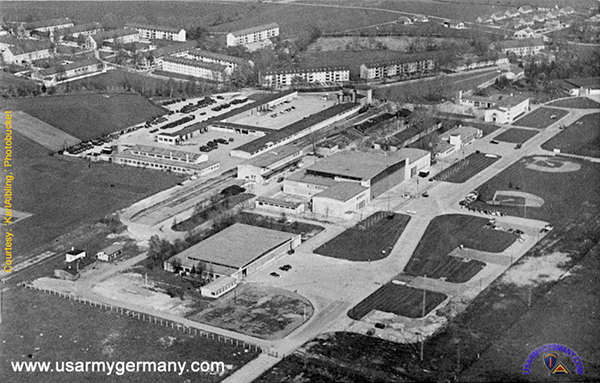 Aerial photo of technical area, Bad Aibling Station |
||||||||||||||||||||||||||||||
|
||||||||||||||||||||||||||||||
|
||||||||||||||||||||||||||||||
| 1957 - 1966 | ||||||||||||||||||||||||||||||
 320th US Army Security Agency Bn DUI 320th US Army Security Agency Bn DUI |
||||||||||||||||||||||||||||||
| In June 1955, the 312th Communications Reconnaissance Bn was activated and assigned to Bad Aibling Kaserne in Bad Aibling, Germany. When the Austrian peace treaty was signed in Sept 1955, the majority of ASA troops in Austria were reassigned to Bad Aibling. The Bn absorbed the mission and functions of HQ Army Security Agency, Austria and had operational detachments in Germany, Austria and Italy. On July 1 1956, the Bn was redesignated the 312th USASA Bn, remaining in Bad Aibling until it was inact on Oct 15 1957. On Oct 15, 1957, the 312th ASA Bn was redesignated as the 320th USASA Bn (Ops) in Bad Aibling. The 328th ASA Co, subordinate to the battalion at Bad Aibling, was inactivated in Nov 1957. The unit's equipment and personnel were assigned to the newly activated 180th USASA Co. (The 328th had been a TOE type company while the 180th was TDA.) The 180th operated one if not more outstations, including Det L at Nottau near Obernzell on the Czech/Austrian border. Early in 1958 all the detachment's personnel and mission were transferred to the 318th USASA Bn and the det was redesignated as Det K-2, Co A, 318th USASA Bn. In 1960, the 320th USASA Bn comprised the following subordinate units: |
||||||||||||||||||||||||||||||
|
||||||||||||||||||||||||||||||
| The 320th ASA Bn was inactivated on June 22 1966; concurrently, the 18th USASA Field Station was formed at Bad Aibling. | ||||||||||||||||||||||||||||||
| (Source: Email from Jim Sessoms, Memmingen Det, 320th ASA Bn, 1960-65) | ||||||||||||||||||||||||||||||
There is a little bit of incomplete/inaccurate info herein about the 320th ASA Bn DF detachments in the 1960-65 time period.
I arrived in BA in Mar 1960 and was assigned to the Detachment in Memmingen in May of that year. At that time, it was Det D, but was never, as listed, located on the "Fliegerhorst" at Memmingen. Det personnel lived in a combination of a two-story house located in the town of Memmingerberg and in a nearby Gasthaus named the "Lowen." The operational site was located on the far side of the airfield and we had a choice of traveling 4 or 5 miles through the country or going across one end of the runway and with a provided key, exit the base on the other side and pass through farm fields to get to the site. Other sites were: Det A - BremerhavenDet B - Sinzig (near Bonn)Det C - Malmsheim (near Stuttgart)When Det C closed (unknown date), we got some of their personnel and Memmingen then became Det C. In Oct 63, I was reassigned to Det B and then sometime between Oct and Dec of 64, Det B was turned over to the control of Herzo and I returned to BA in Dec of 64. ASAE also controlled some DF Sites in Italy that participated in the European HFDF Net, taking DF "Flashes" from BA via morse and reporting results back the same way periodically throughout the day. Hearability played a large role in success or failure. We keyed the 1000 Watt transmitter that sat in a bldg atop Irschenberg (just off the Autobahn on the way to Munich) from the Ops Bldg in BA. (Correction: I was wrong about the 1000 watt transmitter being on top of Irschenberg. There were two 450 or 500 watt transmitters, a primary and a reserve. I want to say they were BC-610s, but can't be sure. The 1000 watt transmitter we went to later was located in the Signal Maintenance shop in BA Operations and the signal remoted to the antennas atop Irschenberg.) In Jan 65, I went TDY for 3 weeks to the USAF FLR-9 Site in San Vito, Italy, to do a hearability test to determine whether or not we could close the Army DF Site at San Pancrazio and use a dedicated position in San Vito to take its place. Both of those actions happened. I also returned to Memmingen from 68-71 and would be glad to answer any questions that my memory supports.Great effort on the whole web site. Jim SessomsBA 60-65 (E-2--E-6) & 68-71 (E-7)FS Augsburg 74-76 Augsburg/Wobeck (E-8)FS Berlin 76-77 (E-8) HQ USAREUR 83-86 (Civ) ADDITIONAL INFORMATION: The 186th ASA Company was a Special Identification Techniques (SIT) Company. That's Direction Finding (DF) and Radio Fingerprinting (RFP) -- that's all we did. The DF dets were assigned to the 186th. The detachments were later moved to the 180th Co /Co A of the 320th ASA Bn after the 186th was discontinued. The 318th & 319th ASA battalions both had their own DF Dets. I don't remember locations, except that I know at one time Herzo owned the Det at Sinzig. BA transferred it to them late in 1964. As the NCOIC at the time, I remained a couple of weeks to help transition and returned to BA in Dec 1964. The location of a DF detachment depended on several factors, including logistics, land rights and most importantly, hearability. Also important was how their line bearings would fit in with those from their other Dets to triangulate and "locate" the target. Angle of intersection was important because it helped to increase accuracy of the location. In Memmingen, we had excellent hearability and could work just about anybody's targets from there -- and I suspect that's why Herzo (318th ASA Bn) decided to collocate a Det with us -- plus we had all the primary logistics problems worked out. Though their folks lived in another town, their equipment was set up right next to ours. We co-existed quite well! The primary reason for locating Dets on the border was to intercept line-of-sight comms in the VHF range -- its called "proximity and that's why we built towers and put sites on mountains -- to gain that height needed for line-of-sight intercept. To my knowledge, the 320th had DF sites only, not any collection sites like Wobeck or Meissner or Schneeberg. At one time, there was also a DF site in Pocking -- just a little S. of Passau. The NCOIC was a Staff Sergeant named Joseph McMoneagle, later a Warrant Officer and now a published author. I was sent there TDY for several days from Memmingen to help them clean up their admin activities -- that had to be sometime in 1969 or 1970. I only remember the timeframe because my wife went with me and we got married (in Memmingen) in Dec 1968! Wobeck 1974-76: there was an operations compound at Wobeck with an ops bldg, maint bldg, admin bldg (all temporary) and a motor pool area. All potable water had to brought in by the local fire dept. There was also a separate ELINT van (NSA Research project) operated by 502d Gp soldiers who were attached to us for admin. EVERYBODY lived on the economy. That caused lots of problems, as we military bosses had no legal authority to inspect anyone's living quarters. It was surely a challenging assignment, especially when our bosses in |
||||||||||||||||||||||||||||||
| 1962 | ||||||||||||||||||||||||||||||
| (Source: Email from William Moloney) | ||||||||||||||||||||||||||||||
Stationed in BA from June 1962 to June 1964, was a ‘ditty bopper’ assigned to Company A, I believe I remember ‘Trick #3’. Sgt Castle was our trick chief and Reilly Self was the assistant TC. He was GOOD as an 05H! (Met him years later at Ft. Devens on a refresher course while I was in the reserves. He was an E-9 at Devens. |
||||||||||||||||||||||||||||||
| (Source: Email from Jim Holmes, 320th ASA Bn, 1963-65) | ||||||||||||||||||||||||||||||
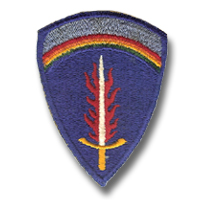
| I also served in the 320th ASA in Bad Aibling Germany from mid-1963 (probably July) until December-1965. When I arrived we wore the 7th Army flaming sword patch (Webmaster note: Jim actually means the USAREUR patch) and shortly thereafter switched to the current ASA patch. I remember the artillery bty that was also assigned to BA would sometimes have their missiles pointed at our OPs building, a former Luftwaffe hanger. We also had a remote site about 10-20 miles out of the post but I can't remember what it was called. Midway during my tour, a train that ran thru the middle of the Kaserne jumped the track and blocked the road. BA was a good post to be stationed at and the Germans were for the most part friendly with the Americans. |
||||||||||||||||||||||||||||||
| (Source: Email from Mike Tarantino, 320th ASA Bn, 1963-64) | ||||||||||||||||||||||||||||||
| You asked if the 320th USASA Bn wore the 7th Army patch. I believe I can help you answer that question. I served in the ASA from Sept 1961 to June 1964 as an 059. I arrived in Bad Aibling in July 1963 on a PCS from TUSLOG Det 4 in Sinop, Turkey. When I arrived, the 320th USASA Bn was wearing the USAREUR flaming sword patch. The 320th's mission was to support the III Corps in CONUS which had pre-positioned equipment (e.g., tanks, APCs, artillery, etc.) in West Germany and would be brought over to reinforce the V and VII Corps which were supported by the 319th and 318th USASA Bns, respectively. In the Fall of 1963, the 320th USASA Bn changed over to the new ASA patch and the new Intelligence & Security Branch brass. Prior to that time, we wore the Unassigned Branch brass from our Basic Training days. I assume the 318th and 319th Bns also changed over patches and brass at the same time. In 1963, the 320th USASA Bn was composed of three companies: HQ Co, A Co, and B Co. I do not believe that the 180th, 181st, or 186th ASA companies existed at that point in time. We also had four DF outstations referred to as DETs A, B, C, and D. The only other unit at Bad Aibling was a Hawk SAM firing Battery. In the winter of 1964, Ron Tarr and I plus three or four 058s were sent on TDY to Baumholder for a week to an inactive OPS site to test its suitability as an intercept site for our targets. I don't believe anything ever came of that test. |
||||||||||||||||||||||||||||||
| (Source: Email from Dick Beers, 320th USASA Bn, BA & Project SOUTHGATE) | ||||||||||||||||||||||||||||||
| After training at Fort Devens, I was originally assigned to the 320th in Bad Aibling from September 1963 for about 4 or 5 months then went to Project Southgate, the NSA operation located several miles away from the base in Bad Aibling. Served as an 056 and 057 DF and Special Ident Op until overseas discharge in September 1965. I arrived in BA as a freshly minted DF op. The first couple of months I ran the DF net and did radio fingerprint stuff in the main ops building for the 320th. The ops building was the old Luftwaffe hangar for the jets towards the end of WWII. The radomes (that you can see in the satellite photo on GOOGLE maps) were not there until after I left in 1965. All that was there at that time were acres of rhombic antennas. All the DF work was done at three out stations. The one I remember, because I partied out there a few times, was in Memmingen. The actual DF site was on a Luftwaffe base. The ops lived (and partied) in a private residence. Also remember at the far end of the BA base, I think next to the infirmary, was a Nike or some such (air defense) battery.… At some point several months into my tour the need arose for a DF op for Project Southgate, the NSA top secret mission located several kilometers away from the main base. As I recall we operated out of 3 or 4 expandable vans in a small compound with generator power and an armed guard at the entrance.… One other bit about Southgate is that there was Brit DF and intercept site about 200 yards across a field from us. Most of my memories of my 2 years in BA are a bit hazy at this point but that's what I do remember. |
||||||||||||||||||||||||||||||
| 1965 | ||||||||||||||||||||||||||||||
| (Source: Email from Brian V., 320th USASA Bn, BA) | ||||||||||||||||||||||||||||||
| I'm an old ASA dog, 988 (Voice Interceptor) with a language digit. Served at Bad Aibling 1965-67 incl. during the transition to the 18th Field Station. As I recall, the Company alignment didn't change - Hq Co, 320th USASA Bn; and A & B Companies. Other units present on post were a detachment of Brits, unk. unit designation (they were asigned to one of the super-hush Projects "out back" toward the rhombic antenna field; I never went out there because...."no need to know! There also was a HAWK missle battery providing our cover. Sorry, "B" Btry, that's all I remember, never knew their parent outfit. (Webmaster note: that would actually have been "C" Battery, 6th Missile Battalion, 62nd Arty (HAWK).) I recall dealing with only one DF Branch on my job in the OPS Bldg. ADDITIONAL INFORMATION Responses to several questions: [1] Organization of the 320th: As I recall, the Company alignment didn't change. Other units present on post were a detatchment of Brits, unk. unit designation (they were assigned to one of the super-hush Projects "out back" toward the rhombic antenna field; I never went out there because.... no Need To Know!) and a Hawk misslie battery providing our cover. Sorry, "B" Btry, that's all I remember. Never knew their parent outfit. [2] Were the 180th & 181st ASA there at the time: Never heard of 180/181st ASA. If you mean the units that were formerly in Austria, there could have been some element of them among us, but if so it was unknown to me. [3] D/F DETACHMENTS: Yes, I recall dealing with only one DF Branch on my job in the OPS Bldg. When you say "Dets", does your info indicate there were more, for ex. elsewhere on base? Only one that I was aware of. [4] Redesignation of 320th as 18th Field Station: I recall no appreciable difference in the way the place ran after re-designation, but since I had nothing to do with Admin stuff and due to passage of time, it's prob. better if I don't officially answer that one. Did the intercept described before. Company A did hi speed and automatic intercept as well as automatic transmission. |
||||||||||||||||||||||||||||||
|
||||||||||||||||||||||||||||||
| 180th ASA Company | ||||||||||||||||||||||||||||||
| (Source: Email from Larry Uloth, 180th ASA Co, 1960-63) | ||||||||||||||||||||||||||||||
| I was a morse intercept operator in Bad Aibling during this period. I was there for the Cuban crisis, the Berlin Wall and several other interesting times. We were there to keep track of the various Russian armies by way of their radio transmissions. I waded thru more of this site and realized that you had nothing on the 180th, so here goes. I entered service in 1959, spent most of year after basic at Ft. Devens. I was stationed to 180th USASA Co, Bad Aibling, in the Summer of 1960 as an "058 morse intercept operator" on trick #3.
Our primary mission was tracking various Russian armies by use of intercepting their transmissions, RDF and RFP monitoring their traffic, copying it and sending it up the line. In early 1960 two cryptos, Mitchell and Martin at NSA, defected and we waited for the other shoe to fall. Prior to this time we had them cold, we knew where they were, where they were going, what frequencies they were going to as well as what the new call signs would be. We knew their operators so well that they were like old friends. Then December 25th came and all the armies disappered for several weeks. We heard nothing and were on operations lock down, no leaves, slept in the ops building, manning all radios 24/7. This went on for some 30-60 days. When they gradually came back up it was all different -- we had to re-identify them all and were unable to follow them when they changed freq/cs just had to find them all over again. One army we lost for almost a year . . . and when I and another op found them, the folks at NSA didn't want to belive us. We got in quite a bit of travel because we would ID them without permisson. But eventually they came reluctently around to our way of thinking. Things were calm until August 13, 1961 when the Berlin Wall went up. While that was scary and interesting it was not as bad as December 1960. I should tell you about Trick #3. There were about 50 of us, and we were definitely bad boys. i.e. a new Colonel came in and thought we should stand inspection and march from our barracks to the ops building in cadence. That lasted about a month of us marching past his house chanting "dirty" jody calls. One of our foreign launguage specials once marched us on to base from the gasthouse we had been at all day, in the costume of "little larry" singing in russian. Needless to say that did not win us any kudo's. Oh yes we wrote a newletter monthly called the Trick #3 Terror, it was done unknown to the brass and we used it to badger and out them. We told all, who was sleeping with whose wife or girl etc. We also told the stories of "little larry" the peanut vendor who was crippled but whenever there was a need he turned into Captain Victory who wore a russian uniform with a great red cape and always saved the world at the expense of several virgins. The worst time was in October of 1962 when JFK and Khrushchev went eye to eye over the Cuban missles. Again we were in ops lockdown, but this time all of our families were set up ready to leave and head west, while we were ready to head east. We really thought that the balloon was going to burst and we would have the next war. Then the President was assassinated in November of 1963, but by this time both us and the russians were smart enough to take it easy. These years were a fantastic tour there. The exchange rate was 4 to 1, beer was cheap and it was a beautiful part of the world. I left Bremerhaven on New Years Eve 1963 and road out the storms of the North Sea drinking Vodka and playing cards with the porters since everybody else was sea sick. Reassigned to "The Farm" Vint Hill station great folks, beautiful country but an unbelieveable amount of Chicken xxxx coming down from DC only 35 miles away. Those Generals really liked to come down for the deer hunting, quail hunting and golf in the guise of quote "inspecting" us. It wound up to be more than I could take and after six years I went my way. However I still fondly remember those days at Bad Aibling. ADDITIONAL INFORMATION Company B (mine) did the intercept described before. Company A did hi speed and automatic intercept as well as automatic transmission. Just so you know we had a full complement of special vehicles which made it so we could become a mobile unit in case of war. On occasion we had detached units for special purposes, however these were usually tempory units. Some worked with the West German Army which was a hoot... they had beer in their mess hall, were allowed to wear their hair long, and talk back to their officers. |
||||||||||||||||||||||||||||||
| (Email from Brooke Anderson, 180th ASA Co, Bad Aibling, 1960-61) | ||||||||||||||||||||||||||||||
| Just found your web site and read it with great interest. Thanks for your major effort to bring this history to some sense of order. I was stationed at Bad Aibling, 320th USASA Bn, and a member of the 180th Co. I read Larry Uloth's comments on the 180th, and wanted to add some additional details. The Martin and Mitchell thing was really big, particularly after their Moscow news conference, in which they really outlined everything we were doing, and by name. It was quiet, but as Larry says, it finally got noisy again. Later on, while looking through the magazines at the Snack Bar, I found one entitled "Two-Fisted Tales" or some such macho title, but one article on the front cover grabbed my attention. It was about the ASA, "...the 8,000 hand-picked men whose existence the Pentagon refuses to admit." In it, Martin and Mitchell's conference was reported verbatim, so as we practiced daily security in our jobs and lives, the information we protected could be bought by anybody on base for 50 cents! As to the marching: I started on Trick Three, but was transferred to Trick One later. Don't know about Trick Three marches, but I do know that I marched the T1 troops to ops for several nights of mids, doing count-cadence-count in Russian as we passed dependents' quarters. Years later CSM John Hipsley (ret.), who was and is a good friend, and was our trick chief then, reported that some of the old-timers really appreciated our being so "shaped up." So much for protest. The little Larry story is more complex. It actually started in the fevered minds of several Trick Three Terrors involved with the newspaper, and evolved into a short play and long march. Larry Limonade, crippled boy peanut vendor, would be hassled continuously by local ruffians. Whenever this became unbearable, he would utter the magic word "Helles!" and turn into the caped crusader, Kapitan Bier. This was based on the Captain Marvel series, hence the red costume. If Kapitan Bier defended anything it was his voracious appetite for beer and babes - especially at pajama parties. In order to introduce him to the world, a short play was presented in a back room at the Last Chance, and then more than one Maxlrainer was downed as the reviews were awaited. The evening ended with Kapitan Bier marching the troops back to the station through the main gate, to the consternation of the Officer of the Day, who, by late night, had little sense of humor left. Hardly an important part of defending the free world, but we did have a great time doing it, and, more importantly, we all had a great time at BA. It was a special time for us all, and many good - and lasting - friendships were made. Sorry today's young folks don't have a similar opportunity to serve their country. Thanks to Larry Uloth for remembering the 180th, and to you for your fine efforts and accomplishments. |
||||||||||||||||||||||||||||||
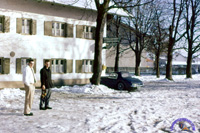
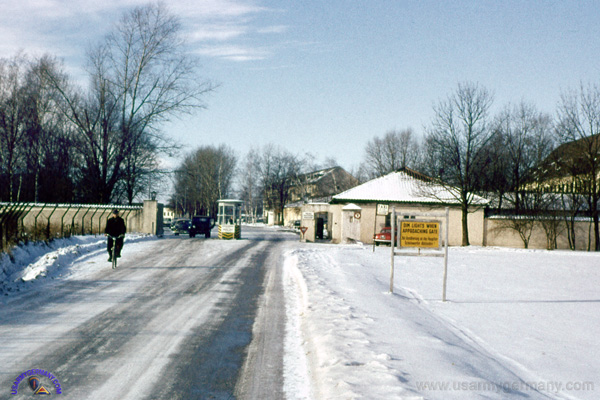
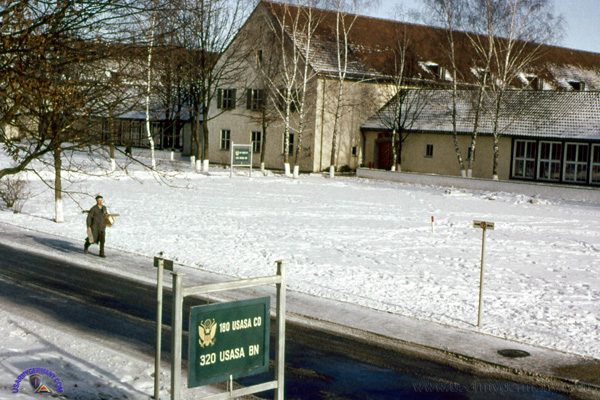 181st USASA Company building, 1958 (Walter Cline) |
||||||||||||||||||||||||||||||
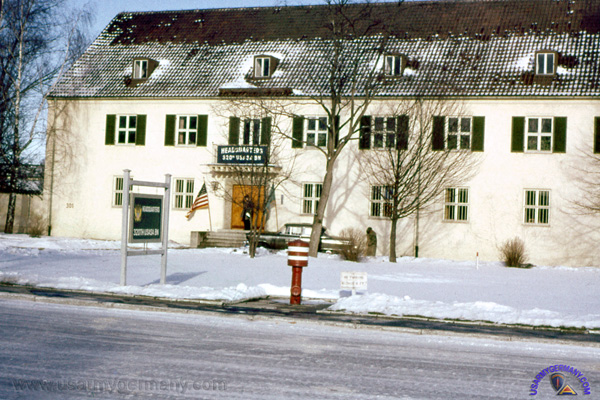
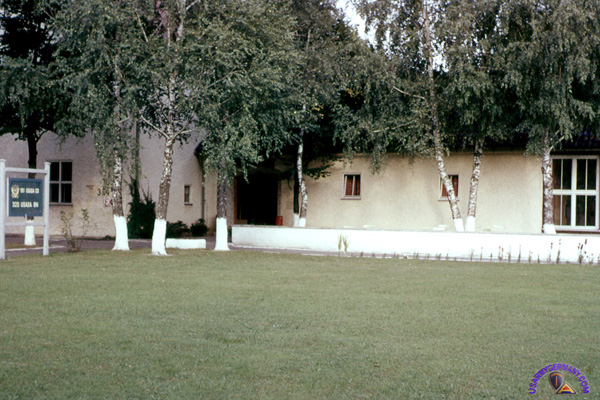 Entrance to 181st USASA Company building, 1958 (Walter Cline) |
||||||||||||||||||||||||||||||
| 181st ASA Company | ||||||||||||||||||||||||||||||
| 1958 | ||||||||||||||||||||||||||||||
| (Source: Email from Walter Cline) | ||||||||||||||||||||||||||||||
| On the 15th of September I signed in on your guest book with a short email about me being stationed at Bad Aibling Kaserne in the late 1950's. I said I had some pictures from my stay there. I finally dug them up. I arrived at Bad Aibling in Jan. 1958 and was assigned to the 181st USASA Co as a 058 operator. Sometime in the spring of 1959 I was transferred to the 180th USASA Company. I left Bad Aibling in Jan 1960 for transfer back to the USA. ADDITIONAL INFORMATION The Bad Aibling base was a good place to spend 2 years. Beautiful countryside and the base was more like a small college campus than most Army bases that I've seen. It had been a Luftwaffe airbase during the war. The barracks were mostly 2 man rooms. Once you got use to the rotating shifts, it wasn't a bad life most of the time with a good bit of free time between shifts. The mission of the 181st company was to monitor the east European countries. The 180th responsibility was mostly the Russians. Both companies (180th & 181st) operations were in the same building, which had been a hangar during WWII. It was probably the main operations hangar for the Luftwaffe. I think it was enlarged or at least upgraded into a suitable building for our needs. The portion of the building that was the hangar for aircraft was used to park our mobile operations trucks. They were kept ready to go at a moments notice. This building was very secure. We were not allowed even to take pictures of it. One day I noticed several of the mobile operation trucks were gone. I found out that some of the guys from our unit were sent to Lebanon to support the Marines that were sent to secure the Beirut airport. Our guys were there on the airport property for several months in that support role. The position that I was assigned to was monitoring the Hungarian Secret Police HQ in Bucharest. The previous operator who broke me in on the position told me that he was on duty monitoring them when the 1958 Hungarian revolution started. When the protesters starting breaking into the Secret Police HQ building the radio operators went a little crazy, sending all kinds of traffic, a lot of it in the clear. He said things got kind of crazy, then they went off the air very suddenly. It was a while before they got back on the air. After the Russian troops came in and took over. Another thing that happened before I came to BA was the launch of Sputnik in Oct 1957. A friend of mine that was there then said he was on duty and heard the launch. He was a Russian voice monitor. He covered a lot of the Russian rocket launches. |
||||||||||||||||||||||||||||||
|
||||||||||||||||||||||||||||||
| 186th ASA Company | ||||||||||||||||||||||||||||||
| ADDITIONAL INFORMATION (Notes - not yet confirmed) The 186th USASA Company at Bad Aibling Station (BAS) was a DF/RDF unit and operated 4 detachments (Bremerhaven, Bonn, Nuernberg and Memmingen). The 186th was disbanded in 1961 (June?) and the unit's personnel transferred to the 180th USASA Co, also at BAS. |
||||||||||||||||||||||||||||||
|
||||||||||||||||||||||||||||||
| Related
Links |
||||||||||||||||||||||||||||||
|
||||||||||||||||||||||||||||||
 .
.

 Bremerhaven Det