| If you do
NOT see the Table of Contents frame to the left of this page, then
Click here to open 'USArmyGermany' frameset |
||||||||||||||||||||||||||||||
|
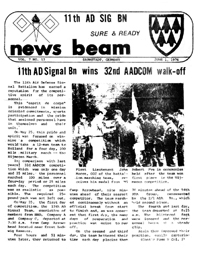
11th Air Defense Signal Battalion |
||||||||||||||||||||||||||||||
|
|
||||||||||||||||||||||||||||||
|
||||||||||||||||||||||||||||||
|
|
||||||||||||||||||||||||||||||
| History | ||||||||||||||||||||||||||||||
| 7th US Army Signal Battalion | ||||||||||||||||||||||||||||||
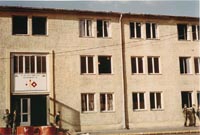
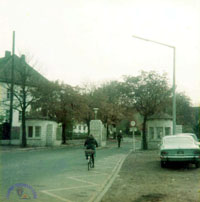
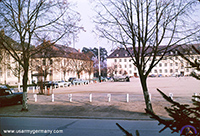
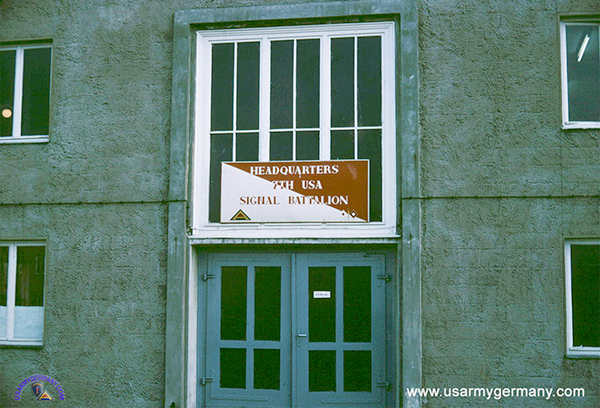 Entrance to HQ building, 7th Army Signal Spt Bn, Kaiserlskautern (Bill Feissner) |
||||||||||||||||||||||||||||||
| 1958 - 1992 | ||||||||||||||||||||||||||||||
 11th AD Signal
Battalion DI
11th AD Signal
Battalion DI |
||||||||||||||||||||||||||||||
| (Source: 11th Signal Battalion Unit History) | ||||||||||||||||||||||||||||||
|
||||||||||||||||||||||||||||||
| The 11th AD Sig Bn completed its change-over to the new MSE equipment by April 1991. The digital MSE replaced the analog Army Tactical Communications System (ATACS). The new network operated and maintained by the 11th connected the Fire Direction Centers of the ADA Brigades with the Command and Reporting Centers. The communications between the batteries and battalions was to continue to use the analog communications system until the J-TIDS became available. The battalion remained in Germany providing communications support until the 1992. On 27 October, 1992, the HHC, 11th AD Sig Bn held its deployment ceremony in Darmstadt, Germany. The line units were redesignated and the colors cased: |
||||||||||||||||||||||||||||||
|
||||||||||||||||||||||||||||||
| HHC, 11th AD
Signal Bn was inactivated at Fort Gordon, Georgia 15 January 1993.
The unit's motto was "Sure and Ready". |
||||||||||||||||||||||||||||||
| CORRECTIONS:
Some corrections submitted by Frederick Twombly. - The parts where the units were redesignated are transposed between C Co and D Co. I was in Delta Co. and was redesignated as the 413th Signal Company. At the time we lived on Kaupan Air Station in Kaiserslautern and then moved to Kleber Kaserne. |
||||||||||||||||||||||||||||||
|
|
||||||||||||||||||||||||||||||
| 1967 | ||||||||||||||||||||||||||||||
| (Source: STARS & STRIPES, Jan 28 and April 11, 1967) | ||||||||||||||||||||||||||||||
| 132 house trailers that have previously been used by Air Force families at various bases in France are now being sent to Germany to be used at 32nd AADC remote site. The 41-foot trailers will be used as housing facilities, mess facilities and ready rooms for the various missile and signal units. Almost every battery and radio relay site is scheduled to receive a number of these trailers. They will replace primarily the winterized tents currently used at these sites. Distribution:  7th Sig Spt Bn -- 40 trailers 10th Arty Gp -- 29 trailers69th Arty Gp -- 33 trailers94th Arty Gp
-- 30 trailers 7th Sig Spt Bn -- 40 trailers 10th Arty Gp -- 29 trailers69th Arty Gp -- 33 trailers94th Arty Gp
-- 30 trailersMajor James A. Vardeman is the project officer for the move. A 32-man team led by CWO Vernon Barksdale has been in Frace since last November to coordinate the paper work and movement of the trailers from France to their final destinations. (By mid April 1967, 64 batteries and radio sites had received their trailers.) The trailers (41 feet long, 8 feet wide and 8 feet high) have two bedrooms, a hallway with storage space, combination kitchen-living room, a bathroom, space heaters and built-in cabinets. |
||||||||||||||||||||||||||||||
| 11th Air Defense Signal Battalion | ||||||||||||||||||||||||||||||
| Kaiserslautern | ||||||||||||||||||||||||||||||
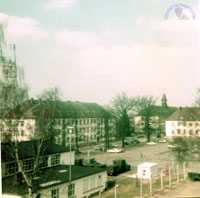
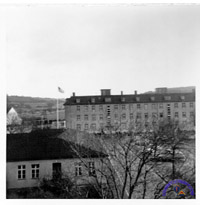
 Headquarters building, 11th AD Sig Bn, Kleber Kaserne, Kaiserslautern (Mark Hageter) |
||||||||||||||||||||||||||||||
| 1971 | ||||||||||||||||||||||||||||||
| (Source: STARS & STRIPES, June 29, 1971) | ||||||||||||||||||||||||||||||
| (According to personnel of the 11th) The 11th Air Defense Signal Battalion is the only tactical signal battalion outside of Vietnam that operates on a 24 x 7 basis. The battalion is responsible for providing reliable, flexible communications support to the 32nd Army Air Defense Command over a 50,000 square mile operational area. The unit maintains 34 separate locations throughout southern Germany -- operating 79 radio relay systems and 2 troposcatter radio communications links. In addition to operating communications links, the battalion provides direct support maintenance of all signal and most electronic equipment utilized within the battalion. The DSSA (direct support supply activity) of the 11th AD Sig Bn stocks more than 6,000 separate repair parts. The Radio Relay School run by the Bn in Kaiserslautern provides three courses: -- a one-week site chief refresher course;-- a one-week orientation course for signal officers new to the command;-- a three-week operator's course.The school was founded in 1965 and has had more then 1,700 students take its courses. The 11th AD Sig Bn uses communications equipment that is different from any other used by the US Army. The Bn uses "F" Band equipment linked to AN/TRC-24 radios (see NATO Radio Bands). (Therefore there is no interference with German military or commercial stations.) The System Control (SYSCON) section is the heart of the communications network. The staff of this section is involved in realigning and re-engineering systems to meet the constantly changing needs. The battalion operates 11 communications terminals and 13 radio relay sites that provide link-ups between the missile sites, control centers and headquarters. Radio relay sites are typically located on mountain topsand manned by 5 to 15 military personnel. Site chief is an E-6. ll of the radio relay sites are named after automobiles, such as Ford, Morgan, and Triumph. Radio Relay Site Triumph is located near the village of Eckersweiler. It is manned by a site chief and 7 EM. |
||||||||||||||||||||||||||||||
| 1972 | ||||||||||||||||||||||||||||||
| (Source: Email from John Welch) | ||||||||||||||||||||||||||||||
| I want to congratulate you for the work that goes into keeping the history of USAREUR alive. It is remarkable to think about the national resources it required to protect freedom and eventual defeat the Soviet Union through a commitment to readiness ($) that they eventually could not match.
My early days in the Signal Corps were as a young officer in 32d Army Air Defense Command. I was a history major in college but the Army in their way of doing things decided I would be a Signal Officer. It served me well for 27 years where a career was capped off with both battalion and brigade command before my retirement in 1998. My first assignment was as the signal officer for the 6th Battalion 62d Air Defense Arty (Hawk) with a headquarters at Spangdahlem AB and the Battalion Control Center located about 20 miles north of Bitburg at Balesfeld. I arrived in Feb 1972 and was a brand new second lieutenant that was being assigned to a captain's position as both the battalion signal officer and in fact what amounted to being the platoon leader for the highly disperse signal soldiers operating the multichannel radio relay equipment at the the BOC and the four firing batterys. USAREUR was still much in the shadow of Vietnam at this time, there were no facility renovation programs, drugs were an issue, race relations were not good and USAREUR was at a low ebb. It was a challenge. I was in the 6/62d ADA (later redesignated 2d Battalion 62d ADA in late 1972 or during 1973). I learned so much but without a senior NCO to support my most critical responsibility of the ensuring the reliability of the multichannel radio relay systems in the Battalion and our shot to the Missile Control Center at Erbeskopf, it wore me down. I did pursue and gain a reassignment in January 1974 to the Headquarters of the 11th Air Defense Signal Battalion at Kapaun Barracks in Kaiserslautern. I became the SYSCON Officer for the battalion for the next 19 months. The Battalion SYSCON, as all the veterans of the battalion well understood, maintain the status of all radio systems as reported from the designated control terminal within each of the line companies. It was me that had my SYSCOM operators constantly calling to get more and better information during radio system outages because I was the guy that stood before the battalion commander in the morning to explain every outage and every detail. I was frequently armed with less than defining reasons as "bad wiring". I knew bad wiring was a defense mechanism when the site did not know what caused a system to come back on line but had to contort the all dreaded Reason for Outage or be required to provide a detail outage to report to explain what they could not explain in the first place. The good news was that the "bad wiring" RFO was not uncommon but generally reasonable explanations were given. It was a leadership lesson for me that it was my job to take the butt chewing from the battalion commander for not getting better information and a subsequent butt chewing from a company commander requiring detailed outage reports. I left the battalion in July 1975 to return to schooling at Fort Gordon and subsequently a multi-service telecommunication staff officer course at Keesler AiFB, Biloxi, Ms. My wife and I missed Germany. I made a fairly bold decision to travel to Washington DC to meet with my assignment officer for a review of performance record, as officers are encouraged to do. My other agenda was to have some face to face contact and ask to go back to Germany. The radio system map presented on the 11th Signal Site was very good and reflected history as I heard it in early 1970s as to how things had evolved from the the mid-60s. There was important transition in 32D ADDCOM in the 1970 time frame as the need was seen to bring some air defense coverage back from the border facing East Germany to augment the Air Force fighter bases west of the Rhein (Ramstein, Zweibruecken, Hahn, Bitburg, and Spangdahlem). There were supposed to be two Hawk battalions that came west but eventually only the 6th Battalion 62D Air Defense Artillery made the move in 1970 to Spangdhalem with firing batterys providing overwatch for the fighter bases. There was also the addition of Chaparral-Vulcan units that beefed up the very close range support for the several airbases. This means that systems reaching down towards Munich and Bad Aibling were taken out when 6/62d ADA moved West. The radio system diagram from the mid-1960s did not reflect systems to connect the Battalion Operations Centers to a missile control facility for integrated engagement among the several battalions. There is probably no indication of a system going higher from battalion because this was probably done with leased lines from the Bundespost. Unlike the Hawk units, the high priority of security matters in the nuclear equipment Nike-Hurcules Battalion gave them the benefit of Bundespost landlines that went all the way down the Nike firing battery. There was a bit of a morale problem in the signal section of these Nike Battalions because the tendency was solely use the land line communication and not the more temperamental radio systems. It really made the MOS 31M personnel in these units a bit frustrated and wondering why they were working significant hours around the clock if their talents were not being used. The answer is, as the Nike Units got closer to their annual NATO tactical evaluation, there was a big rush in these units to train with the radio systems because it would be required during the TacEval. I hope you are still out there covering down on this great effort of capturing the history of USAREUR. I grew up in USAREUR as a family member in Frankfurt, Baumholder, and Herzo Base before returning home in 1972 to 32d AADCOM. I will return later to talk more of the signal sites and fill in some pieces for the 1972-1979 period. |
||||||||||||||||||||||||||||||
| ADDITIONAL INFORMATION | ||||||||||||||||||||||||||||||
| My life has traveled through US Army Europe. It started in 1952 as a 4 year old when my dad, an E-5 or E-6 mess sergeant, was assigned to Army Security Agency-Europe at the IG Farben Building. We were there for about a year before ASA stood up a Group Headquarters in Baumholder and my dad went to be the NCOIC of the Group Headquarters Mess Hall. We departed in 1955 but returned in 1960 where my dad was a master sergeant and ran the consolidate battalion mess hall for the 318th ASA Battalion at Herzo Base (as you would know an ASA field station and a Nurnberg subpost). We were three for 5 years. I delivered the Stars and Stripes for 2 ½ years and lived through the USAREUR experience of the Berlin Wall construction and the Cuban Missile Crisis. After college I returned to USAREUR as a 2d Lieutenant, Signal Officer assigned to 32d ADDCOM with the 2nd Battalion, 62nd ADA at Spangdahlem Airbase and subsequently 18 months with the 11th Signal Battalion on Kapaun Barracks in Kaiserslautern (Vogelweh). We went back to the States for the Signal Officer Advanced Course and a follow up technical school at Keesler AFB, Ms. Watching the 1976 Olympics on TV, my wife and I decided we really missed Europe and I successfully obtained an assignment back into USAREUR. I wrote the 11th Signal Bn to inform the XO that we were going back to Europe. The XO contacted 21st Replacement Battalion and got me assiged directly into a company commander position in B Co 11th Signal Battalion at Emery Barracks Wurzburg. After my 18 months of command, and a bit of luck, as a middle grade captain was moved to a major's position in the battalion headquarters (now at Cambrai-Fritsch Kaserne in Darmstadt, as the battalion S-3. We returned to the National Capital Region in July 1979 where I was assigned to MILPERCEN for three years. Because of my assignment within Signal Branch in my last year at MILPERCEN, it was not difficult to get reassigned back to Europe, this time in the 509th Signal Battalion at Camp Darby Italy. Technically, I was an asset of the Army's Strategic Communications Command (STRATCOM) and not USAREUR but the significant part of the job was in direct support of USAREUR. I was the Battalion S-3 and then the Battalion XO in these three years. We returned to the DC area where I was with the Army Inspector General Agency. In 1988 I got promoted to Lieutenant Colonel and returned to Camp Darby, Italy to command the 509th Signal Battalion and be dual hatted as the SETAF G6. I finished command and was sent to Germany for a year to be on the staff of the 5th Signal Command in Worms. After the year, I attended the Army War College at Carlisle Barracks, Pa before again seeking a return to Europe with the 5th Signal Command. I was again successful and returned to Europe with an assignment to Heidelberg as the USAREUR Deputy G-6. I had been promoted to colonel. The job had a complicated title at the time, but to simplify, the entail being the Deputy G-6 to manage the daily operations of USAREUR Signal planning, policy, and services for USAREUR units and garrisons. The G-6 officer, a brigadier general, was dual hatted with his attention split as Commander of the 5th Signal Command and USAREUR G-6. In February 1995, it was my honor to take command of the 7th Signal Brigade in Karlsruhe but with drawdowns in USAREUR, the brigade was also in the process of being relocated to Sullivan and Taylor Barracks in Mannheim. In the midst of getting the brigade with all its soldiers, equipment, and families transitioned to Mannheim, the Brigade was thrust into preparation of evolving contingency plans for deployment to the Balkans as the theater level signal brigade supporting implementation of the Dayton Accords. The brigade deployed in December 1995, some elements returned by June 1996, and with one battalion remaining for a full year. I left the battalion in November 1996 and was assigned as the J-6 Officer for US Southern Command at Quarry Heights Panama. It was a short stay in Panama as US Southern Command, under the 1977 Canal Treaty, was relocating to Miami, Florida. I retired in August 1998. Upon retirement I returned to Hqs USAREUR, Heidelberg as a contractor to the USAREUR G-3 for command and control programs and policy. So, USAREUR is pretty much engrained in me as these jobs took me repeated through the command at every level. In the course of this life, I quit counting trips across the Atlantic (one-way segments) at 105. So, I have taken great interest in browsing through your web pages for the six decades it was my honor to serve USAREUR as a family member, soldier, and contractor. |
||||||||||||||||||||||||||||||
| (Source: Email from Bob Wilkinson) | ||||||||||||||||||||||||||||||
| In reading your site I have some knowledge on some of the "C" Company Terminal Sites as I was the Terminal Officer for the Company. Terminal 52 (Griesheim?) was just outside Darmstadt. Terminal 50 was in Ernst Ludwig Kaserne in the basement of the "C" Company barracks. Terminal 51 was on a hill near the East German border called Wasserkuppe, not too far from Fulda. It overlooked the East German border and at times we could see East German maneuvers going on. Wasserkuppe was the old home of the German Glider School from WW2. When I was there (1972-5), they gave (sold) rides on gliders of which I did partake. While in the air I realized that I could cause an international incident if we landed on the wrong side of the border. Fortunately, we landed on the West German side, but that was the last time I did that. Terminal 51, though a couple of hours drive in my Fiat Special from Darmstadt, was the most exciting of the Terminal sites because of it's location and the beauty that went with a country mountain far from anywhere. In the hotel that I frequented when I spent the nights there, there was a room that had an autographed picture of Neil Armstrong. It was a lovely place back in the 70's. There were many radar under the domes (I think there were three huge domes) so as not to give away what was on the hill/mountain. I took a trip to Europe in 2003 and had a great time. I tried to find the Ernst Ludwig Kaserne in Darmstadt and had a dickens of a time finding it. I went to the Cambrai Fritsch Kaserne and asked the security guards, who were from Poland and somewhere else, where the Ernst Ludwig Kaserne was and no one knew of its whereabouts or had even heard of it. Ernst Luwig Kaserne is not up there with Normandy and the Battle of the Bulge so I guess we are some of the support troops that go highly unnoticed until something wrong happens. 1 Well, I stopped in a car lot, could this be where I bought my 1972 Fiat 124 Special or my 1975 Ford?, and asked for directions. They thought there was this place, just take a left and it should be on your left... And sure enough there it was. They were tearing it apart and turning it in to a performing arts center. I did my stint in Germany for the sake of the free world and ballet is just one of those free world type things. I went on post and even walked in to the building I spent three years working out of. They were tearing apart the inside of the building. I have photos of the Kaserne, the buildings and the inside of at least our building, Company C, 11th AD Signal Battallion(1972-75). Thanks for keeping this thing alive in us. |
||||||||||||||||||||||||||||||
| Darmstadt | ||||||||||||||||||||||||||||||
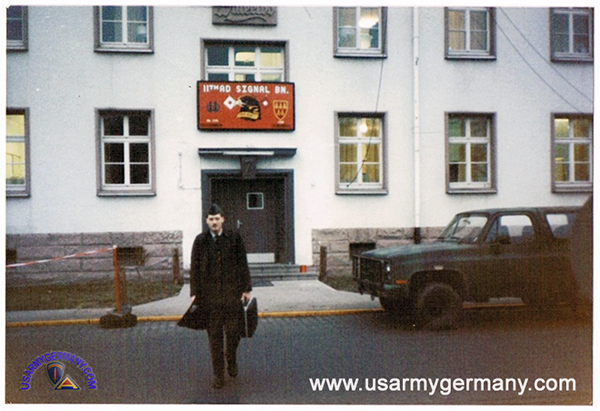 Headquarters building, 11th AD Sig Bn, Cambrai-Fritsch Ksn, Darmstadt (Steven Wessel) |
||||||||||||||||||||||||||||||
| 1983 | ||||||||||||||||||||||||||||||
| (Source: ABOUT TOWN, September 7, 1983) | ||||||||||||||||||||||||||||||
| O'Connor takes top post at 11th Signal Battalion The 11th Signal Battalion provides communications support throughout central Germany. There are 19 radio sites and 17 direct support maintenance activities. The battalion's mission is communications support of 32nd AADCOM and 15 air defense artillery battalions. |
||||||||||||||||||||||||||||||
 |
||||||||||||||||||||||||||||||
| Headquarters/Headquarters Company | ||||||||||||||||||||||||||||||
| 1966 | ||||||||||||||||||||||||||||||
| (Source: Email from Robert Paul, HHC, 7th Army Sig Spt Bn, Apr 1966 - early 1967; B Co, 7th Army Sig Spt Bn, early 1967 - Apr 1968) | ||||||||||||||||||||||||||||||
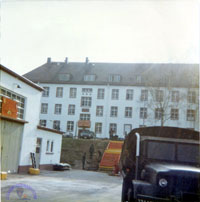
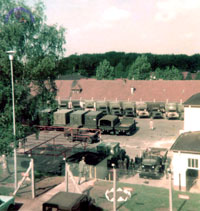
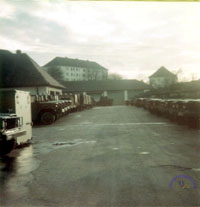
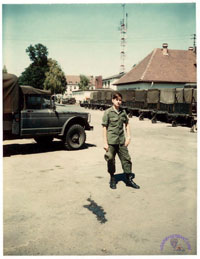
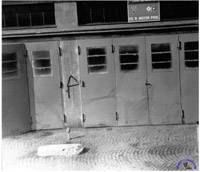
| I was stationed with HHC, 7th Army Sig Support Bn at Kapaun Bks, Kaiserslautern, Apr 1966. I was a mechanic. Went to Etain, France in Dec 1966 TDY with a group to bring back trailers for the relay sites (see STARS & STRIPES information). Then went to B Company at Emery Kaserne in Würzburg, early 1967 ---- was assigned to a mobile mechanic team. We serviced Relays Cadillac, Chrysler, Imperial. Finally, got permanent duty at Relay Chrysler until Apr 1968 when I was sent to Vietnam. Since you are going to post this I will give you some more info ---- the Co B motor pool photo shows the old original german motor pool maint shop from WW2. All the windows in the shop were painted black so they could work at night during air raids. It even had the work pits in the floor to drive the vehicles over so you could work under them. The guy in the photo at Relay Cadillac opposite me on the right side is Gordon Kirchoff----he was the maint team leader. |
||||||||||||||||||||||||||||||
|
||||||||||||||||||||||||||||||
| 1970 | ||||||||||||||||||||||||||||||
| (Email from Robert Simmons, HHC 11th AD Sig Bn, 1970-1972) | ||||||||||||||||||||||||||||||
| I was stationed at HHC 11th AD Sig. Btn from Dec. 1970 to Jan. 1972. I was a 31N20 with a secondary of 31M20. I was to ETS in Apr. of 72 but got an early out because of the modern Volunteer Army. I had some good times there. We ran T40. It was manned by a 31M and a 31N. We worked a week on each shift and I think it was 3 days off. T40 was a short walk behind the Bn. building. Not a large building at all. We had TRC 24s and TCC 7s. Bn. was across the street from HHC. Just down the street and on the same side was our PX/Snack Bar. A little down the street from that and on the other side was 32nd AADCOM. That is pretty much all there was as I recall. The mess hall was on our side of the street kind of behind 32nd AADCOM. We had a good Btn. commander and a good company CO. Cpt Gary Droege was my Co. Good guy. Sadly I didn’t get many pictures and 2 divorces kind of lost most of them.I have a friend that lives in Hohenecken and she told me all the buildings are gone now. They are or have built a school there. This girl and I went to school together. We both grew up in Wentzville, Mo. I found her on Facebook. |
||||||||||||||||||||||||||||||
| 1980s | ||||||||||||||||||||||||||||||
| (Source: Email from Michael Rattler) | ||||||||||||||||||||||||||||||
| Your info is correct of the operation of radio sites. In the late 1980s, Alpha Company was moved to Kaiserslautern and assisted Delta. HHC continued to operate TAA. I serve with the tatical combat telecommunication center codename 'Cowboy'. The other names were Cinnamon (Delta Company) Cocktail (Bravo Company) Curfew (Alpha Company) Cricket (Charlie Company) I saw mention of 'Strawbasket'. There were three others (the Four Horseman) . . . . one was 'Hardtire'. NOTE: Michael is referring to the Control and Reporting Center (USAFE & GAF) sites: Hardtire (CRC Börfink)Strawbasket (CRC Lauda) |
||||||||||||||||||||||||||||||
|
||||||||||||||||||||||||||||||
| Company "A" (Det "A") | ||||||||||||||||||||||||||||||
| 1961 | ||||||||||||||||||||||||||||||
| (Source: Email from Peter Burnside, Det "A," 7th Army Signal Support Det, 1961-1963) | ||||||||||||||||||||||||||||||
| After graduating the Microwave school at Fort Monmouth I served in the Signal Corps in Germany from June 1961 until Sep 1963 (Signal Support) as a Microwave Radio repairman and was attached to the 32nd Artillery Brigade out of K-town. Our unit was known as Det A Signal Support Unit and attached to 7th US Army 32nd Artillery Brigade headquartered in Kaiserslautern (K-Town). I was stationed at three different sites including one just outside of Heidelberg (Relay 11 = Lohr?), then one near Miltenberg am Main (Relay 7 = Moenchberg), and also one near Bensheim (south of Darmstadt) (Relay 6 = Melibokus). I see that Joseph Peck remembers a MSGT Charles O' Malley in 1975. I believe that was the same Charles O' Malley I served with at Relay 6. We were both Spec 5s. Chuck was married to a local German gal. Relay 6 was indeed Melibocus which is a hill south of Darmstadt. I never really knew what the chain of command was, only that we were 7th Army and attached to the 32nd Artillery Brigade. For the most part my experience was a good one and I still keep in touch with some of my old army buddies from those days. Two of them stayed in the military and made Command Sgt Major: well done Clyde Downs and Dan Richey, gentlemen both. Going over there in June 1961 I arrived just in time to be almost hit by a Russian Military Mission (spies) car fleeing the Air Police in a little village outside Heidelberg. The Berlin Wall was being built and the poor guys who were due to get out were all getting extended three months. The Radio sites (at that time) resembled MASH tent sites with no running water or electricity except from generators which ran night and day. I remember that at Christmas time we were on alert (which happened at least 2x a week) and we had to get all our field gear on and carry our trusty short carbine (loaded) around. A USO team from Wertheim led by a really great Lt Col tried to get up to our site but could not negotiate the slushy wet mud and snow so they set up in the local Gasthaus (the Ochsen) in a place called Moenchberg. They put on a nice show for those of us not on duty and a few dependents who lived in the village. I remember that standing there only about 30 clicks from the Czech border with a loaded carbine and singing Christmas carols was a bit sureal. I have often wondered what good I would have done to defend the village or radio site with a clip of ammo and one up the spout since there was only about 8 of us on the station with no fence or other means of defense. At Relay 7 we shared the hilltop with a unit from the 102nd (Signal Bn) and at the Heidelberg site we shared some space on an Air Force Radar Unit. Relay 7 Moenchberg (the locals jokingly called it uber Moenchberg) was known as " Bobcat" (call sign). One of our Spec 5's (Jimmy Herrington) used to answer the service channel calls with "This is the cat, one each bob type" I visited Relay 7 site in the early 1980s but hardly recognized it as it had been converted to satelite comm. It now had a nice blacktop road and a very high security fence with permanent buildings. When I first went there it was a dirt (logging) road and had a squad tent sitting on a concrete slab. We hauled our own water in from Wertheim or got it locally plus had to keep generators running night and day for power. When the water trailer froze we had to brush our teeth with beer. The set of the show MASH reminded me a lot of that site, it was so crude, dry toilets with a zillion flies. Years later I found out that the 400,000 plus US troops in Western Germany were considered expendable if the Russians ever came across the border. Our prime mission was to hold up the Russians for up to 5 days to allow NATO to send in reinforcements and grind the Russian's supply lines to a halt. When my son called me a few years ago to tell me that the Berlin wall was coming down I surprised him by telling him that I was over there when it was being built. The site outside of Heidelberg was known as Relay 11 and I was one of a team of three who set it up. It was down river from Heidelberg (north side) and located at a USAF radar site which had about 50 Air Force personel including two Lts. They had a few Air Police assigned for security and it was a nice liitle camp complete with a mess hall. The barracks were centrally heated and the place had a nice blacktop road in and out. I was sorry to leave it as it was quite comfortable (Hollywood twin size beds, rec room with pool tables etc). I do not remember the name of the village it was so small if you blinked you missed it. PS: I would like to hear from anyone who served over there in my old unit especially James Lowery (Florida) and Bill Parks (Michigan). Pete (Scotty) Burnside |
||||||||||||||||||||||||||||||
| 1963 | ||||||||||||||||||||||||||||||
| (Source: Email from René Meier) | ||||||||||||||||||||||||||||||
|
||||||||||||||||||||||||||||||
|
||||||||||||||||||||||||||||||
|
||||||||||||||||||||||||||||||
| Signal Sites Operated by the Det A, 7th Army Sig Spt Unit | ||||||||||||||||||||||||||||||
|
||||||||||||||||||||||||||||||
| 1968 | ||||||||||||||||||||||||||||||
| (Source: STARS & STRIPES, Feb 24, 1968) | ||||||||||||||||||||||||||||||
| Company A, 11th AD Sig Bn, operates three hilltop radio relay sites and two terminal sites. CO of Co A is Capt George E. Pilgrim. Relay Sites: Morgan (at Weyher) Simca (at Eibensbach) Austin (at Donnersberg) Terminals: T41 (at Erbeskopf) T72 (at Erbeskopf) |
||||||||||||||||||||||||||||||
| 1971 | ||||||||||||||||||||||||||||||
| (Source: Email from Lynn Rich, 11th AD Signal Bn) | ||||||||||||||||||||||||||||||
| I served at a radio relay site (Relay Morgan) from 1971-1972. We were a relay between headquarters and the missile sites. The site was on a mountain just above the town of Weyher. There were just 5 of us stationed there. We had two bunk houses, a kitchen shack and a radio shack. The area was about 100 ft by 100 ft with an old stone tower just outside the fence. The antenna towers were located at one edge of the compound - one was a 2-ft triangle going up 150 ft and the other was a 100-ft wooden platform between to wooden posts. The site did not have hot water or running water for that matter. We trucked it in every two weeks when we went to Landau for showers. We also went there to get our food which we fixed for ourselves and anything else we need from the PX. Winter saw us stuck for several weeks and had a drop of "C" Rations until we could get down. We would get our mail, movies and other supplies on these trips down also. Our recreation was movies, a pool table, and long 5-mile hike down to town if we wanted s anything else. VIew from google earth shows nothing left of the relay site except the stone tower. |
||||||||||||||||||||||||||||||
| 1975 | ||||||||||||||||||||||||||||||
| (Source: Email from Dan Manring, Co "A," 1975-77) | ||||||||||||||||||||||||||||||
|
||||||||||||||||||||||||||||||
|
||||||||||||||||||||||||||||||
|
||||||||||||||||||||||||||||||
| Company "B" (Det "B") | ||||||||||||||||||||||||||||||
| 1967 | ||||||||||||||||||||||||||||||
| (Source: Email from Robert Paul, HHC, 7th Army Sig Spt Bn, Apr 1966 - early 1967; B Co, 7th Army Sig Spt Bn, early 1967 - Apr 1968) | ||||||||||||||||||||||||||||||
|
||||||||||||||||||||||||||||||
| (Source: Email from Mike Thomas, Co B, 1967-69) | ||||||||||||||||||||||||||||||
The best I can remember, Company B had sites that were called: Mercury, Chrysler, Buick, T-61 (major relay site in Wurzburg), plus another 7 or 8 sites with American car names -- as far south as the Bad Tolz area. I served in the company from June 1967-April 1969. Unfortunately, I can't remember the other names.
I do remember some of the officers and NCO's:
 1LT. Ron Turner2nd LT. Ron Edwards1LT. Ron KinneySFC James RussellSFC Danny O'dellSGT Stan BaileySGT. MacDonaldSP4 Dan Euell 1LT. Ron Turner2nd LT. Ron Edwards1LT. Ron KinneySFC James RussellSFC Danny O'dellSGT Stan BaileySGT. MacDonaldSP4 Dan EuellAt the time, the commander of the 69th ADA Brigade was Col. Babers. We were collocated with the HQ's of the 69th at Emery Kaserne; most of the married Soldiers lived at Leighton Barracks, a few miles away from Emery.
I remember we played hard and we worked hard. I learned how to be an officer from SFC's Russell and O'Dell.... they were old time NCO's, who knew how to lead and how to train young lieutenants.
At any rate, I enjoyed my time, learned a lot -- that helped immensely when I went to RVN in 1969/70. I recall many trips visiting the Soldiers who lived in tents, Gasthaus's, and in host family houses on the isolated mountain tops in the area. |
||||||||||||||||||||||||||||||
| 1968 | ||||||||||||||||||||||||||||||
| (Source: Email from Drew Strawbridge) | ||||||||||||||||||||||||||||||
| I was stationed with 11th AD Signal Bn was stationed at Giebelstadt and Relay Chrysler, 1968- 1969.
I was stationed there October 68 to May 69. I guess I lucked out as all the people I trained with were not sent to Vietnam. |
||||||||||||||||||||||||||||||
| 1970 | ||||||||||||||||||||||||||||||
| (Source: Bill Caloia, B Co, 1970-72) | ||||||||||||||||||||||||||||||
I was stationed at Co B, 11th AD Sig Bn from Sep 1970 until April 1972. I was the PLL Clerk, MOS 76U20 , Communications-Electronics Repair Parts Specialist, even though I was assigned at first to work on the TRC-129A Troposcatter Radio System (MOS 26L10) made by Collins Electronics.
We were stationed in Wurzburg at Emery Kaserne. I supported all sites with Electron Tubes and related electronic repair parts. I was a better parts clerk than I ever was a tech. When I first got to Wurzburg, I was assigned as a Tropo Scatter radio operator in MOS 26L20 which was what I was trained in at Ft. Monmouth in 1967-68. I never worked in that MOS unti I got to Germany in Aug 70. Since I had already worked as a Tech Supply Specialist at a HAWK Missile Battery in Korea, when out clerk was rotating back to the States, I took over the job. I had a list of regulations and manuals to post changes in, and I had a Cardex bin. This was the record of all transactions involving the issuance of Prescribed Load List (PLL) items. It stated the NSN, Description, Classification Code and location. The card had fields for manual entries of all in and out transactions. I also had a running log book for the Site Chiefs to sign out everything they took. I maintained a group of parts referred to as "running spares" which were commonly used, low value electron tubes and other components not requiring formal documentation. Of course, I had to keep the place clean and neat and First Sgt Bob Warford was anal about neat and tidy. Once I learned his system, I had no trouble from him and we got along fine. I even got to pick my days pulling CQ (I was a SP4 at the time). |
||||||||||||||||||||||||||||||
| 1972 | ||||||||||||||||||||||||||||||
| (Source: Email from Randall "Randy" Leigher, 1972-75) | ||||||||||||||||||||||||||||||
I have a lot of photographs of my 3 years in B Co. My wife put them away someplace safe. As soon as she locates them I can prove some of my corrections.
Also please understand 1972-75 was a long time ago, it is possible my memory went along with my hair. In your list of Kasernes located in Wurzburg, when I was there the military had 4 plus a hospital. You do not list Faulenberg Kaserne. My spelling of it might not be correct. (Webmaster Notes: Randy is correct. Faulenberg Kaserne has been added to the Kasernes list.) In the list of relay stations it shows Relay Sunbeam as being run by C Company. I suppose it is possible that C Company had it's own relay Sunbeam, but I doubt it. While I was in Germany, Relay Sunbeam was part of B Company. My job made me travel a lot in Germany and I was sent to Relay Sunbeam a bunch of times. If it matters all of B Companies Relay sites were named after Automobiles. I remember questioning why Relay Sunbeam was different. I seem to remember being told that Relay Sunbeam used to be called Relay Ford? And I think they mentioned something about a fire? But do not hold me to the fire and the name Ford as I have no proof. In your list of B Company relays I do not see Relay Cadillac? Since it is not on your list it has me wondering if I am confuseing Cadillac with the name Chrysler. But I looked at some maps last night and Chrysler is right where I remember it being located, near Regensburg. Cadillac I seem to remember was the furthest relay from B Company's location in Wurzburg. I seem to remember that due to it's distance from Wurzburg that they sent generator and vehicle mechanics to permanently stay at the site to ease the repair situation. You show a list of Terminals. Here is where I need my pictures to really help my memory. B Company was located at Emery Kaserne and behind the Kaserne on top of a big hill was our main Terminal which I am pretty sure was named Terminal 62. It was inside of a Hawk Missile Battery. This may not matter and it is just my opinion based on what I saw. Emery Kaserne had a main gate that had pillars made of granite. I remember staring at a section on the pillars while waiting for taxis. The rock at one time had a name chiseled in it. Even though it had been ruined apparently on purpose, to me you could still make out what looked like the word Hitler Kaserne. So I have wondered if in the past before it was Emery Kaserne if it had the name Hitler Kaserne.
Also on the hill behind Emery Kaserne next to the missile battery and Terminal 62 was an air field with buildings. I used to ride dirtbikes down the runway. Anyways I do not remember the name of the runway but there were Army Helicopters there when I first arrived at Wurzburg. I would go to the airfield and watch them working on them. I did not see any reference to this on your Germany site although I might have missed it.
I keep in touch with some people who were stationed with me at B Company and even 1 person who was at 11Sig HQ Company in Kaiserslautern. When I next talk to them I will bring your site to thier attention and I will bug them about my memory on certain things.
|
||||||||||||||||||||||||||||||
| (Source: Email from James A. Riley) | ||||||||||||||||||||||||||||||
| I was in Co "B," 11th AD Sig Bn at Emery Barracks from July 72 to July 74, great time. I was in the Company area the whole time I was there. I also supported the sites if they needed a weekend off or something as was the case a few times we would have a crew go to a site so they all could have a weekend off. We also delivered Communications equipment to the various HAWK sites. We also would go to locations given to us by Battalion to set up a temporary site to see if communications could be established for REFORGER or someone getting ready to have field exercises and needed to be sure they could communicate back to their HQ. WE WERE THE JUMP TEAM. I worked Terminal 60, operating out of a van in the back of the Company Building and T 61 in the company area. T 60 (anytime in the van) was the Jump Team or during Alerts, T 61 was the site in the company basement. We connected to T 62 up the hill. I did spend some time up there too. From reading others comments, they may have changed the terminal assignment for T 60 and T 61 but I don't think so. I also did a Jump for our site we used in the REFORGER of 1973. What a blast that was - 1.5 months of boy scout camp. We had so much fun at REFORGER, I heard the next year there was a ton of volunteers that wanted to go. I thought I had met Bill Caloia who had left a comment from 1970 but I didn't get to Co, B until July 72. The person I met was also Tropo Scatter radio operator working for SFC Tice the Supply Sargent and he also worked in the Company Recreation room in the basement. Guess it was another 26L20. He left in August, September of 1972. It was a lot of FUN and in the Army, who knew they could go together. Spent 4 more years in the service, Ft Bragg, Ft Monmouth, and Ft Gordon. I didn't spend long in Ft Monmouth but it was the best Duty assignment I had. Awesome. I do have some pictures of T62 and equipment. I will gather a few. |
||||||||||||||||||||||||||||||
| 1974 | ||||||||||||||||||||||||||||||
| (Source: Email from Ken Tollstam) | ||||||||||||||||||||||||||||||
| I stumbled on to your WEB site by accident. I was looking for a reference to an old Army AN/TRC-24 radio set and eventually found this link to 11th Sig.
I served in B Company from 1974 to 1977. I was assigned to Emery Barracks, just outside of Wurzburg. My memory is a little fuzzy but I recall most of the radio terminal and relay sites. I got there as a Spec 5, MOS 31L. I was assigned to Direct Support Maintenance Activity (DSMA) B-4/5. DSMA B-4 was originally up the hill at T-62, but when I got there B-4 was consolidated with B-5 at the Kaserne. I had my family there and we lived in quarters at Leighton Barracks. I was on a “Command Sponsored,” three year tour and I shipped over my 1967 Chevy Impala. It was a tank on the roads compared to the small European cars. The Army subsidized the price of gas for people who had cars. We bought gas coupons that were only good at ESSO stations. 1. The Relay Sites were named after U.S. cars; Cadillac, Chrysler, and Buick – except for Sunbeam. The Terminals were all designated by numbers; T-62 up the hill from Emery, T-61 on Emery itself (replaced by an old WWII cable found going up the hill) and T-60 in Wasserkuppe (I think) or maybe Tauberbischofsheim (I forget). B Company was Commanded by CPT Thomas W. Martell. The 1SG was Robinson. There was a 1LT Kessler. My memory is really bad – seems like a lifetime ago; but it was a great assignment and I got to see much of Germany and Europe. I had all but forgotten that time I spent in the Army, overseas in Germany. I was drafted into the Army in 1970 (off the streets of Chicago), went to Ft. Lewis for Basic and ended up at Ft. Gordon for Signal School. I started out as an Operator (31M) and stayed on for additional training as a repairman (31L). It was pretty good basic electronics training at the time. Not much call for vacuum tubes these days but I still know what a grid leak resistor is. My first assignment was in Korea where I reenlisted (didn't know any better at the time). Then I went to Ft. Riley, KS and was assigned to the 701st Maintenance Battalion. I went on a Reforger exercise; this would have been 1973'ish or early 1974. I remember getting PCS orders for Germany and coming home to watch Nixon resign the Presidency. By the Fall of 1974 I was in Germany originally assigned to Kaiserslautern but was rerouted to Wurzburg. 11th Signal had just replaced all the TRC-24/TCC-7 FDM communications with the "new" AN/GRC-103 (Band III) and TD-352 PCM equipment. Getting all this equipment in place and being able to provide maintenance and logistics support was the challenge. I spent most of my time going from site to site conducting technical inspections and troubleshooting outages. I am in the air traffic control equipment and systems business now and spend much of my time out of the country. I have been back to Emery Kaserne (around 2006) and the surrounding area including Leighton Barracks. Emery looked to be commercial property, but Leighton was still there (the PX, Commissary, Housing Area and School). It looked really shabby. American troops were still stationed and housed there. Before I moved into Quarters (I was on a waiting list), I rented an apartment on the "economy" as it was referred to. I was in an a two-flat in Estenfeld but got into a dispute with the landlord and moved out. We moved into another two-flat in Uettingen. This was a nice little village with a Gasthaus, a few bars and grocery store. My daughter was about one year old and everywhere we went in the village we were treated like family – many times at the Gasthaus cookies, cakes and beer would show up at our table – no charge. It was a great experience. |
||||||||||||||||||||||||||||||
| 1982 | ||||||||||||||||||||||||||||||
| (Source: The News, October 1982) | ||||||||||||||||||||||||||||||
| Signallers 'get the job done' By Mike Vitullo Even when everything was up, all the systems were in and the equipment seemed to be in a good state of repair, there was still not time for the soldiers of Company B, 11th AD Signal Battalion to relax during REFORGER '82 -- the equipment still had to be manned 24 hours a day, guard duty had to be pulled continuously around the perimeter, and KP just made things worse for signallers without much rank. Co. B, 11th Sig. Bn. has one of the most difficult missions for a signal company in USAREUR. They provide the soldiers and equipment needed to enable the 69th Air Defense Artillery Brigade headquarters to communicate with 32 AADCOM and the brigade's four battalions (3/7 ADA, 2/57 ADA, 6/52 ADA, and 3/60 ADA) in the garrison and in the field. Because the four battalions, 32d AADCOM and 69th ADA Bde. are spread out from Darmstadt to Grafenwoehr, it's a tough job for just a single signal company, especially in the field. But Co. B signallers proved during RE FORGER '82 that even though they're only a signal company, they can handle their mission, and handle it well. "This is one of the most successful exercises we've ever had," said Capt. Robin Hanson, Co. B's operations officer. "Everything's gone beautifully. Commo has been steady, every problem has been answered and my people have been given 150 percent. Basically, 69th ADA Bde. has had good commo," she said. In order for 69th ADA Bde. to have good communications, close to 100 Co. B personnel worked long hours for the two weeks of REFORGER '82. "You don't get much sleep," said Sp4 Valerie Washington who worked an AN/TRC 145 commo van during the field problem. "With the guard duty, the 24-hour manning, and working to get our UHF shots in after we jumped, I figure I've missed a couple of nights sleep," she said. Co. B is comprised of several different sections but all the sections have the unified goal of providing good commo for the brigade headquarters. Sgt. Kenneth Golston heads the Quick Reaction Force for Co. B. The ORE is an advance communication party that is actually a self sufficient commo unit. "It's a pretty unique mission;" said Golston. "Whenever the group moves, we've got to be the first to jump. I've got 17 people who can move into a new site and set up quick communications." Another part of the Co. B mission is the message center that sends and receives teletyped messages. "All the messages we receive are for 69th ADA Brigade," said PFC Tony Loudermilk. "We receive them, log them and then deliver the message by hand to 69th Bde. They then give us messages and we type them up and send them out." But even with the best UHF multi channel operators, communication center operators, technical circuit controllers, and radio and teletype operators, there are problems that only the maintenance personnel can work out. And, with all the equipment that Co. B has, there's plenty of maintenance to be done on trucks, electronic gear and generators. To power all of their equipment in the field, Co. B relies on hundreds of generators and because of that, Co. B relies on Sp4 Kenneth Driggers, the company's chief generator mechanic. "These generators break down right and left," said Driggers, "and there aren't too many people who really know how to fix them so I'm constantly humping. But it's a good job for that reason. They really appreciate me when I get a generator going." For PFC Katherine Bartelle, REFORGER '82 was her first field problem. "I actually liked it," said Battelle. "If a system goes out, we have to work to get it back in. If a piece of equipment has been running a long time, something may go out. "What I really like about it is that we can get the job done, and when 69th ADA Bile. has good communications they know we're doing the job," said Bartelle. |
||||||||||||||||||||||||||||||
|
||||||||||||||||||||||||||||||
| Company "C" (Det "C") | ||||||||||||||||||||||||||||||
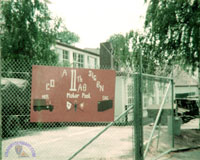
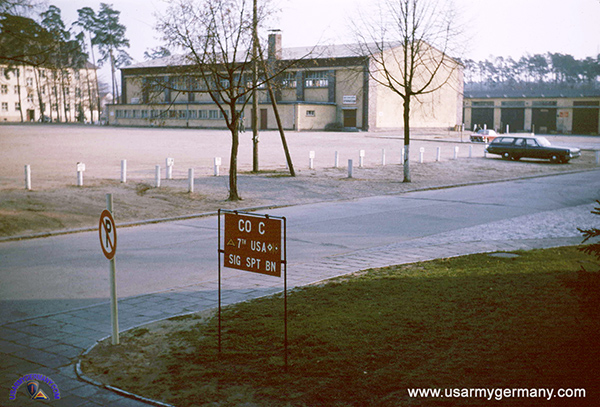 Sign in front of Co "C" barracks at Ernst Ludwig Kaserne, Darmstadt (Bill Feissner) |
||||||||||||||||||||||||||||||
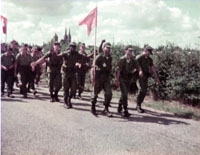
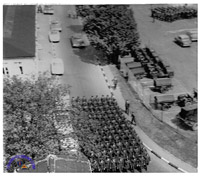
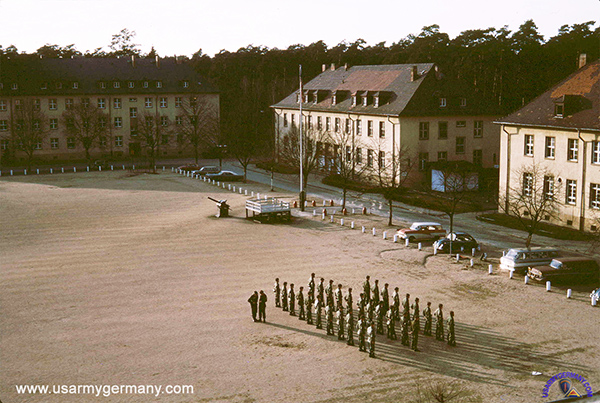 Guard mount, Ernst Ludwig Kaserne, Darmstadt (Bill Feissner) |
||||||||||||||||||||||||||||||
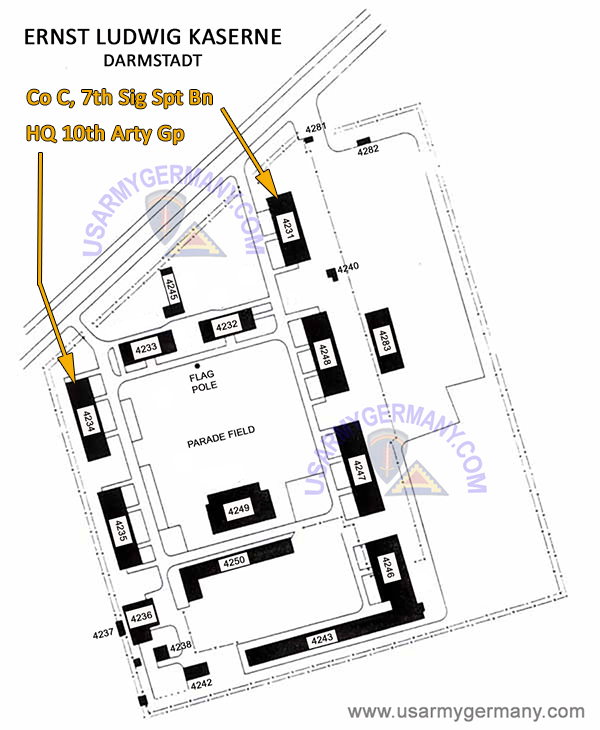 Click here for an annotated installation map for Ernst Ludwig Kaserne |
||||||||||||||||||||||||||||||
| 1964 | ||||||||||||||||||||||||||||||
| (Source: Email from William "Bill" Feissner) | ||||||||||||||||||||||||||||||
| I was stationed with Company C, 7th US Army Signal Support Battalion at Ernst Ludwig Kaserne, Darmstadt, Germany from end of 1964 to June of 1966. Just prior to 1964 (about 6 months prior to my arrival) they had moved from Munich to Darmstadt. Our headquarters company was in Kaiserslautern, Germany. We provided radio and radar repair to 10th Artillery Group and 3rd MSL Bn, 80th Artillery. We also had several radio relay sites throughout the area supported by maintenance teams. I can find no information what happened to my old company. I only assume that after I left they were reorganized and combined into the 7th signal group. The mess hall was shared by the 3 units on the base. We also moved on the Kaserne a few times. We were in one building when I got there and moved later to one across the Kaserne. Once I made E-5 we were allowed 2 man rooms so I had to move up one building again. I do know on the one end of the post was the motor pool and our maint. shop. also a gym and EM club and a small EM Annex. There was another motor pool for the 6/62 on another side of the Kaserne. Also above the mess hall was a snack bar. As I remember there were no Co C personnel at the Griesheim Airfield. I don't even remember such an air field. Only Air Force stuff I remember was on the way to the 3rd MSL Bn, 80th Arty missile site was a monitoring station operated by the 6910th Security Wing, that was stationed at Cambrai Fritsch Kaserne. The 3/80th Arty used Sergeant missiles and I used to service the IFF Radar for them. As for the comm equipment, it was TRC-24 (track 24), field phones were TA-312. This equipment was all used in the radio relay sites, but we had some in our maint. shop for testing purposes. We were only 3rd echelon maint. with the hq in K-town being 2nd echelon maint. Anything else had to go to depot maint. |
||||||||||||||||||||||||||||||
|
||||||||||||||||||||||||||||||
| 1973 | ||||||||||||||||||||||||||||||
| (Source: Email from Robert Ortloff, C Co, 11th AD Sig Bn, 1973-74) | ||||||||||||||||||||||||||||||
| I was drafted 24-Aug-72 and did my basic with E-5-2 at Fort Polk, La.
A.I.T. was at Fort Belvoir, where I was trained as a 52-B-30, Mobile Generator Mechanic.
All but two of my classmates either went to Vietnam or Korea. The other two went to Germany and I was to stay as an instructor at the Engineering School. After PO'ing an E-6 in personnel, on 07-Apr-73, I found I was Fort Dix bound and heading across the Atlantic instead of going to Fort Lee and Instructor school. At Dix I was given a list of units I could volunteer for duty with. I requested a Field Artillery unit located near Stuttgart where one of my classmates was assigned. I was assigned to HHC, 11th ADA Signal. First stop was Rhine-Main AB, Frankfurt a.M. After in-country orientation I left for K-town, where they already had sixteen too many of my MOS and did not want another. (The unit my friend was with in Stuttgart was hurting for my MOS.) I was asked what I did before I was drafted, I told them I was a policeman. Immediately I was assigned to C Company and was heading back toward in the general direction that I had just come from. Arriving at ELK, I was attached to HHC, 10th ADA Group and assigned to the Unit Police. C Company was required to assign one person to the Unit Police and this played havoc with their work assignments. They looked at me as a gift and as one less headache. We worked twenty-four on, forty-eight off everyday until I left on 14-Aug-74 to go back to Fort Dix and home two days later. It was a very uneventful assignment. Both 11th Signal and 10th Artillery were very professional units and had some of the best personnel in Europe. The 94th Construction Engineers left a lot to be desired, but with out them the UP's would have died of boredom. Other posts in the area were Kelly Barracks which was about a click down the road toward Darmstadt. I remember the 5?? Combat Engineers were there. I do not recall if there was any other units at Kelly. Both Kelly and ELK were very small posts. I believe we had five building and a motor pool area. The 10th had one, the 11th had one and 94th had the rest. The motor pool was shared. The main post in the area was Cambri-Fritsch (I am not sure of the spelling.) Kaserne (CFK) in Darmstadt. I remember that the Dispensary, Commissary and PX were all at CFK, but I do not remember any of the units that were stationed there.
I lived off post with my wife and my first daughter was born at the 97th General Hospital at Frankfurt. Living off post and having the duty schedule that we had, I really was not part of either 11th Signal or 10th Artillery. I reported directly to the Group commander and the Sergeant Major and no one else. I was assigned as one of two Second Shift watch commanders and was given the rank of acting Sgt. Officially, I was an Spc/4. So other than being called back to duty twice after active duty discharge that is my entire military history. I did read your page about the 11th Signal. Very informative. I had always wondered what we did. I was sorry to hear that the unit stood down in 1992. |
||||||||||||||||||||||||||||||
| 1980 | ||||||||||||||||||||||||||||||
| (Source: Email from Chris Manolis, 11th AD Sig Bn, 1980-82; 3/60 ADA, 1982-83) | ||||||||||||||||||||||||||||||
| I served in the
32nd AADCOM from July 1980 to July 1983 as a Signal Officer (25A),
Lieutenant. I first served with the 11th Air Defense Signal Battalion
from July 1980 to May 1982 and was transferred to the 3/60 ADA, in
Grafenwohr. The 11th AD Signal Battalion was under the command of LTC McKinny and later LTC Ronald Gornto. While with the Battalion, I was assigned to Company C at Ernst Lugwick Kaserne as the Multichannel Platoon Leader, and later with Company A at Cambrai-Fritsch Kaserne as a Platoon Leader, then Tech Control Officer and Company XO. Company C’s mission was to provide communications support for the 10th Group, later Brigade, and its subordinate battalions. Besides the company Headquarters in Darmstadt there were two terminating multichannel sites: BA on the Kaserne and BB at the 10th Brigade's TAC site. The company had three Multichannel Radio Relay Sites: Radio
Relay Site Melibokus Radio
Relay Site Donnersberg Radio
Relay Site Taufstein The multichannel provided 12 channel four wire PCM communications for voice and data communications. Tactical Air Defense command and control (missile control) utilized the AN/TSQ 73 (located at the Battalion and Brigade Tactical Operations Centers); this computerized system utilized the UHF Multichannel System AN/TRC 145s (terminal) and AN/TRC 113s (relay) of C Company to communicate the air picture, target assignment to the I-HAWK Batteries. While with the 11th Signal I participated in four major exercises, two “Able Archer” and two “Wintex.” During my time with here, the battalion was transitioning to more of a deployable unit, this was challenging because of Radio sites (multichannel) were essentially fixed. Under LTC McKinny the Terminal Sites supporting the ADA Group Headquarters developed the ability of deploying each of the terminating radio sites. Later the ability to deploy signal assets from the relay sites became a reality. In the fall of 1981 we moved from deploying to the field (among trees) to what became known as the village concept; where by we placed ourselves in and among German towns and villages. As for Headquarters 32d AADCOM, HHC 11th Signal, and Company A, our 1981 “Able Archer” and 1982 “Wintex” we established ourselves in vacant factory/warehouse east of Darmstadt. For the soldiers assigned this was a welcome relief to be “indoors” rather than out in the German winter. As in most signal units, Company A would deploy one to three days prior to our supported headquarters, and recover one to three days after the end of the exercise. In May 1982 I was transferred (PCS) to 3rd Battalion, 60th Air Defense (3/60), Headquarters in Grafenwöhr, under the command of LTC Andrew L. Jackson and assigned as the Battalion CESO (Communications/Electronics Staff Officer). The Battalion consisted of a Headquarters Battery located in Grafenwohr, and three firing batteries: Battery
A in GrafenwohrBattery
B in Regensburg Battery
C in Hohenfels The battalion was subordinate to the 69th Air Defense Brigade, headquartered in Wurzburg. At that time (early 80s) the I-HAWK battalions had either three or four missile batteries. In a battalion with three batteries, as 3/60 was, each battery had three firing platoons and capable of “kicking out” a platoon to its own area of operation. In a battalion with four batteries, each battery had only two platoons. During my assignment to 3/60, the battalion underwent a NATO Tactical Evaluation (know as a TacEval). This occurred in the fall of 1982, and quite a bit of preparation lead up to the actual evaluation, including evaluations by the brigade as well as 32d AADCOM. Fortunately, we scored very well and were able to enjoy the holidays without the TacEval hanging over our heads. After our evaluations, I had the opportunity to be assigned “on occasion” to the NATO TacEval team and the 32d AADCOM team. I really enjoyed participating as a communications evaluator for other ADA Battalions, both U.S. and Germany. I was impressed with the Germany batteries and believe that they performed extremely well. I must note that (at that time) the Germans did not have to move up in rank as we in the U.S. Army did. I often found that a German Battery Commander was much older than his American counterpart. It was not surprising to find this Battery Commander in his upper forties, while a U.S. battery commander was in his mid to upper twenties. The extended time in grade and position certainly paid off well for the Germans during the NATO TacEval. I completed my assignment with 3/60 and left Germany in July 1983. I was a time in my life that I reflect very positively on. |
||||||||||||||||||||||||||||||
|
||||||||||||||||||||||||||||||
|
||||||||||||||||||||||||||||||
| Company "D" | ||||||||||||||||||||||||||||||
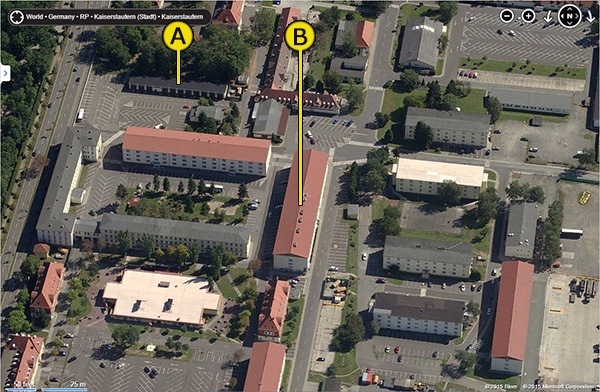 Locations of Terminal 70 (A) & D Company (B), 11th AD Sig Bn barracks, Kleber Kaserne (BING) |
||||||||||||||||||||||||||||||
| 1977 | ||||||||||||||||||||||||||||||
| (Source: Email from George Bonser) | ||||||||||||||||||||||||||||||
| I was stationed with the 11th AD Signal Bn from 1977 to 1980 in D Company at Kleber Kaserine in Kaiserslautern with the DSMA crew. My MOS was 31L.
We had a couple of detachments. One was at Spangdahlem Air Base a bit east of Bitburg and the other was in Pirmasens. Your designation of sites shows nothing for site "70" which we called "seven-zero." I believe that was the site at Kleber which was located in Bldg 3222. I worked quite a bit at Bann Hill (Site 71). At the time it was also being used as a demonstration site for the AN/TSQ-73 "Missile Minder" system which was a computerized tactical air defense command and control system. -- Terminal sites were numbered. Relay sites were named after cars (Triumph, Simca, Morgan, etc.) As I recall, Terminal 70 was most likely in the long building at about the middle (marked as "A" on the BING aerial shot above). The antennas for the site were in the wooded area just to the east of the building. The equipment was in tactical shelters that had been dismounted from vehicles and placed in one of the bays. (Webmaster note: Building 3222 was a former maintenance shop with multiple bays.) I believe there were three but possibly four shelters (it's been a long time). They were laid out in an east-west line inside the building with the doors facing north and a wall built so each shelter sort of looked like "rooms" along the south wall of the operations area. The operations area also consisted of a switchboard manually operated.of the SB-22 family. |
||||||||||||||||||||||||||||||
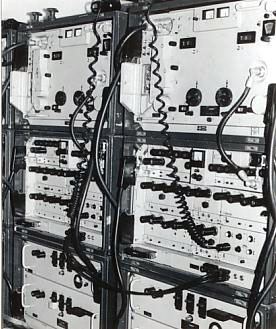
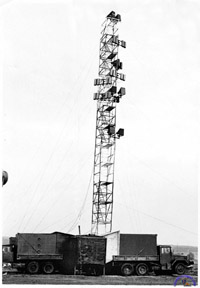
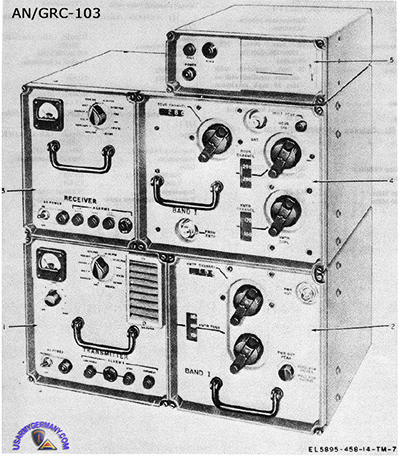 Radio Set AN/GRC-103 |
||||||||||||||||||||||||||||||
| That site had the new AN/GRC-103 radio sets and TD-660 digital multiplexers while many of the other sites still had the older AN-GRC-50 radios with TD-352 multiplex gear. The old Nike/Hercules sites still used the AN/TRC-24 analog FDM radios and mux gear as the newer stuff interfered with the Nike/Herc radar. So some of the relay sites were used to convert bridge the comms from the new digital gear in use at headquarters to the older analog gear used at the fixed Nike/Herc batteries.
D company HQ: If you look to the west there is a long building going north/south with a red roof. That was the female quarters ("WAC shack") when I was there. To it's south you see another long building east/west also with a red roof. That building was the D company HQ. Co. D had the basement and first two floors. The top floor was an ASA aviation unit. The HQ offices were on east end of the building in the basement. DSMA, arms room and orderly room were in the basement, as I recall, with the first and second floors being barracks. I am not positive exactly which units we provided comms for but I knew there were several fixed site Nike/Hercules batteries, a few fixed HAWK sites, and some mobile HAWK and Vulcan/Chaparral units. The kaserne across the street (Daenner) had a Chaparral/Vulcan unit and I believe that was HQ to at least an ADA battalion, if not a brigade. It is likely that the fixed sites were a different unit from the tactical mobile batteries. That was probably the 108th and looking at a Wikipedia entry for that unit it says Kleber and while the brigade HQ offices might have been on Kleber, I remember the barracks and motor pools of the batteries being on Daenner across the street. Terminal 71 (Bann Hill) - I do not recall precisely on a map where the hill itself was located at Bann. There was a large clear area, the antennas for this site were very close to the gear as it was UHF, darned hear microwave, and you couldn't get the antennas too far from the gear. It was at the top of an open hill which could be forested by now. An air defense unit shared the hill with a demonstration project for the AN/TSQ-73 which was coming on-line at the time. I recall General Alexander Haig being on the site one day during a demonstration for the Iranian military which was apparently interested in purchasing the system at the time. They also had an additional large trailer up there with a 6-foot projection screen and several comfortable seats for high ranking dignitaries to watch the air battle exercises/simulations along with a satellite ground station. This came in real handy for the Super Bowl in 1978 when we were able to receive the satellite feed for the game and the ADA guys invited us into the trailer to watch the football game with them. The operators (MOS 31M) would have known more about exactly which units were supported that I would. I was a repair tech (MOS 31L) and visited a few of the sites but mostly only when they were converting from the old gear to the new stuff that was being deployed at the time. We had sort of a dual mission in that we supported both the fixed batteries (94th) with fixed site assets (the numbered sites and named relays) and the 108th with tactical communications mounted on shelters in 2.5 ton trucks. We did have some overlap in that the relay sites (most often Triumph in the areas where I ended up) were also utilized for tactical shots during field exercises. So the network of relay sites supporting the 94th acted to integrate the tactical mobile batteries of the 108th into the net. We could reach one relay or another from practically anywhere in that region of Germany. This meant that the tactical gear could be used for terminating comms for the mobile batteries and we didn't need to use tactical relay sites very often. All comms were radio except one cable shot that I am aware of to a command and control bunker somewhere in the hills between Pirmasens and Bann (Ruppertweiler?). This site was generally never in use except in a period of extremely high alert and I only went there one time when an exercise was being run to see how quickly the ADA HQ could move operations from their garrison HQ to the bunker location and some equipment needed to be installed. I will also relate that conditions at some of the sites were pretty bad. The NCOIC of Morgan was really beside himself at the conditions of that relay. This was during the Carter administration and they had severe problems such as the roofs leaking of the living areas, lack of heat, etc. At one point I believe he put the crew in tents as the conditions were better in the tents than in the fixed quarters (at least they could stay dry in the large GP tents and have some heat from tent stoves).Now that I think about it, there were also alpha designators for the sites in addition to numeric. For example, I seem to recall the Kleber site also being known as LA (Lima Alpha) with the various D company sites using the first letter L. So there might have been Lima Alpha, Lima Bravo, Lima Charlie. I'm not sure if they were converting from numeric to alpha designations or if it was a separate comm net that used the different designation that shared the same site. Actually, now that I think about it, I believe they were converting from numeric to alpha designators and both were in common use at the same time when talking about the sites. I believe 72 for example was also LC. So people might say they were headed out to site "seven two" but the radio call sign used in operations would be "Lima Charlie". But again, my recollection is suspect as it was a long time ago. I was also stationed for brief periods at the DSP facilities at Pirmasens and Spanghalem. Reason for that is most of the techs there were familiar with the older gear and I had gone to school on the new stuff so as units were converting to the new gear, I would go up to lend a hand with familiarizing the people on it. There was a Lt. Bickford who was in charge of the site at Kleber. Not sure I remember who the NCOIC was. DSMO was headed by a Warrant Officer named Parchman who was also OIC of the various remote DSPs. The Kleber DSP was headed by SSG Charles Whitaker or something close to that spelling (might have been two "t"s). DSP in Spangdhalem was run by SSG Cline Calhoun and Pirmasens by SFC Thurman Spurlock. Not sure who the commander of the company was at the time, the name escapes me. This provided 3rd and 4th echelon maintenance for the signal gear of the 11th and also for the various supported ADA batteries. It consisted of a main shop at Kleber Kaserne called the DSMA and remote DSP (Direct Support Platoons) located at Spangdahlem and Pirmasens which were basically satellite shops.
The ADA units were spread over a wide area and having to haul gear all the way to Kaiserslautern would require an overnight trip so the satellite shops were established. These sites repaired both the multichannel gear used for tactical telephone comms as well as the vehicle radios. We were the next level of support up from the commo platoon of the various batteries. Anything they couldn't fix at their level came to us. The level above us was the depot but was rarely used as a piece of gear would need to be REALLY fried for us to send it to depot level and then we would jam pack it with every bad component we had at the shop before sending it up. Some of the old TRC-24 gear was so old the depot had to ask us for manuals and it was vacuum tube gear and parts were hard to find. We were the only active duty unit still using that stuff and the school at Ft. Gordon had stopped training regular Army on the gear. National Guard got an extra two weeks of training on it as there still was some of that gear around in the Guard and Reserves. |
||||||||||||||||||||||||||||||
| 1983 | ||||||||||||||||||||||||||||||
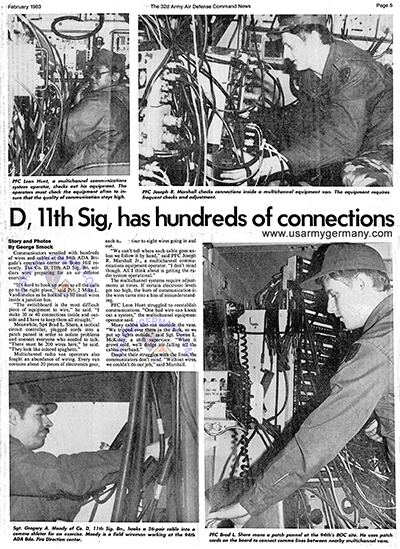 Bann Hill, D Company Radio Site |
||||||||||||||||||||||||||||||
| (Source: Email from Bernie H. Moritz, Jr., Co. D 11th AD Sig. Bn. 1983-1985) | ||||||||||||||||||||||||||||||
| After learning about the reclassification of MOS 31M I came across this site. I was stationed at Kleber Kasserne with Co. D from 1983-1984, extended and went to Erbeskopf 1984-1985. Designation changed from Relay site to Terminal. The 94th was going to relocate it's HHC to Erbeskopf. The barracks for Erbeskopf in 1984 were on site. A new building was built and there were approx. 30 people assigned. The German Military built a new Radar site next door which is still there today. Air Force still had their small microwave site. There was also an unmanned NATO site on the property as well. |
||||||||||||||||||||||||||||||
| 1986 | ||||||||||||||||||||||||||||||
| (Source: Email from Benjamin D. Bualat, D Co, 11th AD Sig Bn/413th Sig Co, 1986-1995) | ||||||||||||||||||||||||||||||
| I was assigned
to D Co, 11th AD Signal Battalion from
March 1986 until it was reflagged the 413th Signal Company in 1993.
I served in the 413th Signal Company until June 1995 when I departed
for OCS. Just glancing at your list of radio sites spark a few memories: Kalmit was YS
(Delta Company) CRC Borfink was
VS (Delta Company / later A company) Kleber Kaserne,
Kaiserslautern had QA (Delta Company / later A Company) Bann Hill was operated
by Delta Company AA was on
CFK operated by HQ & A CompanyFrom my arrival until some time in 1987 the Battalion consisted of 4 companies, Headquarters and A Company on CFK (Cambrai Fritsch Kaserne, Darmstadt, GE) supporting HQ 32nd AADCOM, Bravo Company (Larson Barracks, Kitzingen) supporting 69th ADA Bde, Charlie Company (Ernst Ludwig Kaserne, Darmstadt, GE), and Delta Company (Kleber Kaserne, Kaiserslautern, GE) supporting both the 94th ADA Bde and the 108th ADA Bde. At the time, Delta was the largest tactical signal company in the Army. With the fielding of the Patroit Missile system in Germany, the 11th AD Signal Battalion reorganized. Headquarters & A Company became HHC; Delta Company split to create Alpha Company. Delta supported the 94th ADA Brigade and Alpha Supported the 108th ADA Brigade. The two units shared the same building and motorpool for a time. In 1993, the 32nd AADCOM de-actived, along with HHC 11th AD Signal Battalion. Alpha Company reflagged as the 286th Signal Company and moved to Fort Polk, LA. Bravo Company reflagged as the 57th Signal Company and was a separate company under the 22nd Signal Brigade and then became the 17th Signal Battalion's Charlie Company when that battalion moved to Larson Barracks, Kitzingen from Frankfurt, GE. Delta Company was reflagged the 413th Signal Company and remained the signal company for the 94th ADA Brigade. The 94th ADA Brigade became the theater ADA unit with the deactivation of the 32nd AADCOM. In 1994 the 94th ADA Brigade left Kaiserslautern for Darmstadt where they occupied the old 32nd AADCOM headquarters. In 1995, the 413th Signal Company moved from Kaiserslautern to Kelly Barracks, Darmstadt, GE. I was assigned to the 17th Signal Battalion from 1996 to 1999, for a time as a Platoon Leader in Charlie Company. During that time the 413th was still located in Kelly Barracks, GE. I do not know the current disposition of any of those units. Life was good in the 11th AD Signal Battalion, and, as Pete Barnes can attest to, some of the best times had by those who served in it. Incidentally, I was a 31C/31F while in the Battalion. Ben |
||||||||||||||||||||||||||||||
|
||||||||||||||||||||||||||||||
| Related Links: |
||||||||||||||||||||||||||||||
 .
.