| If you do
NOT see the Table of Contents frame to the left of this page, then
Click here to open 'USArmyGermany' frameset |
||||||||||||||||||||||||||||||||||||
|
11th Armored Cavalry Regiment |
||||||||||||||||||||||||||||||||||||
|
|
||||||||||||||||||||||||||||||||||||
|
||||||||||||||||||||||||||||||||||||
|
|
||||||||||||||||||||||||||||||||||||
| Regimental History | ||||||||||||||||||||||||||||||||||||
| 1957 - 1964 | ||||||||||||||||||||||||||||||||||||
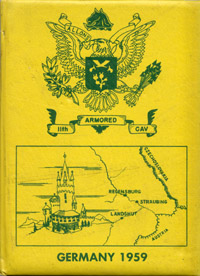
| (Source: 11th Armored Cav, Germany, 1958 and 1959 Yearbooks) | ||||||||||||||||||||||||||||||||||||
|
GYROSCOPE
|
||||||||||||||||||||||||||||||||||||
|
||||||||||||||||||||||||||||||||||||
| While in garrison
variety is the word that best describes the training in the 11th Cavalry.
Because of the amount of different type weapons, vehicles and other
equipment used by the unit, training is both interesting and extensive.
Inasmuch as the Regiment is completely motorized, preventive maintenance
takes up a large part of the days work schedule both in garrison and
in the field. In addition to the Regiments border assignment and garrison duty, a strenuous field program is carried out by the unit. The Battalions are frequently on the move to the Seventh Army's training areas at Grafenwohr, Vilseck and Hohenfels. All three of the howitzer companies make use of the excellent ranges at Grafenwohr which are ideal for artillery, while the tankers spend a part of their training at the Seventh Army's Tank Training Course at Vilseck. At each of the training areas the men are in the hands of the most capable and experienced soldiers in the US Army. One of the most interesting and exciting parts of the training program is the Battalion Tests, which show to what degree the men and units have responded to the years training cycle. The soldier and the unit are tested on their reactions to combat situations, and the functioning of the unit as a team. The tests last for a period of 72 hours in which time the Battalion simulates actual war-time conditions. Both the officers and men are constantly on the move throughout the three day period, with sleep arid food taken whenever time permits. In the course of the test every piece of equipment is put to maximum use, and every man used to the utmost of his capabilities. Attacks with infantry and armor, delays, and counter-attacks are the order of the day. By the time the tests are over the men have had a first hand account of what an actual battle will be like. The only difference being that blank instead of live ammunition is used. Aside from the tests the Battalions take part in a number of Field Training Exercises (FTXs) and Command Post Exercises (CPXs) during the training year. Also, each month one or more alerts are held in which the entire unit moves out of garrison into prepared alert positions in the field. The alert trains the men and the unit how and where to move out quickly in case of enemy attack. The 11th Cav has also taken part in almost every major field problem held in Germany since its arrival. After just four days in Germany, Headquarters and Headquarters Company moved out to the field to take part in the NATO CPX, "Lion Noir." Not too long afterwards the Regiment sent out a control group to take part in CPX "Counter Punch." Early in 1958 the Regiment moved out in full strength to join other Seventh US Army units in the giant field exercise, "Sabre Hawk", which was the largest field exercise ever held in Europe since the war, with 120,000 soldiers taking part. One of the main purposes ofthe exercise was to test the Seventh Army's new pentomic setup, and to give the soldiers experience in cold weather training. This was followed in March by the Regiments second participation in a NATO CPX, "Lion Bleu." However, all is not work in the Regiment. Because of the central location of the 11th Cav in Bavaria, the men have access to many of the famous capitals of the world. Also, a few hours drive from the units home stations are the excellent and beautiful recreation centers of Garmisch and Berchtesgaden. There is a liberal pass policy in the Regiment which enables the men to get into the nearby towns for an evening, where good relationships are kept with the German people. A number of the 11th Cav's men have found many new friends among the German population, and the towns themselves have much to offer in the way of entertainment and culture. Because of these factors the Regiment has one of the highest reenlistment rates of any unit of its own size in Seventh Army. Many of the men remained with the unit so to be able to complete a full tour of duty here in Bavaria. In keeping with Seventh Army policy concerning friendly German-American Relations, Colonel Hulse continued to stress these relations as the secondary mission of the Regiment. Among the various programs carried out by the 11th Cavalry, Organization Day is one of the highlights of the years events. Open house is held at the Regimental Headquarters in Straubing and German civilians and military representitives flock to the Kaserne to join in the festivities. The big event of the day is the Regimental Review, followed by athletic contests some of which are played by both German and Americans. Displays of American equipment are laid out for the spectators to view, and tank rides are held for the youner children. Another activity is the Christmas program. During the holiday season each company in the Regiment sponsors an ophanage and invites them out to the Kaserne for a day. The children receive gifts, a large Christmas dinner at the company mess hall, plus a visit from Saint Nicholas. Also during the holiday season the Service Clubs sponsor various activities such as caroling throughout the towns, and Christmas parties for school children and orphanages. The various Women's Clubs on each post make visits to old folk homes and hospitals in order to bring a little more season cheer to those who are not able to attend the festivities at the Kasernes. Throughout the year the 11th Cav continues to carry on its program of assistance and good will with all the means available to it. The 83rd Army Band performs both classical and jazz concerts in many German towns and cities. The German-American Women's Club helps to create and improve good relations. Assistance is given in every way possible when emergencies arise in the surrounding areas, both financially or with the aid of military equipment. The excellent 11th Cav stage productions and soldiers chorus perform at many German theaters and civic halls. These are just some of the many programs in which the Regiment tries to assist or entertain the German public, and thereby creating an atmosphere of friendliness and cooperation between the Regiment and the German people. After almost two years as Commanding Officer, Colonel Hulse left the Regiment for duties with USAREUR. On 24 May 1958 the Regiment held a change of command ceremony in which Colonel Hulse turned over the Regimental Colors to Colonel James W Snee, formerly Seventh Army Special Troops Commander . It was with great regret that the men saw Colonel Hulse leave. Under his leadership the unit had come a long way from raw recruits at Fort Knox, Kentucky, to one of the finest comhat ready Regiments in the Seventh Amy. The Regiment's new Commander, Colonel James W Snee, however is well acquainted with the 11th and other Cavalry units. He has seen duty with the 8th and 2nd Cavalry Regiments, and commanded "F" Troop, 11th Cavalry, in 1940. During World War II, Colonel Snee served with the 2nd Armored Division, commanded the 714th Tank Battalion, and later served with Special Troops of the 12th Army Group. During the Korean War he served with the 24th Infantry Division. The Colonel is a graduate of the United States Military Academy, the Cavalry School, The Command and General Staff College, and the Air War College. He has been awarded the Silver Star, The Legion of Merit w/OLC, and the Air Medal w/OLC. And so the history of the Regiment goes on with much yet to be written of the future, and the new assignments as they come along. The gallant record of the past is carried on by the new men and still newer equipment, but always the Regiment continues to uphold the principals and beliefs to which it is dedicated in both peace and war. |
||||||||||||||||||||||||||||||||||||
|
|
||||||||||||||||||||||||||||||||||||
| MISCELLANEOUS
UNIT INFORMATION Kasernes, Border Camps & Observation Points operated by the 11th ACR in southern Germany (1957-64): |
||||||||||||||||||||||||||||||||||||
|
||||||||||||||||||||||||||||||||||||
|
|
||||||||||||||||||||||||||||||||||||
| 1958 | ||||||||||||||||||||||||||||||||||||
| (Source: Email from Paul Magley, Hq 11th ACR, Straubing) | ||||||||||||||||||||||||||||||||||||
| I was in the 11th Cav. from June 1958 to Dec.1959. I was assigned to S-2 / Border Operations / S-4 Training.
Regimental Commander in 1958 was Colonel James Snee; in 1959 Colonel Walter Geenwood took over. Major James Torgerson was in command of S2 /Border Ops /S4 in 1958. In 1959 he was transfered to 3rd Bat. that was having problems. Major F. G. Gosling assumed command of S2 / Border Ops in 1959. Captain Harry Peters was 2nd in command. I was personal driver for these Officers. More on Hq-Hq Company S2/Border Ops/S4 11th A.C: Hq-Hq Company was issued two tanks (M48-A1); two personal carriers; two L19 planes; two H13 helicopters; one DeHaviland Beaver and two H34 helicopters. These were Cav. (Air Section) planes flown by army officers and Warrant Officers. Aviation Company didn't arrive untill late Dec. 1959. Early 1959 the 11th started using H34s to deploy troops wherever they could land. This later became a separate unit stationed in U.S. then went to Nam. and designated 1st Air Cav. The 11th patrolled the German-Czech border from Whitehaus (sp?) in the north to Passau to the south. A group of engineers was stationed in Passau to destroy the bridge (if the red flag went up) entering Austria. I have no photos of the border as no one except authorized by S2/Border Officer were allowed to have a camera (while on patrol). However I am sure some patrols took the chance. In early summer of 1958 a small plane went down near a swiming pool on the edge of Straubing. Two young men were pulled out safely. One was an 18 yr old Czech. practicing to be a civilian pilot. He stole the two seated trainer from a town in Czechoslovakia, flew to another town, picked up his friend, flew at tree top level to escape radar. He used the Danube River as a guide. He knew that when they crossed the river they would be in West Germany. The plane was moved to Mansfield Kaserne. A couple of months later it was loaded on a dragon wagon (low boy) and we took it to Munich airport - one jeep escort in front and me in the rear. More on Border Ops: A three-lettered US federal agency had a house in Cham, a city north of Straubing. When I drove the officers to the border, we would try to stop there at some point to see what was new. They had their info downstairs in a special room. In S2 Intelligence you had to have a security clearance, "confidential" being lowest. I had a "secret" clearance. It depended on what you had access to as how high the clearance. I had two MOS': 133.60, Intel. Spec., and 133.10, driver. I was in a special position. Per the Majors orders I was the only person allowed to take a military vehical off base without a NCO passenger. This was so I could go to a certain place or border camp or outpost without any one knowing where the Major or Captain were going. Most of the time we checked into the radio net using the S.O.P. call sign of the month. If we went at nite or later and didn't want anyone to know, we would check in at commo. room and use a different call sign. Only commo person would know . Back to the three-lettered agency: every once in a while they would fly in. The plane was a DC3 twin engine equipped with all kinds of surveillance gear which they used flying along border. Having security clearance they let me aboard to take a look. In 1958 that kind of equipment was awesome. |
||||||||||||||||||||||||||||||||||||
 |
||||||||||||||||||||||||||||||||||||
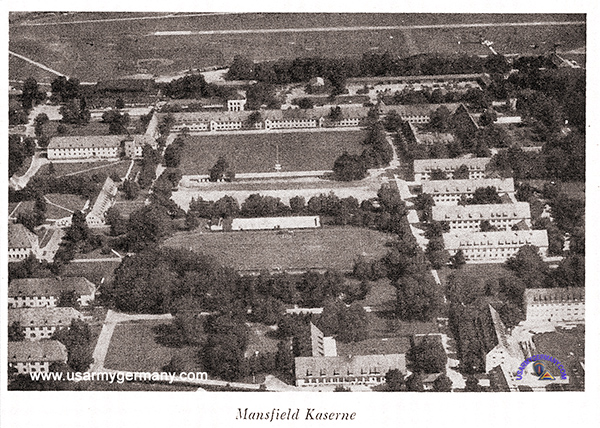 Mansfield Kaserne, Straubing, site of Headquarters, 11th ACR in the early 1960s. |
||||||||||||||||||||||||||||||||||||
| 1960 | ||||||||||||||||||||||||||||||||||||
| (Source: 11th Armored Cavalry , 1901 - 1961, a pamphlet issued by | ||||||||||||||||||||||||||||||||||||
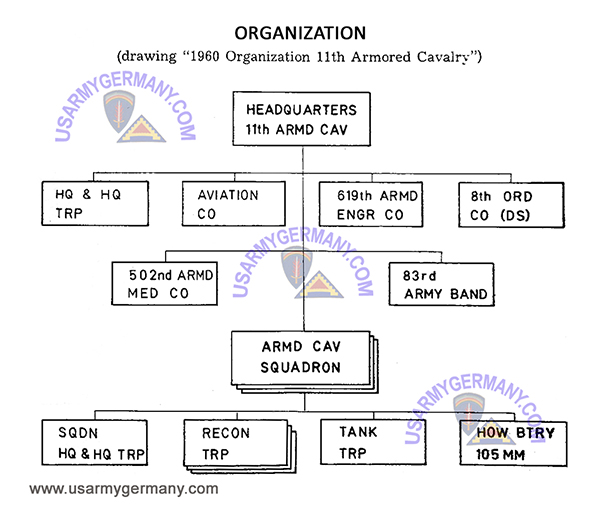
| The 11th Armored Cavalry is organized as shown schematically (above). It is one of five such units in the U.S. Army. Essentially, it is a combined arms unit. That is, it contains Armor, Artillery, and Infantry elements integrated at all levels from platoon through squadron. At regimental level there are additional supporting elements - Aviation, Engineers, Ordnance, and Medical. The 11th Armored Cavalry is a self-sustaining fighting organization characterized by great mobility, fire power, and flexibility. It is normally employed as the eyes and ears of the Army, continually seeking out the enemy, maintaining contact with him, and gathering intelligence about him. Because of its inherent mobility, its organic multiple means of communication, and its variety of weapons, it is also ideal for employment on the atomic battlefield as an attacking or defending force. The 11th Armored Cavalry is composed of three identical reconnaissance squadrons, a regimental headquarters troop and staff, an aviation company, and four attached units. They are the 8th Ordnance Company, the 83rd Army Band, the 502nd Armored Medical Company, and the 619th Armored Engineer Company. Each reconnaissance squadron contains a headquarters troop, three reconnaissance troops, a tank troop, and a howitzer battery. Each of the reconnaissance troops is an infantry- supported armored company, complete with tanks, armored personnel carriers and 4.2 mm mortars. The 11th Cavalry has succeeded, both in maneuvers and combat, in proving itself an effective organization in mobile defense and in delaying action. This type of organization is extremely capable of both rolling-with-the punch and striking back at the opportune moment, as the situation dictates. These characteristics are well suited to the present mode of warfare, making the armored cavalry an invaluable fighting force. |
||||||||||||||||||||||||||||||||||||
| 1962 | ||||||||||||||||||||||||||||||||||||
| (Source: Email from Jerry Frasl, M Trp, 3rd Sq 11th ACR, Regensburg) | ||||||||||||||||||||||||||||||||||||
I just reviewed your website concerning the 11th ARC. I joined M Troop, 3rd Squadron in Ft Skelly (by the way, this was the ONLY US post with a "Fort" designation in Europe) in 1962. I was with the Troop when we were rotated to Ft. Meade, MD in 1964.
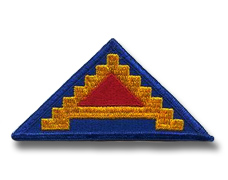
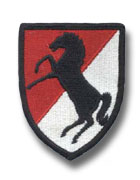
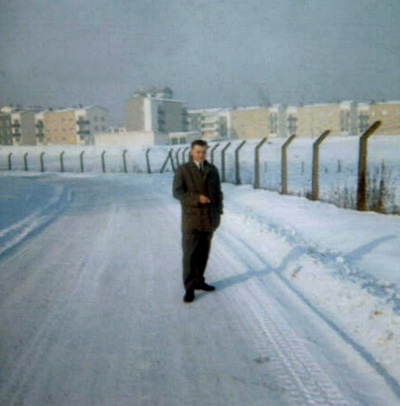
M Troop was the Tank troop for the squadron. While I was there, we used M48A2 tanks with 90mm cannons. I served as a loader, driver, gunner and occasionally as the Tank commander for M23 (since we were able to name our own tanks, this one was named "Miss Take"). The patch you show was not a part of the unit until they were involved in Vietnam. Our unit patch was the 7th Army (7 steps to hell). At one point we were given Allon patches for sewing on our shirt pockets, but they did not pass being approved by the Army Heraldy deparment and we were forced to return them (I managed to sneak one out, that I have in my trophy case to this day). I do have some pictures of some of the personnel of M troop that I will pass in a later email. Actually, as I dug deeper into your page, I found a picture of myself as a bright shining 17 year old troop (that's me standing in the snow outside of Ft. Skelly). There is also an annual picnic for Blackhorse troopers held in Eugene Oregon during the summer. Another M trooper actually went to the one last year, unfortunately, I had to miss it. This guy and I connected just before the picnic after 42 years.. One of my favorite memories of Ft. Skelly was the painting titled "The evolution of armor" that was done on the walls just outside the orderly room in M troop.
|
||||||||||||||||||||||||||||||||||||
|
||||||||||||||||||||||||||||||||||||
| (Source: STARS & STRIPES, May 31, 1963) | ||||||||||||||||||||||||||||||||||||
| French Troops
Join Yanks in Border Patrol By ROB BOYER S&S Munich Bureau PASSAU, Germany (S&S) - American Soldiers who stand watch along the Communist border between West Germany and Czechoslovakia are receiving assistance from France. During the past year, French army contingents have been assigned to work with the Americans at this lonely and tedious job on a rotating basis. The mission of the NATO partners: Surveillance of the Czech border. It can be a cold and nasty assignment, especially in the dead of winter. The present French unit is the 5th Hussards, 1st Platoon, a 48-man outfit. The French team up with American soldiers from the 11th Armd Cav at Camp Dennis D. Whalen to carry out their border chores. The French participation in border surveillance calls for the continuous duty of a platoon-size reconnaissance unit with the Yanks. Camp Whalen, the eastern-most outpost of freedom along the Communist border, is situated in the rugged rolling farmland north of here. A fenced camp of 1½ acres, Whalen is east of Berlin and east of eight other German border camps maintained by American cavalry units that watch the border. Since French units began coming to Whalen, the camp has become a boon to French-American relations. Americans fully support the French, who are billeted at the camp, eat all their meals there and enjoy the small luxuries available. Movies are shown nightly. Once a week the movie is in French. |
||||||||||||||||||||||||||||||||||||
|
||||||||||||||||||||||||||||||||||||
| American weapons include personnel carriers and tanks. Both French and Americans maintain their own ammunition trucks and both are equipped for extensive on-the-spot maintenance. French soldiers on duty at Whalen seem to enjoy their assignment. "I haven't minded the isolation" said reserve officer 2nd Lt Bernard Baudot. "I would say this has been a fitting climax to my active duty in the French army." Regular officer 2nd Lt Jacques D'Achon, a new arrival at the camp said: "I think I'm going to like Camp Whalen. It should be an experience I won't soon forget" |
||||||||||||||||||||||||||||||||||||
 |
||||||||||||||||||||||||||||||||||||
|
|
||||||||||||||||||||||||||||||||||||
| 1972 | ||||||||||||||||||||||||||||||||||||
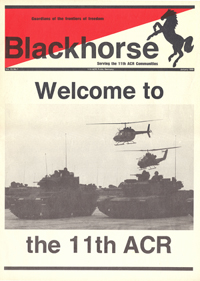
| (Source: Welcome to the 11th ACR, Special Issue, BLACKHORSE, Jan 1988) | ||||||||||||||||||||||||||||||||||||
|
||||||||||||||||||||||||||||||||||||
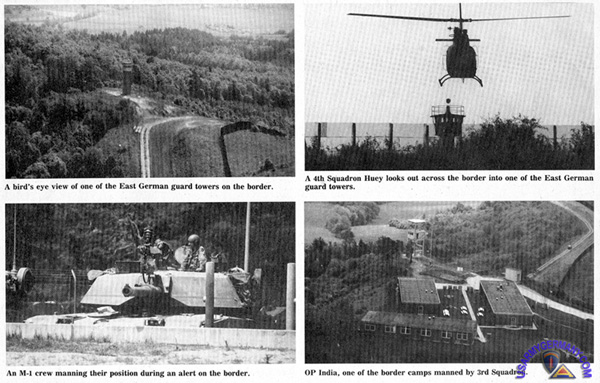
| The First Squadron operates out of OP Alpha. The units rotate their combined arms elements through the OP every few weeks. OP Alpha has a dining facility, troop billets, and a dayroom equipped with games and a weightlifting machine. Unlike First Squadron which uses its OP as a home station, Second Squadron operates its base out of Camp Lee and periodically mans three OPs at different locations. A fourth OP is manned on a twenty-four hour basis. Camp Lee becomes home for a troop-size element for about a month. The camp is a "mini-kaserne", complete with a motor pool, PX, billets, dining facility, and aid station. Third Squadron's operations are much like those of First Squadron, except that they man two separate OPs at all times. Both OP Romeo and India are self-sufficient, with a dining facility, billets, and an aid station. Surveillance of the border is accomplished in many varied ways, including: air, foot and mounted patrols; reaction forces; radar; and annual training exercises on the actual border. Mounted border patrols constantly cover the border "trace" using two 1/2-ton Mercedes jeeps. While on patrol, the soldiers carry weapons and ammunition, day and night vision devices, cameras, and flares for dire emergencies. This type of surveillance is complemented at times by armored OP using M-1 tanks and Bradley Fighting Vehicles. If a patrol encounters a potentially dangerous situation, or the home station loses contact with them, a well-armed, armored reaction team can be dispatched from the OP or camp at a moment's notice. The reaction force has the ability and equipment to fight, but its mission is mainly to get the "friendlies" out of the area. Troopers are tested on every aspect of the border mission and must pass the test before being allowed to perform any responsible mission on the border. Throughout the border tour, the soldiers are tested, evaluated, and inspected by both squadron and regiment level border operations center personnel. At first glance, there is no doubt that the barrier fence and other border fortifications are not designed as defensive measures against a western force. The barrier is a nearly completely successful, and expensive, effort to keep the Soviet Zone in Germany from becoming completely depopulated, a situation that would have ruinous economic consequences for the Soviet Bloc.. |
||||||||||||||||||||||||||||||||||||
 |
||||||||||||||||||||||||||||||||||||
| The East German fence system is one of the most formidable barriers to human movement ever constructed. The system has been constantly upgraded to prevent the escape of East German citizens. Despite these precautions, the German Border Police (BGS) reported that there were seventeen successful escapes in the 11th ACR sector during 1987. The fence system begins anywhere from one meter to several kilometers behind the actual border, depending on the terrain. The first defensive measure of the system begins well behind the fence. A wide area on the east side of the fence is commonly known as the "Restricted Zone", and provides East German border troops a clear view of potential escapees attempting to approach the border. The farthest eastern portion of the Restricted Zone is usually bordered by a small secondary fence. The next element is the high speed patrol road which runs the length of the border. The next part is an anti-vehicular ditch made of pre-formed concrete slabs set at an inward angle to stop vehicles from ramming the fence. Just after the ditch is a ten meter plowed strip that is kept smooth so that soldiers can tell if anyone has been walking near the outer fence. The next element is the three-meter-high fence which is known throughout the world as the Iron Curtain. The fence is buried deeply to discourage tunneling and is made of diamond-shaped stamped steel mesh. The holes prevent scaling by painfully pinching bare fingers and by being too small for gloved fingers. The fence in the 11th ACR sector was formerly covered by anti-personnel mines, but after a trade agreement with West Germany, the East Germans conceded to removing the mines. The border fortifications have gone through many phases of improvement since the tangled barbed wire of the fifties. Each upgrade has stemmed the tide of migration further. Border tours are given to inprocessing 11th ACR soldiers and persons wishing to see the border. These tours can also be arranged for groups through the Regimental Border Operations Center. |
||||||||||||||||||||||||||||||||||||
|
||||||||||||||||||||||||||||||||||||
| 1990 | ||||||||||||||||||||||||||||||||||||
| (Source: BLACKHORSE, June 1990) | ||||||||||||||||||||||||||||||||||||
| WARFIGHTER '90 Exercise (Article by Rudy Carter ) For nearly two weeks the facilities at Downs Barracks and Sickels Army Airfield would undergo massive changes. Changes that would accommodate some five thousand additional soldiers participating in the Warfighter '90 Exercise. While the additional soldiers were set in fest tents on Sickels Army Airfield and Downs Barracks, support was given to make Warfighter a huge success. At Sickels, traffic was changed from two-way to one-way, a snack shack was also set up by 4th Squadron and was open 24 hours to give soldiers who had worked late hours a chance to grab a meal. "The help from the community to support Warfighter was tremendous," Airfield Commander Capt. Mark Craft said. Different establishments such as the commissary and shoppette extended their hours of shopping to allow soldiers the opportunity to buy necessary items. |
||||||||||||||||||||||||||||||||||||
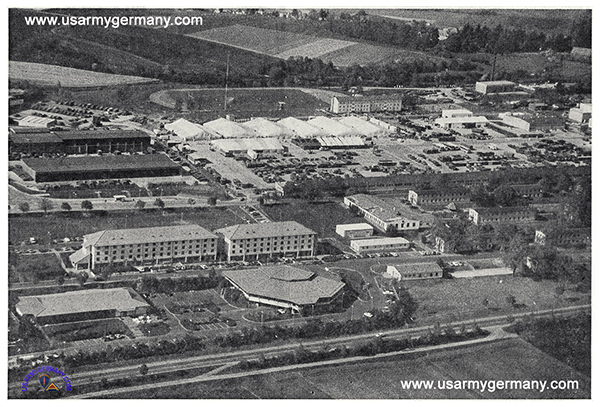 Downs Barracks, 1990 (Webmaster's collection) |
||||||||||||||||||||||||||||||||||||
| From an aerial view Downs Barracks looked liked an invasion of fest tents. The exercise which was dubbed as the U.S Army's largest simulation exercise is part of the Battle Command Training Program (BCTP). "The BCTP was created by Gen. Carl E. Vuono, Army Chief of Staff, as a way for the Army to provide a tool for senior commanders and battle staffers," said V Corps Warfighter Planning Coordinator Doug Nolen. During the exercise, Vuono had an opportunity to visit and see how the exercise was going first-hand. Warfighter was the first Corps level simulation exercise in Europe and the first time V Corps used it. The exercise which had participation from various V Corps units took not only planning from V Corps, but from the Blackhorse Regiment as well. "We started planning eight weeks out on how we would accomodate everyone. All the support from the Directorate of Engineering and Housing (DEH) was super," Craft said. He added that the success of the Warfighter exercise was due to the support of the community, which was "very appreciative toward the effort". |
||||||||||||||||||||||||||||||||||||
|
||||||||||||||||||||||||||||||||||||
|
|
||||||||||||||||||||||||||||||||||||
| Additional 11th ARMD CAV Patches - 1950s - 80s | ||||||||||||||||||||||||||||||||||||
|
||||||||||||||||||||||||||||||||||||
|
||||||||||||||||||||||||||||||||||||
|
|
||||||||||||||||||||||||||||||||||||
| 1st Squadron / Battalion | ||||||||||||||||||||||||||||||||||||
| Mansfield Kaserne, Straubing (1957 - 1964) | ||||||||||||||||||||||||||||||||||||
| Downs Barracks, Fulda (1972 - 1994) | ||||||||||||||||||||||||||||||||||||
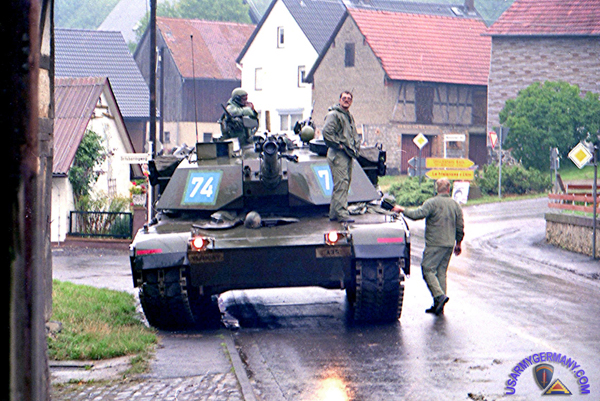 |
||||||||||||||||||||||||||||||||||||
| 1975 | ||||||||||||||||||||||||||||||||||||
| (Source: Email from David A. Hays) | ||||||||||||||||||||||||||||||||||||
| I served in D Troop and Howitzer Battery, 1/11 Armored Cavalry Regiment from May 1975-May 1978. I can share some stories with you if you are interested. (Webmaster's Note: Below is the first story.) Indipendent Command I had been in D Troop a few weeks, days in the motor pool working on the vehicles, burning late hours in the barracks checking TA 50 (do they still call it the same thing?), or ponchos, webgear, boots, helmets, masks, uniforms, everything they were issued upon arrival, a time consuming job, as I am sure you know. One day in mid-June, I came into the orderly room and the CO asked me in. He and the XO were casting dubious glances at a Letter of Instruction (LOI for short) which tasked D Troop for two jeeps and a deuce and ½, to accompany two B Troop Sheridans and their crews down to Wildflecken (a firing area 40 klicks away to the south). It seems that these Sheridans were taking part in a live fire and static display for the US Army’s 200th Birthday. We had to come up with display boards and convoy the vehicles down. The OIC of our little traveling band was to be none other than one-each, one month in-county LT - me. “Sir,” I mentioned, “I haven’t been issued my maps yet, and I don’t know our AO,” not knowing the location of Wildflecken from the South Pole. Captain Breeden smiled and said, “That’s okay, I’ll give you my jeep and driver, he knows the way.” The casually sighted leading the blind, I thought, oh well. Thus began my first independent command. Before I begin, I should predicate my story by saying that I was like most graduates from college, maybe more so, in my belief that the outside world ran like a Swiss watch, or in my army brat mind, like a West Point parade. Everyone was supposed to know where they needed to go, what they needed to do, how they needed to do it, and above all, the team was supposed to drill in a seamless, efficient manner. If I was a confused stumblebum, I thought I was the only one who was, and the rest would presently find me out. This first “command”, as it were, introduced me to the alternate world that most mature adults call reality. Well the LOI called for us to go down to Wildflecken (or Chicken-Flicken in GI parlance) on Friday morning (the next day), report in at Range 9, feed the troops there, lock the vehicles (those organizing the event would feed the troops and provide security), come back to Fulda in the deuce and a ½ and jeeps that evening. Rally the troops the next morning and take the jeeps and the truck back down on Saturday morning for the live-fire demonstration and the following static display. Then we would come back Saturday evening. Easy, huh? Friday morning, ready to move out, I found out that the Sheridans needed to be bore scoped (aligning the sights with the bore, always a good idea before shooting), something no one had thought of the previous day. I was FA, and while even howitzers required such calibrations, I would never have thought of it. It meant that we had to wait for 15th Maintenance to perform the procedure, while we cooled our heels. I was up in Squadron Maintenance grousing about the wait, and the Squadron Motor Officer sat back in his chair, his feet up on the desk, his hands behind his head, black beret (we wore them in the 11th and 2nd ACRs in those days) pulled down to his brow, sunglasses barely concealing a merry expression. After hearing my complaints, he grinned and remarked, “El Tee, this is the cav, you’ve got to learn to be flexible,” another comment that would stay with me a long time, although it would take a few months to find out exactly what it meant. After an uneventful trip back to Range 9 in jeeps and a truck, the crews performed PM checks on their vehicles, only to find out that one Sheridan’s scavenger system (that which purged the smoke from an expended round from the breech instead of releasing it into the inside of the turret when the breech was opened) was down, meaning it couldn’t fire. The other Sheridan, the one with overheating problems, had a missing radiator cap. Yeah right, I thought. How these bozos from B Troop could have lost their radiator cap, either on the way down or while at Wildflecken, was too much for me. So after a search, I sent the other jeep back to Fulda to get another radiator cap. I still thought that B Troop crew was f****** with me. Meanwhile, M60 tanks, their 50 cals set up, M109A1 155mm self propelled artillery, M60 MGs and many other vehicles brandishing crew served weapons were being lined up for the free fire minutes that would be the regional 7th Army fireworks for the US Army’s 200th birthday. Civilians and brass were starting to collect, including a Major from the 11 th ACR’s Regimental HQ. He was a Vietnam veteran and a cav man and was astonished to find that I had brought down one Sheridan that could shoot but not move and another Sheridan that could move but not shoot. I pointed to my crossed cannons and told him I was from D Troop and had only taken the Sheridans that B Troop had provided. He barked that it was still my responsibility (I was learning that while having none of the authority, I still had the responsibility of a minor prince). Luckily, having served as a platoon leader in the 11 th ACR in SE Asia, he was overly familiar with field expedients, and was able to help crew the Sheridan with the malfunctioning scavenger system. Heck, before that day, I had never heard of a scavenger system, although it did seem like a great idea. He helped them shoot when the time came and ended up looking like a chimney sweep. Well, when the shooting was over and the crowd dissipated we took our vehicles and static display boards to a holding area for our vehicles. I asked for volunteers to secure the excess vehicles and several hands went up. Both the sergeants and I knew that they might take advantage of sitting in their vehicles to take a toke, so we warned them not to (yeah, that works) and took only as many vehicles and personnel as needed and the boards for the display. I released the rest of the troops on their own recognizance over my sergeants’ opposition. Telling them to report back at 1600 for return to Fulda. We would leave by 1630, so they were cautioned not to be late or miss movement (an Article 15 charge). We then motored down to a parking lot in the town of Wildflecken to contribute to the overall display, kind of a Army used car lot. At 1550, we reassembled everybody at the holding area and waited until the 1630 march order. Two Bravo Troop guys were missing, but I said, we are not waiting, they had the word and would pay the piper later. Everything went well on the move back until we were a few miles out of Fulda in this little cluster of buildings. I stopped the convoy. Well, you guessed it. It was that same overheated Sheridan (whose crew, by the way had found their radiator cap in their engine well – idiots). I thought the same remedy would work that had worked on the way down. So I gathered my NCOs and told them to take the rest of the convoy into the Motor Pool, secure the vehicles, making certain they alerted Border Operations (Ops) to open the back gate, the preferred entrance to the Motor Pool for tracked vehicles. The NCOs looked at me strangely and asked if I was sure. I waved them off and said I could take care of this, and they took off, taking the USMA cadet with them. After they left, I knocked on the nearest door and asked the German if they could provide me with a bucket of water, which he did. The crewman then poured the water into his radiator, which was going to cool the system off and we could then head into base. To my horror, however, I noticed that the water was puddling on the pavement as fast as we were pouring it in, “Oh F*** Me!”. So there I was with a vehicle requiring towing, the sun going down fast (and no tracked vehicles were allowed out on the roads after dark at that time), and all my knowledgeable NCOs had been released by some idiot (no wonder their strange looks). So the TC, the CO’s driver and I had a skull session. I took the jeep back to Fulda and tried to scare up a VTR, or Vehicle, Tracked, Retriever. But it was Saturday evening and neither the crew of the VTR for Bravo Troop (the correct one to use), or the crew of the Squadron VTR on call (the next appropriate) could be found. I found the driver for D Troop’s VTR, a gargantuan M88 retriever that seemed half a block long and shot gas flames out its exhaust when it revved up. But he couldn’t get the beast started. All the while the sun was going down and I was panicking.So one of the first platoon SP4s suggested, “Sir, a Tank is bigger than a Sheridan, we ought to be able to tow it in that way. We can use my tank, I have the keys.” Never mind that it wasn’t one of my platoon’s tanks and I had no authority to borrow it. I didn’t think of that. But had I, none of my own platoon’s people were with me at the time anyway, so I couldn’t take one of my vehicles. “Does the tank have a tow cable and hook?” He said yes, so I called Border Ops to get them to open the back gate and waited for them to come and open it. By now it was twilight, not much daylight left. When no one showed and I was cursing, I asked my driver, “Can we go out the front gate?” He replied with all the certitude and devil-may-care inherent in a SP4, “Sure, sir, if the back gate’s closed.” So my jeep led the big M60A1 from the motor pool out the front gate when I noticed two guys in civilian dress running at me, waving their arms and shouting, coming from senior officers’ country. The Regimental XO in shorts and a golf shirt and my Squadron XO in sweats, fresh from a barbeque, I think. I pulled to a stop by the guard shack, and the RXO started to harangue me about how I was violating the RCOs order about taking tracked vehicles out the front gate (an order my driver had somehow forgot and I was too new to know). I advised the RXO and SXO that I had asked Border Ops to open the back gate, they had not complied, and I knew that dark was coming and I could not have tracked vehicles out after dark, so which order was I supposed to violate? By this time, the accumulated snafus and frustrations had built to such a crescendo, that I was no longer impressed by brass or regs. I thought to myself, “What were they going to do to me at this stage – assign me to the 1/11 th ACR? Send me to Fulda? I was already there.” Well the RXO gave me a dirty look, warned me that they had better have a record of my request at Border Ops, and told me I was lucky the RCO was off base and out of town and told me to carry on. I shrugged and told me driver to move out. We hooked up the Sheridan, hauled it back to the back gate, which by now was open as wide as you please. I had my guys secure the vehicles and, weary of the two-day fiasco, head down, I walked over to the O Club, where the cadet saw me and made some sort of funny remark. I snarled back at his surprised face, fed up with the entire affair and my own seeming inability to do anything right. The next Monday, I got chewed out by Captain Breeden, but not for going out the front gate, it seems that Border Ops had taken down my request and hadn’t acted on it right away, clearing me of the front gate gaff. However, because of the front gate gaff, my CO knew of my borrowing one of 1 st Platoon’s tanks, rather than taking one of my 3 rd Platoon tanks. My excuses of fading daylight, no available VTRs, and none of my platoon’s drivers with keys available, seemed only to tone his rage down somewhat. He may have been angry with himself, having sent such a green LT out, who did not know his way around. Upon retrospect, after several more years in the 11 th ACR, I was to learn that my first “Independent Command” went far better than I had first believed and that minor glitches occurred all the time. I had faced all the little bumbles, had gotten all the vehicles and personnel there and back, had not had an accident or done anything irreversible, and all had ended well, my frustrations notwithstanding. By that time I had long outgrown my expectation that the Army should operate like an oiled machine, a ridiculous belief that took some time to shake. By the way, the two who missed movement had hitched back to Fulda! They got Article 15s for that, you can bet. The B Troop First Sergeant was none too keen on their bolting from the operation. I can’t imagine what they could have been thinking. |
||||||||||||||||||||||||||||||||||||
| 1984 | ||||||||||||||||||||||||||||||||||||
| (Source: Email from Siegfried Walter, Germany) | ||||||||||||||||||||||||||||||||||||
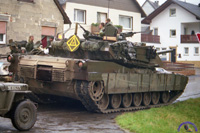
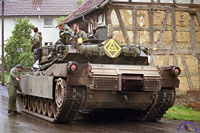
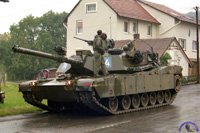
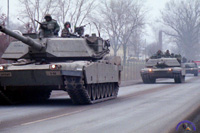
| I have sent you several photos from my extensive archives - they show 1st and 3rd Squadron scenes shortly after the 11th ACR transitioned to the M-1 Abrams tank . Some of the photos are from a REFORGER field exercise. | ||||||||||||||||||||||||||||||||||||
|
||||||||||||||||||||||||||||||||||||
| 1974 | ||||||||||||||||||||||||||||||||||||
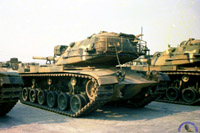
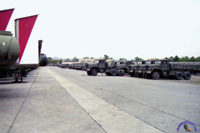
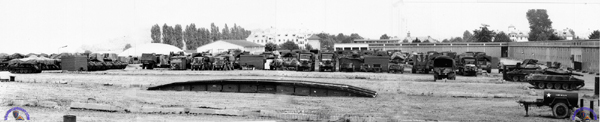 8. 1st Squadron Motor pool, 1974 |
||||||||||||||||||||||||||||||||||||
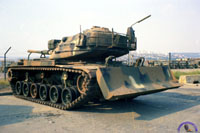
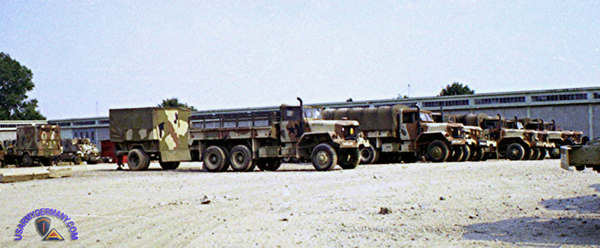 8A. 1st Squadron motor pool, 1974 |
||||||||||||||||||||||||||||||||||||
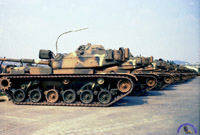
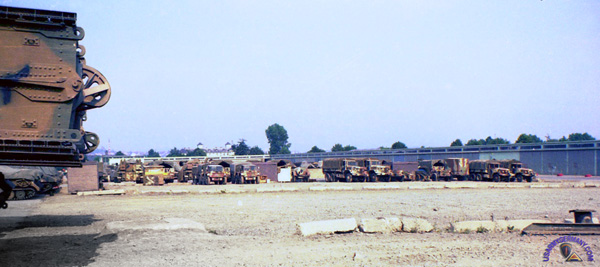 9. 1st Squadron motor pool, 1974 |
||||||||||||||||||||||||||||||||||||
|
||||||||||||||||||||||||||||||||||||
| 1980s | ||||||||||||||||||||||||||||||||||||
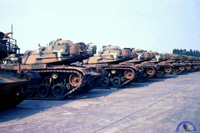
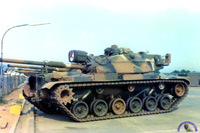
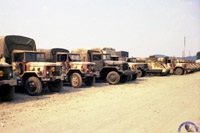
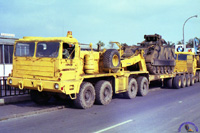
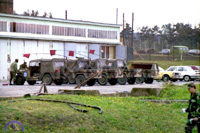
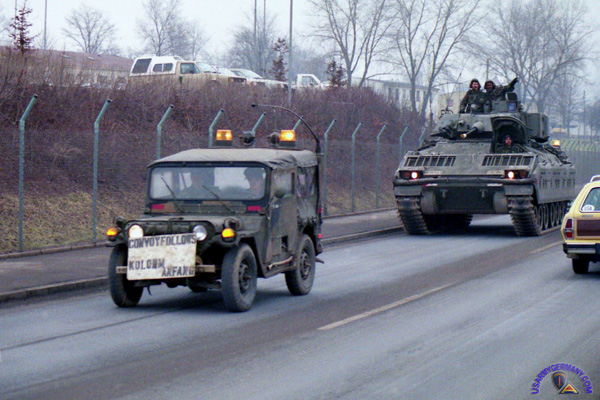 19. 1st Squadron convoy near Downs Barracks, 1980s |
||||||||||||||||||||||||||||||||||||
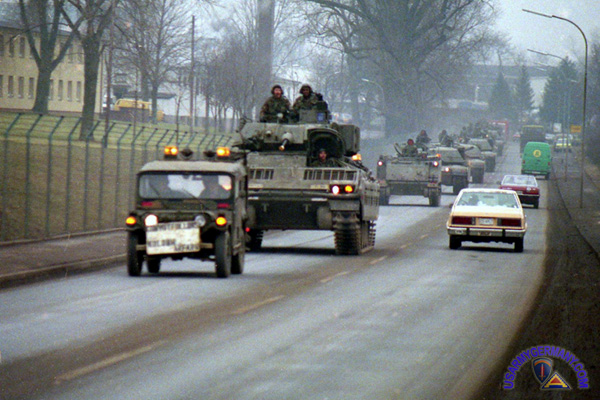 20. Returning from the field, 1980 |
||||||||||||||||||||||||||||||||||||
|
||||||||||||||||||||||||||||||||||||
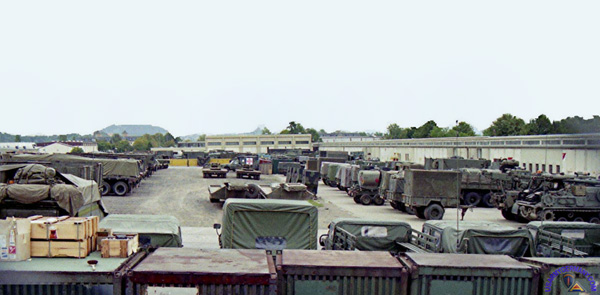 23. 1st Squadron motor pool, 1987 |
||||||||||||||||||||||||||||||||||||
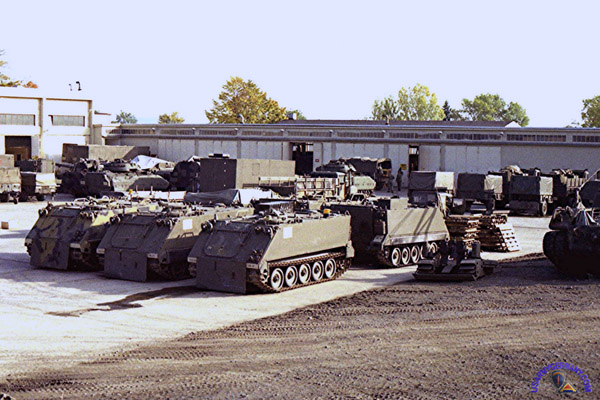 24. Motor pool, 1980s |
||||||||||||||||||||||||||||||||||||
|
||||||||||||||||||||||||||||||||||||
|
||||||||||||||||||||||||||||||||||||
| 2nd Squadron / Battalion | ||||||||||||||||||||||||||||||||||||
| Pinder Kaserne, Landshut (1957 - 1964) | ||||||||||||||||||||||||||||||||||||
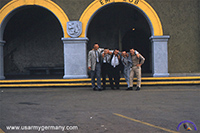
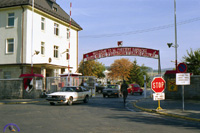
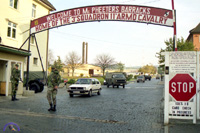
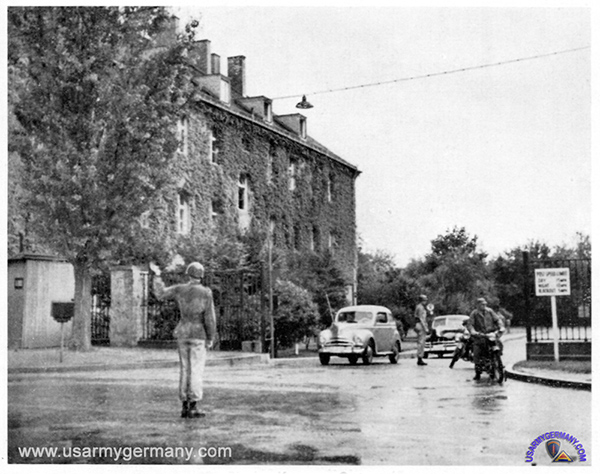 Main gate area, Pinder Kaserne, Landshut, 1954 |
||||||||||||||||||||||||||||||||||||
| (Source: Email from Marvin Pearlstein) | ||||||||||||||||||||||||||||||||||||
| I just read online a lot of information, and I do remember Col Snee. I was invited to his home in Regensburg, and he loaned me his leather boots for a show I was putting on for the USO in Landshut, Germany. When I was inducted by my letter of greetings to report to 39 Whitehall St, in Manhattan, NY. On January 13, I was taken to Fort Dix, NJ. by an Army bus. On the 3rd day after tests, we were told we were going to Fort Knox, Louisville, KY to be trained by the 6th Armored Cavalry Regiment. We would be the 11th Armored Cavalry Regiment would be replacing the 6th in Germany in one of three towns, those you mentioned. I was in the 2nd Battalion. After Basic Training, I went to the (TIE) Troop Information & Education school in Fort Slocum, NY. My friend who was stationed in Regensburg with my outfit went to the same school and he also was an S3 clerk. In 1958 there was a crisis in Lebanon, I believe in May or June 1958. The Army was thinking of sending us to Germany right away to replace the 6th ACR that would go to Lebanon, but that never happened. I was stationed at the Pinder Kaserne in June of 1958 and left for the States in Dec 1959 the time our outfit Gyroed back home. I worked for S3 as a clerk typing training schedules for all the companies of the 2nd Battalion and many other things. Colonel Donald A. Kersting was our battalion commander. Major Sevdy worked for Col Snee. Saw the picture above (main gate Pinder Kaserne), and it looks familiar to me other then there was, to the left of the soldier in the foreground, a small protected space with a roof that was large enough to accommodate a couple of MP's that would allow you inside the Kaserne. Usually one was on duty. On the far right, which isn't shown, was where the MP's would be if you needed to speak to them for whatever reason. The building is right on. When I was there you could buy a slice of Pizza at the NCO club that was absolutely delicious. On a (CPX) Command Post Exercise or (FTX) Field Training Exercise, we would go to Grafenwoehr or Hohenfels. I was searching for the name of a General who was either head of the 3rd Army or the 7th Army and can’t find his name. To memory, it sounded like Gen Algers, or Elgers something like that. I suppose I have the spelling wrong. But I met him at the British Post in Bergen Hohne when we were shipped up there end of March, and left sometime in May during some kind of a stand off between President Eisenhower and the Soviet Union. I enjoyed reading what you posted. |
||||||||||||||||||||||||||||||||||||
| Daley Barracks, Bad Kissingen (1972 - 1994) | ||||||||||||||||||||||||||||||||||||
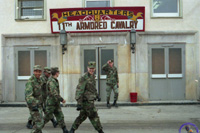
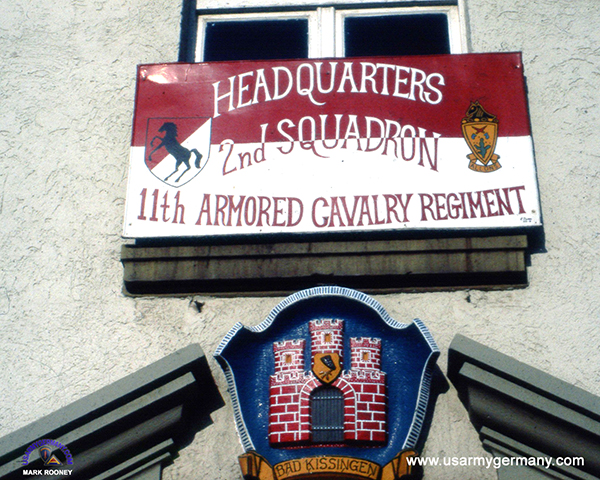 Sign above entrance to headquarters building, Daley Barracks, early 1980s (Mark Rooney) |
||||||||||||||||||||||||||||||||||||
|
||||||||||||||||||||||||||||||||||||
| 3rd Squadron / Battalion | ||||||||||||||||||||||||||||||||||||
| Fort Skelly, Regensburg (1957 - 1964) | ||||||||||||||||||||||||||||||||||||
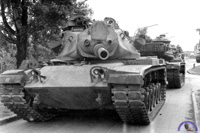
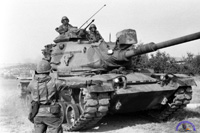
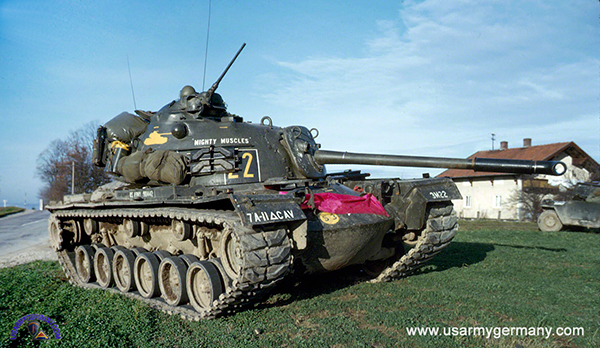 M-48 Patton tank of "M" Company, 3rd Battalion, 1963 (Mike Dolan) |
||||||||||||||||||||||||||||||||||||
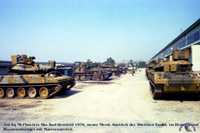
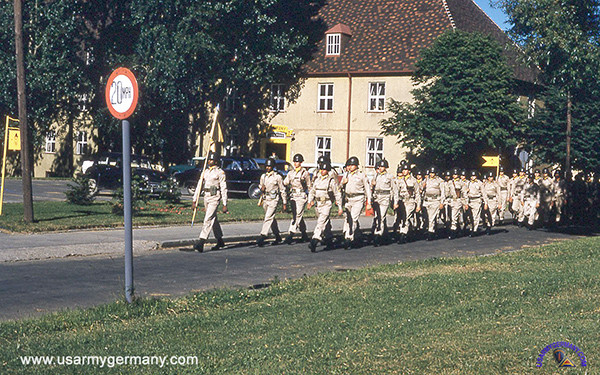 3rd Battalion at Fort Skelly, Regensburg, 1957 (Webmaster's collection) |
||||||||||||||||||||||||||||||||||||
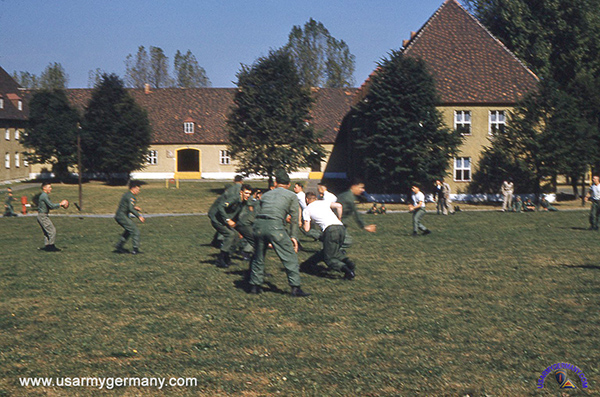 3rd Battalion at Fort Skelly, Regensburg, 1957 (Webmaster's collection) |
||||||||||||||||||||||||||||||||||||
|
||||||||||||||||||||||||||||||||||||
| McPheeters Barracks, Bad Hersfeld | ||||||||||||||||||||||||||||||||||||
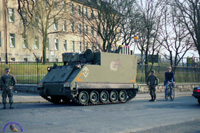
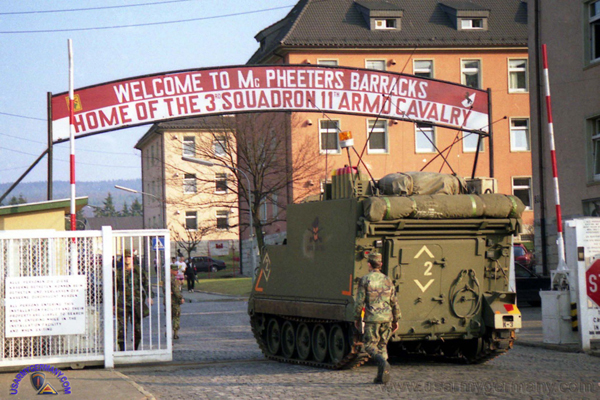 An M577 tracked vehicle enters the main gate (Siegfried Walter) |
||||||||||||||||||||||||||||||||||||
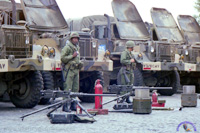
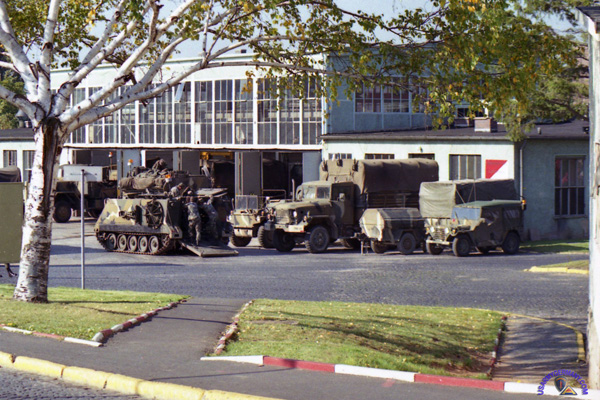 Shop area (Siegfried Walter) |
||||||||||||||||||||||||||||||||||||
| 1970s - Early 1990s | ||||||||||||||||||||||||||||||||||||
| (Source: Email from Siegfried Walter, Germany) | ||||||||||||||||||||||||||||||||||||
|
||||||||||||||||||||||||||||||||||||
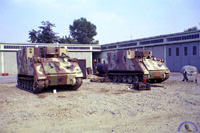
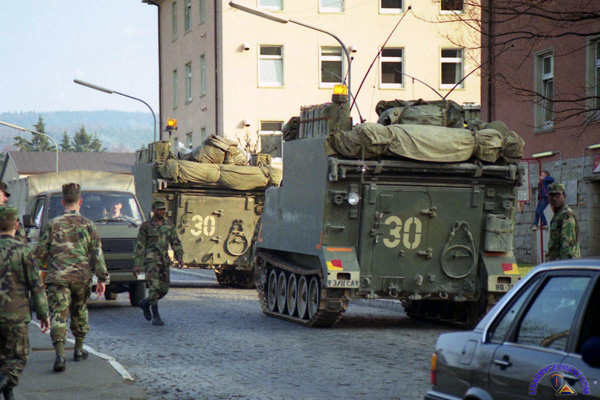 11. A pair of M577's return from a field exercise (Siegfried Walter) |
||||||||||||||||||||||||||||||||||||
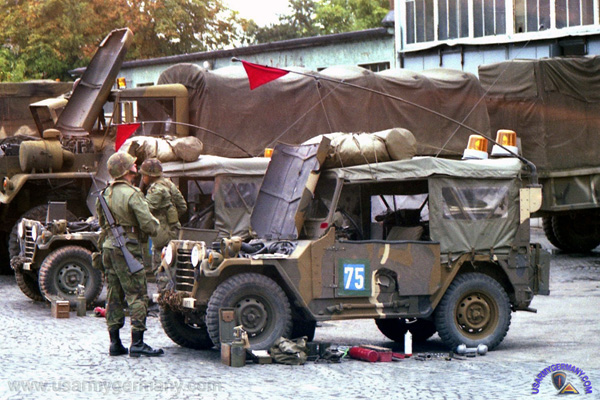 12. Getting ready for REFORGER (Siegfried Walter) |
||||||||||||||||||||||||||||||||||||
|
||||||||||||||||||||||||||||||||||||
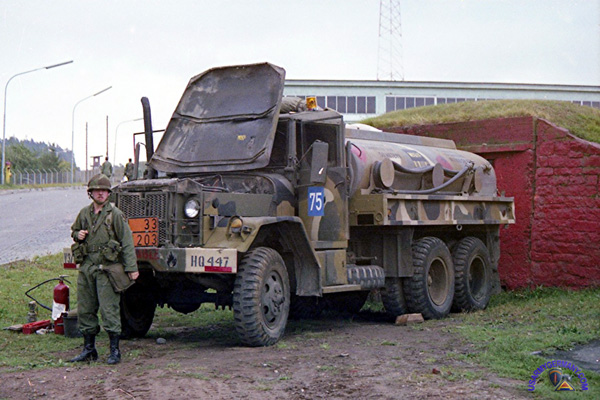 24. REFORGER 1983 |
||||||||||||||||||||||||||||||||||||
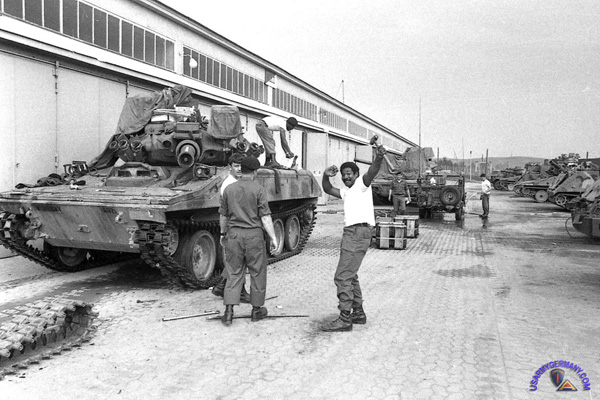 24. Working in the motor pool |
||||||||||||||||||||||||||||||||||||
| |
||||||||||||||||||||||||||||||||||||
| 3rd Squadron, 11th ACR at Bad Hersfeld - DIORAMA | ||||||||||||||||||||||||||||||||||||
|
||||||||||||||||||||||||||||||||||||
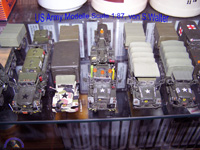
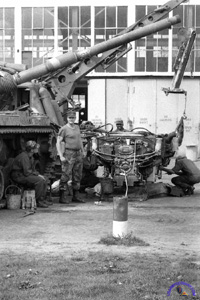
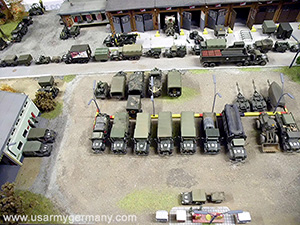
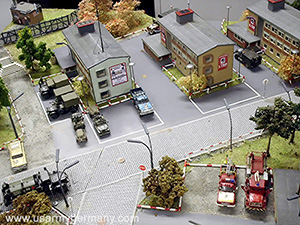
| Siegfried "Siggi" Walter from Kassel, Germany, who has provided us with some really great photos of the 11th ACR from the 1970s and '80s, has been working on a very large diorama of a complete Blackhorse kaserne.
The two enclosed pictures are just a partial view of the diorama layout and will give you an idea of the amount of detail that Siggi is putting into this project. His current project task is to add a maintenance scene in the motor pool area where the engine pack of an M-60 Patton tank is being removed from the tank's engine compartment. What Siggi needs are good photos showing engine and compartment details to make the scene as detailed and realistic as possible. If you have any photos or information that you think would be helpful, please contact the webmaster or Siegfried Walter. |
||||||||||||||||||||||||||||||||||||
| |
||||||||||||||||||||||||||||||||||||
| Aviation Company / 4th Squadron | ||||||||||||||||||||||||||||||||||||
| 1984 | ||||||||||||||||||||||||||||||||||||
| (Source: Email from Don Long) | ||||||||||||||||||||||||||||||||||||
I have thoroughly enjoyed your site ever since I stumbled across it a few years ago. My first overseas assignment was to Fulda with the Aviation Squadron of the 11th ACR on Sickles Army Airfield. I got there in Apr 1984 as an E2 Private and left Oct 1985 as an E4 Specialist. When I first arrived the Squadron was composed of During my time there we spent a lot of time at Graf, (Squadron Beer Halls at Graf) Reforgers, MRE (Maneuver Rights Exercises) and so on. Our pilots flew the "trace" constantly, from wherever we were. We did have the distinction of performing the "1st Aviation Decon" in USAREUR (or so said Stars and Stripes). During my 18 months there, I had the privilege of working with at least 3 future Generals - CPT J.D. Thurman, CPT Rickey Rife, CPT John Curran (might be more). LT Ozzie Gorbitz (love the name) was our HHT XO and eventually left the Army to fly jets for the AF and last I had heard made full bird. Our Squadron Commander during most of my time was LTC Patrick (Buda) Bodelson (he looked like his nick-name). Our Sergeant Major was CSM Dobbins. We also had the 511th MI Company on the airfield with us. One of my running buddies (Billy-Ray) was "detached" as crew chief on one of their UH-1s. It had DILLIGAF stenciled across the nose. Gotta love it. We were basically a self-supported Squadron within a self-supported Regiment (I always felt like the 11th ACR was a "pocket" division). Our Aviators, however, were going to stem the Red Horde all by themselves (and I think we could have). I wasn't "command-sponsored" but I had just got married so I brought the Mrs. over and we lived in Neuhof, about 15 km from the airfield, under the big salt mountain. Rent was cheap (great exchange rate) and our landlord was a German who was the Head Butcher at our commissary. We'd go in to get some meat for a party or cook-out and he'd whip out his magic marker and write "half-price/freezer burnt" on the steaks and we get out with 20 lbs of steak for $10. Great guy - his wife was Canadian and twice a year they would go Canada to see her family, and that's the only time he'd ever ask me for anything. He wasn't allowed to shop on post even though he worked there, so when they went to Canada he'd ask me to buy him some deodorant. You old-timers know that deodorant wasn't a highly stocked item in the German stores. We spent a lot of time downtown at the Irish Pub. Guinness beer and darts. That bar was "ours". The tankers from main post (Downs Barracks) had their bars and we had ours. We didn't mingle together very well. It wasn't uncommon to be at the Irish Pub and have the Squadron S3 or any one of the Troop Commanders be there and buy a round. I managed to get a lot of "work" done on Fridays and Saturday nights - go in Monday morning an remind the Commander what he promised me Saturday night over a beer........worked every time. Some other notable notables: CPT Glenn Botkin was our Commo Officer. Had a great little gang of guys doing stuff that wasn't invented yet. We talked to everyone, everywhere. My newborn baby daughter was the first baby he held - he used to stop by our place on the way home sometimes - said we were on the way - he lived 30 klicks the other way. 1LT Lawrence Montogomery was my initial NBC Officer. Hard worker, tried real hard and eventually got it done. He was replaced by a 1LT Arrendondo, good guy also. CPT Dixon was our S1 & taught me a lot about Army paperwork. CPT Cash Striplin was our S3 and used to take his dog to the field - in a Huey. CPT Butler was S4. All you had to do was think about needing something and it was there - brand new, ready to use. Going back to Gorbitz and Curran, CPT Curran was the HHT Commander when I got there and he and the XO and 1SG set me up when I got one of my promotions. I got called into his office, asked some questions about some missing equipment, read my rights - and then 1SG called "attention to orders" and promoted me. Won't forget that one for a while. Got to go back during Christmas 2002 and was saddened to see that the airfield was basically gone. The 511th MI barracks and the Airfield Base-Ops buildings were all that was left. The rest of the area was being turned into a housing area. Main post (Downs Barracks) had been turned over the Germans also and the Polizei had some buildings, some other businesses had moved in and post housing was occupied. Have a lot of bitter-sweet memories of that assignment. You don't realize what a good organization that you are a part of until you leave and get stuck in some other not so high speed units. Kinda miss the place. Thanks for letting me ramble on - BTW - when do YOU find time to do anything else? Every time I check the site you've added something. Thanks a bunch a please keep up the outstanding work. |
||||||||||||||||||||||||||||||||||||
 |
||||||||||||||||||||||||||||||||||||
| 1988 | ||||||||||||||||||||||||||||||||||||
| (Source: BLACKHORSE, May 1988, p. 3) | ||||||||||||||||||||||||||||||||||||
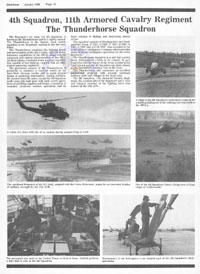
| Blackhawks for the Blackhorse.
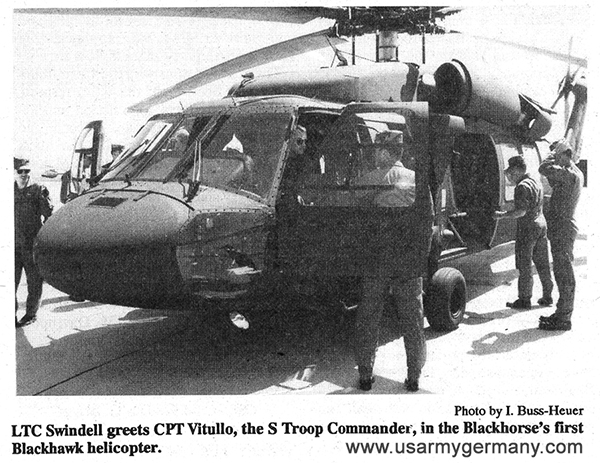
On 11 May, S Troop, 4/11 ACR received the first of its fifteen UH-60A Blackhawk helicopters. Six Blackhawks were flown from Ramstein Air Base between 11-13 May to their new home at Sickels Army Airield. Each of the Regiment's newest six aircraft, all built in the month of March 1988, are replacing six UH-1H aircraft built as long ago as 1967, which made them older than some of the pilots flying them. The first aircraft arrived at 1400 hrs, flown by CPT Roland Vitullo, the S Troop Commander, and CW3 James Helton, the Squadron Utility Standardization Instructor Pilot. The two crew chiefs were SGT Helton from AVUM Troop (CW3 Belton's younger brother), and SP4 Harrel from S Troop. Upon arrival CPT Vitullo stated, "We are all excited about the Blackhawks, we just flew 198 kilometers in 48 minutes. This is quite an aircraft, it is going to change the way we do business." S Troop will continue its UH-60A fielding with three more aircraft in August, and with the final six in September. The Squadron will also receive three UH-60A for the HHT Combat Aviation Platoon in August and three EH-60A for the CEWI Platoon in December. The UH-60 helicopter is a twin-engine, single-rotor aircraft. It has a crew of three and can carry up to 14 combat-equipped troops. With a top airspeed of 193 knots, the Blackhawk can move faster across the battlefield than a UH-1, and transport twice the internal load and three times the external load of the Huey. Capable of carrying 8000 lbs on an external slingload, the UH-60A will greatly enhance the resupply capability of the entire Regiment, specifically in the areas of ammunition, fuel and spare parts. The incorporation of the UH-60A into the Blackhorse Air Assault School will also enable the Air Assault graduates to develop the fundamental air assault skills with the newest assault aircraft in the Army inventory. The Blackhorse welcomes its newest aircraft of the combined arms team - the Blackhawk, an outstanding, proven assault helicopter. |
||||||||||||||||||||||||||||||||||||
|
||||||||||||||||||||||||||||||||||||
| Combat Support Squadron | ||||||||||||||||||||||||||||||||||||
| 1985 | ||||||||||||||||||||||||||||||||||||
| (Source: Wikipedia, accessed April 3, 2019; various BLACKHORSE issues) | ||||||||||||||||||||||||||||||||||||
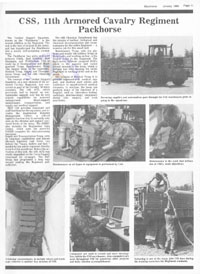
| (Combat Support Squadron (Nickname: "Packhorse"), was activated in Fulda, Germany under the command of LTC RonaldF. Kelly on 17 September 1985. Initial organization included five units:   Headquarters and Headquarters Troop ("Wolfpack") Maintenance Troop ("Blacksmith") Supply and Transportation Troop ("Stallions") Medical Troop ("Lifesaver") 54th Chemical Detachment ("Dragon") Headquarters and Headquarters Troop ("Wolfpack") Maintenance Troop ("Blacksmith") Supply and Transportation Troop ("Stallions") Medical Troop ("Lifesaver") 54th Chemical Detachment ("Dragon")The squadron also operated the Regimental Material Management Center which had the responsibility for the overall logistics state of the regiment. Elements of the squadron were based at both Fulda, Bad Hersfeld, Bad Kissingen and Wildflecken. The squadron was large for a battalion-sized unit, as the Maintenance Troop alone had some 400 soldiers assigned. The Packhorse provided logistical support during both the frequent regimental maneuvers of the Cold War and at gunnery exercises at Grafenwoehr, where the squadron operated for weeks at a time while the cavalry troops and tank companies rotated through the firing ranges. |
||||||||||||||||||||||||||||||||||||
| (Source: BLACKHORSE, May 1988) | ||||||||||||||||||||||||||||||||||||
| The Combat Support Squadron (CSS) is in effect a mini-Support Command. The addition of the CSS in 1985 allowed the Regiment to free itself of the old support cord to V Corps, making the Regiment practically self-sustaining, and also increased its combat staying power immeasurably. |
||||||||||||||||||||||||||||||||||||
| 1988 | ||||||||||||||||||||||||||||||||||||
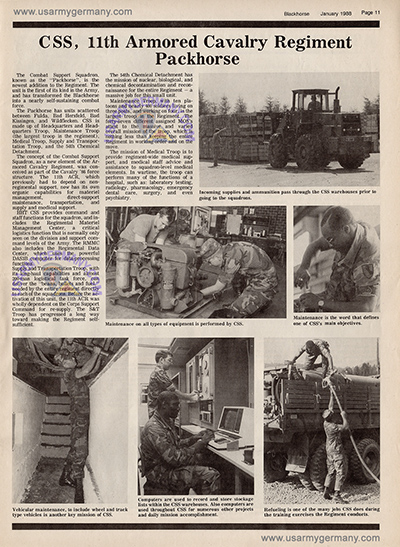 Combat Support Squadron, 1988 (Webmaster's collection) |
||||||||||||||||||||||||||||||||||||
| 1990 | ||||||||||||||||||||||||||||||||||||
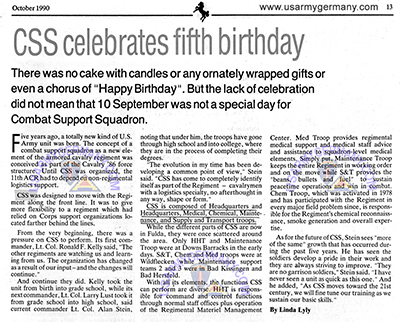 CSS celebrates 5th anniversary, 1990 (Webmaster's collection) |
||||||||||||||||||||||||||||||||||||
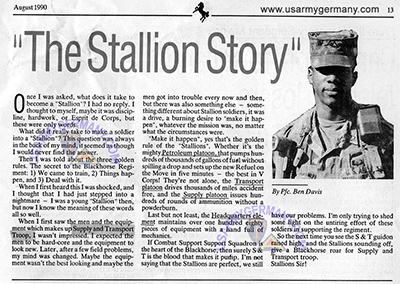 Supply and Transport Troop, 1990 (Webmaster's collection) |
||||||||||||||||||||||||||||||||||||
| 1993 | ||||||||||||||||||||||||||||||||||||
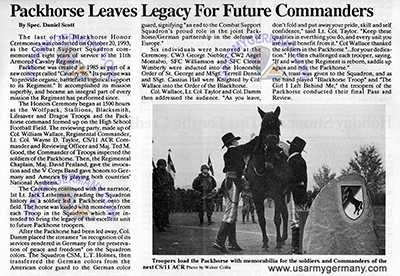 CSS inactivated in 1993 (Webmaster's collection) |
||||||||||||||||||||||||||||||||||||
|
||||||||||||||||||||||||||||||||||||
| 58th Combat Engineer Company | ||||||||||||||||||||||||||||||||||||
| 1979 | ||||||||||||||||||||||||||||||||||||
| (Source: Email from David A. Smith) | ||||||||||||||||||||||||||||||||||||
| I was stationed in Fulda,Germany from 1979-1981. I was part of the 58th Combat Engineer Co. I was in "heavy junk" squad. MOS 62 Echo.
Heavy junk was the heavy equipment we operated (D-7 bulldozer, JD 410 backhoe, 2.5 cubic-yd scoop loader). It was "HEAVY JUNK".
The guys used to have a joke about the combat engineers (MOS 12 Bravo): MOS 11 Bravo is infantry. 12 Bravo was infantry that "blew shit up". The airfield with Huey's and Cobra's had a light that had 1 spotlight on one side and 2 on the other. It took a while to get used to the "blink -- blink-blink" going 24-7. |
||||||||||||||||||||||||||||||||||||
|
||||||||||||||||||||||||||||||||||||
| 619th Armored Engineer Company | ||||||||||||||||||||||||||||||||||||
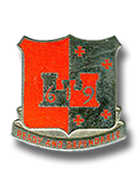 619th Armored Engineer Company DUI 619th Armored Engineer Company DUI |
||||||||||||||||||||||||||||||||||||
| 1960 | ||||||||||||||||||||||||||||||||||||
| (Source: Email from Karl Leuba) | ||||||||||||||||||||||||||||||||||||
| I read your unit history, and was surprised to learn that the 619th was stationed in Straubing.
I was a member of that unit, and recall having tickets to Regensburg, and orders to Straubing in October of 1960. The travel orders were wrong, the First, Second and Third Platoons were in Regensburg at that time, along with the CO, Major Corsen. The Fourth Platoon was assigned to Straubing, and I was eventually sent to that unit. We did bridge building exercises on the Danube River, and I was part of a detail that painted Fort Skelly God Awful Green. I took a slow motion fall from the top of the Theater Gables on that job when the extension ladder overbalanced. I won a competitive appointment to the Military Academy Prep School and left in August of 1961 during the alert that closed the border, and saw the Berlin Wall Built. At the time of the Alert I was on a detail to Passau building a Chapel on the Border Post there. I am also curious if the Chapel was ever finished. |
||||||||||||||||||||||||||||||||||||
| (Source: Email from Mike Welch) | ||||||||||||||||||||||||||||||||||||
| I read your article about the 11th AC and found it very interesting. I was a member of the 619th Engineer Company from August 1960 until January 1963, attached to the 11th AC. When I arrived our company was stationed in Straubing and later moved to Regensburg to Fort Skelly Kaserne. I have fond memories of the 83rd Army Band marching past our barracks and playing the "Colonel Bogey March". Also of the beauty of the Bavaria and the friendliness of the German people. The 619th was in support of the 11th AC and went into the field when they went. We helped build the chapel at Rotz border camp and it seems we were forever going to Hohenfels or Grafenwoehr for training. I have tried to locate a history of the 619th Combat Engineers but haven't had any luck. |
||||||||||||||||||||||||||||||||||||
| |
||||||||||||||||||||||||||||||||||||
| Related Links: Blackhorse Association - official web site of the 11th Armored Cav Association (Broken Link) Grenzer.com - An excellent web site that takes a close look at how the Interzonal border ("Iron Curtain") dividing West Germany from East Germany evolved over the years from a simple demarcation line to a heavily fortified and deadly border. (Broken Link) |
||||||||||||||||||||||||||||||||||||
|
||||||||||||||||||||||||||||||||||||
 .
.
 Combat Aviation Troop (CAT)

