| If you do
NOT see the Table of Contents frame to the left of this page, then
Click here to open 'USArmyGermany' frameset |
|||||||||||||||||||||
|
Kaiserslautern
Army Depot |
|||||||||||||||||||||
|
|
|||||||||||||||||||||
|
|||||||||||||||||||||
|
|
|||||||||||||||||||||
|
|||||||||||||||||||||
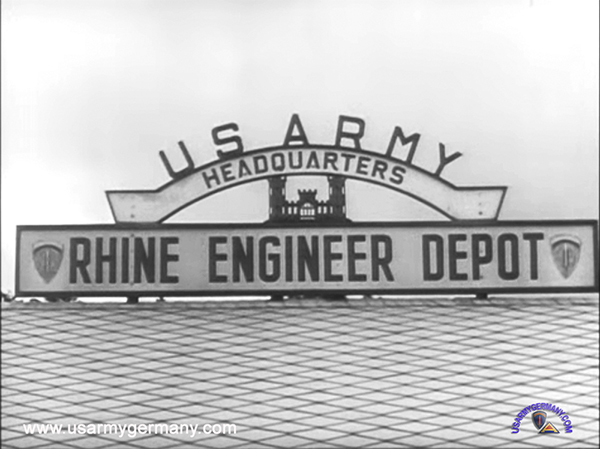
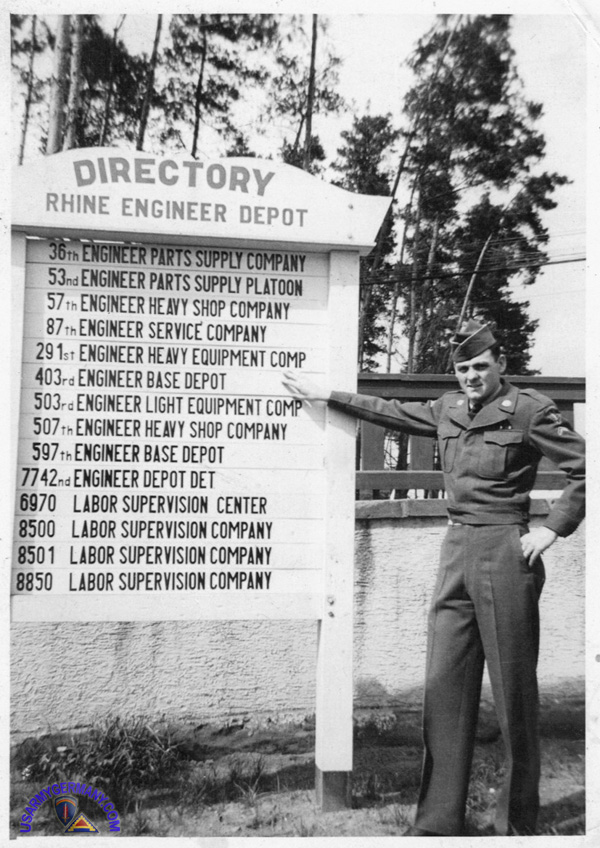
| Rhine Engineer Depot History | |||||||||||||||||||||
 |
|||||||||||||||||||||
 |
|||||||||||||||||||||
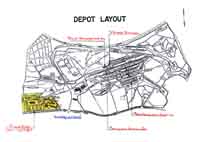
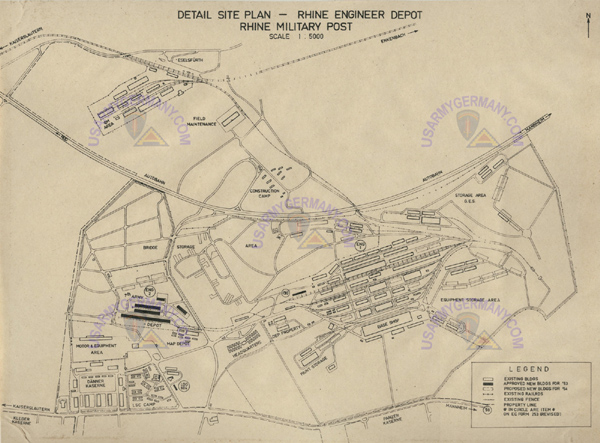 Detail Site Plan - Rhine Engineer Depot, 1953 (Webmaster's collection) (If you have additional maps, photos or information on the Kaiserslautern Army Depot, I would like to hear from you! Falls Sie ein deutscher Angestellter waren, können Sie auch gerne auf deutsch schreiben.) |
|||||||||||||||||||||
| 1951 - 1956 | |||||||||||||||||||||
| (Source: Rhine Engineer Depot, Unit History April 1951 - April 1956. APO 227 United States Army) | |||||||||||||||||||||
| After the war,
engineering material was scattered all over Europe. Dumps were abandoned,
depots were left with skeleton staffs, and units departed from the
scene of operations, leaving equipment behind, resulting in confusion,
theft, sabotage, and deterioration of equipment. An accurate accounting
of equipment and supplies did not exist. Much of this material was
usable and required to support the new status of an occupying force
instead of a combat situation. In 1946, the old German bridge depot at Hanau, Germany, which is near Frankfurt, was selected as a control storage point and vast quantities of equipment were gathered from the dumps in England, France, Germany and from all of the other Western European countries, and shipped to this depot. At Hanau this material had to be identified, classified, stored, unserviceable items disposed of, and serviceable items put into proper issue condition. This depot then became the Theater Engineer Supply Depot. The decisions made in 1950 brought about a movement of logistical functions west of the Rhine River and 1 May 1951, Rhine Engineer Depot was established here at Kaiserslautern, Germany. The concentration of all Army and Air Force logistical support activities of major importance within this mountainous area posed a problem of individual site selection. The few existing flat areas would have been more economical and would have permitted more rapid construction as well as more efficient operation and function. However, these were, in general, reserved for the Air Force. Accordingly, the site selection decision was, to construct at this location because of rail facilities, nearness to Autobahn, and source of utilities. Little significance was given to the need for camouflage or concealment. Actual construction began at Rhine Engineer Depot on May 3 1951. The depot was erected by troop labor, Labor Service personnel, and German contractors. The internal communications network of the depot includes eight miles of railway with switching facilities and twelve miles of roadway which connects with an entrance feeder to the autobahn. The approximate cost of construction was $38,000,000. All of the construction originally planned has been completed, except for minor road changes and hardstand construction. Rhine Engineer Depot is one of the more important supply installations in Europe today. It covers 821 acres near the shores of what was once a great lake stocked with prize fish for the private sport of Barbarossa, one of the first feudal emperors of Germany. In less than three years this once densely wooded area except fr the old German rifle range in the middle of it has been transformed into a modern, smooth-functioning engineer depot. As previously mentioned, construction began on the Depot 3 May 1951 and was essentially completed in late 1953. Situated three kilometers east of the city of Kaiserslautern, Rheinland-Pfalz, Rhine Engineer Depot was designed as a Class II Installation and operates directly under the (Chief) Engineer, Headquarters, United States Army, Europe. Western Area Command provides the essential logistical-administrative support to the depot, including housing, utilities, and personnel services. The Rhine Engineer Depot was established under the authority of General Order Number 2, Engineer Division, Headquarters EUCOM, dated 23 April 1951. Headquarters & Headquarters Company, 599th Engineer Base Depot, was relieved attached Hanau Engineer Depot and was attached to Rhine Engineer Depot 1 June 1952 by Movement Order Number 31, Engineer Division, Headquarters EUCOM, dated 19 May 1952. The 587th Engineer Welding Detachment was attached to Rhine Engineer Depot 25 June 1952 by Troop Assignment Number 17, Engineer Division, Headquarters EUCOM, dated 9 July 1952. General Order Number 2, Engineer Division, Headquarters USAREUR, dated 13 January 1953, redesignated the 36th Engineer Company Parts Supply, the 57th and 507th Engineer Heavy Shop Companies to 36th Engineer Co (Parts Depot), and 57th and 507th Engineer Companies (Depot Maintenance). Troop Assignment Number 1, Engineer Division, Headquarters USAREUR, dated 20 January 1953, assigned Headquarters and Headquarters Co, 599th Engineer Base Depot to Rhine Ordnance Depot with the following attached units: |
|||||||||||||||||||||
|
|||||||||||||||||||||
| General Order
Number 3, Engineer Division, Headquarters USAREUR, dated 23 January
1953, designated the Hanau Engineer Depot a sub-installation of the
Rhine Engineer Depot 1 January 1953. In addition, the following units
were designated as activities of the Rhine Engineer Depot: |
|||||||||||||||||||||
|
|||||||||||||||||||||
|
General
Order Number 32, Headquarters USAREUR, dated 3 April 1953, redesignates
the Bordeaux Engineer Rebuild Plant a Class I installation. In addition,
Troop Assignment Number 5, Engineer Division, Headquarters USAREUR,
dated 5 May 1953 placed it under the jurisdiction of Headquarters
USAREUR, Com Z.
General Order Number 56, Headquarters USAREUR, dated 22 June 1953, discontinued the Kassel Engineer Rebuild Plant 1 July 1953. Troop Assignment Number 6, Engineer Division, Headquarters USAREUR, dated 20 August 1953, attached the 8121st Labor Service Co to Headquarters and Headquarters 599th Engineer Base Depot. Troop Assignment Number 7, Engineer Division, Headquarters USAREUR, dated 1 September 1953, relieved the 8850th Labor Service Co from attachment to Rhine Engineer Depot and Headquarters and Headquarters Co, 599th Engineer Base Depot 15 September 1953. General Order Number 15, Engineer Division, Headquarters USAREUR, dated 21 September 1953, redesignated Headquarters & Headquarters Co, 599th Engineer Base Depot to Headquarters & Headquarters Co, 599th Engineer Group (Maint & Sup). General Order Number 16, Engineer Division, Headquarters USAREUR, dated 21 September 1953, inactivated the 522nd Engineer Refrigeration Maintenance Team and the 587th Engineer Welding Detachment. General Order Number 92, Headquarters USAREUR, dated 28 October 1953, redesignated the 7742nd Engineer Depot Detachment to Rhine Engineer Depot Augmentation Detachment 7742nd Army Unit, 20 November 1953. General Order Number 2, Engineer Division, Headquarters USAREUR, dated 19 March 1954, attached the 8121st Labor Service Co to Rhine Engineer Depot 25 March 1954. General Order Number 3, Engineer Division, Headquarters USAREUR, dated 1 April 1954, discontinued the Fulda Engineer Rebuild Plant 15 April 1954. Troop Assignment Number 6, Engineer Division, Headquarters USAREUR, dated 6 May 1954, relieved the 507th Engineer Co (Depot Maint) from attachment to Rhine Engineer Depot 1 June 1954. General Order Number 73, Headquarters USAREUR, dated 4 June 1954, discontinued the Hanau Engineer Depot 4 May 1954. Letter Headquarters USAREUR AG 323.3 GID-AGO, 18 Feb 1954, subj: "Distribution Mission of Toul Engineer Depot," and letter Headquarters USAREUR, AG 323.3 ENG AGO, 21 June 1954, subj: "USAREUR Depot Missions-Engineer" caused Toul Engineer Depot to assume the mission for all units in France effective 1 July 1954. General Order Number 8, Engineer Division, Headquarters USAREUR, dated 7 July 1954, discontinued the Kaiserslautern Engineer Rebuild Plant 1 July 1954. At this time, the Kaiserslautern In-Storage Maintenance Section, a sub-section under Storage Division, Rhine Engineer Depot, was originated. Troop Assignment Number 9, Engineer Division, Headquarters USAREUR, dated 22 September 1954, attached the 176th Engineer Platoon (Svc), activated pursuant to General Order Number 121, Headquarters USAREUR, dated 1954, to Rhine Engineer Depot 28 September 1954. Troop Assignment Number 9, Engineer Division, Headquarters USAREUR, dated 22 September 1954, the 87th Engineer Co (Svc) redesignated the 87th Engineer Co (Pipeline) was relieved from attachment to Rhine Engineer Depot 23 September 1954. Troop Assignment Number 10, Engineer Division, Headquarters USAREUR, dated 31 December 1954, relieved the 176th Engineer Platoon (Svc) from attachment to Rhine Engineer Depot 28 September 1954. General Order Number 231, Headquarters USAREUR, dated 31 December 1954, relieved the 470th Engineer Co (Fld Maint) from active military duty and transferred the unit to the military reserve at its home station of Quincy, Illinois, 22 February 1955. General Order Number 231, Headquarters USAREUR, dated 31 December 1954, transferred the 984th Engineer Co (Fld Maint) from the Continental United States, assigned it to Engineer Division, Headquarters USAREUR, and attached the unit to the Rhine Engineer Depot 21 February 1955, to replace the 470th Engineer Co (Fld Maint). General Order Number 10, Headquarters USAREUR, dated 11 January 1955, redesignated the Rhine Engineer Depot Augmentation Detachment, 7742nd Army Unit, to Headquarters, Headquarters and Service Co, Rhine Engineer Depot, 7742nd Army Unit, 1 February 1955. Unit remained assigned to Engineer Division, Headquarters USAREUR, and attached to Rhine Engineer Depot. General Order Number 28, Headquarters USAREUR, dated 28 January 1955, deactivated Headquarters and Headquarters Co, 599th Engineer Group (Maint & Sup) 1 February 1955. General Order Number 137, Headquarters USAREUR, dated 31 May 1955, relieved the 8850th Labor Service Co from attachment to Rhine Engineer Depot 1 June 1955. General Order Number 11, Engineer Division, Headquarters USAREUR, dated June 1955, discontinued the Nürnberg Engineer Rebuild Plant 30 June 1955. Letter Headquarters Engineer Division ENG 400 SUP, 23 June 1955, subj: "Plan for Continuation of Issue Mission at Rhine Engineer Depot." Spare Parts Division, Rhine Engineer Depot reassumed the issue mission for all units in Germany and spare parts support for all units in France effective 1 July 1955. Troop Assignment Number 7. Engineer Division, Headquarters USAREUR, dated 2 August 1955, relieved the 984th Engineer Co (Fld Maint) from attachment to Rhine Engineer Depot 15 August 1955. The Kaiserslautern In-Storage Maintenance Section was discontinued 31 March 1956. At the time of this writing (April 1956), the Rhine Engineer Depot has the following units attached: |
|||||||||||||||||||||
|
|||||||||||||||||||||
|
From
the time the Rhine Engineer Depot was established in 1951, until
the present day, the following officers have commanded the depot:
|
|||||||||||||||||||||
|
|||||||||||||||||||||
|
The
present Commander of the Rhine Engineer Depot is Colonel Eugene
P. Fahringer. Col Fahringer assumed command of RED 28 March 1956.
|
|||||||||||||||||||||
If you have more
information on the history or organization of the Kaiserslautern Army
Depot, please contact me . . |
|||||||||||||||||||||
|
|
|||||||||||||||||||||
1953 |
|||||||||||||||||||||
(Source: STARS & STRIPES, May 2, 1953) |
|||||||||||||||||||||
The Rhine Engineer Depot supplies the USAREUR Engineer Division. The depot's mission is to receive, store, account for, maintain and issue engineer supplies, spare parts and bridge equipment. It also provides in-storage maintenance and rehabilitation. The depot is also responsible for screening and approving control levels maintained at station level accounts in USAREUR, editing requisitions for supplies and authority to take necessary supply action. The depot's Maintenance Division controls maintenance activities through the depot base shop. The base shop comprises a complex of technical skills and facilities for repair and rehabilitation at all echelon levels. The Rebuild Division controls similar activities on a contract basis with plants located in Kaiserslautern, Fulda and Nuernberg. The depot provides field maintenance support for all authorized engineer equipment of US-origin, including that of 39th Engineer Gp units, but excluding 7th Army equipment. The depot also serves as a collection point for excess engineer materials in USAREUR and depot generated salvage, which it receives, stores, accounts for, segregates, classifies, and, upon instruction, disposes of. The depot is the parent organization for the Hanau Engineer Depot (which formerly had been the parent installation). |
|||||||||||||||||||||
(Source: STARS & STRIPES, May 13, 1953) |
|||||||||||||||||||||
Latvian labor service units, attached to the 311th Engineer Construction Group, were heavily involved in the construction of the Rhine Engineer Depot which began in May 1951. The first labor service unit to be committed to the project was the 8850th LS Engineer Construction Company (Latvian). The two other units were the 8361st and the 8503rd LS Companies. The latter two were pulled off the job last month as the project winds down toward completion. The depot construction project has consumed 1,000,000 man-hours and 500,000 machine hours in the past three years. In all, 130 buildings with 700,000 square feet of floor space have been constructed. In addition, 100,000 square feet of concrete roads and macadam pavement and 60,000 linear feet of piping were put in place. |
|||||||||||||||||||||
| 1954 | |||||||||||||||||||||
| (Source: THE MILITARY ENGINEER, Jul-Aug 1954, Society of Military Engineers, Wash. D.C.) | |||||||||||||||||||||
| Heavy Equipment Maintenance in Germany The Rhine River (Engineer) Depot specializes in repairing and rehabilitating all makes and models of heavy engineering equipment. Army engineers, American civilians, and German civilians and contract labor work side by side. More the 100,000 spare parts are stocked for the repair of cranes, tractors, and many other items. Equipment valued at $14,000,000 was repaired in 1952 at a cost of $240,000; and $22,000,000 worth at a cost of $510,000 in 1953. |
|||||||||||||||||||||
 |
|||||||||||||||||||||
| 1957 | |||||||||||||||||||||
| (Source: STARS & STRIPES, March 23, 1957) | |||||||||||||||||||||
The Rhine Engineer Depot (RED) is one of the most important supply operations in Western Europe today.
Commanded by Col James A. Thetford, the supply and maintenance complex covers 821 acres on the eastern edge of Kaiserlautern. The depot supplies and serves both Army and Air Force units. Acting as a "wholesaler," RED ships needed supplies in large quantities to distribution outlets within 7th Army and other supply points in Europe. These in turn supply the Army and Air Force using units. |
|||||||||||||||||||||
The Rhine Engineer Depot is divided into numerous divisions whose complex activities involve millions of dollars and thousands of employees and engineers. |
|||||||||||||||||||||
 |
|||||||||||||||||||||
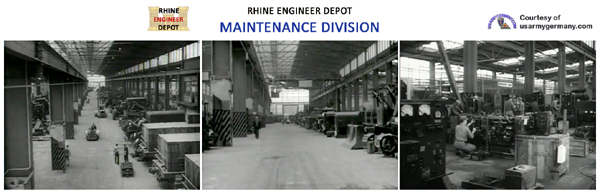
The Depot Maintenance Division runs a main (maintenance) shop which is 864 feet long, 172 feet wide and 56 feet high. The Engineer Contract Repair Office arranges for the rebuilding of expensive equipment (for more see USAREUR Rebuild Program Page), sometimes through German plants. (Life expectancy of rebuilt heavy equipment is 90 percent of new items and costs only 32 percent of the price of new items.) The Engineer Regional Maintenance Office sends out inspection teams to all Army and Air Force units in Germany and France to give technical advice and assistance for equipment provided by the depot. The Spare Parts Division performs stock accounting for more than 100,000 items, and runs a large warehouse with over 700,000 square feet containing 93,000 separate items. The Miscellaneous Service Division runs motor pools, performs housekeeking, maintenance, salvage and other jobs for the depot installation. |
|||||||||||||||||||||
 |
|||||||||||||||||||||
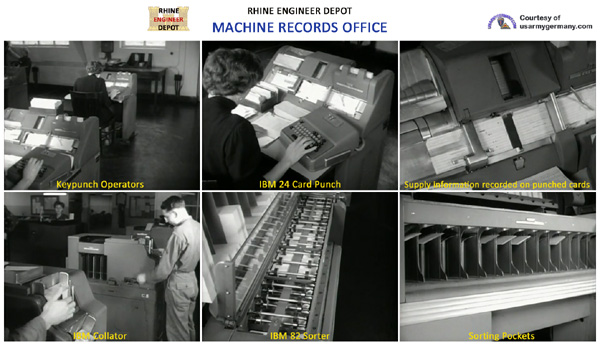
The Machine Records Division is RED's mechanical bookkeeper and accountant, employing Electronic Accounting Machines to streamline supply management. The Stock Control Division arranges the distribution of all items to the various outlet points. The Storage Division classifies and stores all items. |
|||||||||||||||||||||
|
|||||||||||||||||||||
36th Engineer Company (Parts Depot) |
|||||||||||||||||||||
(Source: Email from George Wilfong) |
|||||||||||||||||||||
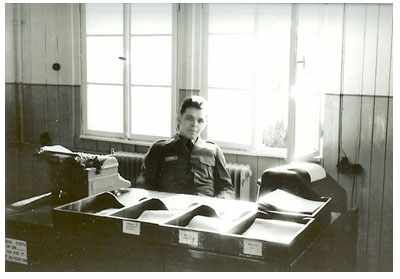
I served in the 36th Engineer Company from March 1960 to September 1962 when I returned to the states for discharge. I traveled to Germany on the USS Rose and returned on the USS Buckner. I think that one or both of these vessels were used during the early days of Vietnam to transport entire units from the states to Vietnam. My primary job was that of a teletype operator in the headquarters message center. I lived off post with my wife and we have returned to Kaiserslautern twice to visit some civilians that we knew. The Depot Commander at that time was Colonel Laugerman and the second in command was Lt. Col. Robinson and the Company Commander at the 36th was Captain Lugo. My memory of the place is very much the same as that noted by other contributors. It was a big sprawling place with every conceivable type of item stored there. WWII had been over for only about 15 - 17 years at that time so many of the civilians working there and the labor company personnel were WWII veterans. That was a long time ago and I last drove through there in the 1990's and it still looked much the same. |
|||||||||||||||||||||
|
57th
Engineer Company (Depot Maintenance)
|
|||||||||||||||||||||
|
(Source:
Email from Terry Edlin, 57th Eng Co (DM), 1956-1959)
|
|||||||||||||||||||||
|
|||||||||||||||||||||
|
While
at the depot I had several different jobs after the first year.
I overhauled tracks for the D7 and D8 caterpillars, I also worked
in the Trailer Section, Bridge Boat Section, and various truck and
engineering equipment sections. I also worked in the Minor Repair
Section, where we deprocessed, tested, repaired and reprocessed
equipment for storage.
During this time we went from the brown shoe army to the green army, never did like those shorts they gave us to wear. I also served 3 months in the Depot Security Section where we were gate guards, and made roving jeep patrols in the depot. I spent most of my off duty time the last couple of years in a small town of Otterberg enjoying the German culture. Reluctantly I departed Germany in DEC. 1959 with the wish to someday return. Terry Edlin |
|||||||||||||||||||||
(Source: Lineage & Honors, Engineer Branch, US Army Center of Military History website) |
|||||||||||||||||||||
The 57th Engineer Company was inactivated in Germany on 20 September 1975. |
|||||||||||||||||||||
693rd Engineer Co (Depot) |
|||||||||||||||||||||
(Source: Email from Ron Wilwerding) |
|||||||||||||||||||||
I served in the message center of the Depot Hdqtrs from September 1957- April 1959 under Major Robert Wilson, Adjutant. Our group was also involved in the disposal of the surplus equipment for that period. This equiptment was cataloged; advertised and auctioned on a bi-monthly basis. Bidders at these auctions were Middle-eastern countries and metal dealers from across western Europe. I lived off-post with my wife in the Romaweg region of the city. I have returned to the Depot on several occasions and have visited the children of the family we lived with. My last visit to the depot was in the late 1980's, early 90's. At that time I was amazed at how little had changed. My time with the 693rd, with Captain Robert Braun, comanding officer, company M/Sgt Ginn and Battlion M/Sgt Wright developed life long disciplines, mental toughness and leadership skills that propelled my civilian career. I shall forever remember them with respect and appreciation. |
|||||||||||||||||||||
|
|||||||||||||||||||||
|
|
|||||||||||||||||||||
| US Army General Depot, Kaiserslautern | |||||||||||||||||||||
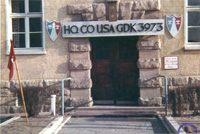
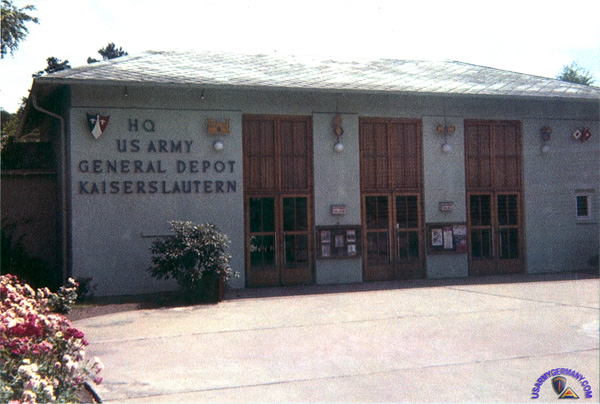 HQ USAGDK, Kaiserslautern (Photo: Frank Matheny) |
|||||||||||||||||||||
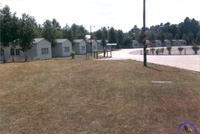
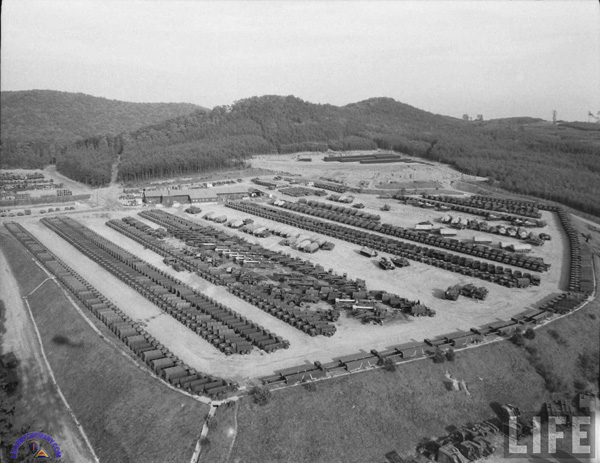 Open storage area at Kaiserslautern Army Depot, 1963 (TIME, Inc.) |
|||||||||||||||||||||
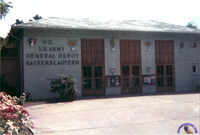
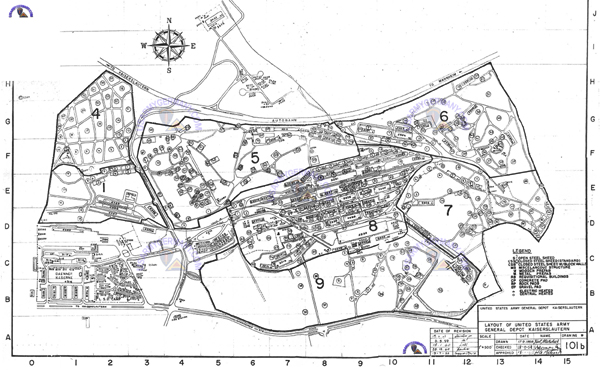 US Army General Depot Kaiserslautern, 1962 (Webmaster's collection) |
|||||||||||||||||||||
| 1963/64 | |||||||||||||||||||||
| (Source: Welcome to the United States Army General Depot, Kaiserslautern. Welcome Booklet issued by USAGD-K, APO 227, US Forces, in 1963/64, to newly assigned/attached soldiers.) | |||||||||||||||||||||
| Located just
east of the city of Kaiserslautern, this is the largest US General
Depot in Germany. The location is centered within excellent road and
rail nets, and affords direct access to the east-west autobahn. Our
position, west of the Rhine but well forward on the line of communications,
permits rapid support to USAREUR tactical units. Construction of this depot began in 1951 and was completed in 1953. The value of this facility is estimated at $12,200,000. Fixed investment includes warehouses, storage sheds, storage hardstands, maintenance and repair shops, and office buildings, plus road and railroad access connections. The depot mission area covers an area of approximately 540 acres. |
|||||||||||||||||||||
|
|||||||||||||||||||||
| Organization
elements consists of a TD Company (Headquarters Co, USAGDK), four
TO & E Companies (36th Eng Co (Parts Depot); 57th Eng Co (Heavy
Maint); 693rd Eng Co (Depot), ?), a Labor Service Company (8593rd
LS Eng Bridge Maint Co) and a Civilian Support Group (8121st CS Gp),
plus our large work force of Local National civilians. These diverse
elements work together daily in a spirit of mutual understanding and
cooperation. This depot contributes significantly to the annual mission accomplishment of 4th Logistical Command. Our resources consist of an extensive physical plant, an experienced labor force, and a large in-storage inventory. US Army General Depot Kaiserslautern stands ready, under any contingency, to accomplish its assigned tasks in support of USAREUR tactical missions. |
|||||||||||||||||||||
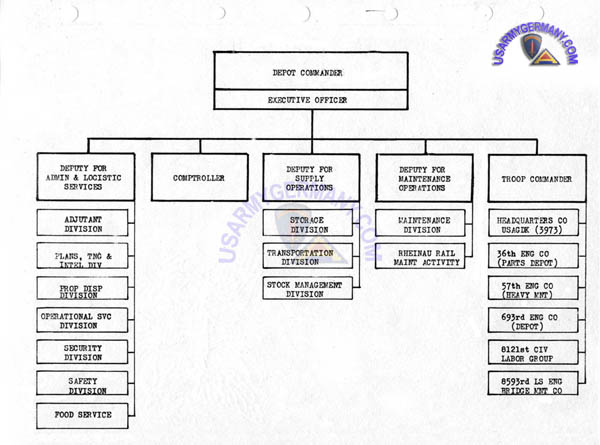 USAGDK Mission Statement & Organizational Chart, 1963 (click on image to view complete document) |
|||||||||||||||||||||
| 1958 | |||||||||||||||||||||
| (Source: Email from Gary Mladjan) | |||||||||||||||||||||
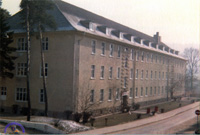
I served at the (Kaiserslautern General) Depot from Sept. 1958 thru Sept. 1960 and assigned to the Headquarters & Headquarters Company. Living quarters were in the Daenner Kaserne, a series of five thick-walled, steam-heated, four-storied, with attic and basement Buildings. The 693rd (Engr Co) had it's own building as did the Hq Company. The 36th (Engr Co) and the 57th (Engr Co) shared a building. The other two buildings were occupied by some 7th Army Troops, who we had little to do with. The Hq Co. building was also the home of the Kaserne Guard detail and had a tailor shop for the Hq Co personnel. Pressed Class A uniforms were the order of the day for the HQ troops.
The Depot personnel had their own mess hall, staffed by Army cooks and bakers with the KP handled by German civilian ladies. There was an NCO Club, with good Steaks and Pommes Frites next to the mess hall and a beer shack across the street for the lower enlisted ranks.
Mostly we walked to work, up the hill to the depot Headquarters. This was a sprawling single story building that housed all of the Depot offices, Depot Commander, Personnel, Property Disposal, Troop Commander and the various Branch Representatives. I seem to recall there were 70 some officers and 30 some enlisted in the building along with around 300 civilians, male and female, administrative types, mostly in the Property Disposal Sections. A few were American DAC's (Department of the Army Civilians). There was a reasonably good snack bar and a barbershop for the Officers and Headquarters troops use only. Haircuts were $.25 or 1 DM. Monday, Wednesday and sometimes Friday were haircut days to keep the hair as long as possible and still pass inspections.These were almost daily in the Hq. (Long hair and European style clothing were an asset when traveling on the "economy")
The Colonel in charge, when I left was John B. Laugerman. There was a Col before him, but he went to the 2nd Log at Fort Ord, CA. (He was CO there when I was sent there to finish out my time) The Adjutant was Major Robert D. Wilson. Lt Col George Conley was the Troop Commander and my leader was Major Dayton S. Pickett, a West Pointer, who was as sharp as any officer I ever ran across. Funny how you remember initials. I also remember at Capt Lothar Fox, Maj James Crawley and Capt Lugo, although I didn't know him well.
Lt Col Conley was a hard nosed Infantry Commander, who must have done something wrong to end up at the depot. He just couldn't get the Depot guys in the 693rd, the 57th and the 36th to be "parade ground" sharp and do a hour of PT every day either before or after working in the depot for an 8 or ten hour day. Needless to say, the HQ troops were a lost cause from the beginning. There were a lot of "old army" NCO's and even a few RIF M/Sgts who were waiting to get there "20" from WW II. The younger ones were mostly college grads who were finance specialists or engineers or some such. All a bunch of cream puffs who barely made it through basic training.
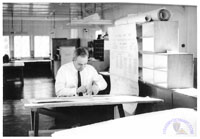
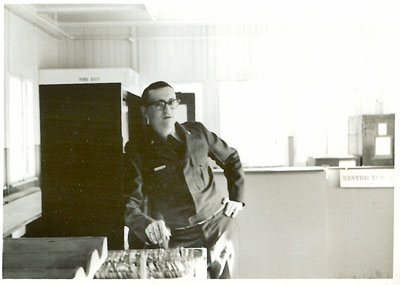
I was mostly in the Engineering Section and worked with Maj Pickett and Sp/4 Joe Riccini, and Sp/4 Pete Bernaki to develop the first color slides for the monthly Depot briefings to Gen Fleming, the 4th Log Commander, who came from Nancy, France every month. As I recall, he wanted to transfer all of us EM's to his headquarters to make the charts for him. Duty in France was as bad as it gets at the time (probably still is) and we were all able to get out of it. I was in the next wing from and in fact worked with Sp/4 Ron Wilwerding, Sp/4 Ron Heron, SFC F. F. Wright and Sgt Maj Marty Siegel all who were under Maj R.D. Wilson ably assisted by Fraulien Anita Kleber and PFC Earl C. Hill, who kept losing his false teeth. The PIO guy was Sp/4 Jerry Kaufman.
When things were slow with the charts, I helped out in the message center and mail room. Anita was the proud possessor of the only electric typewriter in the depot. Us underlings used it evenings and weekends for letters home when on Headquarters CQ duty.
Every once in a while, USAREUR would call a "practice alert" and everyone would grab their gear and weapons and head for preplanned position somewhere in the woods, where the Depot could continue operating from the field. Mostly it was a night out in the pup tents and "C" rations left over from WW II. Yes, the Lucky Strikes and Camels were that stale and so were the Hershey bars. The beef chunks and the brown bread were usually pretty good though. It only got scary one time when they also passed out live ammo. We thought for sure that the "balloon had gone up". That was also the morning that the Battery of 280mm cannons passed through town. Those are or were the ones that fired the nuclear projectiles. Luckily, for us and everyone concerned, it was a practice that went on for a little longer than usual.
We felt pretty safe in the Depot. There were some 300 or more acres of heavily wooded hillside with every piece of military equipment one could imagine stored there. No POL or Ammo. They were at other nearby Depots. There were a couple of Air Force installations close by, one for fighters and the other for missiles. We always liked to think they were there just for us. We didn't think of us being the U.S. at the time.
It was during this time that the Army started a program granting "Proficiency Pay" to certain critical MOS's. I was Regular Army and had MOS 811.10, Construction Draftsman, and I guess that was considered critical. I was in one of the first groups to take the test and luckily passed and was awarded an extra $100 per month. As I recall, base pay for an Sp/4 over 2 yrs was $225 per month, so this was huge. Six months later, they awarded second step proficentcy pay, another $50 per month. We were told to designate our rank as Sp/4-E4/P2. When sending for some records years later, the P2 designation was not recognized.
Kaiserslautern was known as "Sin City" at the time. It supported somewhere around 200 bars and many more times that in "Ladies of the Night". I remember the civilian population as being around 20,000 at the time. If I recall correctly, K-Town as it was known, was the home of the Pfaff Sewing Machine factory and I believe there was also a ball bearing factory there. The town was heavily bombed during WW II and was still in the process of rebuilding in the late '50s and later. The better civilian establishments were off limits to GI's in uniform and would allow a small number of Americans in civilian clothes who could speak passable German in as a guest in the dining room. The same could be said of the establishments out and away from town. Few of the troops had cars at the time so there was not much of a problem finding decent places on the"economy". I think most of the married enlisted who brought the wives over would agree that life in the area was good. Most of the "decent" people didn't want anything to do with the military from anywhere, so they kept to themselves. The men who were conscripted all claimed to have been on the "Eastern" front and said little more.
I was in Germany on business in the early 80's and went through Kaiserslautern. It was on a weekend, so most everything around the Depot was closed down. It looked the same (the hills and the woods) but it all seemed to be a little smaller now.
I have great memories of my time there and if all things were equal, I would probably do it again |
|||||||||||||||||||||
|
|||||||||||||||||||||
|
|||||||||||||||||||||
| 1963 | |||||||||||||||||||||
| (Source: Letter from Frank Matheny) | |||||||||||||||||||||
| I was stationed at HQCOUSAGDK from 1963-1966. The Chain of Command at that time was:  ? Commanding OfficerDavid D. Powell, Executive OfficerCapt P.C. Wilson, AdjutantCWO W-3 Marshal E. Cheek, Personnel OfficerWilbur Blair, Personnel SergeantNorman L. Bell, Sergeant MajorCapt Theordore S. Wilson, HQ Co CO ? Commanding OfficerDavid D. Powell, Executive OfficerCapt P.C. Wilson, AdjutantCWO W-3 Marshal E. Cheek, Personnel OfficerWilbur Blair, Personnel SergeantNorman L. Bell, Sergeant MajorCapt Theordore S. Wilson, HQ Co CO Other outfits at the depot at the time: 36th Engineers; 57th Engineers; Rheinau Railway Maintenance; 57th MP Detachment. |
|||||||||||||||||||||
|
|||||||||||||||||||||
| 1968 | |||||||||||||||||||||
| (Source: STARS & STRIPES, Sep 3, 1968) | |||||||||||||||||||||
| Engineer Maintenance Division The Engineer Maint Div is responsible for rebuilding German and US Army engineer equipment (ranging from 40-ton cranes to small generators) . The Division handles more 130 different lin items. There are twelve repair shops located in the large warehouse (as long as 2½ football fields) that is used by the Division on the KAD complex. Some of the shops: |
|||||||||||||||||||||
|
|||||||||||||||||||||
|
|||||||||||||||||||||
|
|
|||||||||||||||||||||
| Kaiserslautern Army Depot Complex | |||||||||||||||||||||
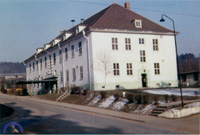
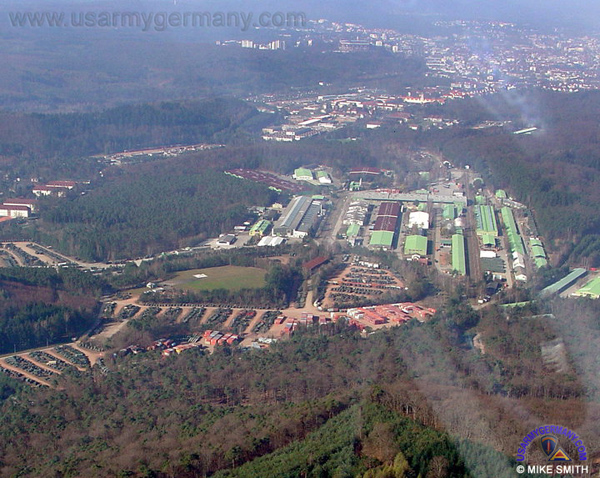 Kaiserslautern Army Depot (Mike Smith) |
|||||||||||||||||||||
| 1972 | |||||||||||||||||||||
| (Source: Email from Earl L. Benedict, 1972-74) | |||||||||||||||||||||
| I had the good
fortune to be assigned to Kaiserslautern
Army Depot Complex from 1972 to 1974. I was a Spec
4 when I ETSed. I worked in the PIO at the Depot HQ. In my position
I worked closely with Col. John K. Stoner Jr. Col. Stoner was truly
a great Man and went on to wear at least 3 stars according to information
that I got after I returned to civilian life. He appreciated the work
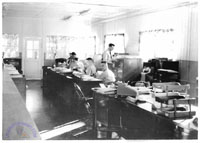
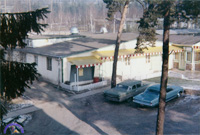
that I did and gave me an ARCOM for it. When I first arrived at KADC there were four companies. HQ Company, 36th Engineer Company (Parts Depot), 693rd Engineer Company (Depot), 57th Engineer Company (Heavy Maintenance). We were quartered at Daenner Kaserne which also had some other units including a Battery from the 32nd Army Air Defense Command which provided air defense for the depot. There was also an MP detachment that provided depot security. Later in about 1973, the 557th QM Company arrived. They were an airborne rigger unit that specialized in air delivery and had previously been stationed at Germersheim. The Depot in those days provided logistical support for the entire European theater. Material was shipped everywhere in Europe and a warehouse inventory of parts and supplies was also maintained. Another primary mission was the maintainance and positioning of bridge material for bridging the Rhine River in the event of hostilities. The Depot maintained prepositioned supply points with bridge material throughout the Rhine region. A lot of the material was pre-loaded on trucks at these points. The 57th Engineer Company maintained the rolling stock for the bridging capability as well as the vast quantity of rolling stock that was stored in outdoor areas of the Depot. Generally the depot did not handle too much in the way of aircraft, armor or heavy weapons, although it did have a security warehouse that shipped and received small arms. The depot also had it's own rail system and several engines which were operated by army personnel. The depot also had a property disposal office that scrapped and or sold obselete and dysfunctional material. Under the Depot command was also a railcar maintenance and storage facility at Rheinau. They had a large number of hospital cars. During the time that I was there the Depot underwent a major modernization project and new warehouses and shipping and receiving facilities were built. The complex had a IBM 360 computer system that took up an entire building with massive tape and disk drives and the old IBM cards. The modernization took the facilities from a World War II era look to a much more modern look. It also improved working conditions by getting things out of the sprawling open buildings into indoor climate regulated facilities. Among the improvements were ergonomically designed conveyors and work stations. Electric forklifts were also implemented. Picking of small parts for shipment utilized a basket and conveyor system. In addition to the military personnel at the depot their were also a large number of local nationals and labor service personnel. The LS personnel were from eastern Europeon countries including Albania, Poland and Latvia. These personnel performed guard duty and did other work at the depot. They wore military uniforms and were quartered in nearby barracks. They were getting along in age and it was not uncommon for one of them to pass on while in service. During the time that I was there there were several notable periods of heightened alert including the 1972 Olympics, the 1974 mid-Eastern War and the attacks on US facilities by the Baader-Meinhof Gang. These resulted in weekend duty guarding the installation. This was a period of transition for the US Army. As the Vietnam war was winding down it was changing to an all volunteer Army. Lingering were problems with morale, Drug abuse and racial issues. In my 3 years things changed dramatically. Shape up or ship out was the order of the day. Command of the Depot complex during my time there went to 2 men who went on to become General Officers. They were Col. James Welch and Col. John K. Stoner Jr. The Depot command was divided into Directorates. I remember that the Director for Supply and Transportation, called DSandT, was LTC Saunders. The troop commander was LTC Steinman. The Director for Administation was a DAC, Judith H. Welch. She was my boss. Major Getz was the Director for Maintenance. There were other directorates that I can't recall. Company commanders that I can recall include. Capt. Leatzow, 36th Engineer; Capt Platt, HQ Co.; Capt. Eby and Capt. Stokes, 693rd Engineer. The 36th Engineer and 693rd Engineer were deactivated during the time that I was there. The Depot was a large sprawling forested setting. The Headquarters was a single story sprawling prefab wooden structure comprised of many wings. The Barracks of Daenner Kaserne were 4-story stone structures built for the ages, probably pre-war German Army. Tranportation to work on the Depot was by troop truck. The Depot was about 2 miles from the Kaserne. Kleber Kaserne across the street provided the PX, Gym, dispensary, Theater, Library, Education center and NCO club. Daenner Kaserne had an EM club and Messhall. Commisary and Hospital were at Lanstuhl at the other end of Kaiserslautern, or K-Town as it was commonly known. Earl Benedict |
|||||||||||||||||||||
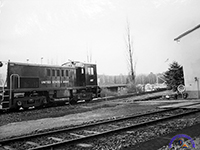
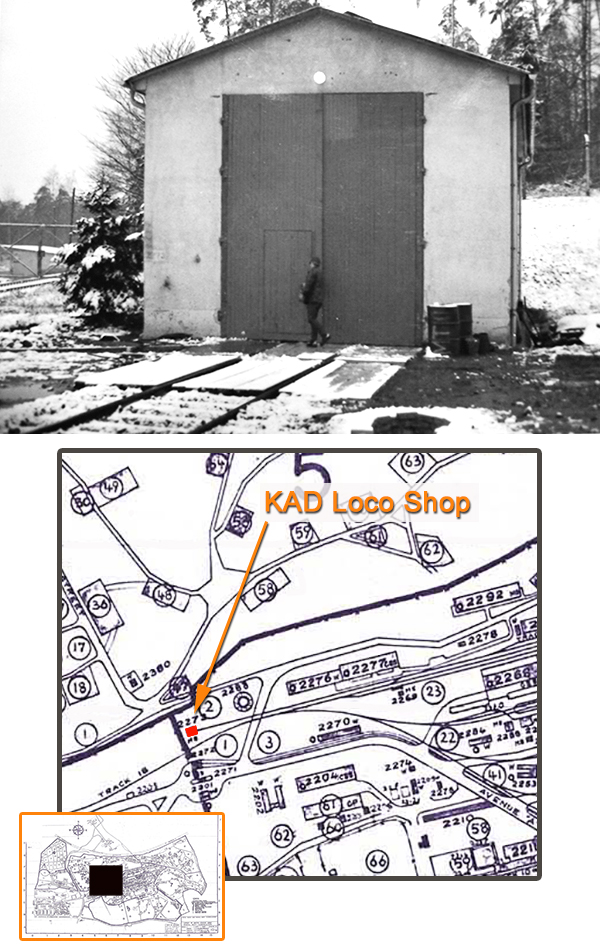 Locomotive maintenance shop at KADC |
|||||||||||||||||||||
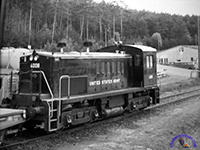
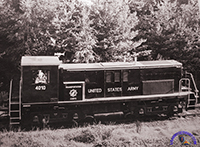
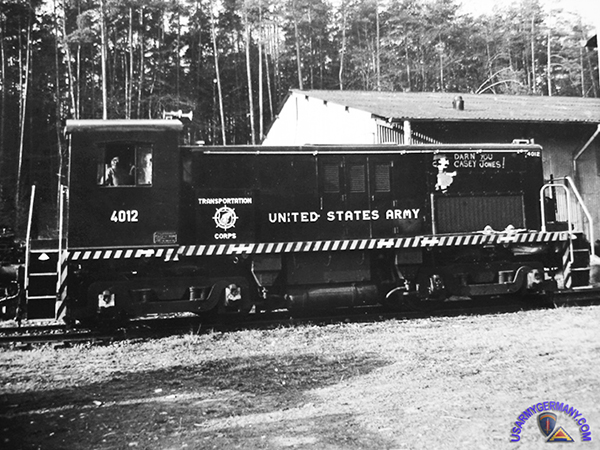 Engine 4012, the work horse of the Internal Rail Section, KADC (Ronald Peterson) |
|||||||||||||||||||||
| (Source: Email from Ronald L. Peterson, Rail Section, Kaiserslautern Army Depot Complex, 1972-1974) | |||||||||||||||||||||
| I was stationed at the Kaiserslautern Army Depot for 25 months as the senior operator (locomotive engineer). I was there until March of 1974. We were part of the Transportation Unit on the depot. (Official deisgnation of the unit: Internal Rail Section, Movement Operations Branch, Transportation Division.) I still work on the Railroad. I am a Road Foreman and Manager of Safety and Training. I teach conductor and locomotive engineers. I have railroaded so long now if I retire I will miss the locomotives. | |||||||||||||||||||||
|
|||||||||||||||||||||
| Trains were inbound from Ports, other depots and the field. Through trains arrived a few miles west of the depot just east of the Ramstein Air Base in the Einsiedlerhof Yard. It is very large and can be seen on Google Earth.
The local crew that was on the steam engine would then bring the train to Eselsfurth Station just outside the depot. If it was too heavy for the pull up the mountain we would push from the rear. If it was small they would arrive with a 260 class diesel hydraulic 0-6-0. Some days there were more than one arrival or departures. They were short of crews or engines one day and I ran to Einsiedlerhof one time. I ran to the Miesau Munitions Depot one time. So in 25 months I was only off the Depot twice. Had to have the pilot on board when making those runs. We then did all of the spots and pulls at the warehouses, shops and railhead where the overhead crane is. Tanks were driven onto the flats. Other vehicles were loaded with the overhead crane. |
|||||||||||||||||||||
|
|||||||||||||||||||||
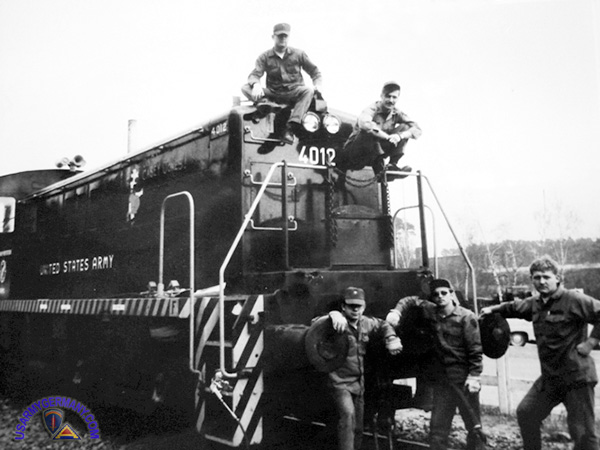 Members of one of the Army's last rail crews, KADC 1973 (Ronald Peterson) (Top L to R: Joseph Hager, Sunshine White; Bottom L to R: Ron Peterson; Albert Nicholson; Dennis Day) |
|||||||||||||||||||||
| The Army was ready to phase out their solider railroaders and I was very lucky to be there at the end. Trucks were the new choice for transport of goods and rail would be phased out. I feel if it had not been for the Vietnam War the Army would not have changed so fast their Transport Planning. Railroads do not fit into modern war planning. If the 714th Railroad Battalion (last Railroad Bn in the Army, stationed at Fort Eustis, VA) would have survived the Vietnam War era I most likely would have re-enlisted and stayed a while but the Battalion was done so I went home and have railroaded for the Modesto & Empire Traction for 40 years. ADDITIONAL INFORMATION: When I rotated in from the 714th Railroad Battalion the KAD CREW was 6 men, March of 1972. About two weeks after I got there Frank James went home. He was drafted from the Burlington Northern Railroad. The Army did a lot of drafting from the American railroads to run their world wide operations. So that left the crew at 5. We were at 5 for most of a year then men came in this order as the 714th was de-activated at Fort Eustis: Henry Wright; Rodger Heinle; Jesse Jarret (all from the deactivating 714th). When the 714th was de-activated, short timers were discharged. Men with time to serve that made it worth rotating were rotated. After the operation they were sent to was no longer needed they would need to change MOS or discharge. |
|||||||||||||||||||||
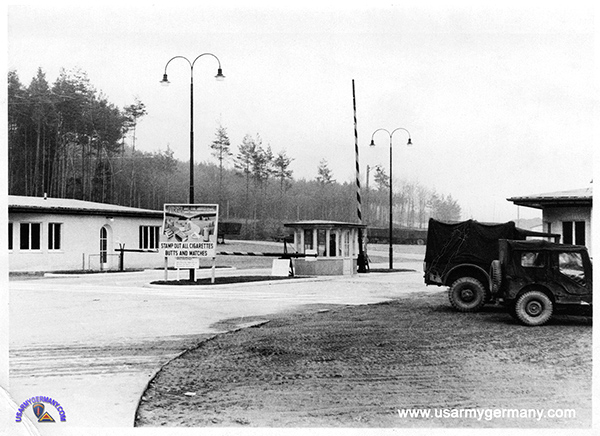 Main gate at KAD, probably 1950s (Webmaster's collection) |
|||||||||||||||||||||
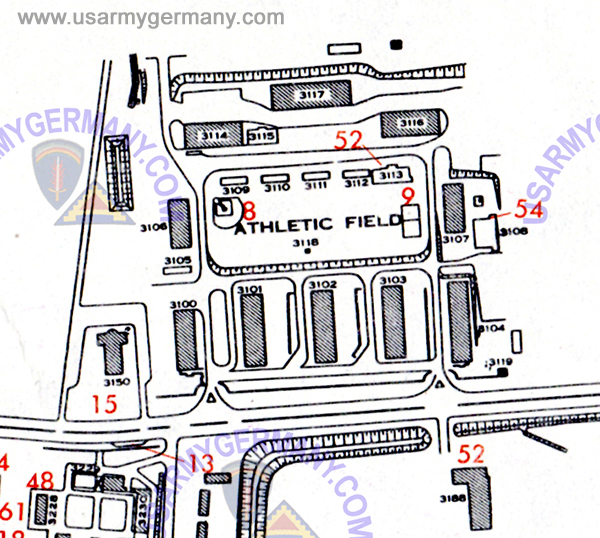 Installation map of Daenner Kaserne, 1973 (Webmaster's collection) |
|||||||||||||||||||||
| (Source: Email from David Roscher) | |||||||||||||||||||||
| In regard to the photo (see above) requesting information on location of a gate (possibly a secondary entrance for Daenner Kaserne), that gate is the main gate for Kaiserslautern Army Depot Complex (as it was called in the mid-70s). To the left side of the photo is the security office building. This housed the Depot security officer/NCOIC, pass office (where I worked for some time back in 1972), admin/secretary office. To the right side of the photo (with two vehicles) is the MP station for KAD. We handled only physical security duty for KAD.
Interesting photo. It brings back lots of memories. The gateshack was the same as I worked; somewhere I have a nice photo of a lazy Sunday afternoon with a couple of MPs lounging. I may have other photos, but I'll have to find them. When I got to Germany in Feb 1972 I was immediately assigned to 94th MP Battalion, 15th MP Brigade. At that time the 94th was headquartered in Kleber Kaserne, Kaiserslautern. After a week or so I was sent to the 189th MP Co, a physical security MP company, in Miesau. The 189th had a half platoon size detachment for Kaiserslautern Army Depot and I think at the time Pirmasens Army Depot. I was sent to KAD for physical security duty there. We maintained gate guards, roving patrols, VIP escorts when needed, etc. The photo really brought back some memories for me, as I remember it from 1972-1975. Additional details on Daenner Kaserne (see above installation map): - 3105, 3106 I don't completely remember, but 3106 may have been a mess hall. 3107 was a mess hall. I remember it (3107) being the only mess hall in Daenner for some time, then another one was opened on the west side, possibly 3106. - 3108: EM club; I remember eating in there quite often. - 3150, Post Chapel. Somewhere I read that there is a small cemetery next to the chapel where babies and small children belonging to US servicemembers and families are buried. I never saw that. But I have been in the huge German cemetery that was just west of the chapel. - 3100, 3101, 3102, 3103, 3104 are barracks housing various units. I remember different Engineer units there, some maintenance and QM units. They all worked at TMP-14 or at KADC. The end barracks, 3104, housed C Battery, 2/60 ADA. They had an area inside the depot where they kept Chapparel anti-aircraft missiles and Vulcan anti-aircraft guns. The 3rd Platoon, 189th MP Co had the top floor of that barracks. To the east of Daenner was a Labor Service camp. - In the area on the map marked 52 I don't remember much military stuff there. I remember it as a big empty lot, but there could have been stuff that I didn't pay any attention to. I remember in 1972 one of the Com or division commanders coming in and his helicopter landed in that area. I was interested only because it was a model not often seen. - Red 13: a bus stop. - 3228 (or 3226, I can't tell, building faces west and runs north and south) housed the 94th MP Bn HQ, my old BN. - 3222: a strip of motor pool buildings. The northeast corner of Kleber housed a barber shop, Unit Police office, and various other places. At the time I was in the area Kleber housed a lot of Signal, Enginer, and Personnel units and such. There was also a Troop Med Clinic, telephone exchange building (operators and such), theater, PX, gym, etc I hope this helps. I just found a photo of the MP gate for KAD and I'll get that scanned and sent to you soon. I also have Thanksgiving and Christmas menus I could scan if interested. On a side note, I remember going in the mess hall (3107) on year for Thanksgiving dinner. Just inside the front doors was a set of steps, and at the top of the steps was a couple of tables that held two beautiful roasted turkeys, all kinds of fruits and nuts, apples, etc. The idea was the troops would get some fruit or nuts on their way out of the mess hall, and leave the turkey alone. I suspect those were for the cooks. After one soldier finished his meal he walked up to the table as if to get some fruit or nuts, grabbed a turkey instead, and he was out the door in a flash. One of the memories. |
|||||||||||||||||||||
| 1973 | |||||||||||||||||||||
| (Source: KADC newspaper, April 1973 issue) | |||||||||||||||||||||
| KADC Rail ... All of six men, all of 122,000 pounds of locomotive and all of the eight and a half miles of rail here at Kaiserslautern Army Depot keep vast and continually flowing tonnage moving into and out of the supply complex. The individuals responsible for such a task are workers on one of the last remaining rail crews in the United States Army. Not unlike the now outmoded relationship between soldier and horse from the days of "boots and saddle", military engineers, brakemen, and other crew will take their turn from the running tracks of the military railway. In the not too distant future civilians will replace the present military means of operation. Nevertheless the six remaining crew members take their job as diligently as did the fabled Casey Jones running out his 904 against the measure of time. Not so much different as they are involved is only an attempt at describing the make-up of these railers. Seemingly they eat, drink and think railroad... but mostly they work it. The hours are long, the times rough. Here on the depot each member of the rail crew is charged with the maintenance of equipment as well as with their normal operational tasks. The engineer often times must pull himself away from the throttle to replace diesel bearings. The conductor might have to put down his lanterns and log book to help paint a fuel-pumping unit. There's a bit more to the rail transport business here at KADC then the push ... pull locomotive jockey work most people singularly associate with it. Yes, in the midst of the repair work the six man crew manages to meet their shipment quotas. During the month of Reforger alone some 235 rail cars were sent from the depot proper to supply units in the field. The field total does not include monthly shipments made to such points as Italy, Greece, Turkey or Spain. Although the crew is restricted to operation within the depot limits, their work is kingpin relay for the support of Europe-wide supply contacts. Rain, sun and winter find the railers at their daily outside routines with few complaints concerning their work. There's no room for misunderstandings or hot tempers while working the railbed with hundreds of tons of materiel and equipment constantly on the move. As the last of their kind do it big with the last of their time, its a 'keep up the good work' for as long as possible from "all aboard".
|
|||||||||||||||||||||
|
|||||||||||||||||||||
|
|
|||||||||||||||||||||
| Related Links: |
|||||||||||||||||||||

 (posted 04/04/2026)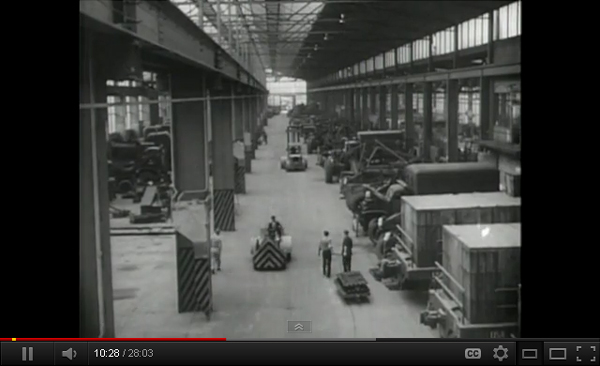
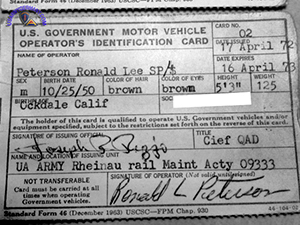
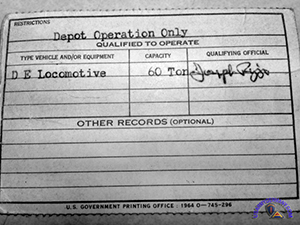
 Senior Operator: Ronald Peterson