| If you do
NOT see the Table of Contents frame to the left of this page, then Click here to open 'USArmyGermany' frameset |
|||||||||||||||||||||||||||||||||||||||||||||||||||||||||||||||||||||||||||||||||||||||||||||
18th Field Artillery Group |
|||||||||||||||||||||||||||||||||||||||||||||||||||||||||||||||||||||||||||||||||||||||||||||
|
|
|||||||||||||||||||||||||||||||||||||||||||||||||||||||||||||||||||||||||||||||||||||||||||||
|
|||||||||||||||||||||||||||||||||||||||||||||||||||||||||||||||||||||||||||||||||||||||||||||
|
|||||||||||||||||||||||||||||||||||||||||||||||||||||||||||||||||||||||||||||||||||||||||||||
|
|
|||||||||||||||||||||||||||||||||||||||||||||||||||||||||||||||||||||||||||||||||||||||||||||
|
|||||||||||||||||||||||||||||||||||||||||||||||||||||||||||||||||||||||||||||||||||||||||||||
| Group History | |||||||||||||||||||||||||||||||||||||||||||||||||||||||||||||||||||||||||||||||||||||||||||||
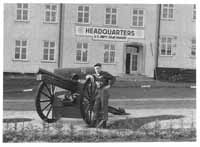
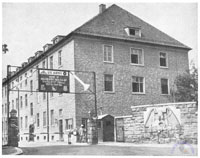
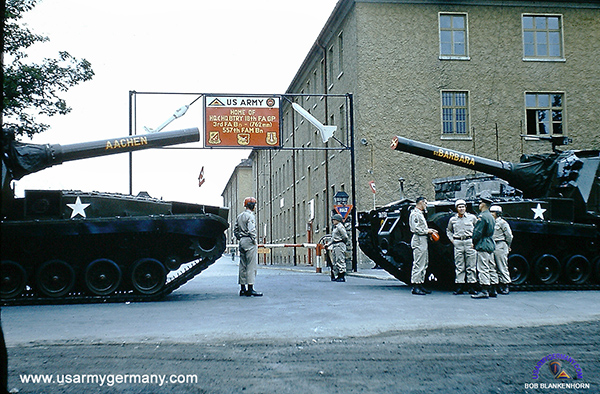 Main gate at Bleidorn Kaserne, Ansbach, home of the 18th FA Group |
|||||||||||||||||||||||||||||||||||||||||||||||||||||||||||||||||||||||||||||||||||||||||||||
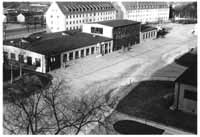
 18th FA Gp consolidated mess hall, Bleidorn Kaserne (Johnnie Moellering) |
|||||||||||||||||||||||||||||||||||||||||||||||||||||||||||||||||||||||||||||||||||||||||||||
| 1951 - 1958 | |||||||||||||||||||||||||||||||||||||||||||||||||||||||||||||||||||||||||||||||||||||||||||||
| (Sources: 18th Field Artillery Group, 37th Anniversary, 1954; 18th Field Artillery Group, 38th Anniversary, June 1955) | |||||||||||||||||||||||||||||||||||||||||||||||||||||||||||||||||||||||||||||||||||||||||||||
|
|||||||||||||||||||||||||||||||||||||||||||||||||||||||||||||||||||||||||||||||||||||||||||||
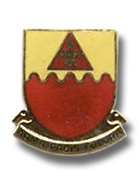
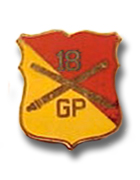 18th FA Group DUI
 The 18th Field Artillery Group's present tour of active service began August 23, 1950 at Fort Sill, Oklahoma, when it was re-activated under the command of Colonel C. Wesner. On September 19, 1951, the Group Headquarters, with no battalions attached, departed Fort Sill for Camp Kilmer and Germany. The unit arrived at its present station (Bleidorn Kaserne) in Ansbach on October 7, 1951 and was assigned to the Seventh Army. After alternate attachments to the 1st Infantry Division and the VII and V Corps, the Group was again attached to VII Corps in June of 1952, an attachment which is presently in effect. The 18th Field Artillery Group was inactivated in October 1958 (I don't have a confirmed date) and replaced by the 210th Field Artillery Group (activated on 15 October 1958 at Ansbach). |
|||||||||||||||||||||||||||||||||||||||||||||||||||||||||||||||||||||||||||||||||||||||||||||
| (Source: 18th Artillery Group Yearbook (1957 or 1958) - submitted by Tony Altese) | |||||||||||||||||||||||||||||||||||||||||||||||||||||||||||||||||||||||||||||||||||||||||||||
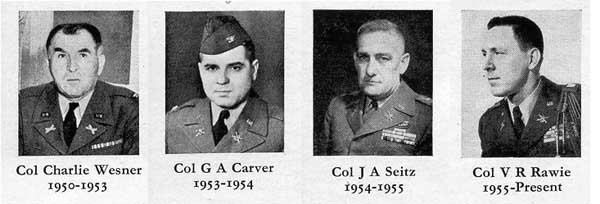 Commanders of the 18th Field Artillery Group in Germany |
|||||||||||||||||||||||||||||||||||||||||||||||||||||||||||||||||||||||||||||||||||||||||||||
|
CHRONOLOGY
|
|||||||||||||||||||||||||||||||||||||||||||||||||||||||||||||||||||||||||||||||||||||||||||||
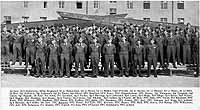
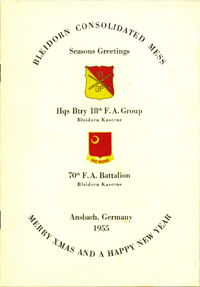
| Hqs Btry, 18th FA Group & 70th FA Bn - Ansbach, Germany, Christmas 1955 | |||||||||||||||||||||||||||||||||||||||||||||||||||||||||||||||||||||||||||||||||||||||||||||
| (Source: Author's collection) | |||||||||||||||||||||||||||||||||||||||||||||||||||||||||||||||||||||||||||||||||||||||||||||
|
|||||||||||||||||||||||||||||||||||||||||||||||||||||||||||||||||||||||||||||||||||||||||||||
| (Source: 18th Field Artillery Group, 40th Anniversary, 1957 via Guy Petrillo) | |||||||||||||||||||||||||||||||||||||||||||||||||||||||||||||||||||||||||||||||||||||||||||||
|
|||||||||||||||||||||||||||||||||||||||||||||||||||||||||||||||||||||||||||||||||||||||||||||
PENTOMIC Changes - 1957/58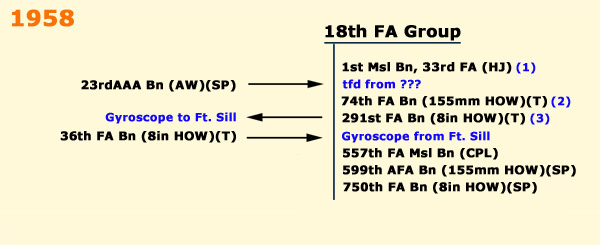 |
|||||||||||||||||||||||||||||||||||||||||||||||||||||||||||||||||||||||||||||||||||||||||||||
| (1) Effective 1 July, 1957 - USAREUR's four FA Rkt Batteries were reorganized as battalions; 3rd FA Rkt Btry reorganized and redesignated as 1st Msl Bn, 33rd FA (HJ) (Source: 18th FA Gp Yearbook 1957) (2) 74th FA Bn inactivated in Germany on 23 Dec 1957 (3) 291st FA Bn and 36th FA Bn switched places under Operation Gyroscope, probably in Feb 1958 (Source: 18th FA Gp Yearbook 1957). |
|||||||||||||||||||||||||||||||||||||||||||||||||||||||||||||||||||||||||||||||||||||||||||||
ORGANIZATION (30 June 1958): |
|||||||||||||||||||||||||||||||||||||||||||||||||||||||||||||||||||||||||||||||||||||||||||||
|
|||||||||||||||||||||||||||||||||||||||||||||||||||||||||||||||||||||||||||||||||||||||||||||
| [1] STATION LIST, 30 June 1958 | |||||||||||||||||||||||||||||||||||||||||||||||||||||||||||||||||||||||||||||||||||||||||||||
If you have more information on the history or organization of the 18th FA Group (or any of the subordinate units), please contact me . . |
|||||||||||||||||||||||||||||||||||||||||||||||||||||||||||||||||||||||||||||||||||||||||||||
 |
|||||||||||||||||||||||||||||||||||||||||||||||||||||||||||||||||||||||||||||||||||||||||||||
| (Source: Email from Jim Sandrin) | |||||||||||||||||||||||||||||||||||||||||||||||||||||||||||||||||||||||||||||||||||||||||||||
| Jim served with HHB, 18th Field Artillery Group, 1955-56) | |||||||||||||||||||||||||||||||||||||||||||||||||||||||||||||||||||||||||||||||||||||||||||||
|
|||||||||||||||||||||||||||||||||||||||||||||||||||||||||||||||||||||||||||||||||||||||||||||
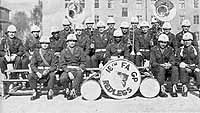
| 18th
FA Group Band (Source: Email from Bob Tanguay, Bleidorn Kaserne, 1955-1956) I arrived in Ansbach in July 1955 and was assigned to the 70th FA Bn at Bleidorn Kaserne. CO was James Click (from Seattle, I believe). The 70th was part of the 18th FA Group which was then commanded by Col. Vernon R. Rawie (from Indiana, I believe). Exec was Lt. Col Mulcahy. On staff was Lt. Thomas E. Dewey, Jr. I remember that Col. Rawie's favorite expression in addressing the troops was "remember men, there is nothing greater than the sound of a gun to a true artilleryman". One of the band members (Roland Washington) did a water color of a 105 on the door to the band quarters with those words beneath it. The Colonel loved it. Shortly after arrival at the 70th, I transferred, on indefinite TDY, to the 18th FA Group Band, also at Bleidorn. Band Director was Bill Steineger who was shortly thereafter sent home on emergency leave. I took on Director's job and stayed in that position until my departure for the ZI in August 1956. The band's major duties included playing at reveille and retreat each day. In addition, we played at each of the sporting events in which the 18th had a team - baseball, basketball, boxing, etc. It was also our responsibility to play at monthly "graduation" day at Crailsheim when the guys in the stockade were released. Bob Tanguay |
|||||||||||||||||||||||||||||||||||||||||||||||||||||||||||||||||||||||||||||||||||||||||||||
| (Source: 18th Artillery Group Yearbook (1957 or 1958) - submitted by Tony Altese) | |||||||||||||||||||||||||||||||||||||||||||||||||||||||||||||||||||||||||||||||||||||||||||||
|
|||||||||||||||||||||||||||||||||||||||||||||||||||||||||||||||||||||||||||||||||||||||||||||
| The band has
two regularly scheduled retreat parades weekly, one at the Signal
School and one at Bleidorn Kaserne. There are also any number of other
occasions when the band swings into action. In one week they may visit
the 599th in Erlangen and the 291st at Schwaebisch Hall, as well as
play their normal engagements. Before each one of these outings, however, the band spends many long hours practicing the specific numbers for the day and putting several extra layers of polish on their spit shines. Each day they practice for several hours in the theater adjacent to Bleidorn Kaserne's motor pool. Then, if the weather allows, they take a few turns around the kaserne practicing their marching. As one of their additional duties last August in Grafenwohr, the band acted as aggressors during the group's battalion tests. To add the oriental influence to their attacks they charged to the sound of the bugle and retreated only on the sharp notes of adjutant's call. On other problems the band has found itself holding down part of the group's perimeter defense in the still hours of the morning. At times they have put on an impromptu jam session at the mess hall after hours adding a little life to the normally somber Grafenwohr atmosphere. The band celebrated its first anniversary last December by continuing the hard work which got it to its present position. The men in the band are for the most part amateurs with a deep rooted love for music. Their forerunners, the 18th Field Artillery Regimental Band, had the same desire to play music as do the present band members. Their uniforms are different and the unit's crest have changed since the regimental band was deactivated at the beginning of World War II, but the spirit which marked the old artillery band is still present in their playing. |
|||||||||||||||||||||||||||||||||||||||||||||||||||||||||||||||||||||||||||||||||||||||||||||
 The Red Legs football team, 18th Field Artillery Group, Peden Barracks (Dan Welcing) |
|||||||||||||||||||||||||||||||||||||||||||||||||||||||||||||||||||||||||||||||||||||||||||||
| (Source: Email from Daniel E. Welcing) | |||||||||||||||||||||||||||||||||||||||||||||||||||||||||||||||||||||||||||||||||||||||||||||
| Where on Peden Barracks was Peden Field located? Also, interested in identifying any of the team members. |
|||||||||||||||||||||||||||||||||||||||||||||||||||||||||||||||||||||||||||||||||||||||||||||
|
|||||||||||||||||||||||||||||||||||||||||||||||||||||||||||||||||||||||||||||||||||||||||||||
|
|
|||||||||||||||||||||||||||||||||||||||||||||||||||||||||||||||||||||||||||||||||||||||||||||
| 3rd Field Artillery Battery (762mm Rocket) | |||||||||||||||||||||||||||||||||||||||||||||||||||||||||||||||||||||||||||||||||||||||||||||
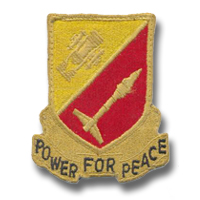 3rd FA Battery (Rocket) Pocket Patch 3rd FA Battery (Rocket) Pocket Patch |
|||||||||||||||||||||||||||||||||||||||||||||||||||||||||||||||||||||||||||||||||||||||||||||
| (Source: Yearbook of the 18th FA Group, June 1955) | |||||||||||||||||||||||||||||||||||||||||||||||||||||||||||||||||||||||||||||||||||||||||||||
| The 3rd
Field Artillery Battery was reconstituted, effective 23
May 1952, and allotted to the Regular Army. On 7 July 1952, the Battery
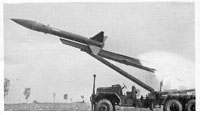
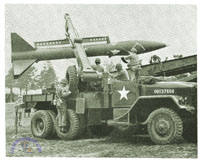
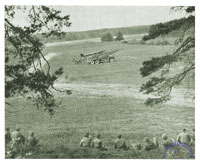
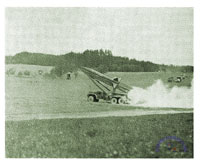
was activated at Fort Bragg, North Carolina. The Battery participated in Exercise Flashburn, the first Atomic Ground Force Maneuver, which was held from 23 April through 3 May, 1954, at Fort Bragg. On 29 November 1954, the Battery departed Fort Bragg to join NATO Forces, USAREUR. The Battery arrived in Ansbach, Germany, and was attached to the 18th Field Artillery Group on 13 December 1954. Webmaster Note: The 3rd FA Rkt Battery was the first Honest John unit in USAREUR. |
|||||||||||||||||||||||||||||||||||||||||||||||||||||||||||||||||||||||||||||||||||||||||||||
|
|
|||||||||||||||||||||||||||||||||||||||||||||||||||||||||||||||||||||||||||||||||||||||||||||
| 1952 | |||||||||||||||||||||||||||||||||||||||||||||||||||||||||||||||||||||||||||||||||||||||||||||
| (Source: Lynwood B. Lennon, 3rd FA Battery, 1952-54 - prior to unit's departure for Germany) | |||||||||||||||||||||||||||||||||||||||||||||||||||||||||||||||||||||||||||||||||||||||||||||
| I want to add some detail on the
3rd FA Battery. This detail begins with activation in July 1952 and
extends through departure for Germany. I was the first commander of the 3rd FA Battery at Ft. Bragg, NC. We were the second Honest John battery activated at Ft. Bragg, as the 550th was activated in May 1952, but was transferred to White Sands Proving Ground as the test unit for the Honest John system. When we were activated we had one officer (me), 1/SGT Elmer Denby, and six enlisted men. As we had no equipment we were used as augmentation to the 265th FA Bn (280mm Gun). I was the battalion S-2 and my men were members of the battalion recon & survey section. After some six months we received a full set of equipment and some 90 enlisted men, mostly returnees from the Korean war. By March 1953 we were at full strength and were preparing to participate in "Exercise Southern Pine," a major maneuver involving four divisions. We had a launcher platoon on the "Red" side and the rest of the battery on the "Blue" side. I had a special pass that allowed me to be a "line crosser." In the fall of 1953 we received two additional sets of equipment. Can you imagine 9 HJ launchers in a battery under the command of a First Lieutenant? We also received the cadre for two additional batteries. Our peak strength was close to 600, including 24 officers, 6 warrant officers, and 14 master sergeants, still commanded by a First Lieutenant. I was given the order to prepare for a troop test of the battery organization, prepare for support of both sides during "Exercise Flashburn," and prepare to activate two additional batteries. The six-week troop test over lapped the exercise by three weeks and there were frequent mix ups between the 65 troop test monitors from Ft. Sill and the 7 exercise umpires. Meanwhile we entertained almost every senior member of the US Army from the SecArmy, Ridgway as Chief of Staff, Gavin as DCSOPS, and many others. During one day 23 general officers signed our guest book (I wonder what happened to it?). Since we were blessed with such strength we were able to put a complete battery in support of the "Red" force. It was commanded by my XO, 1/LT Edward I Alexander and later became the 6th FA Battery. The 3rd supported the "Blue" force as a 6-launcher battery. A week or so after the exercise was completed the 6th FA Battery, commanded by 1/LT Alexander, and the 85th FA Battery commanded by 1/LT Larry Bostick, were activated and our strength suddenly decreased. Almost simultaneously we were ordered to prepare for a training proficiency test. Since no such test existed, the experts from Ft. Sill created a test by modifying a heavy artillery battalion test. We took the test in early 1954. During the test the rocket on the center launcher was being prepared for firing. When the section chief reached inside to plug in the spin rockets they ignited. That settled the question of whether such an incident would roll the rocket off of the launcher. It did not. It did blow the field jacket off the left shoulder of the chief of section and aged both him and me by several years. He was fortunate to be left-handed. Had he been right handed he would have gotten the full blast of two spin rockets in his face. The XXVIII Corps Artillery Commander, BG Paul Weyrauch, observed the incident. He and I arrived almost at the same instant. When we had determined that there was no injury he suggested that we proceed with firing two rockets and give the third one the average of those two in terms of accuracy. We had an "over left" and a "short right," so the third came out as almost a target hit. After the test was complete the test team told us that we had made an unexpectedly high grade. They decided that after all of the Honest John batteries had been tested, using our test scores as the passing mark, they would adjust the grades for all. Later, when I was a student at Ft. Sill, I learned that no other battery had surpassed our mark, so our adjusted score became 93 (What the hey, you can't be perfect all of the time) In August 1954 the battery received orders for deployment to Germany. My Group commander, Colonel Walter Downing, told me that did not feel comfortable sending the battery to Germany under command of a First Lieutenant and he was placing Captain Ray Cloninger in command and I could go as XO. I told the colonel that I did not feel like doing that after bringing the battery from birth, through motherhood, to maturity. So I became Group S-2 and Captain Ray Cloninger took the battery to Germany Lynwood B. Lennon |
|||||||||||||||||||||||||||||||||||||||||||||||||||||||||||||||||||||||||||||||||||||||||||||
| 1956 | |||||||||||||||||||||||||||||||||||||||||||||||||||||||||||||||||||||||||||||||||||||||||||||
| (Source: Email from Anthony 'Tony' Altese who served with the 3rd Missile Btry, 18th Gp Headquarters from Oct '56 to Aug '58) | |||||||||||||||||||||||||||||||||||||||||||||||||||||||||||||||||||||||||||||||||||||||||||||
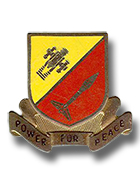 3rd Field Artillery Btry (Rocket) DUI
The 3rd Field Artillery Battery (Honest John 762mm Rocket) was commanded by Capt O'Grady. He formed the battery in the States at Fort Bragg. They arrived (in Oct 1954) and were stationed at Bleidorn Kaserne, Ansbach. When I arrived in October 1956, the unit only had 70 men in it. I was put in the Firing Battery, then later was put in Headquarters and trained as a Morse Code Radio Operator by the only other radio operator, Specialist Bell. Before I was completely trained we went on maneuvers - I believe it was called Sabre Hawk. During this time, the Hungarian Revolution started and we were put on alert for that. However, nothing happened. We then had a change of command in 1957 and were increased in size to a battlion. Were were called the 1st Missile Battalion, 33rd Field Artillery. I can't remember who the new officers were. I left the outfit in August 1958 and later that year, I believe, they were deactivated. |
|||||||||||||||||||||||||||||||||||||||||||||||||||||||||||||||||||||||||||||||||||||||||||||
|
|
|||||||||||||||||||||||||||||||||||||||||||||||||||||||||||||||||||||||||||||||||||||||||||||
| (Source: Email from Robert E. Corkins) | |||||||||||||||||||||||||||||||||||||||||||||||||||||||||||||||||||||||||||||||||||||||||||||
| I served in 3rd FA Battery (762mm Rocket) from June 1956 until February 1958. The CO was Captain Eugene J. O'Grady. After Captain O'Grady left, Major Denman of the 557th. became our CO. Shortly after the unit was reorganized into the 1st Msl Battalion, 33rd FA (HJ). The unit remained the same as it was as a battery except we received several new Officers (all West Pointers). I became a Firing Battery Officer and then the Special Weapons Officer. I consider my time in the unit as one of the most enjoyable times of my life. |
|||||||||||||||||||||||||||||||||||||||||||||||||||||||||||||||||||||||||||||||||||||||||||||
| 1957 | |||||||||||||||||||||||||||||||||||||||||||||||||||||||||||||||||||||||||||||||||||||||||||||
| (Source: 18th Artillery Group Yearbook (1957 or 1958) - submitted by Tony Altese) | |||||||||||||||||||||||||||||||||||||||||||||||||||||||||||||||||||||||||||||||||||||||||||||
| You've heard
the name, and you've probably played the game - 'O'Grady Says'. Well,
that's the boss, Captain Eugene J. O'Grady, Third Rocket Battery,
Commanding. The men won't brag about the CO, but there has not been
an AWOL in six hundred days. Before hitting the USAREUR scene, the
Third was stationed at Fort Bragg, North Carolina. The first rocket
battery of its kind established, the Third lost no time building a
reputation that outfits with a longer history would be proud to possess.
'Exercise Flashburn', the first atomic exercise held, was the scene
of the first launching of an 'Honest John'. Three guesses as to who
fired it. The high brass was a little worried about firing the 'John' on the East Coast, and gave the Third the job of experimenting. Third Rocket not only proved it safe, but set a record for the 'Honest John' that has never been beaten: eight yards short, thirty-five yards left. The Army doesn't use the term 'Business picked-up', but before leaving the land of the big PX, the unit entertained them all, Robert E. Stevens, Secretary of the Army on down. The Third is a mobile outfit; from Fort Bragg to the "Hindenberg Alps", to the Commissary Building and finally Bleidorn Kaserne, the battery's present home. Where next?? Bleidorn has a rather interesting background; it was constructed in 1935 and first occupied on 13 December 1936 by Hitler's 17th Obsn. Bn. During Bleidorn's construction it was known as the "Kaserne at the Water Tower" due to its proximity to the water works, but was named Bleidorn Kaserne in honor of a German Artillery Officer who commanded an observation battalion shortly after World War I. Perhaps the most surprising factor concerning Third Rocket is the daily routine, whereby a small battery functions as a battalion. Personnel, Operations and Supply all work on a battalion level, directly under 18th Group. It may sound simple, however check the gray hairs on Sp 3 Rogers' head, and you'll know better. It's easier to understand an outfit by looking at it through the eyes of the men, so 'Spec Magoo' McGreevey and 'Hi Guy' Baugh teamed up to give the history of the Third Rocket as they've seen it for the past two years. Battery history, huh; we're making the battery's history. Weren't we the first to fire an Honest John on the Atlantic Coast, and of all the present units, weren't we the first to fire an HJ in Europe? |
|||||||||||||||||||||||||||||||||||||||||||||||||||||||||||||||||||||||||||||||||||||||||||||
|
|||||||||||||||||||||||||||||||||||||||||||||||||||||||||||||||||||||||||||||||||||||||||||||
|
|||||||||||||||||||||||||||||||||||||||||||||||||||||||||||||||||||||||||||||||||||||||||||||
|
|
|||||||||||||||||||||||||||||||||||||||||||||||||||||||||||||||||||||||||||||||||||||||||||||
| 74th Armored Field Artillery Battalion | |||||||||||||||||||||||||||||||||||||||||||||||||||||||||||||||||||||||||||||||||||||||||||||
| (Source: 18th Artillery Group Yearbook (1957 or 1958) - submitted by Tony Altese) | |||||||||||||||||||||||||||||||||||||||||||||||||||||||||||||||||||||||||||||||||||||||||||||
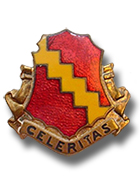 74th Armd FA
Bn DUI
74th Armd FA
Bn DUI |
|||||||||||||||||||||||||||||||||||||||||||||||||||||||||||||||||||||||||||||||||||||||||||||
| The Battalion
was inactive until December 15, 1948 when the 27th Constabulary Squadron
at Landshut, Germany, was redesignated as the 74th
Field Artillery Battalion and assigned to the 2nd Constabulary
Brigade as part of the occupation forces. (Webmaster Note: The 74th was attached to the 7732d Field Artillery Group which had been formed on July 20, 1948, at Sonthofen. Eventually, the Group was comprised of one medium and three light field artillery battalions (105mm How, Towed: 70th, 74th, 517th FA Bns; 155mm How, Towed: 519th FA Bn). On April 1, 1951 the 7732d was disbanded and two new FA groups were formed in its place: 35th Field Artillery Group (April 1) with home station at Munich (later relocated to Schwäbisch Gmünd) and the 36th Field Artillery Group (April 1) with home station at Babenhausen. For a brief period, April - late 1951, the 74th was attached to the newly formed 35th FA Group.) A further redesignation took place on October 15, 1951, when the unit became the 74th Armored Field Artillery Battalion. As the occupation phase in Germany came to a close, the battalion's mission changed to the protection of Western Europe. In keeping with the triangular concept of modern warfare, the 74th AFA Bn was assigned directly to the 6th Armored Cavalry Regiment late in 1951 with a direct support mission. It remained in this capacity until April 10, 1954 when it was assigned to the 35th (FA) Group although it retained its mission of direct support of the 6th A/C. On April 4 (1955), the battalion was inactivated at Landshut and its three firing batteries were designated howitzer companies and assigned to the 6th A/C. On this date the 690th FA Battalion at McKee Barracks, Crailsheim, was redesignated the 74th. (Webmaster: although it is not stated in this yearbook, the reorganization most likely coincided with an concurrent attachment to the 18th FA Group.) Commanding Officer of the 74th from that date to February 1, 1956 was Lt Col Victor A. Stefanowicz. Current CO of this 155mm towed howizter battalion is Lt Col William M. Hughes. |
|||||||||||||||||||||||||||||||||||||||||||||||||||||||||||||||||||||||||||||||||||||||||||||
|
|||||||||||||||||||||||||||||||||||||||||||||||||||||||||||||||||||||||||||||||||||||||||||||
|
|
|||||||||||||||||||||||||||||||||||||||||||||||||||||||||||||||||||||||||||||||||||||||||||||
| 291st Field Artillery Battalion | |||||||||||||||||||||||||||||||||||||||||||||||||||||||||||||||||||||||||||||||||||||||||||||
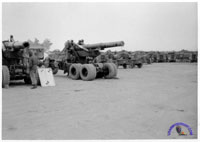
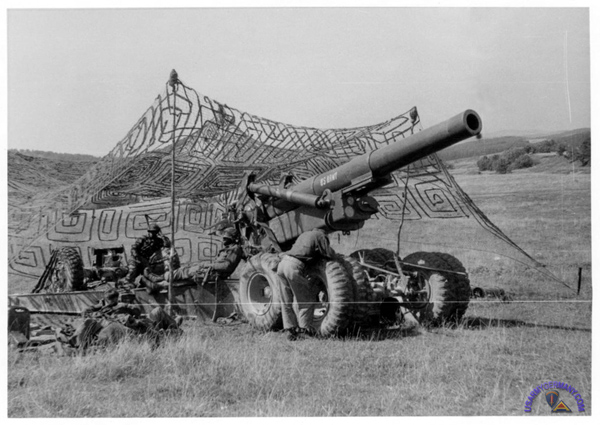 Towed 8-inch howitzer of the 291st Field Artillery Battalion (Walter Elkins) |
|||||||||||||||||||||||||||||||||||||||||||||||||||||||||||||||||||||||||||||||||||||||||||||
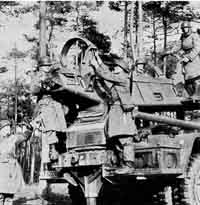
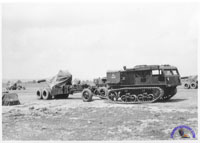
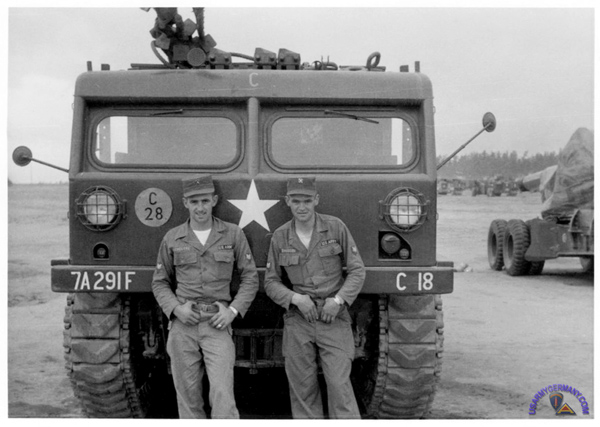 M-4 high speed tractor used for towing the 8-in howitzers (Walter Elkins) |
|||||||||||||||||||||||||||||||||||||||||||||||||||||||||||||||||||||||||||||||||||||||||||||
| (Source: 18th Field Artillery Group, 40th Anniversary, 1957 via Guy Petrillo) | |||||||||||||||||||||||||||||||||||||||||||||||||||||||||||||||||||||||||||||||||||||||||||||
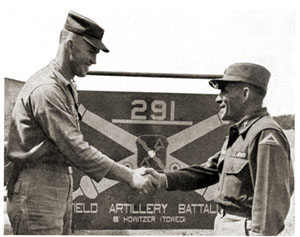
| The battalion (291st FA Observation Bn) was redesignated the 291st FA Battalion, withdrawn from the Army Reserve and allotted to the Regular Army 28, October 1954, with authorization to be activated 17 December 1954 in Europe. (The 291st replaced the 426th FA Battalion which was a subordinate battalion of the 18th FA Gp.) | |||||||||||||||||||||||||||||||||||||||||||||||||||||||||||||||||||||||||||||||||||||||||||||
|
|||||||||||||||||||||||||||||||||||||||||||||||||||||||||||||||||||||||||||||||||||||||||||||
|
|||||||||||||||||||||||||||||||||||||||||||||||||||||||||||||||||||||||||||||||||||||||||||||
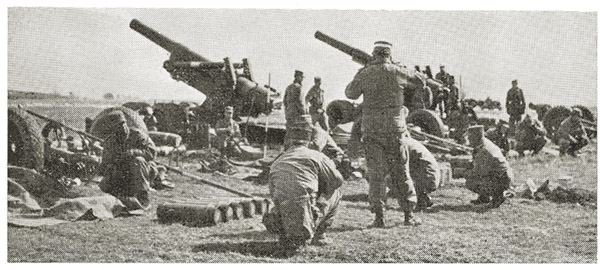
| On June 2, 1957, the battalion commander, Lt Colonel Hugh G. Brown, left for reassignment in the United States. Colonel Brown had served with the battalion for over 18 months, and was replaced by Major Ejner J. Fulsang Jr. Major Fulsang, previously the executive officer of the 287th FA Battalion, is planning the next big event in the history of the 291st: gyroscope exchange of stations with the 36th FA Battalion at Fort Sill, Oklahoma, scheduled to take place in February 1958. |
|||||||||||||||||||||||||||||||||||||||||||||||||||||||||||||||||||||||||||||||||||||||||||||
 |
|||||||||||||||||||||||||||||||||||||||||||||||||||||||||||||||||||||||||||||||||||||||||||||
| (Source: webmaster's collection) | |||||||||||||||||||||||||||||||||||||||||||||||||||||||||||||||||||||||||||||||||||||||||||||
|
|||||||||||||||||||||||||||||||||||||||||||||||||||||||||||||||||||||||||||||||||||||||||||||
|
|||||||||||||||||||||||||||||||||||||||||||||||||||||||||||||||||||||||||||||||||||||||||||||
| 426th Field Artillery Battalion (8-inch How, Hv, Towed) | |||||||||||||||||||||||||||||||||||||||||||||||||||||||||||||||||||||||||||||||||||||||||||||
 426th Field Artillery Battalion DI 426th Field Artillery Battalion DI |
|||||||||||||||||||||||||||||||||||||||||||||||||||||||||||||||||||||||||||||||||||||||||||||
| (Source: Email from Kenneth O. Bruce) | |||||||||||||||||||||||||||||||||||||||||||||||||||||||||||||||||||||||||||||||||||||||||||||
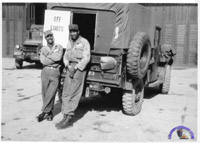
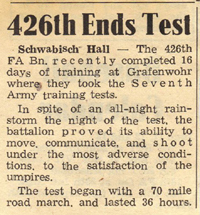
I was in the 426th FA in Germany from 1953 to 1956. The battalion was under the 18th FA Group and located at Schwaebish Hall, close to Hessental, Germany. I do have many pictures.
(Webmaster Note: the 426th was either a NG or Army Reserve unit and was replaced in Germany by the 291st FA Bn in Dec 1954.) |
|||||||||||||||||||||||||||||||||||||||||||||||||||||||||||||||||||||||||||||||||||||||||||||
|
|||||||||||||||||||||||||||||||||||||||||||||||||||||||||||||||||||||||||||||||||||||||||||||
|
|||||||||||||||||||||||||||||||||||||||||||||||||||||||||||||||||||||||||||||||||||||||||||||
|
|||||||||||||||||||||||||||||||||||||||||||||||||||||||||||||||||||||||||||||||||||||||||||||
| 557th Field Artillery Missile Battalion (Corporal) | |||||||||||||||||||||||||||||||||||||||||||||||||||||||||||||||||||||||||||||||||||||||||||||
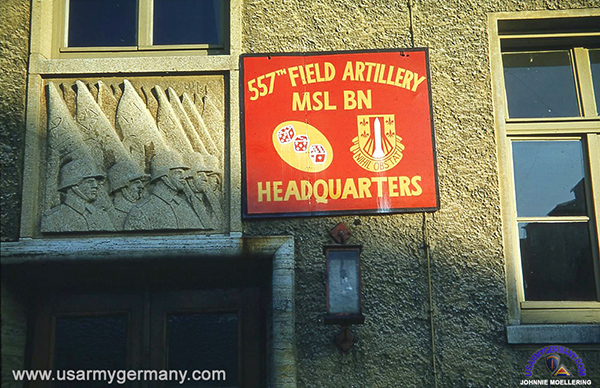 Sign over entrance to headquarters building, 557th FAM Battalion (Johnnie Moellering) |
|||||||||||||||||||||||||||||||||||||||||||||||||||||||||||||||||||||||||||||||||||||||||||||
| (Source: 18th Artillery Group Yearbook (1957 or 1958) - submitted by Tony Altese) | |||||||||||||||||||||||||||||||||||||||||||||||||||||||||||||||||||||||||||||||||||||||||||||
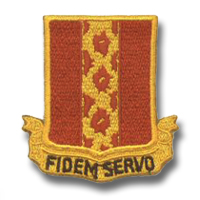
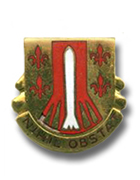 557th
FA Missile Bn DI
557th
FA Missile Bn DI |
|||||||||||||||||||||||||||||||||||||||||||||||||||||||||||||||||||||||||||||||||||||||||||||
| The history of
the 557th Field Artillery Battalion dates
back to 25 February 1943, when it was constituted at Camp Gruber,
Oklahoma. During World War II the Battalion took part in four campaigns
which are symbolized by the four fleur-de-lis situated on the Unit
crest; Northern France, Rhineland, Ardennes-Alsace, and Central Europe.
Upon completion of WWII hostilities, the 557th was inactivated at
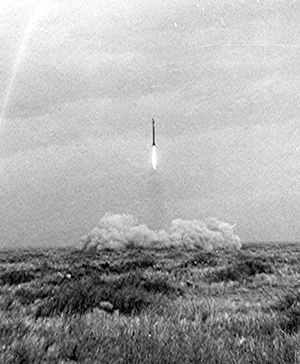
Camp Cooke, California. On 1 April 1955, the present 557th Field Artillery Missile Battalion originated at Fort Bliss, Texas. Two months later the 557th, or 'Nickel-Nickel-Natural' as the Unit is informally referred to, was joined by a large group of personnel just graduated from the Corporal Missile Technical Training School at Fort Bliss. However, when the Table of Organization and Equipment for all Corporal Battalions was slashed on 10 September 1955, many of the personnel were transferred to other organizations. At that time a number of specially trained men arrived from various Army Training Centers throughout the United States to provide additional strength and skills for the 557th. After Headquarters and Service (batteries) had been combined into a single unit, and A and B Batteries had likewise joined to form Firing Battery, the Battalion resumed its ATP, an intensive 16 week Army Training Program. During the initial half of ATP the time was chiefly devoted to separate section training. In Headquarters and Service Battery, 'Communications' was busy familiarizing themselves with radio technique, wire-laying, and field transmission; 'Fire Direction' was engaged in the much-needed practice of computing fire missions; the Maintenance section was readying all rolling stock for the final eight week drive and Army Training Test; 'Survey' was out on reconnaissance missions setting up possible launching sites for mock shoots; and the 'Ammo Train' was preparing to pick up and deliver both missiles and warheads. Meanwhile in Firing Battery, the Assembly and Test section was making constant guidance checks on the internal components of the missile; 'Ground Guidance' was setting up their external guidance equipment which includes the ground radar, the doppler, and the computer; the Launching section was familiarizing themselves with their principle piece of equipment, the launcher; and the Fueling section was practicing the proper fueling procedure of acid and aniline from the weirdly-shaped storage tanks to the missile itself. Half of ATP having elapsed and the respective Batteries familiar with their responsibilities, the Battalion was ready to co-ordinate itself into a single, efficient Unit. The final eight weeks, most of which was to be spent on the desert of New Mexico, would put the 557th to a test. During most of the field work the Battalion engaged itself in a series of mock shoots. Harrassed consistantly by desert sand storms and aggressor forces the 557th improved itself with each mock shoot. Time was then drawing near for the actual firings. The `Nickel-Nickel-Natural' was required to launch four missiles, two during the final part of ATP and two during the Army Training Test. In their fourteenth week of ATP the Battalion was prepared to attempt its first missile shoot. Countdown commenced. -- The tension mounted as the countdown continued. -- "X-6o seconds." -- The results of many weeks of intensive training were about to be tested. -- `X-to seconds' -- 9-8-7-6-5-4-3-2-1-0,' and then `Missile Away.' For several seconds the enormous missile appeared to simply hover approximately 20 feet above the launcher. With a thunderous roar amid a gigantic mushroom of dust and smoke the missile, gaining tremendous speed, darted upwards. Within seconds it was out of sight. In the final week of ATP the 557th successfully launched its second missile. |
|||||||||||||||||||||||||||||||||||||||||||||||||||||||||||||||||||||||||||||||||||||||||||||
|
|||||||||||||||||||||||||||||||||||||||||||||||||||||||||||||||||||||||||||||||||||||||||||||
| At the conclusion
of the test a letter from the Battalion Commander was read to the
troops giving the umpires' results. The Unit was given a high rating
and thus was ready for its next assignment. At the close of the letter
the final words,' ... upon your return from Christmas leaves, be prepared
to travel', gave the men a hint as to just what was in store for them.
Upon arrival back at Post after Christmas leaves the men were informed that they were destined for Ansbach, Germany, to join the 18th Field Artillery Group. Throughout the following four weeks the hours were long and the work was hard. All equipment had to be prepared for travel. Trucks had to be processed. An IG inspection was slated for the latter part of January. Conex containers had to be packed. Systematically, each man contributing his part, the 'Nickel-Nickel-Natural' prepared for shipment. The freight train having departed a week before, the Unit boarded the troop train on the evening of 25 March (Webmaster Note: should be February) 1956 at Fort Bliss. Three days later the 557th was aboard the USN Goethals moving slowly away from the Brooklyn Army Terminal. After a comparatively calm 10 day crossing of Atlantic the Battalion landed at the Bremerhaven Port of Debarkation on the morning of 9 March 1956. That night the 'Nickel-Nickel-Natural' made the final leg of its journey to Ansbach by train. Now a part of VII Corps Artillery and attached to the 18th Field Artillery Group, the 557th Field Artillery Missile Battalion, with one mock shoot already behind them, looks forward to future training with both enthusiasm and determination. |
|||||||||||||||||||||||||||||||||||||||||||||||||||||||||||||||||||||||||||||||||||||||||||||
|
|
|||||||||||||||||||||||||||||||||||||||||||||||||||||||||||||||||||||||||||||||||||||||||||||
| (Source: 18th Field Artillery Group, 40th Anniversary, 1957 via Guy Petrillo) | |||||||||||||||||||||||||||||||||||||||||||||||||||||||||||||||||||||||||||||||||||||||||||||
|
|||||||||||||||||||||||||||||||||||||||||||||||||||||||||||||||||||||||||||||||||||||||||||||
In early November, Colonel Vernon R. Rawie, Commanding Officer, 18th Field Artillery Group, presented the Group Commander's Trophy to the 557th. On 11 January 1957, VII Corps Artillery awarded the VII Corps Artillery Commanders Trophy to Lt Col John F. Stephens, Commanding Officer, 557th Field Artillery Missile Battalion. It was during this period of awards and parades that the battalion began to mature. Certainly by now preparedness was indicated. |
|||||||||||||||||||||||||||||||||||||||||||||||||||||||||||||||||||||||||||||||||||||||||||||
| HEADQUARTERS & SERVICE BATTERY Headquarters and Service Battery plays an integral part in the missile team. Though they aren't the actual firers, there would be absolutely no firing without them. Each section of H & S Battery has a vital function to play before the Firing Battery can actually put a missile in the air. Survey, under the direction of 1st Lt Julius A. Horvath and Sfc Raymond D. Gender, has a key mission to perform. They must establish the exact location of the missile in order to give the projectile the accuracy needed for a successful shoot. Fire Direction Center computes and sends vital data to the firing unit, without which there would be no mission. Chief Computer, Master Sergeant Harold G. Jessen, has two exceptional computers in Sp 3 Robert A. Urban and Pfc Charles A. Levis, who he says he' II match against any in Europe. Maintenance, with CWO Peter P. Panagopoulos and Master Sergeant Bill W. Franklin of the helm, keeps everyone on wheels under the worst of conditions. Particularly, during FTX Warhawk, the Maintenance Section showed its real worth. Working under the very worst conditions possible, Sgt Franklin and his men received special commendation for the manner in which they kept the battalion running. Sgt George M. Williams keeps his Mess Section in shape and does a very laudible job, particularly in the feld, where meals remain above standard. Personnel gets a message to all of the men of least once a month when that hard earned cash is doled out. Sgt Ewell B. Blakey Jr., keeps his section constantly of peak effciency, and has one of the top fnance clerks in Sp2 Joseph M. Matusek. Communications Section lays those miles and miles of wire in even the most adverse conditions, effectively linking the sections of the battalion into a single, unifed combat unit. 1st Lt Edward M. Reed and Sfc Jesse M. Thomas have molded their VHF, Radio, and Wire Sections into a very effcient and highly trained group of men. This is H & S Battery, providing the logistics and service without which the battalion couldn't operate. H & S Battery started the year under the command of 1st Lt Donald M. Amundson; after a successful I.G. in October, 1956, he became the Assistant S3. 1st Lt William D. Taylor became the Battery Commander, and the battery continued to function as a smooth, highly polished unit. During their first year in USAREUR, the men of H & S Battery have learned much about their new home and the German way of life, but most important of all, the men are working together as a smooth unit in order to keep their battery and battalion an top. |
|||||||||||||||||||||||||||||||||||||||||||||||||||||||||||||||||||||||||||||||||||||||||||||
|
FIRING BATTERY The 557th Field Artillery Missile Battalion Firing Battery is now well into its second year as a battery, and has begun its second year with the 18th Field Artillery Group. During the last two months of 1956, a considerable personnel turnover occurred in the Firing Battery. Captain Ralph E. Messmore, the past Firing Battery Commander, left the battery and was replaced by Captain Edwin L. Weber. At the same time, M/Sgt Woodrow W. Noel became 1st Sergeant replacing M/Sgt Waldo A. Byrd who returned to the United States for reassignment. A 70% turnover of enlisted personnel al the same lime, left the battery badly inexperienced. A substantial quantity of field training at Grafenwoehr, mixed with long hours of hard work at Bleidorn Kaserne, made the 557th Missile Battalion a well trained Firing Battery. A high degree of training was necessary for that battery when in April of 1957, ninety eight enlisted men and nine battery officers traveled to White Sands, N.M. to be tested during their Annual Service Practice. Firing Battery's performance there, firing live missiles, assured Captain Weber that his battery is well able to manage the large task that has been set before it. In April, the Firing Battery left the United States, having achieved a record of the best single firing by any Corporal Unit, 96.5. Two thousand years ago, a Roman, Publius Syrus, advised his contemporaries "Practice is the best of all instructors". Now, two thousand years later, the same advice seems applicable. Upon the Firing Battery's return from White Sands, "Practice" has become the byword of battery training. Constant, repetitious practice of procedures (much of that practice being conducted at Grafenwoehr) maintains an important battery in readiness. The Assembly and Test Platoon drills its men on procedures, while at the some time it must insure that its large bulk of special equipment vehicles remain operative. Time and again, the technically complex Guidance Platoon must drill its operators, check out its equipment, and at the same time remain mobile. Indeed "Practice", connoting much long, hard work, has become the byword of the Firing Battery of the 557th Field Artillery Missile Battalion. Having set out to qualify for the challenge manifested in its assignment, the Firing Battery stands ready as a mature, well trained, proficient unit. |
|||||||||||||||||||||||||||||||||||||||||||||||||||||||||||||||||||||||||||||||||||||||||||||
|
|
|||||||||||||||||||||||||||||||||||||||||||||||||||||||||||||||||||||||||||||||||||||||||||||
| (Source: Email from Bob Boberg, 557th FA Msl Bn, Fort Bliss, 1955 and Ansbach, 1956) | |||||||||||||||||||||||||||||||||||||||||||||||||||||||||||||||||||||||||||||||||||||||||||||
|
|||||||||||||||||||||||||||||||||||||||||||||||||||||||||||||||||||||||||||||||||||||||||||||
|
|
|||||||||||||||||||||||||||||||||||||||||||||||||||||||||||||||||||||||||||||||||||||||||||||
|
|||||||||||||||||||||||||||||||||||||||||||||||||||||||||||||||||||||||||||||||||||||||||||||
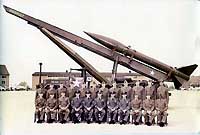
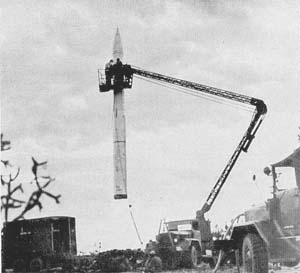
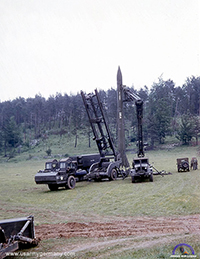
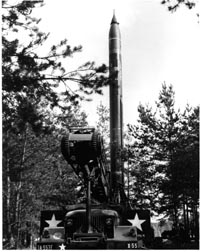
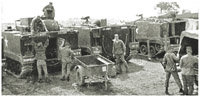
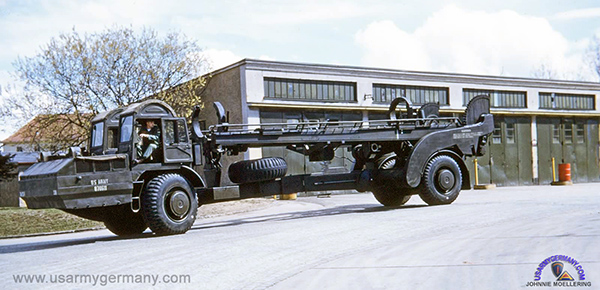 The 557th FAM Battalion was a single fire unit organization which consisted of a headquarters and service battery (HSB) and one (1) firing battery (Johnnie Moellering) |
|||||||||||||||||||||||||||||||||||||||||||||||||||||||||||||||||||||||||||||||||||||||||||||
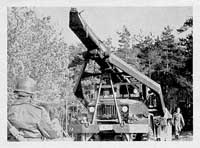
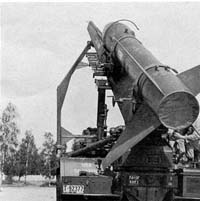
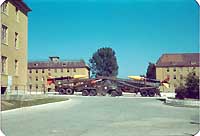
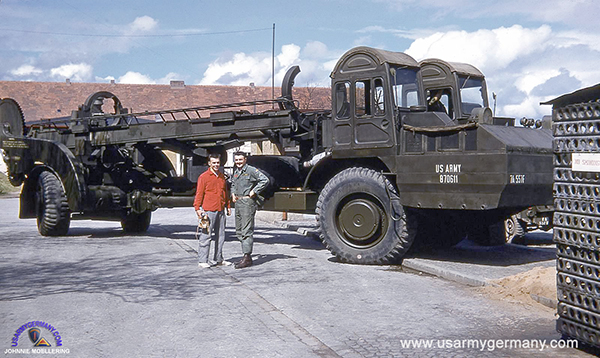 One of the transporter-erectors of Firing Battery at Bleidorn Kaserne (Johnnie Moellering) |
|||||||||||||||||||||||||||||||||||||||||||||||||||||||||||||||||||||||||||||||||||||||||||||
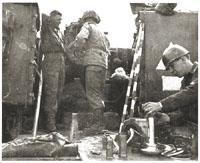
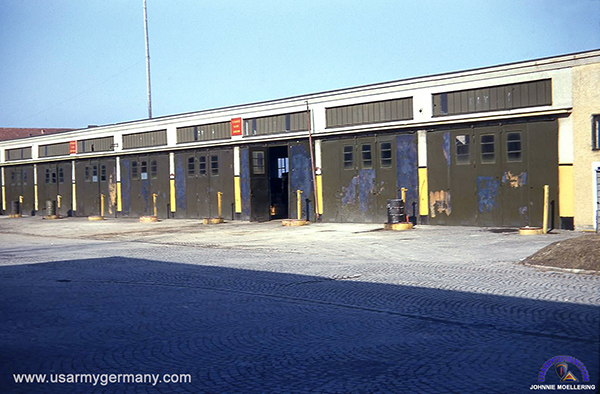 Shop area at Bleidorn Kaserne (Johnnie Moellering) |
|||||||||||||||||||||||||||||||||||||||||||||||||||||||||||||||||||||||||||||||||||||||||||||
|
|||||||||||||||||||||||||||||||||||||||||||||||||||||||||||||||||||||||||||||||||||||||||||||
| 158th Ordnance Detachment (GMDS) (CPL) | |||||||||||||||||||||||||||||||||||||||||||||||||||||||||||||||||||||||||||||||||||||||||||||
| (Source: Email from Bob McPartland) | |||||||||||||||||||||||||||||||||||||||||||||||||||||||||||||||||||||||||||||||||||||||||||||
I was assigned to the 158th Ordnance Detachment in April 1957. The unit was located at Bleidron Kaserne, Ansbach, Germany. There were 22 men and a warrant officer assigned. We supported the 557th FA Bn.
I was the company clerk for the detachment from April 1957 until November 1958. Spent many a night in the EM club and when I had a pass I went to the 50 Pfennig Club where I lived on Wienerschnitzel which was delicious. Mr Draper, a warrant officer, was our CO. You could not have had a nicer guy. He didn't bother anybody and was well respected. The ordnance detachment was a great bunch of guys and everybody got along with each other.
|
|||||||||||||||||||||||||||||||||||||||||||||||||||||||||||||||||||||||||||||||||||||||||||||
| (Source: Email from Jim Jenkins) | |||||||||||||||||||||||||||||||||||||||||||||||||||||||||||||||||||||||||||||||||||||||||||||
|
|||||||||||||||||||||||||||||||||||||||||||||||||||||||||||||||||||||||||||||||||||||||||||||
|
|||||||||||||||||||||||||||||||||||||||||||||||||||||||||||||||||||||||||||||||||||||||||||||
|
|||||||||||||||||||||||||||||||||||||||||||||||||||||||||||||||||||||||||||||||||||||||||||||
|
|
|||||||||||||||||||||||||||||||||||||||||||||||||||||||||||||||||||||||||||||||||||||||||||||
| 599th Armd FA Battalion (155mm How)(SP) | |||||||||||||||||||||||||||||||||||||||||||||||||||||||||||||||||||||||||||||||||||||||||||||
 599th Armd FA Bn DI 599th Armd FA Bn DI |
|||||||||||||||||||||||||||||||||||||||||||||||||||||||||||||||||||||||||||||||||||||||||||||
| (Source: 18th Field Artillery Group, 40th Anniversary, 1957 via Guy Petrillo) | |||||||||||||||||||||||||||||||||||||||||||||||||||||||||||||||||||||||||||||||||||||||||||||
|
|||||||||||||||||||||||||||||||||||||||||||||||||||||||||||||||||||||||||||||||||||||||||||||
| The Battalion started off the Fiscal Year 1956 by saying "Auf Wiedersehen" to outgoing CO, Lt Col Charles K. Harris, and "Welcome Aboard" to the new commander, Lt Col Henry I. Molter, at a spring review held in Ferris Barracks, home of the 599th AFA Battalion. Col Molter arrived at Erlangen in time to prepare his unit for the year's most important training highlight, the VII Corps Artillery Battalion Tests at Grafenwoehr in August. The new CO introduced himself to the men of the 599th for the first time on 21 July. At this time he spoke of Leadership, Loyalty, Teamwork, and finally German-American relations within our area-all matters which were to play a major role in the unit's achievements in the months to follow. In early August the battalion moved afield for a prolonged 35 day exercise at Camp Normandy in Grafenwoehr. This time the unit completed its most successful shoot ever fired during a Battalion Test, with Alpha Btry topping every comparable sized unit in VII Corps Artillery. |
|||||||||||||||||||||||||||||||||||||||||||||||||||||||||||||||||||||||||||||||||||||||||||||
|
|||||||||||||||||||||||||||||||||||||||||||||||||||||||||||||||||||||||||||||||||||||||||||||
|
|||||||||||||||||||||||||||||||||||||||||||||||||||||||||||||||||||||||||||||||||||||||||||||
| 690th FA Bn (155mm How)(T) | |||||||||||||||||||||||||||||||||||||||||||||||||||||||||||||||||||||||||||||||||||||||||||||
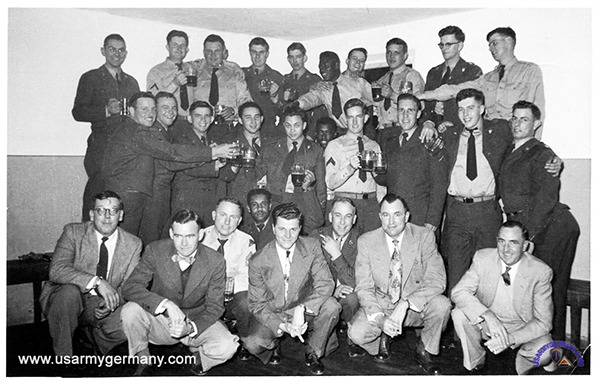 Hq Pltn, 690th Field Artillery Battalion, Crailsheim, 1954 (Chuck Skogerboe) |
|||||||||||||||||||||||||||||||||||||||||||||||||||||||||||||||||||||||||||||||||||||||||||||
 690th Field Artillery Bn DUI 690th Field Artillery Bn DUI |
|||||||||||||||||||||||||||||||||||||||||||||||||||||||||||||||||||||||||||||||||||||||||||||
| 1954 | |||||||||||||||||||||||||||||||||||||||||||||||||||||||||||||||||||||||||||||||||||||||||||||
| (Source: Email from Chuck Skogerboe) | |||||||||||||||||||||||||||||||||||||||||||||||||||||||||||||||||||||||||||||||||||||||||||||
I’m attaching a picture of my HQ Platoon taken in Crailsheim, Germany in August 1954.
Our HQ building was located sort of in the corner, very close to the dependents housing building. The Radio Operators and the Wire (telephone)
guys were in the same building right next to the Building where our Battery Commander’s office was—(Capt. Goldian). Sgt 1st Class Tracey was our Radio Chief and our call sign was LV7Z (LOVE VICTOR SEVEN ZEBRA).
We went to off base locations for training to Grafenwohr up near the Chec Border. The alert to do these trips came in in Morse Code and we would enter the code into a M-209? code converter to get the translation and then rush the message to the Base Commander. The base would be vacated within 1 hour. Only a small contingent would be left at the Base. I was also selected to play on a traveling Basketball team for our Division and we played games around Germany. Our payroll was brought in from Ansbach and we were paid in Military Script which changed about every 6 months. Chuck Skogerboe, Morse Code Radio Operator |
|||||||||||||||||||||||||||||||||||||||||||||||||||||||||||||||||||||||||||||||||||||||||||||
| 1955 | |||||||||||||||||||||||||||||||||||||||||||||||||||||||||||||||||||||||||||||||||||||||||||||
| (Source: Email from Michael Williard) | |||||||||||||||||||||||||||||||||||||||||||||||||||||||||||||||||||||||||||||||||||||||||||||
| The 690th FA Battalion that was attached to the 18th FA Brigade in Germany was a North Carolina National Guard Battalion that was mobilized into Active Federal Service on 25 April 1951. I have attached two images of its DUI as well as a unit history that includes its time in Germany. I hope you find this interesting and add it to your website. |
|||||||||||||||||||||||||||||||||||||||||||||||||||||||||||||||||||||||||||||||||||||||||||||
| Click here to view the Unit History (PDF Format - requires Adobe Reader) (Webmaster Note: On April 4 1955, the 74th Field Artillery Battalion (155mm)(Towed) was inactivated at Landshut and the 690th FA Battalion at McKee Barracks, Crailsheim, was redesignated as the 74th FA Battalion.) |
|||||||||||||||||||||||||||||||||||||||||||||||||||||||||||||||||||||||||||||||||||||||||||||
|
|||||||||||||||||||||||||||||||||||||||||||||||||||||||||||||||||||||||||||||||||||||||||||||
| 750th FA Bn (8in How)(SP) - 1st How Bn, 75th Arty | |||||||||||||||||||||||||||||||||||||||||||||||||||||||||||||||||||||||||||||||||||||||||||||
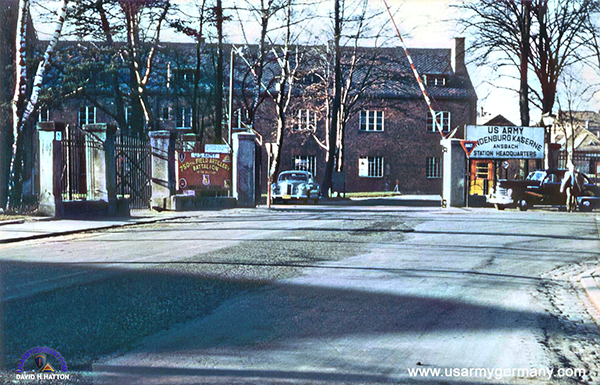 Main gate, Hindenburg Kaserne, Ansbach, late 1950s (David H. Hutton) |
|||||||||||||||||||||||||||||||||||||||||||||||||||||||||||||||||||||||||||||||||||||||||||||
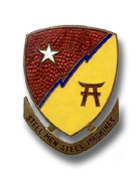 750th Field
Artillery Bn DUI
750th Field
Artillery Bn DUI |
|||||||||||||||||||||||||||||||||||||||||||||||||||||||||||||||||||||||||||||||||||||||||||||
| 1955 - 1958 | |||||||||||||||||||||||||||||||||||||||||||||||||||||||||||||||||||||||||||||||||||||||||||||
| The 750th FA Battalion was activated in Germany on 6 January 1955; the battalion was inactivated there on 25 June 1958. | |||||||||||||||||||||||||||||||||||||||||||||||||||||||||||||||||||||||||||||||||||||||||||||
| (Source: 18th Field Artillery Group, 40th Anniversary, 1957 via Guy Petrillo) | |||||||||||||||||||||||||||||||||||||||||||||||||||||||||||||||||||||||||||||||||||||||||||||
|
|||||||||||||||||||||||||||||||||||||||||||||||||||||||||||||||||||||||||||||||||||||||||||||
| The fiscal year of 1956 already had its beginning when Colonel Stone, VII Corps Artillery Staff Officer, visited the battalion for the purpose of conducting a Training Inspection. Accompanied by Colonel Vernon R. Rawie, Commanding Officer, 18th Field Artillery Group, he found the unit to be in highly satisfactory condition. On 14 June, Flag Day was observed of the Hindenburg Kaserne, home of the 750th, by a parade. Participating in the parade were 18th Field Artillery Group, 3rd Field Artillery (Battery), and the 750th Field Arlillery Battalion. An Award, the Commendation Ribbon, was presented to Master Sergeant James J. Brennan, the Sergeant Major of the 750th, by Colonel Rawie, 18th Group Commander, for outstanding bravery while he was stationed at Fort Belvoir , Virginia. The 750th completed in the month of June, a course of training in driving and maintenance of wheeled and tracked vehicles for three German warrant officers of the new German Army. Through an interpreter, Kurt Poerster, Otto Springer, and Benne Kempf learned the operation of the 750th "8" Howitzers and the fundamentals of field artillery . The 750th is proud to have had a part in the development of the new German Army in such a direct way. The temporary assignment of Company "B", 79th Engineer Battalion to Hindenburg Kaserne, resulted in the improvement of the 750th home station. When the 79th left, the battery training area, the auxiliary motor pool, and the parade ground were all finished with a hard surface. The 750th also improved their own living facilities, with Headquarters Battery adding a dayroom and a gameroom. On July 1 through 13, a VII Corps Artillery Inspection Team with Major Carl F. Arnuad, Officer in Charge, visited the 750th for the annual Inspector General's Inspection. All batteries and battalion headquarters were checked, plus the men and their equipment. The Inspector General's Team complimented the battalion for their high esprit de corps and pride in the unit's achievements and overall excellent condition. On July 16, Major Mason J Young Jr was assigned to this unit as Operations and Training Officer. Major Young, a West Point graduate, had served actively in the Second World War and the Korean Conflict. Battalion Day, this year, had to be postponed due to inclement weather and training. Although the day had to be put aside for a time, the old fashioned outing with barbecued chicken and corn on the cob was a big success. After Colonel Lesneski addressed the battalion, games were initiated and refreshments were served. The 750th put its "all" into enjoying a picnic. The end of July found the battalion in preparation for the VII Corps Battalion Test to be administered by VII Corps in Urlas Training Area, the battalion practiced in earnest to be prepared to give a good account of itself. On 9 August, the battalion left Hindenburg Kaserne for Vilseck Training Area where they were to spend the next six weeks, and where the VII Corps Battalion Test was to be administered. Just a few days prior to the battalion's leaving, the 750th participated in a parade at Bleidorn Kaserne in which Lt Colonel Robert H. Malone, 18th Field Artillery Group Executive Officer, and Lt Colonel Lesneski, the commander of the troops, were the reviewers. On 20 August, while in Vilseck, the Group Battalion Test was conducted with Lt General Bruce C. Clarke, Commanding General, 7th Army, and Brig General James K Wilson, Commanding General, VII Corps Artillery, present to observe the battalion in operation. The VII Corps Battalion Test resulted i n the battalion making an excellent score. Observing the VII Corps Test was Lt General John F. Uncles, Commanding General VII Corps. Following the Corps Test, the individual batteries of the 750th underwent battery tests by the 18th Field Artillery Group. Because of the performance staged by "A" Battery, it won the coveted Honor Battery Award for the month. In October, the 750th played host for the VII Corps Chemical, Biological, and Radiological Warfare School. The five day school was conducted for CBR Training, and was attended by thirty-five officers and enlisted men. Major Sherman R. McGrew arrived as the battalion executive officer, on 5 November. "An old Artillery Man" as the cliche goes, Major McGrew has seen action in the European Theatre during the Second World War and more recently in the Korean encounter. Also, on this date, the 750th was visited by Colonel Hugh McDonald, Deputy Commander, VII Corps Artillery, who toured the battalion area accompanied by Captain Marvin, Service Battery Commander. A parade was held on Armistice Day with Colonel Rawie, Group Commander, the reviewing offcer and Lt Colonel Lesneski, 750th Commander, the commander of the troops. Fourteen enlisted men were awarded the Good Conduct Medal as part of the program. The address was given by Chaplain Hett, 18th Group Chaplain. The following week, Colonel Rawie conducted a Command Maintenance Inspection in this battalion and found it to be up to its usual high standards. The Thanksgiving spirit found the 750th dreaming of the usual turkey and filling, and much to the enjoyment of all, the 750th celebrated with its annual Thanksgiving Dinner. Like the Battalion Day picnic, this was a repeat performance of the 750th enjoying itself to the "full". In the Honor Battery Competition, it was once again "A" Battery that took away the prize. The Battalion Commander announced the award and made commendations on the battery's repeatedly winning the award. On a Good Will Mission, the 750th provided transportation for many Hungarian Refugees from Ansbach railway station to a Displaced Persons Camp outside Ansbach. This was a tragic episode in the history of these people; the 750th is proud to able to say it helped them in their search for freedom. Field training exercise "Warhawk" commenced on the 4th of December to continue for seven days. It was on this exercise that "C" Battery had the unusual experience of training rather unexpectantly with a German Infantry Company. 1st Lieutnant Dennis C. Holtz, "C" Battery Commanding Offcer, and Warrant Officer Boxheimer, Commander of the German Infantry Company, arranged a mock battle between the two units, the Germans as agressors and "C" Battery as the defenders. After the "battle", weapons were compared and operated, giving much instruction to both units in the art of field warfare. The encounter and meeting was unrehearsed; however, the final results, good will and good training, were definitely the products of understanding and a desire to be good neighbors. On 22 December, a "coffee break" for all dependents was called by Lt Colonel Lesneski. In bringing the holiday spirit to the 750th, Colonel Rawie, Group Commander, spoke on the Christmas Spirit and desired that it prevail to better the unit. Also, celebrating the Christmas season, the men of the battalion, with the Service Club facilities and the smiling faces of German orphans, gave presents and cheer while playing the role of "Santa Claus" for the Ansbach Kinderheim. The new year come to a flying start with the visit of Lt General John F. Uncles, VII Corps Commander, to the Kaserne for the purpose of inspecting the battalion. Accompanied by Colonel Rawie, he found the battalion to be in excellent condition and he made commendations to that effect. On the 12th of January, a battalion review was held in honor of Lt Colonel Fremont B. Stanley's assuming command of the 750th from departing commander, Lt Colonel Stanley V. Lesneski, who was to leave for new assignment in VII Corps Artillery Headquarters. Colonel Rawie, 18th Group Commander, and Colonel Creighton, Commanding Officer, Signal School, were guests at this review. Lt Colonel Stanley arrived to take command of this battalion after leaving his former job as S3, VII Corps Artillery. His emphasis on training and alertness is ever in keeping with the 750th tradition; and today under his leadership, the 750th stands alert and strong. On 28 January, VII Corps held its annual Command Maintenance Inspection and the unit attained an overall overage of 86.7. Following the inspection, the battalion was visited by Lt Colonel Mason B. Begley, of the Corps Inspector General's Staff, who commended the unit on its facilities and maintenance, which is always at a high standard. In celebrating the day put aside for the Boy Scouts of the World, Colonel Rawie visited the Hindenburg Kaserne to participate in a ceremony which honored the German and American Boy Scouts. On 4 March, the 750th proceeded to Vilseck on what started out to be the battery tests. However, the result is now a part of the battalion's history. Since early February, the battalion had anticipated the arrival of the new self-propelled M-55, 8in Howitzers to replace the M-43's, which were the 750th weapons. Long the dream of artillerymen, the M-55's had the battalion "chafing at the bit" awaiting their arrival. Three weeks prior to the battery test, it appeared that the long awaited M-55's would not arrive. However, on the day of the battalion's first "dry run", the battalion commander was notified of a choice: to pick up the new howitzers while on the field problem, or upon return to home station. The M-55's were drown in the feld and plans were made to take the battery tests with the new weapons. With only two weeks of training with the new equipment, and with the battalion 35% understrength, the 750th passed the battery test with two batteries firing in the nineties. The 750th became the first battalion in Europe to fire the new M-55 8in Howitzer on a training test. Returning to home station after the tests, the unit arrived in Ansbach on the 2nd of April to prepare for a Special Weapons Inspection which was conducted by Colonel Robert N. Anderson, Department of the Army Representative, on the 4th of April. The battalion was found to be satisfactory. The new M-55 brought much attention and many visitors to the 750th. Among those attracted by the new weapon was Brig General Wilson, Commanding General, VII Corps Artillery. Also, visiting the battalion while on a tour of this area were Major General John C. Oakes, Chief of Staff, VII Corps Artillery and Brig General John C. Hoyden, V Corps Arty Commanding Officer. On May 4th, the 750th once again packed up its feld gear to depart to a training area for its battalion tests. This time the place was to be Camp Algiers, Grafenwohr. At Camp Algiers the 750th passed its 18th Field Artillery Group test with a satisfactory rating. While in the feld, in celebration of Armed Forces Day, "C" Battery gave a demonstration of the M-55 Howitzer to German Nationals. The VII Corps Battalion Test proved to be a real test for the battalion, but it emerged through all diffculties with an excellent score of 86.43. |
|||||||||||||||||||||||||||||||||||||||||||||||||||||||||||||||||||||||||||||||||||||||||||||
|
|||||||||||||||||||||||||||||||||||||||||||||||||||||||||||||||||||||||||||||||||||||||||||||
| (Source: Email from Gary Christensen, B Btry, 750th FA Bn, 1955- ) | |||||||||||||||||||||||||||||||||||||||||||||||||||||||||||||||||||||||||||||||||||||||||||||
I really appreciate the info Guy Petrillo furnished on my old Battalion, the 750th. When I arrived early Fall of 1955, parts of Ansbach, particularly around the bahnhof, still had consider bomb damage! There was about a dozen of us that were just reassigned after the repo depot experience at Zweibrucken. As I recall all of us were Arty Surv Specialists and I was assigned to Baker Btry. Sgt. John Amadio was our Survey Leader/Plt Sgt. Spec. S.Paul LaFarge was our Surv Party Chief; Cpl "Mac" Mcwhorter, Notekeeper; Pfc Nick Gehrs and I, Gary "Chris" Christensen, Pvt were Chainmen and Pvt Chas. Freitas made up the Survey Section.
Eventually, Freitas became very capable on the transit and relieved LaFarge of much instrument time allowing him to do other chores that Sgt Amadio had been saddled with. Sgt Amadio and McWhorter were "old Soldiers"...probably about 35 years old,WW2 combat vets.... they were great guys, I'll say unforgettable! Paul LaFarge, while quite young, helped me out of a few "tight spots"...I'll never forget his kindness! Then there's Gehrs, my buddy on the 50 meter tape, he was the best chainman I ever worked with and one of my best friends... I'm not sure he was aware of it at the time! We still call each other on our birthdays, each year. We're both in our 70's, he's the only guy I stay in regular contact with. When we got to Baker Btry the Commander was a Lt but I can't recall his name. He was replaced by 1st Lt Premo; Msgt George Kiger was First Sgt. Detail Plt Ldr was Lt Maccini I don't recall the Btry Exec or the Gun Sect Ldr. Premo and Kiger were "lifer's" but they'd been there and done that as EM's. Maccini was straight from OCS, he was a good guy and leader. Later on Lt Connors came to the Btry and he was a good guy, too. When Lt Premo left Cap't Crafton came over from "A" Btry, he was an ol' mustang, too, and an exceptional CO. I don't want to forget 1st Lt Phillips (Hdqts) the first Officer I met when I arrived, a fellow "Okie", set me straight right away... and I appreciate it, sir! Major John(?) Poorman was Lesneski's Exec. Mr Purdy and Mr Brown were really good Soldiers. I can't remember which was which, but one of them had about a weeks time in grade on the other one and never let him forget it... all in good humor! |
|||||||||||||||||||||||||||||||||||||||||||||||||||||||||||||||||||||||||||||||||||||||||||||
| (Source: Email from Robert S. Sandla, A Btry, 750th FA Bn, 1956-59) | |||||||||||||||||||||||||||||||||||||||||||||||||||||||||||||||||||||||||||||||||||||||||||||
I was stationed in Ansbach, at Hindenburg Kaserne, with an 8" SP artillery battalion from 1956 to 1959. Our unit was designated the 750th FA Bn and later renamed the 1st of the 75th FA Bn. My battery, "A" battery, was housed in Bldg 5350 on the 1st floor with Svc battery and Hqs battery on the floors above. Bravo and Charlie were in Bldg 5351.
Our senior unit was the 18th FA Gp headquartered at Bleidorn. At that time there was a Corporal Missile bn at Bleidorn as well as an Honest John rocket battery. Our family quarters were across the street from Bleidorn on Schleiser Strasse. Your info was sent to me by a friend who was stationed at the Signal School at exactly the same time [56-59] although we didn't know it until about 5 months ago.
We visited Ansbach in 1990 and found the town to have retained much of its old charm, especially inside the town wall with no cars allowed. However, we stayed at a Best Western Hotel, on the hill north of town, and found a McDonald's just outside the town wall.
|
|||||||||||||||||||||||||||||||||||||||||||||||||||||||||||||||||||||||||||||||||||||||||||||
|
|||||||||||||||||||||||||||||||||||||||||||||||||||||||||||||||||||||||||||||||||||||||||||||
| 979th Field Artillery Battalion | |||||||||||||||||||||||||||||||||||||||||||||||||||||||||||||||||||||||||||||||||||||||||||||
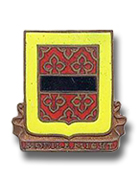 979th FA Battalion DUI 979th FA Battalion DUI |
|||||||||||||||||||||||||||||||||||||||||||||||||||||||||||||||||||||||||||||||||||||||||||||
| 1952 | |||||||||||||||||||||||||||||||||||||||||||||||||||||||||||||||||||||||||||||||||||||||||||||
| (Source: Photo album of Donald M. Drury, 979th FABn) | |||||||||||||||||||||||||||||||||||||||||||||||||||||||||||||||||||||||||||||||||||||||||||||
|
|||||||||||||||||||||||||||||||||||||||||||||||||||||||||||||||||||||||||||||||||||||||||||||
| (Source: Email from Vincent E. Falter, 979th FA Bn, HHB, 18th FA Gp & 750th FA Bn, 1954-57) | |||||||||||||||||||||||||||||||||||||||||||||||||||||||||||||||||||||||||||||||||||||||||||||
|
I wish to thank you and Guy Petrillo for your historical notes on the VII Corps Artillery and the 18th FA Group and its subordinate battalions and units.
I was assigned to the 979th FA Bn in Bleidorn Kaserne in Ansbach in August 1954 where I was the C Battery XO. I served with it until the 979th FA was inactivated. I then went to the HQ 18th FA Gp where I was the HQ Battery XO and Assistant Communications Officer. I next went to the 750th FA Bn and served as A Battery XO to finish out a tour that lasted 37 months.
It seemed only fitting to me that I came back to the 7th Corps Artillery 21 years later to command the Corps Artillery.
The 979th was inactivated as part of the program to return federalized reserve component units back to the States in 1954/55. I was the first non-Reserve officer assigned to the unit as it began to rotate out of Germany in three increments over three months. It was deployed to Germany in three increments; an advance party, a main body, and a rear element, and that is how they redeployed to the States over a period of three months.
The 979th was replaced by the 3d Missile Battalion (Honest John) and I was reassigned to the 18th FA Group and another junior non-Reserve cannon artillery officer was reassigned to the 750th FA Battalion in Ansbach. A year later I was assigned to the 750th.
Major General, (ret) Vincent E. Falter
|
|||||||||||||||||||||||||||||||||||||||||||||||||||||||||||||||||||||||||||||||||||||||||||||
|
|||||||||||||||||||||||||||||||||||||||||||||||||||||||||||||||||||||||||||||||||||||||||||||
|
|
|||||||||||||||||||||||||||||||||||||||||||||||||||||||||||||||||||||||||||||||||||||||||||||
| Related Links: |
|||||||||||||||||||||||||||||||||||||||||||||||||||||||||||||||||||||||||||||||||||||||||||||
 36th FA BN
  70th AFA BN
  291st FA BN
 557th FAM BN
 793rd FA BN
 ROSTER OF OFFICERS AND ENLISTED MEN: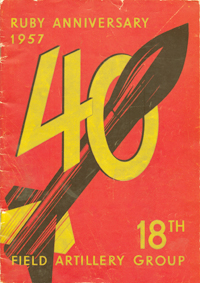
 Lt. Gen. A.J. Bowley