| If you do
NOT see the Table of Contents frame to the left of this page, then
Click here to open 'USArmyGermany' frameset |
|||||||||||||||||||||||||||
|
9th Hospital Center |
|||||||||||||||||||||||||||
|
|
|||||||||||||||||||||||||||
|
|||||||||||||||||||||||||||
|
|
|||||||||||||||||||||||||||
| 549th Hospital Center History | |||||||||||||||||||||||||||
| 1960 | |||||||||||||||||||||||||||
| (Source: USAREUR AGO Letter: Order of Battle, United States Army, Europe (RCS ECJC-1)(U), dtd 20 Oct 1960) | |||||||||||||||||||||||||||
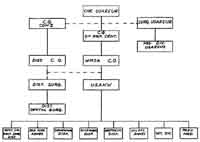
ORGANIZATION (1960): |
|||||||||||||||||||||||||||
|
|||||||||||||||||||||||||||
| 1962 | |||||||||||||||||||||||||||
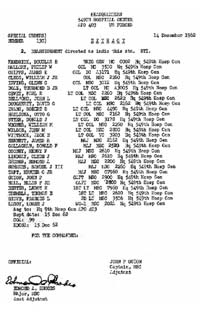
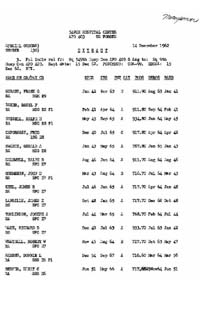
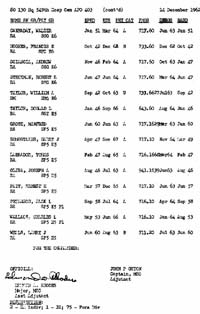
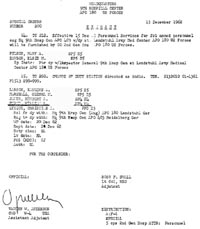
| (Source: Special Orders #130, Headquarters 549th Hosp Cen, APO 403, dtd 14 Dec 1962) | |||||||||||||||||||||||||||
| SO #130 directed the reassignment of personnel from the inactivated 549th Hosp Cen to the newly formed 9th Hosp Center. | |||||||||||||||||||||||||||
|
|||||||||||||||||||||||||||
 |
|||||||||||||||||||||||||||
|
|
|||||||||||||||||||||||||||
| 9th Hospital Center History | |||||||||||||||||||||||||||
| 1960 | |||||||||||||||||||||||||||
| (Source: USAREUR AGO Letter: Order of Battle, United States Army, Europe (RCS ECJC-1)(U), dtd 20 Oct 1960) | |||||||||||||||||||||||||||
ORGANIZATION (1960): |
|||||||||||||||||||||||||||
|
|||||||||||||||||||||||||||
| 1962 | |||||||||||||||||||||||||||
| (Source: Email from William R. Pupke) | |||||||||||||||||||||||||||
I just retired from the Army Reserve in 2003 from AD after being called up in Nov 2001. I had many EM in my unit that served in Germany and I'll pass the site to them. Most are intel types. We would spend most weekends in the EM club from Friday night thru Sunday evening playing cards (whist or hearts or pinochle) and eating all our meals. For a break we would play the slots which lined every wall. |
|||||||||||||||||||||||||||
|
|||||||||||||||||||||||||||
| 1964 | |||||||||||||||||||||||||||
|
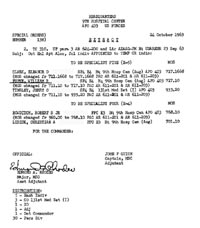
(Source:
Organization & Functions, Headquarters 9th Hospital Center,
1964)
|
|||||||||||||||||||||||||||
|
|||||||||||||||||||||||||||
|
|||||||||||||||||||||||||||
If you have more
information on the history or organization of the 9th Hosp Cen, please
contact me . . |
|||||||||||||||||||||||||||
|
|
|||||||||||||||||||||||||||
(Source: STARS & STRIPES, May 1, 1964) |
|||||||||||||||||||||||||||
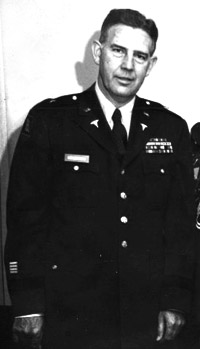
Brig Gen Douglas B. Kendrick, Jr. is the current commanding general of the 9th Hospital Center. The Center, with headquarters at Heidelberg, provides hospitalization, medical and dental clinic services, preventive medicine facilities and veterinary services for an area of 50,000 square miles. The command also directs the operations of  four general hospitalseight station-type hospitalsmore than 80 separate and attached dispensaries, and 90 dental clinics four general hospitalseight station-type hospitalsmore than 80 separate and attached dispensaries, and 90 dental clinics
The Hospital Center also provides (through the 57th Med Bn) intra-command medical evacuation service by rail, air and motor ambulance by means of its ambulance unit operations, railway ambulance cars and helicopters. The 9th operates the USAREUR Medical Regulating Office (which handles medical evacuations to the US) and the Central Medical Records Agency. In addition to all of the above, the Center watches over USAREUR's 300 water sources and their chlorination, and the sanitary safety for 600 USAREUR messes and dining establishments. |
|||||||||||||||||||||||||||
 |
|||||||||||||||||||||||||||
1965 |
|||||||||||||||||||||||||||
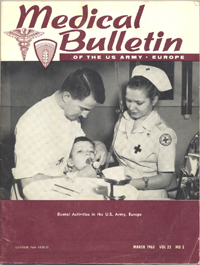
(Source: Medical Bulletin of the US Army, Europe, March 1965) |
|||||||||||||||||||||||||||
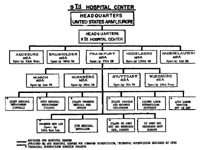
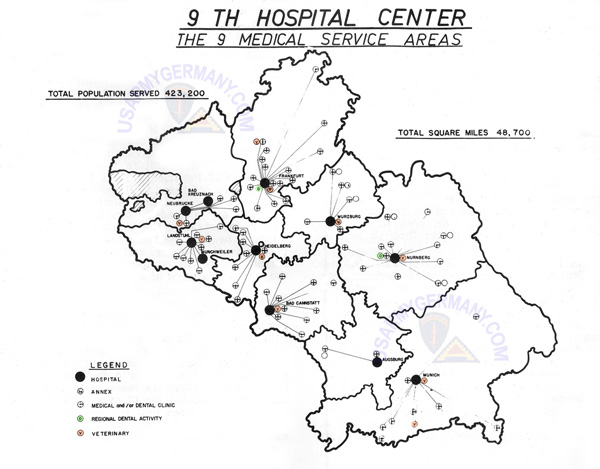
THE 9th HOSPITAL CENTER by Brigadier General Laurence A. Potter, MC (CG, 9th Hospital Center, APO US Forces 09403) The following presentation was held at the USAREUR Surgeon's Tenth Annual Conference held in Heidelberg, Germany, 1-2 October 1964. Before getting into the actual subject of my talk let's find out what the 9th Hospital Center is. First off, it is not a hospital center. It is a vertical medical service, serving basically personnel located within the posts of the U. S. Army Area Command for Germany. The medical service areas, except for minor variations, coincide with the post organizations -- Frankfurt covers three posts. In Bad Kreuznach and Kaiserslautern MSA's there are two hospitals. This vertical service is organized around hospitals serving medical service areas with outlying dispensaries and annexes under one central commander for the area (Figure 1). This organization is responsible for the provision of dental, veterinary, preventive medicine, and evacuation services as well as medical outpatient and inpatient care, thus carrying out an all inclusive medical support mission. The headquarters, though based on the Hospital Center TOE, is a Medical Command Headquarters - responsible to the CG USAREUR and responsive to the Surgeon USAREUR. The 9th Hospital Center, as many of you well know, has the responsibility of providing hospitalization to military and other authorized personnel in all of Western Germany less Berlin and Bremerhaven, an area of approximately 48,700 square miles. Outpatient care is provided to all dependents and to military personnel other than those treated in unit dispensaries operated by Seventh Army. To do this job we have a funded budget of over 18 million dollars and are authorized over 9,000 military and civilian personnel who are assigned to 113 separate TOE and TD units. These units operate 11 hospitals with a total of 2440 operating beds; 59 dispensaries; 7 hospital annexes; 82 dental clinics, 2 regional dental activities; 9 veterinary food inspection detachments and 1 veterinary animal hospital (the only one in the Army). Our patient evacuation capability consists of approximately 200 commercial ambulances furnished by post motor pools, and 5 ambulance companies, 4 ambulance trains, and 1 helicopter ambulance detachment under the command control of the 57th Medical Battalion. The Air Force provides regularly scheduled intratheater evacuation. Our hospital at Frankfurt acts as the embarkation hospital for all CONUS evacuation by air. Command Interrelationships In deciding on the subject material for my discussion this morning, I thought it would be of interest to talk with you about the interrelationships which exist between the 9th Hospital Center and the various elements of USAREUR and the USAREUR "Medical Service Team." For it is in this area, as I see it, that the greatest possibility exists for mutual assistance in carrying out more effectively our assigned mission. It is in this area where problems may arise that defy solution through unilateral action. It is in this area where a vacuum occasionally exists which requires joint action on the part of all of us. First, let us take a look at USAREUR. The 9th Hospital Center is a subordinate command directly under the CINC and reporting directly to Headquarters USAREUR. Technical staff guidance and supervision is provided by Medical Division. All other staff divisions provide guidance and supervision within their respective areas of responsibility. The Surgeon, USAREUR, also retains technical direction (assignment of mission; technical supervision in accomplishment of mission; writing the efficiency report of the Commander) over five assigned units which operate the USAREUR Medical Laboratory, Medical Records Agency, Medical Regulating Office, Medical Illustration Service, and the Nuclear Medical Research Detachment. The Medical Research Unit, Europe, is attached to the Center for command supervision but is assigned to the Research and Development Command, Office of The Surgeon General. Let us now take a look at our relationships with the United States Army Area Command (USAACOM). Our medical command structure is organized into nine medical service areas, each of which provides complete area medical service. The medical service areas with two exceptions parallel post boundaries. There are 11 posts, three of which are located in the Frankfurt Medical Service Area. USAACOM and its posts have no organic medical organization. To insure that our organization reacts and responds to the needs of the military communities it serves, we have designated the Deputy Commander, 9th Hospital Center, as USAACOM Surgeon, the Chief, Preventive Medicine Division, as Preventive Medicine Officer, and the Chief, Veterinary Division, as Veterinary Officer. These officers actively participate in these positions on the staff of the Commanding General, USAACOM. The purpose of these designations is to provide a direct informal channel for the flow of information both ways. Medical service area commanders and their preventive medicine officers have been designated to serve as post surgeons and post preventive medicine officers to their respective post commanders. Certain deviations from this pattern have been made in the Frankfurt Medical Service Area due to the existence of three posts within its geographical boundary. With this paralleling medical command structure, it is felt that post commanders and their military communities are being given effective and efficient medical support, perhaps to a greater degree than that being provided under the command organization which exists in our Class 1 system in CONUS. For one thing, more flexibility in the utilization of resources exists in that funds and personnel are under the control of one medical commander, which permits shifting of these resources as required. Directives issued by Area Command are applicable only to the units of 9th Hospital Center in so far as they concern medical support policies, administration of military justice, and policies pertaining to lodger unit-post command relationships. Relationship with Seventh Army Turning now to our relationships with Seventh Army, I would like to preface my remarks by saying that all of our personnel are fully aware that their one major purpose, the reason for their very presence here in USAREUR today, is to support Seventh Army in peacetime, in contingency operations, or under emergency conditions of war. This includes, of course, the same support for all others who are here because the Seventh Army is here. In attaining this major objective, we provide hospitalization for all Seventh Army military personnel and their dependents. We are responsible for providing outpatient care and treatment for all dependents and for those military personnel who do not receive their care from unit dispensaries organic to Seventh Army. In many cases these unit dispensaries occupy and jointly staff 9th Hospital Center outpatient facilities. I call them 9th Hospital Center because jointly staffed medical facilities are, by direction, under the operational and administrative control of the 9th Hospital Center Medical Service Area Commander concerned. Dental Care All dental care for military personnel and their dependents within our area of responsibility is provided in our clinics. In this regard we have a very active preventive dentistry program. With increased command interest in this program, each year more and more of our water supplies are being fluoridated. While on the subject of dental care and hygiene, I should mention a fact which has become quite obvious here in Europe. The whole of USAREUR is a "remote" area for dependent dental care purposes. To the Dental Surgeon this means that complete dental care can be provided authorized dependents subject to the availability of personnel, facilities, and time. To the dependent and sponsor it means that complete dental care is a right. The large majority of dependents, unfortunately, have postponed needed dental treatment, anticipating overseas duty where all needs would be met. The result is that many individuals present themselves with an alarming accumulation of neglect, expecting immediate attention. Dental staff, past, present, or future, will not allow the correction of all defects for all patients. Therefore, a policy of "selective" treatment is in effect, This requires that when possible the most urgent defects are to be corrected first, with an alertness to the patient's complaint which caused him to seek dental care. Such a complaint is given first and early consideration. Less urgent treatment requirements must be delayed until a later time. In essence, such a policy is simply that it is more equitable to treat the essential or more urgent needs of the majority than to attempt treatment of all the needs of a few. At our 11 medical supply points, called ECPs (European Command Property accounts), located at each of our hospitals, Seventh Army receives all medical supplies and equipment. Training In the area of training, our hospitals provide out-training for Seventh Army medical personnel as required in all specialty areas, administrative and professional. The number of trainees at any hospital is based on size, staffing, and billeting capability. Also, proximity of Seventh Army medical units to a hospital is still another very important factor. At the present time Seventh Army sends approximately 300 trainees to our hospitals for 90-day training periods. The Seventh Army programs for and pays the TDY and travel expenses involved. In order to provide an equitable distribution of professional personnel during an emergency, the 9th Hospital Center provides to Seventh Army medical units through the mobilization assignment program, minimum essential medical personnel to perform their operational missions. These personnel maintain their proficiency in field medical service operations by participating in Seventh Army training exercises and in annual training exercises and annual field proficiency tests conducted by the parent units of 9th Hospital Center. To meet the requirement for a balanced medical service within USAREUR, both Seventh Army and USACOMZEUR are responsible for furnishing certain 9th Hospital Center units with emergency letters of instruction (ELOI) which provide for timely redeployment and transition from peacetime to wartime operations. Both commands, Seventh Army and USACOMZEUR, must designate and plan for emergency sites and/or facilities to accommodate these units. Where required, these instructions must be coordinated with the appropriate traffic headquarters to insure proper movement instructions from one location to another. Many deploying units, by necessity, require pre-positioned equipment, and the responsibility for surveillance and maintenance of this equipment is accomplished by COMZ. Pre-Positioned Medical Assemblies Recent changes which have taken place in the strength, composition and location of troop units, particularly in the Communications Zone, make it more essential than ever that the entire concept of pre. positioned medical assemblies be carefully reviewed. This review should include the quantity and type of assemblies required, with special emphasis on the location and condition of equipment contained in the assemblies. The use, storage and maintenance of this equipment is, or should be, of interest and concern to all the major and subordinate commands represented at this conference. Specific responsibilities for most of these functions is divided between COMZ and the 9th Hospital Center. Ancillary Areas of Medical Responsibility In addition to what has already been mentioned, 9th Hospital Center provides medical, dental, and veterinary care to personnel outside the USAACOM-9th Hospital Center boundaries. The Frankfurt Medical Service Area supports and supervises a health unit at the U. S. Embassy in Bonn. This facility cares for U. S. Mission personnel as well as State Department and Department of Defense Technical Representatives. Also, medical support is provided to military personnel and their dependents assigned to isolated units, who find this to be the closest military medical facility. Another area of concern to the Center is providing medical and dental support to personnel of the Special Ammunition Support Command (SASCOM). This support varies from total medical and dental care and treatment to supplement medical and dental care for those units which are furnished support by sponsor nations under multinational and technical agreements. In line with the Commander in Chief's policy of doing everything possible to provide, within our resources and capabilities, whatever medical support may be required, our medical service area commanders concerned have had to develop a mobile capability in this regard due to the location of many of these units. For example, mobile dental vans are utilized to provide dental care and treatment. Medical teams provide required immunizations and in some instances annual medical examinations. Preventive medicine teams conduct periodic sanitary inspections and provide advice and counsel to commanders relative their problems. Our nine Veterinary Food Inspection (VFI) Detachments provide their services throughout much of Western Europe. The Veterinary Animal Hospital at Lenggries, the only one in the U. S. Army, supports the Sentry Dog Training Unit located there. These dogs are sent to many countries of the world where their services are utilized by Army security forces. Medical Claims A function which is not discussed too frequently, but which is performed by the Center, is the processing of medical claims under the Medicare Program and payments for civilian care received by Army personnel throughout Western Europe and the Middle East. Considerable difficulties are often experienced in processing for payment claims for medical service rendered by indigenous civilian agencies to military personnel of USAREUR and to their dependents. The primary cause for delay is the lack of prompt response by unit commanders to queries or requests for signatures from our Medical Claims Office. Isolated cases have already occurred where doctors, hospitals or ambulance companies have threatened to discontinue service to our people unless claims are paid more promptly. We must constantly improve our rapport with the civilian medical community in order that services are readily available in emergencies and in routine care and treatment as required by personnel authorized to avail themselves of these services. I have tried in this presentation to focus your attention on some of the things which we at 9th Hospital Center are doing in carrying out our responsibilities as members of the USAREUR "medical team." I have indicated some of the many relationships which we have with all of you in order that this medical team may carry out its peacetime mission effectively and efficiently and be prepared for any other eventuality. It is expected that problem areas will arise. Your job and my job is to work together in solving these problems, and if they are insoluble, to minimize their impact on our operations. General Kendrick, I would like to see, as a result of this conference, even closer coordination and cooperation between all elements of the USAREUR Medical Service, particularly in our planning, in our joint exercises, in our day-to-day operations. None of us can travel the path toward mission accomplishment alone. We must travel it together. We must recognize our individual problems and we must have an appreciation for the problems of others. As our resources become more limited, we must constantly strive to use them to the very best advantage. Working together I believe we can continue to provide a medical service "second to none," not only in a relatively stable peacetime situation but during periods of turbulence as well. |
|||||||||||||||||||||||||||
(Source: Medical Bulletin of the US Army, Europe, March 1965) |
|||||||||||||||||||||||||||
| DENTAL SERVICES IN 9th HOSPITAL CENTER & 819th HOSPITAL CENTER | |||||||||||||||||||||||||||
|
|||||||||||||||||||||||||||
| (Source: Email
from James R Keel) NOTE: James would like former members of the 9th Hospital Center, Heidelberg, Germany, to contact him at srkeel9@juno.com |
|||||||||||||||||||||||||||
|
|||||||||||||||||||||||||||
|
|||||||||||||||||||||||||||
| 1968 | |||||||||||||||||||||||||||
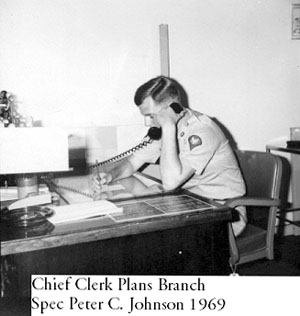
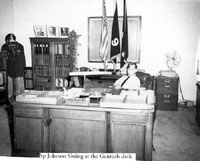
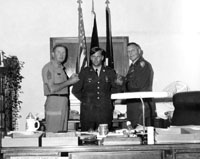
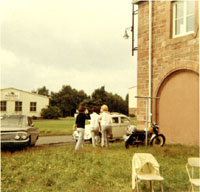
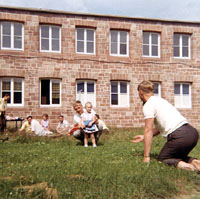
| (Source: Email from Peter C. Johnson, 9th Hospital Center, Aug 1968 - Jan 1970 ) | |||||||||||||||||||||||||||
|
|||||||||||||||||||||||||||
|
|||||||||||||||||||||||||||
|
|||||||||||||||||||||||||||
|
|
|||||||||||||||||||||||||||
| 57th Medical Bn | |||||||||||||||||||||||||||
 57th Medical
Bn DUI
57th Medical
Bn DUI |
|||||||||||||||||||||||||||
| 1958 | |||||||||||||||||||||||||||
| (Source: Email from Jack Peterson, 42nd Med Co, McGraw Kaserne, later 1950s) | |||||||||||||||||||||||||||
| I served 18 months with this unit from 1958 to 1960. We had three platoons of medics, with each platoon equipped with 19 cracker box ambulances and one jeep. The platoons would alternate with one stationed in Munich, another stationed around resorts (AFRC) where American soldiers and their families would play and the third off duty for rest and repairs. I was a vehicle mechanic and later acting maintenance Sargent. We were based in McGraw concern. ADDITIONAL INFORMATION (Webmaster) The 2nd Field Hosital was located just outside of McGraw Kaserne (in Perlacher Forst). The 42nd supported the hospital and all the surrounding kasernes in the area with ambulance coverage. |
|||||||||||||||||||||||||||
1960 |
|||||||||||||||||||||||||||
(Source: STARS & STRIPES, Dec 6, 1960) |
|||||||||||||||||||||||||||
57th Medical Battalion The mission of the 57th Med Bn is to evacuate patients to or between hospitals. The means used to transport patients are helicopters, ambulances and hospital trains. CO of the battalion is COL Jack T. Waldren. The units under the 57th that perform the medical evacuation mission are the following: Ambulance Units: 581st Medical Company (Ambulance) (Separate), Landstuhl 583rd Medical Company (Ambulance) (Separate), Landstuhl Helicopter Ambulance Unit: 63rd Medical Detachment
(Helicopter Ambulance), LandstuhlHospital Train Units: 31st Medical Train Ambulance (Rail), Pirmasens34th Medical Train Ambulance (Rail), Neubruecke 37th Medical Train Ambulance (Rail), Muenchweiler 80th Medical Train Ambulance (Rail), Toul, France There are four of the "two-car diesel" trains and eight "10-car steam-powered" trains. The diesel trains are used for peacetime efficiency. The steam trains (providing wartime capabilities) are kept "in storage" for emergencies but taken out for periodic runs and servicing. These hospital trains are the only ones operated by the US Army anywhere in the world. The hospital trains run once a week in peacetime. A typical run (80th Amb Train) sees the train stop at Toul and Nancy in France; and Neubrücke, Bad Kreuznach and Frankfurt in Germany. Another one (34th Amb Train) connects Neubrücke, Landstuhl, Heidelberg, Frankfurt, Würzburg and Nürnberg. The connections permit trains to pick up and deliver patients who cannot be treated locally and need to be transported to the Army's "specialty" hospitals in Europe -- the 2nd General Hospital at Landstuhl, the 98th General Hospital at Neubrücke and the 97th General Hospital in Frankfurt. As a train arrives at a German railway station, ambulances are already in position to deliver patients. Inside the train is a registered nurse assisted by medical and surgical technicians, wardmen, a train NCO, cooks, and a Medical Service Corps officer who serves as the train commander. There is a fully equipped gallery in the coach car. (The 10-car trains used in wartime would carry two doctors and five nurses; these trains have a capacity of 242 litter patients, or six ambulatory patients for every two litter cases.) The two-car diesel provides space for a maximum of 42 patients -- one (litter) ward car with room for 21 persons; the other is a comfortable coach with space for additional 21 patients. The USAREUR Medical Regulating Office, located at the 9th Hospital Center in Landstuhl, is responsible for directing medical evacuation so that there is no delay in getting to proper treatment facilities. |
|||||||||||||||||||||||||||
1963 |
|||||||||||||||||||||||||||
(Source: USAREUR Medical Bulletin, Nov 1963) |
|||||||||||||||||||||||||||
Major Evacuation Link by Capt Baxter F. Black, MSC A vital element of medical evacuation within USAREUR today is the 57th Medical Battalion. Assigned to the 9th Hospital Center, the Battalion provides direct support to seven of the nine Medical Service Areas in Germany. To provide this support for such a vast geographical area are the following units of the Battalion:
Versatility is the one word best suited to describe the operation of the 57th Medical Battalion. By means of land ambulance, air ambulance, and hospital train the unit assumes a major responsibility for patient evacuation in USAREUR. |
|||||||||||||||||||||||||||
1967 |
|||||||||||||||||||||||||||
(Source: STARS & STRIPES, March 14, 1967) |
|||||||||||||||||||||||||||
| The 57th Medical Battalion (TO/E 8-126E64) is located at Wilson Barracks in Landstuhl. The battalion transports by rail, road or air sick and injured personnel to and between 51 separate medical facilities (operated by the 9th Hosp Cen) within an area of responsibility that covers over 49,150 square miles of West Germany and northern France. In 1966, the battalion transported 44,854 patients -- covering 1,698,849 vehicle (ambulance and jeep) miles, 35,910 rail (diesel and steam train) miles, and 1,555 flight (helicopter) hours. Currently, there are eleven units subordinate to the 57th Med Bn. Ambulance Service -- Ambulance (the field ambulance is also nicknamed "crackerbox") drivers receive eight weeks of basic training at the Medical Field Service School at Ft. Sam Houston, Tex. Then they get on-the-job training in handling patients and giving first aid. Approved speed for the ambulance is 50 m.p.h. on the autobahn, 30 m.p.h. in built-up areas. Helicopter Ambulance -- the 63rd Med Det (Hel Amb) is stationed at Landsberg (Kirchberg Hill). Equipped with UH-1B Huey helicopters, each can carry up to six litters. The Hueys not only haul patients but also carry doctors, drugs, blood or specimens. Ambulance Trains -- two-car diesel trains and steam trains. The two-car diesels (built in Germany in 1956) run regular routes originating from their home stations at Neubruecke and Muenchweiler. Originally they went through Landstuhl, Heidelberg, Frankfurt and Wuerzburg to Nuernberg. Now they have added Bad Cannstatt, Augsburg and Munich to their runs. The cars are air-conditioned and carry 43 patients: 16 normal litters, 4 litters for women, 2 for isolation, and space for 21 ambulatory patients. Books, magazines and full length movies are available. Meals are served en route from the train's diet kitchen. There are four big steam trains that are maintained by the Ambulance Train (Rail) units at Muenchweiler and Neubruecke. They are used during large field exercises. |
|||||||||||||||||||||||||||
|
|||||||||||||||||||||||||||
| Data Processing Facility, Landstuhl | |||||||||||||||||||||||||||
| 1967 | |||||||||||||||||||||||||||
| (Source:STARS & STRIPES, March 31, 1967) | |||||||||||||||||||||||||||
| The 9th Hospital Center recently opened a data processing facility at Landstuhl. The new data processing activity is a branch of the Center's Comptroller Division (which is located at Heidelberg). The new facility will provide hospital commanders improved use of and greater control over their funds by implementing a "direct funding" system. Previously, all supplies required by medical installations under the 9th Hosp Cen were financed under a "consumer credit" system managed by the US Army Supply and Maintenance Agency. In addition, the facility processes patient statistical data for the USAREUR Central Medical Records Agency. Plans call for the expansion of the facility's capabilities to ultimately automate many other medical systems and procedures within USAREUR. |
|||||||||||||||||||||||||||
|
|||||||||||||||||||||||||||
| Related Links: |
|||||||||||||||||||||||||||