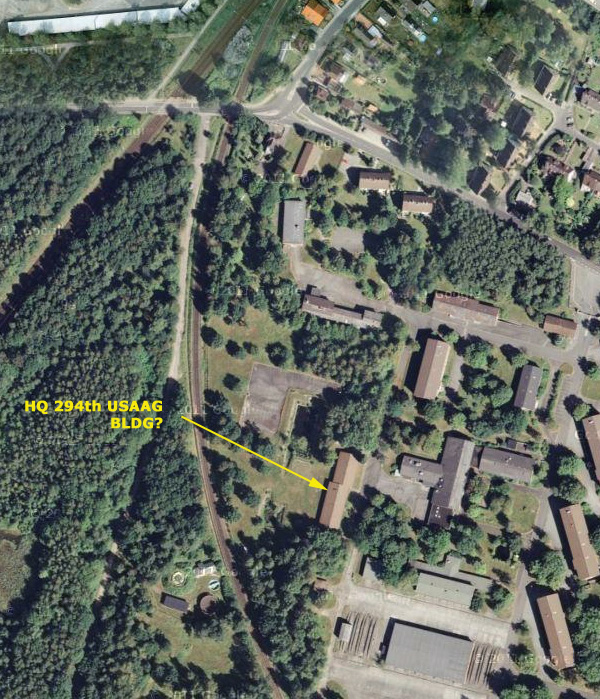
| If you do
NOT see the Table of Contents frame to the left of this page, then
Click here to open 'USArmyGermany' frameset |
||||||||||||||||||||||||||||
|
294th
US Army Artillery Group |
||||||||||||||||||||||||||||
|
|
||||||||||||||||||||||||||||
|
||||||||||||||||||||||||||||
|
||||||||||||||||||||||||||||
|
|
||||||||||||||||||||||||||||
| History | ||||||||||||||||||||||||||||
|
||||||||||||||||||||||||||||
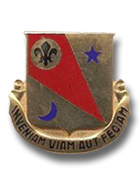 294th US Army Artillery Group DI 294th US Army Artillery Group DI |
||||||||||||||||||||||||||||
(Source: A Look Back ... at the 59th Ordnance Brigade. Final issue of the 59th COURIER, the command newspaper, published in 1992.) |
||||||||||||||||||||||||||||
| 294th US Army Artillery Group | ||||||||||||||||||||||||||||
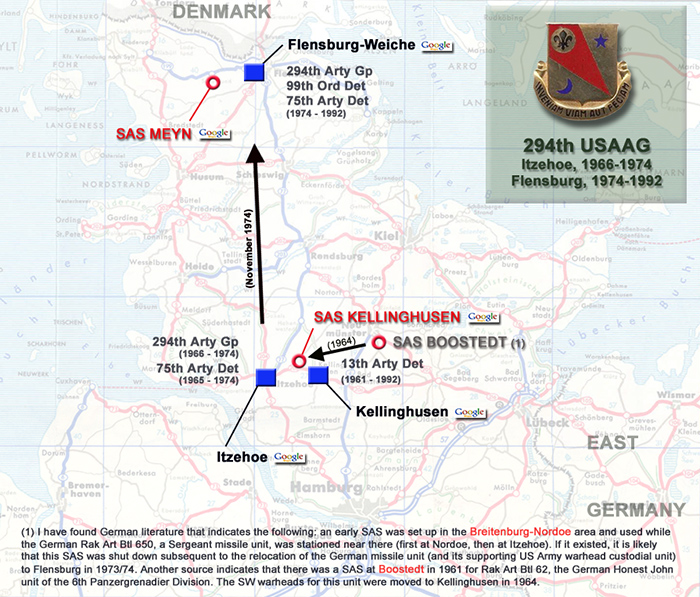
| The 294th U.S. Army Artillery Group was constituted in the Army of the United States as the 294th Field Artillery Observation Battalion in February 1944. The battalion was activated in April 1944 at Fort Jackson, S.C. Following training, the 294th went to Europe and received battle credit for the Central Europe Campaign. After returning to the United States, the 294th was deactivated in October 1945 at Camp Bowie, Texas. Headquarters and Headquarters Battery, 294th Field Artillery Battalion was reorganized and redesignated in January 1966 as Headquarters and Headquarters Detachment, 294th U.S. Army Artillery Group. The group was activated in May 1966 at Itzehoe, Germany as part of the 515th U.S. Army Artillery Group (sic). (Webmaster Note: Should be the 514th USAAG.) The 294th Artillery Group relocated from Itzehoe to Flensburg, Germany in November 1974. The 294th USAAG inactivated in June 1992. 13th U.S. Army Field Artillery Detachment The 13th U.S. Army Field Artillery Detachment was organized in August 1960 as the 13th U.S. Army Missile Detachment at Fort Sill, Okla. Arriving in Germany in 1961, the 13th was assigned to the Special Ammunition Support Command and further attached to the 552nd U.S. Army Artillery Group. The detachment was reassigned to the 294th U.S. Army Artillery Group in June 1966. The detachment was located in Kellinghusen, Germany. The 13th USAFAD inactivated in May 1992. 75th U.S. Army Field Artillery Detachment The 75th U.S. Army Field Artillery Detachment was organized in May 1965 as the 75th U.S. Army Missile Detachment at Fort Sill, Okla. The unit departed the United States and arrived in Germany in November 1965. Assigned to SASCOM's 552nd U.S. Army Artillery Group, the detachment became operational in April 1966. The unit was transferred to the 294th U.S. Army Artillery Group in June 1966. The detachment was located in Flensburg and inactivated in May 1992. 99th Ordnance Company The 99th Ordnance Detachment was constituted in the regular Army as the 59th Ordnance Company in January 1922. It was reorganized and redesignated as the 59th Ordnance Ammunition Company in March 1943. The company served in the Asian-Pacific Theater during World War II and received credit for the New Guinea Campaign. It was inactivated in 1947, but was activated again in 1950 in Korea as the 59th Ordnance Ammunition Renovation Platoon. The unit received credit for eight campaigns during the Korean War. It was redesignated as the 99th Ordnance Detachment in November 1954 and deactivated in June 1955. After serving in Vietnam and receiving credit for 11 campaigns, the 99th was deactivated there in November 1972. The 99th Ordnance Detachment was reactivated in Germany in November 1974 in Flensburg, then inactivated in May 1992. |
||||||||||||||||||||||||||||
| SPECIAL AMMUNITION STORAGE SITES - 294th ARTILLERY GROUP | ||||||||||||||||||||||||||||
|
||||||||||||||||||||||||||||
 |
||||||||||||||||||||||||||||
| Headquarters/Headquarters Det, 294th USAAG | ||||||||||||||||||||||||||||
| 1969 | ||||||||||||||||||||||||||||
| (Source: Email from Scott Jones, 294th Arty Group, June 1969-March 1970) | ||||||||||||||||||||||||||||
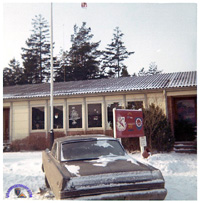
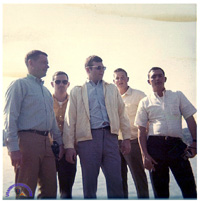
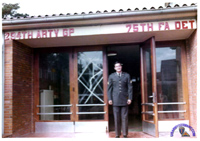
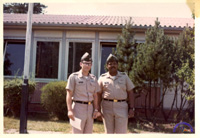
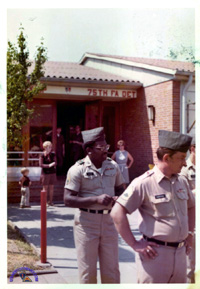
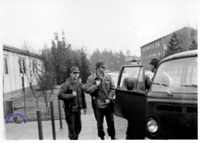
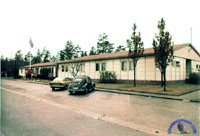
| I have recently retired with some time to browse the web and I did find Walt Nichols one of my friends from the 75th USA Artillery Det which was housed in Itzehoe with the 294th headquarters. I was a 294th clerk and never even went to the missile site. Walter Nichols has reached out and found some of the 75th Missile folks. Some names I recognize on your list from the 75th are: Stovall, Crews, Porsavage, Riggs, McClellen, McAleer, LaFontaine, and Miller. One of my closest pals was James Jones (Jonah) and I'm not sure if he was the one listed as Jimmy Jones. I'll send along one photo from the front of the 75th USA/294th building and another of some of us on a harbor tour in Hamburg in the fall of 1969. ADDITIONAL INFORMATION In my time Colonel Parks was a 1939 West Point graduate and was the only active military of his class not to make General. He was real interested in safety to a point of being a fanatic. He insisted we include safety points in all our bulletins. The sad irony was that his clerk was a SP4 who died in his private vehicle during this time. The identity of the 75th/294th guys on the Hamburg harbor tour in the fall of 69 are: Left to Right in the front row: Walt Nichols, Scott Jones, SGT Crews Left to Right in the rear row: unknown, John Sturkey Maybe Steve Mortenson would know the unidentified member? |
||||||||||||||||||||||||||||
|
||||||||||||||||||||||||||||
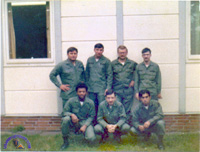
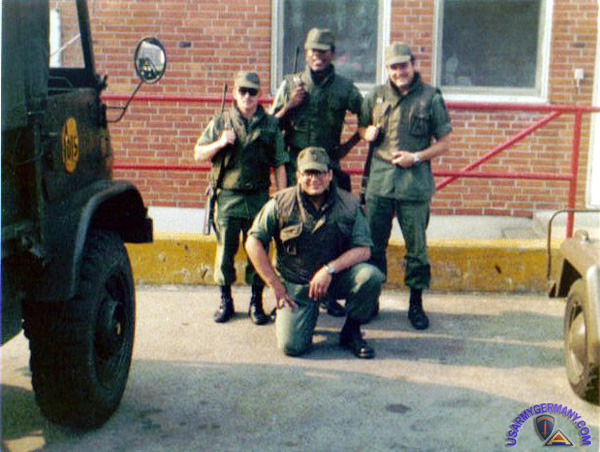 SAS Kellinghusen guard crew (three "custodial agents," standing) and site duty officer (Phil Noto) (1) |
||||||||||||||||||||||||||||
| (1) The above photo was taken 4 July 1973 at Kellinghusen in front of the 13th FA Det dining facility. The photo is of the site duty officer (me) and the new crew of custodial agents ready to be posted at the site after I would relieve the old crew. Back L to R: SP/4 "Shorty" Zeltwanger, SP/4 Robson and PFC Cumins and 2LT Phil Noto in front. | ||||||||||||||||||||||||||||
| (Source: Email from Bob Preston, HQ 294th USAAG) | ||||||||||||||||||||||||||||
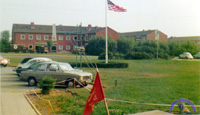
| I came across this site by chance and it brought back many memories of my time in the service. On April 16 1969 I was drafted here in Los Angeles and sent up north to Fort Ord for basic training. After basic I moved a few barracks over for advanced infantry training after which I received my ready orders for Vietnam. Our company was given a weeks leave and upon my return to Ord we were advised that our company was being sent to Germany, no one could explain why. I was not complaining! We arrived in Frankfurt in early September 1969 and within days the whole company had been sent to different units all over Germany, mostly large infantry units. That was everyone except me and another guy. We would hang around for about another week before they finally came to us with train tickets to Itzehoe, northern Germany, and with orders not to get off the train until we arrived in Itzehoe. We followed orders and many hours later we arrived in Itzehoe very late at night. There we were met by Wolfgang, a German soldier driving a Unimog. With him was an American Sgt Major (Hossler) who instructed us to get in the back of the Unimog. After a short ride we arrived at our destination, a long single story building that didn't really look like any kind of military base. They put us each in different rooms and told us we would have a meeting with the CO in the morning. I was placed in a room with Roy Price who was a Spc 5 working S-2. His first question was "can you type." I explained that I had a semester of typing in school, he rolled over and went back to sleep. The next day we did meet the CO, Major McAleer. He was not all that informative as to what we were doing there only to say that one of us would be with the 294th and the other sent to another unit. I guess my semester in typing was a big hit. I stayed with the 294th. I was assigned to the S-2 unit to work along side Roy Price which turned into a great friendship. It was some time before I could work within the unit while they did a complete background check for a top secret clearance that included several different accesses. It wasn't long before I met up again with Wolfgang. I made many of those trips to Bremerhaven with him, always an interesting trip, with him speeding through the icy narrow cobble stone streets. During the winter I remember several times being pulled out of a ditch by farmers tractor. It was all a great time. When I arrived at the 294th Group I believe I was told by Roy Price, the Spec 5 working in S-2, that there were only 25 personnel working at that location which I assumed later was a combined total of the 294th and the 75th (Arty Det). I do remember some of the other guys, such as SFC Stovall, John Sturkey, SGT Crews, Porsavage, MAJ. McAleer and SGTM. Hossler. I read the email from Scott Jones who I do not remember but we were obviously there at the same time and both with the 294th. I remember the softball games and the volleyball that we played, probably on the same team. In answer to your question about the 99th Ord Det, as far as I remember during my 15 months with the 294th in Itzehoe the 99th was never at our location and, to be honest, I have no recollection of the 99th other than when I was typing some of the endless classified documents that unit designation would often come up as would several others. I remember that most of what I typed would go directly to the crypto room on a daily basis. I also remember that one of my duties on a regular basis was to stand guard at the door of Maj McAleer's office door during meetings, armed with a .45 and oders not to let "anyone" in. Pretty exciting for a 19 year old. I guess because I worked in S-2 I never did pull any guard duty and I never saw any of the other units. During my stay with the 294th there was only one building that housed both the 294th and the 75th. The building was all the offices and living quarters. The photo of the front of the 294th on your site is exactly how I remember it. I know one thing - I was a very very lucky guy to end up in the 294th after being drafted and then trained as a light weapons infantryman. I remember the CO telling me, I don't know how you got here, but you are here and your staying. I even bought Sgt Major Hossler's Ford Taunus and had great fun exploring the surrounding countryside and a few trips to Copenhagen. I know I have some pictures buried somewhere of my time at the 294th playing football, softball and of course the volleyball court behind the building. I do recall that the last room on the left was a bar, I somewhat remember some of the drinking games that went on their. I know that I will remember many more things about my stay at the 294th but for now I will just say it was a great experience. |
||||||||||||||||||||||||||||
| 1970 | ||||||||||||||||||||||||||||
| (Source: Email from Hugh S. Bryant) | ||||||||||||||||||||||||||||
| I was assigned as the S-1 for the 294th during the period August 1970 to July 1971. This was my first assignment after completing officer basic. In July 1971 I was reassigned to SASCOM HQ in Frankfurt until April 1972. I still proudly display my SASCOM patch and 294th unit crest in my office today. I retired from the USAR in February 2000 as an O-6 after 30 years of service. It all began with the 294th. I really enjoyed reading your history of the 59th Ord. One small error is noted in the history of the 75th Detachment. The 75th Det. was initially co-located with the 294th headquarters in Itzehoe (Fritz Kasserne). I assume the 75th later relocated to Flensburg with the 294th HQ. |
||||||||||||||||||||||||||||
| (Source: Email from James Decker) | ||||||||||||||||||||||||||||
| From 1970 to 1973 the 294th had two detachments - the 75th FA Det. and the 13th FA Det.. The 13th was located in Kellinghusen, Ger. and the 75th was colocated with the 294th HQ on a German Army Post in Itzehoe, Ger.. I seem to recall that it was Freiherr Von Fritsch Kaserne. I was assigned to the 294th HQ from late 1970 until late 1973. The 294th and 75th were all together in one building and we were considered an isolated unit. The closest American anything was about 3.5 hours away in Bremerhaven. There was only about 25 to 30 of us combined for both units as I recall. I do not recall how many were in the 13th in Kellinghusen but it was very small also SGM Thomas C. Hossler was my direct supervisor. I was a PFC when I arrived there and a SP/5 WHEN I departed. I went on to spend 21.5 years on active duty and retired as a Major. I would love to hear from anyone whom was there from 1970 to 1973 in the HQ 294th or the 75th Artillery Detachment.) |
||||||||||||||||||||||||||||
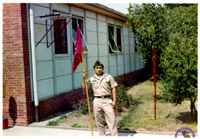
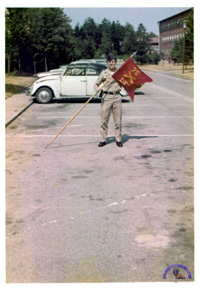
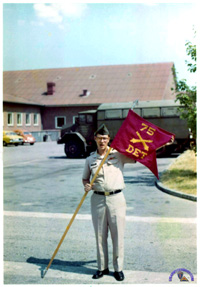
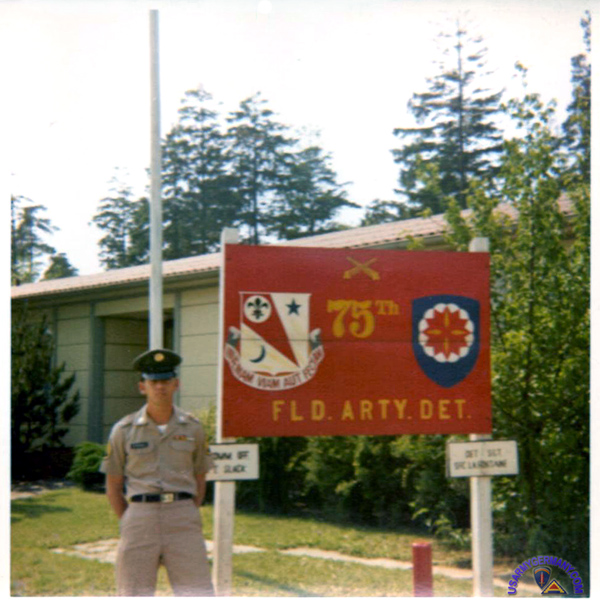 75th Field Artillery Detachment sign, Itzehoe (Bruce Carpenter) |
||||||||||||||||||||||||||||
| 1971 | ||||||||||||||||||||||||||||
| (Source: Email from Bruce B. Carpenter, 294th USAAG, 1971-75) | ||||||||||||||||||||||||||||
| I was drafted in Oct 1970, one month after my nineteenth birthday, and I retired on 31 Oct 1994 as an MSG at Fort Bragg NC. After basic and AIT I was shipped off to Germany and arrived in Germany in the middle of April. I stayed in Frankfurt about three weeks waiting on orders for an assignment. In the first week of May 1971, I was given a one way train ticket to Itzehoe, GE. I was told to changed trains in Hamburg, and I did. When I arrived in Itzehoe, it was in the afternoon. I had to wait for about 20 minutes, but it felt like two hours. I don't remember who picked me up, but I was one nervous E-2. I really didn't want to be in the military and arriving at a German military base with woods all around the base didn't help. Two days after being assigned I was promoted to E-3 and assigned to the 75th FA as the Supply. I worked for SSG Wilbur C. Stovall (who would always say he was from "West by God VA."), the Supply Sergeant for 294th Group and the 75th Det. In May 1972 I was transferred to the 13th FA Detachment in Kellinghusen because they didn't have a supply sergeant or supply clerk assigned there. As an E-4, and running the supply room at the 13th FA Det. Until a Supply Sergeant was assigned in Nov 1973, and I was transferred back to the 75th Det. I learned a lot, I learned how to be a good supply sergeant. After SSG Stovall PCS's back to the States, I did his job for about six months then another Staff Sergeant was assigned to the 294th Artillery Group as the supply sergeant, he stayed about ninety days then he was gone, I don't know what happened to him. Again I was the supply sergeant for the 294th Group and the 75th Det. Soon after I became the Supply Sergeant SGM Hossler called me to his office and when I got there, he told me to set down, which I did, he then said to me: SPC Carpenter you are doing a good job, but there is one thing you need to do. I asked him, what is that SGM, he said that people would challenge me because I was young and try to push me around to see if I knew what I was doing and why was I doing it. He then gave me the best information that I ever received, he told me to learn the Supply Regulations, and I did. I don't remember much about Maj. Toye, but I do remember Maj. Frank Ward. Being assigned to the 294th from May 1971 to Oct 1975 I saw a lot of people come and go. Maj Jim Warren. LT Frank Poccacini (was I was assigned there when he totaled his car). LT Ira Evans use to make me tie up my Jump boots when I would be getting in the German truck to make my supply run to Bremerhaven. I would get in the truck untie my boots and take them off. I thing he knew that, and I did learn from that. SSG George Perez was a good PAC Sergeant and had a nice Ford Torino. SFC Phelps was a good 1SG, I played a trick on him once. Top was a big guy and I told him one day that for every push up he did I would do two, what I meant was, I was going to do two pushups, when Top hit 85 (eighty five), I hollered out like I heard someone calling my name, and said here I come. About 15 minutes later I heard Top say: where is that dog gone Carpenter. We laughed about it later. SFC GARZA was a great Mess Sergeant SFC Tyrone C. Harris who the NCOIC for the signal site, he and his wife Betty took me under there care to make sure that I stayed out of trouble. SPC James Woodard, who taught me my first words in German. SPC Kenneth Wayne Garrett, that guy could really sing. |
||||||||||||||||||||||||||||
|
||||||||||||||||||||||||||||
| 1972 | ||||||||||||||||||||||||||||
| (Source: Email from Phil Noto, 294th USAAG, 1972-73) | ||||||||||||||||||||||||||||
| I served as the S-1 of the 294th USAAG from late 1972 to Sep 1973 when I was “stolen” by Col. Vedder B. Driscoll to serve on the HQs staff at the 59th in Primasens.
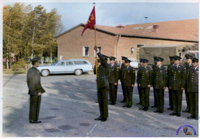
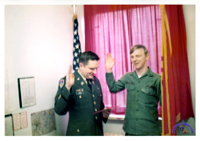
The 294th was my first assignment in the Army as a brand new 2nd Lt. (I retired in 1995 as a Lt. Col.). I’ll never forget that experience and cherish my time there. Maj. Calvin O. Toye was the CO and then Maj. Frank Ward. I remember with great fondness those I served with there:  Cpt Jim Warren1Lt Bruce Muzzy (13th Det)1Lt Frank Proccacini2Lt Ira EvansSFC George PerezSFC Wilbur Stovall2Lt Bill PiperSGM Hossler and especially SFC Jimmy Phelps, the 1st Sgt of the 75th Det. Cpt Jim Warren1Lt Bruce Muzzy (13th Det)1Lt Frank Proccacini2Lt Ira EvansSFC George PerezSFC Wilbur Stovall2Lt Bill PiperSGM Hossler and especially SFC Jimmy Phelps, the 1st Sgt of the 75th Det. I could go on with name after name. I then served at 59th HQ until returning to the US in late 1975. I was there for Maj. Ward’s change of command at Itzehoe as an invited guest along with Col. John DeGrazia, CO of the 59th and was also there to see the transfer to Flensburg and to visit that new site. I would be most interested in contacting 2LT Ira Evans as he was my sponsor when I arrived, George Perez was my first NCO and he really took care of me as the old time RA NCOs did. He taught me a lot about the real Army. Frank Ward taught me how to be an officer and leader. I’ll never forget him for that. I ran into him by accident in 1992 and we ended up having dinner together (and quite a few cocktails too). I was a Battalion Commander at the time and got the chance to tell him how much I learned about leadership from him as a young officer. But contacting anyone who was there then would be great too. I got the chance to visit the old site at Kellinghusen in 2000 with an old German Army friend who I got to know when he was a UH-1 pilot at Hungrier Wolf airbase. The site was closed by then, but I couldn’t believe the changes (the big guard tower, etc). By the way, there is a Pirmasens reunion set for this summer in Park City, Utah. I hope to attend. I never knew there was a website for the 294th or the 59th. I was overjoyed to stumble upon it and want to thank you for managing it so well too. Thanks again for the help and I hope we have some success with making contact with some of these now older 50-5 soldiers. By the way, I didn't fully appreciate our mission there until I read the background information provided on the website. When you're a 22 year old 2LT you just stay in your own lane, worry about screwing up and never really see the big picture. The only photo of my military career that I keep framed and on the desk in my study is a photo (see photo above) from 4 July 1973 at Kellinghusen just before posting the new guard mount at the site. The photo includes myself, SP4 "Shorty" Zeltwanger, SP4 Robson and PFC Cumins. We're all armed and in flak jackets..."Cold Warriors" with a real world mission. Find a Way or Make One. As far as the sites go, if memory serves me correct the SWASP (Special Weapons Ammunition Supply Point) would be used for a tactical expression, therefore I think you're correct in that it is a Corps level entity. However, I also think I heard this term applied to Miesau (which I think was our largest site) and Fishbach. The site at Kellinghusen was a Type A ( I thought we were called a Type F) when I was there. We were in support of Arty Regiment 6, but also had a command relationship with LANDJUT and BALTAP so I'm not sure what we were suppose to have. There were 3 storage bunkers and the M & A (storage for maintenance, supply and other equipment) building inside the inner fence. Each warhead container had a 105mm SHAPE charge on top, wired with det cord. The CA (custodial agent) building, basically a guard shack, was in the "limited zone" between the fences, which was patrolled by a German infantry company that had a bigger building outside of the limited zone. Based on my 2000 visit, Kellinghusen must have been enlarged to an S site as there were quite a few more storage bunkers and the site was reconfigured. They even changed the approach road that lead into the site from my time there. When we pulled site duty, the officer would relieve the old guard (3 soldiers) and post the new crew. He also made his site visits during the hours of darkness after midnight. The duty NCO made his visits during the hours of darkness before midnight, so unless we got any messages to break (decode w/ the crypto system), the NCO got a good night's sleep. In that part of Germany there was a period of 2 or 3 weeks just before and after the 4th of July where it never really got totally dark. The sun would fully rise around 2 am and set around 11 at night. So the NCO and officer site checks had to be done between 1130 and 0030. It was strange, everything just got kind of grey for an hour or so and then the sun began to rise. Of course it was the opposite in winter when we had about six hours of full daylight (about 0900-1500). The other tidbit, was when you relieved the old guard you separated them from the incoming crew. I always had the outgoing guys get in the vehicle for return to Lilincron Kaserne and then briefed the new guards with the latest that the S-2 had provided for the day and establish the new duress code, which would be known only to the 3 CAs on duty, the site officer and NCO. Itzehoe/Nordoe was 19k from Kellinghusen, so the officers and NCOs assigned to HHD 294th and 75th Det had to get briefed by the S-2 and depart NLT 1530-1545 so as to drive over and get the new guys ready, draw weapons, ammo and flak jackets. Then inspect and chase down the German dienstfahrer so as to get the new guard posted by 1700. When we did site checks, we had one CA go with us, we'd lock and load one round in the chamber of our weapons (M-16 and .45) and go in. The other CA would cover us throughout our entire check from his position inside. The third CA would be asleep. They each worked 16 on and 8 off. We were required to check each bunker and M & A building's security locks, sign the form at each, check the security fence for holes or weaknesses, count the working security flood lights as we were allowed to have a certain number out, once over the number we had to report immediately and wake everybody up at the CA shack until we got the new light bulbs installed. I thought I'd forgotten all this stuff. ADDITIONAL INFORMATION The SAS at Kellinghusen was the only site for the 294th prior to the move to Flensburg. All officers assigned to the HHD, 294th, 75th and 13th pulled duty at the site in Kellinhusen except of course the 294th Commanding Officer, who was the only field grade officer in the 294th. Further, all NCOs and enlisted personnel at HHD, 294th and 75th who were cleared to do so did pull duty at Kellinghusen along with the 13th. The exceptions to site duty were very few. Even the cooks had security clearances to be custodial agents. I don't think the mess sergeant did site duty nor did a couple of the crypto clerks. But other than that we all did. The guys assigned to STRATCOM manned the tropo tower only. They were attached DS to us so we did not exercise command over them. There was a SFC in charge of that detachment. We did however, feed and quarter them with the 13th FA Det. In fact, in the photo above: SP/4 Zeltwanger was assigned to the 75th, SP/4 Robson and PFC Cumins were assigned to the 13th, and I was HHD, 294th. So that should give you an idea of a typical day there. There was no site at Itzehoe/Nordoe. Kellinghusen (Liliencron) was 19 kilometers distant from Freiher von Fritsch Kaserne in Itzehoe. I think in my earlier email below I described the daily timeline of getting the S-2 brief in time to drive over to Kellinghusen to get everybody in flak jackets, draw weapons and ammo, etc. Plus chasing down the German duty driver was also a fun additional duty for a 2Lt. I also forgot to mention that in the second change of command photo (August 1974), Col. John DiGrazia was SASCOM commander. He took over from COL Johnson in either 1973 or 1974. |
||||||||||||||||||||||||||||
|
||||||||||||||||||||||||||||
|
||||||||||||||||||||||||||||
| 99th Ordnance Detachment | ||||||||||||||||||||||||||||
|
||||||||||||||||||||||||||||
|
||||||||||||||||||||||||||||
| 13th US Army Artillery Detachment | ||||||||||||||||||||||||||||
| Supported Command: Artillerieregiment 6, Panzergrenadierdivision 6 (link) | ||||||||||||||||||||||||||||
| The 13th US Army Missile Detachment supported the 62nd Rocket Arty Bn and the 61st FA Bn. | ||||||||||||||||||||||||||||
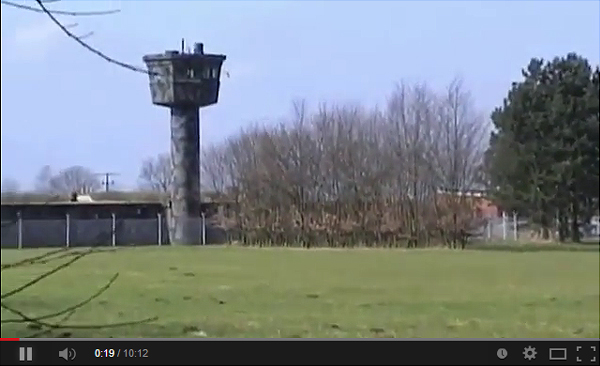 SAS Kellinghusen, 2007 - a 10-min tour (YouTube) |
||||||||||||||||||||||||||||
| 1968 | ||||||||||||||||||||||||||||
| (Source: Email from Dan Prevo, 13th Arty Det, Jan 1968-Jan 1970) | ||||||||||||||||||||||||||||
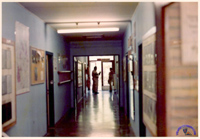
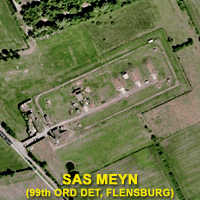
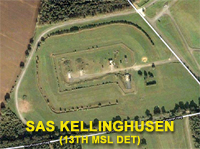
| Stumbled on your site surfing the internet. I was a Lt. at the 13th USA Missile Detachment in Kellinghusen, Germany from Jan 1968 to Jan 1970. The 13th and 75th MSL Detachments shared the same SAS during the time I was there. The 13th had 8 inch artillery and Honest Johns in one of the bunkers and the 75th had Sergeants in the other bunker at Kellinghusen (Areal picture on your web page). Also stored there were MADMs and SADMs (special demolition munitions) for a combat engineer unit (don’t know which one). Interior security at the bunker site consisted 24 hour coverage by at least three US personnel (from both the 13th and 75th ) and 24 hr. perimeter security of the bunker site was provided by German units at Liliencron. The 13th was headquartered and billeted at Liliencron, while the 75th was stationed at Itzhoe with the 294th. You have a pic on your website looking out from the front door of the 13th building. You would pass through the entrance gate of the Kaserne and bear to the right and the building was about 1/3 mile from the gate. We had two teams at the 13th. My team was the eight inch team. We maintained the warheads for an artillery btn that was probably part of the 6th Artillery Regiment but the unit (don’t remember the nomenclature) was not located at Liliencron or Itzehoe. They were probably less than an hour away. We would train together occasionally, but no more than once or twice a year and usually part of a US led NATO inspection. We also did some limited classroom training for the Germans. I guessed that the training was limited because the components of the projectile were classified Secret Restricted Data and could not even be looked at by anyone without a US SRD clearance. Therefore the training with the Germans was with a dummy round that had no features of the actual warhead. The warhead we trained on had all the components of the actual round but were, of course, inert. The actual warheads remained in the bunkers at all times. The other team at the 13th was for the Honest John (Lt. Cook, Lt. Camara, and Lt. Corcoran successive team leaders). The German Rocket Artillery Btn for the Honest John was at Liliencron. I believe all German units we supported were under the 6th Artillery regiment which I believe was HQ’d at Liliencron. Only a few of the names on your web page were at the 13th in the 1960’s – S/Sgts Havronik, Chambers, Maj. Macaleer, Lt. Dennis Corcoran, Cpt. Dieter Hoffman (thought he should have been an opera singer). Cpt. Pruitt was the CO of the 13th until Hoffman replaced him. Pruitt had been in Viet Nam and went on from the 13th to promotions up the line and a very successful Army career. In addition to them: Sgt Jimmie Gatlin (supply), good guy just waiting to retire so he could go live on his wife’s family’s vineyard in France; Sgt. Hampton, black guy who was devoted to his wife and son Patrick and said often that he would retire in Germany because the folks back in his home town in Alabama would never accept a mixed marriage couple; Lts. Jim Cook and John Camaro who I shared an apartment with, Cook went back to Michigan and Camaro volunteered for Viet Nam. Hung out with Lt. Dick Rhodie who was assigned to the 75th. We did some great trips to Denmark, Amsterdam, and Italy together, not to mention hanging out at the High Chaparral and the Wigwam with a few trips to the Reeperbahn in Hamburg, just to sample the wide variety of beers, of course. Also fraternized with many NCOs and EMs, for which I got an article 15 (I loaned one of them my car and he took it out and totaled it), but would do it all over again as I have great memories of times with Sgt. Bernie Lane, Gatlin, Sgt. Steve Kreglow, and many others. |
||||||||||||||||||||||||||||
| 1970 | ||||||||||||||||||||||||||||
| (Source: Email from Dave Phillps, 13th Arty Det, July 1970-Dec 1971) | ||||||||||||||||||||||||||||
|
||||||||||||||||||||||||||||
| I knew how to type and although I had been trained as an Honest John Rocket Crewman, they quickly made me the Detachment Clerk to replace Dave Knapp who had served his time and was going home to New York. I had a Top Secret clearance and helped out in our "Crypto" or "War Room." I have fond memories of my time at the 13th, and spending about every night downtown at the High Chaparral where Margaret and her husband ran this dance casino. I believe it opened in 1969. We were good customers (though shortly after getting out of the Army I swore off drinking and smoking and haven't touched either since that time). A close friend of mine at the 13th (Ronald M. Nunez) and I got Margaret to set up charge accounts for the soldiers and we were able to put the drinks on our bill and pay up once a month when it was payday. To our knowledge, not a GI that participated in charging his drinks ever failed to pay the bill on time. Mel Chambers (E-7; married to a German woman) was our essential "First Sergeant." Cpt. Dieter Hoffmann was German born, American educated, and a career army officer who served in the Americal division in Vietnam prior to being stationed in Kellinghusen . He was replaced by Cpt. Clinton L. Stokes II (or the III), who was followed by Cpt. Frank M. Harford. Harford served as a Lieutenant on the SASCOM inspection teams that toured sites in Europe. After getting out of the military he went to law school and was working in southern California. When I arrived in July 1970, Major McAleer was in charge of the 294th, followed by Maj. Thomas E. Kinney. Major Kinney's wife was from England. I have communicated with some folks since leaving Germany, including Howard Norman's daughter, Susan Norman Chrispell, and Sergeant George Perez (who worked out of the 294th) and we have put together names of people we remember serving at the 13th, 75th, and 294th Group. They include the following: |
||||||||||||||||||||||||||||
| (Click here for extensive list of former members of the 13th Arty Det from the early 1970 timeframe) | ||||||||||||||||||||||||||||
| I am not sure what else to discuss about our time there in Kellinghusen. A lot of us were homesick for our girlfriends in the States, but we made the most of it. Germany was beautiful, the people were very kind to the GIs since there were so few of us located in Kellinghusen (45 minute north of Hamburg) that we were probably a novelty of sorts. The weather was cold in the winter and the "Hawk" would blow cold! Summers were perfect and it seemed to stay light forever. We made up for that in the winter. We played a lot of horse shoes, volleyball and had some great softball games. We turned the big bay area in the building into individual "rooms" so the soldiers could have a little privacy, and those with seniority got to work their way into a hall-way room (real rooms with doors!) and which were shared by 2 guys. We had our own little PX there in the 13th, and it could not have been larger than 10' x 12' We took turns with the 75th in sending supply trucks to Bremerhaven for rations, supplies and food and mail. The 75th had a few more men than the 13th, so they made the run 3 times a week and the 13th made it the other 2 days. I took that trip a couple of times, and it was memorable taking that big 10-ton truck onto the ferry that crossed the Elbe River. We would go downstairs on the ferry and buy some knockwurst, all the while watching the waves rise and fall through the port windows. Riding in the back of one of those trucks, covered by a canvas top, was memorable! (read: COLD) One time there were 4 of us and we started drinking the Lowenbrau and Beck beer we were bringing back to stock our beverage lounged downstairs of the kitchen are at the 13th (the dungeon). Beer only cost 15 cents a bottle, so the German soldiers loved to come into our lounge downstairs and drink cheap beer. They didn't get paid as much as the American shoulders. Well, we drank all we could drink on the 5 hour trip home and figured it would keep us from dying from the cold. Cecil Wheeler could make a jackass sound better than a real jackass, and as we wound through those numerous, little German towns, the people could hear a big jackass sounding off in the back of this truck, and empty Lowenbrau bottles flying out the back. What a trip. I have written pages of personal history and memories, and if you think they are worth sharing, please let me know and I can send you some. Thanks for letting me share these memories. They really were specials days at a special time in our lives. I hope to hear from anyone else who was there at the 294th/75th/13th, and hope everyone is doing well. I know Sgt. Howard Norman (wife was Bertha, and children included Susan, Wanda, and Steven) died from leukemia about 10 years ago. He was loved by about everyone. He had a hobby of fixing old German clocks and all us guys bought a wall clock, or granddaddy off him. |
||||||||||||||||||||||||||||
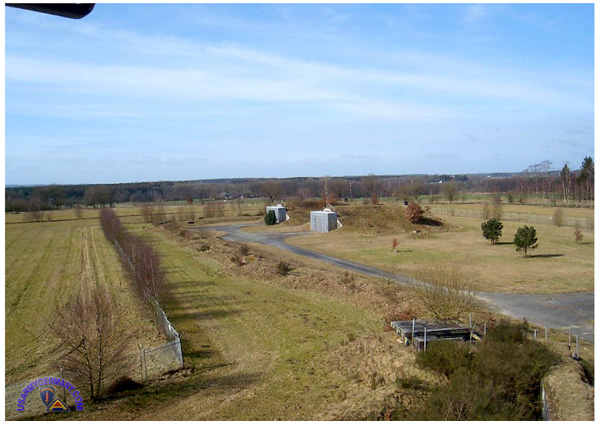
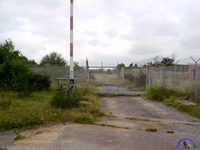
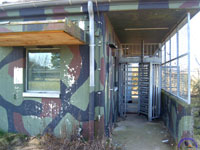
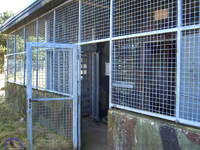
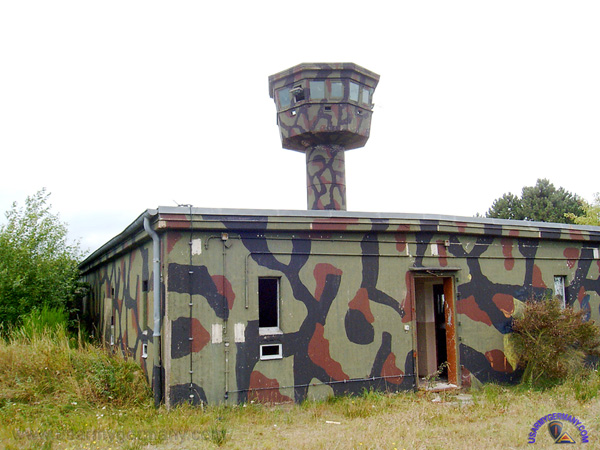 SSCC and Tower One at SAS Kellinghusen, 2008 |
||||||||||||||||||||||||||||
| 2008 | ||||||||||||||||||||||||||||
| (Source: Email from Claus P., Germany & Building for Peace: US Army Engineers in Europe, 1945-1991) | ||||||||||||||||||||||||||||
| In the mid-1970s, US forces in Germany had about 7,000 nuclear warheads stored at 100 storage sites. With the increased threat posed by terrorist organizations such as the Baader-Meinhof gang, the US military recognized the need for increased security measures at nuclear weapons and missile sites. In 1974, the Engineering Division at the European Division of the US Army Corps of Engineers (EUD) initiated a construction program initially known as the Special Ammunition Storage program but later renamed as the Long Range Security Project (LRSP). |
||||||||||||||||||||||||||||
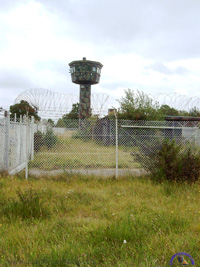
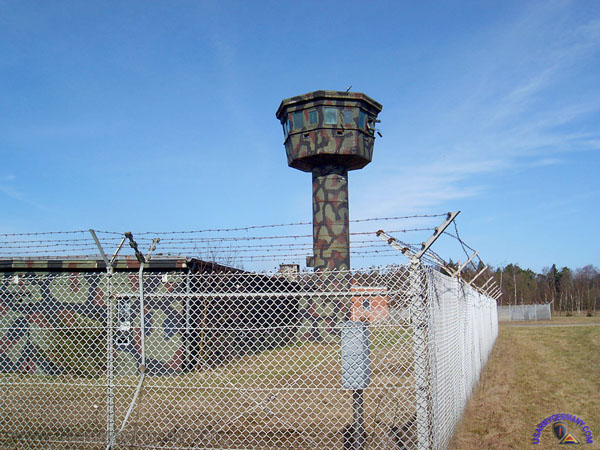 Perimeter fence (chain-link fence with top guard) and Tower One, 2008 |
||||||||||||||||||||||||||||
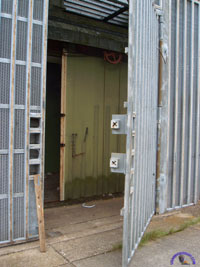
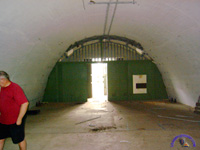
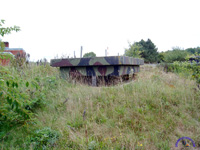
| Under LRSP, the Division formulated improvements centering around measures that would delay terrorists long enough to permit additional security forces to respond. These measures included special fencing; a clear zone both beyond and inside the security fence; (concrete) guard towers; special lighting; and an intrusion-detection alarm that would alert the security force on site to an attempted penetration of the secure area. Also included were construction of special bunkers or reinforcement of exisiting bunkers. Somewhat later, the planners added a new building to the project (the SSCC) that incorporated entry-control facilities, a site security control and alarm center, and quarters for a combined response force of 35 soldiers. SAS Kellinghusen was one of the sites upgraded by the LRS project and demonstrates these enhanced security features. |
||||||||||||||||||||||||||||
|
||||||||||||||||||||||||||||
|
||||||||||||||||||||||||||||
| 75th US Army Artillery Detachment | ||||||||||||||||||||||||||||
| Supported Command: Artilleriekommando 600 (link) | ||||||||||||||||||||||||||||
| 1970 | ||||||||||||||||||||||||||||
| (Source: Email from Steven C. Mortenson) | ||||||||||||||||||||||||||||
| While doing some research on my great uncle who served in France in WWI with the 331st Field Artillery, I ran across your web site. It brough back some long lost memories. Some of the best of my life. I was assigned the 294th Artillery Group on 9 Jan 70. When I arrived at the 294th in Itzehoe, Germany, on 11 Jan 1970 I was immediately reassigned to the 75th US Army FA Detachment also located in Itzehoe, Germany. The 294th and the 75th were in the same building on Freiherr von Fritsch Kaserne. There were less than 20 of us (if memory serves me) in both the 294th and the 75th. It was a very small group which served for a very enjoyable duty. We had two groups: the individuals that maintained and guarded the SW and the other took care of all the administrative/communication/security activities. LT Alexander Miller was our officer for the 75th. I served with the 75th USA FA Detachment until 14 Mar 1972 when I received an early out with President Nixons Phase Down Early Release Program. During my duty with the 75th, I worked in the security room maintaining all the classified documents, coding and decoding messages, COQ (Charge of Quarters) duties several times a week and managed the post exchange. I used to make supply runs to Bremerhaven one to two times a week. In the summer it was nice making the supply runs via the Elbe ferry, however in the winter it was cold in the Unimog (German Truck) and we would have to go via Hamburg. There were no freeways and the trip seems like to take enternity. On one trip through Hamburg in Jan 1972, the driver was playing with my 45 cal pistol and accidently pulled the trigger and blew a hole in the roof of his truck. Having a hole in his truck roof was a hard one for him to explain. I enjoyed the German people and my fellow soldiers. To this day, there is a German couple that I exchange Christmas cards. I agree with you, the 294th was part of the 514th USAAG and not the 515th USAAG. During my time with the 75th USA FA, the 75th USA FA was located with the 294th in Itzehoe Germany and probably moved to Flensburg with the 294th in 1974. Attached are a couple of pictures from the 75th USA FA Detachment. |
||||||||||||||||||||||||||||
|
||||||||||||||||||||||||||||
|
||||||||||||||||||||||||||||
| LANDJUT Corps - Warhead Custodial Detachments & Supported Formations | ||||||||||||||||||||||||||||
 LANDJUT LANDJUT |
||||||||||||||||||||||||||||
|
||||||||||||||||||||||||||||
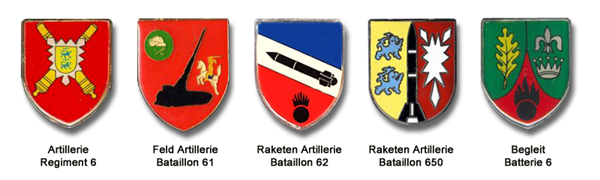 German units supported by the 294th US Army Artillery Group mission |
||||||||||||||||||||||||||||
| Raketen Artillerie Bataillon 650 | ||||||||||||||||||||||||||||
| Warhead Custodial Support: 75th US Army Missile Detachment (link) | ||||||||||||||||||||||||||||
| (Source: Email from Rainer L. Hoffmann, LTC, Reserve) | ||||||||||||||||||||||||||||
| I just found your site about 59th Ordnance Brigade and missed the RakArtBtl 650. It was first located in Itzehoe-Nordoe and later in Flensburg. It was eqipped with the Sergeant Missile System later the Lance. In peacetime it belonged to the I. Corps (GE), but in wartime it would be placed under the command of Landjut. I was a Lieutenant in 1970 in this Bataillon. At this time it was stationed in Itzehoe. Within its barracks was the (294th) Arty Group, Commander was Major MacAleer, and the Arty Detachment (Webmaster Note: would have to be the 75th USAFAD). I don't remember the numbers. It was my first job as a lieutenant and I was responsible for the survey in 3rd battery. Commanding officer was Captain Tonsern. BtlCdr was LTC Kunze. In 1981 he was brigadier general and in command of the ArtyGroup I. Corps. In autumn I changed to 150th Btl in Wesel, which I left in 1981. |
||||||||||||||||||||||||||||
| (Source: Email from Christian Kuhlmann, Germany) | ||||||||||||||||||||||||||||
| I have read your Homepage several times, coming over from www.lostplaces.de (where I'm writing in the discussion forum etc.) Now it is time for me to write to you, because in 1989 and 1990 I served in the Briesen-Kaserne in Flensburg in the Nachschubkompanie 611 as a PFC in the supply group. The 611 was the ordnance company for the LANDJUT Missile Battalion, RakArtBtl 650, but was an autonomous (separate) company, which is rare in the German Army. So, here are some additional facts for your text about this Company: The unit's complete designation was "Nachschubkompanie Sonderwaffen 611" or shortened, "NschKp Sw 611." On the site, you are missing the "Sw" in the designation under the crest with the covered wagon (which stood 1:1 in front of the Headquarters Building!) CO in the years I belonged to the unit was Major Hans Legies, Deputy CO was 1LT Norbert Gottschalk. What you didn't mention was the fact that the NschKp Sw 611 included a "Staffel" (detachment) of infantry (nearly a company in size, with about 70+ men), to provide security for the missiles (LANCE) and warheads. They alternated with the 4th Company of the 650th, even in providing security at the Depot in Meyn, which was also equipped. They were called "Begleitstaffel" (escort-troops) and they had an extra Badge on their sleeves, showing "Snoopy the Beagle" (from "Peanuts"), because of the similar pronouncement of "Begleiter" and "Beagle"; they were called "Beagles" as well. Also, a single anomaly in the German army, these soldiers had the badge on their arm and two braids instead of one braid next to their badge of rank. These braids were blue (for technical units, incl. Supply) and green (for fighting units, like infantry). |
||||||||||||||||||||||||||||
| Artillerieregiment 6 (Panzergrenadierdivision 6) | ||||||||||||||||||||||||||||
| Warhead Custodial Support: 13th US Army Missile Detachment (link) | ||||||||||||||||||||||||||||
| Raketenartilleriebataillon 62 | ||||||||||||||||||||||||||||
 RakArtBtl 62 RakArtBtl 62 |
||||||||||||||||||||||||||||
| Feldartilleriebataillon 61 | ||||||||||||||||||||||||||||
 FAB 61 FAB 61 |
||||||||||||||||||||||||||||
| (Source: Historie FAB 61 @ www.FAB61.de) | ||||||||||||||||||||||||||||
| On April 1 1958, Lt Col Rebensburg is assigned as commanding officer to III Battalion, 6th FA Regiment (Feldartillerieregiment 6) which is being formed at Hamburg-Wandsbek. The battalion is comprised of a headquarters battery (1st Battery), three firing batteries equipped with 105/155mm howitzers (2nd, 3rd, 4th Battery), and a service battery (5th Battery). In December 1958, the battalion is moved to Schleswig and redesignated as the 61st FA Battalion (Feldartilleriebataillon 61). In December 1962, the 4th Battery transitions to the M110 203mm SP howitzer and thus becomes a special weapons capable unit. On October 30 1963, the battalion moves again, this time to Dithmarsen Kaserne, Albersdorf. Initially, the 4th Battery remains in Schleswig, but by July 1 1964, the battery is also moved to Albersdorf. Later in 1964, the 2nd and 3rd batteries transition to the M107 175mm gun. On October 1 1965, 1st and 5th batteries are merged to form the Headquarters & Service Battery (1st Battery). In the mid-1960s, the 61st FA Bn began to work more closely with the Danish forces. In October 1979, the battalion is reorganized under the Heeresstruktur 4 (a new TO&E). 4th Battery is redesignated 5th Battery. The training battery (8th Btry) is redesignated 4th Btry. On April 1 1980, 2nd, 3rd and 4th Batteries are reequipped with (M109) 155mm howitzers. In 1982, 5th Battery transitions to the M110A2 version of the 203mm SP howitzers. In 1986, the battalion is reorganized again, under "Artillery Structure 85." 2nd and 3rd Batteries are each equipped with nine (M109) 155mm howitzers; 4th and 5th Batteries each have nine M110A2 203mm howitzers. (Webmaster Note: I am not sure, but it is possible that only the 4th Btry was nuclear certified.) On March 31 1992 (a few years after the fall of the Berlin Wall - November 1989), the special weapons mission of 4th Battery and Special Artillery Detachment II/6 (ArtSpezZugll/6) is declared completed. In September 1992, the battalion loses its M110A2's. On April 1 1993, the battalion is reorganized and redesignated as the 61st Field Artillery & Target Acquisition Battalion. |
||||||||||||||||||||||||||||
|
||||||||||||||||||||||||||||
| Related Links: Traditionsverband Feld-/BeobArtBtl 61 e.V. - veterans of the 61st German Field Artillery Battalion. |
||||||||||||||||||||||||||||
 .
.