| If you do
NOT see the Table of Contents frame to the left of this page, then
Click here to open 'USArmyGermany' frameset |
|||||||||||||||||||||
|
Hohenpeissenberg Radio Station |
|||||||||||||||||||||
|
|
|||||||||||||||||||||
|
|||||||||||||||||||||
|
|
|||||||||||||||||||||
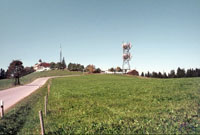
| Hohenpeissenberg Radio Station | |||||||||||||||||||||
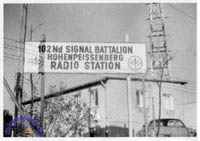
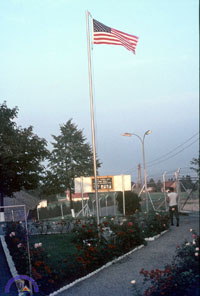
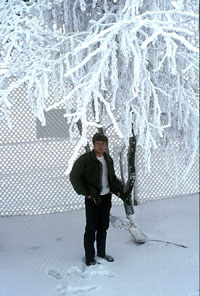
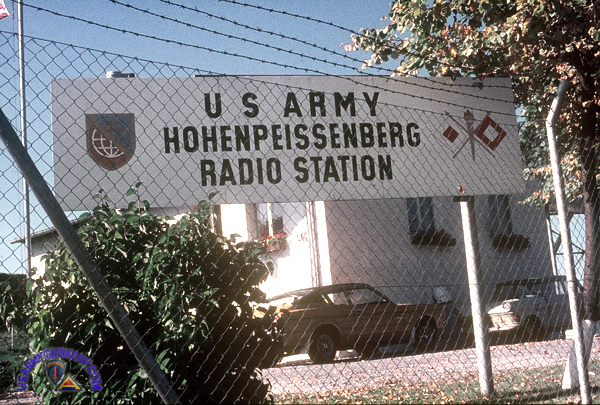 Hohenpeissenberg Radio Station sign, early 1970s (Randy Tucker) |
|||||||||||||||||||||
102nd Signal Battalion |
|||||||||||||||||||||
| (Source: Email from Bob C. Fox, 102nd Sig Bn, 1957-60) | |||||||||||||||||||||
|
|||||||||||||||||||||
|
|
|||||||||||||||||||||
| 1964 | |||||||||||||||||||||
| (Source: Email from George Clinton) | |||||||||||||||||||||
| I was at HPG for the best two years of my life. We were billeted in the ops building. It had a shower, kitchen, coal fired furnace, and the radio equipment was in the basement. When I arrived in the Fall of 1964 the AN/GRC-66 had not been installed. There was no 100-m tower, no microwave dishes. Just some old Siemens VHF radios. When one of these radios died we would fix it by putting it in the ¾-ton, drive it to the bottom of the hill, and then return it to service. Worked every time. At the time we had five Labor Service members: Roman Wegrzynik, Semau Browdowski, ? Laskowski, and two others whose names I don’t remember. Sgt Mike Michalowski was the station chief. He and I went through radio school at Ft. Monmouth together in 1964. He told me when he was in Viet Nam he was a heavy weapons guy that trained locals. He spent some time in the North and the Golden Triangle area of Laos & Cambodia. He wanted to get away from that and he thought that there was a future in the Signal Corps. Some of the GIs with me were a SP6 Radar (really), SP4 Lloyd Apitz, SP4 Rick Hollowell, sorry I don’t remember the others. When the AN/GRC-66 was installed it was done by contractors from Italy. An old guy and a young one. The young one had an Alpha that he would drive like a bat from hell. The tower was put up by a gang of Turks. Two of them got arrested for poaching a deer. Shortly after the waveguides were in place we were hit by a lighting storm. Ball lighting danced along one of the waveguides and finally found ground in the power distribution panel destroying it. One night in 1966 we were “captured” by a Special Forces team out of Bad Tolz. At 2AM I am woken up by some guy sticking a .45 in my face saying we were prisoners. They then proceeded to turn the radios off. A few minutes later the phone rang and the General on the other end wanted to know what “private” was responsible. All ended well though – we gave them breakfast and they left. We never heard from them again. One more story – In the Fall of 1965 we were “visited” by the Soviet Military Liaison. They were taking pictures from the road. Sgt Mike thought that was a bad idea so he had me pull our truck across the road trapping them on the up side with no way out. I was in the truck with our M-60 pointed at them. No ammo but they probably didn’t know that. They abandoned their car and ran down the hill. The MPs showed up later and towed the car. They were back the next day photographing from below us and there was really nothing we could do about it. The Labor Service guys were upset because they didn’t want to be photographed. Most had relatives that were still in the East. |
|||||||||||||||||||||
68th Signal Battalion |
|||||||||||||||||||||
| 1967 | |||||||||||||||||||||
| (Source: Email from Michael Radziewicz) | |||||||||||||||||||||
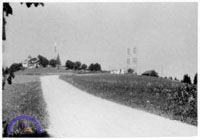
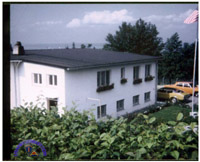
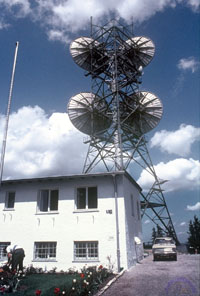
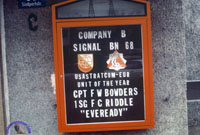
| Hello, saw a small article on this station. I was stationed there April 1967 to Jan 1969, made Spec 5 and had my own shift. Only non-career person with a shift. Saw the white Opel sedan next to building (photo above). It belonged to a Polish Labor service man. Roman Wegrzynik was his name and he served in Monte Cassino and other battles. Person in charge of all labor service was Lazar Lazarov who held the job till the station closed. He was Bulgarian and quite a man also. As far as I know his wife is still alive and lives up north. Funny story with that sign saying the name of the station. We did not have inspections as such because of our location. The IG came out once and sat us down and kept on wanting some kind of complaints. Said he had never been anywhere without complaints. We told him we live in a resort area, get extra pay, 5 late run movies per week, we live above gasthouses, etc. and no officers, as the highest ranking man was at best an E-8. We were down to an E-7 when I left as they did not have the personel. Anyway my true story about the sign. During this period Kris Noel was a favorite disc jocky on Armed Forces Network. Yes, Kris was a female! One of the enlisted men at the station decided to artfully make letters with her name and paste them over the Hohenpeissenberg. So our sign read US ARMY Kris Noel Radio Station. I think the First Sergeant, LTs and the LT Col from IG came up. Couple hours later they left and the man could not contain himself. Asked us all to go outside and look at something. Took us down to a parking lot that the Bundeswehr used for a mobile com site. WE all looked up at the station and none of us noticed he had changed the name of the station! The guy in picture 8 (below) last name is Thompsen, we had a nickname for his first name and I can not really remember his first name. He was from Gary IN. In picture 12 the guy with the bald head on the left is Roman, he was on my shift and together we were probably the only 2 people who could fix the Trac 4. I dont remember the equipment but the mico stuff still had tubes, the carrier was all updated. Had these huge klystrons to boost into and out of antennae, these were our fatal link as a diode way inside would burn out. Basically had to take apart the unit to get at the diode. The TRAC 4, as I think it was called was a WWII jeep mounted. We used it only for a shot to Bad Tolz when the green berets were there. All tubes and what a joy to work on! A little more on the pictures of flower gardens. We had to replace the soil and spent days putting in the garden. Browdowski was our supervisor and the E-8 in charge was Michalowski. SGT Mike was a green beret who had two tours in Nam. Met eye to eye in jungle with a tiger who had been tracking him, pelt was in Mikes living room in Perlacher Forest housing. Browdowski was a spy in WWII. Murnau had two bases, the one we had was the Germany army and then us. Across the highway the Germany army had the base. Previously it was a Prison camp for Polish officers. Browdowski had the mission of going in for an unannounced visit twice and escaping again! I tried to verifiy with people in town and the lady who ran the commisary laundry in Murnau did tell me it was a Polish officers camp. Sgt Mike left soon after I got there and took me down to Peissenberg to meet Herr Wagner, who owned the VW dealership. about a week before he left. Gave me a careful speech about taking care of Wagner and he would take care of me. Then also said he had alot of friends and had been a Captain in the SS. Very interesting person. I do not know why SGT Mike picked me out with Wagner, maybe because I could speak Polish and his name of course, Mike's name, was Polish. Wagner one day got me into a conversation of when and who from my family emigrated to America. My one great grandfather was a career officer in the Galacian army (Austrian army in Austrian part of divided Poland). So Wagner told me I was Austrian so that he could be my friend. Wagner one day asked if I had a little time and he wanted me to go up to the Barons house. Of course I went and met this person from the Bavarian Royal family, he stood at least 6'6 and was huge. He invited us to visit his barn, in which he had a still and it was more of a bar. Really do not remember leaving several hours latter! Remember this was in 1967 and not that long after the end of WWII. I lived in Schongau in the same complex as Lazarov and his wife. Went to every Bier Fest from April till Oktoberfest. I still can speak Bayerisch quite well and the last time I went thru the area was in 2002 or 03. The building of the station is still there, Bavarian TV owns it. Gasthaus Fischer is huge and profitable and old man Fischer's son runs it and UTE still waits tables. You left the station, turned right, walked past the cemetary in pictures and you were there... no driving. Many of the older places the GIs like are still there, the RIGGI Ulm down past Hohenpeissenburg city befor P'berg, and I cant remember the others names. I stayed at different Zimmer Frei places and they all were taken back when I could speak to them in their dialect. A quick breakfast took me @ 2 hours as the owner would sit at the table with my wife and myself and they were still curious as to what we did at the station. They still all believed that we listened to the Russians. We were the first ones given permission to live off station and we all lived in Peissenberg at first. We were then all given permission to get drivers license. When I first got there you had to hike up and down mountain to the train station on far side of town. But it got us to Munchen and other places. A liter of Bier cost 1 mark then (.25cents) My apartment in Schongau with a garage and great view of the Alps cost $60. per month. The special of the day lunch at any gasthaus cost .60 cents.... soup and meal with meat, potato and veggie. Gas coupons got a gallon of ESSO for .25 cents and cigarettes at the commisary were I think .20 per pack. Being as we got hardship pay, higher rate extra rations,housing allowance plus my E-5 pay, I remember always having money left over. If I am correct I was making @ $600. per month. Looking back life was beyond good, it was great during that time. I met living history books, saw beautiful places and went back several times to see friends. Last time I was in the station was in 1971 as Lazarov still was working there. The guy who replaced me as the shift chief was also there. Labor service were all also there except for a name I can not remember exactly. Even Meyer was still there, he was one of a few German labor service. He had a jeep to transport the labor service and whatever other needs. He loved the jeep and we would tease him that it was his wife. We were in the village one day and got him to give us a ride up the hill. He told us he would show us what his wife could do, and he drove us up the steps up the hill. |
|||||||||||||||||||||
| 1968 | |||||||||||||||||||||
| (Source: STARS & STRIPES, May 20, 1968) | |||||||||||||||||||||
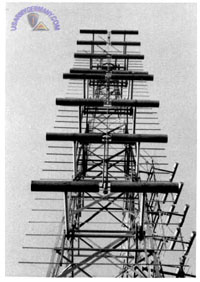
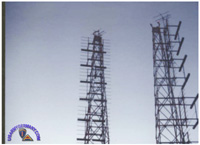
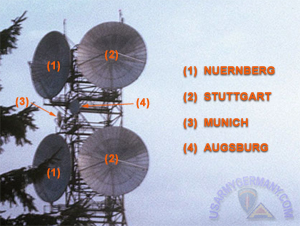
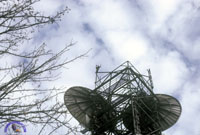
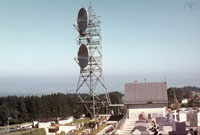
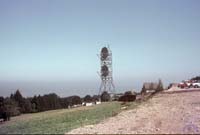
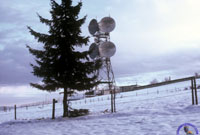
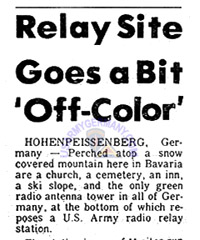
| The Hohenpeissenberg Radio Relay Station is one of seven operated by Co B, Signal Bn 68. Co B headquarters is located in Munich. The site links Munich, Bad Toelz and Augsburg. It is considered the most important link in the communications network covering southern Germany. The 132-foot tower - painted green (1) - holds several antennas:   Four 30-foot tropo dishes serve to link to Stuttgart (109 miles to the NE) and Nuernberg (113 miles to the north).
Two smaller dishes receive and transmit signals to Munich and Augsburg Two fly-swatter antennas fixed near the base of the tower handle microwave transmissions to and from Munich and Bad Toelz Four 30-foot tropo dishes serve to link to Stuttgart (109 miles to the NE) and Nuernberg (113 miles to the north).
Two smaller dishes receive and transmit signals to Munich and Augsburg Two fly-swatter antennas fixed near the base of the tower handle microwave transmissions to and from Munich and Bad Toelz(1) The tower was built two years ago (1966) replacing the original two VHF towers. It was painted green - the only Army tower painted green in Germany. The locals would not give permission to the construction of the new tower unless it was painted green. The new tower was necessary to support the 30-foot tropo dishes when tropospheric transmission was added to the site. The site house is 20 feet from the base of the tower. It houses the radio equipment on the first floor and kitchen, living room, bedroom and office on the second floor. Three of the men stationed at the site are billeted there. The others live in Murnau or in a gasthaus in Peissenberg. |
|||||||||||||||||||||
| 1971 | |||||||||||||||||||||
| (Source: Email from Randy Tucker, "B" Co, 68th Sig Bn, 1971-74) | |||||||||||||||||||||
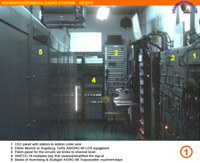
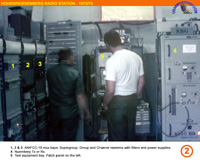
B Company HQs was in Munich with 68th Signal Battalion HQ in Stuttgart. I did not realize the 68th was so spread out over Germany until I read info on USARMYGERMANY and the 102nd SIG BN websites. Married personnel lived in Munich and drove to work. Single personnel lived in local civilian housing and ate at home or in a gasthaus. Duty was pretty good as we worked 24 hours on duty and the 48 hours off duty. As Walt G. mentioned in his Hohenstadt article, we also received movies since we were so "isolated". The single GIs stayed away from Munich as much as possible, out of sight out of mind. We did receive regular visits from Sig Bn 68 commander as he liked the area, also the Sig Gp 22 commander and even the STRATCOM Commander, a BG on one occasion. HPG received two 'Outstanding" on DCA inspections and we were told HPG was the only relay site at that time to receive this award so the Company CO did not come out often. 26L20 was my MOS out of Fort Monmouth but worked 26V20 at HPG. I know that HPG went unmanned at some point, maybe the late 1980s, and was supported from either Augsburg or Munich. Later the site was deactivated and returned to the Germans. If anyone has the timeframe of these two events I would appreciate the info. Ed Painter and I returned in 2001 but the tower was gone by then - But not the good memories. Randy Tucker (1) AN/FCC-18, Multiplexer Set - The FCC-18 multiplex equipment employs frequency division to provide 600 voice channels on a single transmission medium; it is used in the IWCS. |
|||||||||||||||||||||
| ADDITIONAL INFORMATION | |||||||||||||||||||||
|
|||||||||||||||||||||
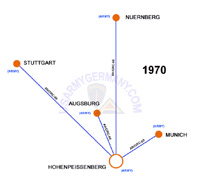
| Hohenpeissenberg was part of B Co, 102nd Sig Bn until the mid 1960s then became B Co, 68th Sig Bn. In 1974 the 68th was deactivated and HPG was a unit of the 69th Signal Battalion. I know that from June 71 to May 74 HPG had links to MNH (LOS), RAG (LOS), NBG (TROPO), and SGT (TROPO). I believe the link to Bad Tolz (Siemens ?) was taken down in 1970 or early 1971 as it was gone when I arrived in June of 71. Some additional information from Bob Fox and some of the 102nd Signal guys -- In the early 60s traffic from Munich did not go through Hohenpeissenberg (HPG) but went LOS from Munich to Schweitenkirchen (SKN) to Reinwarzhofen (RHN) and then to Nurenberg (NBG). Traffic from Munich to Stuttgart went LOS from Munich to Hohenpeissenberg to Hohenstadt and then Stuttgart. Bob said HPG only had single comm link to Augsburg during his time at HPG in the early 60s. Bob said HPG did not have the Bad Tolz link during his time and it was down by June 71 when I arrive at HPG. By 1971 HPG had the TROPO gear and I believe SKN and RHN were deactivated as we had the NBG link. We also had the TROPO link to SGT so never had any communication with HST. On one of the 69th Signal posts the remote MW site at Bonstetten (BST) is mentioned. This is just a guess but your DEB map shows links from Augsburg to both SGT and NBG through BST. Once BST activated and the Munich community closed, there would have been no need for Hohenpeissenberg? I have spoken with people that were at HPG before my time and after but have not been able to locate anyone that was there when the TROPO equipment and the big tower were installed or when the site was deactivated. |
|||||||||||||||||||||
|
|||||||||||||||||||||
|
|||||||||||||||||||||
69th Signal Battalion |
|||||||||||||||||||||
| 1985 | |||||||||||||||||||||
| (Source: Email from Milton Chavez) | |||||||||||||||||||||
| I was assigned to this com site as a Sr. Defense Comm Tech working for ITT/Federal Electric out of Paramus NJ. Spent a year there and loved it. I was there from April of 1985 to April of 1986. This was my first job when I left the USAF. The tropho shots were still running and the LOS shots (AFN) also when I was in 1986. The patch bay was something else where just opening the panel would cause a circuit to fail or come back online. I helped install some new LOS equipment for the new Digital “DEB” system and some new encryption equipment CY 104s. There were some Polish or Czech civilian techs there that we were replacing and they were not happy about it. I was always amazed at the German U-boat backup generator that fired up every time we needed it and how well the facility was maintained by the civilians before ITT came in. It was a lovely place to work and the view was amazing. Don’t know about the graveyard next door but the Gasthaus at the very top of that little mountain was nice. I seem to remember the name Rigi Alm for the Gasthaus and the owner had a big Saint Benard called “Barry” but someone said that the Rigi Alm moved into the village below. The tower was still green when I was there. The equipment was on the first floor and the office/living space on the second floor were the toilet seemed to smell and you had to keep the door closed. I lived in the village below near what was called the Cafe Foyer, rented a room in a house owned by the Bank Manager of the little bank in town and bought my groceries from the little Spar Mart. It was a nice place to live and work and recover from a recent divorce. My best memory of being assigned to Hohenpeissenberg radio site is helping a former Army serviceman stationed at the this site find and connect with his daughter living in Peissenberg. I wish I could remember the gentleman’s name. But he was very pleased with my efforts and his daughter was very happy to meet her father. |
|||||||||||||||||||||
 |
|||||||||||||||||||||
 .
.