| If you do
NOT see the Table of Contents frame to the left of this page, then
Click here to open 'USArmyGermany' frameset |
|||||||||||||||||||||||||||||||||||||||||
34th Signal Battalion |
|||||||||||||||||||||||||||||||||||||||||
|
|
|||||||||||||||||||||||||||||||||||||||||
|
|||||||||||||||||||||||||||||||||||||||||
|
|
|||||||||||||||||||||||||||||||||||||||||
| 321st Signal Battalion History | |||||||||||||||||||||||||||||||||||||||||
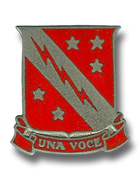 321st Signal Bn DI 321st Signal Bn DI |
|||||||||||||||||||||||||||||||||||||||||
| See Page 5 of the Jan 18, 1952 issue of the 7th Army Sentinel for an article that describes the organization and mission of the 321st Signal Battalion. | |||||||||||||||||||||||||||||||||||||||||
| MISCELLANEOUS The 321st Signal Battalion is an Army Reserve unit from Detroit Michigan. The Bn provides signal communications of all types between Corps Headquarters and subordiante units. The basic organization of the battalion is as follows:  Hq & Hq Co, 321st Sig Bn Co A, 321st Sig Bn Co B, 321st Sig Bn Co C, 321st Sig Bn Telephone & Teletype Co, 321st Sig Bn Radio & Message Center Co, 321st Sig Bn Hq & Hq Co, 321st Sig Bn Co A, 321st Sig Bn Co B, 321st Sig Bn Co C, 321st Sig Bn Telephone & Teletype Co, 321st Sig Bn Radio & Message Center Co, 321st Sig Bn An Air Section and a Corps Radio Repair Section are also included. The three line companies (A, B & C Co) are responsible for signal construction operations. T&T Company is responsible for installing, maintaining and operating telephone and teletype communications. R&M Company is responsible for providing radio and message center facilities for Corps Headquarters all of its operation echelons. The Message Center Platoon operates message centers, cryptographic facilities, motor messengers and two airplanes. The Radio Relay Platoon operates point-to-point VHF radio stations, which provide voice and teletype circuits. |
|||||||||||||||||||||||||||||||||||||||||
| (Source: Email from Laddie Srahola, 321st Sig Bn, 1952-53) | |||||||||||||||||||||||||||||||||||||||||
| I was stationed at Kelly Barracks, Stuttgart from 1952 to 1953. A group of us have been meeting in various parts of the country for 20 years. This year we will meet in Atlantic City, New Jersey. First time ever in NJ. A delagation of NJ vets are hosting. Dates are October 2,3,4. Our group were men from the north-east, midwest, and southwest portions of the USA. The majority were draftees sent to replace National Guard men from New York and southern USA. |
|||||||||||||||||||||||||||||||||||||||||
|
|||||||||||||||||||||||||||||||||||||||||
| (Source: Email from Tom Cadell, 321st Sig Bn and 34th Sig Bn) | |||||||||||||||||||||||||||||||||||||||||
I was stationed at Kelley Barracks with the 321st Signal Bn. which later became the 34th Sig Bn. As Jerry Mace states, we thought when they said the unit was going back to the States, that meant us. I was as disappointed as he was to find that it was only the flags and insignias that were going.
I was a team chief (corporal -- later Specialist 4th) in VHF Platoon of Company "E." We also ran the radio circuits between VII Corp and the Divisions. Spent a lot of time in the field in those trucks with the huts on them. I ran a team for a while which used semi-trailer to run the radio circuits.
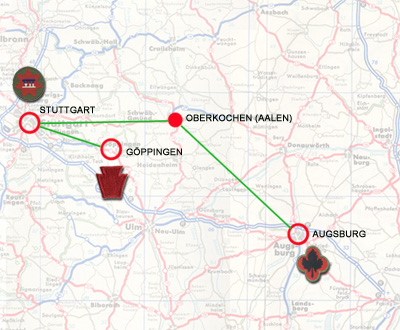
Always appreciated the great barracks and the fine food in the Mess Hall. I know we used to complain, but, in fact, it was really the best food I had in my two-year Army career. Late 1955 and early 1956 I was team chief at out TDY outpost in Oberkochen (near Aalen, Germany). Just three of us; two PFC's and myself. We had a great time. The other two guys were electircal engineers in civilian life so we had no trouble keeping the radio relay station on air. I would love to have a copy of the morning report from January, 1955, that Jerry Mace alludes to. |
|||||||||||||||||||||||||||||||||||||||||
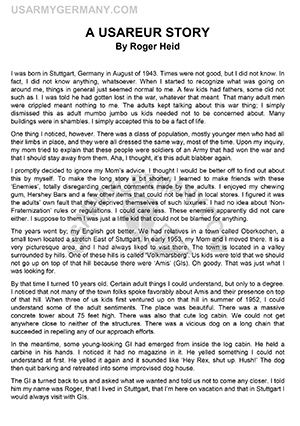 Roger's short story. (Click on the image to read the story (PDF)) |
|||||||||||||||||||||||||||||||||||||||||
| (Source: Email from Roger Heid) | |||||||||||||||||||||||||||||||||||||||||
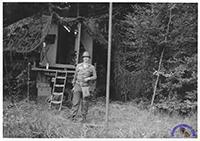
| I was looking through the website regarding USAREUR Units & Kasernes, 1945 - 1989. In the section about the 34th Sig BN, I found an entry submitted by Tom Cadell. He writes about a VHF Relay Station near Oberkochen, not far from Aalen.
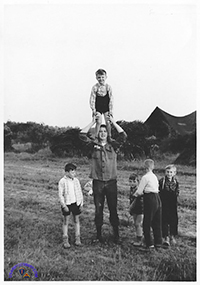
Get a load of this. I knew Tom Cadell. In 1955, I was only 12 years old. I was a local German boy that lived in Oberkochen. I used to hang around a lot in that hut (log cabin) that this Relay Station was located in. I also knew the other two fellers he mentioned. One of them was Don Coffmann (? spelling), the other guy's name I cannot recall, at the moment. I wonder if you can find out if Tom Cadell is still alive and, if so, do have any contact info. I will now turn around and write an article that goes more into details of my unusual story. I will attach this article to an e-mail. Info: In 1953, the call sign there was 'Able'. I often overheard the operator trying reach some other station.
"Victor Zulu, Victor Zulu, Victor Zulu, this is Able - Over." |
|||||||||||||||||||||||||||||||||||||||||
 |
|||||||||||||||||||||||||||||||||||||||||
| 34th Signal Battalion History | |||||||||||||||||||||||||||||||||||||||||
|
|||||||||||||||||||||||||||||||||||||||||
| 1969 - 1970 | |||||||||||||||||||||||||||||||||||||||||
| (Source: 52nd Anniversary, 1918 - 1970. The JAYHAWK Anniversary Issue, August 19, 1970.) | |||||||||||||||||||||||||||||||||||||||||
 34th Signal Bn DUI
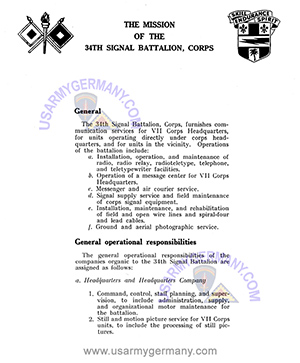
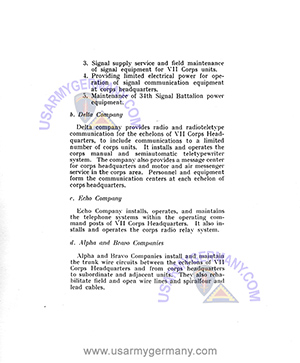
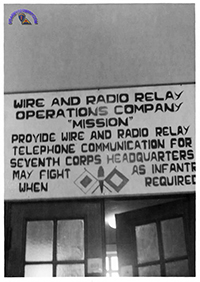
Ordered to reactivate on January 28, 1955, the 34th Signal Bn has rendered signal support to VII Corps and its organic units. Providing signal communications for all echelons of VII Corps Headquarters is one of the many functions of the 34th Signal Battalion. In addition to providing signal communications, the battalion has these missions: a. To install, operate and maintain multi-channel communication facilities to major subordinate tactical units b. To install, operate and maintain multi-channel communication facilities between major headquarters of Corps Artillery c. To operate the VII Corps ground messenger service d. To provide photographic service for VII Corps Headquarters The battalion is commanded by Lt. Col. John S. Tuck, who replaced Lt. Col. James J. Kouten on October 14, 1969. The 34th Signal Bn has participated in various field training exercises during the past year. In September, it was the one-week maneuver near Abtswind, followed by Certain Check in the Kitzingen and Kulsheim areas. In January the 34th staged a reduced-distance Signal Field Training Exercise at Krabbenloch. During April the battalion participated in the Signal Field Training Exercise Crusader near Kist and Kulsheim; and in May gave signal support to VII Corps during Exercise Front Centre '70. German-American relations were emphasized at the battalion's Organization Day on June 27. Over 2,000 people, including 34th Signal troops, dependents and German neighbors and guests attended the ceremonies. The day included continuous sports competition between the battalion's four companies, the winner of which was awarded a training holiday in July. |
|||||||||||||||||||||||||||||||||||||||||
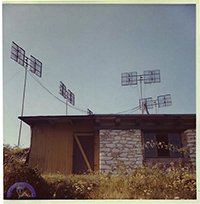
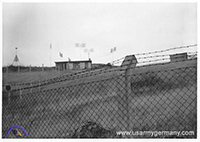
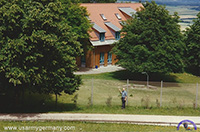
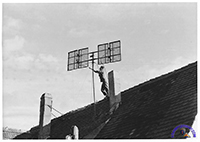
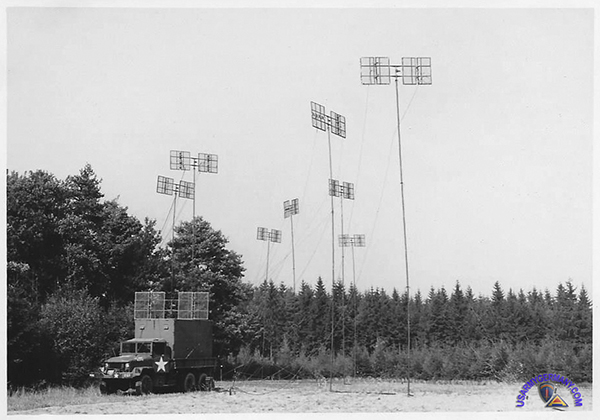
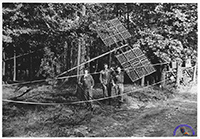
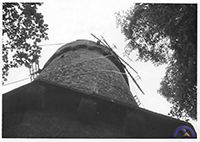
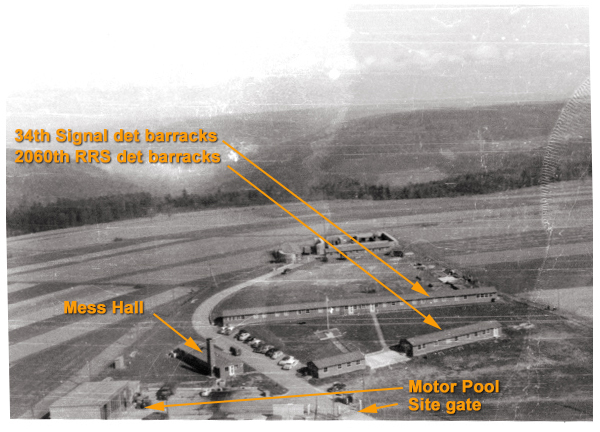 Reisenbach Radio Relay site, 1950s (Reisenbach Reunion Group website) |
|||||||||||||||||||||||||||||||||||||||||
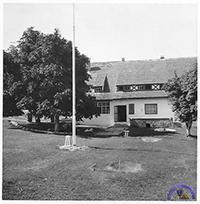
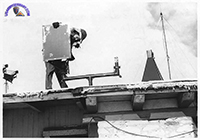
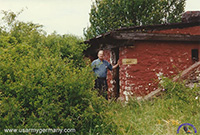
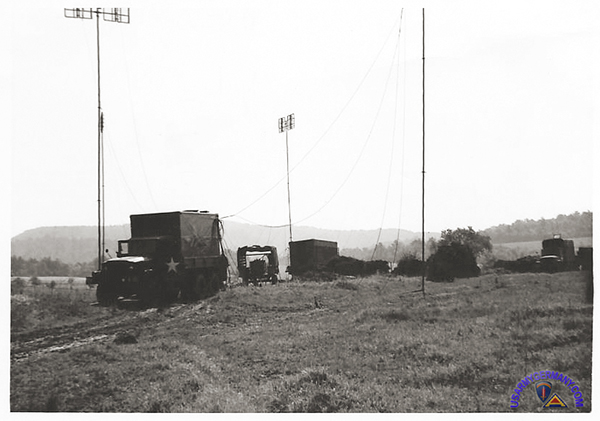
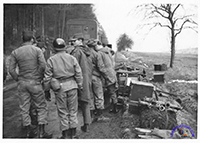
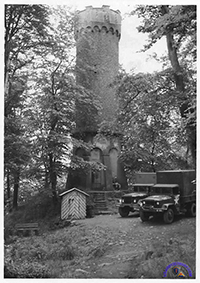
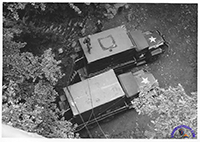
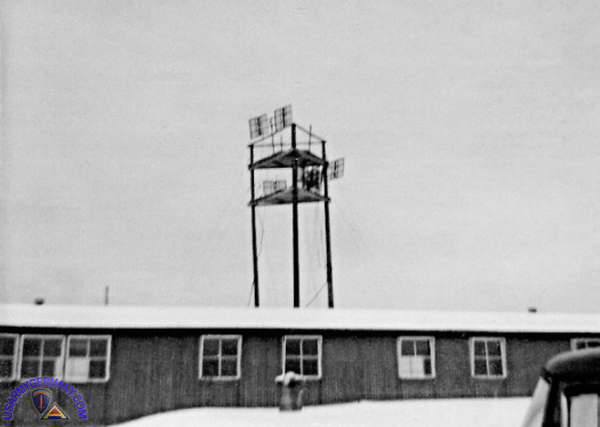 34th Signal detachment antenna tower, Reisenbach, early 1960s (Gale Watts) |
|||||||||||||||||||||||||||||||||||||||||
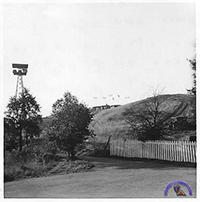
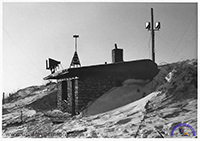
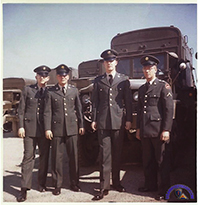
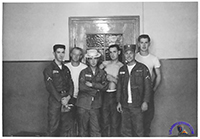
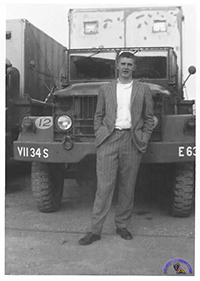
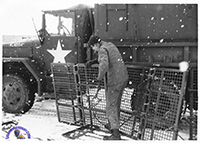
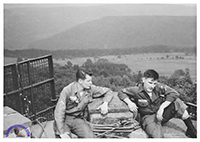
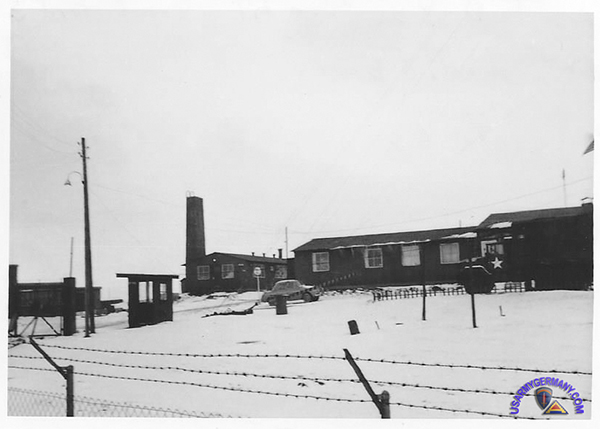 Possibly Reisenbach Relay - Richard Scheik was on TDY here, early 1960s (Richard Schiek) |
|||||||||||||||||||||||||||||||||||||||||
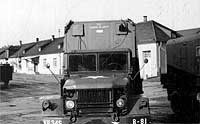
| (Source: STARS & STRIPES, Aug 23, 1968) | |||||||||||||||||||||||||||||||||||||||||
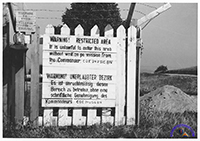
| Jessup Relay Site, located near Reisenbach, Germany, is operated by a small group of men from the 34th Signal Bn. The relay site maintains a radio link between Schwaebisch Hall and Wuerzburg. The site is manned by six men who work in three eight-hour shifts. (Source: Rich Spoley, Det 11 (Reisenbach), 34th Sig Bn) The 34th Sig Det at Reisenbach was first "Tampa Relay" and in about 1964 it changed to "Keiser Relay." |
|||||||||||||||||||||||||||||||||||||||||
If you have more
information on the history or organization of the 34th Signal Battalion,
please contact me . . |
|||||||||||||||||||||||||||||||||||||||||
|
|||||||||||||||||||||||||||||||||||||||||
|
|
|||||||||||||||||||||||||||||||||||||||||
| 1954 | |||||||||||||||||||||||||||||||||||||||||
| (Source: Email from Jerry Mace) | |||||||||||||||||||||||||||||||||||||||||
|
|||||||||||||||||||||||||||||||||||||||||
| (Source: Email from Carl Johnson, Jr.) | |||||||||||||||||||||||||||||||||||||||||
| Maybe it was
overlooked, but I never discovered any record of "A" and "B" Company
of the 34th Signal being stationed at Krabbenloch Kaserne in Ludwigsburg,
Germany during the years 1955-1956. I served with "A" Company at Flak Kaserne. At this time, HQ Company of the 34th was located at Kelly Barracks near Stuttgart. Evidently, "A" and "B" Company of the 34th were moved from Flak to nearby Krabbenloch Kaserne. This must have taken place sometime after 1956. Flak was approximately two kilometers from Krabbenloch. Any history on this? Carl D. Johnson Jr |
|||||||||||||||||||||||||||||||||||||||||
|
|
|||||||||||||||||||||||||||||||||||||||||
| (Source: Email from Chuck Hannen) | |||||||||||||||||||||||||||||||||||||||||
| I was stationed
at Kelley Barracks, VII Corps Headquarters, from January 1955 till
my discharge in Sept 1956. Company D, the Radio and Message Center company, was the communications for VII Corps Headquarters. We maintained radio teletype communication with various units of the VII Corps and a Morse code unit located in the basement of VII Corps Hq. Building. Company D also maintained the message center and the cryptograph center. I have never seen this mentioned in any websites or information concerning 34th Signal Bn at Kelley Barracks. Was I there for a year and a half or was I dreaming? Any body else there?? Chuck Hannen |
|||||||||||||||||||||||||||||||||||||||||
|
|||||||||||||||||||||||||||||||||||||||||
|
|
|||||||||||||||||||||||||||||||||||||||||
| 1956 | |||||||||||||||||||||||||||||||||||||||||
| (Souce: Notes, July 1956) | |||||||||||||||||||||||||||||||||||||||||
| Air Section, 34th Sig Bn performs various missions that include mail and courier runs, aerial photography, and ambulance service. The Air Section has three aircraft: a multi-passenger utility and cargo aircraft, a two-seater light observation plane and an all-purpose
helicopter.
Each morning, days a week, mail and courier runs are made to all units of VII Corps. Regular stops are made at Goeppingen, Ansbach, Nuernberg, traubing, Augbsurg and occasionally Regensburg. The unit's aircraft are given maintenance checkups at the end of every flight. After 30 hours of flying, the planes are xxx down and given a thorough inspection. This efficient upkeep is credited for the unit's no-mishap record since the 34th came overseas in 1951. |
|||||||||||||||||||||||||||||||||||||||||
| (Source: Email from Robert Cullums, "E" Co, 34th Sig Bn, 1956-58) | |||||||||||||||||||||||||||||||||||||||||
| I was stationed
at Kelly Barracks from July 1956 thru Sept 1958. I was in "E" Company,
34th Signal Bn. I was a Team Chief on a terminal team providing telephone
communications from 4th Armored Division Hq.
back to 7th Corps Headquarters. ( We used TQ 7 carrier equipment over TRC 35
radios.) On training exercises I was assigned to 4th Armored Div Hq. and traveled with them thru the end of the exercise. We transmitted telephone carrier communications over VHF radio. We had a 2½-ton truck with radio hut (can't remember what it was called) with all the carrier equip and radio gear. We used a 50-foot antenna with a huge mast head. We had 2,4 cyl power units and 100 gal of fuel. In addition, we had a ¾-ton truck for supplies. I was married and lived off post on the German economy. My son was born in the military hospital in Bad Cannstatt. Am I the only one left that was there? Would like to hear from anyone who was there during that timeframe. Oh yes, Hq. Company, E and D companies and a Car company were the only units I remember being there except for an MP unit. A and B companies were at Flak Kaserne. Bob Cullums |
|||||||||||||||||||||||||||||||||||||||||
|
|
|||||||||||||||||||||||||||||||||||||||||
| (Source: Email from Bill Burton, A Co, 34th Sig Bn) | |||||||||||||||||||||||||||||||||||||||||
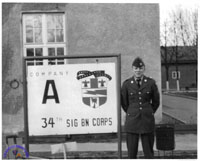
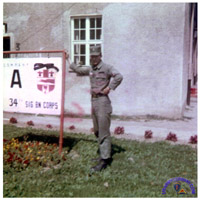
| A Co, 34th Sig Bn, Flak Kaserne, Ludwigsburg. | |||||||||||||||||||||||||||||||||||||||||
|
|||||||||||||||||||||||||||||||||||||||||
| 1957 | |||||||||||||||||||||||||||||||||||||||||
| (Source: Email from Ed Karnes, A Co, 34th Sig Bn, 1957-1960) | |||||||||||||||||||||||||||||||||||||||||
| I was formerly with Co A 34th Sig BN, MOS 321.10 Lineman
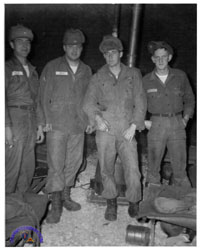
I enlisted "RA" in Apr of 1957 at the age of 17. Did my basic at Ft. Ord, my second 8 weeks at Fort Gordon in July, and in September after a nice cruise on the Upsure I became a member of Co. A. 34th Sig BN The first couple of weeks in Germany I found myself in isolation, at Kelly Barracks because of an outbreak of some sort of flu that, by the way, kicked my ass. I finally was assigned to Co A. at Flak Kaserne. Co B was also there but no other 34th Companies at Flak,they were all at Kelly Barracks, and as I recall they were Hdqrs Co, Co E and Co D. There was not Co C that I ever heard of anywhere. Around Nov of 1958, as I recall, a few guys from Co B and Co A were sent TDY, to become Honor Guards, for The 7th Corp Under Gen. Uncles. That lasted about 4 or so months. We were all sent back to our original Companies. This was probably done because we were all such goof offs, and we outstayed our welcome. When we all got back to our respective units everything returned to normal. Spending weeks on end setting up spiral 4 cable for upcoming field maneuvers, and weeks after, taking it all down. And when we were not in the field we were testing and maintaining the equipment, Mostly those crappy heavy reels and cable hocks. I had been in Germany much longer than any of the guys I shipped over with because I was RA and they were US or ER. I was about to accept the fact that I would remain in Germany forever. I have been a member of the Krabbenloch Facebook page for a couple of years now, and a I have never come across anyone I served with. There are a couple of guys that were a Co B at the same time as I was in Co A but our paths never crossed. I am still looking for guys in Co A at the time I was. At no time while I was at Flak Kaserne did I hear of any move away from Flak. There was a 7th Army Transportation unit at Flak as well. I heard recently the reason the troops were moved is because they found hazardous waste material all over the Kaserne, and the move was cheaper than the cleanup. Just hearsay though. I noticed a picture of a PFC Smith on the photo, on your site ( he is the third from the left) of four guys. I may have known. He was from Marietta GA and we called him Gene. If you would like I can send a few photos, Let me know. This is all factual and accurate as far as I can remember, its been a few years since the experience. |
|||||||||||||||||||||||||||||||||||||||||
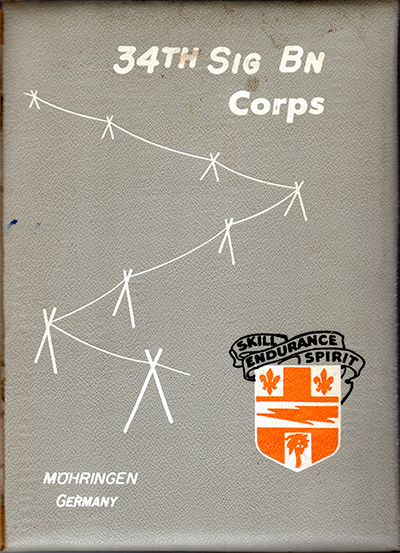 Yearbook 1957 (Webmaster's collection) |
|||||||||||||||||||||||||||||||||||||||||
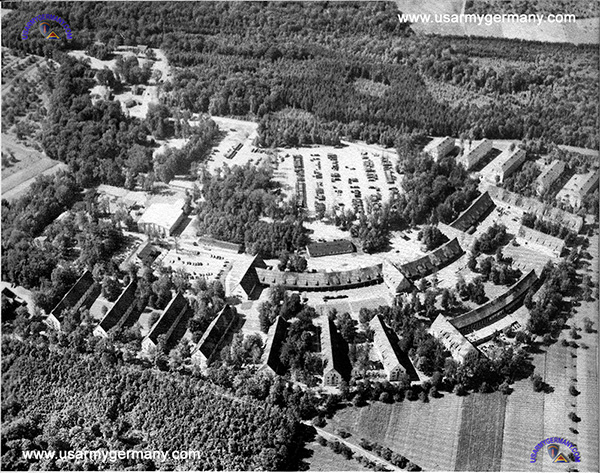 Kelley Barracks, Moehringen, about 1956 (34th Sig Bn Yearbook, 1957) |
|||||||||||||||||||||||||||||||||||||||||
Mission of the 34th Signal Battalion, 1957 (Click on thumbnails to view in higher resolution) |
|||||||||||||||||||||||||||||||||||||||||
| (Source: STARS & STRIPES, April 3, 1957) | |||||||||||||||||||||||||||||||||||||||||
| VII Corp Switches Switchboards in CPX A Signal Corps switchboard that can handle twice the nurnber of calls as its predecessor was put into use in VII Corps for the first time during NATO's command-post exercise LION NOIR. Technically listed as the AN/TTC-7, the unit consists of three terminal panels, each with 220 lines, enabling any one of three operators on duty to answer an incoming call. Men ot the 34th Sig Bn made the changeover without a hitch in operations. According to Sgt John C. Clark, a wire chief with Company E of the 34th Sig Bn, the improved service provided by the new equipment more than compensates for the headaches involved in its installation. Month-Long Job Clark explained that during a peak period the operators were able to handle nearly twice the telephone traffic they had been able to handle using the old units. |
|||||||||||||||||||||||||||||||||||||||||
| 1961 | |||||||||||||||||||||||||||||||||||||||||
| (Source: Email from Vern Gissel, Flak Kaserne Co. B 34th Sig, 1 Jan 1961-30 Sept 1961 (inactivated); Krabbenloch Kaserne Co. B 34th Sig, 1 Oct 1961 - 26 Sept 1963) | |||||||||||||||||||||||||||||||||||||||||
I was very much surprised to find info regarding the 34th Sig. Bn. Yesterday out of nowhere the 34th Sig entered my mind so I located your site simply by entering, " tatus of US Army 34th Signal Bn. Corps" and here I am.
Having entered the Army 17 Oct 1960 and completing boot and schooling in Fort Ord, Calif. In Jan 1961 I was transferred to Co. B, 34th Sig Bn. Corps located at Flak Kaserne in Ludwigsburg, Germany. My MOS was 631.10 (Vehicle Mechanic) I suddenly learned the German countryside as I spent most of my time in field duty supporting the signal vehicles and related equipment. Looking back, I would say I spent most of my working hours in vehicle recovery and at the time it seemed a 24 hour duty as I was all over the fields, roads and autobahns in all directions from the Stuttgart area command. I towed many worn out vehicles from Ludwigsburg to Dachau for a direct exchange from a German operated US Army ordinance facility there.
Seemed we were in boot camp conditions the 31 months or so I was stationed there as we responded constantly to various alert levels. As they say, practice makes perfect and by doing so, the 34th at that time earned # 1 signal support in Europe.
I took hundreds of photos while serving there as it was a hobby of mine. The service club at Flak Kaserne had a fine photo lab for everyone to use. There was a German National who operated it, and I assisted him in its operation as best I could when not on duty. I wish I could be of assistance with your photos of the area, however, when I packed up to ship back to the States, my box with the photos and negatives never made it, lost all the photos.
My resident billet at Flak Kaserne from Jan 1961 thru 30 Sept 1961 was the first building on the right as you enter the main gate. I have in front of me my copy of the inactivation notice from Commanding Officer Lt. Col. Dakin which states, 30 Sept 1961 as being the eve of the inactivation of Co. B. 34th Sig. Bn. at Flak Kaserne. Some personnel were to remain with the 34th Sig Bn, while others were assigned to other organizations.
The next day on 01 Oct 1961 I was transferred to Co. B, 34th Sig Bn Corps located at Krabbenloch Kaserne also in Ludwigsburg. My resident billet there was the last building to the left and rear on the property.(viewed from the main gate). Behind it was our motor pool and an ex-red-cross building. These Kasernes were quite close to each other perhaps 1 to 2 mile range as we continued to walk between the two to visit the photo lab and the bars. With a slight side step between the two we would frequent Ludwigs Castle. This was a hang out for the guys for many photo ops with many of the nice looking gals. Also spending many hours at the cafe and the small zoo located at the rear of the grounds. During the warm summer days near the Castle we also frequented the swimming pool which was near the Castle and next to the Neckar river. Many special moments there with the gals and the camera. We sometimes spent 3 months at a time in field duty to provide support for various training operations involving troops from many state side locations, all this to show this is how we do it, while they kicked back as on vacation and observed. This agenda was to see how fast they could deploy troops to various locations around the world.
Many changes started to take place during 1962/63. Many problems came our way from "Bay of Pigs agenda" as well as lighting the fuse for the Viet Nam agenda.
When I arrived in Germany it was a 24 month tour of duty, President Kennedy changed everyone to a maximum tour, not to exceed 36 months. During this same time frame of 1962/63 the signal trucks changed from the fly-swatter antenna to the Microwave style antenna. The Ford M-151's (Ford version of the jeep) were beginning to arrive in Germany, we received one. It was alleged this enabled Robert MacNamara, then Sec. of Defense, also key stock holder at Ford, to enjoy some revenue enhancement as both provider and purchaser of the M151.
"OK, back to the subject" ! 1963 also gave us the first delivery of one multi-fueled 2 1/2 ton truck. I recall clearly, I was able to test drive and tow a vehicle to Dachau with it. Was a nice experience as it was the newest vehicle its size in the Company. All of our equipment was either rebuilt or used repainted ex Air Force vehicles from France, ( a little scratch of the OD paint would reveal the Air Force blue previous color). During my tour, I was also sent TDY to many Air Force sites pulling wrenches as needed to keep them happy.
The garages for vehicle maintenance were straight down hill from the main gate just past the flag pole on the left side. Co. B shop was the door nearest the flag pole. (Inside that door on the floor was a steel plate covering one of the accesses to one of the many many underground tunnels on that post connecting the billets the mess hall the red cross building as well as the other buildings on the post. There are/were much larger ones (between) Ludwigsburg to Stuttgart large enough to drive a vehicle through). (While on that subject, the Stuttgart / Heilbronn autobahn near Stuttgart the autobahn passes through a hill (small mountain) I was told that tunnel passes through what was the Germans main aircraft manufacturing facility during WWII era. Built them there, pushed them outside but no fuel to fly them.) I often wanted to see for myself what was on the other side of the tunnel walls. Perhaps it is still a shut down factory ???
Brought in New Years Day across the street from the main gate at a German Bar during both Jan 62 and 63. Many fond memories and tons of headaches during the tour in Ludwigsburg.
Hope some of this information may help clarify a date for someone. I throughly enjoyed browsing through the photos and reading comments from others having served the 34th Signal at Flak and Krabbenloch. I was somewhat lucky I guess to be able to travel through so many cities, or burgs while towing and servicing breakdowns of our vehicles at so many sites. When I surpassed 60,000 miles with the tow truck I quit counting. |
|||||||||||||||||||||||||||||||||||||||||
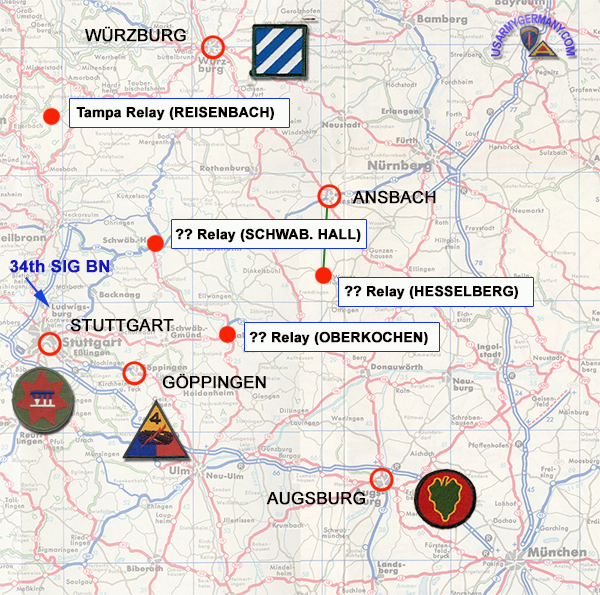 Possible 34th Signal Bn Radio Relay sites in the early 1960s (DRAFT) (If you have information on the radio relay sites please contact the webmaster - email link at top of page) |
|||||||||||||||||||||||||||||||||||||||||
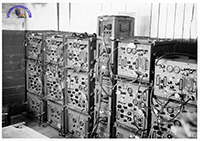
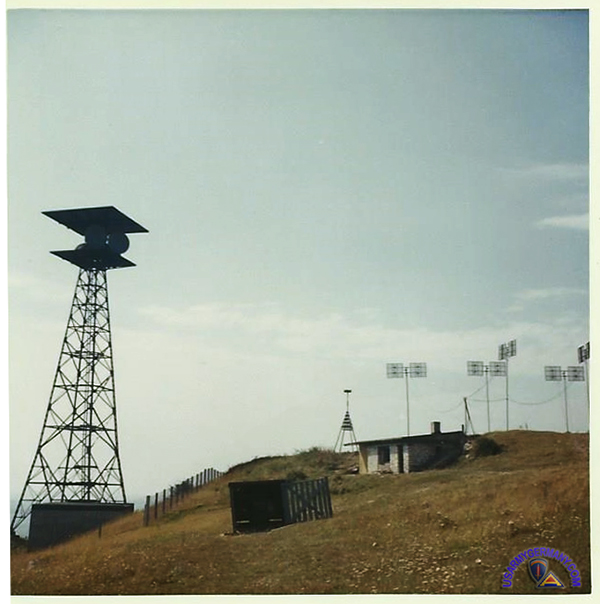 Hesselberg Radio Relay site (with radio shack and fly-swatter antennas) next to a German radio tower (Richard Schiek) |
|||||||||||||||||||||||||||||||||||||||||
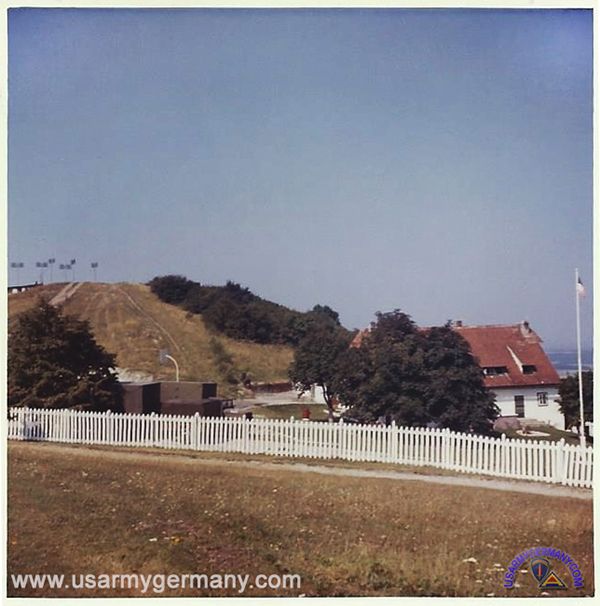 Detachment compound with relay site on hill (Richard Schiek) |
|||||||||||||||||||||||||||||||||||||||||
| (Source: Email from Richard Schiek) | |||||||||||||||||||||||||||||||||||||||||
| I enlisted in the Army June 6, 1960. My basic training was at Fort Hood Texas and my advanced training was Carrier Equipment Repair Schooling at Ft. Gordon, Georgia. My MOS was 294 Carrier Equipment Repair but I never worked my MOS. When I was sent to Germany in March of 1961, I was assigned to Company B, Radio Relay Platoon, at the Krabbenloch Kaserne in Ludwigsburg, Germany. I worked as a radio relay operator (MOS 293) which I did for my entire tour of duty. We were a field operation unit providing VHF radio relay for the carrier platoon. The majority of the time we were in the field on training operations all over southern Germany. I would say we were in the field at least two weeks every month. The equipment in the radio shack was the same as we had in our vans. (Photo #6 in the "Hesselberg Relay" series shows the equipment in the radio shack.) We still had our vans with all of our equipment loaded and ready to go on a moments notice. At one time we tried to install the radio equipment in our living quarters with cables up to the antennas on the hill but there was too much signal loss. We also tried to put extra tall antennas in the front yard but it did not work as well as at the radio shack. I was assigned TDY for approximately six months at two different times at a Radio Relay site located at Hesselberg. Hesselberg is a mountain 60KM Southwest of Nuremberg and is the highest point in Southern Germany. We had eight operators and a cook at this location. Our radio shack was located at the highest point of the mountain and our living quarters were in an old German gasthaus located just down the hill a short distance from the radio shack. We worked in shifts and we were operational 24 -7. We went to Ansbach to get supplies and I seem to remember seeing other members of the 34th there. I remember being TYD at Ansbach for a short time but do not remember why. I also remember being at Schwabisch Hall and Crailsheim. I shipped out in late May, 1963 and after a long boat ride on a troop ship arrived in New York City where I was discharged from active duty. In 1996 I returned to Germany and found remains of our radio shack at Hesselberg and visited several places that I was at in the early 60’s including the Krabbenloch. |
|||||||||||||||||||||||||||||||||||||||||
|
|||||||||||||||||||||||||||||||||||||||||
|
|||||||||||||||||||||||||||||||||||||||||
|
|||||||||||||||||||||||||||||||||||||||||
| 1963 | |||||||||||||||||||||||||||||||||||||||||
| (Source: Email from Dan Whitford) | |||||||||||||||||||||||||||||||||||||||||
| Dan was assigned
to Combat Support Pltn, B Co, 34th Sig Bn, from 1963 to 66. His detachment
was located at Bleidorn Kaserne, Ansbach where it provided communications
support to the 210th Field Artillery Group, a part of VII Corps Artillery. Dan worked out of an old AN/MRC-73 and was assigned to the crashout alert team. First to go if the balloon went up. The composition of the Platoon: (to the best of Dan's recollection,) two AN/MCC-6 Carrier Terminal rigs, two AN/MRC-54 Radio Relay Rigs, two AN/MRC-73 rigs, one AN/GRC-26D AM Radio CW & Teletype rig, one SB-685 Patch Panel, and all the Generators to run everything. They also had a Cable and Wire Team as well as a 5-ton Wrecker and several support vehicles. The Pltn was about 30 to 35 strong with one 1st LT as Plt Leader, one 2LT as assistant, one SFC as PSgt. Team Chiefs were E-5 or E-6. The platoon operated in the VHF/UHF frequency range at that time. They were able to provide up to 12 Channels of Voice and up to 144 Channels of teletype per system. An AN/MRC-73 could be used as a relay in an emergency. There was most likely was a similar unit in support of the 35th Field Artillery Group (the other VII Corps Artillery unit). But I can not say for sure. They did not have a mess section with them so most of the time that they were out in the field they subsisted on C-Rats. or would go to the supported units if they were close. Sometimes they would scout out a gasthaus to eat (unofficially of course) and at other times would trade C-Rations to the Kids in the area for beer, rolls, and wurst. |
|||||||||||||||||||||||||||||||||||||||||
|
|||||||||||||||||||||||||||||||||||||||||
|
|
|||||||||||||||||||||||||||||||||||||||||
| 1965 | |||||||||||||||||||||||||||||||||||||||||
| (Source: Email from Jim Nygard) | |||||||||||||||||||||||||||||||||||||||||
| If you are still posting info on the 34th... I made the rounds from Ludwigsburg (1965) to Würzburg - Det 8 (1966) to Kelley at Stuttgart (1966-67). VII CORPS ORGANIZATION - 1966 In 1966 the 34th Signal Battalion HQ, "B" and "C" Co were at Krabbenloch Ksn, Ludwigsburg. Only "A" Company was at Kelley Bks, Möhringen... and I do not know when "A" Co took up residence at Kelley... I know they were there prior to 1965 and still there in 1967. Det-9 of the 34th Signal was at Leighton Bks or Emery Bks in Würzburg, my memory has gotten so I can't remember which.. I was on detachment there for a few months prior to coming to Kelley. At... Co "A" 34th Sig. Bn. Corps...( I wish I had a nickel for every time I typed that out... I'd been retired long ago...) I was the Operations Clerk for a few weeks until SSGT Gutherie rotated back to the US and then I became the Operations NCO... We were under the command of Capt Steven T Schenk and 1st SGT Lamar G Schieb... the Morning Report Clerk was Douglas W Fick.. Doug and I both arrived on the same day as PFC's and left within a few days of each other as SGT-E5's... we were best friends at the time but lost contact in the early 1970's, so if you post this and anybody sees it that knows how to contact Doug please let me know. A few years back I got interested in trying to track down some of my old service buddies and in the process I put together a Unit Roster for 1966/1967 based on data I received from the archives in St Louis. I thought I had it at hand but that was a computer or two ago and I am having trouble locating it. I should still have the hardcopy somewhere in my 'stuff' and hopefully a disc with the information. Now that I know your still posting I will make some effort to find it and when I do I will send you a copy. I did notice that on your site you reference Det-8 in Würzburg... and my recollection was that for the 34th Signal it was Det-9... we manned the radio relay facility compound that was located up on the hill in what I recall was a park or maybe it just seemed like one because it was kept so neat and the locals like to stroll there on the weekends. I was only there for a couple of months, but have some good memories, before going to Stuttgart. |
|||||||||||||||||||||||||||||||||||||||||
| 1970 | |||||||||||||||||||||||||||||||||||||||||
| (Source: Email from John T. Lindson) | |||||||||||||||||||||||||||||||||||||||||
| Please be advised that there was indeed a Company B as well as a Company A at Krabbenloch Kaserne. I was a member of Company B Carrier Relay Platoon as an operator/team chief on a AN/TRC-117 signal rig with crypto from 1970 until march 1973. Our motor pool was behind the Company C barracks. As I remember there was approximately 1000 troops and 300+ vehicles. We had a relay at Tauberbishofsheim, and a terminal rig with 48 channel mux at Wuerzburg, the home of 3 ID. I was in Germany and found the old Kaserne was now housing a a German public school . I have to say, I never realizes there was so much interest in the 34th. Hope this is of some help. |
|||||||||||||||||||||||||||||||||||||||||
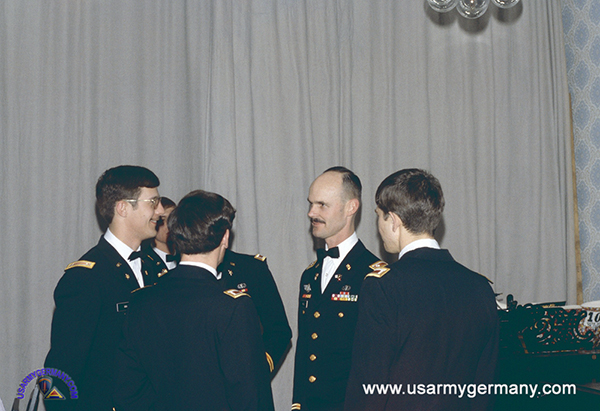 LTC William Mills, battalion commander, is surrounded by several lieutenants in the battalion at a dining out held in 1979 (Steve Witt) |
|||||||||||||||||||||||||||||||||||||||||
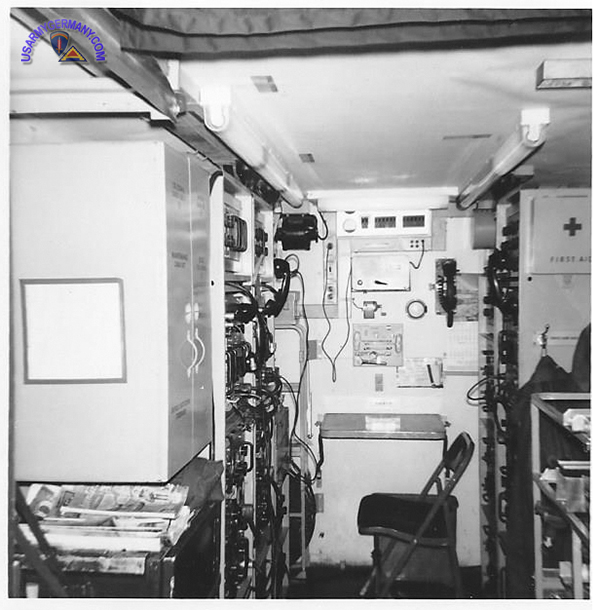
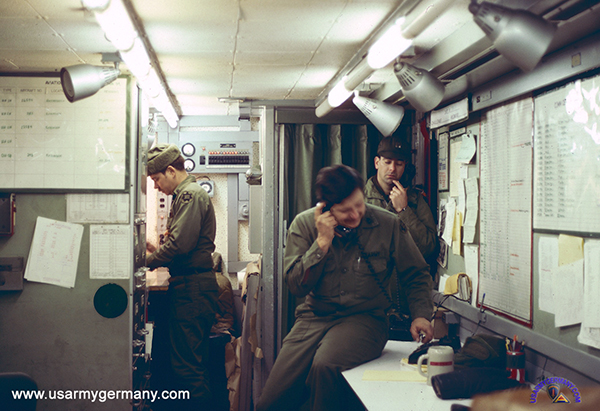 The inside of the AN/MSC-25 Operations Center used as the System Control (SYSCON) element of the 34th Signal Bn (Corps) (Steve Witt) |
|||||||||||||||||||||||||||||||||||||||||
| 1980 | |||||||||||||||||||||||||||||||||||||||||
| (Source: Email from Steve Witt, 34th Sig Bn (1978-1981) and 93rd Sig Bde (1981-83)) | |||||||||||||||||||||||||||||||||||||||||
| Webmaser note: I have devided the contents of Steve's email into two sections - 34th Sig Bn and 93rd Sig Bde and posted them on their respective pages. 1. Introduction This paper is a short recollection of the creation of the 93d Signal Brigade (Corps) in the Federal Republic of Germany in January 1980. I was a junior officer in the 34th Signal Bn (Corps) prior to the creation of the 93d Signal Bde and was later assigned to HHC, 93d Signal Bde as a staff officer in the Brigade S-3 section. I was first assigned to the 34th in December 1978 as a 2LT and served in several capacities in the battalion until August 1981. At that time I was reassigned to HHC, 93d Signal Bde and remained there until March 1983 when my tour in Germany ended and I returned to the U.S. 2. 34th Signal Bn (Corps) The 34th Signal Bn (Corps) was the signal unit that performed the tactical communication mission for VII Corps, prior to the formation of the 93d Signal Bde. This means that the 34th provided communications when VII Corps was deployed in the field. Communications for the Corps and all its units when in garrison were provided by the fixed station signal units that were part of 5th Signal Command. The 34th Signal Bn's mission was to install, operate, and maintain (IOM) tactical communications systems between the VII Corps headquarters elements and the major subordinate commands (MSC) of the Corps. The MSCs of VII Corps during this time (1978 - 1983) were the 1st Armored Division, 3d Infantry Division, the 3d Brigade of the 1st Infantry Division (which was forward stationed in the FRG, the remainder of the 1st ID was at Ft. Riley, KS), 2d Armored Cavalry Regiment, 17th Field Artillery Brigade, 72d Field Artillery Brigade, 210th Field Artillery Brigade, 7th Engineer Brigade, 11th Aviation Brigade, and 2d Support Command. When VII Corps was alerted and deployed to the field, the 12th Panzer Division was placed under the operational control of VII Corps and included in the MSCs that the 34th provided communications to. The doctrine employed for Corps communications at this time followed the standard U.S. Army signal doctrine to provide communications from higher to lower, left to right. The 34th Signal Bn (Corps) provided communications from the VII Corps command posts (CP) to the CPs of the VII Corps' MSCs (including 12th Panzer Div) in what was termed a 'command' system. In a Corps command system, as distinguished from an 'area' communications system, a large signal center was established at the Corps Main CP and line-of-sight (LOS) multichannel radio, very high frequency (VHF) frequency modulated (FM) voice radio and high frequency (HF) radio teletype (RATT) systems were installed between the Corps Main signal center and the CPs of all the Corps' MSCs, plus the Corps tactical CP and the Corps Rear CP. Additionally 34th Signal Bn provided a multichannel radio system to II (GE) Corps at its main CP, the corps to the right of VII Corps. The 32d Signal Bn (Corps), the V Corps signal battalion, provided a multichannel radio system to VII Corps Main and another communications system was provided by 7th Signal Bde, the USAREUR tactical signal brigade, from USAREUR to VII Corps Main. At this time corps signal battalions were equipped with the following major types of communications systems: a. Multichannel radio: The multichannel radio in use was the AN/GRC-50 UHF radio. This system used the pulse code modulation (PCM) multiplexers and was capable of providing 12 or 24 voice grade channels over this radio systems. The 34th Signal Bn installed these multichannel radio systems between the Corps Main signal center and all of the Corps MSCs. b. VHF FM radio: The VHF FM radio that was used at this time was the AN/VRC-12 series radios, which were single-channel voice radios capable of encryption. The 34th Signal Bn operated several radio retransmission stations in the Corps area for the Corps Command, Fire Support, and Intel radio nets. c. HF RATT: The RATT rigs in use were the AN/GRC-122 RATT shelter
with the AN/GRC-106 HF radios and TT-98 and TT-76
teletypewriters. These provided radio teletype service between
the Corps CPs and the MSC CPs. e. Communications Center: CommCen's were established at the major Corps signal centers. This consisted of S-280 shelters with TT-98 and TT-4 teletypewriters on which teletype circuits were maintained with all of the other signal centers that the communications network was connected to. f. Patch Panel: AN/MSC-32 Patch Panels were the center of each signal center. All of the multichannel radio systems circuits were terminated at the patch panels. Individual teletype circuits from the CommCen and telephone trunk circuits from the AN/TTC-38 telephone switchboards were installed over the multichannel voice channels to patch panels at the distant end signal centers. The 34th Signal Bn (Corps) consisted of an HHC and four line companies. A and B Co. were essentially identical and consisted of a CommCen platoon, HF/FM platoon, telephone switching and cable platoon. C Co. consisted of three multichannel radio platoons and one cable platoon. D Co. consisted of 3 multichannel radio platoons and one cable platoon, but the missions of the two companies was different. D Co. installed all the multichannel communications at the Corps Main signal center, usually building an AB-216 tower on which to hang all the horn antennas for the GRC-50 radios. C Co. installed the multichannel radio relay and radio terminal sites necessary to extend the multichannel radio systems to the MSCs. The 34th Signal Bn (Corps) was based at Krabbenloch Kaserne, in Ludwigsburg FRG and was pretty much the only unit on that kaserne. The 34th Signal Bn (Corps) was a big battalion and had difficulty
accomplishing its mission within the Corps. The 34th had to commit
nearly 100% of its communication equipment to provide
communications to all of the required elements within VII
Corps. This was problematic in that it was very difficult to
achieve a readiness rate of nearly 100% for electronic equipment,
wheeled vehicles and generator sets. The Army attempted to improve
the communications support in the Corps by accomplishing this
mission with a signal brigade, rather than a signal battalion. Thus
the 93d Signal Brigade was born. |
|||||||||||||||||||||||||||||||||||||||||
| 1982 | |||||||||||||||||||||||||||||||||||||||||
| (Source: Ironsides (1st Armd Div newspaper), 3 Dec 1982) | |||||||||||||||||||||||||||||||||||||||||
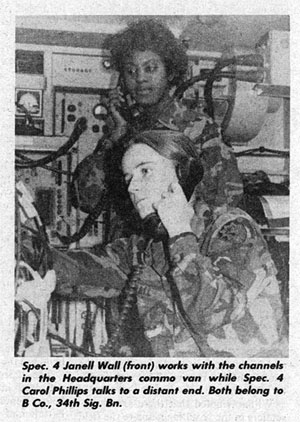
| 34th Signal keeps the lines open for 1st AD If a war broke out today and the enemy cut down all commercial telephone lines, communication would not cease in the 1st Armored Division. There is a daily 24-hour telephone system parked beside the Headquarters building on Hindenberg Kaserne which is manned by Co. B, Signal Battalion (Radio). The rest of the platoon is on a crash-out status to deploy to the general defensive position at a moment's notice to keep the division talking. The soldiers work in mobile Commo Crash Shop rigs. According to Sgt. Lee Norman, the platoon sergeant, the platoon provides the division commander with communication links to all other major commands in VII Corps. He describes the Emergency Deployment Communication Network as a "tactical mode of communication," and the equipment used by the radio operators are secure. |
|||||||||||||||||||||||||||||||||||||||||
|
|||||||||||||||||||||||||||||||||||||||||
| "This is the least rewarding job in the Army, but it is the most important," noted Ist Lt. Gordon Grant, the platoon leader and liason officer. "Since we work inside the shelters, no one can see us work. The only time they hear about us is when the telephones don't work. "We put in a lot of long hours and work hard keeping the telephones working," he added. "They aren't just radio operators; they are mechanics, generator operators, and most of all, soldiers. "The jobs of these radio operators is a lot harder than people think," Grant explained. "It's a real time mission all the time. If we went to war right now, we would do the same thing we are doing now." |
|||||||||||||||||||||||||||||||||||||||||
| MISCELLANEOUS
UNIT INFORMATION: Reisenbach Radio Relay Site (Keiser Relay), manned by a detachment of the 34th Sig Bn in 1966 Reisenbach Radio Relay Site (Tampa Relay), manned by personnel from the 34th Sig bn in 1965 - according to Rich Spoley, webmaster of the Reisenbach Reunion Group web site, the relay site at Reisenbach was initially called "Tampa Relay," and then around 1964 changed to "Keiser Relay." Det 8, Würzburg, 1968 Det at Schwäbisch Hall, closed around 1968 |
|||||||||||||||||||||||||||||||||||||||||
|
|||||||||||||||||||||||||||||||||||||||||
|
|
|||||||||||||||||||||||||||||||||||||||||
| Aviation Section, 34th Signal Battalion | |||||||||||||||||||||||||||||||||||||||||
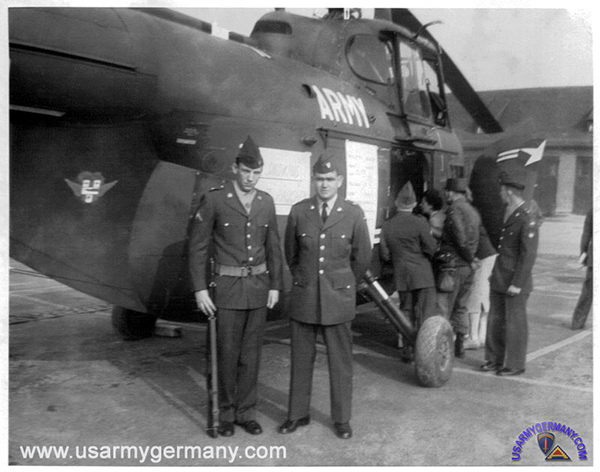 An H-19 of the Aviation Section at a military demonstration in the late 1950s (Bill Burton) (The unit's insignia is visible on the far left) |
|||||||||||||||||||||||||||||||||||||||||
| 1968 | |||||||||||||||||||||||||||||||||||||||||
| (Source: Email from Kenneth Oldwin) | |||||||||||||||||||||||||||||||||||||||||
| The 34th Signal Bn Aviation Section was stationed at Stuttgart Army Air Field and we lived at Kelley Barracks (Möhringen) or on our own (on the economy). (The Battalion was located at Krabbenloch Kaserne, Ludwigsburg.) I arrived in Stuttgart on the 24th of Nov 1968 and left in June 1970.. A Great part of my life. We were the real "BASTARDS" of aviation. We had to beg people to give us missions. The 34th Sig didn't want anything to do with us, and nobody else knew we existed. We had a Capt. Browning in charge of us and about 8-10 warrants and another 6-8 enlisted at any one time. A Beaver Otter, Bird Dog, between 3 and 6 CH-34s, an OH-23 and an OH-13. I remember taking the 34s to Sembach to load up on C-130s to ship them to the States. That was and still is a great helicopter. Way ahead of its time. The Aviation section billets were at Kelley Barracks, right across from the flag pole and cannon. We pulled no duties, we just lived there. We worked at the airfield, ate at the airfield and, oh yes, the mess hall there was Air Force and great. I remember the snack bar, a lady named Erma took care of us greatly. And by the way our Aviation Section Office was in the hangar at Echterdingen. We very rarely had anything to do with the people at Krabbenloch. In the beginning just on paydays -- remember you had to report for pay, but then they started paying us by check and we never saw them. I had a great time all the time... Came back to Germany in 1977, been here ever since.... Got a daughter, son in-law and two wonderful Grandsons.... Enjoyed every moment of my life, no regrets... From surfing the oceans of Ca. to skiing the mountains... of Europe... |
|||||||||||||||||||||||||||||||||||||||||
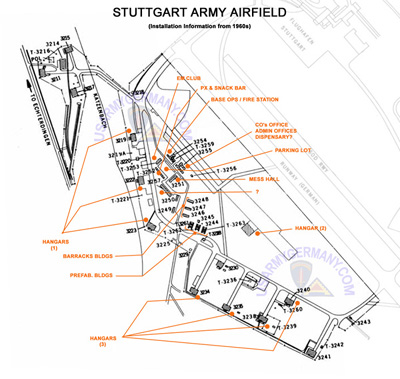 Stuttgart Army Airfield (with information from 1960s) (Click on map to view in higher resolution) |
|||||||||||||||||||||||||||||||||||||||||
ADDITIONAL INFORMATION Then somewhere along the line we moved to the middle of the hangars 1 and shared a hanger with VIP 16th Aviation. I guess that would be 3222, then we moved to 3225 I think right near where a hangar was burned down. I think it was next to the last. I believe the last hangar was 29 Maintance Co., 3rd echelon repairs and I forget now what ya call them, the Spec 6s &7s that checked our work. Those buildings identified as "Prefab Bldgs" were either the Air Force housing or where the telephone operators were I remember a bunch of younger German girls working there kinda made our lives a little easier. I also remember that when we were in hanger 3215 there was a train dock next to our hangar and all around it was junk toilets, sinks, you name it stuff that they say came from France, Paris when then asked us to leave. Boy did they take everything from those buildings, the plaster walls were still attached to the sinks and other fixtures. Then there was that small pond out back of the snack bar. The rumor was that it was originally the entrance to the underground hangers and storage but it was so highly booby-trapped that they couldn't get in or they tried and people were killed or whatever so they sealed it off. Who knows but it was always a good story to tell the new bees. ... and then there was the old YELLOW flight line jeeps we drove around. I remember if we wanted to cross the runway ya just drove up to the end, blinked your lights and waited for the civilian side to give ya the green light and across ya went. Really unbelievable in those days. Stress Free. We really had some good times, and the snow drifts were so deep we would jump off our hangar I roof into them must have been 15/18 feet high. But of course ya had to dig your way out once ya got in. |
|||||||||||||||||||||||||||||||||||||||||
|
|||||||||||||||||||||||||||||||||||||||||
|
|
|||||||||||||||||||||||||||||||||||||||||
| Related Links: 34th Signal Battalion - web page dedicated to the men and women of the 34th Signal Battalion at Krabbenloch Kaserne. Reisenbach Reunion Group - Rich Spoley's great site dedicated to all those signal/communications personnel (Army and Air Force) stationed at the Reisenbach Signal Site - a composite unit consisting of the 34th Sig Bn (VII Corps), 123rd Sig (3rd Inf Div), 7th Army Sig Support and the 2060th Radio Relay Squadron (USAFE). |
|||||||||||||||||||||||||||||||||||||||||