| If you do
NOT see the Table of Contents frame to the left of this page, then
Click here to open 'USArmyGermany' frameset |
||||||||||||
509th Signal Battalion |
||||||||||||
|
|
||||||||||||
|
||||||||||||
|
|
||||||||||||
| Battalion History | ||||||||||||
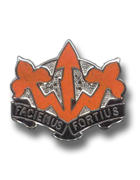 509th Signal Bn DUI 509th Signal Bn DUI |
||||||||||||
| (Source: Official 509th Signal Battalion website - http://www.509sigbn.army.mil/) | ||||||||||||
| For article click here (Coltano Signal Station Page) | ||||||||||||
If you have more
information on the history or organization of the 509th Signal Battalion,
please contact me . . |
||||||||||||
| 1982 | ||||||||||||
| (Source Email from Rickie "Rick" Bresett, HHD, 509th Sig Bn) | ||||||||||||
| I was with the 509th - HHD Camp Darby from 1982-86, under both LTC Ziegler and LTC Nabors. Both were amazing commanders and leaders. Also, 1Sgt Municatta (not sure of the spelling) of HHD.
CSM Pacheco was also one that I was Honored to serve under. I worked as the Battalion illustrator. During my time with the 509th I received 3 Army Acheivement Medals for the "CG's Command Maintenance Award Program"..... I designed, illustarted, photographed and layed out leather bound books for each of the companys within the 509th representing their Maintenance program at each Company site... I received an AAM for each winning submission. I would fly back and forth to 5th Signal Command CGs office, so the CG could review and approve the layout and design. I was quite proud to be part of the 509th and hold these memories dear to my heart. LTC Nabors went above and beyond to get me promoted to Staff Sgt while I was with the 509th. The last 6 months before returning to the States, LTC Nabors would call the Hoffman Building back in the States to push for my promotion despite Uncle Sams determination to eliminate and down size its overstrength military. Unfortunatly his pleas fell on deaf ears and I elected to not re-enlist........until 21 yrs later that is, lol (another story for another time). Anyway I was reminiscing and searching out some of my old units and came across (your) USAREUR Units (website) and well, I was compelled to share some of my best years with the 509th Signal Battalion. |
||||||||||||
| 1988 | ||||||||||||
| (Source Email from John Welch, 509th Sig Bn, 1988-90) | ||||||||||||
| I commanded both the 7th Signal Bde (1995-96) and 509th Signal Bn in Italy (1988-90). We need to add the 167th Signal Company to its list of subordinate companies. It transfered from SETAF to US Army Signal Command and 5th Signal Command in 1985 and remained in the Battalion until it deactivation (due to theater drawdown) in 1992. The 167th Signal Company which was activate as one of the 3 Photo companies in the ETO during WWII had existed for many years within SETAF before being designated an echelon above corps mission and being realigned to the EAC Signal Command (USASC and 5th Signal). |
||||||||||||
 |
||||||||||||
|
|
||||||||||||
| 54th Signal Company | ||||||||||||
| 1980 | ||||||||||||
| (Source: Email from Mike Jensen) | ||||||||||||
| I was assigned to the 54th Signal Company from mid 1980 thru 1981. After in-processing with the people of the 509th Signal Battalion at Camp Darby, I was assigned to the 54th Signal Company in Vicenza, Italy. After being there a couple of weeks and finishing my in-processing, (taking intro to Italian classes and getting issued my TA-50 gear) the 1SG asked me where I was from. When I told him Idaho, he told me that they had a Communications Detachment way up in the Northern Mountains by the Austrian Border. After being real tired of cleaning the barracks and Latrine Duty each day as the New Guy, I asked the 1SG to let me transfer up to the Mountain site. My duty station was at the Army Signal Detachment above the town of Bressanone, Italy. We provided communications (HF Radio Cemetery Net and Digital Communications-Microwave radio to the Air Force Site at Cima Gallena) to a Artillery Detachment. Our base was joined up to an Italian Artillery Base with big Howitzer cannons. Approx 1 mile from the base was a Special Ammo site that contained Special Warheads that would seal off all the mountain passes from an invading Soviet Army. I was stationed with the following at the Signal Detachment:  SFC Lonnie WallsSP5 Brian ThomasSP4 James YirakSP4 Thomas SantosPFC Edward Ollila SFC Lonnie WallsSP5 Brian ThomasSP4 James YirakSP4 Thomas SantosPFC Edward OllilaThe last CO I had with the 54th was a 1LT at the time by the name of Ken Stumpf. He is registered on Military.com under the 54th. I met him as my tour in Italy was over and I was awaiting return to the US. He was a good guy then and I am sure he still is today. P.S. I think the 54th's Main job at Vicenza was to run a Comm Center right across the street from the Barracks. |
||||||||||||
| 1983 | ||||||||||||
| (Source: Email from Karl Reynolds) | ||||||||||||
| I joined the 54th Signal Company in December 1983. At that time the 509th Signal Battalion was commanded by LTC Zeigler and the 54th Signal Company was commanded by CPT(P) Alfonso Ross and the 1SG was Charles Henry Graft. There were 2 X.O.s since the last achieved dates of rank were identical and the 54th Signal Company was an MTOE unit AND a TDA unit and both had an X.O. slot. Due to regulations establishing who is senior in situations like the one mentioned, in the absence of the commander, I was in command. The 509th Signal Battalion command changed from LTC Zeigler to LTC Robert Nabors. The 54th Signal Company had outlying sites at Longare, Mount Calvarina, Ceggia, Oderzo, and Conselve and on Caserma Ederle the 54th had the Telephone Switch, the Communications Center, the Console Local Equipment, and the Automated Data Processing Center (using Wang computers). Most of the outlying sites had two missions, they operated the Digital European Backbone microwave facilities and base HF operations and they had a mobile MRC-117 with HF capability to support the Artillery Group when the group deployed. Those sites would lose two soldiers with the MRC-117s while others continued with the DEB sites. There were no ARTEPS since the 54th was alway doing its real wartime mission. The last outlying site was a tropospheric scatter site. Operations was originally ran by 1LT Paul Martin (later transferred to the 509th at Camp Darby). Then CPT Reynolds until he was attached to the SETAF DSPO office. Operations was then given to 1LT Patricia Kozlovsky. MSG Carrascosa was the Operations Sergeant and SSG Turcuit took over the Training NCO slot from SSG Guy. CPT Ross had instituted several awards programs. Two of the most significant were "Site of the Quarter" and the award for those sites with the most outstanding "MRC-117/HF" maintenance and performance quarterly. Anyway, CPT Ross completed his command tour (in 1984) and received orders stateside. He was replaced by Elzie Berry who eliminated all the awards programs. After completion of his tour of command (in 1986), he was replaced by CPT Leyva. |
||||||||||||
|
||||||||||||
| 56th Signal Company | ||||||||||||
| 1984 | ||||||||||||
| (Source: ECHO, July 1984) | ||||||||||||
| Coltano: a small, satisfying standout by SSgt Gayle S. Marks, NCOIC of research and analysis for the 56th at Coltano. Chances are you won't be able to find the place named Coltano on a map of Italy. It's that small. It's well known, though, within USAISC (formerly USACC) circles, and for good reason. The U.S. Army has been communicating from a site a few kilometers from the small Tuscan village of Coltano, Italy, for more than 20 years. It lies just 15 minutes from the beaches of the Italian Riviera, and on a clear day, although you can't quite see forever, it is possible to see the world famous Leaning Tower of Pisa. At this site in 1911, a man named Giglielmo Marconi made history. He connected three continents - Europe, North America and Africa - by wireless communicaton: the radio. This unprecedented feat established Coltano as a focal point in world-wide communications and it's maintained that position for more than 70 years. Today the 56th Signal Company of the 509th Signal Battalion operates and maintains the Coltano Automatic Switching Center (ASC), one of the three in Europe, all under the control of the Defense Communications Agency. The troops of the 56th who work in this Automatic Digital Network switch (AUTODIN) take great pride in the important mission they perform at Coltano. Their hard work assures the Coltano switch, a major link in the world-wide AUTODIN network, stays on line, providing vital communications between the United States and all of Europe. Their dedication hasn't gone unnoticed, however. Recently the Coltano ASC was selected as the AUTODIN Switch of the Year for Europe by the Defense Communication Agency. Winning the award made the 56th troops justifiably proud, but didn't come as a surprise to them. They're well aware of their success rate. The graph of monthly down-time statistics shows figures which are consistently high enough to impress even the most seasoned of signal workers. Coltano staffers aren't strangers to receiving awards of excellence either. In the years since 1969, when the switch began operating, the 56th troops have attained numerous awards for their work. But resting on laurels isn't enough for the 56th soldiers. They continually strive to excel and surpass even the seemingly unbeatable records of past years. Sgt. Maj. Eddie McGlown, site chief, can personally attest to individual and collective dedication at the facility. McGlown is currently serving his fourth tour at Coltano. Like him, numerous other soldiers have returned to the site on succeeding tours, most of them requesting the assignment. Extension request rates are high and the command takes pride in being able to retain a large percentage of first-rate soldiers at the facility. This is especially important because many of the Military Occupational Specialties (MOS's) worked in the ASC are in the Army's Space Imbalanced Program. MSgt. Temple Nunnally, NCOIC of the site's quality assurance section, says plainly, "People extend or request to come back here because we've got a full-time live mission. At other assignments they often spend a good portion of their time doing things like painting rocks or inventorying commissary shelves - but here that's not the case. The soldiers get to do what they were trained for." CWO 2 Orin N. Fatolitis, the site OIC, believes that excellence doesn't just happen - it's built. And the "building blocks" are good training programs and good training. Training is constantly going on in most areas of the switch 24hours a day. How effective the training programs are was recently shown when the ASC won the runner-up award in the 5th Signal Command's Commanding General's Maintenance Award in the intermediate category. Most of the site personnel holding the MOS of 34H (Automatic Digital Message Switch Repairer) had no electronics experience prior to working in AUTODIN, much less experience in maintaining one of the Army's most advance communications computers. 34H is not an entry-level MOS, and many new maintenance personnel are in the grades of E-6 or above. At a time in their careers when their contemporaries have become experts in their jobs through years of experience, these mid-grade NCOs have accepted the challenge of learning again, and that's good. The younger soldiers reporting to Coltano soon realizes that training and learning are where it's at, and follow suit. It's been a good year at Coltano ASC for awards and recognitions, not all of them mentioned here, but now, at Coltano, the troops aren't thinking of it much. They're busy communicating. |
||||||||||||
| 1988 | ||||||||||||
| (Source: Email from Pazi Steklo, 56th Sig Co, 1988-89) | ||||||||||||
| My first deployment to a duty station was Coltano. I arrived on Sep 15th 1988 and that very same night (my first night in the barracks) they called a muster alert! Woke up at 4AM with a bunch of strangers, someone gave me an M-16 and other equipment, threw us on a bus and headed out from Camp Darby to Coltano. They dispatached us around the facility and told us to find a "foxhole," dig in and protect the site. Being my first time and freshly out of AIT I had no idea what the hell was going on. It was pitch black and I was in unfamiliar territory. There was no way I was going to get my uniform all wet and ruined from "digging in" the foxhole and just stood straight up with my weapon waiting for something to happen. I was impressed by all the antenna's and satty (satellite) dish and was excited all at the same time. A short time later, I could see 3 people in the dark coming my way. Perhaps they were telling me I was relieved from duty. As they approached I saw the captain bars and went into a salute.
As the time rolled on, I settled in and loved my new surroundings. It wasn't the last time that I made a fool of myself. I became friends with some of the satty techs and we would climb into the satty dish and suck helium from a tank and then make prank phone calls with funny voices to unsuspecting people. A lot of times, off duty people would come into the tech control office to "borrow" the free long distance lines to make free phone calls back to the states. This pissed off some Col, who at 2AM decided to call "home" from his office and realized the line was being used by someone else...so he drives all the way to Coltano, busts into our office in his PJ's and screams..."Who has the free line back to the states?!!!! get off it immediately!" Since I was the senior at the site I was the one who told the Col (with quick thinking) that we were "QC testing" the circuit (when in fact someone was using it to call home) to ensure its quality was in tip-top condition. He looked at me like I had two heads and realized what I was doing and told me this... "Next time you are going to lie to an officer, make sure you can back up your claims" Here's another funny story you can print. In 1988 or 1989 on the 4th of July, while working as a 32D-Fixed Station Technical Controller, I was working the swing shift and was going to miss the fireworks being set off at the American Beach. Disappointed in not seeing the celebration, I decided to use my surroundings to make the best of the situation. I figured I would climb the red and white radio antenna to get a better view. So I climbed the tower. It was a beautiful night and climbed up without any issues. I was able to watch the fireworks and was happy to be in Italy and celebrating the 4th of July while in uniform. After the fireworks, I climbed back down to return to shift. When I got to the ground, my duty Sgt was standing under the ladder. Not looking very pleased.
But one of the best stories.... My two years were up and I was ETSing back to the States so I became lazy and stopped cutting my hair or caring about my uniform. Got my orders and headed to the travel office to get my plane ticket home. As I am sitting in the waiting area, a Col comes in and sits next to me. He looks me over...
He took my name and my Sgt's name and wrote it in a book. Now the funny thing was, my ticket out of Pisa was the same day at the same time. There was no way I was going to show up in his office as I would be on my way home instead. I often wonder what he did when he was waiting for me. Ha ha ha. |
||||||||||||
|
||||||||||||
| 59th Signal Company | ||||||||||||
| 1984 | ||||||||||||
| (Source: ECHO, July 1984) | ||||||||||||
| The 59th Sig Co operates an AN/GSC-39 satellite communications terminal at the Coltano radio site. | ||||||||||||
| (Source: Email from Jon Watt, 59th Sig Co & HHD, 509th Sig Bn) | ||||||||||||
I was assigned to 59th Sig Co in Nov 1979 with extension and a re-enlistment for station – then in 1982 for 6 months was assigned to HHD, 509th, departing in 1983. I returned for a second tour 1988. |
||||||||||||
| (Source: Email from E. Saul, 59th Sig Co, 1985-87) | ||||||||||||
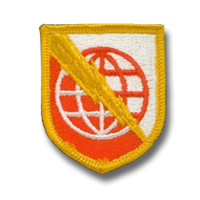
| I worked 13/9L maintenance Mar 1985-Mar 1987. I see the patch with a dragon. We wore a different patch when I was in the 59th. As I said before it was/is a globe of the world. A one dimensional picture of a globe, if you will, with a lightening bolt going through the center at an angle. I'm not sure how much information I have that would be valuable for you. I remember a lot of things. I was a microwave technician. We had four radio 'shots'. Two were tropospheric scatter and two were line of sight. We had the 'krypto' room. There was some equipment we worked on that was used in the Korean War: the AN/FCC-118. As you are probably aware the 59th signal provided commo for the Korean War. Gosh the list just goes on and on. I'm remembering stuff I hadn't thought about in years. 20, to be exact on the amount of years. The First Sergeant for 59th Signal was Charlie Simpson. He was married to an Italian lady. The CSM was the same as the one you mention in the brief article, CSM Pacheco; in fact his driver was one of my closest friends away from work. |
||||||||||||
|
||||||||||||
| Related Links: | ||||||||||||
|
||||||||||||

 - Facebook Page for former members of the 59th Signal Company who served at Coltano near Pisa, Italy. Anyone who served at nearby Camp Darby is also welcome.