If you do
NOT see the Table of Contents frame to the left of this page, then
Click here to open 'USArmyGermany'
frameset |
Air Force Communications in Europe
Air Force Communications Service
Looking for more information from military/civilian
personnel assigned to or associated with the U.S. Army
in Germany from 1945 to 1989. If you have any
stories or thoughts on the subject, please contact me . .
|
|
|
|
|
|
| History |
| |
| 5th Airways and Air Communications Wing |
| |
| (Source: Air Force Communications Command CHRONOLOGY, 1938 - 1988, by Linda G. Miller and Cora J. Holt, Office of AFCC History, 1989) |
1 October 1948
In accordance with a new Air Force directive, AACS's units were redesignated. Subordinate groups were numbered in the low 1800 series; communications squadrons were assigned the 1900 block; and other special purpose units such as "mobile" and "installation and maintenance" squadrons were assigned numbers in the 1950sd |
|
| |
| (Source: STARS & STRIPES, Oct 24, 1948) |
AACS Hq in Wiesbaden announced recently that all units of the Airways and Air Communications Service in EUCOM, Africa and the Middle East received new unit designations effective October 1, 1948.
The new unit designations will not affect any changes in the mission and operation of the units. |
| OLD DESIGNATION |
LOCATION |
NEW DESIGNATION |
|
| 5th AACS Wing |
Wiesbaden, Germany |
1807th AACS Wing |
|
| 156th AACS (I&M) Sq |
Freising, Germany |
1854th AACS (I&M) Sq |
|
| 116th AACS Sq |
Kaufbeuren, Germany |
1944th AACS Sq |
|
| 158th AACS Sq |
Berlin, Germany |
1946th AACS Sq |
|
| 159th AACS Sq |
Wiesbaden, Germany |
1947th AACS Sq |
|
| 175th AACS Sq |
Wheelus Field, Tripoli |
1950th AACS Sq |
|
| 160th AACS Sq |
Vienna, Austria |
1949th AACS Sq |
|
| 161st AACS Sq |
Dhahran, Saudi Arabia |
1948th AACS Sq |
|
|
| |
(Webmaster note: I do believe that the list above is an incomplete listing of AACS units under 5th AACS Wing at the time of the S&S article.
For example, in the publication "A Salute to Air Force Communications Command, Leaders and Lineage," issued by the Office of AFCC History in 1990, the predecessor of the 1945th AACS Squadron, Rhein-Main AB, is listed as the 133th AACS Sq. That unit was redesignated as the 1945th AACS Sq on 1 Oct 1948.) |
|
| |
| 1807th Airways and Air Communications Wing |
| |
| (Source: Air Force Communications Command: 1938-1991. An Illustrated History, Thomas S. Snyder, General Editor. AFCC Office of History, 1991) |
| AIR FORCE LONG-LINE COMMUNICATIONS
During the 1950's, AACS was retailored to meet the growth of Air Force responsibilities. Operations needed to be centrally coordinated for strategic control. Air Force personnel were deployed in 73 foreign geographic areas. The increase in Air Force strength, revised war planning, the vast increase in the number of aircraft flights, and the greater amount of intelligence and weather information required all served to overload the existing point-to-point and air/ground communications systems.
Air Force missions and operations, particularly after Korea, shifted away from the theater commander concept where joint operations and functions were centralized under a single commander. Instead, they now were under functional commands which exercised vertical control. The result was that each of the major commands, such as the Strategic Air Command, had their own communications networks tying their command headquarters in the United States to their activities around the world. This allowed them complete and instantaneous control of their components in a precise time frame, whether it was scheduling in-flight refueling, providing weather information, or conducting airlift operations. This was to change somewhat during the 1950s with the establishment of the Global Communications System (GLOBECOM). This system, which was to play a critical and important part in the Air Force Communications Network, was a project in which AACS played a key role. |
|
 |
|
Until 1947, AACS's pattern of operations for point-to-point communications was based upon the World War II-organized Army Command and Administrative Network. This system, called ACAN, utilized single-channel voice, teletype links, and torn-tape relays which were carried over both low and high frequency radio as well as wire. This system, outdated by its slowness and low volume of traffic it could carry, was replaced by GLOBECOM in 1951.
GLOBECOM was originally a modest program calling for the installation of a globe-encircling system of high power trunk circuits and modernization of the major AACS point-to-point circuits. Planning, which began in 1946, continued into 1950. The Korean War led to the expansion of the plan and caused Congress to free the monies needed for construction.
Construction began in 1951 with no agreement on the proper organization or management of the system. Nor was such an agreement reached even after GLOBECOM'S completion. AACS wanted it operated as a system under centralized control of one command to satisfy the long-line communications needs of all Air Force commands and activities. This could not be realized if the relay stations were operated by several different agencies. The fixed, or relay, stations were not to serve, by themselves, any specific airbase or command headquarters. |
|
| |
AACS was made responsible for installing, maintaining, and operating GLOBECOM, thereby fixing responsibility and ensuring uniformity in methods and procedures. It operated the system in the same manner that American Telephone and Telegraph's Long Lines Department serviced the entire Bell System. Therefore, it did not infringe upon the prerogatives of the various commands.
GLOBECOM was basically a radio system and was the first integrated communications system to span the world. It was an extension of the Air Force Communications Network which was primarily a continental wire system. Larger than any commercial system in the world, its cost of a quarter of a billion dollars by 1953 made it already about eight times the worth of the Radio Corporation of America and slightly more than that of Western Union. It came to represent one-half of AACS's effort and one-third of the Air Force's entire communications manpower resources.
It was an integrated and engineered system of interconnected Air Force radio stations, together with other leased commercial or allocated Army and Navy long-haul wire and radio channels, the necessary terminal equipment, relay facilities, communications centers, and cryptographic facilities. The facilities were all permanent and similar to civilian commercial systems. Internal, tactical, and special purpose communications systems of the various commands, used to accomplish specific missions within their organizations, were excluded.
Its central nervous system consisted of seven main or "beltline" stations, which were interconnected by high-power, multi-channel radio circuits. Each station had spare mufti-channel transmitting equipment to ensure reliability. Voice, teletype, and facsimile circuits, along with torn tape relay and offline encryption, were used on four-channel low and high frequency radio and landline circuits that employed semi-automatic switching. Linear amplifiers, boosting transmitter power to 50-kilowatts, were installed on special circuits to offset the effects of jamming and overcome adverse atmospheric conditions prevalent over the Atlantic Ocean. These beltline stations served 36 other stations.
Each GLOBECOM station had four separate facilities; a relay or message center and a technical control facility serviced by remotely located transmitter and receiver plants. The last two were placed far apart to avoid being affected by local noise or transmitters. Microwave connected them all because cable was expensive and difficult to protect in overseas areas.
AACS was designated as the responsible agency for engineering and the installation of all GLOBECOM facilities, except for those portions done under civilian contract. It operated all stations with the exception of several key stations in Europe and some in the United States which were operated jointly with other agencies. Those major commands that used the system were responsible for organizational and field level maintenance.
Each major command wanted individual ownership of all its own communications and support. But the quantum jump in the volume of communications and the sheer size of the networks they required, plus the skyrocketing costs, served to curb independent ownership of all command-needed communications.
Air-to-ground capability, added in 1952, allowed commanders to talk to aircraft up to 3,000 miles away. The system was renamed AIRCOM, which stood for the Air Force Communications Complex, in 1955. (See the AIRCOMNET section for more.)
|
|
|
| |
| (Source: STARS & STRIPES, June 14, 1953 - online) |
| IN A FAR AWAY country of yashmaks, marabouts and barracanas where the Ghibils blow and the uaddan 1) play, an airman sits in a sound-proofed, air-conditioned room, presses a button and plugs in on a global party line.
"AF 2503, understand your position is 43º00'N and 06º30'E, cruising 9500' on an IFR clearance from Wiesbaden to Wheelus, Tripoli, Estimate Wheelus at 1245Z. Wheelus standing by."
"Wheelus, this is AF 2508 that is Roger. Request you relay our position report to Hq AACS, Washington, 1808th AACS Wing at Tokyo and 1807th AACS Wing at Wiesbaden."
"AF 2503, this is Wheelus, Understand. Will relay your message."
"Wheelus, this Is AF 2503. Roger. Out."
The airman then hands the position report to the adjacent comm center for processing. A radio teletype perforated tape is cut and in a matter of seconds the report is beamed over the desert via the Middle East to Tokyo, and westward over Tunisia and Algeria to French Morocco and further relay to the U.S. and Germany. Within minutes all three addressees will have received the report.
This is a typical test message that could be transmitted by any U.S. military aircraft to the four corners of the globe. Tripoli to Middle East, Middle East to Far East, Far East to the Pacific, Pacific to Pentagon, Pentagon to Morocco, Morocco to Europe. Europe to Tripoli.
"Globecom," which stands for global communications, is responsible for the operation. Global communications is a new idea in the Air Force, put into practice about a year-and-a-half ago after seven years in the planning stage. The idea of talking around the world is probably an old one, an H. G. Wells, Tom Swift, Jules Verne fancy. Many pilots to this day are said to be unaware that globecom is now a fact. Until six months ago, the system was classified hush-hush, according to officers in the 1807th Airways and Air Communications Service Wing at Wiesbaden overseeing globecom development in Europe, North Africa and the Middle East.
The global communications system is simply a high-power trunk broadcasting and teletype network encircling the globe, run by the Air Force. Because polar aurora act to absorb and nullify high frequency radio waves, the belt of relay stations is located as far as practically possible from the auroral zone, namely, through North Africa and the Middle East.
In Globecom, it is theoretically possible to hear yourself talk around the world, possible to direct and control aircraft anywhere on the face of the globe, possible for pilots instead of using da-da-dit messages to talk from plane to ground to any place in the world.
The Global Communications system is a world of tape relays, switchboards with blinking green lights, 10,000 teletype keys pounding at once, banks of vacuum tubes feeding rhombic antennae with 240 words a minute of weather data, scrambled code, aircraft movement.
Globecom airmen talk about "patching," "twixes," "telecoms," "VHF," "microwaves," "multiplexes," "tribbing," and "mixing" — in Globecom language.
It's in North Africa on the celebrated shores of Tripoli, where you can see the AF's globecom program budding into its most advanced and complex stags of development.
Just off the Mussolini-built autostrada, uniting the two capitals of Libya, Tripoli and Bengazi, where it is customary to point out the fact that Rommel's caravan of steel faltered not so long ago and that 2,000 years before him the Romans were building their empire, the 1807th's $1,000,000 transmitter is going up, scheduled to be finished in July. With an output of 3 kilowatts, it will be able to beam its messages to Sidi Slimane, in French Morocco, whose 10-kw sender will relay them on to the Pentagon, or other points in the Europe area.
Directly responsible for the new building here are the 1950th AACS Sq and the Middle East Corps of Engineers, along with a New York firm supervising the architecture.
CWO Dean W. Perry, of Santa Monica, Calif., 1950th's liaison man with Italian subcontractors and Libyan Arabs, gazing at the incredibly rich blue Mediterranean here and seeing only water meet red sand, said he felt as if he were out in Pumpkin Center, But it isn't the kind of Pumpkin Center most airman know. The new transmitter building, like other AACS globecom installations at Wheelus, is to be self-contained, with air-conditioned living quarters, wardrobe closets, dining room, sun porch, recreation room and all the amenities that might compensate for having to persevere the sometime 110-degree heat of the desert.
According to Maj James J. Keith. 38-year-old Texan, CO of the 1950th, the receiving, transmitting, and relay triad represent the first permanent, fully-operating AACS globecom unit outside the U.S. This one center at Tripoli is costing an estimated $3,500,000.
In the Globecom linkup, Tripoli itself will be a major East-West relay center between French Morocco and the Middle East. Just how the system works was explained by Brig Gen A. T. Wilson, Jr., 44-year-old Californian who commands the1807th.
To a layman, entering the major tape relay room of the center brings him into the heart of globecom's electronic world. Wilson, on an inspection tour, picked up a pencil and, amid tiers of amplifiers, receiving sets, and other devices, above which reads a sign "This equipment cost $140,000, Your taxes helped pay for it. Treat it accordingly," diagrammed the setup.
"In this major communications network. which will support the Air Force an a global basin no matter where it goes, there are to be about seven worldwide 'beltline stations.' From these stations you have major relay centers, like here in Tripoli, feeding them."
Sounding more like a radio engineer then a general, he continued: "In a station like here at Wheelus, the transmitter is about seven or eight miles away from the relay center — high-powered stuff with its antenna farm linked to the station using micro-wave or VHF (very high frequency), any 'short haul' system taking it to the transmitter, to be sent by 'long haul.'
"Another important thing is that this station can 'patch' a transmitted signal from a faraway station to connect two people not directly communicable, and then carry on a 'telecom,' (a teletype conference) six to eight thousand miles away. We call this point-to-point.
"Another function also is long range air-to-ground contact, working the same way, so that any plane in radius of a station can receive messages and transmit them, and by passing them on a relay and patching them, can have contact with great distances around the world."
In the European area. relay stations are located at Lajes in the Azores, in England as well as Tripoli and Sidi Slimane. Other relay stations are a desert station in the Middle East, a remote island in the Pacific, a point on the Pacific Coast and Washington, D.C.
When some of the stations are not "reading 5x5," or are blanked out because of an atmospheric "freak," another tributary will be able to take over.
For example, last year, three aircraft over England couldn't reach London because of a radio blackout. Tripoli, monitoring the Air Force standardized frequencies, picked up the message and passed it on to London Airport.
When the Air Force not long ago flew planeloads of Arabs from Beirut to Jidda airfield, en route to Mecca, in "Operation Pilgrim" on very short notice, there was no time to figure out plane to base communications. In order to coordinate the whole thing. The 1950th Sq, using AF and Navy circuits, was able to lead the airlift home by signals coming almost 2,000 miles away.
1) Yashmak — an Arab veil.
Marabout — a Mohammedan religious figure.
Barracana — white outer toga seen on Arab women in Tripoli.
Ghibil — a hot wind that blows across the Libyan desert.
Uaddan — a type of gaselle in North Africa. |
|
|
| |
| European-African-Middle Eastern Communications Area |
| |
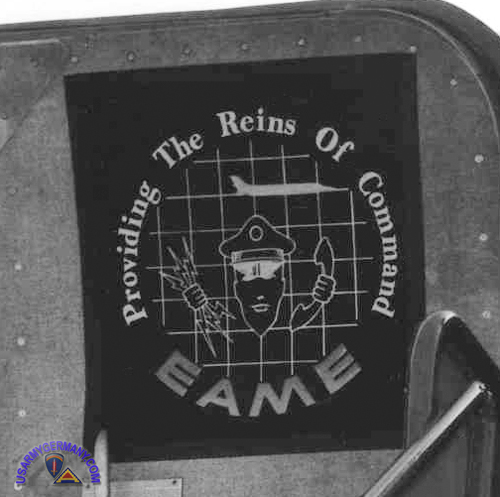
EAME emblem, 1965 (David Higginson) |
|
| 1950-1960 |
| (Source: AACS - AFCS - AFCC, 1938-1981, Providing the Reins of Command, AFCC Office of History, 1981) |
AIRCOMNET (Air Force Communications Network)
|
|
AFCC History
|
In 1956, AIRCOM was renamed Strategic Communications System or STRATCOM. It integrated the important military and civilian circuits and terminals, operated until then by other commands, with the GLOBECOM system. These included the Air Force Communications Network, the Air Force Operations Network, the Air Force Global Air-to-Ground Communications System, the Air Force Weather Teletype and Weather Facsimile Networks, the Air Force Global Weather Broadcasts and Intercept System, and the Strategic Air Command Communications Network. STRATCOM was a $350 million investment which handled a monthly average of 3.5 million messages and 232,000 aircraft contacts.
The terms GLOBECOM and STRATCOM were dropped in 1959 to return to the term AIRCOM. By 1960, the system consisted of 33 major and many minor stations, all of which were compatible with the Army and Navy portions of the Armed Forces integrated communications network. Messages were handled via speech, teletype, facsimile, Morse code, and data.
|
|
A new network was added to the AIRCOM system in 1960. Called the Combat Logistics Network (COMLOGNET), its purpose was to furnish the communications needed for the Air Force electronic data processing equipment programs. AACS was given full operational control and responsibility for the new network.
The Air Force Communications Network and the Air Force Operations Network were the busiest subsystems in the AACS-operated Air Force communications complex, known as AIRCOM. During the second half of 1960, relay stations of the Air Force Communications Network handled 33 million messages, while those of the Air Force Operations Network handled another 7.5 million. Altogether, AACS operated approximately 1,350 channels of communications that connected its major relay stations alone.
|
|
|
|
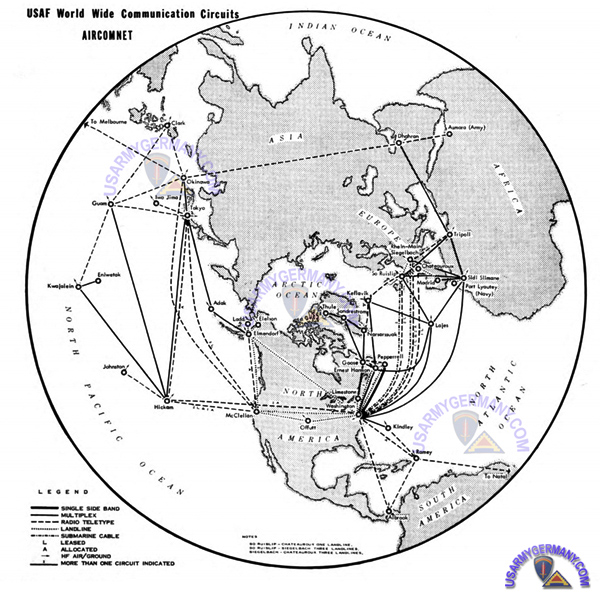
Air Force World Wide Communications System
, 1955 (SIGNAL) |
| |
| (Source: SIGNAL, May-June 1955, Armed Forces Communications Assn.) |
The USAF Strategic Communications System is a world-wide, long-range, point-to-point and air-ground communications system designed for control of world-wide air operations and to provide an over-all system of operational, logistical, and essential administrative communications. It consists of an integrated system of Air Force radio channels, necessary terminal equipment, relay facilities, communications centers, and cryptographic centers. It does not include tactical and special purpose communications systems, except as specially designed by Air Force Headquarters. (According to the article, this system is "almost" completed.)
The broad Air Force policy objective is to integrate all Air Force communications facilities except tactical into one system, so as to achieve efficient control of air operations and the effective and economical utilization of common systems for both administrative and operational communications.
The Air Force strategic communications system is not operated in isolation but as part of a large system, segments of which are operated by, and are responsive to, the needs of a particular Service. Many of the stations are joint facilities, with two or three Services co-located. All of the major stations are inter-connected to permit interchange of traffic and alternate routing.
The USAF Strategic Communications System is not as much an operating network as it is an integration and alignment of other, smaller networks:
  The Teletype Communications Network (AIRCOMNET) The Teletype Communications Network (AIRCOMNET)
The Global Air-Ground Communications System
The Weather Teletype and Facsimile System
The Air Operational Network (AIRCOMNET)
The Security Service Network
The Strategic Air Command Communications System
These systems or networks are considered as separate entities, however, individually each is part of the overall Air Force Strategic Communications System and therefore follows the standard operational procedures specified for the system. Part of the Air Force objective is the further consolidation of several of these teletype systems into the AIRCOMNET, by the use of additional equipment and facilities in the major AIRCOMNET centers.
(The above information is extracted from an article written by (then) Col George M. Higginson, USAF for the SIGNAL publication. Col Higginson's son, David, has provided us with some great photos from the days of his father's assignment as Commanding General of EAME in the early 1960s.)
Webmaster note: Definitions from Air Force Manual 100-39, Communications-Electronics Terminology, 1959.
AIRCOM (Air Force Strategic Communications) Complex: World-wide, long-range, point-to-point and air-ground-air communications system of the Air Force designed for control of air operations on a global scale. It consists of an integrated and engineered system of interconnected Air Force radio stations, together with other leased or allocated long-haul wire and radio channels, necessary terminal equipment, relay facilities, communications centers, cryptographic centers, etc., for use by the Air Force as a whole in the accomplishment of its global mission. It does not include internal tactical and special-purpose communications systems of the various commands below the major level required in the accomplishment of their missions, except as specifically designated by Headquarters, USAF. This term replaces GLOBECOM and STRATCOM.
AIRCOMNET: World-wide integrated teletype relay network comprised of land lines and radio channels designed to carry Air Force message traffic. It us an integral part of the Air Force strategic communications system. |
|
|
| |
| 1962 |
| (Source: STARS & STRIPES, June 30 1962) |
In June of 1961 the EAME Communications Area began a process that will eventually move under its administrative and operational control more than 5,000 military and civilian personnel who previously reported to USAFE. At the completion of this process, the EAME Communications Area will have a personnel strength of over 13,000 communications personnel and will be the "single manager" for communications responsibilities for the entire USAFE geographic area. (This effort is in line with an Air Force-wide consolidation of all communications under the Air Force Communications Service which was activated in July 1961. AFCS will control all USAF ground-air, long and short haul, point-to-point, long-distance wire, radio and telephone communications, as well as the world-wide system of air traffic control and air navigational facilities.)
(The article is not quite clear on this, but it sounds like the EAME Communications Area will be comprised of a total of 50 squadrons, 181 detachments and 4 navigation facility flights, once the consolidation process has been completed.)
Current commander of EAME is Brig Gen J. Francis Taylor, Jr.
EAME Communications Area Organization (current): |
|
UNIT DESIGNATION |
DUTY STATION |
COMMENTS |
| Hq, EAME Comm Area |
Lindsey AS, Wiesbaden |
|
| Mediterranean Comm Region |
Wheelus AB, Libya |
consolidated 1961 |
| United Kingdom Comm Region |
Ruislip AS, England |
in process of consolidation |
| Central European Comm Region |
Ramstein AB, Germany |
consolidated as of July 1 1962 |
| Spanish Comm Region |
Torrejon AB, Spain |
not yet consolidated |
| |
|
|
|
The Mediterranean region was the first to consolidate its communications facilities in the EAME area - the transfer of USAFE assets was completed in 1961. (Current commander of the region is Lt Col Nolan C. Hatcher. He will soon be replaced by Col Gordon C. Hoffman.
The United Kingdom region is currently being consolidated, with USAFE's 3rd Communications Group being transferred to the UK region. (Col William Donies is the commander of the UK region.)
Effective July 1, 2nd Communications Group, a USAFE asset, will be transferred to the Central European Communications Area. (See a related article in the Tactical Air Control System section on this website.) Col Carl C. Barthel heads up the CENEUR region.
The final phase of the consolidation will see the Spanish region absorbed into the EAME area. This region is commanded by Col Frank L. Adams. |
|
|
| |
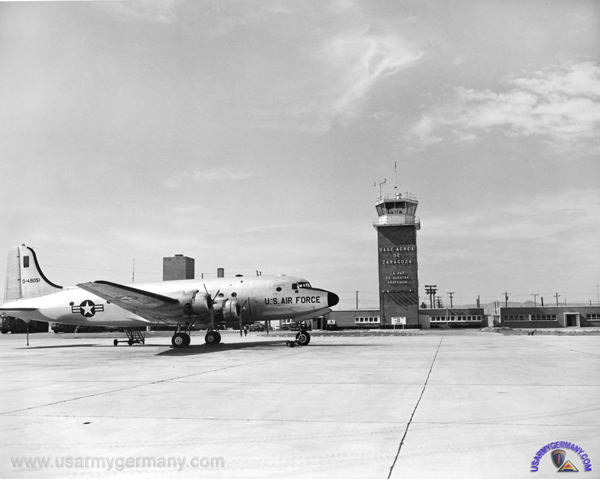
Zaragoza Air Base, Spain, early 1960s (David Higginson) |
| |
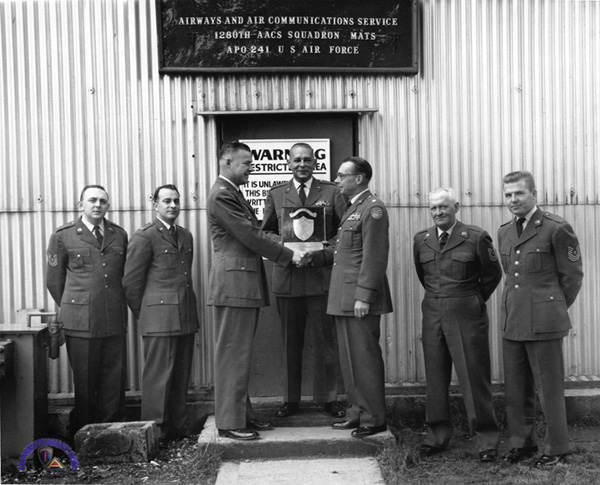
Gen Higginson presents an award to the CO of the 1280th AACS (David Higginson) |
| |
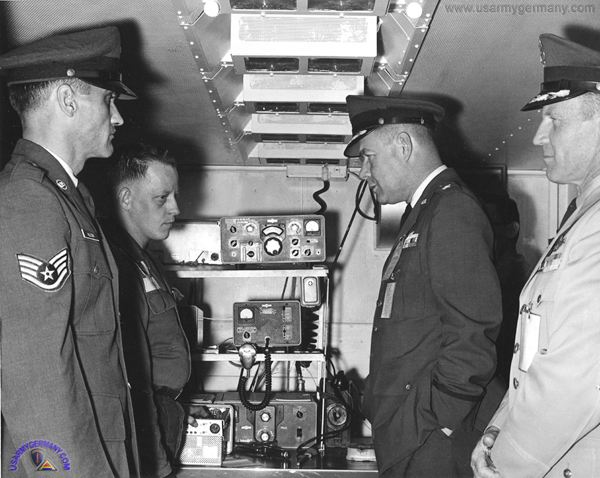
Cemetery Network, radio hut, c 1965 (David Higginson) |
| |
| (Source: STARS & STRIPES, Nov 23 & Dec 8, 1962) |
In March 1959, Brig Gen J. Francis Taylor, Jr took over command of the European-African-Middle Eastern Communications Area (EAME).
In Nov 1962, it was announced that BG Taylor would return to the States to become the director of Command Control & Communications at USAF Headquarters in Washington, DC. This new directorate would to replace the Directorate of Telecommunications and become operational on Nov 30, 1963.
Several days later the Air Force announced that Brig Gen George M. Higgindson would assume command of EAME at Wiesbaden Air Base (this succeeding BG Taylor). He would also serve as the deputy chief-of-staff for USAFE communications at Lindsey Air Station, also in Wiesbaden. |
|
|
| |
| 1964 |
| (Source: SIGNAL (AFCEA Journal), February 1964) |
In December 1963, the tropo-scatter station at Athenai Airport in Greece was accepted by EAME Communications Area. This station is part of a chain of radio relay stations known as Big Rally II and represents the final link in an EAME (AFSC) network that stretches from England to Turkey.
The EAME network serves as a strategic backup to the Defense Communications System. |
|
|
| |
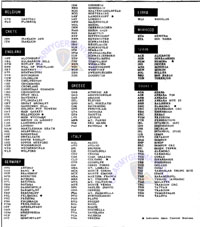
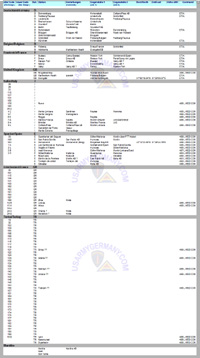
| List of Communication Sites in the EAME |
|
|
| |
| 1968 |
| (Source: STARS & STRIPES, June 24 1968) |
Air Force Communications Service (AFCS) headquarters at Scott AFB, Ill. recently announced that the European-African-Middle Eastern (EAME) Communications Area will be redesignated on July 1 as the European Communications Area. Headquarters of this major subordinate command will remain at Lindsey AS, Wiesbaden. There will be no change in mission.
EAME currently stretches from the United Kingdom through most of Continental (Western) Europe deep into Northern Afrika and as far east as Pakistan.
The command is comprised of four subordinate regions and 140 groups, squadrons and detachments. Personnel strength exceeds 12,500 personnel.
EAME Comm Area is currently commanded by Brig Gen Albert R. Shiely, Jr. (The Area Commander also serves as the senior communications-electronics officer on the staff of CINCUSAFE.)
The long-haul communications operations of EAME serve as a vital component of the Defense Communications System in the European Theater. |
|
|
| |
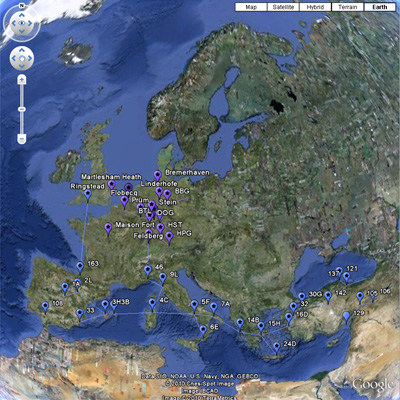
486L and ET-A Troposcatter Communications on Google Earth |
|
| While doing research on the photos of EAME (1962-65) from David Higginson's collection, we are encountering some photos that have no information that can help us pinpoint the location... These will be placed in the "unidentifed sites" section below with the hope that someone can provide some assistance. |
|
| |
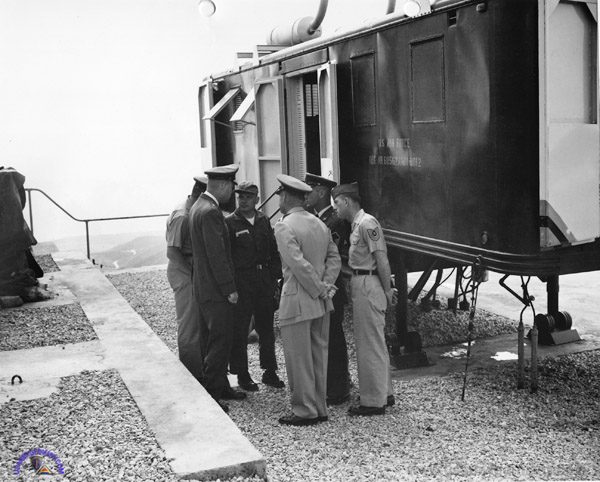
Need help identifying the site and the function of the communications trailer (Unidentified #1)) |
|
| |
Unidentified #2 |
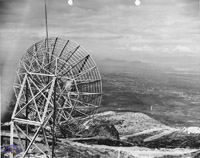
Unidentified #3 |
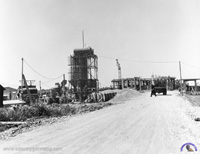
Unidentified #4 |
|
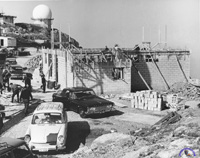
Unidentified #5 |
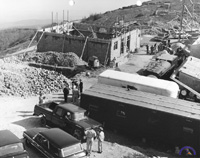
Unidentified #6 |
|
|
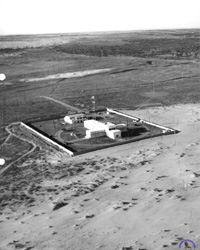
Unidentified #7 |
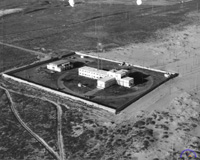
Unidentified #8 |
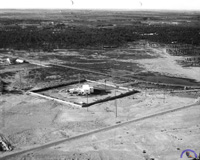
Unidentified #9 |
|
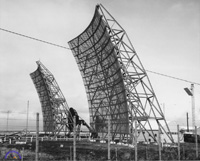
Unidentified #10 |
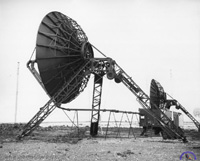
Unidentified #11 |
|
|
|
|
| |
| European Communications Area |
| |
| 1972 |
| (Source: STARS & STRIPES, May 10, 1972) |
On May 9 1972, Headquarters, European Communications Area, AFCS announced that its three subordinate regional communications commands would be inactivated. The inactivations were scheduled to be completed by June 30.
The subordinate commands involved were:
Central European Communications Region, Ramstein AB, Germany
Spanish Communications Region, Torrejon AB, Spain and
U.K. Communications Region, South Ruislip AS, England
The Central European (CENEUR) Communications Region provided communications support to the 17th Air Force at Ramstein Air Base.
The Spanish Communications Region supported the 16th Air Force at Torrejon Air Base.
The United Kingdom (U.K.) Communications Region supported the 3rd Air Force located at South Ruislip Air Station (moved in April 1972 to RAF Mildenhall).
Support operations previously provided by the three intermediate regional commands will now come under the European Communications Area at Lindsey Air Station in Germany |
|
|
|
|
| Central European Communications Region |
| |
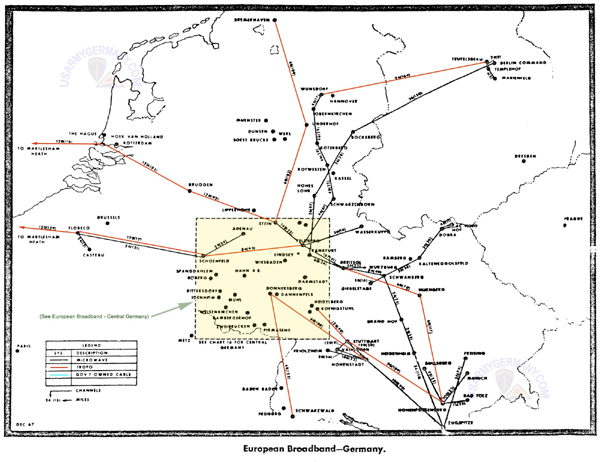
Central European Communications Region, 1967 - Germany (needs to be worked on) |
| |
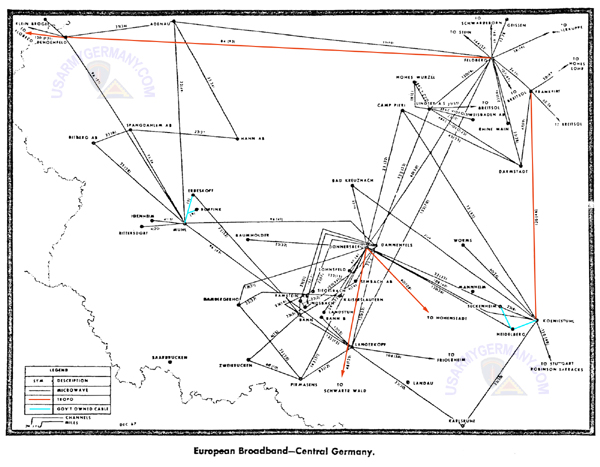
Central European Communications Region, 1967 - Central Germany (needs to be worked on) |
| |
| 1962 |
| (Source: STARS & STRIPES, January 26 1962) |
| The Central European Communications Region has a strength of 1,700 personnel. CENEUR has 16 subordinate squadrons and 10 detachments located throughout Germany, Italy, France and the Netherlands. |
|
|
|
|
| Spanish Communications Region |
| |
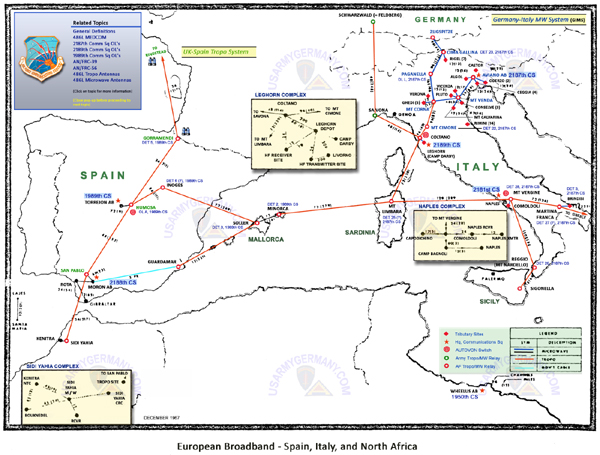
Spanish Communications Region, 1967 - Spain, Italy, Marocco (still being worked on) |
| |
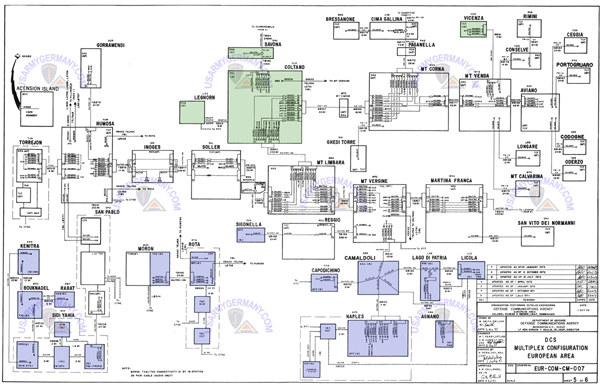
DCS Multiplex Configuration - European Area (Western Mediterranean), 1971 (with updates to 1973) |
|
|
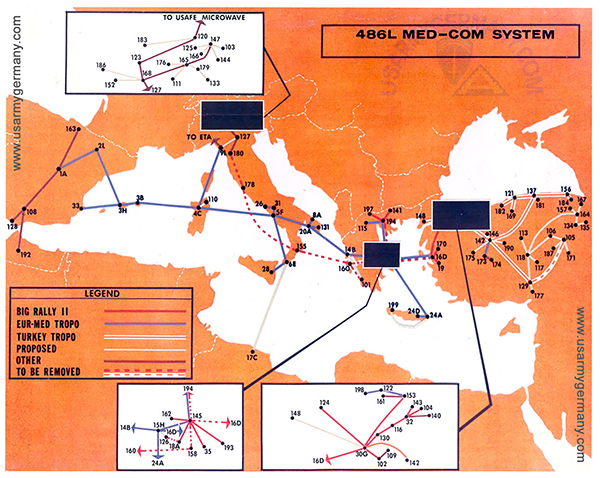
486L MED-COM System (maybe early 1960s)
(Click on image to view higher res version) |
| |
| 1960's |
| (Source: Webmaster's collection) |
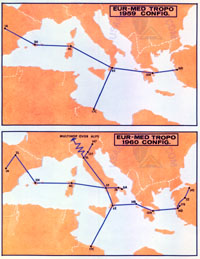
Early Route Maps
486L MEDCOM |
|
|
|
|
 |
 |
|
|
|
|
| |
| 1963 |
| (Source: History, Spanish Communications Region, July 1 to Dec 31, 1963) |
Col James T. McElhone served as commander. The Spanish Communications Region covered an area stretching from the Spanish/French border in the north to Marrakech, Morocco in the south and from Santiago, Spain in the west to Zaragoza, Spain in the east.
The region's mission was to provide adequate, reliable and secure communications, flight facilities and air traffic control for the Spain and Morocco area through assigned AFCS squadrons and detachments.
The 1989th Communications Squadron supported 65th Air Division (Air Defense) communications requirements. (The 65th Air Division was inactivated on 31 Dec 1964.)
The region was composed of eight squadrons and nine detachments located at |
|
UNIT DESIGNATION |
DUTY STATION |
COMMENTS |
| Hq, Spanish Comm Region |
Torrejon AB, Spain |
|
| ??? |
Sidi Slimane AB, Morocco |
|
| ??? |
Nouasseur AB, Morocco |
|
| ??? |
Torrejon AB, Spain |
|
| ??? |
Santiago, Spain |
|
| ??? |
Port Lyautey, Morocco |
|
| ??? |
Djebel Kauali, Morocco |
|
| ??? |
Settat, Morocco |
|
| ??? |
Skhour des Rehama, Morocco |
|
| ??? |
Ben Guerir AB, Morocco |
|
| ??? |
Zaragosa AB, Spain |
|
| ??? |
Gorramendi, Spain |
|
| ??? |
San Pablo AB, Spain |
Plan 55 site |
| ??? |
Moron AB, Spain |
|
| ??? |
Torrejon AB, Spain |
|
|
| |
Units in Morocco were phased out by Dec 25 1963. (US government had made an agreement with the government of Morocco to completely withdraw US forces from Morocco by the end of 1963 subsequent to Morocco achieving independence.)
2062nd Radio Relay Sq, 2162nd Comm Sq, 1975th Comm Sq and 1981st Comm Sq (probably all in Morocco) to be inactivated. |
|
|
| |
| Bricks, Sand, and Marble: U.S. Army Corps of Engineers Construction in the Mediterranean and Middle East, 1947 - 1991, by Robert P. Grathwol and Donita M. Moorhus, Center of Military History and Corps of Engineers, US Army, Washington DC, 2009. |
|
|
|
Chapter 7, the Mediterranean Division, 1961-1966
Includes coverage of the early construction years of Troposcatter communications in the Med.
Link is to the Google Books online copy of the book.
|
|
|
| |
| 1964 |
| (Source: SIGNAL, February 1964) |
United Kingdom-Spain Communications Network
The tropospheric scatter communications system at Humosa, Spain was turned over to the Air Force on December 21, 1963. The system at Humosa is a vital link in the UK-Spain communications network.
Tropospheric scatter communications was first introduced to the Air Force in Spain in September 1957 when a link was established between San Pablo Air Base in Spain and Sidi Slimane AB in Morocco. Additional links were subsequentially added:
from San Pablo north to Humosa (near Torrejon AB)
from Humosa to Gorramendi, Spain (near the French border)
from Gorramendi to Ringstead, England
The Gorramendi-Ringstead link is the longest FM tropo link in the world (as of 1964). At Ringstead, the link ties into the UK microwave system and across the North Atlantic tropo system.
The UK-Spain tropo is part of a planned communications system that will eventually extend east through Italy, Libya, Greece, and Turkey and will be linked on the western end to the North Atlantic Radio System (NARS), which connects the US with Great Britain. |
|
|
| |
| (Source: History, Spanish Communications Region, July 1 to Dec 31, 1964) |
The Spanish Communications Region covered an area stretching from the Spanish/French border in the north to Gibraltar in the south and from Santiago, Spain in the west to Brindisi, Italy in the east.
The region was composed of four squadrons and twenty eight (28) detachments located within Spain and Italy. Units in Spain were tenants of SAC bases under the 16th Air Force; units in Italy were tenants of USAFE and NATO bases.
The Navy Fleet Weather Center, formerly located at Port Lyautey, Morocco, was relocated to Naval Air Station Rota, Spain. |
|
|
| |
| (Source: History, Spanish Communications Region, Jan 1 to June 30, 1965) |
| Final technical acceptance of the Big Rally II Interim Tropospheric Scatter System occurred during this period. This system included sites at Camp Darby, Civitavecchia and Catanzaro, Italy. |
|
|
| |
| 1966 |
The 486L Mediterranean Communications System (MEDCOM) was commissioned by the US Air Force in ceremonies at Martina Franca, Italy on Oct 5 1966. The communications system, spanning the Mediterranean from Spain to the Near East, is a 100-site network with sites in Spain, Sardenia, Sicily, Italy, Greece, Crete and Turkey. The system was built by the System Command's Electronic Systems Division for the European-African-Middle Eastern Communications Area (EAME) of AFCS.
The system costs $145 million and comprises more than 6,000 route miles of communications consisting of giant tropospheric scatter, line-of-sight, and microwave antennas, land lines, repeaters and multiplexing equipment for the transmission of voice, teletype, facsimile and data communications.
When the 490L AUTOVON switches are installed, a MEDCOM user will be able to dial directly into the world-wide military communications network.
The prime contractor for this system was Federal Electric Corp. |
|
| |
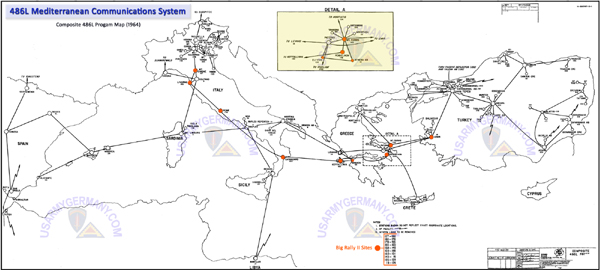
Composite 486L Program, 1964 |
| |
Tea Bag - codename for the last installation in the 99-site wideband/troposcatter and microwave 486L Mediterranean Communications (MEDCOM) network, linking Martlesham Heath in southern England with Fylingdales Moor (a 474L BMEWS site) in northeastern England. In turn, this link ties into Germany and European Mediterranean tropo via Spain.
The Big Rally 2 (BR2) Communications System was designed and built as a temporary communication system to fulfill the immediate needs of the U. S. Air Force. This tropospheric scatter system was part of a greater network and designed to connect military installations in Italy, Greece and Turkey with command control installations in central Europe. (Webmaster Note: Acceptance testing probably occurred early 1964.)
The prime contractor for this system was Federal Electric Corp. |
|
|
| |
| 1968 |
| (Source: SIGNAL, August 1968) |
The European Mediterranean Tropo (EMT) System was conceived in 1961 as part of the Air Force's vast program to link the UK-Spain and Turkey communications networks.
The engineering, equipment acquisition and installation for the EMT System was directed by the US Air Force Electronic Systems Division at Hanscom Field, MA.
In 1965, Federal Electric Corp. was the systems implementation contractor for the EMT Systems' western segment - REL supplied 24 terminals of FM tropo radio equipment in both 1 and 10 kilowatt power ranges.. |
|
|
| |
| 1970 |
| (Source: History, Air Force Communications Service, Vol 1, July 1 1970 - June 30 1971) |
| Mediterranean Communications Region was attached to the Spanish Communications Region for operational control until the Spanish Communications Region was inactivated. (Attached squadrons were reassigned to the Mediterranean Comm Region.) |
|
|
| |
| Assigned Units (1970): |
UNIT DESIGNATION |
DUTY STATION |
COMMENTS |
| Hq, Spanish Comm Region |
Torrejon AB, Spain |
|
| 1950th Comm Sq |
Wheelus AB, Libya |
|
| 1989th Comm Sq |
Torrejon AB, Spain |
|
| 2186th Comm Sq |
Seville, Spain |
|
| 2187th Comm Sq |
Aviano AB, Italy |
runs 15 operating locations between Brenner Pass and Livorno |
| 2188th Comm Sq |
Moron AB, Spain |
|
| 2189th Comm Sq |
Camp Darby, Livorno, Italy |
|
|
|
|
| 2186th Communications Squadron |
| |
| Moron Air Base - Detachment 1 |
| |
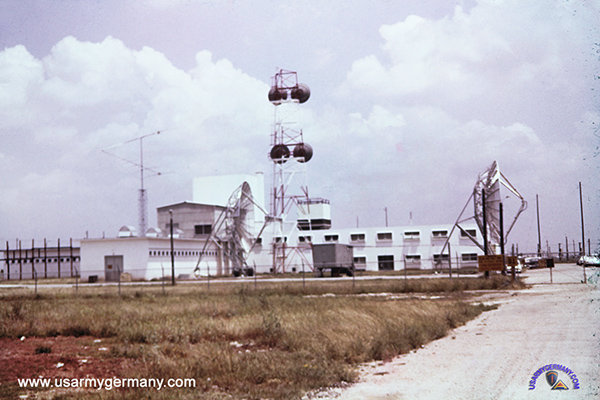
2186th Communications Squadron Det 1, Moron AB, Spain (Bill Mahoney) |
| |
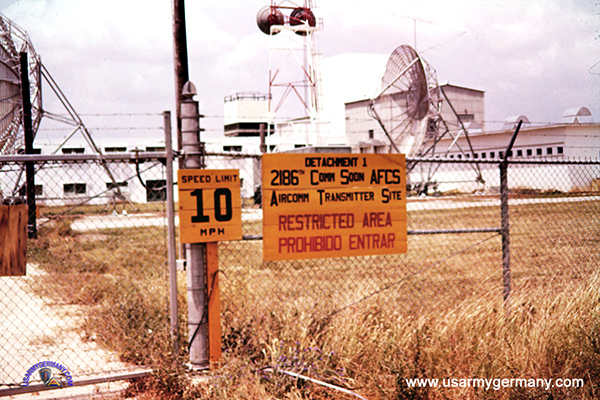 Sign at the entrance to the Det 1 site, Moron AB, Spain (Bill Mahoney)
 |
| |
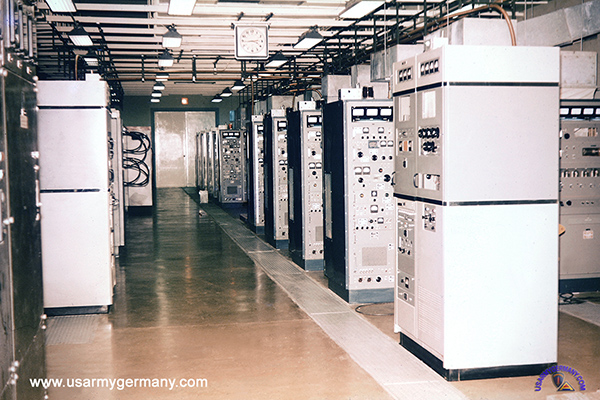
View of the Navy Transmitter wing (Bill Mahoney) |
| |
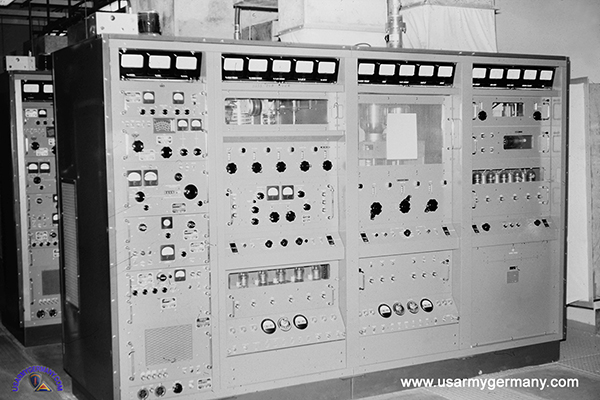
One of the Navy's transmitters (Bill Mahoney)
|
| |
| (Source: Email from William Mahoney, Det 1, 2186th CS, 1962-1966) |
I was stationed in Spain with the USAF from the fall of 1962 through the spring of 1966. Great assignment.
I was originally sent from Kessler AB to San Pablo, Spain to support the Tropo Site 108. They had just filled up their open slots so I was sent out to Moron's Det 1, some 60kms from Seville, as a heavy ground radio tech (304x4). Initially were just a USAF site, with 50% of our equipment bays empty. Main job of the Det 1 site was housing ten's of USAF and NAVY HF (3-30Mhz) Transmitters. The main building housed admin offices, living quarters and equipment bays. Power generators were housed in the second building. (standard setup/format)
In 1964 the NAVY arrived to set up their HF communications net for the 6th Fleet.
The USAF Det 1 was managed by 1st Lt Thomas Graybill (1963? - 1967?). Not sure who managed the Navy section but I think it was a Chief Petty Officer.
My pictures from that era follow.
See additional information in the AIRCOMNET section.
|
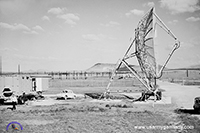
1. Installation of Navy Tropo (shot to Rota) |
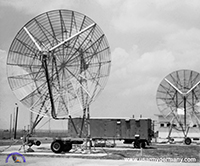
2. Navy, tropo installation complete -1964 |
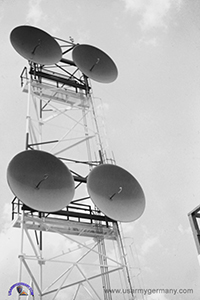
3. USAF Microwave link to San Pablo |
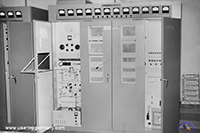
4. Western Electric 4kw transmitter |
|
|
|
| 1989th Communications Squadron |
|
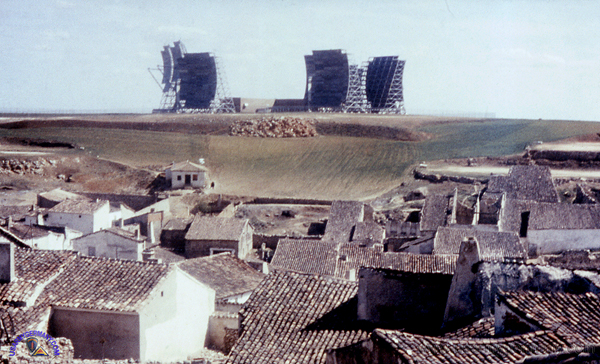
Humosa Tropo Site, May 1965 (David Higginson) |
| |
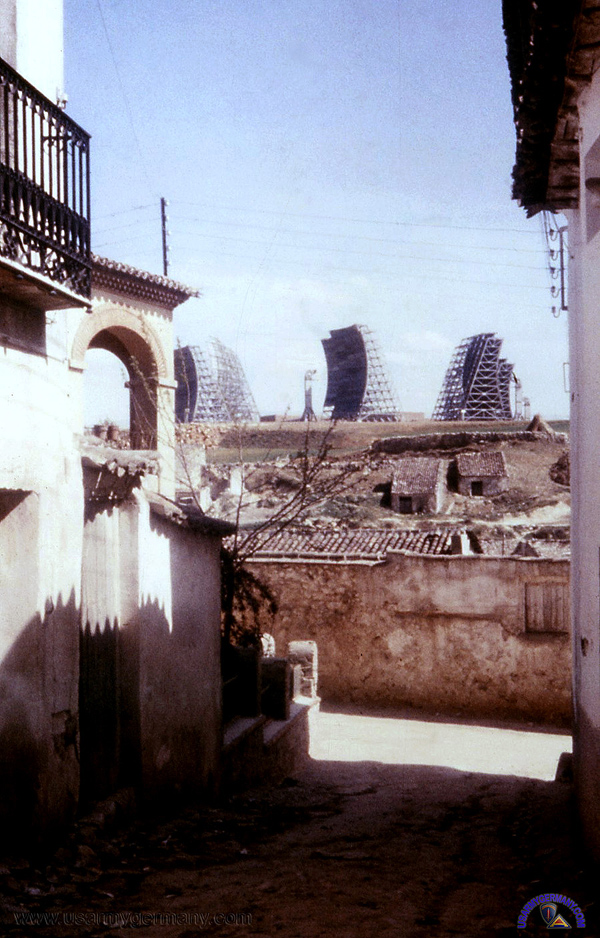
Humosa Tropo Site, May 1965 (David Higginson) |
| |
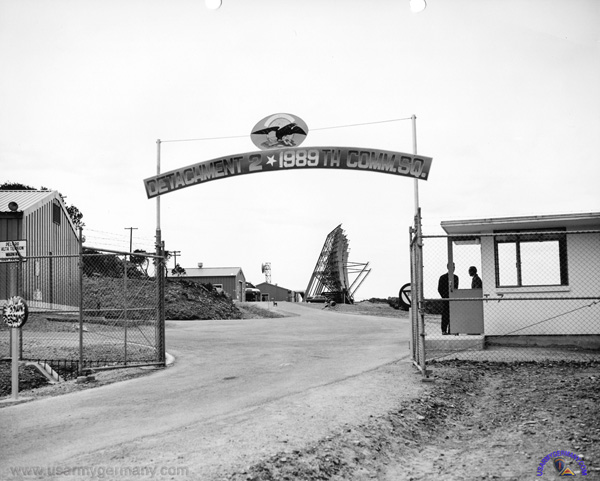
Main entrance to the Minorca Tropo Site, 1965 (David Higginson) |
| |
| Humosa - Operating Location A (previously Site 1A - then Det 2?) |
| |
| 1967 |
| (Source: STARS & STRIPES, Dec 25, 1967) |
The Humosa Tropo Site sits on top of a ridge (elevation of 2,800 feet) that overlooks the village of Los Santos de la Humosa in Spain. Six large 60-foot billboard antenna mark the site also know as Site 1A, an important element of the vast troposcatter network that extends from Turkey, Greece and Italy to Germany and England.
The Humosa station was established in 1962. It is staffed by commanding officer (a CWO) and 51 military personnel, three American civilians and ten Spanish employees. Personnel live in nearby Acala, at Torrejon Air Base or even as far away as Madrid.
The station is also responsible for three other Air Force tropo sites on the Spanish mainland, one Navy tropo site (Guardamar) and tropo sites on the islands of Majorca (Soller) and Minorca.
Nerve center of the site is the technical control room. Radio transmissions caught by the antennas are funneled from the antennas to the station through tubes called "wave guides." All kinds of messages are sent with this system -- voice, teletype, facsimile and other radio signals. |
|
|
|
| |
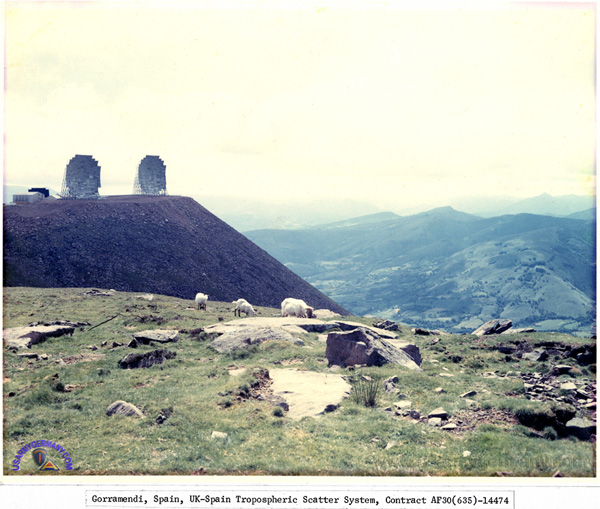
Billboard antennas at the Gorramendi tropo site ( ) ) |
| |
| Gorramendi - Detachment 5 |
| |
| (Source: Email from David Phelps) |
The photos previously identified as "Unidentified #12,13 &14" are at Gorramendi tropo site. (See photos below)
#1 is the 10kw 60ft.billboard antenna toward Humosa Tropo Site. #2 and 3 are at opposite ends of the site. |
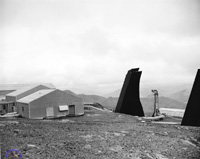
1. Gorramendi |
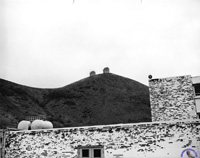
2. Gorramendi |
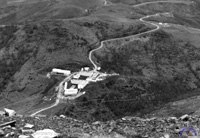
3. Gorramendi |
|
|
|
|
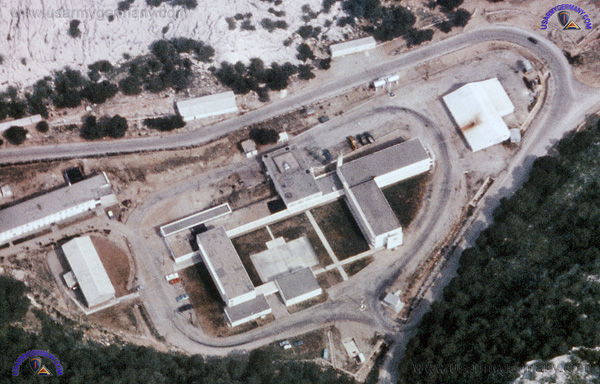
Soller Tropo Site, April 1965 (David Higginson) |
| |
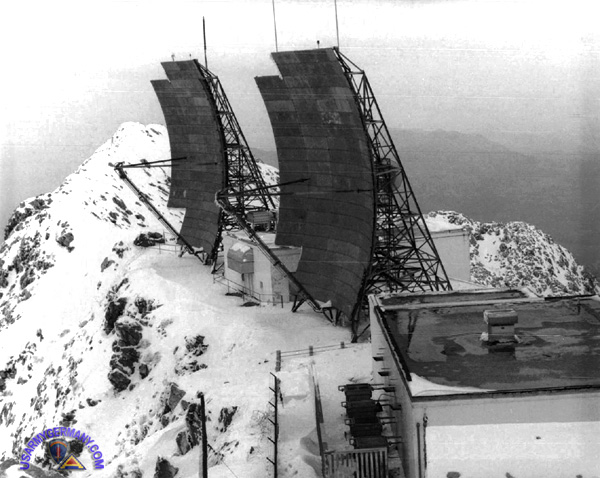
Soller Tropo Site, 1979 |
| |
| Soller, Mallorca - Detachment 3 |
| |
| 1972 |
| (Source: Email from William Teegarden, Det 3, 1989th CS, 1978-79 and Det 20, 2140th CG, 1981-84) |
I have information on two 486L sites. I was stationed at Det 3, 1989CS, Soller (3H) 1978-1979 and Det 20, 2140CG, Mt. Pateras (15H) 1981-1984. The numbers come from the site surveys done to determine the location of the facilities.
Det 3, 1989th Comm Sq
That is why both Soller and Minorica have a “3” as a site designator. Minorica was the second site location surveyed, hence the “B”, and Soller was the eighth location surveyed for that site hence the “H”.
It was determine that the tropospheric scatter site could not be built on only one island in the Balearics and the site was split in two, with a microwave link between the two island. During that period, Soller was linked to Inogés (2L) via AN/FRC-96 10KW tropospheric scatter radio and Minorica (3B) via AN/FRC-127 Microwave. Minorica was linked to Monte Limbara (4C) with an AN/FRC-96 link.
The microwave link between the two “halves” of site 3 was approx. 60 miles long with have over land and half over water. There was also a large elevation difference, 4500ft vs 850ft. This made for a poor link and the microwave was quad-diversity to make up for the difficult link. There were no other links in place at that site, so I can’t speak to the link from 3H to Guardamar (33) in Spain. It did not exist during my time there and there was no trace of any previous link. However, the US radar site on Puig Mayor (the mountain) had been turned over to Spanish control, by that time, and they had constructed a power plant on the western side; that may have been the location for any link with site 33
Det 20, 2140th Comm Gp
Mt. Pateras (15H) was linked to five locations:
Levkas (14B) via AN/FRC-96
Mt. Edheri (24D) via AN/FRC-97 1KW tropospheric scatter radio
Yamanlar (16D) via AN/FRC-96
Mt. Parnis via AN/FRC-127
Elefsis (a USAREUR site) via AN/FRC-127.
From Mt. Parnis, communications went to northern Greece, Nea Makri, and Hellinikon AB (Athens). Mt Pateras also had the 490L AUTOVON Switch for Greece. The Switch building is the closest building in the picture on the cover of the Feb 1969 Airman on your web page. |
|
|
|
|
| Northern Italy Communications |
|
| (Source: AIRMAN, Feb 1969 via Bill Richey) |
|
|
Reprint of two articles that appeared in the Airman in Feb 1969.
First article (pages 1-3) provide information on Monte Cimone, OL M, 2187th Comm Sq, in Italy.
Second article (pages 4-5) highlights Mount Patera in Greece, operated by Det 20, 2140th Comm Sq.
|
|
|
|
| 2187th Communications Squadron (Group as of 1973) |
| |
2187th Comm Group History
2187th CG was first organized as the 1287th Airways and Air Communications Service Sq (AACS) on 18 February 1956 at Aviano AB, part of the 1815th AACS Gp, Mediterranean Region (later changed to Central European Communications Region, 18 December 1959).
The unit was redesignated the 2187th Communications Sq on 1 July 1961 and had a region name change to the Spanish Communications Region, 1 Jan 1969.
The 2187th Comm Gp came into existence on 1 January 1973 under the 1989th Comm Wing, European Communications Division (ECD) working with the 16 Air Force (USAFE), Torrejon AB, Spain.
From 1 October 1984 to 1 November 1986, the unit had a temporary name change to the 2187th Information Systems Group (ISG). The unit changed back to the 2187th Comm Group on 1 November 1986.
2187th went to its final change on 1 May 1991 when it was deactivated and changed to the 40th Communications Group (USAFE) in conjunction with the change of AFCC changing to AFCS. |
|
| |
 2187th Communications Group patch 2187th Communications Group patch |
| |
| 1970 |
| (Source: STARS & STRIPES, June 3 1970) |
On July 1 (1970), the 2189th Communications Sq at Camp Darby, Italy, and the 2187th CS at Aviano Air Base will merge.
The 2187th CS will remain at Aviano Air Base and will, after the merger, become one of the largest AFCS squadrons in Europe, with a complement of 550 personnel. To the 2187th's 15 operating locations will be added the five detachments and one operating location of the 2189th in southern Italy. The detachments are the following:
Mount Vergine
Martina Franca
Mount Nardello
Mount Limbara
San Vito
The operating location is located at Ciampino Airport in Rome.
The mission of the newly expanded 2187th will remain the same: to provide radio and telephone communications in support of USAFE.
The unit will be under direct control of the Spanish Communications Region. |
|
|
| |
| 1974 |
| (Source: "The Hostile Intelligence Establishment in Italy (U)," USAF Office of Special Investigation Special Report, January 1975 - via archive.gov) |
| 2187th Communications Squadron Installations in Italy |
| |
2187th CG |
Aviano Air Base |
|
| |
OL-A |
Codogne |
|
| |
OL-B |
Oderzo |
|
| |
OL-C |
Conselve |
|
| |
OL-D |
Ceggia |
|
| |
OL-E |
Ghedi |
|
| |
OL-F |
Portogruaro |
|
| |
OL-G |
Longare |
|
| |
OL-H |
Bressanone |
|
| |
OL-I |
Mt. Calvarina |
|
| |
OL-J |
Mt. Venda |
|
| |
OL-K |
Mt. Corna |
|
| |
OL-L |
Mt. Paganella |
|
| |
OL-M |
Mt. Cimone |
|
| |
OL-N |
Cima Gallina |
|
| |
OL-R |
Rome |
|
| |
Det 25 |
Mt. Limbara (Sardinia) |
|
| |
Det 26 |
Mt. Nardello |
|
| |
Det 27 |
Martina-Franca |
|
| |
Det 28 |
Mt. Vergine |
|
| |
|
|
|
|
| If anyone has additions, corrections or can provide additional information (or photos) for any of these sites, please contact the webmaster (link to email at top of the page). |
|
|
|
| |
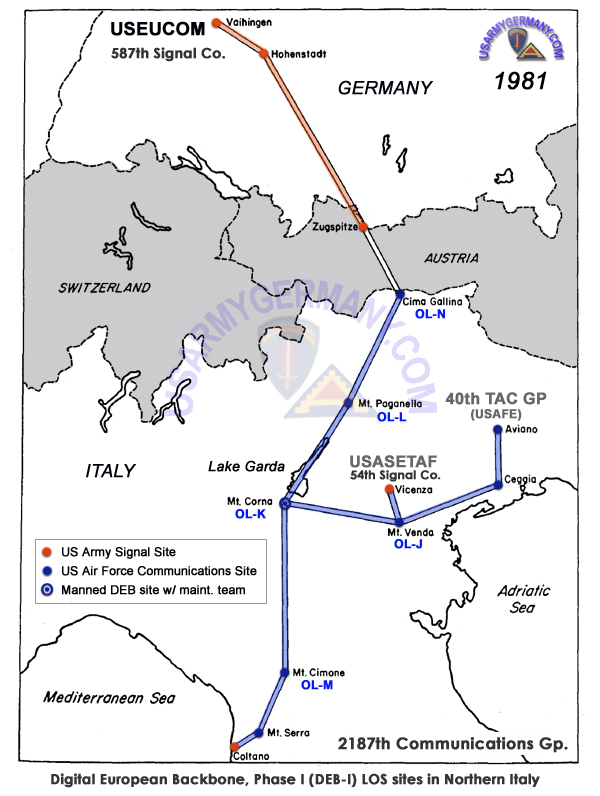
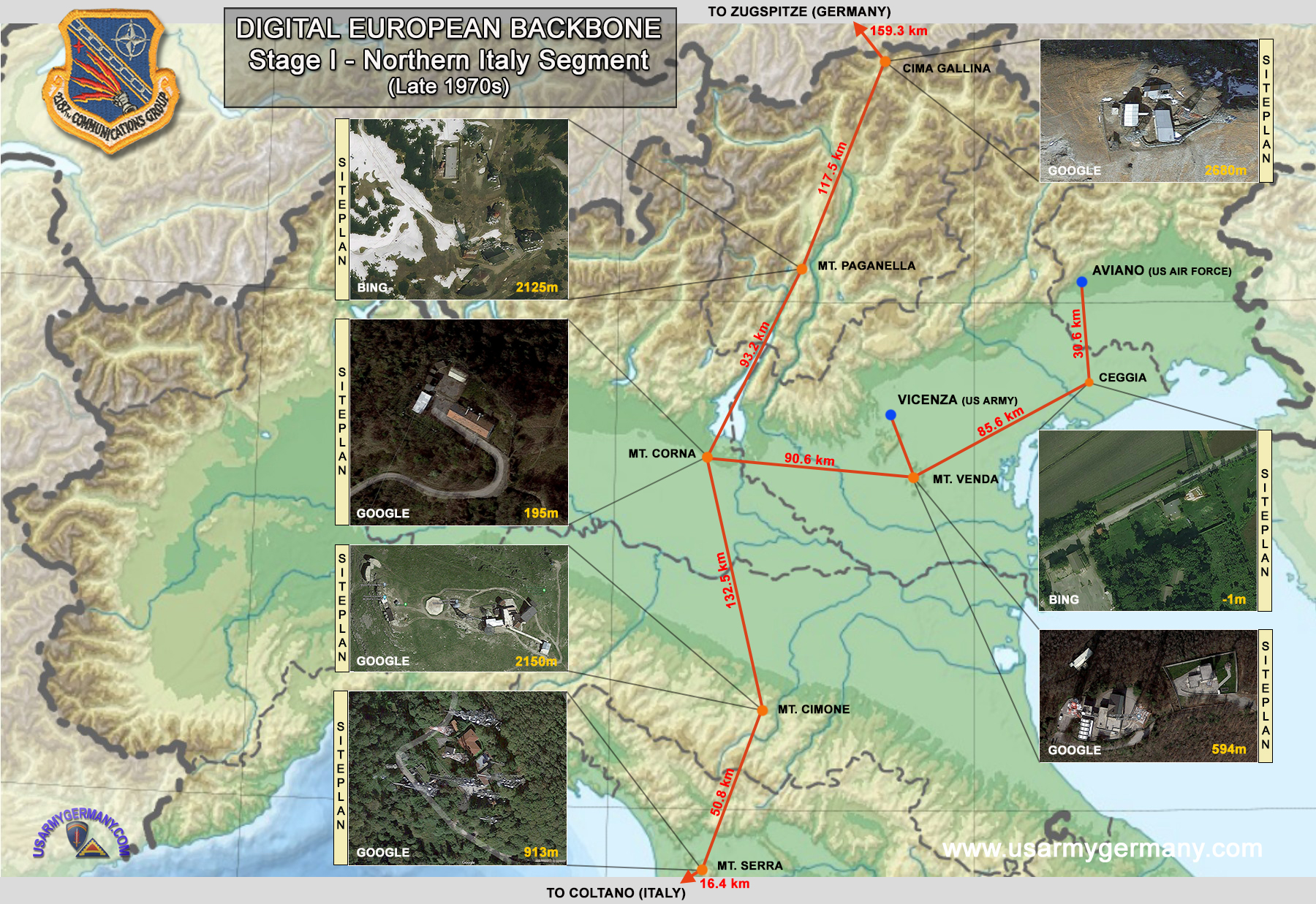 Digital European Backbone Stage 1, Northern Italy (Webmaster's collection)
(Click on image to view hi res interactive map)
Digital European Backbone Stage 1, Northern Italy (Webmaster's collection)
(Click on image to view hi res interactive map) |
| |
| Late 1970s |
| (Source: Selective Fading on a long 8 GHz Line-of-Sight Path in Europe, L. H. Hause, NTIA-Report-81-84) |
| As plans for the upgrade of the long-haul U.S. military communications network in Europe were being made, the advantages of digital transmission became more and more apparent. Long-haul voice channel quality could be improved, integrated medium-speed data transmission could be made more efficient, and bulk encryption of wide-band transmission could improve communication security. For these reasons, military communication planners decided to emphasize digital, transmission techniques for all future main-line communication facility upgrades to be a part of the Digital European Backbone.
The conversion of the Defense Communications System's European wide-band communication system to an all-digital communication scheme started with the installation in 1975 of the Frankfurt-Koenigstuhl-Vaihingen (FKV) microwave links that carried a digital baseband signal on frequency-modulated analog radio equipment. The next step in the conversion was the installation of the Digital European Backbone, Phase I (DEB-I), that used the same technology. Current plans are to convert the entire European wide-band system to digital transmission over the next several years.
The planning and development of these first two digital microwave systems indicated that an improvement in system effectiveness and a decrease in operating costs could be realized by reexamining the traditional methods of communication system control. In the past, each radio site in a system had a number of people assigned to operate the site 24 hours a day. This practice was recognized as being wasteful of both money and trained personnel. Furthermore, modern communication equipment is reliable enough that continuity of service can be assured by installing redundant electronic equipment with automatic switching. This makes reduction or complete elimination of the personnel at repeater sites practical. As a consequence, both the FKV and DEB-I systems were commissioned with certain relay sites that were not staffed. Maintenance and restoral at these sites were to be performed by dispatch of trained, skilled maintenance personnel from one or more central locations. In order to permit system operators to know the status of the equipment at these unstaffed sites, an alarm monitoring system was installed to report site conditions to the location of the responsible system operator.
The initial alarm remoting equipment was a wired-logic, poll-response type system. A master unit requested information from the remote sensing unit and displayed the conditions of the remote radio site as an array of alarm and status indicator lights at the master location.
In order to make the remote site information more complete and accessible to the human operators, the Air Force system engineers decided to use a minicomputer to do some data processing and put the information in a more useful format for presentation to the operators. The development of this improved alarm remoting system, called the Enhanced Fault Alarm System, or EFAS, was begun in 1977.
The EFAS development consisted of preparing hardware and software to allow the minicomputer to replace a master fault alarm terminal. The computer sent poll messages to the remote units and received and decoded the responses. The information in the responses was analyzed and used to generate displays on a CRT terminal. These displays presented the alarm, status, and parameter data gathered from the remote sites in English text designed to show site and entire system conditions on easily understood displays.
The deployment of the minicomputer master units of the Enhanced Fault Alarm System was done in parallel with the DEB-I installations in southern Germany and northern Italy during early 1979. The DEB-I EFAS consisted of 13 remote data acquisition units and 3 minicomputer-based master units. Each communication site, even those where a master unit was located, was equipped with one of the remote data acquisition units. |
|
|
| |
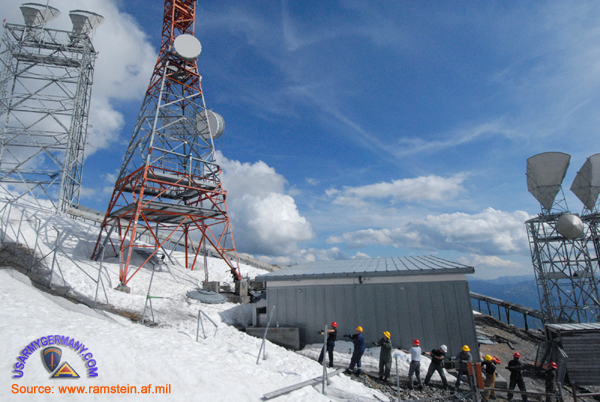
Members of 1st CMXS work together to lower a dish atop Cima Gallina, Italy
|
| |
| 2008 |
| (Source: 1st Communications Maintenance Sq, Ramstein AB - www.ramstein.af.mil) |
In the early spring of 2008 the 1st Communications Maintenance Squadron was tasked with removing all equipment, antennas and associated hardware at nine microwave radio communications sites located throughout northern Italy - including Cima Gallina near the Brenner Pass.
Click here to read the article and view several photos of the work on Cima Gallina. |
|
|
|
|
| Mt. Corna - Operating Location "K" |
| |
| 1972 |
| (Source: Email from Jimmie Cox, OL-K, 2187th CS) |
I was stationed at Mt Corna RRL OL-K in Italy and we used the following MW radios (1972-1975). Siemens/Halske EM 120/400 it was a 132 voice channel analog MW radio using the 400 mhz band
This was the main radios at
Zugpitze to Cima Gallina to Paganella to Mt. Corna
Mt Corna to Mt Venda to Aviano
Mt Corna to Mt Cimone to Coltano
Mt Corna had a fourth radio shot to Ghedi Torre (Italian AFB with AF det). It was a Siemens/Halske FM 12/800, a 12 channel 800 mhz radio.
I first went to Germany in 1972 TDY to assist in the MUX installations (UCC4) from Patrick AFB, FLA assigned to the 1836 E&I Sq at Ramstein. They sent me and my crew to Feldberg for 2 months and transferred us to LKF until my PCS to Mt Corna RRL.
I went PCS to Mt Corna in DEC/1972 and during my time there I went TDY to support sites all along the 486L system. I spent 3 yrs at Keesler (slow student ha ha) as KAFB school maintenance. I was repairing every radio in the AF MW inventory and even a few that were not. I was even TDY to a few sites on the tropo sys from Turkey back to Italy via Greece. I even flew to Det 94 in Turkey to work on a tropo system at the direction of HQ DCA Commander. They sent his jet down to Ghedi Torre IAFB base and fly me to the site and back. They were doing real time intercepts from the USSR and sending back to Langley AFB and the network was DOWN hard. |
|
|
| |
| 1965 |
| Mt. Cimone - Detachment 20 (Operating Location "M" ) |
| |
| (Source: STARS & STRIPES, Feb 12, 1965) |
The Air Force's 2189th Communications Sq, based at Camp Darby, Livorno, Italy operates 20 radio relay sites between Sardinia, in the west, Sicily, to the south, and the Austria border in the north. These sites are part of a much larger network of radio relay stations that stretches from the north of England southward across France and Germany to Italy and then down the length of the Italian boot and east to Greece and Turkey.
Det 20 is located on a 7,000-foot mountain 80 miles north of Livorno. The site is co-located with an Italian Air Force radio station.
The Det staff consists of a site chief (S. Sgt) and four airmen - radio maintenance specialists.
Each site is equipped with transmitter-receivers, power units and spare component parts for on-site repairs. Some of the sites maintain 12 voice channels, others 24.
The sites are basically set up in a similar fashion for self-sustaining operations: site buildings are equipped with stove, refrigerator, television, record player, radio, living room furniture, sporting equipment, games, and a small library.
CO of the 2189th is Lt Col James H. Hartzell. |
|
|
|
| 1981 |
| Mt. Venda - Operating Location "J" |
| |
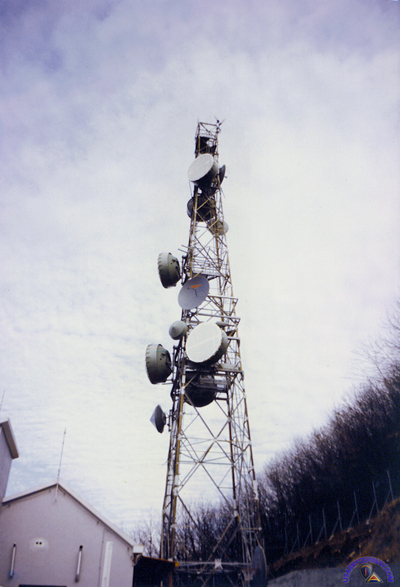
Antenna Tower at OL-J, Monte Venda RRL
(Tim Brown) |
| |
| (Source: Email from Timothy Brown) |
I was stationed at Monte Venda, Italy from 81-82. It was part of the Digital European Backbone system (DEB) at that time. I lived about 15-20 miles from Vicenza where most of my friends were in the 509th Airborne Infantry ("All The Way").
As far as I know, all DEB sites were Operating Locations, at least while I was there, Mt. Venda was OL-J. Links and special names would be something for the Tech Controllers. I was a maintenance Technician, 30450. We just repaired the radios, multiplexers and station equipment.
I do know that we had 3 digital systems and what seamed to be 3 or 4 old analog systems, Siemens-Halske 800 MHZ.
Up until about a month ago, there was a site named CommTroop.net that was primarily made up of postings from Air Force Communicators and most were part of the DEB system, and primarily in Europe, although, some were state side, Alaska, and the Pacific area. There were literally hundreds of photographs of all of these sites and many of the troops assigned to them. Unfortunately, the site closed down, don't know why, maybe lack of funding or participation, but all the data is no longer available. |
|
| |
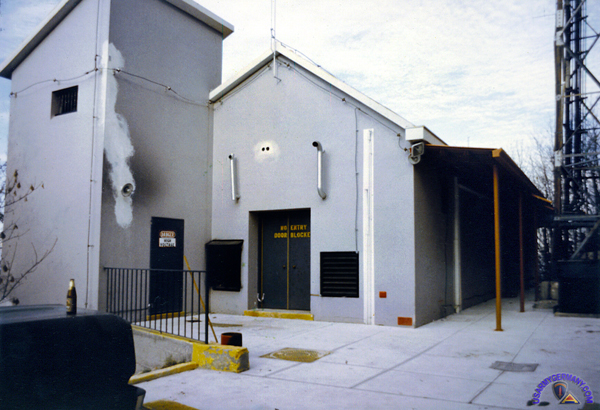
Communications building, Monte Venda RRL (Tim Brown) |
| |
There was really only one building (see photo), kinda looks like two, but it's connected together. The first part on the left was the power entry building. The double doors on the main part was where the diesel generators and power switching equipment was located.
The building was two stories, upstairs was where all the radio equipment was located and downstairs was the offices, day room etc... |
|
|
|
|
|
 1. Former entrance 1. Former entrance |
 2. Decommissioning 2. Decommissioning |
 3. Decommissioning 3. Decommissioning |
|
|
|
|
| 2189th Communications Squadron |
| |
| 1965 |
| Mt. Cimone - Detachment 20 |
| |
| (Source: STARS & STRIPES, Feb 12, 1965) |
The Air Force's 2189th Communications Sq, based at Camp Darby, Livorno, Italy operates 20 radio relay sites between Sardinia, in the west, Sicily, to the south, and the Austria border in the north. These sites are part of a much larger network of radio relay stations that stretches from the north of England southward across France and Germany to Italy and then down the length of the Italian boot and east to Greece and Turkey.
Det 20 is located on a 7,000-foot mountain 80 miles north of Livorno. The site is co-located with an Italian Air Force radio station.
The Det staff consists of a site chief (S. Sgt) and four airmen - radio maintenance specialists.
Each site is equipped with transmitter-receivers, power units and spare component parts for on-site repairs. Some of the sites maintain 12 voice channels, others 24.
The sites are basically set up in a similar fashion for self-sustaining operations: site buildings are equipped with stove, refrigerator, television, record player, radio, living room furniture, sporting equipment, games, and a small library.
CO of the 2189th is Lt Col James H. Hartzell. |
|
|
|
|
| Southern Italy Communications |
|
Mount Limbara, Sardinia, 1965 (David Higginson) |
| |
| Mount Limbara |
| |
At one point known as Tropo Site "4C".
West shot to the island of Minorca; East shot to Mt. Vergine, Italy; North shot to Coltano, Italy.
Based on information found in several forums on the Internet, it appears there was a "Scope Creek" maintenance team stationed at Mt Limbara - late 1960s or early 1970s. They were responsible for installation and maintenance of 486L sites between Spain and Turkey.
Looking for more information on this tropo site! |
|
|
|
Mt. Vergine, around 1970 (Bill Richey)
|
| |
| Mount Vergine - Detachment 28 |
| |
| 1970 |
| (Source: Email from Bill Richey) |
The link you show from Mt. Vergine to Comoldoli is correct -- it was a MW link.
The two 60-footers on the right (above photo) were the Mt Limbara Shot and the two to the left were to Martina Franca. Looking at the attached picture you will also see the two 10-meter (30-foot) dishes facing to the south and on the support of the right hand 10-meter dish you will be able to see the 3-meter dish to Comoldoli.
The Detachment for Mt Vergine is correct for 1971. In fact I think all of your group, squadron and detachments are correct. However at Mt Vergine this was changed to a full squadron later, not sure of the date. It was the 2181st Comm Sq. |
|
|
| |
| 1978 |
| (Source: STARS & STRIPES, March 19 1978) |
The Monte Vergine communications site is the largest of the 16 communications site operated by the Air Force in Italy. The station is staffed with 97 military personnel - 2181st Comm Sq (and Det 28 2187th Comm Gp?). 35 of them live in barracks on the mountain. Others live in villages in the surrounding valleys.
Mt. Vergine is a key element in the tropo network in Italy. Most of the communications traffic in southern Italy passes through this site. The site provides comm service to the US Navy in Naples. In addition, an AUTOVON switch is also located at the site, handling all calls to and from southern Italy.
In Avellino there is a two-room elementary school for dependents, a small medical clinic, a mini-exchange and a recreation center. |
|
|
|
| 2189th Communications Squadron |
| |
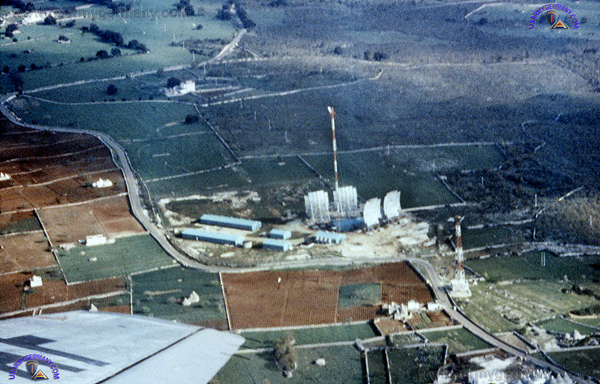
Martina Franca Tropo site, 1965 (David Higginson) |
| |
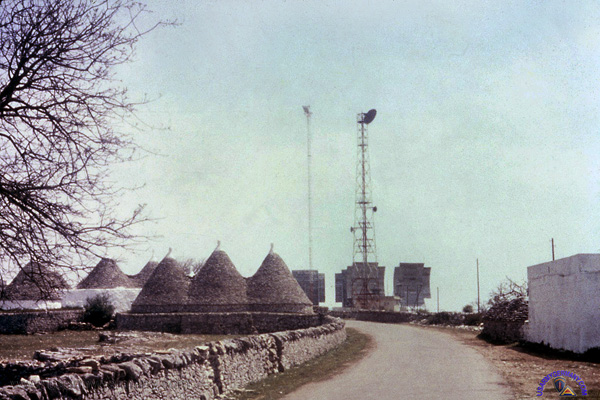
Martina Franca Tropo site, 1965 (David Higginson) |
| |
| Martina Franca - Detachment 23 |
| |
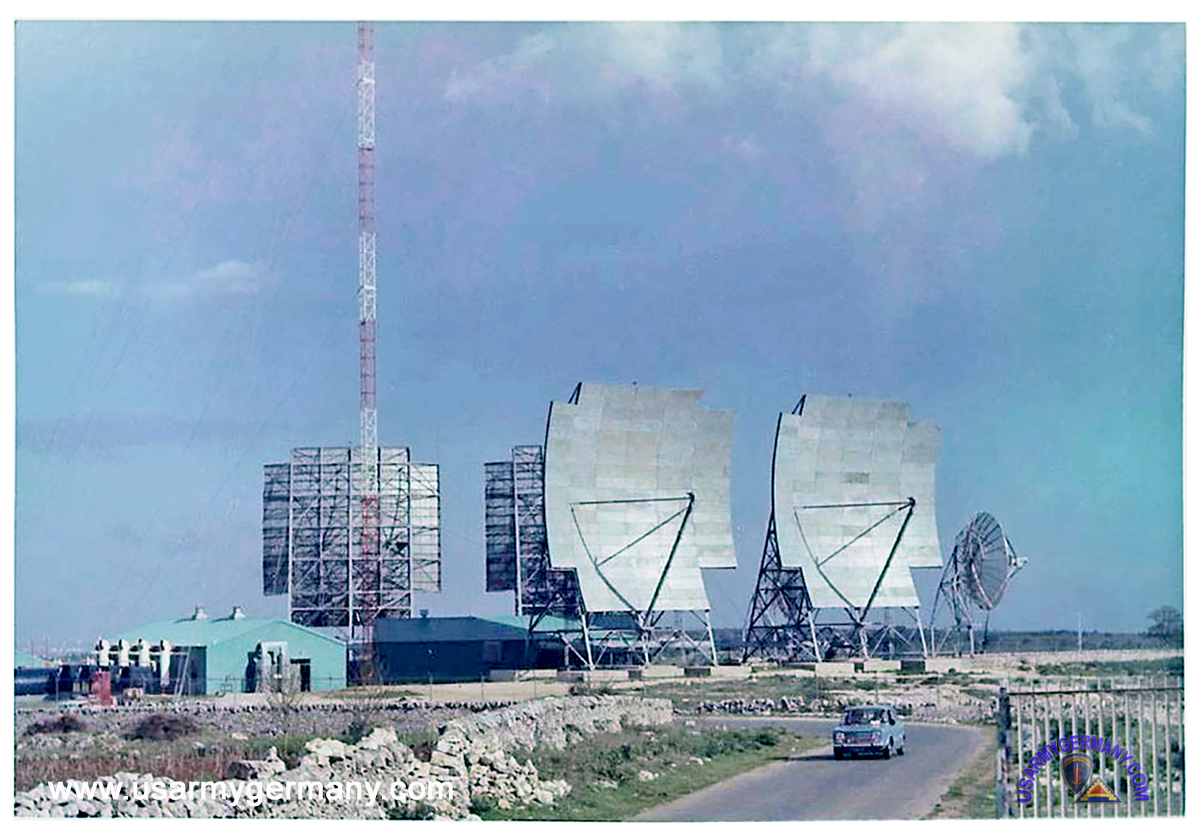
Martina Franca Tropo site, 1966 (Ed Whitney) |
| |
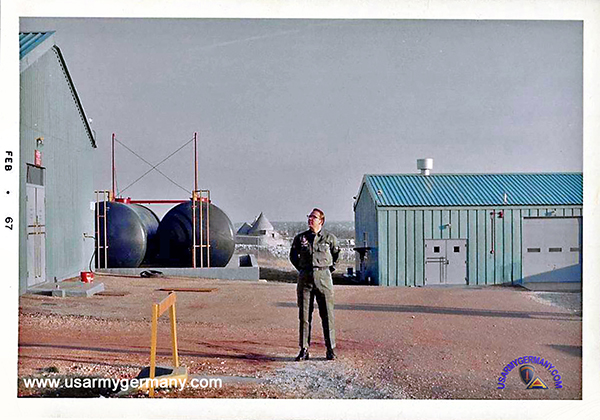
Martina Franca Tropo site, 1966 (Ed Whitney) |
| |
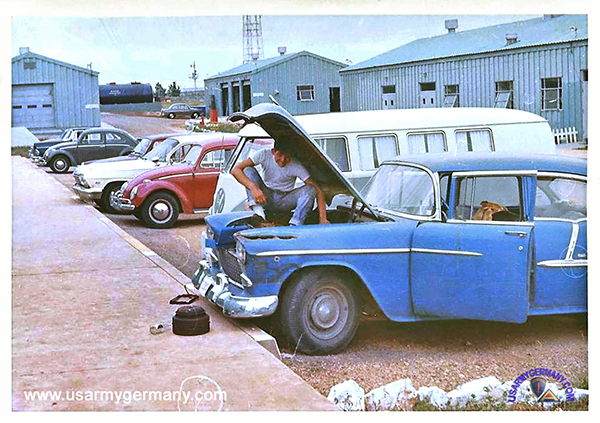
Larry working on his '55 Chevy - a.k.a. the "site limo" (Ed Whitney) |
| |
| 1966 |
| (Source: Email from Edward Whitney) |
I ran across this site a while ago doing a Google search on the net. Have always wondered when they closed the base down or, for that matter, if they ever did?
I was in the USAF from 1964 – 1968 and did a tour of duty in Italy as a member of the 2189th Communications Squadron in Martina Franca.
My AFSC was 30450, Radio Relay Equipment Repairman.
I have some pictures of the site and personnel I was stationed with which I would like to share with you and others for posting on the website.
I was stationed at Martina Franca from January 1966—June of 1967. During that period of time Federal Electric was transitioning support to the Air Force.
Total site complement was approximately 20 people, and we were totally self sufficient. Of course we could not defend ourselves and were dependent upon gate security from an Italian Contractor, and the nearest support from the Air Station in Brindisi. To the best of my knowledge the contractor was the only one who had a weapon, and all that was a Baretta.
The site was considered semi-remote, and married personnel were able to bring their wives over which many of them did. Those that did found apartments in Martina Franca which was maybe 10-15 miles away.
We were not allowed to be in uniform off site, that is unless we were traveling in a government vehicle, from the site to another military base.
It was good duty, probably some of the better options for an overseas tour. We did not have to deal with most of the typical military BS and chicken shit stuff that is imposed upon you at a typical military installation. |
| |
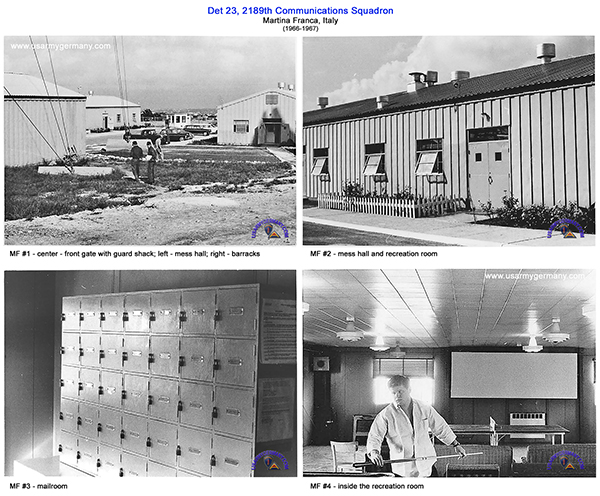
Some of the site buildings (Ed Whitney) |
| |
|
|
|
| United Kingdom Communications Region |
| |
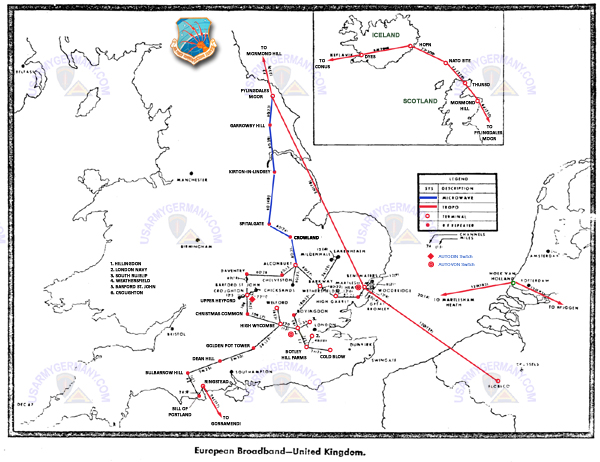
European Broadband - UK, December 1967 (still being worked on) |
| |
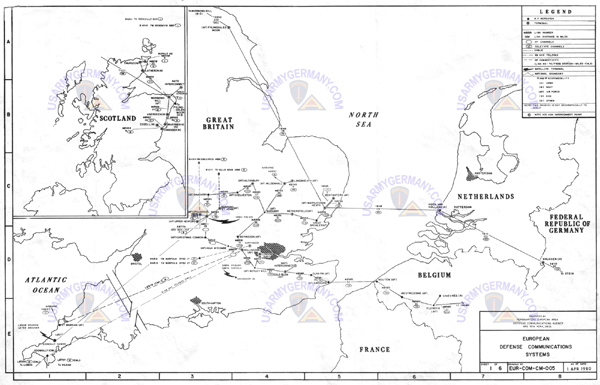
European DCS - Route Map (Page 1 of 6), 1980 (still being worked on) |
|
| |
1971 |
| (Source: STARS & STRIPES, May 25 1971) |
The UK Communications Region has eight subordinate squadrons located in the UK. |
| |
| Assigned Units (1971 - not completely verified): |
UNIT DESIGNATION |
DUTY STATION |
COMMENTS |
| Hq, UK Comm Region |
South Ruislip AS, England |
|
| 1969th Comm Sq |
South Ruislip AS, England |
|
| 1979th Comm Sq |
RAF Lakenheath, England |
|
| 2130th Comm Sq |
RAF Croughton, England |
|
| 2147th Comm Sq |
RAF Mildenhall, England |
|
| 2166th Comm Sq |
RAF Alconbury, England |
|
| 2167th Comm Sq |
RAF Chicksands, England |
|
| 2168th Comm Sq |
RAF Upper Heyford, England |
|
| 2180th Comm Sq |
High Wycombe AS, England |
|
|
|
|
| Barkway Radio Relay Site |
| |
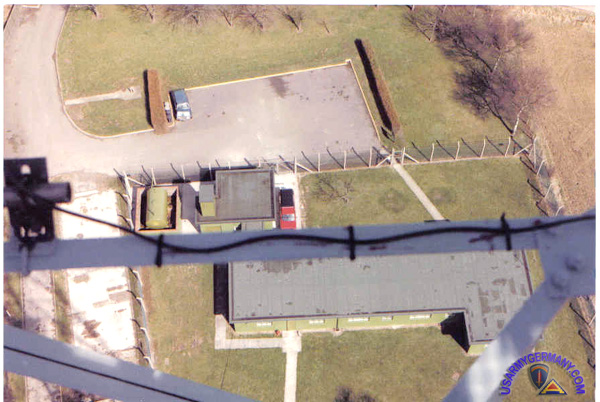
Barkway Radio Relay site - Admin Bldg seen from atop the antenna tower
|
| |
| 1985 |
| (Source: Email from Chris Cook) |
I have more photos of Barkway somewhere. Here is what I can lay my hands on right now. If you look at page 1 of the maps, Barkway is the 4-link hub.
I was there from 1985 to 1989. They were almost done upgrading the site to the new digital radio’s. The outcome of the upgrade was the site went unmanned shortly after I left. It was then maintained by what the Air Force called Regional Maintenance Teams. AF in England called it Regional because there were more than one location that had a team. If I heard correctly there were two Bases that had a team and was responsible for their half of the sites.
I was in Italy from 1993 to 1995 and turned the sites over to Contractors. In Italy we were called Mobile Maintenance Team because we maintained all the unmanned sites in Italy.
Barkway was a 5-man site. I was a Buck Sgt (E-4) and the Operating Location Chief. Our support base was RAF Alconbury.
Barkway as you can see was One Building, two radio vans, a permanent Shed called the MDF Hut, and a Generator Van. In the photos the radio van on the right had four radios. We were frequency and space diversity. So two radio’s in the right van shot to Alconbury and two shot to Mildenhall.
The Alconbury radio’s were AN/TRC-157s and the Mildenhall radios were AN/FRC-167s also known as L-4s for Ford Loral 4 GHz radios.
The Van straight ahead but on the left side of the walk had four radios. All four were AN/TRC-150s. Two of them shot to Weathersfield and the other two shot to Hillingdon through an unmanned site called Bovingdon.
Chris |
|
|
|
|
|
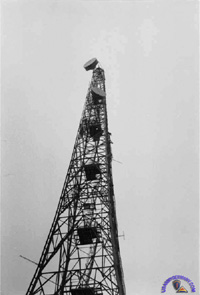 1. Antenna tower before DEB conversion 1. Antenna tower before DEB conversion
|
|
|
|
 2. Looking down on the site 2. Looking down on the site |
 3. Mildenhall antenna 3. Mildenhall antenna |
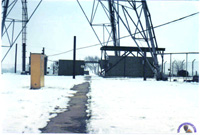 4. Barkway radio vans 4. Barkway radio vans |
|
|
|
|
| Botley Hill RRS |
| |
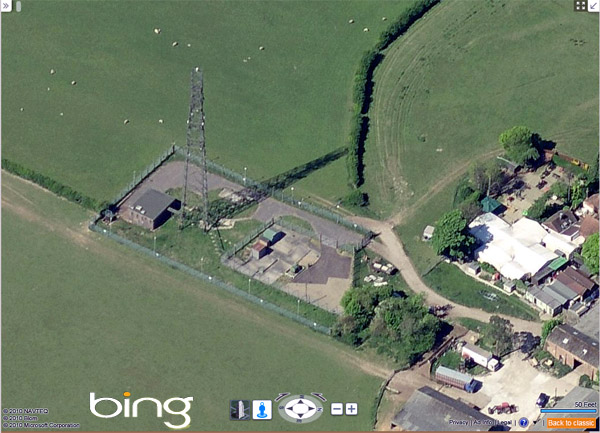
Bird's Eye View of former Botley Hill Radio Relay Site (Bing) |
|
|
| Hillingdon Radio Relay Site (RAF Uxbridge) |
| |
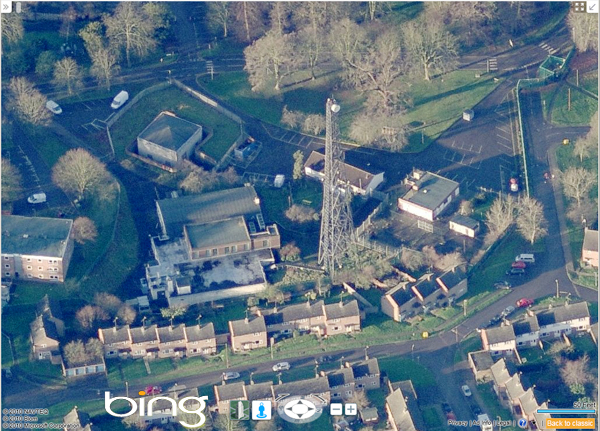
Bird's Eye View of former Hillingdon RRS (Bing) |
| |
| 1969 |
| (Source: STARS & STRIPES, July 16, 1969) |
A dedication ceremony was held on July 14 at RAF Uxbridge for the new AUTOVON (Automatic Voice Network) switch that has been installed at the installation. The new world-wide direct dial system replaces numerous point-to-point circuits and manual switchboards. It is scheduled to be fully operational by March 1970. The 1969th Communications Sq is responsible for operating the new switch.
Hillingdon is one of four new AUTOVON switching centers that became operational in Europe last month. The other three are at Feldberg and Langerkopf in Germany and at Mt. Vergine (Naples) in Italy. Six additional switching centers are scheduled for Europe: by November, facilities at Martlesham Heath (England), Schoenfeld and Donnersberg (Germany) and Humosa (Spain) should be operational; the last two facilities (Coltano, Italy, and Athens, Greece) should be operational by March 1970.
The new system can handle increased traffic and provides for much improved reception. Because of the system's automatic alternate routing capability, all lines will be much more efficiently used. (The article goes on to explain that currently about 60,000 long-distance calls are handled daily by the four automatic switching centers.) |
|
|
|
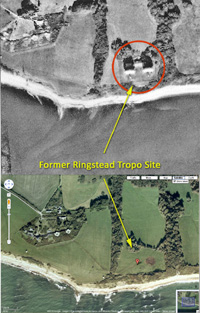
| Ringstead Tropo Site |
| |
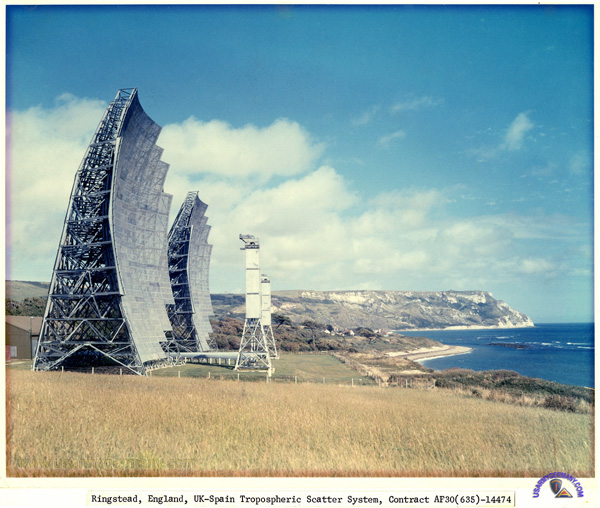
120-foot tall billboard antennas of Det 6, 2180th Comm Sq, Ringstead () |
| |
| (Source: Email from Bill Richey) |
|
|
I have attached a Poor Quality UK aerial picture dated from the 1970s of the dishes at the Ringstead Tropo site.
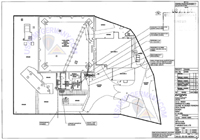
It is my understanding that the site was decommissioned and the dishes removed in 1972. The Google Earth Picture and the Map show the exact location of the Site. Google Earth 50 37 55.64 N , 2 21 41.44 W as indicated on the drawing. Gorremandi Spain is 43 12 35.26 N, 1 26 43.68 W.
When I was there in the UK (1965-68) I was on a special Maintenance team assigned to the 2130 Communications Group (RAF Barford St John Det 1). The headquarters was a RAF Croughton. I traveled TDY to numerous sites throughout Europe. At various time these sites were placed under different Hq units.
If I remember correctly when I was first at Ringstead, in late 1965, it was a Detachment of the 2130 Comm Group.
There were 10 or 12 enlisted techs that lived in the nearby communities. On one occasion there was a ITT Tech rep present. I don’t think he was permanently assigned to the site.
There were only two buildings on site: the Ops building and a small Power Building. If you look at the aerial photo, the Ops building was centered and set to the north of the dishes.
|
|
This site was supposedly obtained by the British Government under Eminent Domain, the only time in UK history where the this was done to support a foreign government. See this link for additional info on Ringstead. http://www.subbrit.org.uk/rsg/features/ace_high/index4.html .
Ringstead and Gorramendi were the only two sites in 486 L that had 75 KW Amplifiers. I think it was later moved under a group at RAF Hillingdon.
There was a Microwave link that connected Ringstead back to London. The link went South West to Portland Bill then to the north to Bulbarrow Hill and then north east to Dean Hill, Golden Pot Tower and High Wycombe where it interfaced with the UK Microwave system. |
|
|
|
| Swingate Communications Site |
| |
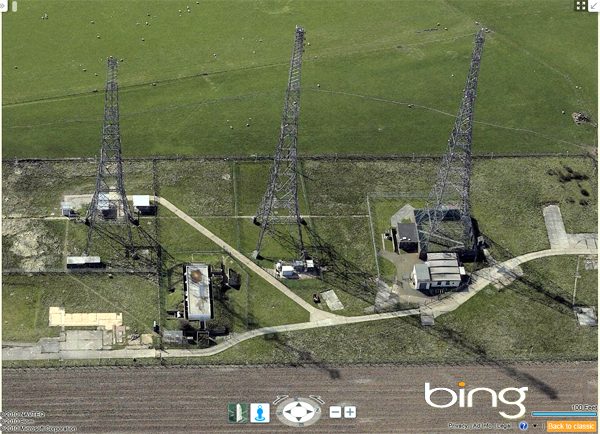 Bird's Eye View of former Swingate Communications Site (Bing)
 |
| |
| Swingate MOD Transmitter Site: Once there were four towers, part of the Swingate Chain Home Station of the WWII-era... One (or two?) tower was removed after WWII. The USAFE DEB Tower on the right (a.k.a. Swingate Tower 2) was constructed in 1950s; used by USAF/DCA. Tower in middle used by BBC used for transmitting radio programs. The "Mould" Tower on right (a.k.a. Swingate Tower 1) - dismantled in 2010 - was used by the British Army for tropo communications. (For more information see the topic: RAF Swingate, Dover on the Kent History Forum - interesting read.) |
|
|
| |
|
| |
| 1979 |
| (Source: Signal Level Distributions and Fade Event Analyses for a 5 GHz Microwave Link Across the English Channel, by D.R. Wortendyke, A.P. Barsis and R.R. Larsen, October 1979) |
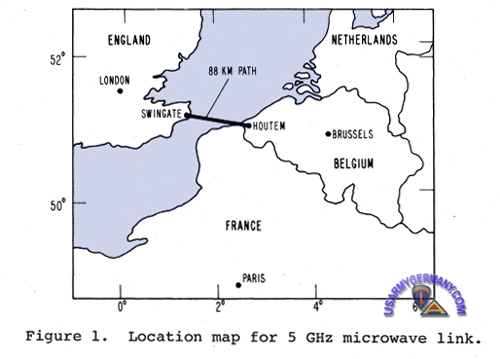
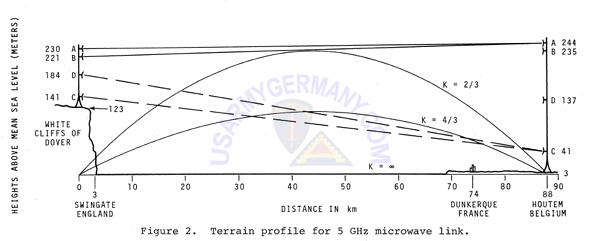
The report describes measurement results of a performance study done on the 88-km multiple-diversity, line-of-sight microwave link between Swingate, England and Houtem, Belgium. This link is 88 km (55 miles) long, 65 km over water (the eastern terminal at Houtem is 19 km inland from the Channel coast). It operates in the 4 to 5 GHz frequency range. The link is a portion of the DCS European network and has been carrying traffic since mid-1974.
Figure 2 below shows the path profile with antenna positions, heights above mean sea level (in meters), and a representation of sea surface for two values of the effective earth radius factor, "k." The antennas A and B at each terminal are 4.6 m parabolic reflectors; the antennas C and D are 3.7 m parabolic reflectors. |
|
|
|
| |
| 1982 |
| (Source: STARS & STRIPES, Sept 25, 1982) |
Above the famous White Cliffs of Dover on the English Channel lies a small communications site operated by the British Ministry of Defence and known as RAF Swingate. Three tall transmitter towers (two from the original WWII station), a local landmark, sit prominently atop the 400-foot cliffs. One of the towers, known as the USAF DEB Tower, belongs to the DCS Wideband system and is operated by OL C, 2119th Comm Sq.
The 350-foot USAF Swingate microwave tower beams directly across the English Channel to a 792-foot tower at Houtem, Belgium. The tower simultaneously transmits and receives up to 300 signals of wideband voice, teletype and computer traffic. This constitutes about two-thirds of the DCS cross-channel communications load. (Webmaster note: The other third is handled by the RAF Martlesham - Hook-van-Holland tropo link further north.)
The site is staffed by six Air Force personnel, who make up OL C. Site chief is an AF Master Sgt. OL C's role is to keep the Swingate tower in top shape as well as maintain a 24-hour mobile maintenance response capability for two unmanned AF microwave communication sites at Coldblow and RAF Dunkirk. |
|
|
| |
| 1989 |
| (Source: Multiple Diversity and Equalization used on Long Over-water LOS Path, a report in the COMMUNICATIONS Journal, written by Kuhnert, B.R. Gelerman, D.,
Mitre Corp., Bedford, MA, 1989) |
A sophisticated line-of-sight (LOS) terminal configuration is described. The Swingate-Houtem link is a 55-mile over-water path across the English Channel. The system uses quad space diversity and dual frequency diversity as well as slope equalization at intermediate frequency and transversal equalization at baseband. The complicated design was necessitated by a difficult path prone to ducting and other anomalous propagation; large waveguide losses due to tall towers; and an inability to test the full two-frequency configuration prior to cutover to live traffic.
Eight receivers were used rather than four to try to obtain the best possible performance using off-the-shelf hardware. |
|
| |
|
|
A site plan of the USAF DEB Tower compound from several years ago. The plan was posted on the Kent History Forum (see above for link) and shows plans for modifications to be made by the company that was leasing the tower (and site) from the British MOD.
|
|
|
|
|
| 2140th Communications Squadron / Group |
| |
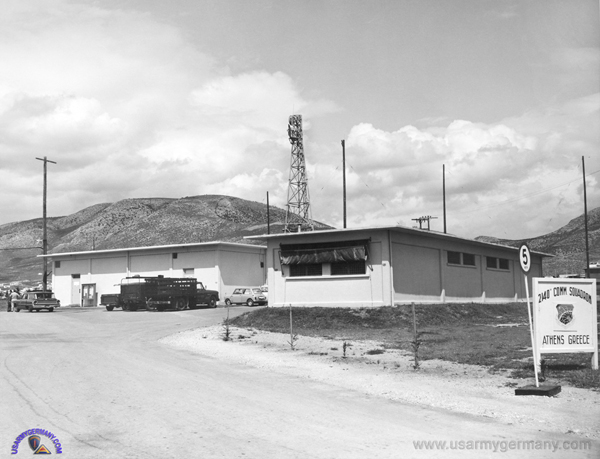
2140th CS building, Athenai Airport (later Hellenikon AB), c. 1965 (David Higginson)
|
| |
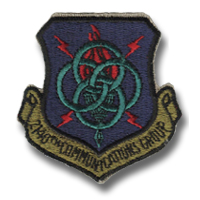 2140th Communications Group 2140th Communications Group |
| |
| 1980 |
| (Source: 2140th Communications Group Jan-Mar, 1980 - Synopsis) |
The mission of the 2140th Comm Gp at Hellenikon Air Base (), Greece, was to provide for continuous operation and maintenance of designed ground communications-electronics systems and facilities in support of command & control and other communications serving all US forces within Greece and to provide the DCS terrestrial communications link to Turkey. Included were:
(1) USEUCOM command control CEMETERY high frequency and STRAIGHT TALK satellite networks;
(2) USAFE INFORM command & control HF network; and
(3) AUTOVON switching center serving Greece and Turkey
(Athenai Airport was redesignated as Hellenikon Air Base on Feb 25, 1976.)
If you have information, stories and/or photos of the 1240th AACS Sq or 2140th Comm Sq/Gp I would like to hear from you - webmaster. |
|
|
| |
| Detachment 3 |
| |
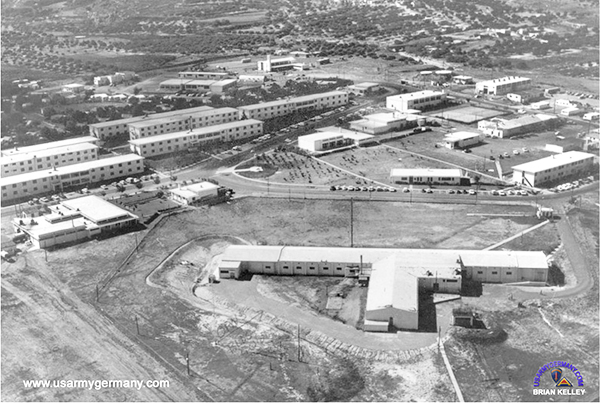
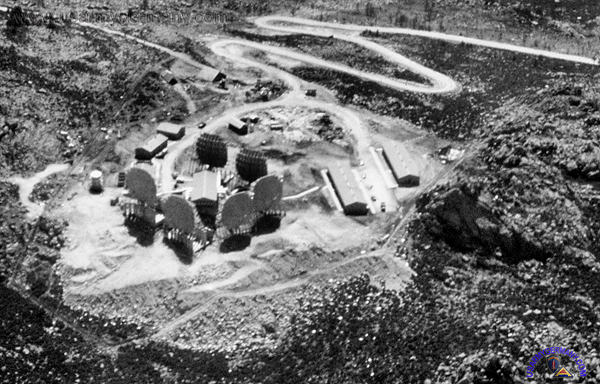
Aerial view of Iraklion Air Station on Crete, 1960s (Brian Kelley)
(Click on image to view a better resolution)
|
| |
 600.jpg)
Iraklion Air Station, circa 1976 (John Handy, flickr)
(Click on image to view a better resolution)
|
| |
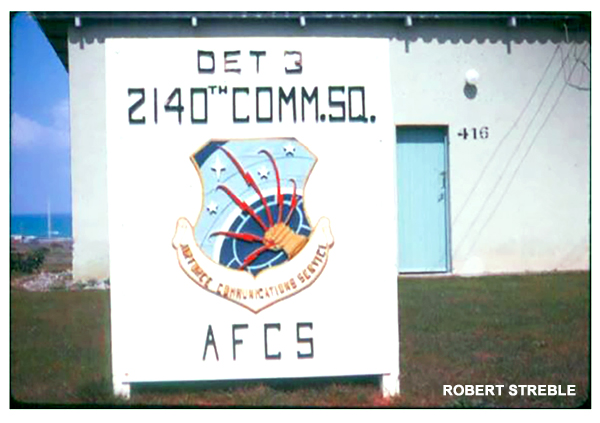
Detachment 3, 2140th CS sign at Iraklion Air Station (Robert Streble)
|
| |
 FB 600.jpg)
Access road and entrance to the Mount Edheri Tropo Site (Facebook)
(Click on image to view a better resolution)
|
| |
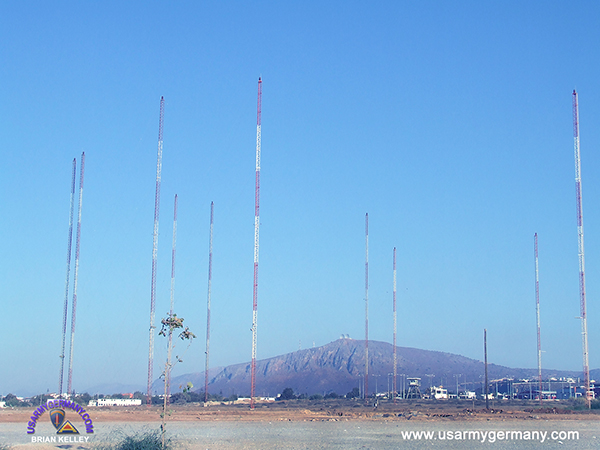
Antenna field on Iraklion AS with Mt Edheri Tropo Site visible on the hill in the background
(Click on image to view a better resolution)
|
| |
| (Source: Email from Brian Kelley, 6931st Security Group, Jan 1974 - June 1975) |
I didn't see Det. 3 of the 2140th on your page. It was at Iraklion Air Station, Crete, up until March of 1979. Then it became the 2115th Comm Sq.
I was in the 6931st SG from January, 1974 to June, 1975.
You can see the Mt. Edheri Tropo site on the hill in the Antenna field pic.
My roommate at IAS was assigned to Det 3. One weekend he took me to the tropo site in his car. This was in February of 1974. The road was paved all the way to the top. But the last portion at the top was grooved because it was so steep.
We only stayed for a few minutes, then headed back. I recall it was foggy that day, so the view was not much. But the sheer cliff in front of those dishes was a memorable sight!
Was MW used for the link between Iraklion AS and Mt Edheri?
Also, wasn't Argyroupolis a 486L Tropo site used on Crete. Must have been west of Iraklion somewhere close to Souda Bay. |
|
| |
| Detachment 4 |
| |
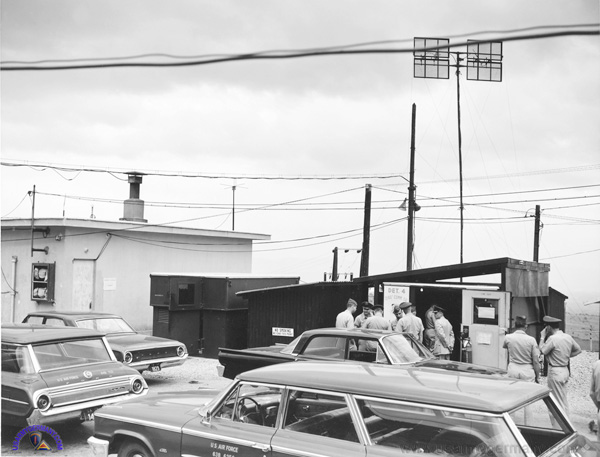
Detachment 4, 2140th CS, Elevsis, c. 1965 (David Higginson)
|
| |
| 1963 |
| (Source: Email from Howard Jeffrey) |
I was stationed at the 2140th, Detachment 4, Elevsis, (Elefsina) Greece as my first assignment out of Tech School (Keesler) in 1963. We were a very small Air Force Detachment, essentially 2, 8X12 portable equipment buildings, located on an Army post which was located on a Greek Air Force Base.
One of our buildings was for administration and housed the commander, a SMSgt Crandall (as I recall) and staff. The other building was the communications building and housed the TRC-24 link to Athenai Air Base and a microwave link to Mt Parnis (I think?) and Collins HF gear we maintained for communications on the Cemetery Net. We also had Power Pro people that maintained a couple of generators for backup power.
David’s photo of Detachment 4 looks to show the communications building in the center, with the Admin building to it’s left. The TRC-24 “Flyswatter” antenna is in the background. The generators would have been to the right, not in the picture. We had some HF dipole antennas strung up between portable masts that should be just out of the picture to the right.
I was stationed at Det 4 from October 1963 to April 1965. I’ve only found one picture from that time and it shows me standing next to the 2140th Comm Gp sign at Athenai Air Base. The same sign as showing in one of your black & white photos. |
| Looking for additional information! |
|
| |
| Detachment 10 |
| |
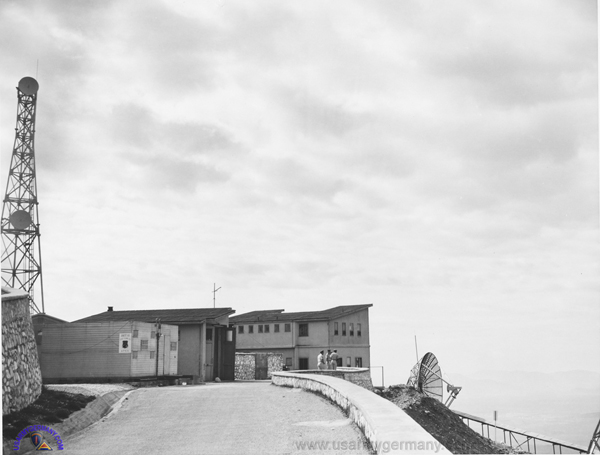
Detachment 10, 2140th CS - site unknown, c. 1965 (David Higginson)
|
| |
| Looking for location of this site and additional information! Could this be Mount Pendelikon? |
|
| |
| Mount Pendelikon Tropo Site |
| |
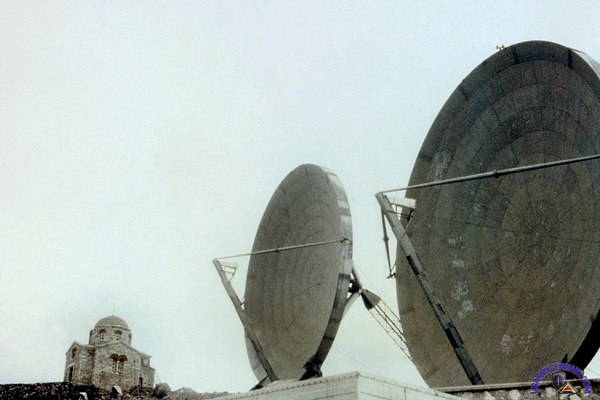
Mt Pendelikon Tropo Site, May 1965 (David Higginson)
|
| |
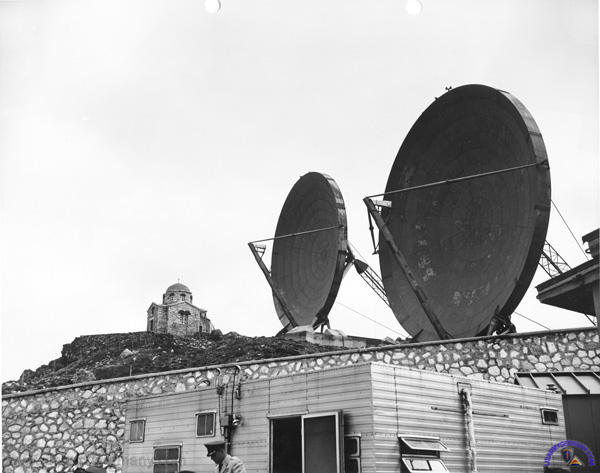
Mt Pendelikon Tropo Site, c. 1965 (David Higginson)
|
| |
| Looking for more information on this tropo site! |
|
|
| Detachment 13, 2140th Communications Group (Araxos, Greece) |
| |
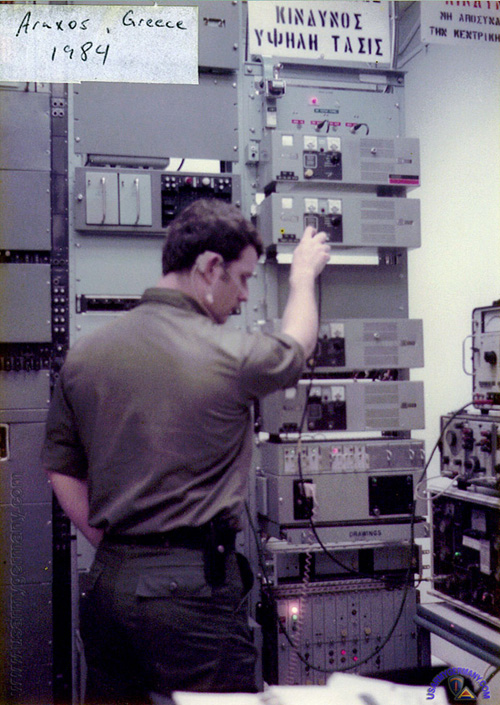
Photo of Sgt (E-4) Les Amidon, 1983/84, in front of the
AN/FRC-127
Microwave Radio Set at Detachment 13, Araxos "the Axe," Terminal Site.
|
| |
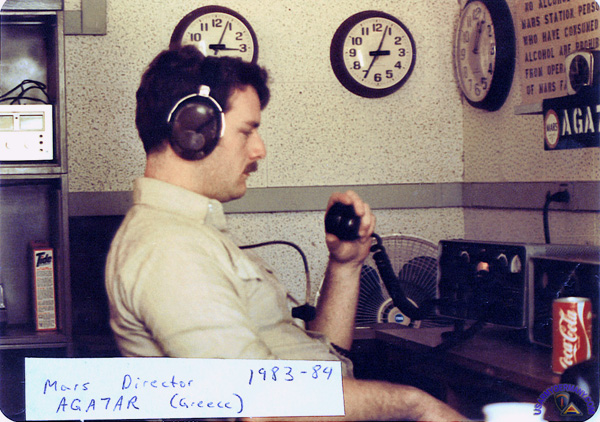
Les also served as MARS director while stationed at Araxos Air Base
|
| |
| (Source: Email from Leslie "Les" Amidon) |
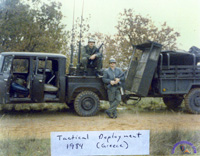 |
|
The Araxos site was strictly microwave. Microwave between Levkas and a relay site and then a short Microwave shot between the Relay site and Terminal Site at the air base.
Webmaster note: Araxos AB was home to an Air Force munitions support squadron (the 7061st MUNSS) that provided warhead custodial services at the local special ammunition storage site (SAS). The nuclear bombs stored at the SAS were earmarked for a Greek fighter-bomber wing stationed at the air base.
The small AF communications detachment was there to support the MUNSS unit. |
|
|
|
| Detachment 15, 2140th Communications Group (Levkas, Greece) |
| |
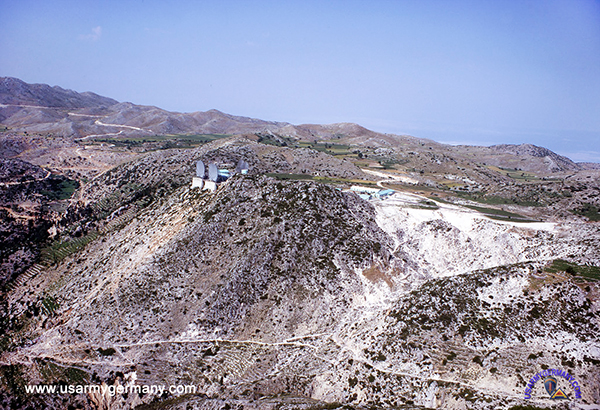
The Tropo site seen from another peak on the island of Levkas (Robert Floyd)
(Click on image to view higher res version)
|
| |
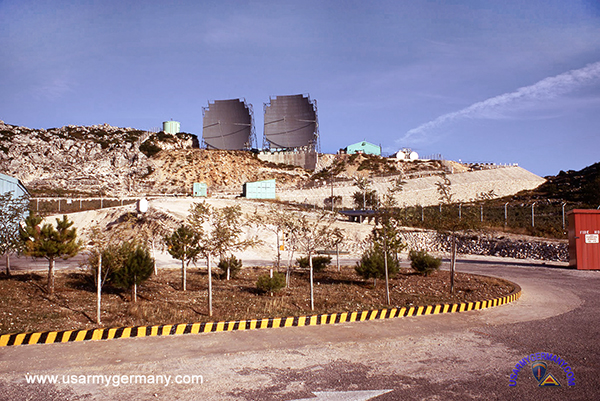
Close up of the tropo site (Robert Floyd)
(Click on image to view higher res version) |
| |
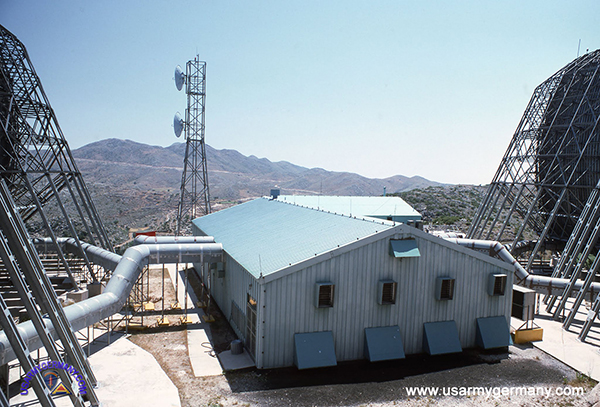
Radio building and the billboard antennas to the left and right (Robert Floyd)
(Click on image to view higher res version) |
| |
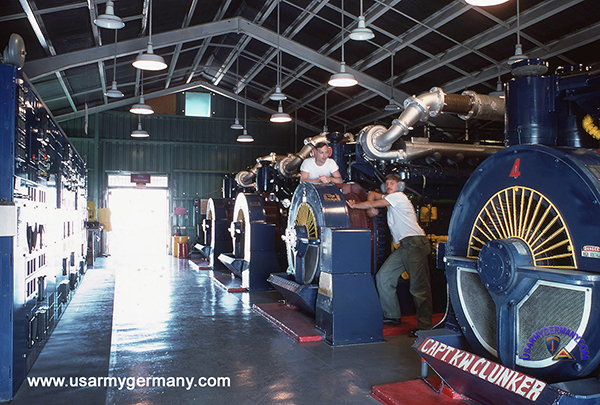
Inside the power plant (Robert Floyd)
(Click on image to view higher res version) |
| |
| (Source: Email from Robert Floyd) |
I was assigned to Detachment 15, 2140th CS at the Levkas Tropo site, 1969-1970 and 1974-1975. (The Greek island of Levkas is also known as Lefkada.)
In 1969-70 I was aware of only the civilian tech support (GS-15?) living off site. All USAF personnel lived on site, with living quarters just down a short road from the hill where the radios and generators (and water tank, filled by truck regularly) sat. I remember an airman from Maine who never left the site and could only dream of being back home in Maine.
I arrived in early August, 1969 and expect by October had requested permission (granted) to have apartment in main town of Lefkas (also the name of the island, alternately Levkas and Lefkada), so long as I missed no work shifts or general assignments, like cleaning barracks and Rec room regularly.
We had monthly runs to Athens to pick up things from BX, usually 2 or 3 airmen gone for 2 to 3 days. There was an occasional C47 flight between Athens and Aktion (about 13 miles from Levkas). I caught it once on a return from Athens.
Generally a Captain served as commander and E7 or E8 top radio and E7 top power.
Meals were served regularly in the mess. Maybe 2-3 USAF staff for mess, and few Greeks.
I noted earlier that a few Greeks maintained our motor pool (for short drive up the hill to work from barracks to work site) and also general maintenance.
I believe there were four 150KW generators, with one running at all times.
|
| |
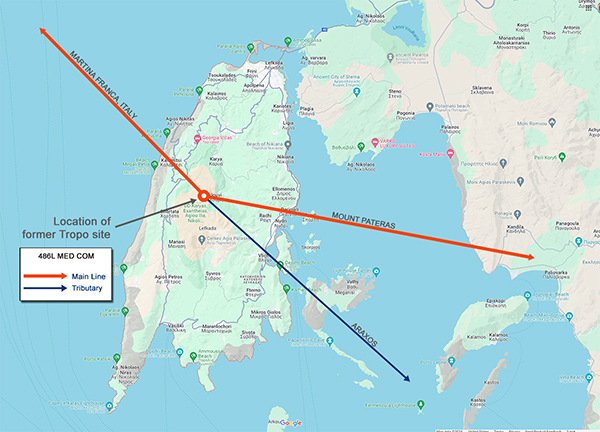
Map shows the radio links from Levkas Tropo (Webmaster) |
| |
Tropospheric Scatter to Martina Franca in Italy and Mt Pateras (near Athens) and Microwave to Araxos.
I have group photos of most of non-working staff at the Levkas Tropo site from the summers of 1970 and 1975. Everyone available was out on the basketball court, USAF and Greek locals that helped with kitchen and vehicle maintenance.
These photos would give a good count of personnel, minus 1-3 each on duty at Power Gen and Radio facilities (and maybe kitchen or asleep, or offsite). 2140-15 also had 1 USAF Medic assigned. My sense was 30 US Air Force personnel. |
| |
| |
Barracks area |
View towards Greece |
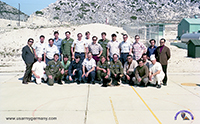
Group photo at Levkas, 1975 |
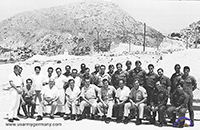
Group photo at Levkas, 1970 |
|
| |
|
|
| Detachment 20, 2140th Communications Group (Mt. Pateras, Greece) |
| |
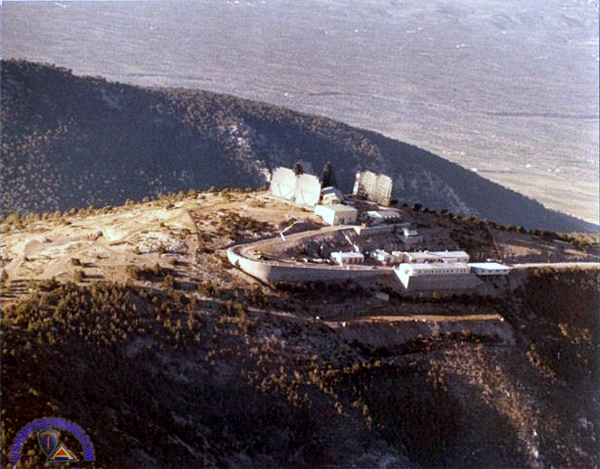
Mt Pateras RRL Site (Les Amidon) ()
|
| |
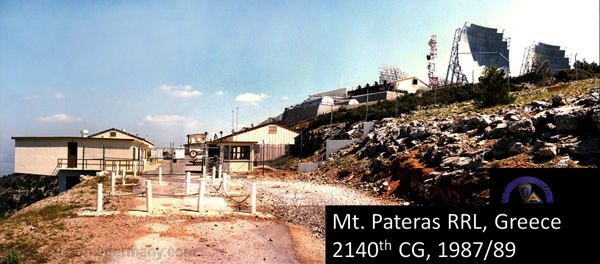
Entrance to Mt Pateras site (Les Amidon)
|
| |
| (Source: Email from Leslie "Les" Amidon) |
I’m Leslie “Les” Amidon, USAF, MSgt Retired, 304X0. I was stationed in AFCS/AFCC at:
OL-A, 1945th CG, Schwanberg RRL, Germany, 1979-1981
Det 13, 2140th CG, Araxos, Greece, 1983-1984
Det 20, 2140th CG, Mt Pateras, Greece, 1987-1989
I have photos of all sites, equipment, and diagrams of equipment, and would be happy to share. I also have recent pictures of Det 20 and will be visiting Schwanberg, Germany in 1.5 weeks. I plan to take pictures while there.
A friend of mine, who I was stationed with at Det 20, visited there last year. Most of the buildings are gone, and all of the antennas. He brought me back some of the floor tiles from what had been our office area.
(Webmaster note: details for the captions for the Mt Pateras and Radio Equipment photos included in this post will be provided soon - when Les has a little more time to focus on those. If you have any input or information, we would love to hear from you and include any details that you can provide.)
|
|
| |
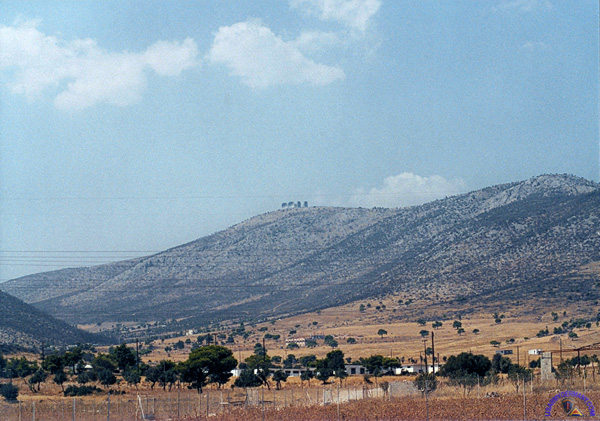
Mt Pateras Tropo site in the distance (Les Amidon)
|
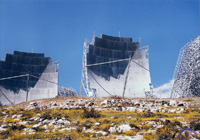
1. Mt Pateras Tropo |
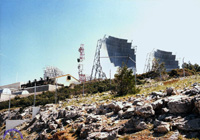
2. Mt Pateras Tropo |
|
|
|
| |
| Mt Pateras Tropo Radio Equipment (AN/FRC-97) |
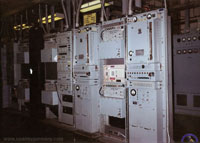
1. Radio Equipment |
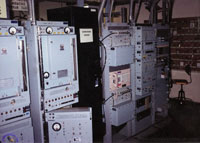
2. Radio Equipment |
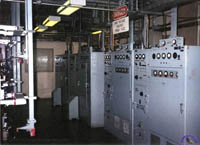
3. Radio Equipment |
|
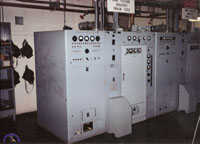
4. Radio Equipment |
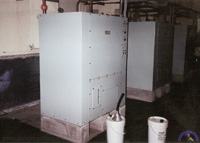
5. Radio Equipment |
|
|
|
|
|
|
| TUSLOG Detachments (Mediterranean Communications Area) |
| |
| USAF Tropo Site Diyarbakir (a.k.a. Pirinclik Air Station) |
| |
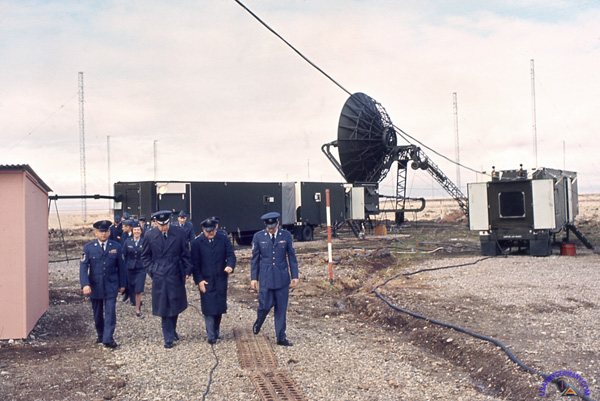
A visit to the AN/MRC-68 tropo system at Diyarbakir, c. 1965 (David Higginson)
|
| |
|
| |
| USAF Tropo Site Elmadag (TUSLOG Det 6-1) |
| |
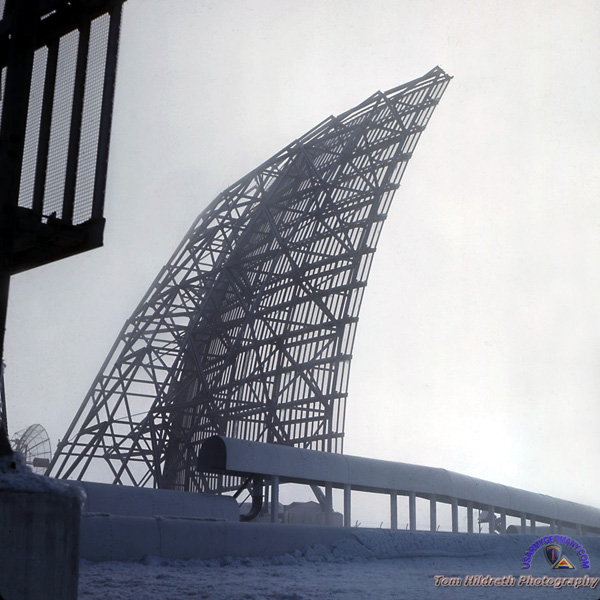
60-foot Billboard Antenna for tropo system, Elmadag, Dec 1967
|
| |
| 1967 |
| (Source: Email from Tom Hildreth,
Incirlik AB, Turkey 1966-1968) |
| I have some photos I took of the USAF Tropo Site at Elmadag, Turkey in 1967-68. I took these 6 X 6 cm Ektachromes in January, 1968. At the time I was a USAF Sgt (E4) Tech Controller (AFSC 30750). This job was found in all branches of the military, and was similar to ATT&T's Long Lines techs. |
|
Elmadag Tropo Site
TUSLOG Det 6-1 |
|
|
|
|
 1. Site signage 1. Site signage
|
 2. FRC-75 Elmadag-Samsun Tropo Trunk 2. FRC-75 Elmadag-Samsun Tropo Trunk
|
|
|
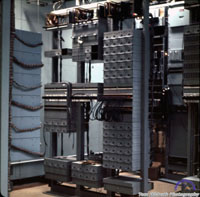 3. Motorola MC50 3. Motorola MC50 |
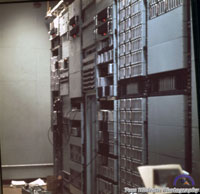 4. TMS2A Voice Frequency Mux 4. TMS2A Voice Frequency Mux |
|
|
|
|
| |
| USAF HF Receiver Site Incirlik |
| |
| 1967 |
| (Source: Email from Tom Hildreth, Incirlik AB, Turkey 1966-1968) |
| Here are some 1967 photos from the Incirlik HF Receiver site. The HF radio callsign for Incirlik was AJO (Alpha Juliette Oscar). |
Incirlik HF Receiver
TUSLOG |
|
|
|
|
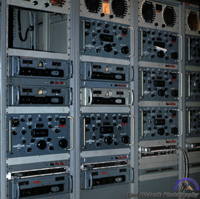 1. RTTY Equipment: R-390/CV-89/CM-22A 1. RTTY Equipment: R-390/CV-89/CM-22A
|
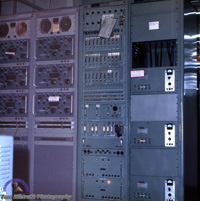 2. Incirlik Airways HF receivers, 1967 2. Incirlik Airways HF receivers, 1967
|
|
|
 3. Incirlik Receiver Site Tech Control patch bays 3. Incirlik Receiver Site Tech Control patch bays |
 4. Incirlik Antenna Farm RF Patch Bays, 1967 4. Incirlik Antenna Farm RF Patch Bays, 1967 |
|
|
|
|
| |
| USAF Tropo Site Karatas |
| |
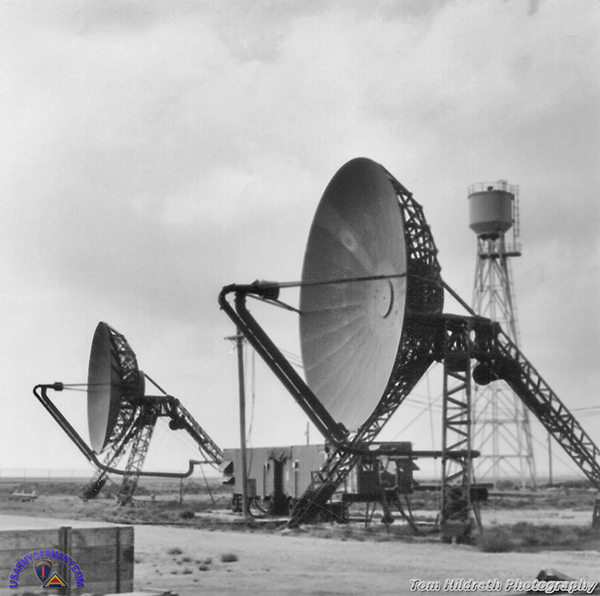
MRC-68 tropo system, Karatas, 1967
|
| |
| 1967 |
| (Source: Email from Tom Hildreth, Incirlik AB, Turkey 1966-1968) |
This is at Site 129, the tropo site often called "Adana" on the orderwire. It was located at Karatas, and sometimes this was used as the callsign. The equipment shown here is MRC-98 tropo gear for the Karatas-Elmedag shot, which nomenclature was 66JTXX. The XX stood for the specific shot, could have been 66JT01 or 66JT05 depending on location, but unfortunately, I don't remember which it was.
With the exception of a little bit of remaining HF, in 1967 when this picture was taken, the majority of Incirlik's customers were connected to the 486L system through this site via the 66JM01 microwave link. There was no landline backup or other radio system available. At times when the microwave went down (often due to temperature inversions), a few creative tech controllers were able, if given enough time, to restore a large portion of the TTY circuits over additional HF trunks we were able to bring up with Torrejon, Spain.
It seemed impossible for even a clean HF channel to temporarily satisfy voice customers, they just didn't want to use it. |
|
|
| |
| USAF Tropo Site Sahin Tepesi (TUSLOG Det 150) |
| |
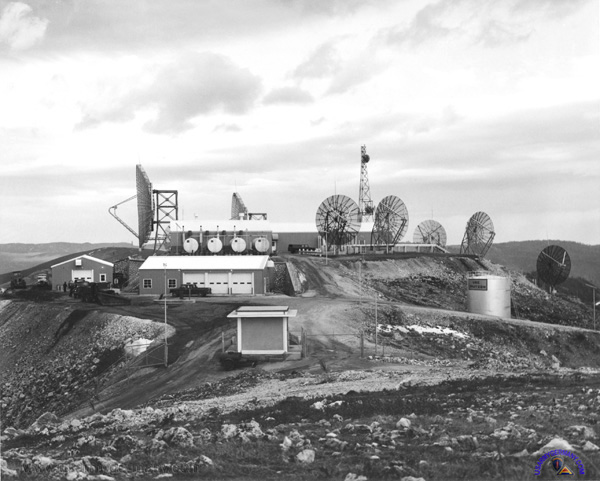
Sahin Tepesi Tropo Site (TUSLOG Det 150), c. 1964 (annotated version) (David Higginson)
|
| |
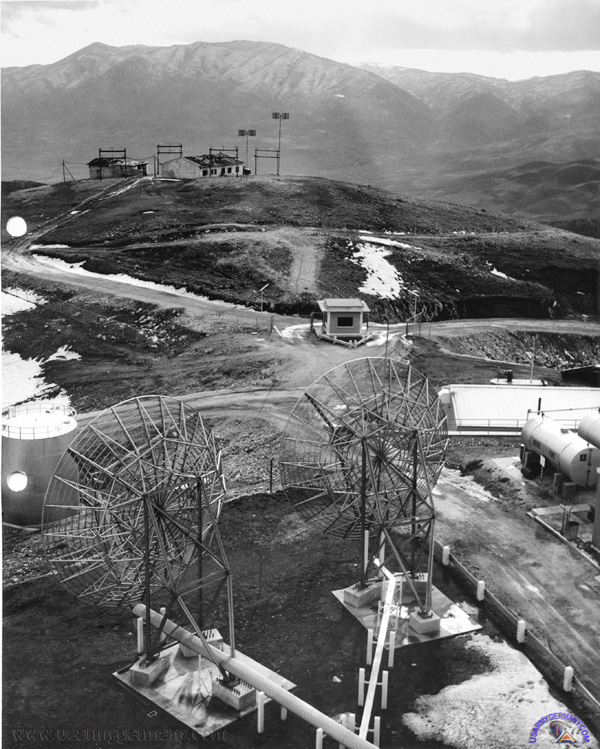
A Turkish VHF site next to the tropo site (TUSLOG Det 150), c. 1964 (David Higginson)
|
| |
| 1963 |
| (Source: Email from Dennis Luessenheide) |
Click here to read his interesting story on the MerhabaTürkey website - American Military in Turkey.
Thanks for the "old" pictures of Sahin Tepesi in 1964/1965. I haven't seen any like that since I left in March 1964. I didn't go across the road & take a picture of the site, although I did take a picture of the Turkish site. Actually, I was taking a picture of the Turk drivers in the contractors cars. Those drivers just sat there all day, listening to their radios, until the American contractors left for the day.
I was surprised to see the billboard antennas shown in Pat Shediack's story about Sahintepe...(TUSLOG Det 150 website - see link in Related Links below) as the Turks called it 20 years later. There is another Sahintepe website of TUSLOG Det 150. There's a lot of b/w pictures posted by Kevin McCoy, who was stationed there during 1967-68...& his pics show billboard antennas.
The pictures taken by/for General Higginson show the 30 ft dish antennas that were used on the Ankara shot. In 1963 there were 15 ft dishes used on the Eskisehir shot, but Gen Higginson's pictures show what appears to be another 30 ft dish next to Ankara. Apparently, Eskisehir was "up graded" to improve its performance...likewise, the same for Ankara with the 60 ft billboards.
Looking out across to the Turkish Army site I see some "ANTRAC" fly-swatter antennas. There weren't there in 1963, only the di-pole antennas for their TRC-1 radios. |
|
| |
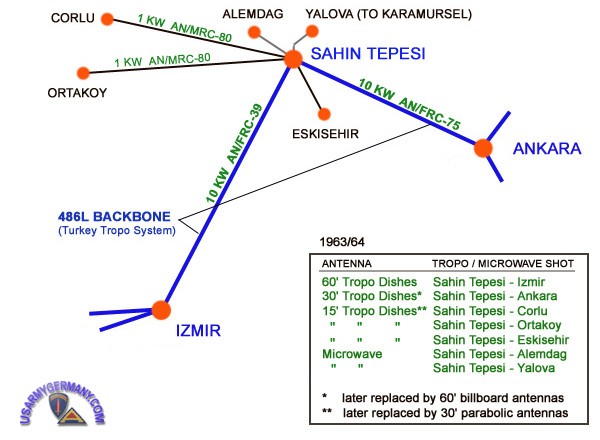
Schematic shows tropo and microwave shots from Sahin Tepesi, 1963/1964
|
| |
In 1963 we did have the 60 ft dish antennas on the Izmir (Yamalar) shot, & another set of 15 ft dishes for the Corlu shot. The 15 ft dishes were used with the MRC-80/TRC-24 radio. The 60 ft dish was connected to a FRC-39 radio & the 30 ft dish to Ankara was connected to a FRC-75 radio. There's another set of dishes next to the Corlu antennas...which I believe is a tropo shot installed later to Ortakoy, southwest of Corlu.
We started operations during September 1963, with all contractors still on site. Federal Electric Corp (FEC) & Page Communications Engineering (PCE) were the electronics installers, Tumpane Company installed the site facilities...buildings, water & sewer, power generation & fuel.
We went to work with only 3 buildings done; comm, power, & the garage. The barracks & the mess hall were only half completed. It took Tumpane until December to finish the retaining walls behind the barracks & mess/rec hall..(2 separate buildings). There a building next to the motor pool garage that wasn't there at the beginning of 1964. I believe it's the CE building/shop.
We commuted for 2 months from Karamursel (Det 63) on a 24hr on/72hr off schedule. We lived in the garage for only 4-5 weeks during December 1963-January 1964, before the barracks & mess hall were ready. My biggest surprise is the 60 ft billboard antennas...apparently they replaced the 30 ft dishes in the mid-late 1960s, not too long after the site began operating (in 1963).
Can you tell me "exactly" where Alemdag (Tuslog Det 111) microwave relay site was located? I was originally assigned to that site, but it was even built yet in March 1963, so I was re-assigned to Sahin Tepesi (Sahintepe for late comers). Another airman listed the detachment as being on a Turkish Army missile site in/near the Alemdag neighborhood of Istanbul. (I haven't been able to contact him for any locale information.)
Walter, a little more 'updating' about Sahin Tepesi pictures:
Photos #2 and 3 both show the site water tank. It was located on top of the hill next to the power bldg, just above the CE bldg. I understand water was pumped up hill with 2 pumps from a spring located about 1200 ft below, northward from the 'right' Izmir dish.
The microwave tower supported 2 microwave shots: (a) a spaced diversity to Almadag/Istanbul, because it went over water (Marmara Sea), & (b) a shot eastward to a passive reflector to a relay at Yalova airport (Site 4 HF transmitter site) to Karamursel. KAS sent some channels on to Golcuk & to Izmit. I estimate the reflector was about 1 2/3 mile eastward from the tower. The foundation for the reflector is very difficult to find on Google Earth. I tentatively located it by using the 3D effect & tilting the terrain & 'back tracking' from Site 4/Yalova. The reflector was used to get over a ridge that blocked any direct shot to Yalova. We shot the microwave up hill, bounced it off the reflector & down through the gaps in the mountains to Yalova. Pat Shediack sez the site commander once used a shotgun to loosen the ice which was degrading the Karamurel signal.
The microwave radios were Motorola MW503. The mux was a Collins, but I don't recall the number. Collins mux was also used to Izmir/Yamanlar, 24 channels I believe. All of the microwave mux was 12 vf channels. The MRC-80's to Corlu & Eskisehir used a military Lenkurt 12 channel mux. (I later used the same mux at AT&T LL with 'Looking Glass'.)
The Ankara shot used a German made Siemens-Halske V60fu 24 vf channel mux. Page Comm Eng used the Siemens eqpt throughout Turkey, with a "0db" jackfield. The Collins used the normal telco +7/-16 db run through pads for "0db". Sahin Tepesi had to explain this difference in levels to USAFE/17 Switch many times because no one else (Turkey tropo nor USAFE) was aware of the "0db" arrangement. |
|
| |
| Site location on Google maps: link |
 1. Entrance to radio station 1. Entrance to radio station |
 2. Power building 2. Power building |
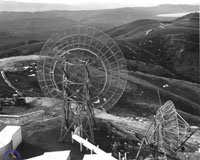 3. 60 ft dish - Izmir shot 3. 60 ft dish - Izmir shot |
|
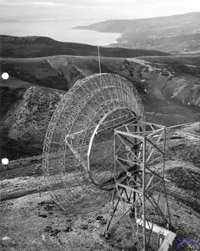
4. Another view of a 60 ft dish |
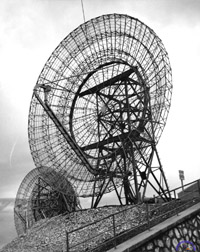
5. View of both 60 ft dishes and a 30 ft dish |
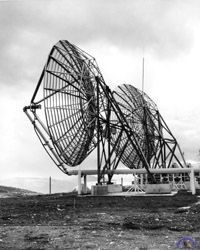
6. Two 30 ft dishes near the site entrance |
|
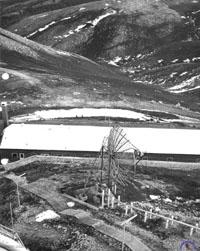
7. Looking at the dining facility |
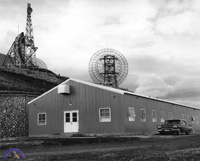
8. Billets - MW tower upper left |
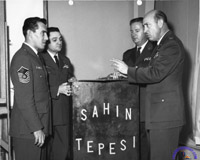
9. |
|
|
|
| |
| USAF Tropo Site Trabzon |
| |
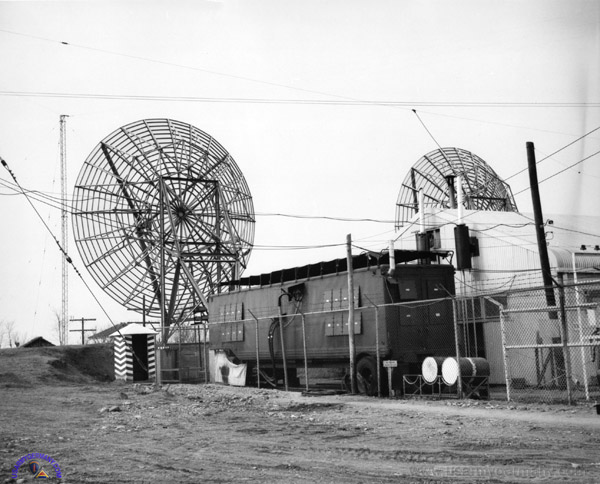
Trabzon tropo site, mid-1960s (David Higginson)
|
| |
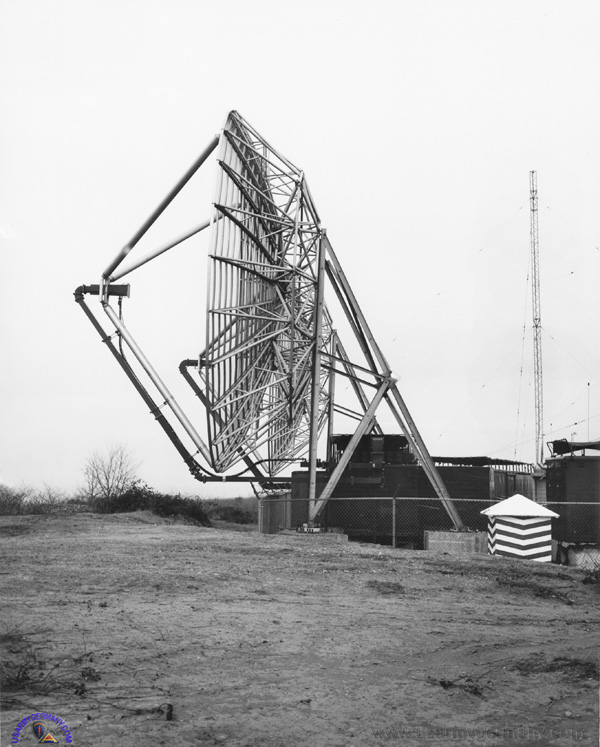
Trabzon tropo site, mid-1960s (David Higginson)
|
| |
|
| |
| USAF Tropo Site Yamanlar |
| |
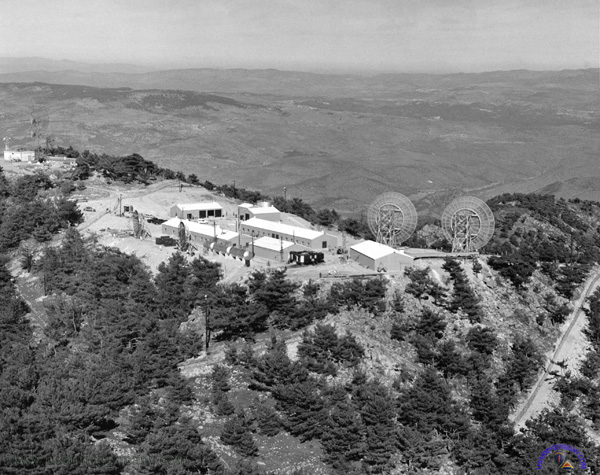
Yamanlar Tropo Site, c. 1963 (David Higginson)
|
| |
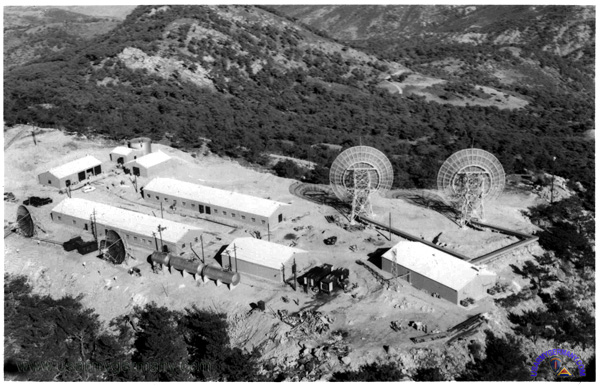
Yamanlar Tropo Site, c. 1963 (Webmaster's collection)
|
| |
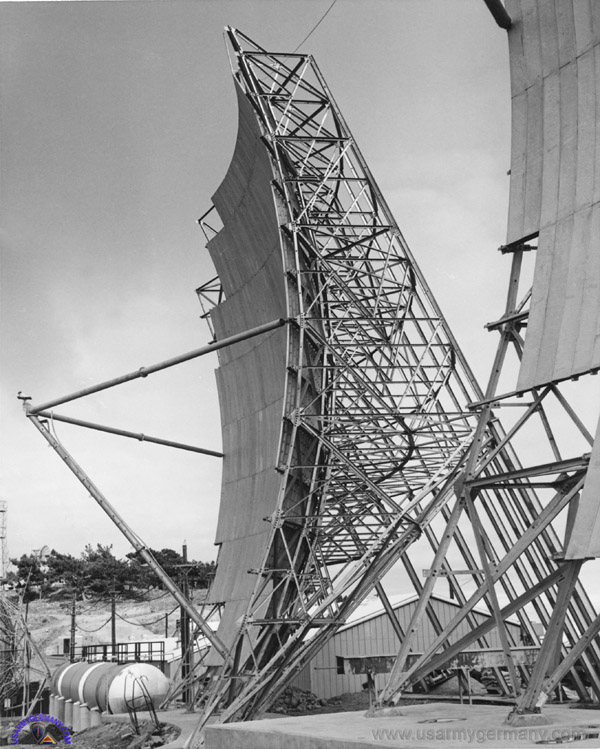
Billboard antennas replaced some of the parabolic antennas at Yamanlar (David Higginson)
|
| |
| Site location on Google maps: link |
|
|
|
| Scope Communications System |
| |
| 1969 |
| (Source: STARS & STRIPES, June 20, 1969) |
The Scope Communications system operated by AFCS is a communications network between Air Force bases in northern Europe (Webmaster note: I believe the article is referring to air bases in AFCENT region and the UK). The Scope Communications system is primarily a voice communications network. It is also used for classified messages (voices are scrambled on the originating end of the transmission and unscrambled on the receiving end).
This system is currently undergoing a $9.5 million modernization and upgrade program that includes the replacement of commo equipment with more modern equipment and the installation of new microwave towers, receivers and multiplex equipment. The new equipment is being installed by GEEIA teams. (GEEIA = Ground Electronics Engineering & Installation Agency) The program is scheduled to be completed by December.
The Air Force Communications Service (AFCS) is responsible for the engineering, installation, operations, and maintenance for approximately sixty percent of the wideband (line-of-sight and tropospheric scatter) systems within the DCS. |
|
|
| |
1971 |
(Source: STARS & STRIPES, Jan 9, 1971) |
The Scope Communications system is currently undergoing a $20 million upgrade program that will be completed by the end of 1972. The program will alleviate backlogs on voice circuits and improve reliability and quality. It will double existing capabilities of the Air Force facilities in Europe. (SCOPE COMM will handle AUTOVON and AUTODIN transmissions and links major Air Force installations in Europe and includes the Air Forces' link to West Berlin.)
Nineteen new antenna towers are being erected under this program: 8 in Germany; 6 in England and 5 in Belgium. The tallest of the new towers is an 800-foot tower near the Belgian coast (Houtem).
In addition to the towers, new (communications) buildings, pads and electronic equipment are being included in the overall system.
Work on the section of the network in Germany will be completed by September.
This upgrade program is an outgrowth of a modernization program of the European Wideband System that was initiated in 1966 but then interrupted due to the withdrawal of US forces from France 1966-67. |
|
|
| |
| 1974 |
| (Source Email from James R. Wynn) |
I am surprised that there is no
mention of SCOPECOM, early 1974, that included sites in Germany, Belgium, and
England.
Here is a list of the radio relay sites:
|
| |
SITE NAME - UK |
COMMENTS |
| |
Barkway |
|
| |
Botley Hill Farms |
|
| |
Bovington |
|
| |
Cold Blow |
|
| |
Dunkirk |
|
| |
Great Bromley |
|
| |
Hillingdon |
|
| |
Lakenheath |
|
| |
Martlesham Heath |
|
| |
Mildenhall |
|
| |
Navy London |
|
| |
Swingate |
|
| |
Wethersfield |
|
| |
|
|
| |
SITE NAME - BELGIUM |
COMMENTS |
| |
Ben-Ahin RRS |
|
| |
Flobecq RRS |
|
| |
Houtem RRS |
|
| |
Le Chenoi RRS |
|
| |
SHAPE HQ |
|
| |
Spa Malchamp RRS |
|
| |
Westrozebeke RRS |
|
| |
|
|
| |
SITE NAME - GERMANY |
COMMENTS |
| |
Schoenfeld West |
|
| |
|
|
|
|
|
| |
| Related
Links |
 |
|
A photo page on picasaweb with images of 486L tropo sites at Majorca, Minorca, Inoges and Humosa |
|
 |
|
MerhabaTurkey.com - this very comprehensive and interesting website is about the American military stationed in Turkey during the Cold War and beyond. The webmaster is Jan Claire. |
|
 |
|
TUSLOG Detachment 150 - Pat Shediack's comprehensive and interesting website is dedicated to TUSLOG Det 150, an Air Force Tropo site at Sahintepe (a.k.a. Sahin Tapesi), in northwestern Turkey - about 70 km south of Istanbul. |
|
| |
|
|
|
|
| |
| |