| If you do
NOT see the Table of Contents frame to the left of this page, then
Click here to open 'USArmyGermany' frameset |
|||||||||||||||||||||||||||
|
31st
Transportation Battalion |
|||||||||||||||||||||||||||
|
|
|||||||||||||||||||||||||||
|
|||||||||||||||||||||||||||
|
|
|||||||||||||||||||||||||||
| 31st Trans Bn (Inf Div) History | |||||||||||||||||||||||||||
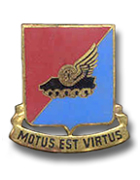 31th Transportation Bn DUI 31th Transportation Bn DUI |
|||||||||||||||||||||||||||
| 1958 | |||||||||||||||||||||||||||
| (Source: Email from R.L. Brown) | |||||||||||||||||||||||||||
| I was assigned to C Company 31st Trans in 1958 at Ft Carson, as my first duty assignment. Shortly after arriving the unit was designated to be sent to Munich as a mechanized TC Bn with M59s. I led the 2nd Platoon with Sgt Tom Williams as Platoon Sgt. I was an ROTC Lt from Univ of Kansas. Lt Clarence Sahm [B Company] and I were designated as advance party officers and sent to Munich about three months early to join the new 31st Bn at Will Kasern, along with two NCOs. The Battalion at Will was commanded by Maj Gus Peyer, with Maj Casper Bornman as Exec. Capt Howard Willams commanded A Company, a truck company.. Lt Sahm and I received all of the equipment, including M59s, for the two companies. When the units arrived in Munich we set up activities at Will Kaserne, with the troops housed in the two Barracks on the North side of the parade ground. C Company was in the second building from the north west. Major Peyer became Lt Col Peyer and was an aggressive commander, establishing the M59 units as important cogs in the 24th Division, including getting the units authorized to wear "green tabs". Capt Dick Castle commanded C Company. We spent the first few months training the troops and officers in the M59, and then were assigned to spend much of our time at Hohenfels supporting the Infantry Battle Groups and training for our combat role on the Czech border. Units of B and C companies spent weeks on end at Hohenfels thrughout my 3+ year tour in Munich. The M59s suffered from various maintenance problems early on, primarily from dried out hoses, belts and the like. The crews adapted well, as did the infantry squad and platoon leaders who were learning the new tactics. Life at Hohenfels was crude, with much time spent in freezing weather in tents or sleeping in the M59s. C rations were the order of the day for days on end..... but we were young! Eventually we were assigned to the old barracks at Hohenfels where coal pot stoves warmed us. My Platoon averaged 3-4 weeks in the field and 2-3 weeks in Munich over the tour. The highlight of the tour was when we staged a successful night blackout tactical crossing of the Danube as part of a NATO winter exercise called Wintershield. That had never been done before under similar conditions. The units were well received by the battle groups and cooperation and professionalism was high between us and the Inf. Those were days when one DM was worth 25 cents US, so we lived well. My wife and I lived on Herkimer Platz in State Department housing, by the luck of the draw, Quarters were great, furniture was new, beer was superb. Munich nite life was awesome and the travel opportunities were fabulous. Other than the field time the duty was great. My tour was extended for the birth of a son, and as a short timer I was assigned as aide to a NATO Major General, which allowed me to play with helicopters, staff cars, fine dining, and see saluting the flag on the staff car from an new perspective. Other officers I recall were Lts Jim Davoli, Jim Bundy, John Vargo, ... all great guys. Our NCOs were also solid and worked well with the troops and the officers. We just did not have discipline problems. Col Peyer ran a tight ship and was very well liked by the troops and the officers. It was a pleasant experience and gave me some excellent insight into the life overall. It was often said that this unit was not like any TC unit anywhere else in the Army. We trained like airborne troops and it showed. Glad to be able to share!! |
|||||||||||||||||||||||||||
| (Source: Email from Jan Stock) | |||||||||||||||||||||||||||
| I was with C Company 31st Trans Bn after arriving in Munich in 1958; stationed at Will Kaserne. I can recall my 1st.Sgt as Sgt Hamel and our Company Commander was a Captain Castle. Most of our guys came directly from Fort Knox, Kentucky where we had undergone Armor training on M-48 Medium Tanks. The whole 24th Infantry Division had gyroed to Germany at the same time and part of our training group had gone to Augsburg with the 9th Cav. The remainder went to Munich where we were trained to operate the M-59 armored personnel carrier. I can remember 1st Abn BG, 503rd Inf was across the street at Warner Kaserne and their training area, Jump towers and drop zone were right outside of our tank park. After leaving Germany, I went to Fort Ord California where I completed my enlistment. Yes, I was RA. |
|||||||||||||||||||||||||||
| 1960 | |||||||||||||||||||||||||||
| (Source: Email from Allan Fagan) | |||||||||||||||||||||||||||
| After reading R. Brown’s piece on C Company, I can’t resist adding my brief memories, as well. I had just completed my two-year combat arms tour (required of all RA officers at that time) with Delta Company, 1/21st Infantry, 24th Infantry Division. This was the shortest PCS move in my 28 year career, since Delta was across the strasse at Warner Kaserne, and I was billeted in a BOQ at Will Kaserne, about 200 yards from the 31st! My stay only lasted from July thru November of 1960.
Dick Castle was the CO, and R. Brown and another LT Brown (not related) were the other platoon leaders. M/Sgt Pinkston was my platoon sergeant, and he ran a squared away group of troops -- he had these track drivers doing “silent drill” during our PT sessions! As a result of being part of two winter exercises---Freeplay in ’59 and Wintershield in ’60 -- I had been supported with 4 M59 PC’s from C Company for my infantry platoon, and boy, were we glad to be riding rather than walking in the snow/mud of late January when those exercises were held. The track drivers were skilled at handling those beasts in some really bad weather, particularly during Wintershield, when it snowed every day after the first day of the exercise. We never had a breakdown, and they were always ready to go when we were! I was in the commanders hatch during the nighttime river transit R. Brown spoke of, and I remember watching that cold, black water climb up the front of the track until I thought we were going to cross the river like a hippo---by walking along the bottom! At the last second, we started floating and slowly (very slowly---4 mph, or less) across the river. About halfway,the driver came over the intercom with “Sir, I think I forgot to put in the hull drain plugs!” We made it without sinking, but who knows by how much? When I joined C Company, they were supporting the Battle Groups undergoing summer training at Hohenfels, so I reported for duty there. Our BOQ was, for me, deluxe -- that meant the shower and latrine were in the same building, totally unlike what the infantry had. Since we were there while two Battle Groups cycled through their training (ATT’s, live fire assault courses), I didn’t feel too badly about our quarters situation. When we weren’t on commitment, we were in the motor pool, seeing to our tracks, strapping down the basic load of 50 cal MG ammo that was stowed aboard, along with 10 days of C-rations (with Lucky Strike “greens”!) for 12 people. There were two GMC engines, two right angle drives, a control transmission and two final drives, plus the track tension, radios, the 50 cal. And a host of other gear to look after, clean, adjust, oil; whatever. One thing I learned while in motor stables -- never approach an M59 from the right rear, because that where the bilge pump discharges the bilge water from the top of the vehicle. I had to go change uniforms, and I’m not sure to this day if it was a “welcome to the new guy”, or not. I got a real dousing, but also got a good laugh out of it, especially seeing the expression on the driver’s face when I confronted him! We were there for 6 weeks or so because it cost a lot of money to ship all those tracks and supporting vehicles via German rail. Loading the tracks on the flatcars was a really hairy operation -- the treads were overhanging the flatcars sides by at least four inches on each side. I watched my squad leaders jump up on the flatcar and guide the drivers up and on, with hardly a hesitation. They made it look easy. You may have heard that, ”Attitude is Everything”, and I believe that is true in whatever situation you find yourself. First Platoon members hung out together after duty hours, yet never seemed to get into the kind of scrapes that brought down DR’s, or the MP’s. I’m certain they had their moments, but it never arose to the point of official notice, and in my five months as prosecuting counsel, tried only two cases for the entire battalion. Across the street we tried two a week. Good leadership at the junior nco level really does pay off. I really enjoyed my short stay with C Company, and although anxious to get back to the “Land of the Round Door Knobs”, felt real regret at leaving. R. Brown’s article brought all that back. One unit not listed was, I believe, the 46th Armored Rifle Battalion, billeted on Henry Kaserne, along with the 3/34 Armor A short story about Will Kaserne: The DIVARTY Commander’s Aide fell asleep driving up to the Kaserne front gate one morning, demolishing the wooden sentry box (and doing his sports car no good!) Fortunately, no one was injured. Magically, the sentry box was totally rebuilt and painted by the end of that day! I’m told the Aide was handed the repair bill to pay. |
|||||||||||||||||||||||||||
| ORGANIZATION (Dec 1960): | |||||||||||||||||||||||||||
|
|||||||||||||||||||||||||||
| [1] STATION LIST, 31 Dec 1960 | |||||||||||||||||||||||||||
| (Source: Email from George O. Smith, CO of Co B, 31st Trans Bn, Sept 1961 - June 1962) | |||||||||||||||||||||||||||
| Re Your request for information on subject unit. I was assigned as CO Company B, 31st Transportation Bn in September 1961 upon completion of my 2 yr. Combat Arms detail to Armor following appointment to Regular Army Commission. The unit was stationed at Will Kaserne in North Munich. Principal garrison activity was training drivers from the 1st Battle Group, 21st Infantry in preparation for the transition of the 24th Division from a Pentomic Division to a Mechanized Division. Driver training although the principal garrison duty did not supplant the primary mission as the major mobility component of 24th Infantry Division. When attached to 1st Battle Group 21st infantry, Company B, 31st Transportation Battalion enabled the Battle Group CO to operate as an Armored Rifle Battalion. When not attached the unit provided for forward movement of cargo and personnel in a potentially hostile environment while protected by the armor of the M-59 personnel carriers of which the unit possessed 57. In February 1962, Company B received the first shipment of the new M-113 Armored Personnel Carriers and undertook an additional mission. Division Ordnance issued the carriers to Company B in increments of 10. Company B processed the carriers for service, trained a driver from the Battle Group and transferred each carrier to the battle group with two qualified drivers. One from Company B and one who had been detailed from the Battle Group for training. As the number of M-113 APC processed increased the strength of the unit gradually diminished as one driver was sent to the Battle Group with each carrier transferred. At the same time the M-113 were being processed and driver training was taking place, the unit had to maintain a high state of readiness in support of the 24th Infantry Division mission. By early May 1962 the M-113 APC processing and transfer was complete and the company strength was at approximately 50% of authorized strength. At that point the unit began working off all 1st and 2nd Echelon Maintenance deficiencies of the old M-59 APC, inventorying and packaging all OEM and turning in the equipment to Division Ordnance for placement in the Theater Pre-positioned War Material Inventory or transfer to allied armies. By mid June 1962, the company strength had been reduced to less than 25 personnel who were engaged in closing out all records, supply requirements and preparing for inactivation. The inactivation ceremony was held at Will Kaserne on June 30, 1962. Thus I was the last Commander of Company B, 31st Transportation Bn (Inf Div). I understand that the unit was reborn at some subsequent date as Company B, 24th Supply and Transport Bn of 24th Infantry Division, however I have no knowledge of that. There is a stained glass window in the Transportation Memorial Chapel at Fort Eustis, Virginia that contains the Battalion Crest of the 31st Transportation Battalion. Funds for the acquisition and installation of this window were raised through the combined efforts of the Battalion Officer's Wives club and the Battalion NCO Wives activity. Numerous activities such as bake sales, benefit card parties, and other fund raising activities were conducted between January 1962 and June 1962 when the 31st Transportation Battalion was inactivated as part of the reorganization of the 24th Infantry Division. Lieutenant Colonel Virgil Brown was the last Battalion CO and his wife served as co-chair preson fo rmost of the activities. |
|||||||||||||||||||||||||||
If you have more
information on the history or organization of the 31st Trans
Bn (Inf Div), please contact me . . |
|||||||||||||||||||||||||||
 |
|||||||||||||||||||||||||||
|
|
|||||||||||||||||||||||||||
| Related Links: |
|||||||||||||||||||||||||||
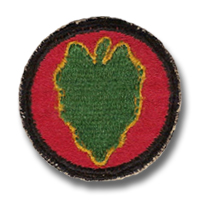
 1/21 was billeted at Warner Kaserne