| If you do
NOT see the Table of Contents frame to the left of this page, then
Click here to open 'USArmyGermany' frameset |
||||||||||||||||
|
17th
Signal Battalion |
||||||||||||||||
|
|
||||||||||||||||
|
||||||||||||||||
|
|
||||||||||||||||
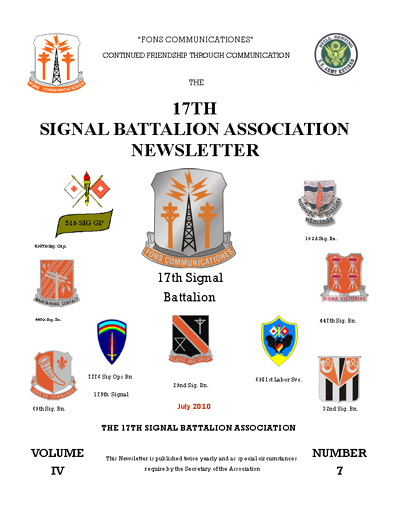 JULY 2010 issue now available through the 17th SIG BN ASSN |
||||||||||||||||
|
||||||||||||||||
| Battalion History | ||||||||||||||||
 17th Signal Battalion DUI
 |
||||||||||||||||
|
On
5 July 1950, the 17th Signal Operation Battalion was activated in
Germany (through a reorganization of the 7776
Signal Company in Karlsruhe [1][2]). The unit was allotted
to the Regular Army on 15 December 1950.
The Battalion was orginally located at Philips Ksn, Karlsruhe; in early 1951 (Feb?), the unit moved to Forstner Ksn (later known as Smiley Bks), also in Karlsruhe. In late 1951 (Nov?), the Battalion moved again, this time to D'Isley Ksn in Pirmasens. The Battalion was reorganized and redesignated on 20 October 1953 as the 17th Signal Battalion (Op). The 17th Sig Bn (Op) provided command operations signal support. In April 1956, the Battalion relocated from D'Isley Ksn, Pirmasens, to Neureut Ksn, Karlsruhe. The 17th Sig Bn was inactivated on 25 September 1965 in Germany. The unit was reactivated on 16 March 1981 in Germany and placed under the 22nd Signal Brigade at Höchst, Germany. The Battalion's mission was to provide Command and Control Communications to the V Corps Commanding General and subordinate units. In December of 1992 the Battalion moved to its current home on Larson Barracks in Kitzingen, Germany. |
||||||||||||||||
| [1] A STARS & STRIPES article in the paper's Dec 15, 1951 issue, confirms that the 17th Sig Op Bn was formed from the 7776th Sig Co. CO of the 7776th at the time of the reorganization/redesignation was Lt Col Alexander S. Turner. The 7776th was stationed at Zwingenberg in the 1940s and later moved (date unknown) to Karlsruhe. [2] Merv Norton, who served with the 17th Signal Operations Battalion, from June 1950 until his transfer to the 29th Signal Battalion in 1952, states that the 7776th was a Signal Service Battalion when it was redesignated as the 17th Signal Operations Battalion on July 5th, 1950. Merv commented in an email to me: In June 1950 there were two Signal Battalions in USAREUR, the 7774th and the 7776. The 7774th was in the Heidelberg area and they were responsible for the USAREUR fixed, garrison communication. The 7776 was at Phillips Barracks, Karlsruhe and was resposible for USAREUR communications in the field. The 7776 had four companies: HQ Co, Wire Co, Radio Co and Message Center Co with a strength of at least 800 men. There was no change in organization on 5 July 1950 when the 17th was activated. If anyone has more details about the 7776th Sig Svc Bn/17th Sig Ops Bn, please contact the webmaster. |
||||||||||||||||
|
|
||||||||||||||||
| (Source: Email from Bill Moore, 17th Sig Bn Assn - see Related Links for link to their web site) | ||||||||||||||||
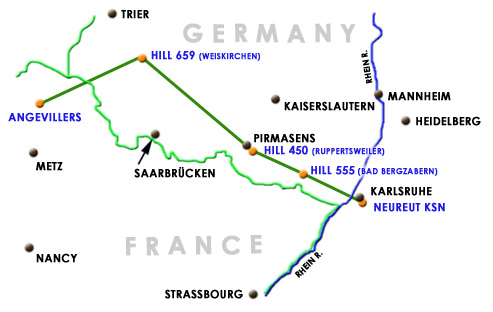
| The 17th Signal
Battalion operated radio sites at Neureut Kaserne. From there, the
link went to Hill
555 (we called it Tripple Nickle), then to Hill
450 outside of Münchweiler, then to Hill
659 outside of Neiderzerf (Weiskirchen), then on to Thionville
in France. I was at 659 as a private, E-3, and at Hill 450 as a Spc-4., as the VHF site chief. Hill 555 site chief was Sgt Bill Sterm; Hill 659 was Sgt. Jerry Smith. Jerry was killed in a car accident a few weeks ago. The Bn. Historian has a map that I gave him of all the radio sites that we had, also all sites when we went on fast set ups. We would go to a certain location and set up a fast as we could. When we made contact we would move to another location and do the same thing. As soon as we finished we went back to the post at Neureut. Bill Moore |
||||||||||||||||
 |
||||||||||||||||
|
|
||||||||||||||||
| (Source: Email from William Maples, 17th Sig Bn, 1956-58) | ||||||||||||||||
| I was assigned
to the 17th Signal Battalion in October 1956 and went TDY to the 102nd
about January 1957 and worked in a communications center in a bunker
outside Mannheim. I was TDY to the 102nd Signal Battalion Bn until
December 1958. We ran a relay station in the bunker at Feudenheim.
I was a teletype operator. We were a separate unit from the 102nd
Headquarters Co. and had a different mission; the 102nd only served
as a cover for us. We were attached to the 102nd but all they did
was provide housing and meals as they didn't know about our operation. Wwe were billeted at a number of different posts around there. We first were billeted at an old rundown airfield barracks between Mannheim and Seckenheim then moved to Hammond Barracks and from there to Spinelli Barracks and then onto the grounds of the bunker. We worked inside the bunker and "what a bunker it was" the walls were approx 4 ft thick and the roof was even thicker. Except for the entrance it was all underground and was self sustaining in case of an attack. There was a tower attached to the bunker that was made of concrete and also detached were radio towers. I didn't get to know any of the personel of the 102nd as we were not involved with them except for support. It has been so long ago that I can't even remember many of the names of the people I worked with from the 17th. The detachment I was in consisted of aprox. 30 men who were radio, crypto, teletype and telephone operators and repair men. |
||||||||||||||||
|
||||||||||||||||
| 1960 | ||||||||||||||||
| (Source: SIGNAL, January 1960) | ||||||||||||||||
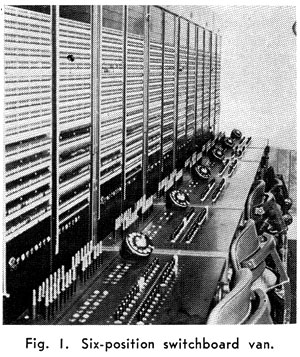
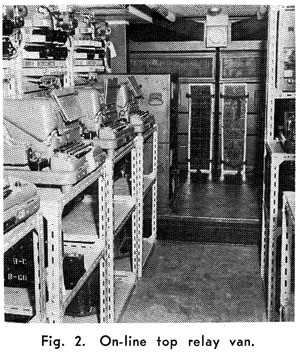
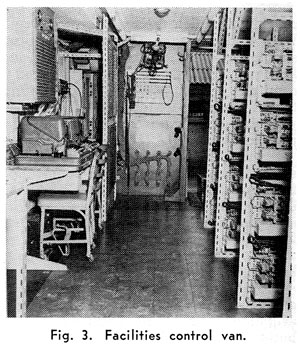
| CENTAG communications - flexible and mobile by COLONEL EMMETT R. REYNOLDS, USA . . . . Such was the situation encountered by the 17th Signal Battalion (Operation), the operations element of the 516th Signal Group which provides communications support for NATO's Central Army Group in Europe. CENTAG, of which the U.S. Seventh Army is the hard core, has wasted no time or motion in adapting itself to the changing concepts of military tactics. Exposed as it is to the possible immediate ground threat and its forward elements able to "see the whites of their eyes," CENTAG's success as a forward bulwark of NATO depends on its ability to fight a "conventional" battle or a nuclear one. Whether it will be called upon to fight, which type of battle and when are, to a degree, imponderables -- a circumstance which further emphasizes the need for readiness. The maintenance of such versatile readiness creates a constantly changing, irresistible influence on tactical communications concepts and requirements. Adaptability to this influence was seriously handicapped by the organizational structure of the 17th and the limited type of mobility which it possessed. The organization was characterized by centralization stemming from the "hardware" concept of organization. Discussion of the pros and cons of "hardware" versus "function" in the science of organization is not the objective here, so suffice it to point out that the centralized complexion of the battalion simply did not lend itself to the support concept under which the battalion was required to operate. The Wire and Message Center companies in particular were simply pools of men and equipment from which the battalion headquarters extracted various sized detachments to accomplish specific tasks. The battalion mission was such that it could be divided into distinct sub-missions but there was no subordinate element of the battalion which could perform any one of these sub-missions. Since no subordinate entity of the battalion could be considered the parent of a detachment, it was necessary to treat each detachment as a task force functioning under the direct control of the battalion staff. This mired the battalion staff down in detailed supervision, handicapping the performance of its planning and over-all supervisory functions, and obviously minimized the opportunity for delegation, the key to flexibility. Mobility was similarly handicapped by the type and quantity of equipment on hand. Enough transportation was available to render the battalion approximately 60% mobile but this depended on the type of mobility required. The mobility actually consisted of the possession of enough transportation to move about 60% of the equipment authorized on the Table of Organization and Equipment, Equipment Modification Lists and Special Letters of Authorization. Movement of even this much, however, meant maximum loading as cargo and entailed extensive unloading and installation in tentage or buildings prior to operation. The only exceptions to this were the components of the Mobile ComCenter (AN/MSC-5), mobile radioteletype equipments (AN/GRC-26) and power units. This type of mobility was completely inadequate to cope with the concept of command post mobility which was being supported. Communications simply could not move fast enough. In response to these circumstances, the 17th Signal Battalion undertook two comprehensive programs -- reorganization and communications mobility. Reorganization A reorganization study was initiated in October 1957 which culminated in the publication of a battalion general order in January 1958 effecting a complete realignment of resources and responsibilities within the battalion. The method of a battalion order was adopted for two reasons (1) time and flexibility and (2) the desired result could be achieved quickly and necessary refinements could be accomplished at the discretion of the battalion. Approval for this action, of course, had been secured from 516th Signal Group and United States Army Europe Signal Command. The rate at which these approvals were obtained was significantly increased by the interest taken by the Group Commander and the Commanding General of Signal Command (also the CENTAG Signal Officer) and the excellent cooperation of their staffs. The next two months went by very quickly as the battalion, in a frenzy of activity, sought to accomplish its reorganization amid preparations for a full-scale CENTAG Command Post Exercise scheduled for March. Despite the advantages of reorganizing under battalion orders, there were some restrictive qualifications in the authority granted -reorganization had to be achieved within the grade and MOS structure of existing Tables of Organization and Equipment and within existing authorized strength. However, the challenge was met and on 1 March the first elements departed for the maneuver, physically reorganized, though personnel and property records had been outdistanced. Benefits were immediately realized in the installation phase of the exercise and enthusiasm for the new structure grew daily. Quite contrary to their previous roles of fifth wheels, company commanders suddenly found major packages of responsibility in their hands, major sub-missions which they were expected to perform from start to finish, with their own resources. The battalion S-3 section was divorced from the details of circuit installation and operation, com-center manning and the myriad other tasks it previously had been burdened with. Now it devoted its energy to planning, coordination and supervision of the system. Platoon leaders remained with their platoons. Instead of becoming shift officers, reporting to the S-3 and supervising men from another company, they supervised their own troops under the command of their own company commanders. Noncommissioned officers established, manned and supervised the activities performed by the same personnel that they lived and worked with in garrison. No longer was responsibility for major functions split; they were delegated intact. Obviously this all didn't occur spontaneously; tradition isn't swept aside that easily. Nor would it be desirable to have a change of this magnitude and nature occur without some opposition. A degree of opposition was encountered at officer, NCO and technician level; opposition to the theory was slight, opposition to the techniques and finer points was more pronounced. Conviction came slowly to some and conviction was achieved in some instances only by refining the product. The result was a better product. Obviously, too, the structure which had been designed on paper and organized under pressure had deficiencies. Careful scrutiny and analysis, observations by those looking at the forest instead of the trees and the satisfaction of those with reservations provided an acute evaluation. Correction of the deficiencies and general improvement were undertaken immediately and the refined organization was committed to another CENTAG CPX in June. Any doubts which had remained must surely have evaporated by the end of the June exercise. The results were outstanding and recognition came from all cognizant observers. Final reorganization under authority of USAREUR came much more slowly. However, the time was filled with several additional field exercises, large and small, which further confirmed the validity of the reorganization and provided further refinement. On 5 February, 1959, the complete revision, including changes in the MOS and grade structure was effected by USAREUR general order. The only remaining restriction was the ceiling on its strength. New Organization As indicated previously, the underlying principle of the reorganization was delegation, the key to effective adaptation to the challenge of flexibility and mobility presented by the pentomic concept. The mission of the signal operations battalion can no longer be construed as static; its job is flexible, therefore its organization must be. Self-sufficiency at company level is an obvious requirement-self-sufficiency in terms of the means to accomplish an integrated portion of the battalion mission. This, in turn, permits commensurate application of the battalion staff to the planning, direction and coordination of the over-all, widespread effort. The new organization of the 17th Signal Battalion (Operation) comprised of the following elements: BN Hq, Hq and Hq Company, Companies A and B (Command Operations) and Company C (Field Operations) achieves this objective, as confirmed by extensive testing. Each of the Command Operations Companies (Companies A and B) has the capability in men and equipment to support an echelon of the headquarters served and the capability for providing displacement or "jump" support in the event an additional echelon is established. Applying this capability to the current tactical concept, it is apparent that two major echelons can be supported and a move of either forward or backward can also be supported. Or, if the concept requires it, an alternate location for either can be supported. Most important, the complete mission for either echelon can be assigned to a single company. Similarly, the long lines mission of the battalion is assigned to the Field Operations Company (Company C) which has the full long lines capability of the battalion. Thus, the over-all battalion mission has been subdivided into three distinct, coordinated sub-missions, each representing a complete functional responsibility. These integral elements of the over-all mission are then assigned to an integral element of the organization, a company. Each company possesses the means, in men and equipment, to accomplish its assignment. The capability for delegating recognized responsibility has been obtained. In addition to the elimination of divided responsibility for major functions, a number of other advantages have accrued. Company commanders now retain and exercise operational control of the members of their units and unit integrity is maintained. Platoon leaders now employ operationally the personnel which they, themselves, were responsible for training. Furthermore, they depend operationally on the equipment which they, not another platoon or company, have been maintaining. As previously indicated, it was formerly necessary to utilize some of these same platoon leaders as assistant operations officers under the control of the Battalion S-3, removing them from their primary interest, their platoons, assigning them responsibilities for which they had not been trained and subordinating them to two masters, the S-3 and the Company Commander. By virtue of assignment to the same company, elements such as the Radio Relay Platoon (VHF) and the Carrier Platoon live together and train together, under the same leadership, thereby improving their mutual relationship and the teamwork on which they must rely. The same is true of the other elements between which extraordinary cooperation is essential: Message Center and Teletype, Message Center and Cryptography, and Teletype and Cryptography. The necessity for team integration under pressure and in a short time is obviated. This disintegration of companies resulted in the battalion possessing the only integrity at a particular geographical location such as a command post, with the result that battalion-level housekeeping was required to be performed by a composite headquarters commandant organization under the control of another officer removed from his normal activity. This responsibility now resides with the company commander who is providing the communications support mission at that command post, a much more efficacious solution. It would be very difficult to secure agreement on a single factor or objective as contributing most to the improved capability of the battalion. Perhaps it is one not yet mentioned, a very important one esprit and unit pride, the competitive spirit and the morale that derive from unit integrity and daily association in training, operations and relaxation. Major functions have become company missions and personnel have oriented themselves on a unit objective, an important element of sound organization. Communications Mobility The 17th possessed a degree of mobility considerably less than that necessary to meet the requirements of present tactical concepts. Though authorized a large number of vehicles, some 300 self-propelled and 200 trailers, its mobile capability was primarily of a cargo nature. End items of communications equipment had to be transported as boxes, unloaded and installed in tents. This procedure consumed excessive time, limited flexibility and, despite the shockresistant capabilities of the equipment, created a real hazard to the "operability" of the items. A sizeable maintenance task could be counted upon. To overcome this handicap, a positive equipment-mounting program was initiated. Though not yet complete, the program has substantially improved the state of communications mobility. With the Mobile Signal Center (AN/MSC-5) as a point of departure, wire, radio and communications center facilities have been mounted in 6-ton cargo vans. The principal problems encountered were the design of a layout for maximum utilization of space, without handicap to operations; design and installation of power and communications circuitry which achieved maximum flexibility; mounting equipment in a manner consistent with the "roadability" of the vehicle; maintaining maximum shock-absorbing qualities in equipment mountings and achieving conditions of light, ventilation and heat which would be conducive to human efficiency. Furthermore, this had to be done utilizing tactical equipment, such construction materials and hardware as could be procured under conditions of great austerity and the battalion's own manpower. Examples of Changes We now have in the "VHF Quad" van, a four-terminal radio relay facility capable of functioning as a double relay. Spare equipment is included and can be patched into a system in minutes. In the switchboard van the three-position telephone switchboard is mounted at one end and the main distribution frame is mounted at the opposite end. This van provides an excellent displacement or alternate telephone switching facility. A six-position switchboard appears in Figure 1; its distribution frame is mounted in a separate van, complete with testing facilities. Included in the MSC-5 are two telephone and telegraph carrier equipment vans, each with a capability of four telephone and five telegraph carried systems, considerably less than the usual carrier requirement at a single command post. These now are supplemented with three cargo vans is each of which six telephone and four telegraph carrier systems have been mounted. |
||||||||||||||||
|
||||||||||||||||
|
||||||||||||||||
|
||||||||||||||||
| Summary These two programs -- reorganization and equipment-mounting -- have produced highly beneficial results in terms of consistency with the tactical concepts of the headquarters supported. Progress was sometimes slow; objectives were sometimes elusive or obscured by the means a few false turns were made. But the result is extremely gratifying, meeting the need for a more responsive capability, organizationally and in terms of equipment, a greater capability for meeting the challenge of command control under the conditions of nuclear warfare as compounded by the problem of immediacy attendant to the requirement of readiness in Europe. In its entirety, it is limited as a solution under other conditions. The equipment program can be characterized to some extent as field expediency and reflects local circumstances. Certain aspects would, however, apply equally well under other conditions. The rack-mounting of on-line cryptographic teletype terminations, for example, would be beneficial to any major tactical user of on-line teletype. The VHF Quad van is also applicable to other situations and is highly recommended as is the facilities control concept. Similar adaptability may well apply to other expedients. The basic principle of the reorganization, itself, is applicable to the lone range problem of communications support in the new army. Flexibility and responsiveness must be achieved if the communications mission is to be accomplished. Decentralization and delegation, properly controlled, will provide these qualities. The organization developed and field-tested by the 17th Signal Battalion, is sound and has been endorsed by all cognizant observers. Highly significant is the response it has generated among the officers and noncommissioned officers who have put it into effect-approval has been almost unanimous. By means of these two programs, the 17th has increased substantially its capability to place at the disposal of the Commanding General of CENTAG a means of exercising command control under conditions of extreme flexibility and mobility. |
||||||||||||||||
| 1964 | ||||||||||||||||
| (Source: Email from Robert C. Cline) | ||||||||||||||||
| I was stationed in Neureut Kaserne from 1964 to 1967. I was a Sgt E-5 (31M40) in Company B, of the 17th Signal Bn. We set up VHF stations. One radio site along the communications line was located on a hill outside of a small town. We linked from there to Heidleberg, which company B also serviced. There was a Church and a Gasthaus located at the top of this hill and a destroyed German pill box on the side of the hill. It was close enough to Karlsruhe for us to go there on weekends, to visit the gasthaus. ...or even during the week and come back to the Kaserne in Neureut. I am thinking it was Michaelsberg (mountain) at Untergrombach. There was a vineyard up there as well. I am wondering if someone remembers where this was. I can't remember all the places we set up relay stations. My first assignment as a private was in the town of Speyer. The second, was someplace in France. I was on the last US military exercise with the French. I think I was at a military base in Verdun, but I can't be sure. Too many years have passed. I did TDY in Heidelberg, Frankfurt at the I.G. Farben Building, Germersheim, and others. I really enjoyed my military service in Germany. It was a great experience. The 17th Sig BN webpage mentions that the 17th Sig Bn historian has a map of the hills used along the communications line. Is this map available for viewing? |
||||||||||||||||

|
||||||||||||||||
|
|
||||||||||||||||
| 175th Signal Company (Svc) | ||||||||||||||||
| (Source: Email from Ralph Studer) | ||||||||||||||||
| I was delighted to find your Web Site on the 516th (Sig Gp). I reported to Karlsruhe around 1 Nov 1956 fresh out of Basic Officers Class at Ft Monmouth. Was assigned to the 175th Sig Co (SVC) at the old Maginot Line camp at Angevillers through about 1 Jul 1958. Very interesting times. I lived in Luxembourg City, Luxembourg right across the street from the Russian Embassy personnel, who tried to bug my apartment. CO at the 175th was Capt. Jones upon my arrival, and later, Major Warren Rossman who had just been declared Persona Non Grata as one of our Eastern European Embassy "Military Advisors". As I say, very interesting times. The Exec at the 175th was Capt Ed Talley, a West Pointer, who now lives in Atlanta. I was last in Angevilles in the mid 1990's. The camp and the "hole" was pretty well boarded up and fallen on hard times. I remember it as almost the center of the universe in 1956-57-58 when it was not a matter of "If" the Russians were coming, but "When" the Russians were coming. Despite the tension, there were the good times. I made $220 a month, and lived like a King. Is there any such thing as a Group, Battalion, or Company veteran members organization or reunion? If so, I would like to know about it. I also recall the CO of the 29th was Capt. Charlie Brown when they came to Angevillers for some construction work for the "hole". |
||||||||||||||||
| (Source: Email from Frank Gochakowski) | ||||||||||||||||
I was stationed with the 175th Sig Co (Svc) at Angevillers, France, from 1958-1960. (We were a splinter group of the 17th Sig Bn.) In 1960 we left France for Feudenheim, Germany. (Some members of the 175th were sent to Karlsruhe, others to Heidelberg.) I stayed there until Sept 1960 before rotating back home.
I arrived at Camp D'Angevillers, France, home of the 175th Signal Company (Svc), on 10 Oct 1958. I was a teletype operator. There were four platoons:  1st Pltn - Headquarters2nd Pltn - Wire3rd Pltn - Radio4th Pltn - ComCenter 1st Pltn - Headquarters2nd Pltn - Wire3rd Pltn - Radio4th Pltn - ComCenterThe company consisted of about 110 US personnel and the same amount of French soldiers (?). We worked outside the camp down a small hill that led to the entrance of a large bunker (the ROCHONVILLERS Section of the Maginot Line Tunnels, the largest of the Maginot Line bunkers). We also had a couple of Air Force guys who worked at a radio site outside the camp and a few guys from the 102nd Sig Bn who also worked at a radio site. We spent our off time either at the EM Club on camp, the village of Angevillers or three cities in Luxembourg: Esch, Dudelange and Luxembourg City. The camp itself was opened in 1955 and closed in 1960, at the request of the French government. When the camp closed in 1960, some of us were sent to the 521st Signal Company in Feudenheim after a brief stay at Spinelli Barracks. The rest were sent to Karlsruhe and Heidelberg. There is a reliable story that the 175th was actually a fifth company of the 17th Signal Battalion. I am also a member of the 17th Signal Battalion Association. |
||||||||||||||||
| |
||||||||||||||||
| Related Links: | ||||||||||||||||
 New 17th Signal Battalion Association website (Former and current members of the 17th Signal Battalion and members from other associated signal units are welcome to join)
|
||||||||||||||||
 .
.

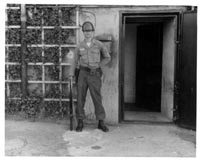
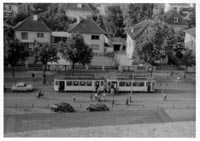
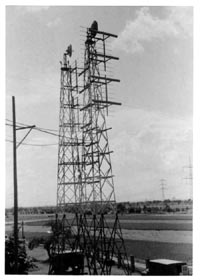
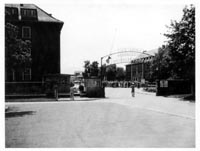
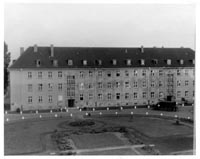

 - Mervin Norton recounts his experiences as a young soldier in Germany serving with the 17th Signal Battalion in Karlsruhe in the early 1950.