| If you do
NOT see the Table of Contents frame to the left of this page, then
Click here to open 'USArmyGermany' frameset |
|||||||||||||||||||||||||||||||||||||||||||||||||||||||||||||||||||||||||||||||||||||||||||||||||||||||||||||||||||||||
|
Transportation Corps Duty Trains |
|||||||||||||||||||||||||||||||||||||||||||||||||||||||||||||||||||||||||||||||||||||||||||||||||||||||||||||||||||||||
|
|
|||||||||||||||||||||||||||||||||||||||||||||||||||||||||||||||||||||||||||||||||||||||||||||||||||||||||||||||||||||||
|
|||||||||||||||||||||||||||||||||||||||||||||||||||||||||||||||||||||||||||||||||||||||||||||||||||||||||||||||||||||||
|
|
|||||||||||||||||||||||||||||||||||||||||||||||||||||||||||||||||||||||||||||||||||||||||||||||||||||||||||||||||||||||
| History of TC Duty Trains | |||||||||||||||||||||||||||||||||||||||||||||||||||||||||||||||||||||||||||||||||||||||||||||||||||||||||||||||||||||||
| 1949 | |||||||||||||||||||||||||||||||||||||||||||||||||||||||||||||||||||||||||||||||||||||||||||||||||||||||||||||||||||||||
| (Source: STARS & STRIPES, May 31, 1949) | |||||||||||||||||||||||||||||||||||||||||||||||||||||||||||||||||||||||||||||||||||||||||||||||||||||||||||||||||||||||
| US Resort Trains S&S article lists duty train schedules for two Bavarian recreational centers: Munich to Berchtesgaden  US Duty Train 17- leaves Munich at 10:12 am; arrives in Berchtesgaden at 1:22 pmUS Duty Train 716 - leaves Munich at 5:12 pm; arrives in Berchtesgaden at 8:11 pm US Duty Train 17- leaves Munich at 10:12 am; arrives in Berchtesgaden at 1:22 pmUS Duty Train 716 - leaves Munich at 5:12 pm; arrives in Berchtesgaden at 8:11 pmBerchtesgaden to Munich US Duty Train 18- leaves Berchtesgaden at 11:37 am; arrives in Munich at 3:04 pmUS Duty Train 808 - leaves Berchtesgaden at 8:40 pm; arrives in Munich at 11:45 pmFrankfurt to Garmisch US Duty Train 620 (1) - leaves Frankfurt at 10:34 pm; arrives in Garmisch at 9:59 am (next morning) Garmisch to Frankfurt US Duty Train 619 (1) - leaves Garmisch at 8:25 pm; arrives in Frankfurt at 6:46 am (next morning) Bremerhaven to Garmisch US Duty Train 616 (2) - leaves Bremerhaven at 7:57 pm; arrives in Garmisch at 6:14 pm (next evening) Garmisch to Bremerhaven US Duty Train 615 (2) - leaves Garmisch at 8:00 am; arrives in Bremerhaven at 6:11 am (next morning) (1) trains stop at: Laufach, Wuerzburg, Fuerth, Nuernberg, Augsburg, Maisach, Munich and Murnau. (2) trains stop at: Kassel, Wabern, Marburg, Giessen, Bad Nauheim, Friedberg, Frankfurt, Darmstadt, Heidelberg, Stuttgart, Goeppingen, Geislingen, Ulm, Augsburg, Munich and Murnau. |
|||||||||||||||||||||||||||||||||||||||||||||||||||||||||||||||||||||||||||||||||||||||||||||||||||||||||||||||||||||||
| (Source: STARS & STRIPES, July 11, 1949) | |||||||||||||||||||||||||||||||||||||||||||||||||||||||||||||||||||||||||||||||||||||||||||||||||||||||||||||||||||||||
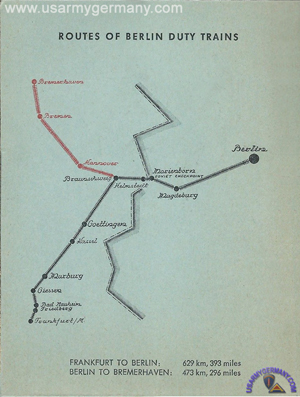
| Frankfurt-Berlin Duty Trains EUCOM has announced that regular passenger rail traffic between Frankurt and Berlin would start again on July 11 (however, operating on a new schedule). US Duty Train 609 (3) - leaves Frankfurt at 6:59 pm; arrives in Berlin(-Lichterfelde Westbahnhof) at 7:45 am (next morning) US Duty Train 610 (3) - leaves Berlin(-Lichterfelde Westbahnhof) at 7:30 pm; arrives at Bremerhaven-Lehe at 7:05 am (next morning) (3) trains stop at Friedberg, Bad Nauheim, Giessen, Marburg Sued, Marburg, Wabern, Kassel, Goettingen, Helmstedt. |
|||||||||||||||||||||||||||||||||||||||||||||||||||||||||||||||||||||||||||||||||||||||||||||||||||||||||||||||||||||||
| (Source: STARS & STRIPES, July 25, 1949) | |||||||||||||||||||||||||||||||||||||||||||||||||||||||||||||||||||||||||||||||||||||||||||||||||||||||||||||||||||||||
| Berlin-BPE Duty Trains EUCOM has announced that regular passenger rail traffic between Berlin and Bremerhaven has been resumed (after termination of the Berlin Bockade). US Duty Train 637 (4) - leaves Bremerhaven-Lehe at 8:50 pm; arrives in Berlin(-Lichterfelde Westbahnhof) at 6:53 am (next morning) US Duty Train 638 (4) - leaves Berlin(-Lichterfelde Westbahnhof) at 9:49 pm; arrives at Bremerhaven-Lehe at 7:27 am (next morning) (4) trains stop at Bremerhaven Hauptbahnhof, Bremen, Hannover, Braunschweig, Helmstedt. |
|||||||||||||||||||||||||||||||||||||||||||||||||||||||||||||||||||||||||||||||||||||||||||||||||||||||||||||||||||||||
| (Source: STARS & STRIPES, Dec 3, 1949) | |||||||||||||||||||||||||||||||||||||||||||||||||||||||||||||||||||||||||||||||||||||||||||||||||||||||||||||||||||||||
| US Resort Trains EUCOM Transportation Division announced that a new "weekend special train" would be operating from Frankfurt via Heidelberg and Munich to Garmisch every Friday. The train will leave Frankfurt (Hauptbahnhof) at 10:15 pm and arrive at Heidelberg at 11:45 pm. It will leave Heidelberg at 12:12 am (Saturday monring) and arrive in Munich at 5:15 am. The train will then leave Munich at 8:20 am and arrive at its final destination at 10:15 am. The special train will include four sleepers, two coaches and a baggage car. At Heidelberg, four sleepers and a coach will be added. At Munich, a sleeper will be taken off and two dining cars added. Every Sunday, the special train will return from Garmisch at 8:25 pm; arriving in Munich at 10:48 pm; arriving at Heidelberg at 4:22 am (Monday morning) and getting into Frankfurt at 6:45 am. US Duty Train 620 (Frankfurt to Garmisch) Duty Train 620 continues to operate on a regular schedule from Frankfurt via Munich to Garmisch. Friday through Sunday, the train leaves Frankfurt with five sleepers, two coaches, a baggage car and a mail car. At Munich, the train is revised to consist of two sleepers, a diner, two coaches and a baggage car. Monday through Thursday, the duty train carries seven sleepers, three coaches, a baggage car and a mail car. US Duty Train 619 (Garmisch to Frankfurt) Duty Train 619 continues to operate on a regular schedule from Garmisch to Frankfurt. Friday through Sunday, the dury train leaving Garmisch consists of two sleepers, two coaches, a diner and a baggage car. At Munich, three sleepers and a mail car are added. Monday through Thursday, the train carries seven sleepers, three coaches, a baggage car and a mail car. |
|||||||||||||||||||||||||||||||||||||||||||||||||||||||||||||||||||||||||||||||||||||||||||||||||||||||||||||||||||||||
| 1950 | |||||||||||||||||||||||||||||||||||||||||||||||||||||||||||||||||||||||||||||||||||||||||||||||||||||||||||||||||||||||
| (Source: HQ EUCOM Annual Narrative Report, 1 January - 31 December, 1949) | |||||||||||||||||||||||||||||||||||||||||||||||||||||||||||||||||||||||||||||||||||||||||||||||||||||||||||||||||||||||
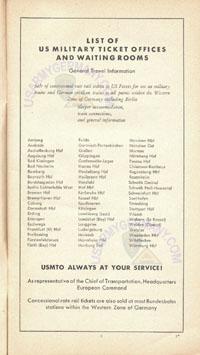
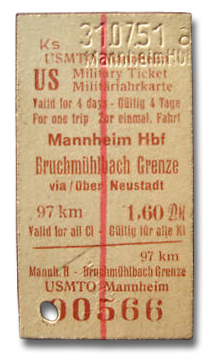
| Ticket Offices at German Railroad Stations On Oct 27, 1949 a project was approved by HQ EUCOM for the rehabilitation and improvement of waiting rooms used by Occupation personnel at German railroad stations. The project was financed from Military Payment Cerificates derived from the sale of train tickets to members of the US Occupying Forces. (All such funds obtained after June 1949 above operating expenses of the ticket offices were used in the project.) The completion date for improving facilities at 75 German stations was estimated as 31 December 1950. After that date another project would be initiated to rehabilitate additional stations. The purpose of the renovations was to improve station facilities, including waiting rooms, rest rooms, and ticket offices used by US personnel, to the extent necessary to make them comparable with similar facilities in the United States. |
|||||||||||||||||||||||||||||||||||||||||||||||||||||||||||||||||||||||||||||||||||||||||||||||||||||||||||||||||||||||
| (Source: STARS & STRIPES, April 7, 1950) | |||||||||||||||||||||||||||||||||||||||||||||||||||||||||||||||||||||||||||||||||||||||||||||||||||||||||||||||||||||||
| Weekend Special Trains This article states that the "weekend specials" reported on above are designated as US Duty Train 618 (Frankfurt to Garmisch) and US Duty Train 617 (Garmisch to Frankfurt). US Duty Train 618: leaves Frankfurt with three sleepers, a coach and a baggage car for Garmisch; and one sleeper for Berchtesgaden. Four additional sleepers (2 for Garmisch, 1 for Munich and 1 for Berchtesgaden) are added at Heidelberg. The two sleepers for Berchtesgaden are transferred to US Duty Train 19 at Munich. US Duty Train 617: the train leaving Garmisch has two sleepers for Garmisch to Heidelberg; one sleeper from Berchtesgaden to Heidelberg; three sleepers Garmisch to Frankfurt and one sleeper from Berchtesgaden to Frankfurt. One additional sleeper is added at Munich for Heidelberg. Duty Trains 618 and 617 do not carry diners. |
|||||||||||||||||||||||||||||||||||||||||||||||||||||||||||||||||||||||||||||||||||||||||||||||||||||||||||||||||||||||
| EUCOM Railway Guide | |||||||||||||||||||||||||||||||||||||||||||||||||||||||||||||||||||||||||||||||||||||||||||||||||||||||||||||||||||||||
| 1951 | |||||||||||||||||||||||||||||||||||||||||||||||||||||||||||||||||||||||||||||||||||||||||||||||||||||||||||||||||||||||
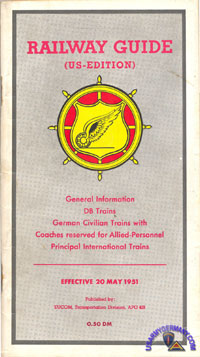
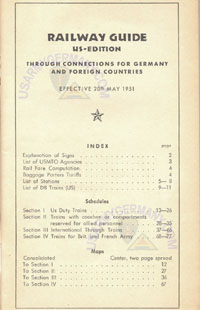
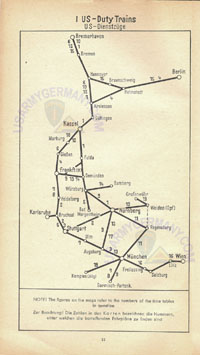
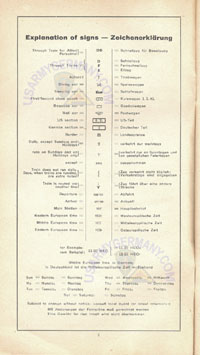
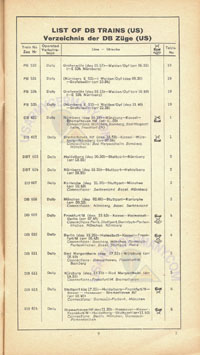
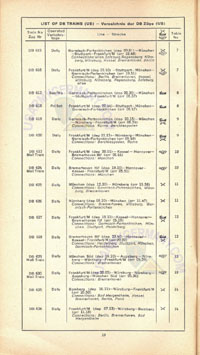
| (Source: Railway Guide (US-Edition), Effective 20 May 1951) US Duty Trains |
|||||||||||||||||||||||||||||||||||||||||||||||||||||||||||||||||||||||||||||||||||||||||||||||||||||||||||||||||||||||
|
|||||||||||||||||||||||||||||||||||||||||||||||||||||||||||||||||||||||||||||||||||||||||||||||||||||||||||||||||||||||
| (Source: STARS & STRIPES, July 27, 1951) | |||||||||||||||||||||||||||||||||||||||||||||||||||||||||||||||||||||||||||||||||||||||||||||||||||||||||||||||||||||||
| New Heidelberg-Rhine Military Post Train The DBT 603-604 train that has furnished daily service between Heidelberg and Nürnberg for US and Allied military and civlian personnel will make its last round trip on that route on July 30. Beginning on August 1, that train (designated as DBT 603-605) will start a new route between Heidelberg and the Rhine Military Post area. The new schedule for this train has been published by EUCOM: |
|||||||||||||||||||||||||||||||||||||||||||||||||||||||||||||||||||||||||||||||||||||||||||||||||||||||||||||||||||||||
|
|||||||||||||||||||||||||||||||||||||||||||||||||||||||||||||||||||||||||||||||||||||||||||||||||||||||||||||||||||||||
| Another item discussed in the S&S article, was the announcement that the Frankfurt-Garmisch leave train, DB 618, would leave Frankfurt 11 minutes earlier than before. at 8:33 pm, beginning on Aug 3. The train would stop at the Mannheim main station (Hauptbahnhof) at 8:44 pm for eight minutes. Otherwise, the schedule for DB 618 would remain the same as previously published. | |||||||||||||||||||||||||||||||||||||||||||||||||||||||||||||||||||||||||||||||||||||||||||||||||||||||||||||||||||||||
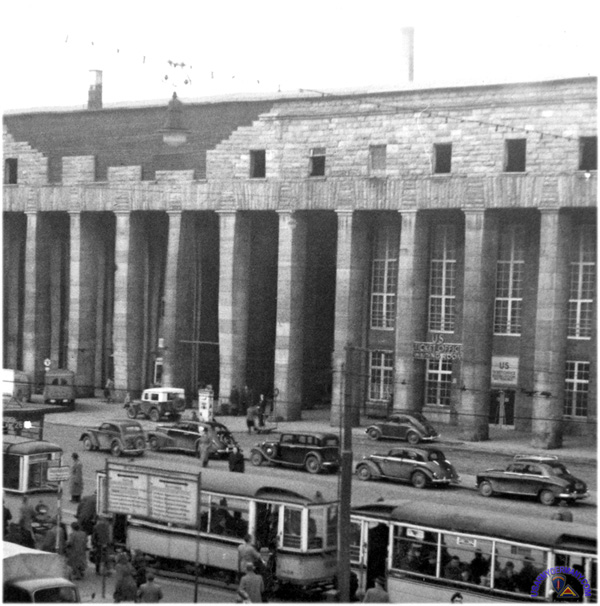 Military Ticket Office - Stuttgart Hauptbahnhof, 1952 |
|||||||||||||||||||||||||||||||||||||||||||||||||||||||||||||||||||||||||||||||||||||||||||||||||||||||||||||||||||||||
|
|||||||||||||||||||||||||||||||||||||||||||||||||||||||||||||||||||||||||||||||||||||||||||||||||||||||||||||||||||||||
| 1952 | |||||||||||||||||||||||||||||||||||||||||||||||||||||||||||||||||||||||||||||||||||||||||||||||||||||||||||||||||||||||
| (Source: STARS & STRIPES, July 13, 1952) | |||||||||||||||||||||||||||||||||||||||||||||||||||||||||||||||||||||||||||||||||||||||||||||||||||||||||||||||||||||||
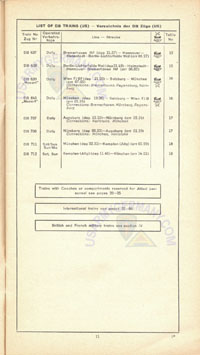
| Effective at midnight July 15 1952, the US Army released to the German railway authorities (Bundesbahn) all coaches and compartments reserved for US and Allied passengers on German trains and all but three US military trains. The three military trains that will be retained and continue to by operated by the US Army are the duty trains between Frankfurt and Berlin, Bremerhaven and Berlin, and Munich and Bremerhaven. Here is the daily schedule for the US military trains: |
|||||||||||||||||||||||||||||||||||||||||||||||||||||||||||||||||||||||||||||||||||||||||||||||||||||||||||||||||||||||
|
|||||||||||||||||||||||||||||||||||||||||||||||||||||||||||||||||||||||||||||||||||||||||||||||||||||||||||||||||||||||
| In addition to the three duty trains, the Army will operate two mail trains (Frankfurt-Bremerhaven and Frankfurt-Munich). The German Bundesbahn stated that they would provide adequate passenger service on the routes previously covered by the former military trains. The trains T80603 and T80604 between Heidelberg and Baumholder (by way of Bad Kreuznach) will continue to operate as civilian trains. The special trains DB 80619 and DB 80620, Frankfurt - Garmisch (by way of Munich), will be replaced by a German civilian train on the same time schedule. The DB 80649 and DB 80650 trains between Munich and Berchtesgaden will be continued as civilian trains. Also, trains between Nuernberg and Grafenwoehr will continue as civilian trains. It was announced that US military ticket offices would continue to assist duty and nonduty travelers in purchasing tickets for military and German civilian trains and in booking reservations for sleeping car accommodations. |
|||||||||||||||||||||||||||||||||||||||||||||||||||||||||||||||||||||||||||||||||||||||||||||||||||||||||||||||||||||||
 |
|||||||||||||||||||||||||||||||||||||||||||||||||||||||||||||||||||||||||||||||||||||||||||||||||||||||||||||||||||||||
| Frankfurt-Berlin Duty Train | |||||||||||||||||||||||||||||||||||||||||||||||||||||||||||||||||||||||||||||||||||||||||||||||||||||||||||||||||||||||
| Early 1950s | |||||||||||||||||||||||||||||||||||||||||||||||||||||||||||||||||||||||||||||||||||||||||||||||||||||||||||||||||||||||
|
|||||||||||||||||||||||||||||||||||||||||||||||||||||||||||||||||||||||||||||||||||||||||||||||||||||||||||||||||||||||
| 1955 | |||||||||||||||||||||||||||||||||||||||||||||||||||||||||||||||||||||||||||||||||||||||||||||||||||||||||||||||||||||||
| (Source: STARS & STRIPES, Dec 20, 1955) | |||||||||||||||||||||||||||||||||||||||||||||||||||||||||||||||||||||||||||||||||||||||||||||||||||||||||||||||||||||||
| USAREUR Transportation Division announced that, effective Jan 2 1956, the dining car service on the Frankfurt-Berlin duty train will be discontinued. A recent survey disclosed that only 24 percent of the passengers on these trains were utilizing the dining car facilities. Discontinuing the service will save the Army about $95,000 annually. The Frankfurt-Berlin journey typically takes 9 hours and 30 minutes. |
|||||||||||||||||||||||||||||||||||||||||||||||||||||||||||||||||||||||||||||||||||||||||||||||||||||||||||||||||||||||
| Early 1960s | |||||||||||||||||||||||||||||||||||||||||||||||||||||||||||||||||||||||||||||||||||||||||||||||||||||||||||||||||||||||
|
|||||||||||||||||||||||||||||||||||||||||||||||||||||||||||||||||||||||||||||||||||||||||||||||||||||||||||||||||||||||
| 1971 | |||||||||||||||||||||||||||||||||||||||||||||||||||||||||||||||||||||||||||||||||||||||||||||||||||||||||||||||||||||||
| (Source: STARS & STRIPES, Oct 31, 1971) | |||||||||||||||||||||||||||||||||||||||||||||||||||||||||||||||||||||||||||||||||||||||||||||||||||||||||||||||||||||||
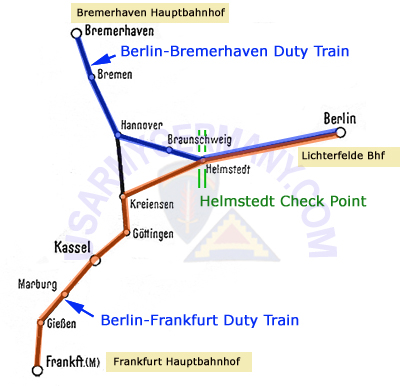
The Berlin-Frankfurt duty train is one of two US Army trains that goes to Berlin on a daily basis to meet the needs of the US garrison located there. The other train is the Berlin-Bremerhaven duty train that originates in Bremerhaven and carries a large amount of freight which has arrived there by ship. Both trains are operated by the Transportation Division, Berlin Brigade. Potsdam, East Germany -- is the entry point into the East Zone coming from West Berlin. The same ritual described under Marienborn is performed at this stop when traveling westbound towards Frankfurt. |
|||||||||||||||||||||||||||||||||||||||||||||||||||||||||||||||||||||||||||||||||||||||||||||||||||||||||||||||||||||||
|
|||||||||||||||||||||||||||||||||||||||||||||||||||||||||||||||||||||||||||||||||||||||||||||||||||||||||||||||||||||||
|
|
|||||||||||||||||||||||||||||||||||||||||||||||||||||||||||||||||||||||||||||||||||||||||||||||||||||||||||||||||||||||
| Frankfurt-Bremerhaven Duty Train | |||||||||||||||||||||||||||||||||||||||||||||||||||||||||||||||||||||||||||||||||||||||||||||||||||||||||||||||||||||||
|
|||||||||||||||||||||||||||||||||||||||||||||||||||||||||||||||||||||||||||||||||||||||||||||||||||||||||||||||||||||||
| Heidelberg-Paris Duty Train | |||||||||||||||||||||||||||||||||||||||||||||||||||||||||||||||||||||||||||||||||||||||||||||||||||||||||||||||||||||||
| 1967 | |||||||||||||||||||||||||||||||||||||||||||||||||||||||||||||||||||||||||||||||||||||||||||||||||||||||||||||||||||||||
| (Source: STARS & STRIPES, March 28, 1967) | |||||||||||||||||||||||||||||||||||||||||||||||||||||||||||||||||||||||||||||||||||||||||||||||||||||||||||||||||||||||
| HQ Communications Zone announced that the US military duty train service between Heidelberg and Paris will end on March 28 1967. The final trip from Heidelberg to Paris was scheduled for March 27; the last trip from Paris to Heidelberg is scheduled for today. |
|||||||||||||||||||||||||||||||||||||||||||||||||||||||||||||||||||||||||||||||||||||||||||||||||||||||||||||||||||||||
|
|||||||||||||||||||||||||||||||||||||||||||||||||||||||||||||||||||||||||||||||||||||||||||||||||||||||||||||||||||||||
| The Mozart Duty Train | |||||||||||||||||||||||||||||||||||||||||||||||||||||||||||||||||||||||||||||||||||||||||||||||||||||||||||||||||||||||
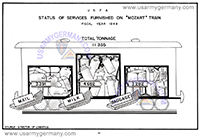
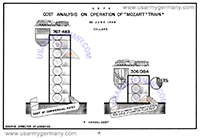
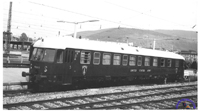
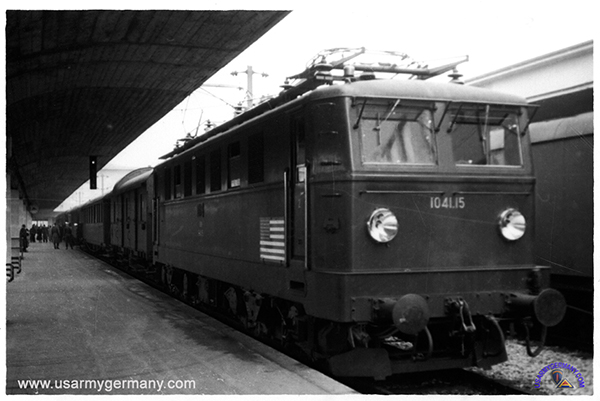 MOZART duty train at an unidentified train station, early 1950s (Webmaster's collection) (The picture with locomotive 1041.15 was taken at Vienna West Station (Wien Westbahnhof) and was probably taken in 1953 or 1954. The locomotive looks almost new and 1041.15 entered service September 11 1953. Today, it is in a railroad museum. (Martin Baumann)) |
|||||||||||||||||||||||||||||||||||||||||||||||||||||||||||||||||||||||||||||||||||||||||||||||||||||||||||||||||||||||
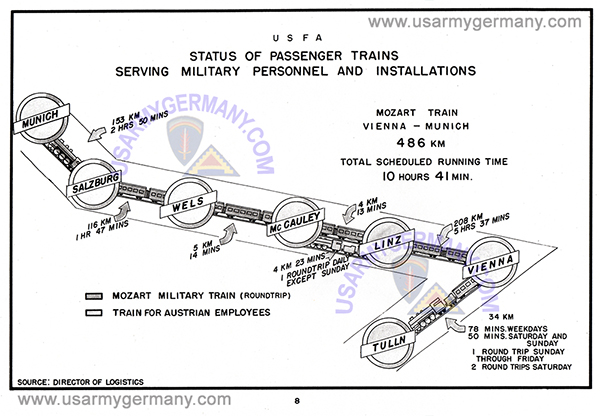 Route of MOZART Duty Train, 1949 |
|||||||||||||||||||||||||||||||||||||||||||||||||||||||||||||||||||||||||||||||||||||||||||||||||||||||||||||||||||||||
|
|||||||||||||||||||||||||||||||||||||||||||||||||||||||||||||||||||||||||||||||||||||||||||||||||||||||||||||||||||||||
| 1948 | |||||||||||||||||||||||||||||||||||||||||||||||||||||||||||||||||||||||||||||||||||||||||||||||||||||||||||||||||||||||
| (Source: Information Bulletin, Dec 1948) | |||||||||||||||||||||||||||||||||||||||||||||||||||||||||||||||||||||||||||||||||||||||||||||||||||||||||||||||||||||||
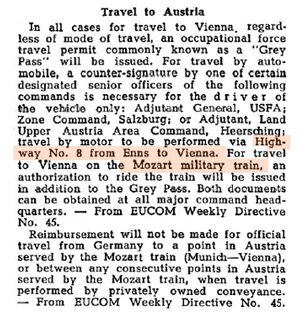 Travel documents required for Mozart train Travel documents required for Mozart train |
|||||||||||||||||||||||||||||||||||||||||||||||||||||||||||||||||||||||||||||||||||||||||||||||||||||||||||||||||||||||
| 1950 | |||||||||||||||||||||||||||||||||||||||||||||||||||||||||||||||||||||||||||||||||||||||||||||||||||||||||||||||||||||||
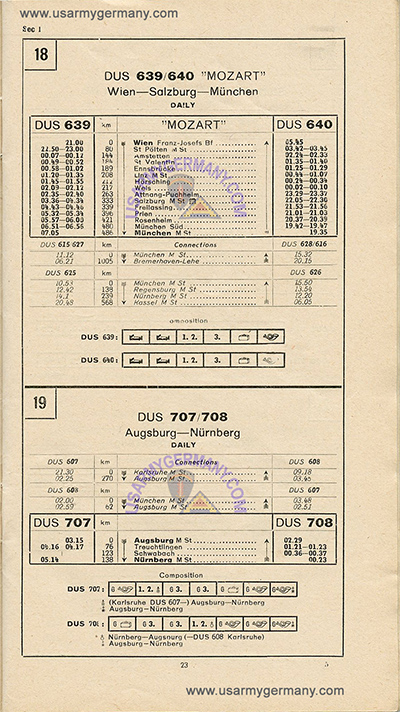 Time Table for Mozart Military Train (Webmaster's collection) (Click on image to view higher resolution of the time table) |
|||||||||||||||||||||||||||||||||||||||||||||||||||||||||||||||||||||||||||||||||||||||||||||||||||||||||||||||||||||||
 600.jpg) Germany leg of the route of the Mozart Military Duty Train (Webmaster) (Click on image to view higher resolution of map) |
|||||||||||||||||||||||||||||||||||||||||||||||||||||||||||||||||||||||||||||||||||||||||||||||||||||||||||||||||||||||
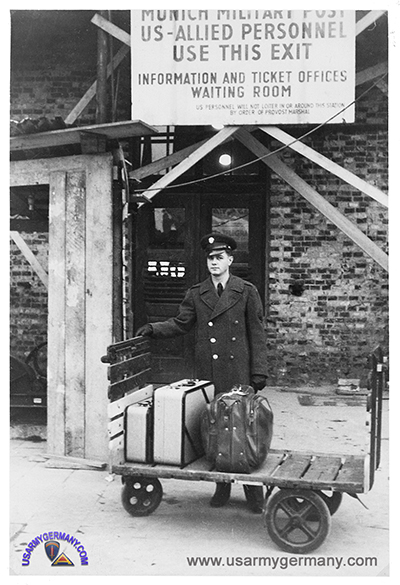 Ralph Dulin in front of entrance to the Munich RTO, 1950 |
|||||||||||||||||||||||||||||||||||||||||||||||||||||||||||||||||||||||||||||||||||||||||||||||||||||||||||||||||||||||
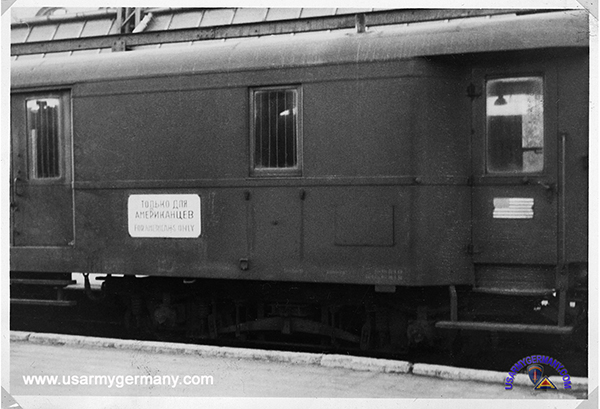 Baggage car of the Mozart at the Munich train station (Nancy Werner Dubin) |
|||||||||||||||||||||||||||||||||||||||||||||||||||||||||||||||||||||||||||||||||||||||||||||||||||||||||||||||||||||||
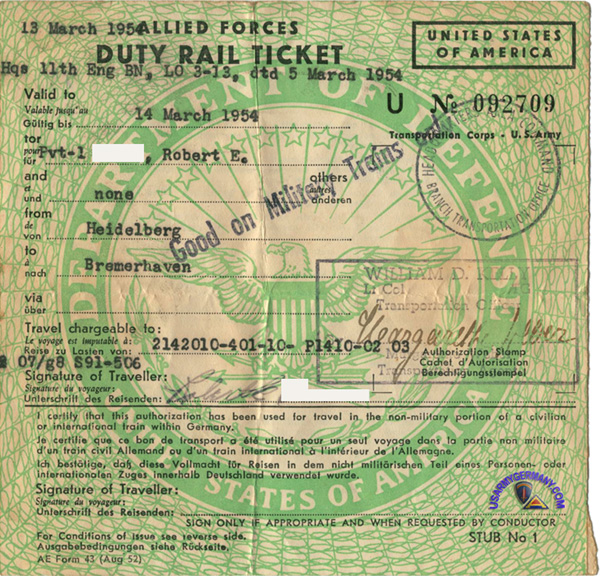
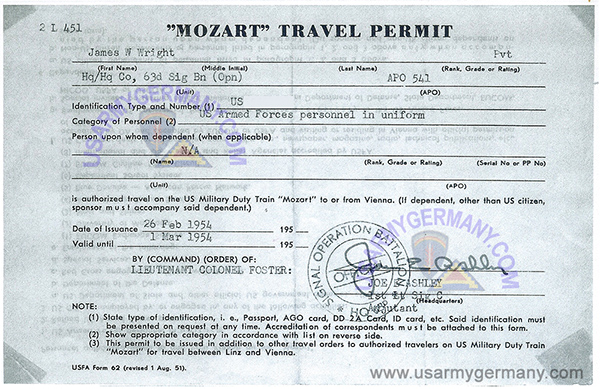 Mozart Travel Permit from 1954 (James Wright) (Click on image to view higher resolution of front and back) |
|||||||||||||||||||||||||||||||||||||||||||||||||||||||||||||||||||||||||||||||||||||||||||||||||||||||||||||||||||||||
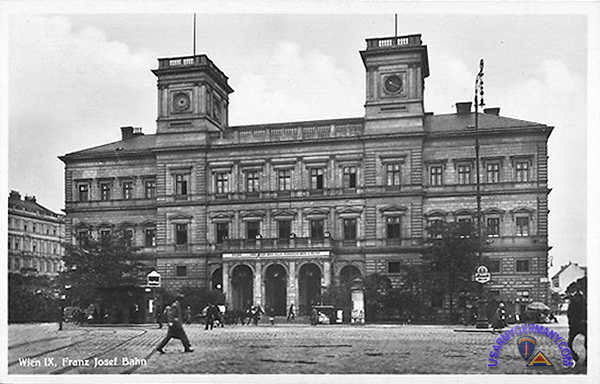 Franz Josef Train Station, US Sector, Vienna (pre-WWII postcard) |
|||||||||||||||||||||||||||||||||||||||||||||||||||||||||||||||||||||||||||||||||||||||||||||||||||||||||||||||||||||||
| 1950 | |||||||||||||||||||||||||||||||||||||||||||||||||||||||||||||||||||||||||||||||||||||||||||||||||||||||||||||||||||||||
| (Source: STARS & STRIPES, April 9, 1950) | |||||||||||||||||||||||||||||||||||||||||||||||||||||||||||||||||||||||||||||||||||||||||||||||||||||||||||||||||||||||
| Food Service on Mozart Run The recently inaugurated food service on the Mozart train has "proved extremely satisfactory," USFA Exchange officials reported at the end of the first week of operation. The new service provides sandwiches, hot coffee, Coca-Cola and ice cold fruit juices for occupation personnel, who ride the Mozart between Vienna and Munich. Assorted candies, cookies and nuts are also sold. |
|||||||||||||||||||||||||||||||||||||||||||||||||||||||||||||||||||||||||||||||||||||||||||||||||||||||||||||||||||||||
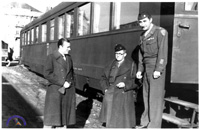
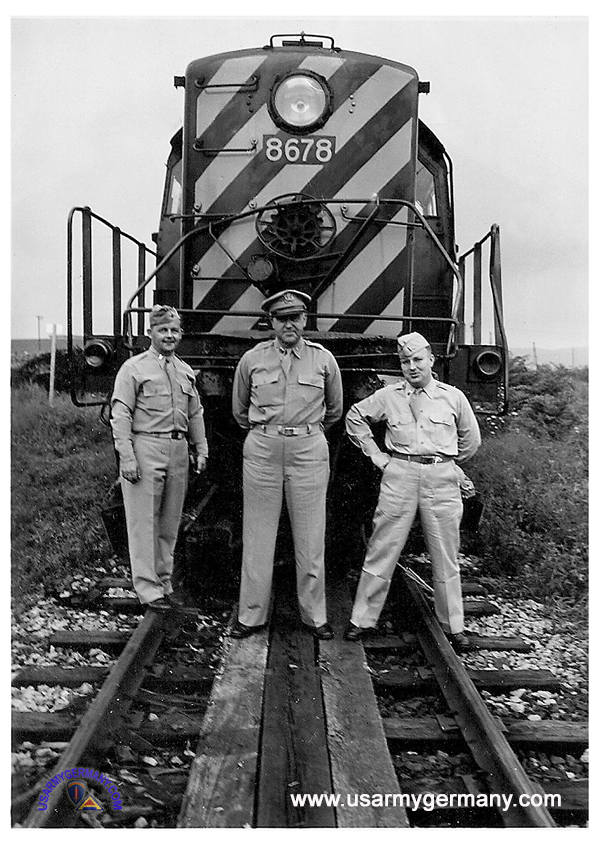 The train crew of THE MOZART, around 1950 (Frank Gallagher) Could this be a WWII-era ALCO-GE RSD-1 diesel locomotive? |
|||||||||||||||||||||||||||||||||||||||||||||||||||||||||||||||||||||||||||||||||||||||||||||||||||||||||||||||||||||||
| (Source: Email from Frank Gallagher) | |||||||||||||||||||||||||||||||||||||||||||||||||||||||||||||||||||||||||||||||||||||||||||||||||||||||||||||||||||||||
| Attached is a picture of the Army train crew with the train that did the Mozart run ... Salzburg to Vienna, circa 1950-51. 1st LT. Thomas J. Gallagher Jr is on the right.. the other two are unknown. |
|||||||||||||||||||||||||||||||||||||||||||||||||||||||||||||||||||||||||||||||||||||||||||||||||||||||||||||||||||||||
| 1952 | |||||||||||||||||||||||||||||||||||||||||||||||||||||||||||||||||||||||||||||||||||||||||||||||||||||||||||||||||||||||
| (Source: STARS & STRIPES, Feb 3, 1952) | |||||||||||||||||||||||||||||||||||||||||||||||||||||||||||||||||||||||||||||||||||||||||||||||||||||||||||||||||||||||
| Effective February 2, The Mozart military train (a sleeper train), operated by US Forces, Austria, is now in service only between Salzburg and Vienna. The Munich - Salzburg leg has been discontinued. A EUCOM coach train (DB 640) will now carry passengers between Munich and Salzburg. It is scheduled to make the connection with The Mozart, leaving Munich at 6:40 pm and arriving at Salzburg at 9:18 pm. The Mozart leaves Salzburg at 10:40 pm for its run to Vienna (Franz Josef Train Station). On the return leg, The Mozart leaves Vienna at 8:00 pm, arriving at Salzburg at 2:45 am. The EUCOM coach train (DB 639) departs Salzburg at 7:26 am and arrives in Munich at 10:02 am. (Connections can be made at Munich with DB 615 for Frankfurt or DB 625 for Nurnberg.) |
|||||||||||||||||||||||||||||||||||||||||||||||||||||||||||||||||||||||||||||||||||||||||||||||||||||||||||||||||||||||
| (Source: STARS & STRIPES, July 18, 1952) | |||||||||||||||||||||||||||||||||||||||||||||||||||||||||||||||||||||||||||||||||||||||||||||||||||||||||||||||||||||||
| EUCOM military personnel now may wear civilian clothing when off duty in Austria except when traveling on the "Mozart" train, EUCOM Hq announced today.
They still must wear uniforms to cross the Austrian border when using military orders rather than a passport. |
|||||||||||||||||||||||||||||||||||||||||||||||||||||||||||||||||||||||||||||||||||||||||||||||||||||||||||||||||||||||
| 1953 | |||||||||||||||||||||||||||||||||||||||||||||||||||||||||||||||||||||||||||||||||||||||||||||||||||||||||||||||||||||||
| (Source: STARS & STRIPES, May 15, 1953) | |||||||||||||||||||||||||||||||||||||||||||||||||||||||||||||||||||||||||||||||||||||||||||||||||||||||||||||||||||||||
| USFA announced a change to the schedule of The Mozart military train that takes effect on May 17, 1953. The revised daily schedule looks like this: 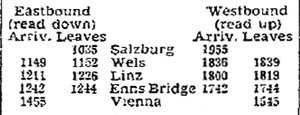 With the new schedule, travel is reduced by 70 minutes. Only three intermediate stops (Wels, Linz and the Russian border point at the Enns River Bridge) will be made on the 188-mile route. The military sleeping car arriving in the Salzburg train station from Leghorn (Livorno, Italy) at 9:50 am connects with the eastbound Mozart. Along with the revised schedule, another change to the run to Vienna is that the military train will arrive at and depart from the new West Bahnhof in Vienna. Previously, The Mozart used the Franz Joseph Bahnhof. A military waiting room and a baggage room have been established at the new train station. |
|||||||||||||||||||||||||||||||||||||||||||||||||||||||||||||||||||||||||||||||||||||||||||||||||||||||||||||||||||||||
| 1954 | |||||||||||||||||||||||||||||||||||||||||||||||||||||||||||||||||||||||||||||||||||||||||||||||||||||||||||||||||||||||
| (Source: STARS & STRIPES, Feb 18, 1954) | |||||||||||||||||||||||||||||||||||||||||||||||||||||||||||||||||||||||||||||||||||||||||||||||||||||||||||||||||||||||
| The Mozart is a military train operated by the US Army Transportation Corps that travels 109 miles from Salzburg to Vienna in Austria. The train is used by US military personnel and dependents only. On each side of the electric engine is a slab of metal more than two feet high that is brightly painted with the US flag. Each of the doors on the coaches is adorned with a smaller US flag and the words "For Americans Only." The sides of the coaches bear an oversized patch of US Forces in Austria (USFA) as well as long red, white and blue stripes. The Mozart leaves Salzburg at 10:35 am. It stops at Wels and Linz before entering into the Soviet-controlled territory for the final leg to Vienna. The train arrives in Vienna at 2:45 pm. It starts its return trip to Salzburg at 3:50 pm. (Until June, the train used to also stop at a Soviet checkpoint at the Enns River bridge.) There are usually six MPs from an MP company (202nd?) who serve on board as train guards. Travelers using the train must have a special Mozart permit as well as the occupational forces travel permit (gray pass). The MP train commander keeps the gray passes for each passenger during the trip to have them available in case the Soviets do a spot check. In earlier days, The Mozart was a sealed train making a night sleeper run from Munich to Vienna. The first trip Munich-Vienna took place in Sept 1945. The night trips ended in 1952. |
|||||||||||||||||||||||||||||||||||||||||||||||||||||||||||||||||||||||||||||||||||||||||||||||||||||||||||||||||||||||
|
|||||||||||||||||||||||||||||||||||||||||||||||||||||||||||||||||||||||||||||||||||||||||||||||||||||||||||||||||||||||
| Command Diesels (a.k.a. Mobile Command Post) | |||||||||||||||||||||||||||||||||||||||||||||||||||||||||||||||||||||||||||||||||||||||||||||||||||||||||||||||||||||||
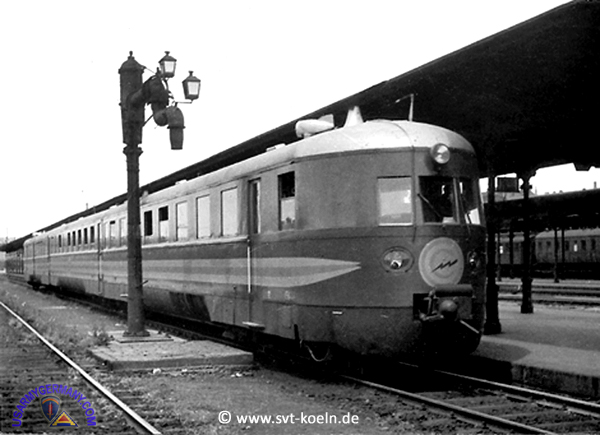 The train of the Commanding General, US Constabulary, at the Lehe train station (SVT-Koeln.de) |
|||||||||||||||||||||||||||||||||||||||||||||||||||||||||||||||||||||||||||||||||||||||||||||||||||||||||||||||||||||||
| Click here to see several interesting historic photos of command trains from the 1940s on the svt-koeln.de website (German). (Scroll down to see all the pics - click on thumbnails for larger images.) | |||||||||||||||||||||||||||||||||||||||||||||||||||||||||||||||||||||||||||||||||||||||||||||||||||||||||||||||||||||||
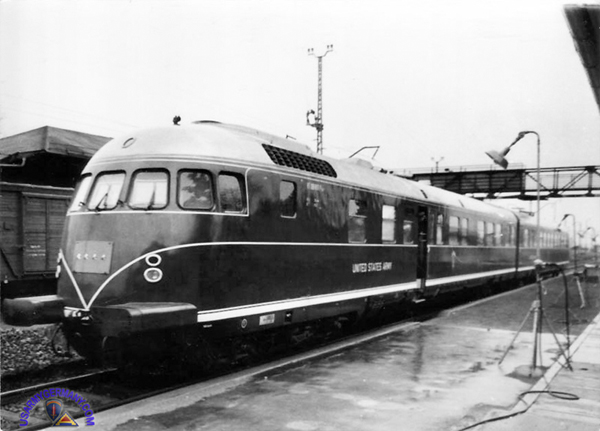 Special train used by the Commander in Chief, USAREUR in the late 1950s (Walter Elkins) Anyone have additional details that they would like to share with us? |
|||||||||||||||||||||||||||||||||||||||||||||||||||||||||||||||||||||||||||||||||||||||||||||||||||||||||||||||||||||||
The Commander's Train |
|||||||||||||||||||||||||||||||||||||||||||||||||||||||||||||||||||||||||||||||||||||||||||||||||||||||||||||||||||||||
(Source: author's collection) |
|||||||||||||||||||||||||||||||||||||||||||||||||||||||||||||||||||||||||||||||||||||||||||||||||||||||||||||||||||||||
|
|||||||||||||||||||||||||||||||||||||||||||||||||||||||||||||||||||||||||||||||||||||||||||||||||||||||||||||||||||||||
RESPONSE TO INQUIRY (Source: Email from Ralf M. Dittmer, Germany) |
|||||||||||||||||||||||||||||||||||||||||||||||||||||||||||||||||||||||||||||||||||||||||||||||||||||||||||||||||||||||
The Commanders train was a German manufactured diesel railcar of the series VT08. The US Army obtained six trains of the series in 1956. These trains were operated by the German Federal Railway (Deutsche Bundesbahn) but were used exclusively for the US Army in Germay. Here are the serial number of the trains: VT US-Army VT08 801 608 801 VT08 802 608 802 VT08 803 608 803 VT08 804 608 804 VT08 805 608 805 VT08 806 608 806 VS US-Army VS08 801 908 801 VS08 802 908 802 VS08 803 908 803 VS08 804 908 804 VS08 805 908 805 VS08 806 908 806 LEGEND: VT = Motorcar VS = Car without engine A full train contains one VT and one VS. The numbers 801 and 802 were salon cars used for high-ranking officers of the Army, while the others were used as hospital trains. All trains, except number 801, had been withdrawn from use by the the year 1973. Train 801 was modified during the year 1988, but it was withdrawn from use in the year 1991 after the German reunion. I don’t know what happened to the trains, but I think they have all been scraped. The German Federal Railways operated trains of this series as “Trans Europe Express” until the year 1969. After this the trains were operated only in Germay until the year 1985. Only three of trains are still there today and they are used for special rides. The train was manufactured by the following companies: Bundesbahnzentralamt München (Federal German Railways) MAN, Nürnberg (Engine) AEG, Berlin (Electrical equipment) Hagenuk, Kiel (Heater) Voith, Heidesheim (Hydrodynamic Geartrain) Some other companies were also involved in the development of the train. I think that the US-Army trains were stationed in the depot (“Bahnbetriebswerk (Bw)”) at Frankfurt/M-Griesheim. The heavy overhaul was done at the “Ausbesserunswerk” Nürnberg. |
|||||||||||||||||||||||||||||||||||||||||||||||||||||||||||||||||||||||||||||||||||||||||||||||||||||||||||||||||||||||
|
|||||||||||||||||||||||||||||||||||||||||||||||||||||||||||||||||||||||||||||||||||||||||||||||||||||||||||||||||||||||
(Source: Email from Jean-Marie Ottelé, Luxembourg) |
|||||||||||||||||||||||||||||||||||||||||||||||||||||||||||||||||||||||||||||||||||||||||||||||||||||||||||||||||||||||
Please find on our site (rail.lu) some pictures of US Diesel Trains in Luxembourg: http://www.rail.lu/materiel/USarmyVT6338032.html http://www.rail.lu/materiel/USarmyVT608801.html |
|||||||||||||||||||||||||||||||||||||||||||||||||||||||||||||||||||||||||||||||||||||||||||||||||||||||||||||||||||||||
(Source: Email from Michael Arndt, Heidelberg, Germany) |
|||||||||||||||||||||||||||||||||||||||||||||||||||||||||||||||||||||||||||||||||||||||||||||||||||||||||||||||||||||||
While looking for more information about the US-Army Train VT 608 801, the "General", I visited your website. I would like to add some additional details on my website - please review my special report (Sonderbeitrag) on the "General." I have the latest information on the last of the six trains.
URL: http://www.heidelberger-herz.com/ Special Report - the "General" |
|||||||||||||||||||||||||||||||||||||||||||||||||||||||||||||||||||||||||||||||||||||||||||||||||||||||||||||||||||||||
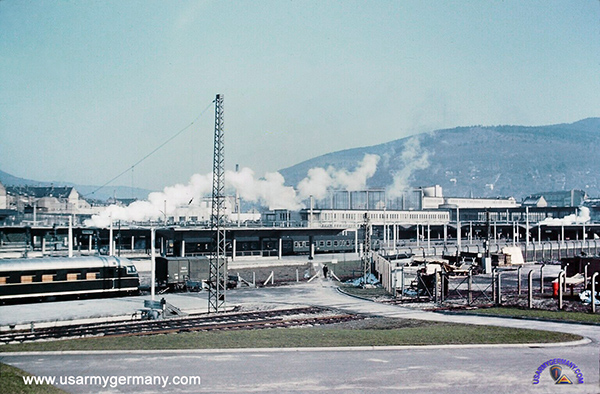 The CINC's diesel (on the left) parked on a special siding at the Heidelberg Hauptbahnhof |
|||||||||||||||||||||||||||||||||||||||||||||||||||||||||||||||||||||||||||||||||||||||||||||||||||||||||||||||||||||||
(Source: Email from Tony Diaz) |
|||||||||||||||||||||||||||||||||||||||||||||||||||||||||||||||||||||||||||||||||||||||||||||||||||||||||||||||||||||||
I am a former USAREUR soldier. I was stationed in Heidelberg from day 1 of my Permanent Party assignment until July of 1989. I was assigned to the 181st Signal Company, 43rd Signal Battalion, that was right there in front of the former Campbell Barracks. I was wondering if you had any history on the CINC’s train. I served as the Radio Operator aboard that train from December 1983 until about a few months before my ETS. I have searched all over for a little more than just this photo, that I marked myself to explain to my friends and family how my work environment was. I understand that because all our trips were classified as “Secret” we couldn’t take photos of anyone aboard or even tell anyone of our schedule. Buy maybe you guys, the historians, have perhaps some declassified photos or stories of the trips the CINC made. The European Train enthusiasts were always at the train stations waiting for an oldie or a special train to come by for them to photograph. The Conductors, who were German, told me that people could go to the train station and ask the Controllers and they would tell them at what time the train would pass through, they wouldn’t say which one it was though, to keep some sort of secrecy. But many times I would see people on the side of the tracks taking photos of the train and us as we rode by, as if they were expecting us; which would always make me nervous. Most of my trips were with Ret General Glen K. Otis, who may Rest In Peace. But I did have trips with General Galvin (NATO Commander), Ambassador Burns and his family, a few Senators visiting Germany and even some foreign Generals. Believe me, I have couple of stories that if they were logged in the SGS Offices’ travel logs, I can expand a little on the details, because the train (2-car diesel) we called the Mobile Command Post, or MCP for short, would never leave the Depot with the “Old Man” aboard without me. There were many many trips to Berlin, Garmisch, Berchtesgaden, Grafenwoehr and others that I provided High Frequency Radio and Teletype and Telephone services on. |
|||||||||||||||||||||||||||||||||||||||||||||||||||||||||||||||||||||||||||||||||||||||||||||||||||||||||||||||||||||||
|
|||||||||||||||||||||||||||||||||||||||||||||||||||||||||||||||||||||||||||||||||||||||||||||||||||||||||||||||||||||||
| Related Links: | |||||||||||||||||||||||||||||||||||||||||||||||||||||||||||||||||||||||||||||||||||||||||||||||||||||||||||||||||||||||
|
|||||||||||||||||||||||||||||||||||||||||||||||||||||||||||||||||||||||||||||||||||||||||||||||||||||||||||||||||||||||
 .
.