| If you do
NOT see the Table of Contents frame to the left of this page, then Click here to open 'USArmyGermany' frameset |
||||||||||||||||||||||||||||||||||||||||||
41st Field Artillery Brigade |
||||||||||||||||||||||||||||||||||||||||||
|
|
||||||||||||||||||||||||||||||||||||||||||
|
||||||||||||||||||||||||||||||||||||||||||
|
|
||||||||||||||||||||||||||||||||||||||||||
| 41st FA Group / Brigade History | ||||||||||||||||||||||||||||||||||||||||||
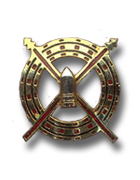 41st Field Artillery
Group DUI
41st Field Artillery
Group DUI |
||||||||||||||||||||||||||||||||||||||||||
|
On
15 March 1972, the 41st Field Artillery Group was reactivated in
Babenhausen, Germany, replacing the concurrently inactivated 36th
FA Group.
1st Bn, 32d FA (LANCE), 41st FA Group, V Corps Artillery, Hanau, Germany. 2nd Bn, 75th FA, 41st FA Bde The unit was re-designated as the 41st Field Artillery Brigade on 16 June 1982 (1) and was assigned to V Corps Artillery. The shoulder sleeve insignia was authorized on 24 Nov 1981. On 1 September 1986, the 41st Field Artillery was authorized the distinctive unit designation "RAILGUNNERS" in honor of its origin in the Railway Coast Artillery. (1) Source: Headquarters and Headquarters Battery, 41st Fires Brigade Lineage (Lineage and Honors Page, Center of Military History website, accessed June 26, 2015) CORRECTION (Source: Email from Brian Cranny) I beg to differ with Mr. Forrest (email below) on the date the 41st changed from a group to a brigade. I was there and didn't arrive in Babenhausen until January 1982. I was there through December 1983, and remember switching from the old V Corps patch to the new 41st FA Brigade patch. Both the 41st and 42nd FA groups changed to brigades during my tenure there, and the 2/5 FA was deactivated and those of us on site became members of the 4/77 FA. I was in HHB and worked in S-2 and S-3 as well as batallion fire direction with the TacFire system. I PCS'd back to the States to serve in the 24th Infantry Division while Schwartzkopf was the commanding general. |
||||||||||||||||||||||||||||||||||||||||||
Webmaster Note: "Field Artillery, Part 1," Army Lineage Series, published in 2010, states the following: (former Headquarters and Headquarters Battery, 41st Artillery Group) redesignated 15 March 1972 as Headquarters and Headquarters Battery, 41st Field Artillery Group; and activated in Germany. Redesignated 16 June 1982 as Headquarters and Headquarters Battery, 41st Field Artillery Brigade. |
||||||||||||||||||||||||||||||||||||||||||
If you have more
information on the history or organization of the 41st FA Group (or
any of the subordinate units), please contact me . . |
||||||||||||||||||||||||||||||||||||||||||
| 1978 | ||||||||||||||||||||||||||||||||||||||||||
| (Source: SPEARHEAD (3rd Armd Div) newspaper, January 1989) | ||||||||||||||||||||||||||||||||||||||||||
| Jan 9 1978: 2nd Battalion, 75th Field Artillery, 41st Field Artillery Group, is the first USAREUR unit to receive the new, long-tube, 8-inch M110A1 Howitzers under a program intended to upgrade the range capability of Army artillery. | ||||||||||||||||||||||||||||||||||||||||||
| 1988 | ||||||||||||||||||||||||||||||||||||||||||
| (Source: Email from Lee Franklin) | ||||||||||||||||||||||||||||||||||||||||||
| I was stationed in Babenhausen from May of 1988 to May 1990.
When I arrived the units there were: By the time I left, 2/83 changed colors to 1/7 FA but no movement of equipment and little of personnel. Supposedly they had shot out of the impact zone in Graf so much 2/83 was banned from firing there, and that was the only place in Germany with enough space for 8" to shoot. 4/77 occupied most of the WW1 era barracks along B26, including 2 building for HHB, A, B, C, and Svc batteris 1 each, and at least an area in the Brigade HQ bldg. I still have my crest if you want a pic of it, but I think 77th FA is easy enough to find one the web. |
||||||||||||||||||||||||||||||||||||||||||
 |
||||||||||||||||||||||||||||||||||||||||||
| 2nd Battalion, 5th Field Artillery | ||||||||||||||||||||||||||||||||||||||||||
| 1977 | ||||||||||||||||||||||||||||||||||||||||||
| (Source: Email from Steve Schaut, B Btry, 2-5 FA, 1977-79) | ||||||||||||||||||||||||||||||||||||||||||
I was assigned to B Btry, 2nd Bn, 5th FA (FDC) from Nov. 1977 to Nov. 1979. Yes, the 2/5 was the last of the 175mm gun battallions in USAREUR (I believe that it converted to 8-inch -- nuke capable -- a couple of years after I PCS'ed to the Big Red One).
One day in July 1979, during an ARTEP in good ol' Grafenwohr, we were having our usual session of life-fire missions when Range Control issued the urgent order over the radio to "Cease fire freeze, cease fire freeze, cease fire freeze!". No one ever wants to hear that; it appears that one of our 141-pound artillery shells ("projoes") failed to explode at the target location. Over the course of the next several hours, range control and battallion officers nervously looked over the charts, calculations, and FADAC settings in our fire direction center -- as well as that of battalion's (each battery has an FCD, and there's one at battallion level as a double-check). Then the officers checked the artillery piece that sent the round down range for the proper deflection and quadrant elevation settings sent by my FDC.
It appeared that everything was in order, but what happened to the round?
Sometime later that night, a representative from a FRG Army unit came by with something wrapped in a blanket. It was our projoe, with the point-detonating fuse broken off!
What apparently happened was that the round did land at the target location some 14 klicks from our location, but struck something hard in such a manner as to break the fuse off. The round bounced off the hard object and, with the clockwise spin imposed on the shell as it travelled through the barrel of the gun, it veered to the right and travelled another 4 klicks and, at the end of its flight, careened through a couple of tents sheltering our West German comrades, knocking over some stoves before coming to rest outside of the last tent...wrapped up in a blanket!
Let's see: that was almost 25 years ago. I think that those West German soldiers have stopped running by now!
The shell was later encased in glass and displayed in the B-Btry, 2/5FA day room for all to see. Less the blanket, of course! |
||||||||||||||||||||||||||||||||||||||||||
| 1978 | ||||||||||||||||||||||||||||||||||||||||||
| (Source: Email from Robert M. Forrest, C Btry, 2nd Bn, 5th FA, 1978-81) | ||||||||||||||||||||||||||||||||||||||||||
| I read the item with great interest about Mr. Schaut's experiences as
the FDO in B Battery when the round bounced out of the safety box.
However, there are a few errors I need to set aright: The facts are substantially correct, except that the incident occurred in December 1978, not July 1979. I am sure of this because I had just been assigned to C/2-5 FA in November 1978 and was at Grafenwoehr with my battery, as the FDO, when the incident occurred. It was my first experience with a "check fire freeze," and is thus pretty indelibly etched in my mind. The First Sergeant of B Battery later told me that he learned from Range Control, who investigated the incident, that the fuze on the projectile had malfunctioned and sheared off of the body when the projectile struck the hard-frozen ground. As Mr. Schaut explains, the spin caused the projectile to skip off to the right. Its final resting place was in the tent camp "Camp Kasserine." The First Sergeant told me that, on its trip through the first of the two tents, it passed through the middle of the tent, where a card game was being played, and took a Coke can out of the hand of a German soldier. I believe it occurred on a Sunday, and the Germans were not training. All the paint had been scoured off the round and it appeared like polished metal. (I relate this from having seen it myself!) The round came into the possession of the battery by the actions of the First Sergeant; normally, such a projectile would have been hauled off to a demolition pit by the explosive ordnance disposal (EOD) people and blown up. Somehow, a couple of three-pound cans of coffee ended up in the hands of the EOD technician, who for some reason burned the Composition B high explosive out of the projectile rather than blowing it up, leaving behind the empty shell. The First Sergeant, not wanting to see the demo pit despoiled by an ugly projectile, took it away... The unit was not held at fault, because the investigators from Range Control actually went into the impact area, found the point of impact, and saw a curved groove cut into the icy ground by the impact of the projectile. The area also contained fragments of the fuze. During our next trip to "Graf," which in fact was July 1979, we heard reports over the Range Control net that a unit traveling on one of the tank trails reported a large projectile skipping across the road in front of one of their vehicles. This was a projectile fired by a German unit using 175mm guns. The high muzzle velocity of the gun caused the projectile to fall at a very shallow angle to the ground, and skips were not uncommon. After that incident, Range Control restricted 175mm guns to firing only their lowest charge (Charge 1 out of 3.) This actually benefitted us, as it opened up many other firing points for our use. Firing Charge 2, we could only use Hardstands 1, 2, 3 and 8. I know there was no fire direction officer (then properly called the "Assistant Executive Officer," or AXO) in B Battery, as C Battery was the only one of the three firing batteries who had an FDO assigned -- me. One of my friends who arrived in late December and was subsequently assigned there, was told by the Battalion Commander that he and another friend, both West Point graduates, were "lucky they got there when they did; [the battalion commander] had been 'saving' the good positions for West Pointers but he had to give one to an ROTC graduate [i. e., me] because he didn't have any other unimportant positions to fill." Mr. Schaut must have been one of the NCO's or enlisted soldiers assigned to the FDC. I don't remember hearing his name at the time. Mr. Schaut also states that 2-5 FA was "the last of the 175mm gun battalions in USAREUR." That's only partially correct; 6-9 FA, part of 42nd FA Group / Brigade in Giessen, also had 175mm guns. The V Corps Commander elected to retain the guns until the M110A2 (long-tube 8-in howitzer with muzzle brake) was fielded in USAREUR. The M110A1, which had the long tube but not the muzzle brake, could not develop sufficient range to fire some of the deepest targets in the Corps fire plan. The M110A2 could, even though its range was nearly 3 KM less than the 175mm gun. The 8-in howitzer was much more flexible, since the 175mm gun had only one shell (HE,) one fuze (point-detonating) and three charges. It was also not nuclear capable, because of the tremendous firing shock needed to generate the high muzzle velocity. Both 2-5 FA and 6-9 FA were converted to M110A2 howitzers during the summer of 1980. I served with 2-5 FA from November 1978 to November 1981, as a Second and First Lieutenant. The unit was redesignated as 4-77 FA shortly after I left; 2-5 FA's colors were moved to Fort Riley, KS, as part of the 1st Infantry Division Artillery. This was a result of the regimental system being implemented at the time. I have just retired from the USAR after a month shy of 29 years, as a Lieutenant Colonel. Your site is fascinating to old "Cold Warriors" like me; THANK YOU for your hard work! ADDITIONAL INFORMATION I just noticed that you listed June 1982 as the date on which 41st FA Group was redesignated as an FA Brigade. I know this date is incorrect, since it occurred while I was stationed there (Nov 78-Nov 81) but I am not sure exactly WHEN it occurred. I believe it was in the late 1979-early 1980 time frame. Your date on the shoulder insignia is probably correct, since I wore the V Corps "Chrysler Patch" the whole time I was there. I was already attending the FA Officer Advanced Course at Fort Sill when the Brigade patch was authorized. The redesignation of the Group as a Brigade involved some changes in the organization and equipment of the headquarters to make it almost exactly similar to the headquarters of a Division Artillery. I believe the S-3 (Operations Officer) position was authorized a Lieutenant Colonel instead of a Major, and the Intelligence Officer, previously assigned to the Operations section, was officially designated as an S-2 with his own section. I believe there was also a small targeting element (maybe one officer and one NCO?) added to Operations. |
||||||||||||||||||||||||||||||||||||||||||
|
||||||||||||||||||||||||||||||||||||||||||
| 1st Battalion, 32nd Field Artillery (LANCE) | ||||||||||||||||||||||||||||||||||||||||||
| 1974 | ||||||||||||||||||||||||||||||||||||||||||
| (Source: Email from Mark M. "Sandy" Morrison) | ||||||||||||||||||||||||||||||||||||||||||
| I served in the 1st BN 32nd FA and the 1st BN 80th FA - redesignated as the 3rd BN 12th FA. I spent nearly eight years between them as related below.
I arrived at Fliegerhorst Kaserne, Hanau, and the 1/32nd FA (Lance) in April 1974 as a brand new Second Lieutenant straight out of the Lance Cadre Course. My classmates and I converted the battalion from Honest John to Lance from May 1974 to May 1975. This year include an Nuclear ARTEP (think it was called a "ATT, Army Training Test" in those days), two Nuclear Certification Qualifications, and a live fire Service Practice at White Sand Missile Range. The Battalion successfully completed four Technical proficiency Inspections, including a DNA Inspections; four Nuclear ARTEPs; four Annual General Inspections; and three live fire evaluations at NAMFI, Crete, Greece. After returning to CONUS I participated in developing the tactics for MLRS, based on my Lance experience, at Fort Sill for about five months before attending the FA Officer's Advanced Course. |
||||||||||||||||||||||||||||||||||||||||||
|
||||||||||||||||||||||||||||||||||||||||||
| 2nd Battalion, 83rd Field Artillery | ||||||||||||||||||||||||||||||||||||||||||
| 212th Artillery Group | ||||||||||||||||||||||||||||||||||||||||||
|
||||||||||||||||||||||||||||||||||||||||||
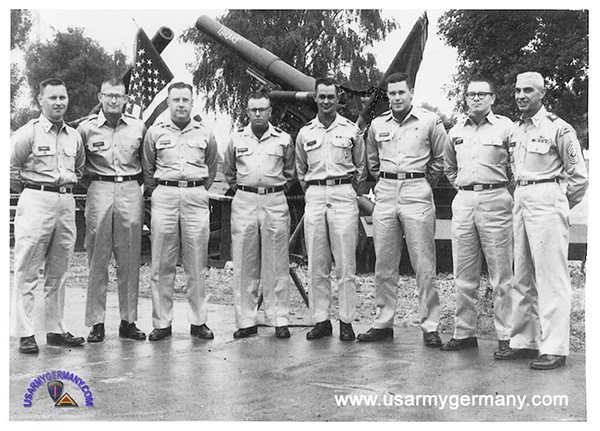 Staff of 2nd Bn, 83rd FA in the early 1960s |
||||||||||||||||||||||||||||||||||||||||||
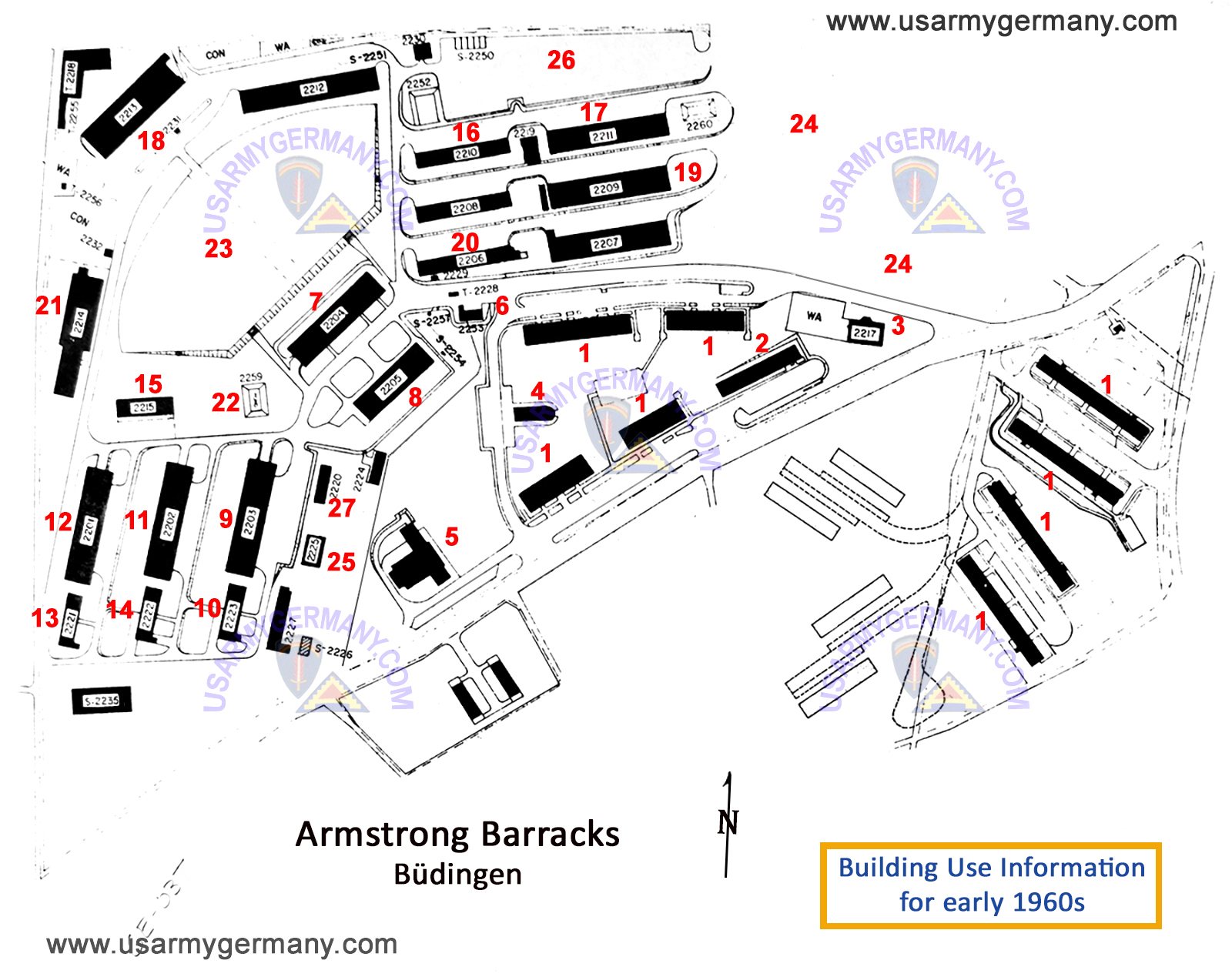 Armstrong Barracks, Buedingen, home of the 2nd Bn, 83rd FA in the 1960s |
||||||||||||||||||||||||||||||||||||||||||
| 1963 | ||||||||||||||||||||||||||||||||||||||||||
| (Source: Email from Richard F. Allen) | ||||||||||||||||||||||||||||||||||||||||||
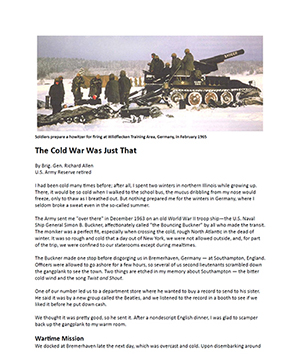
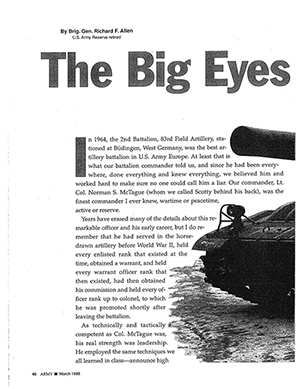
| The Kaserne was a former German installation but while we called it the Kaserne for short, its official name was Armstrong Barracks, as I am sure you know. It was home to two battalion size units while I was there: the 2nd BN 83rd FA (41st FA Group) and the 3rd Sq, 12th Cav (3rd Armd Div), and maybe some detachments that I do not recall. I would be glad to try to identify the various buildings on the Kaserne, and I have several other close friends whose brains we can pick. I will copy them if I can find their Email addresses. The Cav HQ was actually outside of the Kaserne proper as was the MP station. Likewise, the BOQ , the married housing buildings, and maybe the enlisted club were outside the fence. Our Ammo dump and the airfield were also down the road apiece, a quarter of a mile or more from the back gate. The Officers Club and the quarters for the two Lieutenant Colonels were on adjacent properties in the town. There are probably some pics we can dig up if you want us to. The 2/83d was a great unit and the Cav was full of wild and crazy young Armor officers. Lots of good times and good stories if anyone could remember them. I also have had two articles published in the AUSA ARMY Magazine concerning my time with the 2/83 from Dec. 1963 until May 1965 that I am sharing with you. ADDITIONAL INFORMATION Below is a PDF file with some information on the kaserne. The map (above) of Armstrong Barracks has red annotations that are identified on the list. I have a high degree of confidence for most of the buildings I have identified, and where I am not sure, I so indicate. I am still trying to locate someone from the Cav who might add more or better information. |
||||||||||||||||||||||||||||||||||||||||||
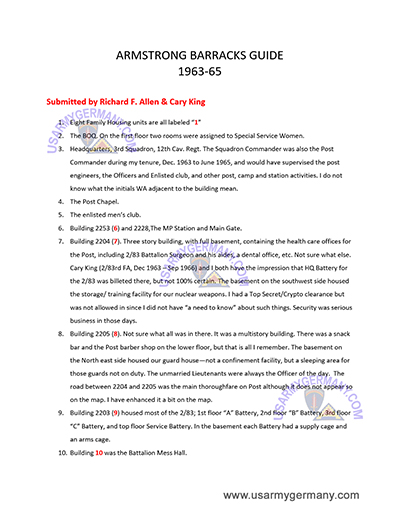 Building use information for Armstrong Barracks, early 1960s |
||||||||||||||||||||||||||||||||||||||||||
| 1964 | ||||||||||||||||||||||||||||||||||||||||||
| (Source: Email from James "Jim" LaPorta) | ||||||||||||||||||||||||||||||||||||||||||
| I was with the 2/83rd from June 1964 to May 1967. I am active on a number of ASA sites since I left ARTY to go ASA, where I should have been from day one. I was assigned as the Radio Team Chief for C-Btry (2nd Bn, 83rd FA) …. Before we got the radios – While waiting I became the Battery Perimeter Sgt under 1SG White and CPT Baugher. Went on 4 Grafs, 2 Vilsecks, 1 Baumholder before the AN/GRC-46 rig came in. This was in early 1965, and the ramp up for Viet Nam was going wild. I was moved to BN S-2 NCO where I worked the last two years of my time there. I was slotted in as the Battalion Radio Chief and promoted to SSG E-6. I did run both the S-2 Shop and supervise the radio ops. At the time we had to man 7/24 radio watch on CW to 212 Arty Group HQ in Hanau. Buedingen – Armstrong Barracks was just far enough away that we couldn’t do VHF with the FM Net and had to do CW. The Group HQ had trouble keeping their AN/GRC 26D going on RATT. We would also use AM voice. All of the Alerts (Real and Practice) were on AM Voice using one-time pad encryption. My additional duty was as the Red Team Leader for the Special Weapons, so they kept me busy and working. I did find the "guns" a good bunch of guys, and recall the first time they let me pull the lanyard on an M110 …. Course it was Charge 5 of 7 – White Bag I think….and I flew off the piece head-over-heels to the laughter of the whole battery – they got the newbie. All in all the tour with the red legs of the 2/83 was a very good experience. The former SVC Battery CO and S-2 for Battalion, Walt Van Arsdale, and I have remained friends for the past 40 years – and Walt lives a 3-hour drive from me. Total field problem time in the field or at one of the 7A training sites was 23 months out of the 36 months there. I made a bunch of friends there, some of them Germans who were ham radio operators. I was DL4LA in Germany and went to Nidda and Gelnhausen radio clubs and enjoyed the common thread of the hobby. |
||||||||||||||||||||||||||||||||||||||||||
| 1967 | ||||||||||||||||||||||||||||||||||||||||||
| (Source: Webmaster's collection) | ||||||||||||||||||||||||||||||||||||||||||
|
||||||||||||||||||||||||||||||||||||||||||
| (Source: Email from Jerry Harper, "C" Btry, 2nd Bn, 83d FA, 1967-69) | ||||||||||||||||||||||||||||||||||||||||||
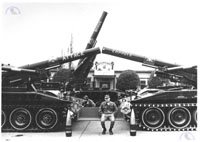
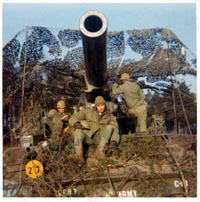
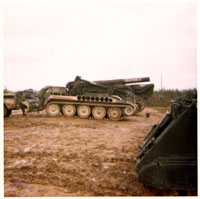
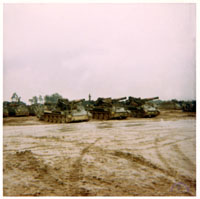
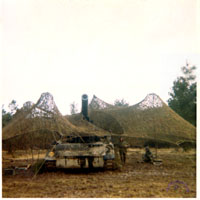
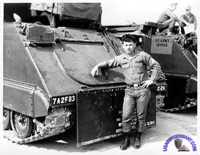
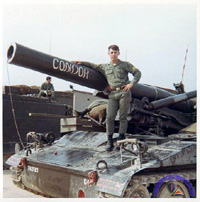
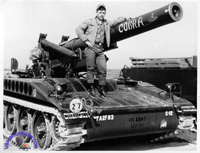
| I hope I've found the right unit. I was assigned to "C" Btry 2nd Bn 83rd FA from August 1967 to August 1969. I served in FDIC/SW, in vehicle #C24 M577 carrier command post. I became section chief (SP/5, Sgt/E5) in August of 1968. While admiring your picture, taken in 1967, of the three guns it struck me that I didn't remember a gun named "Charger" in "C" Btry. So I dug out my old pictures, they have the correct unit designation, which include "C" Btry guns Condor Crusher, Cobra, and Cougar. Did they change gun names, it never happened during my two year stay? (Webmaster Note: I looked at the 1967 photo (No. 1 above) you are referring to -- it looks like the M110 guns were painted specifically for this static display. Is it possible that the nicknames are those of the batteries: "A" ATTACK Battery, "B" BRAVE Battery, and "C" CHARGER Battery? I noticed in one of your pics (No. 3 below) the "CHARGIN' CHARLEY" markings on COBRA (#C12).) FDIC: One chief of section and one officer, I broke in three 2nd Lt's during my tenure. Two computer operators, manual with slide rules 1967-68, and actual computers in 1969, and two men on maps, one of the crew also served as driver. Weapons M-14's, chief a .45, crew serve one M60 and one M-79. Here is a story! While at Graf in '69, with a new 2nd Lt. in tow, a hip shoot was called in during a battery movement to a new firing position. Off the road we charged, the guns digging in quickly. We had a firing resolution completed in heartbeat. However, the new Lt. stopped the process and announced he had a different solution and we were to use his data. He called the order to the guns. I asked him to step out on the ramp and look at the gun tubes, they were pointed in the direction we had just come from. Back in the M577 I drew a line the guns would be firing in, at the range indicted, it was right at a parking area. We quickly readjusted the guns, an bang got a bracket with the first left platoon adjust (Base Piece was declared out of service). We were graded down for our lack of speed, but the Lt. let us do our job from that time forward. All the attached pictures are at "Graf" August-September 1968.ADDITIONAL INFORMATION (Source: Email from Darrel Skidmore) I was stationed in Buedigen at 2/83 Arty, 1966-1969. I know the name of the guy in the pictures (Photos #1 & #2 above), we were buddies in 1967-1969. His name is Thomas Pacheco. And, yes, C Btry gun was called "CHARGER." |
||||||||||||||||||||||||||||||||||||||||||
|
||||||||||||||||||||||||||||||||||||||||||
|
||||||||||||||||||||||||||||||||||||||||||
| 41st Field Artillery Group | ||||||||||||||||||||||||||||||||||||||||||
| 1972 | ||||||||||||||||||||||||||||||||||||||||||
| (Source: Email from Rich Schreibstein, 2/83d FA, 1972-74) | ||||||||||||||||||||||||||||||||||||||||||
I was the Battalion Signal Officer for the 2nd Bn, 83rd FA from 1972-74 and in Babenhausen from March 1972 through April 1974. I replaced CPT Art Reiman. My office was in a vault in the battalion headquarters building because we had NRAS (nuclear release authentication system) codes. Prior to my assignment with the 83rd, I was the executive officer for the HHB 36th FA Group (later 41st FA Group) under the command of CPT Jim Lake and later under CPT Dave Watters, who is now a professor of archeology at the University of Pittsburgh. I also taught the mandatory race relations seminar.
I joined the 83rd when LTC Tucker was the commander and was with it under LTC Boylan. The group commander of the 36th FA Group was COL Morgan J. Cronin. I also remember COL Homer Kiefer commanding when the unit became the 41st Group. There was one commander in between those two; however his name escapes me. A couple of the battery commanders I recall were Captains Marshall Clark, Larry Matthews, and Vince Kovalik. Major Jo Meeker was the battalion executive officer. My communications NCO was SFC Rogoff. Fulda was the battalion EDP and we spent two months a year in Grafenwoehr and Vilseck, on the Czech border.
We were a nuclear-capable, 8" howitzer battalion, our sister unit was the 2/5th, a 175" howitzer battalion. One of the 2/5th battalion commanders was LTC Laird. The battalion doctors were Dr. Dierker and Dr. Jeff Piland. The base chaplain was LTC Street. We, along with the 42nd FA Group in Giessen, were part of V Corps Artillery, headquartered in Darmstadt. Our commanding general was BG Joseph Cutrona and the V Corps commander was LTG Willard Pearson. V Corps was headquartered in the the Abrams Building in Frankfurt, formerly the I.G. Farben building. The USAREUR commander at the time was General Michael S. Davidson.
We had a target acquisition battery in Darmstadt as well as an Honest John battery. We also had an airfield, an Air Defense Artillery battery, a dependent school, a bowling alley, movie theater, gym and a small PX in Babenhausen.
Small correction to an earlier submission. The Baader-Meinhof assault was on the officer's club behind the V Corps headquarters building. A bomb, hidden in a trashcan, exploded in the lobby, killing an Army chaplain who was returning stateside.
After Babenhausen, I was assigned to the 9th Infantry Division at Ft. Lewis, Washington. My last assignment was with the 9th Signal battalion as the C Company commander. I left the service in December 1976 to pursue a civilian career in operations. |
||||||||||||||||||||||||||||||||||||||||||
| (Source: Email from David Rasch, HHB 2/83d FA, 1972-74) | ||||||||||||||||||||||||||||||||||||||||||
| I was assigned to 2/83d FA from March 72 to Aug 74. 2/5th FA was our sister unit at Babenhausen. We went from jeeps to Gamma Goats. I remember watching the cargo airplanes practice landing and take off from the field during the Arab-Isreal War. When I got to the 83d, we waited at the bahnhof for a truck. We signed in to the battalion, there were four of us, John Walker (assg to S2), Ron Burchwell (assg to HHB as supply), Richard Igelski (assigned to HHB as btry armorer/supply) and me (assg to HHB as clerk). All of us were 13A, and reassigned to other duties. Igelski was killed in an accident in 1973. I was there during the Baader-Meinhof assault on V Corps Hq at Frankfurt, the Olympic Games where the Israeli team was slaughtered, and the Arab-Israeli war. Ltc. Tucker was my first Battalion Cmdr and was replaced by Steven V Boylan. Tucker went to Command and Staff College. We did the big maneuvers such as Gordian Knot. I was there for the riots, both at Graf and on base. There was racial tension over women and drugs. The 83d's forward position was the Fulda Gap. We were up there regularly. We had an ARF responsibility -- this was Atomic Response Force. When nuclear bullets (sic) went thru our area and broke down, etc, we had to provide a force to secure the area. Whenever we went out on maneuvers, the SMLM (Soviet Military Liaison Mission) would have spotters who counted our vehicles and direction. Once SMLM got too close to our bivouac area, and were surrounded by dozens of curious soldiers, all with side arms and ammo. They were identifiable by the license plate. The two people in the car just looked straight ahead until we were chased off. No harm intended. Another time a mess truck got on the wrong road and wound up on the way to Berlin. He'd gone too far and couldn't get off and turn around because of the treaty. He had to go all the way to Berlin, meeting a tanker at an approved rest stop to refuel, then come back. He did get into some trouble that time. The 83rd, at that time, had three firing batteries (A, B, and C), Svc Btry, and HHB including battalion Hq. Each Battery had 3x 8-inch guns. We were opposite the airfield, not too far from the theater. We had reveille on the basketball court with the 83d, 2/5th, and the ADA unit. The colors were raised to the recorded sound of the bugle. At 1700, the bulge retired the colors. Everyone not in a building had to come to attention, turn facing the post flag pole, and salute. People in autos were expected to get out of the car, and, if in uniform, salute, if in civvies, place hand over heart. The hand over heart went for all active duty personnel in civvies. In the theater, when the national anthem was played, we all had to stand at attention. When the Arabs and Israelis were at it, we were pretty nervous. Large containers were airlifted to the airfield and cargo planes were practicing landing and taking off. The rumor was that we'd go to Italy, refit, then to Israel. Don't know if that's true or not. |
||||||||||||||||||||||||||||||||||||||||||
| (Source: Email from Michael D Burkey, C Btry, 2/83rd) | ||||||||||||||||||||||||||||||||||||||||||
| I was assigned to C Btry 2nd 83 FA, from 3 Nov 72 thru 1 Feb 76. I was team chief
in the Special Weapons section. We had 4 guns per Btry, they were named: "Chicken man", "Cockatoo", "Cash Ready", "Cheeta" I can't remember how many Grafs I had under my belt but they didn't make a BIC lighter big enough for all the flippy rubbers I had! We went to Fulda, Bad Hersfield. Our 1st Sgt was Lawrence E Miller. He was there the total time I was there, he finally made MSG and went to the S-3 shop. I remember one time when I was short and ready to DEROS back to the world I came in to post one Monday morning and there was NO ONE left!!! What a feeling in your gut. 3 of us short guys were the only ones left, the BN was put on alert and shipped out to an Air Base where they camped out for a few days. Turkey and Greece were fighting over Cyprus, and they both being part of NATO, each had Special Weapons. It was pretty bad for a few days. I wished some one could come up with an 83rd FA get together/reunion or something. We had alot of good times over there. |
||||||||||||||||||||||||||||||||||||||||||
| 1977 | ||||||||||||||||||||||||||||||||||||||||||
| (Source: Email from Walter Dobinson, HQ 2nd Bn, 83rd FA, Sept 1977 - Aug 1980) | ||||||||||||||||||||||||||||||||||||||||||
| I served in Babenhausen with 2/83 FA from Sep 1977 - Aug 1980. I was there when the Bn went from 4 gun M110 Batteries to 6 gun M110A-1 batteries. My wife and I were assigned to the Babenhausen-Darmstadt-Aschaffenburg area on a DA directed Joint Domicile assignment in September 1977. My wife went to 440th Sig n in Darmstadt (Cambrai-Fritsch Kaserne) and I went to the 2/83 in Babenhausen. This area was the "place" for married officer couples on Joint Domicile. At that time Babenhausen was home to:  HHB 41st FA Gp (COL Kenneth R. Bailey?)2/5 FA (175mm) (3 X 4 configuration M-107; LTC Joe Lucas)2/83 FA (3 X 4 configuration 8-inch M-110; LTC George L. Moses)D/3/59th ADA (HAWK)Det 1 699th Ordnance (DS Maintenance) HHB 41st FA Gp (COL Kenneth R. Bailey?)2/5 FA (175mm) (3 X 4 configuration M-107; LTC Joe Lucas)2/83 FA (3 X 4 configuration 8-inch M-110; LTC George L. Moses)D/3/59th ADA (HAWK)Det 1 699th Ordnance (DS Maintenance)The rest of 41st FA GP was in Hanau as follows. 2/75 FA (3 X 4 configuration 8 inch M-110)1/32 FA (3 X 2 configuration LANCE)We were supported by 545th ORD CO (SW) and 6th MP CO and a German Labor Service Company in Muenster-Dieburg. I arrived and was assigned as BN Ammunition Officer/Service Battery XO. As I recall the Officer line-up went like this
|
||||||||||||||||||||||||||||||||||||||||||
| (Source: Email from Michael Landrum, 2/83d FA, Commo, 1977-80) | ||||||||||||||||||||||||||||||||||||||||||
| I was the Battalion Signal Officer for the 2nd Bn, 83rd FA from 1977-80 and in Babenhausen from December 1977 through December 1980. I think I replaced CPT Harris. My office was in a vault in the battalion headquarters building because we had NRAS (nuclear release authentication system) codes. Prior to my assignment with the 83rd, I was a Tech Supply Clerk and a IHAWK technician at Tobin Wells, Fort Bliss, El Paso, TX. Then I was a student at UTEP, and a ROTC cadet (1975-77). I worked closely with two S-2's. I loaned my BMW to one and I borrowed the 240Z from one. Names I remember: Kunni Beasley, Doug McAdams, Dave Schutten, Forest Price, Gaby ?, LTC Moses & his lovely wife, Russ (I liked him), Banks (who gave me a couple of severe ass chewings, but gave me glowing OERs), I liked Ed Jablonski & Ruth (at the time), LTC Palmer (who was diagnosed with cancer & his verry gracious wife) (he gave me a set of his captains bars, I felt special), JD & Mercy were cool & Mercy could sing!, My wife, Carolyn liked JD because he was normally (somehow) always the rear detachment commander. JD was a cool PBO and assisted my education in a very material way. SSG Shively & His Very Special wife who took care of my new son Jason, while Carolyn and I went on vacation to Bavaria. Thank you, Thank you...that was the best vacation ever. Finally, MAJ Kent Confer & Jeanette. He was thrust into Battalion Command upon LTC Palmer's departure. I think I became his 'sounding' board. He was a very good officer and the right man for the job. Ed Jablonski was the S-3 and that last 'Lariat Advance' and ARTEP were nerve racking for both. I was on the DEROS aircraft leaving country (December 1980) when the MPs boarded to select 'mission crictal' folks who needed to stay for awhile due to the Last Gasp USSR activity in Poland. For those of you who weren't there, that was serious pucker factor. If Dave Schutten hadn't been there, I think MAJ Confer would have had no choice but to put me on the 'retain' list. I was also the XO of HHB, 2/83d, even though that was not strictly part of my job description. First, assisting CPT Jim Polite (I bought his Black muscle car, Heh Heh), and then CPT Marty Dunn. Linda Dunn and Carolyn were good friends. The BMO, whose name I cannot remember; and the HHB motor sergeant also assisted my education. My short round electronics tech was a super NCO and I'm please I was able to assist in his promotion to SSG. My assignment with the 2/83d was probably the best one of my 25 year career. I retired as a LTC from CENTCOM, McDill AFB, FL in 1998. I joined the 83rd while it was deployed to GRAF. If it weren't for the kindness of the SGT who was dispatched to Rhein Main to pick me up, who knows where I would have landed. My communications NCO was SSG/SFC Christian, he took pity on the 'brand new butter bar' and actually assisted me. A fact I didn't appreciate until later. Then there was MSG Lumpkin, a SF NCO who was assigned as a Commo Chief position in order to allow him to retire. He took me to the NCO Club and got me drunk on a couple of occassions, much to Carolyn's chagrin. Fulda was the battalion EDP and we spent two months a year in Grafenwoehr and many GDP recos to Vilseck, on the Czech border. We were a nuclear-capable, 8" howitzer battalion. Our sister unit was the 2/5th, a 175-mm howitzer battalion. There was also an airfield, an Air Defense Artillery battery, a dependent school, a bowling alley, movie theater, gym and a small PX (me and Jason walked over to get a match car almost every Saturday) in Babenhausen. There was also a fantastic Officer's Club, before we adopted the All Ranks concept; the lady with her two assistants made a fantastic goulash soup and some of the best German meals we ever had. Carolyn still has several of her recipes. After Babenhausen, I attended SOAC in 81; then to 3d Signal Brigade S3 radio officer; 16th Signal Bn S4 (Daniel was born in an ice storm in 1982); Commander, A/16th; two Reforgers. I was assigned to CATA, FT Leavenworth; Fielded JINTACCS, against much opposition. |
||||||||||||||||||||||||||||||||||||||||||
| 1978 | ||||||||||||||||||||||||||||||||||||||||||
| (Source: Email from Bret Tomlin) | ||||||||||||||||||||||||||||||||||||||||||
| I was assigned
two times to a subordinate unit of the 41st GP/BDE. Both times I was
assigned to the 2nd Bn, 83rd FA, the
first time from Nov 1978 to Jul 1981, and then again from Dec 1982
until Dec 1986. Not sure what all you want or need to know, but will
at least give you a quick run down of the subordinate units of the
time:1st BN 32nd FA (Lance)
Hanau FRG 2nd BN 75th FA (M109
155MM) Hanau FRG 2nd BN 83rd FA (M110A2
8 Inch) Babenhausen FRG2nd BN 5th FA Regt
(M107 175MM, later M110A2 8 Inch) Babenhausen FRG The 2nd BN 5th FA was later renamed 1st? BN 77th FA; believe this happened sometime around 1983 - 84 but am no longer sure, as well as not being sure of which BN, but do think it was the 1st BN. I'm sorry but I don't remember when it converted from 175's to 8 inch. I believe that at one time there was a TAB Battery assigned as well -- the name may have been B Battery 25th TAB -- but once again ,I'm not too sure now. As I was leaving the 83rd on my last tour, the BDE was planning and getting ready to receive one of the (at that time) new MLRS BN's. It was to be on of the BN's of the 7th FA. I recall only that it was one the BN's of the 7th FA due to the fact that there already was the 77th FA and the 77 Maint Company, with the 7th FA soon to arrive, all on the same Kaserne. Many of us thought it would be fun to see how messed up the mail was going to become for those units. After returning to the States I met a guy who had been stationed in Babenhausen after me, he told me that the 83rd had also been renamed, sorry don't remember what he told me they became. My last tour in Germany was as the drawdown action officer for the 3rd INF DIV from Aug 1992 to Aug 1995. I made a trip down to Babenhausen to visit some German friends there. The 41st BDE was still HQ'ed there but all Artillery was then at that time MLRS. |
||||||||||||||||||||||||||||||||||||||||||
|
||||||||||||||||||||||||||||||||||||||||||
|
|
||||||||||||||||||||||||||||||||||||||||||
| Related Links: 41st FA Brigade - official web site |
||||||||||||||||||||||||||||||||||||||||||
 4th BN 77th FA (8" SP, 110A2 HOW)