| If you do
NOT see the Table of Contents frame to the left of this page, then
Click here to open 'USArmyGermany' frameset |
|||||||||||||||||||||||||||||||||||||||||||||||||||
|
66th
Military Intelligence Brigade |
|||||||||||||||||||||||||||||||||||||||||||||||||||
|
|
|||||||||||||||||||||||||||||||||||||||||||||||||||
|
|||||||||||||||||||||||||||||||||||||||||||||||||||
|
|
|||||||||||||||||||||||||||||||||||||||||||||||||||
| History | |||||||||||||||||||||||||||||||||||||||||||||||||||
 66th MI Brigade Unit History (AHEC) (18th MI Bn & 204th MI Bn included) |
|||||||||||||||||||||||||||||||||||||||||||||||||||
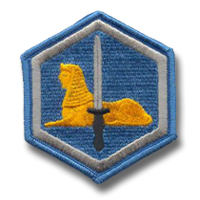
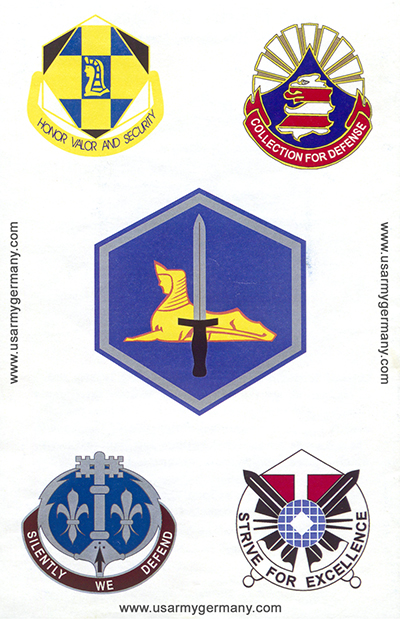
 66th Military Intelligence Bde DUI 66th Military Intelligence Bde DUI |
|||||||||||||||||||||||||||||||||||||||||||||||||||
| 1945 - 1961 | |||||||||||||||||||||||||||||||||||||||||||||||||||
|
(Source:
66th Military Intelligence Group History, 14 June 1962.)
|
|||||||||||||||||||||||||||||||||||||||||||||||||||
| The 66th CIC
Detachment served In Western Europe and was awarded the Northern France
campaign credit. Near the end of World War II, it became a part of the 12th Army Group under the 418th CIC Detachment. Organisation Order No. 276, Headquarters, European Theater of Operations (ETO), dated 25 Apr 45, inactivated the 418th CIC Detachment and created the 970th CIC Detachment, with 10 May 45 the effective date. On 14 Jul 45, the 970th CIC Detachment, which had its headquarters in Wiesbaden, Germany, moved to Frankfurt am Main, Germany. On this date ETO was changed to USFET (United States Forces European Theater). On 12 Nov 45, the 66th CIC Detachment, which had apparently accompanied the 66th Infantry Division to the United States, was inactivated at Camp Kilmer, New Jersey. On 1 Dec 45, USFET took over operational control of all former tactical CIC Teams through the 970th CIC Detachment. In February 1947, the Third Army CIC in Germany consolidated with the 970th CIC Detachment which still had its headquarters in Frankfurt am Main, Deccan. On 20 Jun 48, the 970th CIC Detachment was inactivated. On the same date, it was reorganized and became the 7970th CIC Group. A T/D was authorised under Headquarters European Command (EUCOM), T/D 303-1341-B, effective 15 October 1949. (From 14 Jul 45 to 29 Aug 49, the 970th and the 7970th operational headquarters were located in the IG Farben Building, in Frankfurt am Main, Germany with the administrative headquarters located in Bad Hamburg, Germany.) On 29 August 1949, the 7970th CIC Group moved its headquarters to Wallace Barracks, Stuttgart, Germany. 0n 10 November 1949, the 66th CIC Detachment was activated in the United States and assigned to EUCOM. In the Fall of 1949, a request by the 7970th CIC Croup to become a TO/E unit was approved. The change became effective on 10 November 1949 in consonance with EUCOM GO 102, dated 4 Nov 49. The unit designation was changed with this GO to the 66th CIC Detachment. The 66th CIC Detachment was designated a Regular Army Unit on 5 Dec 51. As of 20 December 1952, the 66th CIC Detachment was reorganized and redesignated as the 66th CIC Group, per USAREUR GO 38, dated 8 Dec 52. The new Group undertook the task of completing thousands of background investigations of refugee applicants for immigration to the United States under the Refugee relief Act of 1953. A separate T/D division administering over 700 DAC and indigenous personnel was established to accomplish the mission. On 1 January 1960 the 66th CIC Group was reorganized and redesignated as the 66th Military lntelligence Group. On 25 July 1961 the 66th Military Intelligence Group was reorganized and redesignated the 66th INTC Group (per USAREUR GO 212, dated 18 Jul 61). |
|||||||||||||||||||||||||||||||||||||||||||||||||||
|
|
|||||||||||||||||||||||||||||||||||||||||||||||||||
|
|
|||||||||||||||||||||||||||||||||||||||||||||||||||
|
(Source:
Chapter 7: The Cold War and Korea, MILITARY INTELLIGENCE by John
Patrick Finnegan, ARMY LINEAGE SERIES, 1998)
|
|||||||||||||||||||||||||||||||||||||||||||||||||||
|
Much of the work of the Counter Intelligence Corps was performed
abroad, as American occupation forces in Europe and the Far East
first attempted to root out the remaining vestiges of Nazism and
militarism and then faced the task of countering Communist subversion.
In Germany, all Army counterintelligence assets were consolidated into a single large unit, the 1,400-man-strong 970th Counter Intelligence Corps Detachment, which blanketed the American Zone of Germany with a network of regional and field offices. In 1948 this was converted into the 7970th Counter Intelligence Corps Detachment, organized under a table of distribution (TD) as a one-of-a-kind unit to perform a specific mission. The change brought about difficulties in obtaining personnel, however, and as a result the 7970th was superseded by a new TOE outfit, the 66th Counter Intelligence Corps Detachment, in 1949. Counter Intelligence Corps operations overseas faced their own special problems. Some higher commanders abroad objected to the idea of CIC agents living in civilian clothes apart from the structure of the Army as a whole and sought to remilitarize the operations. At one point, all counterintelligence personnel in Germany were put back into uniform and ordered into Army billets with considerable loss of operational effectiveness. Another problem was that some CIC personnel acclimatized themselves to life overseas all too well and had married foreign wives. In June 1950 the CIC chief issued an order that any CIC member marrying a foreign national without grant of a waiver would be terminated. Finally, operational necessity drew the corps into unfamiliar activities. In Germany, for example, CIC agents helped crack down on the black market. In most overseas commands, Cold War needs forced Counter Intelligence Corps units to engage in positive collection of intelligence. With no mechanism for gathering human intelligence at its disposal outside of the attache system, the Army was forced to misapply its counterintelligence assets to fill the void. NOTE: For Army lineage purposes, the distinction between TOE and TD units lies in the fact that TOE units are permanently placed on Army rolls and are activated and inactivated as needed, whereas TD units are organized on a one-time basis for a particular mission and are not perpetuated after discontinuance. A typical example of a TOE unit would be an infantry battalion, while a typical TD unit would be an Army garrison. Because of the peculiar demands of intelligence work, many intelligence personnel have historically served in TD (later TDA, or table of distribution and allowances) units. |
|||||||||||||||||||||||||||||||||||||||||||||||||||
|
|
|||||||||||||||||||||||||||||||||||||||||||||||||||
(Source: Excerpt from the Special Historical Series pub, "INSCOM And Its Heritage," published in 1985) |
|||||||||||||||||||||||||||||||||||||||||||||||||||
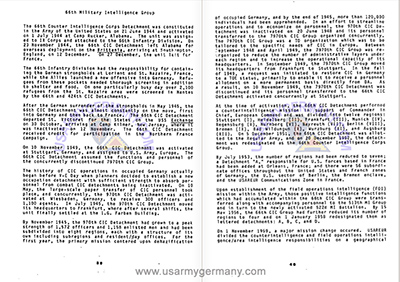 Click on image to view the 66th MI Gp unit history |
|||||||||||||||||||||||||||||||||||||||||||||||||||
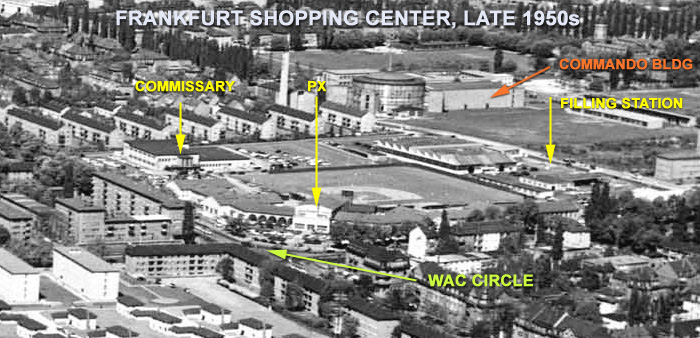 Frankfurt Shopping Center on WAC Circle and Commando Building |
|||||||||||||||||||||||||||||||||||||||||||||||||||
1948 |
|||||||||||||||||||||||||||||||||||||||||||||||||||
(Source: Email from Conrad R. McCormick) |
|||||||||||||||||||||||||||||||||||||||||||||||||||
One item in the artiocle on the 66th MI Brigade is not quite correct. It states that from 14 Jul 1945 to 29 Aug 1949, the 970th and 7970th operational headquarters were located in the IG Farben Building in Frankfurt am Main, Germany, with the administrative headquarters located in Bad Hamburg, Germany. Actually, the Command Group and Adjutant's section of the HQ, along with the S2/S3 sections and the CIC Central Registry
(counterintelligence central files) were in the Farben Building until mid-1948. The S1 and S4 sections were at Camp King in Oberursel, Germany. In 1948 events such as the Berlin Blockade/Berlin Airlift and major currancy reform from Reichsmarks to Deutschemarks, (the latter called Operation Bird Dog) caused creation of an expanded Trizonal Hq for coordination and cooperation between the US, British and French Zone authorities. This Hq was moved into the Farben Building and a number of elements moved out to make room for this, including the newly formed 7970th CIC Group. They, along with the Office of the EUCOM Provost Marshal (then Brig Gen Norman Schwartzkopf, father of "Storm'n Norman" of Desert Storm fame) moved across town to the WAC Circle area of Frankfurt, behind the area of the Main Post Exchange, into a large building called the Commando Building (former HQ of the previous IX Wehrkreis Kommando of the late Third Reich). It was the Commando Building that gave the vaunted 66th CIC Det basketball team their name "66th CIC Commandos". It was from the Commando Building, a year later, that the 7970th moved to Wallace Barracks (the former Grosse Reiter Kaserne) in Stuttgart-Bad Canstadt. This move was again forced by changing conditions in Occupied Germany. At that time there was a competition for the location of the new West German capital. As a contender, Frankfurt was planning to use the Commando Building as the location for the new Bundestag. They even began construction of a very large rotunda wing to that building for that purpose. In the end the bid went to Bonn, but meanwhile, the 7970th had to get out of town - and that is why they ended up in Stuttgart, but from the Commando Builing, not the Farben Building. |
|||||||||||||||||||||||||||||||||||||||||||||||||||
(Source: STARS & STRIPES, Nov 24, 1949) |
|||||||||||||||||||||||||||||||||||||||||||||||||||
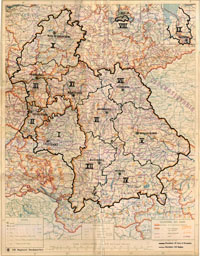
Region IV, 7970th CIC Group is located at Peterson Kaserne, Munich. |
|||||||||||||||||||||||||||||||||||||||||||||||||||
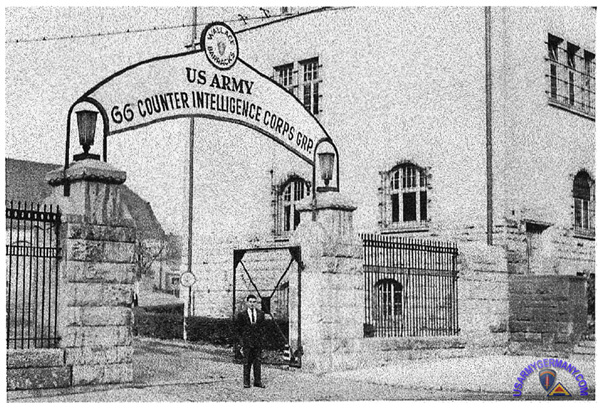 Entrance to Wallace Barracks, Bad Cannstatt (John Snyder) |
|||||||||||||||||||||||||||||||||||||||||||||||||||
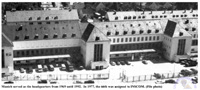
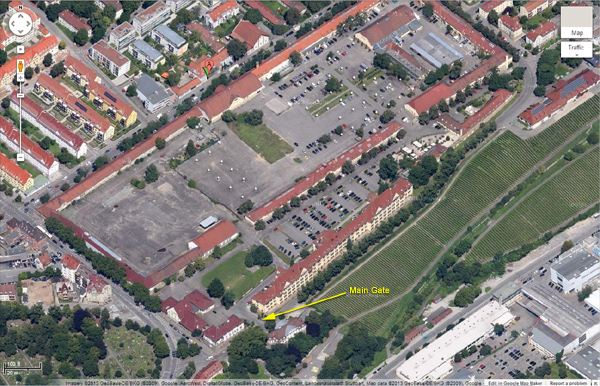 Aerial view of Wallace Barracks, Bad Cannstatt (GOOGLE Maps) |
|||||||||||||||||||||||||||||||||||||||||||||||||||
1954 |
|||||||||||||||||||||||||||||||||||||||||||||||||||
(Source: Email from John Snyder) |
|||||||||||||||||||||||||||||||||||||||||||||||||||
I was stationed in the Grosse Reiter Kaserne (Wallace Barracks) from Dec 1954 to May 1956. The unit was listed at the time as 7807 USAREUR Detachment but was actually headquarters for the 66th CIC Group. (Looking at the aerial photo) after you enter the front gate and proceed straight ahead the large building on the left contained the mess hall, the EM club and the library. If you then proceed to the next street and take a right and follow that street for 20/30 feet or so on your left that building was a basketball court and gym. |
|||||||||||||||||||||||||||||||||||||||||||||||||||
1959 |
|||||||||||||||||||||||||||||||||||||||||||||||||||
(Source: Email from Walter R. Barfield) |
|||||||||||||||||||||||||||||||||||||||||||||||||||
When I arrived in Stuttgart, in late 1959, I was assigned to a numbered USAREUR Liaison Group, the classified cover designation of the 66th CIC Group. I was a CPL E4 when I arrived, and was a 1LT when I departed some four years later. All of my service there was in the USAREUR Central Registry (CR), in the Grosse Reiter Kaserne (GRK) (later renamed Wallace Barracks), in Bad Cannstatt/Stuttgart. It was a very interesting assignment. The CR was composed of divisions/branches, organized around the Central Personality Index (CPI) that consisted of some 5-6 million 5" by 8" cards that indexed all the data in all the files in paper and microfilm that CR maintained. When I arrived, most of the data were in paper files (dossiers), but the CR was engaged in a microfilming project that reduced the paper files to microfilm. The CPI of the CR was composed of cards from several sources. CPI maintained all cards in alphabetical order, and was composed of a large quantity of GESTAPO files, collected as the German armies was pushed back into native Germany. Personalities who came under attention of CIC Agents were reported to CR, and references were created to the data sent to CR for file. One small note about CR, during the Cold War, we had to maintain the capability to evacuate all of CR, which included several hundred cabinets of paper files (dossiers) and CPI cards. Many hours were spent trying to move cabinets of files and cards down the stairs (from the 3rd floor) of GRK. Later, the CR was relocated to the first floor of the main building. This move substantially improved the ability to evacuate the massive amounts of data. The CPI was manned by females who were wives and children of the male servicemen, and some civilians living in Germany at the time. We trained them to make "lookups" in the files, having to look in numerous places due to various spelling of Germanic and other European names. During my assignment in CR, IBM was invited to study our data, files, references, etc., and offer a plan to automate the Registry. They completed the study, made their recommendations, and saw their proposals fall on deaf ears. The Army would not spend money to automate our Registry while the Central Records Facility (CRF), located at Ft Holabird MD, was still a manual operation. CRF was the final home of all data that flowed into CR. During my last year in CR, I proposed that we code CPI, so that it would be easier and more accurate to perform "lookups". This proposal was approved, and we began the conversion with the smallest letter of the alphabet, "y" I believe. Before I left, we had converted all cards in four letters. I visited the CR several years later, and learned that they had completed the conversion. The CPI was able to produce far more work with less people after the conversion. CR and CPI processed requests for information from all the allied intelligence agencies in the USAREUR area. We had a backlog at one time, and made a one-time push to reduce the backlog. In this special push, we were able to process more that 44,000 requests for information. We were not able to maintain the rate, but with the advent of the conversion to the modified Soundex code, better and faster intelligence reports were possible from the data in CR. ADDITIONAL INFORMATION Unless I am mistaken, it was the 3842 ULG. I suspect that each of the Field Stations had a separate ULG number. I do not remember a 7945th ULG.
We called the Oberursel facility (home of the 513th CIC Gp) the "Goat Farm" if my memory is correct. Does that ring a bell with you? The last time I visited there was when I received my commission, a few months before I rotated back to CONUS and Ft Bragg Co B 519th MI Group.
|
|||||||||||||||||||||||||||||||||||||||||||||||||||
 |
|||||||||||||||||||||||||||||||||||||||||||||||||||
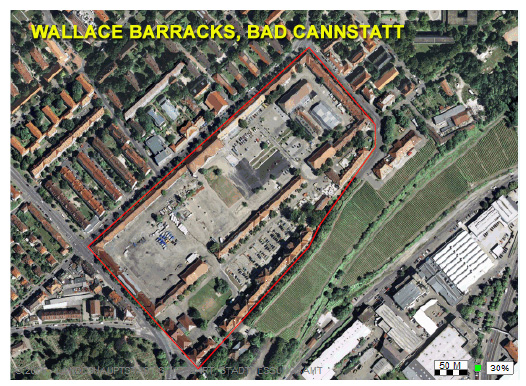
Regarding GRK, there were two or three units using the whole kaserne. We used a strip of the kaserne which is located at the bottom of the photo. Our portion paralleled the Neckar River at the bottom, out of the photo. The major portion at the top of the photo was a transportation unit. Some of the trucks we used for evacuation were parked in that portion of the kaserne. There could have been other elements in the kaserne.
At the lower left end of the kaserne was a street with strassenbahn (end of the line). Turning up the side at the lower left corner, there was one building and then the entrance we used. The first building was the library and a Field Station in the upper floors. The Guard Shack was just inside the entrance gate. Turning right, the building on the right was the headquarters building. CR was located on the third floor when I arrived, but was located on the ground floor when I left. The last building on the right was the billets. Our motor pool was located in the row of buildings near the center, with most of them used by the transportation people.
Continuing up the street (the one with the strassenbahn) the Robinson Barracks was located: PX, Commissary, and housing area. I lived in these quarters part of my stay there. The first years were in Weilimdorf, southwest of Stuttgart. When I made SGT, I was eligible for quarters and moved in.
|
|||||||||||||||||||||||||||||||||||||||||||||||||||
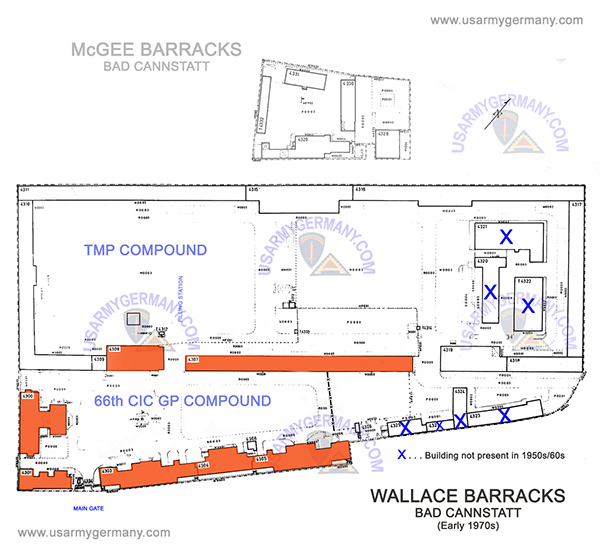 Annotated installation map for Wallace Barracks, 1950s & early 1960s (Click on image to view building use schedule. Additional input needed.) |
|||||||||||||||||||||||||||||||||||||||||||||||||||
(Source: Email from Harry Smith; with additional input from Cedric J. Lewis) |
|||||||||||||||||||||||||||||||||||||||||||||||||||
I was in the CIC back in the 1950's. After finishing Language school, I was assigned to the Liaison Group in Offenbach, Germany but after a couple of weeks, I was reassigned to Bad Cannstatt to study German at the 66th Headquarters. Comments on some of the buildings at Wallace Barracks during that period: Two things to keep in mind. The CIC was effectively dismantled in 1967 with its duties parceled out to other agencies and commands, so these plans and photos, made in 1973, do not quite represent the kaserne as it existed in the 1950's and 1960's. For instance the complex made up of 4323/4324/4325/4327 and 4320/4321/4322 have been added since then. Second: while C.J. remembers the very large area behind 4307 and 4308 as a very large motor pool, he does not make any comment about the other buildings 4310/4311/4315/4316) and I tend to think that the post was a multipurpose post, with those buildings being under a separate command. I think, at the time, the area defined by 4300 around to 4307 and 4308 pretty much was the 66th area. 4300: When you went into 4300 by the door across from the library (Bdlg 4301), you went into the EM Club. 4301: A small portion of this building (neither of us can remember if it was upstairs or down stairs) was the post library, with a very nice young lady named “Elsa” as the librarian. The remainder of the building was occupied by the local CIC field office. I was in the library often but only in the field office one time. Having just graduated from the Army Language School where I studied Polish, I and a classmate were asked to help translate a letter in Polish. 4303: according to C.J., this building was rumored to have been the CIA, so I am assuming it was off limits to everyone else. 4305: Now, the rest of the buildings on post were off limits to me with the exception of 4305, which was the enlisted men's barracks, with a laundry, dry cleaners and barber shop in the basement. The very far end of the building there was a large room. The front part of which was used as billets for temporary personnel coming and going from and to other posts. The end portion of the room was closed off by metal lockers and that is where the students of the German class were billeted. 4307: According to C.J., who had a lot of experience with the transportation functions, 4307 was the Motor Pool Office, Service and repair area. I never knew what was in most of the building but the very far right end of it was a couple of class rooms for training. The German class that I attended was at the end of it. 4308: C.J. seems to think that 4308 contained a handball court or says that it was in that general area. So perhaps that was a gymnasium set-up. As I said, I was only there six months and that was in intense eight hour days of studying German. So, I really did not get exposed to that part of the post. It is a little confusing about the officer's quarters. C.J. had to drive off post to pick-up and transport officers from a off-post site to bring them back to Wallace for the monthly alert exercise but that might have been for the married officers. If there were on post a BOQ and mess, I do not know and neither does C.J. It is possible that they were billeted at Robinson Barracks That just about wraps up our knowledge but I think it pretty much pin points things as they were in the 50's and 60's. If you have any questions, however. Feel free to ask them. It may juggle our memories even more. Both C.J. and I have actually enjoyed this little journey back to Bad Cannstatt. |
|||||||||||||||||||||||||||||||||||||||||||||||||||
1963 |
|||||||||||||||||||||||||||||||||||||||||||||||||||
(Source: Email from Hank Koppelman) |
|||||||||||||||||||||||||||||||||||||||||||||||||||
I was stationed with the 66th INTC Group at the Grosse Reiter - Wallace Barracks and was an Intelligence Coordinator, assigned to work with coordinating and analyzing filed reports from most of the US Army commands along the East German border. Several of us, who were trained at Fort Holabird during the Cuban Missile crisis were assigned to the 66th or the 513th in
Frankfurt (Oberursel). I arrived in January, 1963, via troop ship to Bremerhaven and then transported to Stuttgart/BadCanstadt for assignment. Upon arrival and shown our billets, it was apparent that the Kasserne needed some updating. The shower room window was broken and ice and snow covered the floor. Not a pleasant arrival experience. This was an ideal location to be able to catch the Strassenbahn to downtown Stuttgart and it was an easy drive to Munich and Nuernberg. We were restricted from travel to Berlin at that time...as well as to Albania....primarily for security reasons. I was in Bad Cannstadt until April 1965, when I was assigned to the 527th MI Company in Kaiserslautern, working to support field operations. I would be interested in hearing from anyone stationed there during that period....Larry Thrall, Carlos Vannicola, Dal Lane, George Daily, etc. |
|||||||||||||||||||||||||||||||||||||||||||||||||||
| 1966 | |||||||||||||||||||||||||||||||||||||||||||||||||||
| (Source: USAREUR STATION LIST, September 1966)) | |||||||||||||||||||||||||||||||||||||||||||||||||||
| ORGANIZATION (1966): | |||||||||||||||||||||||||||||||||||||||||||||||||||
|
|||||||||||||||||||||||||||||||||||||||||||||||||||
| CIC ... Counterintelligence Corps | |||||||||||||||||||||||||||||||||||||||||||||||||||
| 1983 | |||||||||||||||||||||||||||||||||||||||||||||||||||
| (Source: Military Intelligence, April-June 1983) | |||||||||||||||||||||||||||||||||||||||||||||||||||
| The History of the 66th Military Intelligence Group By Mr. Danny Johnson Danny Johnson is a Reserve captain and is a manpower specialist with the Directorate of Intelligence Resources Management, OACSI at the Pentagon. |
|||||||||||||||||||||||||||||||||||||||||||||||||||
| The 66th Military Intelligence Group began its history on July 1, 1944, when it was activated at Camp Rucker, Ala. as the 66th Counter Intelligence Corps Detachment. The 66th CIC Detachment was attached to the 66th Infantry Division and assigned to IX Corps. The 66th was relieved from assignment to IX Corps and assigned to XXIII Corps in September 1944. The 66th CIC Detachment did not remain long at Camp Rucker. On Nov. 23, 1944, the unit departed for the New York Port of Embarkation at Camp Shanks, New York for overseas shipment. The unit shipped out for England aboard the "Brittanic" arriving in Southampton on Dec. 12, 1944. After a short period of training, the 66th CIC Detachment arrived in France on Dec. 27, 1944. Once in France, the 66th Infantry Division came under the control of the 12th Army Group. The mission of the 66th Infantry Division was to contain the enemy near the St. Nazaire and Lorient pockets. Refugees in these areas needed thorough screening, and food and shelter. The 66th CIC Detachment served in France and Germany until the end of hostilities. After a brief tour of occupation duty the unit departed for Marseilles, France in June 1945. The 66th Infantry Division was assigned the task of guarding the staging areas while troops returned to the United States. Finally, the 66th CIC Detachment departed France aboard the "USS Exchange" for the United States on Oct. 30, 1945. The unit arrived at the NYPE on Nov. 10, 1945 and was inactivated at Camp Kilmer, New Jersey two days later. The 66th GIG Detachment is credited with participation in the Northern France campaign during World War II. The 66th CIC Detachment was reactivated in Stuttgart, Germany, on Nov. 10, 1949, and assigned to U.S. Army, Europe. The 7970th CIC Group was discontinued and the 66th CIC assumed its functions and personnel. Upon activation, the mission of the 66th was to perform counterintelligence for the Commander-in-Chief, European Command. The organization was divided into 12 Regions. |
|||||||||||||||||||||||||||||||||||||||||||||||||||
|
|||||||||||||||||||||||||||||||||||||||||||||||||||
| The 66th CIC Detachment was reorganized and redesignated in December 1952 as the 66th Counter Intelligence Corps Group and remained assigned to U.S. Army, Europe. By July 1953, the 12 Regions had-been reduced to seven. In December 1955, the 66th Group was temporarily designated as the 7945th USAREUR Liaison Group which later became the U.S. Army Liaison Group Europe which was deactivated in January 1960. The 66th Group was never really redesignated. In May 1956, the 66th Group was further reduced from 7 Regions to 4. In January 1958, the 4 Regions became Detachments A, B, C, and D. In November 1959, USAREUR divided the counterintelligence and field operations intelligence/area intelligence missions on a geographical basis between the 66th Group and the 513th MI Group. The 513th Group had the area of northern Germany including Berlin and the 66th had the southern area of Germany. In January 1960, the 66th reorganized and redesignated as the 66th Military Intelligence Group. In July 1961, the 66th MI Group was redesignated the 66th Intelligence Corps Group. The 66th was again designated the 66th Military Intelligence Group which remained assigned to U.S. Army, Europe and Seventh Army. Due to reorganizations and consolidation of intelligence resources in Europe, the 66th was relocated from Stuttgart to Munich in September 1968. Between 1968 and 1969, the 66th took over the personnel and missions from the 513th MI Group. The formal inactivation of the 513th took place on June 25, 1969 at Munich. The 66th took over the facilities formerly held by the 513th in Munich. The 66th MI Group was relieved from assignment to U.S. Army, Europe and Seventh Army and was assigned to U.S. Army Intelligence and Security Command in February 1977, as part of a worldwide reorganization of Army Intelligence resources. Headquarters, 66th MI Group is currently located on McGraw Kaserne in Munich. Elements of the 66th MI Group are located in 63 cities in eight European countries. Units assigned to the 66th MI Group include the 18th Military Intelligence Battalion also located in Munich. The 511th Military Intelligence Battalion is located in Nuremberg with elements in Northern Bavaria and Baden Wuerttemberg. The 527th Military Intelligence Battalion is headquartered in Kaiserslautern. Detachment D, 66th MI Group is stationed at Caserma Ederle in Vicenza, Italy. The 165th MI Battalion is located near Frankfurt. The 766th MI Detachment is located in West Berlin. The 502d Intelligence and Security Battalion is located on Flak Kaserne in northwest Augsburg. |
|||||||||||||||||||||||||||||||||||||||||||||||||||
| (Source: Military Intelligence, July-September 1983) In a letter to the editor of Military Intelligence, a reader added the following information to the above history. |
|||||||||||||||||||||||||||||||||||||||||||||||||||
| The article "History of the 66th MI Group" in the April-June issue of Military Intelligence is essentially correct in the main points despite some small errors and ommissions. The final regional structure of the 66th MI Group consisted of five, not four, regions (I, III, IV, XI and XII). Region XII relocated from Augsburg to Kaiserslautern following the Peace Treaty and assumed responsibility for Rheinland-Pfalz (formerly a part of the French Occupational Zone). The five regions were subsequently re-designated Field Stations (with the same numbers) until July 1962 when they became, respectively, the 6th, 165th, 503rd, 511th and 527th MI Companies. Later transfer of the 6th MI Company to Fort Meade, Md., and inactivation of the 503rd MI Company left the three that today carry "battalion" designations. Another present group unit which historically descends from the old region structure is the 766th MI Detachment. In the early 1950s, Region IX (Bremen) relocated to Orleans, France, and assumed support for Headquarters USAREUR COM-Z. Its former AOR was absorbed by Region X (Bad Wildungen). Region IX was later redesignated the 766th CIC (later MI) Detachment and returned to Germany when USAREUR COM-Z was disestablished in 1966. The many reorganizations, administrative designations and changes of operational control (and missions) of the 66th MI Group have been far too numerous for any brief history, but they have resulted from, or in, many lessons learned (and sometimes re-learned) over the long years. A full operational history would fill a very large book that would be very instructional for those in the HUMINT field. I appreciate the article and would like to see future articles on the other groups and battalions, including illustrations of their insignia. |
|||||||||||||||||||||||||||||||||||||||||||||||||||
(Source: INSCOM Journal, Spring 2001) |
|||||||||||||||||||||||||||||||||||||||||||||||||||
|
|||||||||||||||||||||||||||||||||||||||||||||||||||
 |
|||||||||||||||||||||||||||||||||||||||||||||||||||
| 18th Military Intelligence Battalion | |||||||||||||||||||||||||||||||||||||||||||||||||||
 18th Military Intelligence Bn DUI 18th Military Intelligence Bn DUI |
|||||||||||||||||||||||||||||||||||||||||||||||||||
(Source: Excerpt from the Special Historical Series pub, "INSCOM And Its Heritage," published in 1985) |
|||||||||||||||||||||||||||||||||||||||||||||||||||
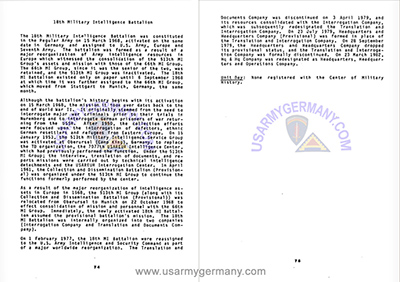 Click on image to view the 18th MI Bn unit history |
|||||||||||||||||||||||||||||||||||||||||||||||||||
| 1983 | |||||||||||||||||||||||||||||||||||||||||||||||||||
(Source: INSCOM Journal, August 1983) |
|||||||||||||||||||||||||||||||||||||||||||||||||||
The 18th MI Battalion traces its history back to the closing days of WWII. In the spring of 1945, the U.S. Army took control of DULAG LUFT, just outside of FRANKFURT (OBERURSEL). During the war, this camp was used as a German Interrogation Center for captured Allied Air Force personnel. The Collection and Interrogation Battalion (C&I Bn), one of several units assigned to the camp, was tasked with its first post-war mission: debriefing major German war criminals prior to their trials at NÜRNBERG. Later, the C&I Bn was tasked with debriefing German POW's returning from captivity in the Soviet Union. In Mar 1966, the unit was redes the 18th MI Battlion. Two years later it was reassigned to the 66th MI Gp and shortly thereafter relocated from OBERURSEL to MUNICH. |
|||||||||||||||||||||||||||||||||||||||||||||||||||
|
|||||||||||||||||||||||||||||||||||||||||||||||||||
| 527th Military Intelligence Battalion | |||||||||||||||||||||||||||||||||||||||||||||||||||
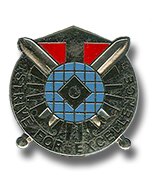 527th Military Intelligence Bn DUI 527th Military Intelligence Bn DUI |
|||||||||||||||||||||||||||||||||||||||||||||||||||
(Source: Excerpt from the Special Historical Series pub, "INSCOM And Its Heritage," published in 1985) |
|||||||||||||||||||||||||||||||||||||||||||||||||||
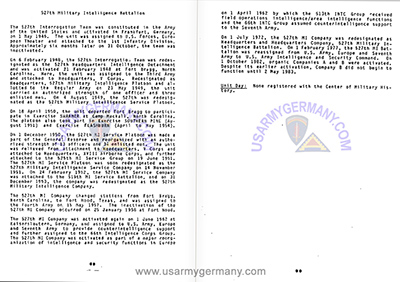 Click on image to view the 527th MI Bn unit history |
|||||||||||||||||||||||||||||||||||||||||||||||||||
|
|||||||||||||||||||||||||||||||||||||||||||||||||||
| Border Residence Offices | |||||||||||||||||||||||||||||||||||||||||||||||||||
| (Source: Email from Richard Stithem) | |||||||||||||||||||||||||||||||||||||||||||||||||||
| From the early 1950s through 1989 the US Army maintained upwards of 12 Border Resident Offices staffed primarily with German-speaking Interrogators who worked closely with German police and border agencies. A Warrant Officer generally managed the offices which were manned by 4-7 other enlisted soldiers. They dressed in civilian clothes. On the rare occasion when they wore uniforms, their uniforms had no rank. These officers were part 66th MI Group until 1980. After that, some were closed and others were maintained by the VII Corps. The Border Resident Offices changed function and number over time. Prior to the construction of the Berlin Wall and fortifications all along the W. German border, much of their work did involve refugees. But, by the time I served from 1975-1978, there were almost no refugees. During my 3 years, only there was only 1 successful escape attempt in our sector. Consequently, BROs focused on gathering intelligence from German border agencies that were patrolling the borders and quizzing travelers coming from E. Germany and the Czech Republic. Our primary objective was to detect any signs that the Soviet Union might be gearing up for an invasion. The BROs at that time were under the 511th MI Battalion and the 165th MI Battalion, which both fell under the 66th MI Group. The 165th MI Company had BROs located at Eschwege, Bad Hersfeld, and Fulda. Assigned to the 511th MI Company were BROs located at Coburg, Kronach, Hof, Bad Neustadt, Weiden, Cham, and Passau. The BROs had interrogators attached from the divisional MI companies and corps MI detachments. I was assigned as an interrogator to the 1st infantry division and attached to the 511th MI Battalion with my duty station being BRO Hof. I only visited the 1st Infantry Division one time. That was to take care of some paperwork. |
|||||||||||||||||||||||||||||||||||||||||||||||||||
| ADDITIONAL INFORMATION | |||||||||||||||||||||||||||||||||||||||||||||||||||
| (Source: US Army Border Operations in Germany, 1945-1983, by William Stacey, USAREUR Military History Office, 1984) | |||||||||||||||||||||||||||||||||||||||||||||||||||
| CHAPTER 5, The Border Force Adjusts, 1960 - 1970 This whole period in the early 1960s was one of great change for the military intelligence structure and functions in USAREUR, which was only partly manifested bay the establishment of the JICs and the comings and goings of the ACRs military intelligence detachments. By the summer of 1961 it was obvious that a major reorganization of the command's intelligence assets was needed, but the Berlin Crisis and the realignment of intelligence functions at higher headquarters had hampered the necessary planning. In January 1962, however, the USAREUR draft plan for the internal realignment of intelligence missions and organizations was completed. Originally, it was envisioned that the 66th Intelligence Corps Group would be eliminated and that its missions, functions, and assets would be divided between Seventh Army's 532d MI Battalion and USAREUR's 513th Intelligence Corps Group. The two units would be organized and operated in peacetime as they would be in wartime: the 532d would be responsible for counterintelligence functions for the Seventh Army area of responsibility, while the 513th would be responsible for USAREUR's effort to collect military intelligence in the East Bloc countries and the Soviet Union as well as for counterintelligence activities in six Federal Republic areas, thereby centralizing the missions of clandestine collection and offensive counterintelligence in one headquarters. Basically, the plan would allow more MI personnel to be placed in operational positions rather than at headquarters and would insure greater flexibility for meeting peacetime or wartime intelligence missions. However, Seventh Army thought its headquarters control elements were inadequate and the plan was modified, one result being that the 66th Intelligence Corps Group was retained and the 532d MI. Battalion inactivated in its place. The realignments and reorganizations were provisionally implemented on 1 April 1962, pending Department of the Army approval. The Department of the Army approved the reorganization on 27 April 1962 and, effective 1 June 1962, the 532d MI Battalion was inactivated, the 66th Intelligence Corps Group was reorganized, and the lettered companies from the 532d were redesignated as numbered companies and reorganized. The corps, division, and ACR military intelligence detachments remained attached to the serviced units. The 66th Intelligence Corps Group, assigned to the Seventh Army since 1 April, now consisted of a group headquarters and headquarters company, 5 security companies, 1 collection company and 11 MI detachments; however, only 3 companies were of major importance to the border mission. On the same date the following companies were activated from 532d assets and assigned to the 66th Intelligence Corps Group: - The 165th MI Company, located in the Frankfurt area, was responsible for the supervision of overt collection in Hesse. In addition to the US element in the Frankfurt JIC, it was responsible for field offices at Bad Hersfeld, Eschwege, and Fulda.* It was composed of 81 officer and enlisted personnel and an unknown number of civilians. - The 503rd MI Company, located in Munich, was responsible for the overt collect; on mission in southern Bavaria and supervised the Munich JIC element as well as the Berchtesgaden and Passau Field Offices. It had 81 officer and enlisted personnel plus 10 Department of the Army civilians and 23 "other" civilians. - The 511th MI Company, located in Nuernberg, was responsible for the overt collection mission in northern, or upper, Bavaria and supervised the Nuernberg JIC element as well as resident offices at Bad Neustadt, Coburg, Kronach, Hof, Marktredwitz, Altenstadt, and Cham. The 511th had 89 officer and enlisted personnel assigned. By the end of 1963, the 165th had picked up supervision of two other JIC elements -- Giessen and Kassel -- and most of the field offices in the 66th that had border responsibilities were being referred to as Border Offices. In addition the Altenstadt Border Office had been relocated to Weiden. It should be noted at this point that the 66th Intelligence Corps Group was responsible for the overall overt collection mission along the eastern borders. Its Overt Collection Division supervised this mission, which was accomplished by the three MI companies that interrogated illegal border crossers, deserters, defectors, refugees, repatriates, resettlers, travelers, and other personnel of intelligence interest who entered the 66th Intelligence Corps Group's area of responsibility (Land Hesse, Land Bavaria, Land Baden Wuerttemberg, and Land Rheinland Pfalz). The Overt Collection Division had been organize during the transition period on 1 May 1962 from personnel of the 532d MI Battalion on the Seventh Army headquarters staff and consisted of two officers, four enlisted personnel, and two Department of the Army civilians. The Border Operations portion of the Overt Collection Division focused on maintaining liaison with the German border police and customs services, screening all border crossers, reporting any changes in the physical features along the border, and investigating and reporting on any incidents occurring in the border area. The overall mission remained the detection of imminence of hostilities or, put more simply to provide early warning of impending attack by hostile forces. Each MI company had an Overt Collection Division that supported those elements of the company responsible for the overt collection mission. The overt collection elements within the companies were supplemented by linguist personnel of the 66th's 5th MI Company (Linguist) -- subsequently renamed the 5th MI Company (Interrogation) in FY 1965 -- and the corps and division MI detachments. The latter personnel were attached for peacetime operations only, and would revert to their parent units in wartime. This focus on the eastern borders by the 66th Intelligence Corps Group was further refined in December 1964 when the Frankfurt JIC was inactivated and operational control for the US elements at the Stuttgart and Mainz JICs was transferred to the 513th Intelligence Corps Group. This left the 66th Intelligence Corps Group with supervision of US elements at four JICs near the eastern borders -- Munich, Nuernberg, Kassel, and Giessen. Of note for the future, in FY 1964 almost all of the resident offices with a border mission began to be referred to as Border Residence Offices. The 503d MI Company was inactivated on 25 September 1965, which led to its elements being divided between the 165th MI Company and the 511th MI Company. The two remaining "border" MI companies were now organized as follows in regard to the border operations portion of their mission: - The 165th MI Company was responsible for the Kassel and Giessen JICs, while its Bad Hersfeld Field Office (which had a border mission also) controlled the Eschwege and Fulda Border Resident Offices; - the 511th MI Company was responsible for the Nuernberg JIC and Border Resident Offices at Bad Neustadt, Coburg, Kronach, Hof, Marktredwitz, Passau, Weiden, and Cham. (U) On 19 September 1966 Department of the Army directed that intelligence corps groups be redesignated as military intelligence groups. Consequently, on 15 October 1966, the 66th Intelligence Corps Group was redesignated as the 66th Military Intelligence Group and the 513th Intelligence Corps Group became the 513th Military Intelligence Group There was a major reorganization of the two MI groups on 1 February 1967 in which the 66th MI Group transferred to the 513th MI Group responsibility for the 5th MI Company, 531st MI Company, and the US Army elements at the JICs at Kassel, Giessen, and Nuernberg. With this loss of the major portion of its overt collection mission, the 66th renamed its Overt Collection Division the Border Operations Division, and the 165th MI Company and 511th MI Company renamed their branches as the Border Operations Branch and Border Liaison Operations Division, respectively. These name changes highlighted the fact that the divisions or branches would now concentrate on providing liaison between the German border agencies and the US Army elements operating on the border. In still another major reorganization, on 9 October 1968 the 66th MI Group and the 513th MI Group were merged at McGraw Kaserne in Munich, with the 513th being deleted as an operational headquarters and its units being absorbed into the 66th MI Group The 513th was subsequently inactivated on 25 January 1969. The 66th MI Group was now composed of the 2d MI Battalion, Aerial Surveillance (MIBARS); 766th and 430th MI Detachments; 18th MI Battalion (which had been activated on 15 March 1968 and controlled US Army elements at the JICs); 165th, 511th, and 527th MI Companies (Counterintelligence); 5th MI Company (Interrogation); plus two corps and four divisional MI detachments, which were now only attached to their parent organizations. By the end of the 1960s, the Border Resident Offices (BROs) had settled into their liaison role with the German border agencies, while still conducting interrogations, if the situation indicated that they might secure information on the "imminence of hostilities" (still their primary mission), and providing counterintelligence support to the armored cavalry regiments. Both companies had Border Affairs Sections within their Operations Branches, which passed all pertinent information directly to the ACR's S-2 and by secure electrical means to USAREUR, the corps, and 66th MI Group. In 1970 the 165th MI Company's Field Office at Kassel controlled the Border Resident Offices at Bad Hersfeld, Eschwege, and Fulda. The 511th MI Company's Field Office at Bayreuth controlled Border Resident offices at Coburg, Kronach, Hof, and Bad Neustadt; while the Cham Field Office (also a Border Resident Office) controlled the Border Resident offices at Passau and Weiden. CHAPTER 6, Modern Border Operations, 1970 - 1983 (U) Border Resident Office (BRO) Structure (U) The roles of the Border Resident Offices did not change substantially from 1970 through 1983, but the number of BROs and their organizational assignment and attachment did change during this period. In 1970 there were ten BROs assisting the armored cavalry regiments in conducting border surveillance and maintaining close liaison with German border agencies. The BROs were assigned to the 165th MI Company and the 511th MI Company, both of which were assigned to the 66th MI Group. - The 165th MI Company had BROs located at Eschwege, Bad Hersfeld, and Fulda. - Assigned to the 511th MI Company were BROs located at Coburg, Kronach, Hof, Bad Neustadt, Weiden, Cham, and Passau. The BROs had interrogators attached from the divisional MI companies and corps MI detachments. (U) A reorganization of these units on 21 April 1974 reversed the assignment and attachment of the divisional and corps MI elements. The divisional MI companies (1st, 3d, 8th, 503d, and 504th) and corps MI detachments (205th and 207th), which had been assigned to the 66th MI Group and only attached to their parent units, were now assigned to their parent units, with their interrogation sections attached to the 66th MI Group for operational control. Most of the interrogators previously serving at BROs were still being used in that mission. The 165th and 511th MI Companies still belonged to the 66th MI Group. The status of the BROs remained the same until November 1980, when USAREUR headquarters decided to close all of the BROs unless the corps or some other agency would take them over. Many of the parent units had often requested the return of their interrogators, so the proposal initially met with a favorable response by the corps and divisions. The reason was that information being developed by the BROs was judged by the 66th and the USAREUR ODCSI as being marginal, duplicative, and neither timely nor mission essential. The corps, however, were given the mission of maintaining liaison with the local German border agencies. Each decided to do it in a different manner. The BROs in the V Corps area (Eschwege, Bad Hersfeld, and Fulda) were closed by 30 June 1981. A Border Liaison Office (BLO), consisting of two analysts from V Corps' MI detachment, was retained in the 11th ACR's S-2 office. The VII Corps, however, never did stop its BRO program and continued to man its BROs with divisional MI personnel. A 3-man Border Liaison Office, attached to 2d ACR's S-2 office, had operational control of the BROs in the 2d ACR sector. The BROs at Bad Neustadt and Passau were closed during this period of retrenchment in 1981. As this study closed, 2d ACR was still convinced that the 23 German linguist interrogators at the 5 remaining BROs performed valuable duty in aiding the regiment in conducting border surveillance operations and maintaining close liaison with the German border agencies. In 1983 there was some discussion over reopening the BROs in the 11th ACR sector, and the 66th planned to operate BROs at Eschwege and Munich with its own assets. |
|||||||||||||||||||||||||||||||||||||||||||||||||||
|
|||||||||||||||||||||||||||||||||||||||||||||||||||
| Related Links | |||||||||||||||||||||||||||||||||||||||||||||||||||
|
|||||||||||||||||||||||||||||||||||||||||||||||||||