| If you do
NOT see the Table of Contents frame to the left of this page, then
Click here to open 'USArmyGermany' frameset |
||||
|
26th
Signal Battalion |
||||
|
|
||||
|
||||
|
|
||||
| Battalion History | ||||
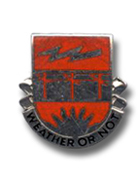 26th Signal Bn DUI 26th Signal Bn DUI |
||||
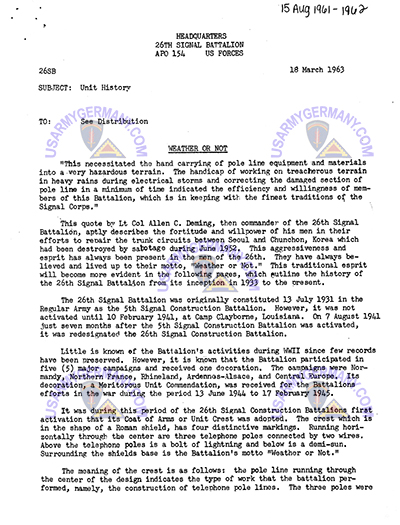 Unit History including the first year & a half in Germany (AHEC) |
||||
| 1961 | ||||
| (Source: 93rd Sig Bde PAO, early 1980s.) | ||||
|
On August 15 1961, the 26th Signal Bn moved from the States to Germany
where it became part of the 505th
Signal Group. In January 1965, the Battalion was reduced to zero strength but was later reconstituted on September 19 1965 from elements of other units in the 7th Signal Group. On April 16 1980, the battalion was reassigned to the 93rd Signal Brigade of VII Corps. The mission of the 26th Signal Battalion is the installation of three Corps Area Signal Centers. These centers provide telephone and record communications which link Corps Headquarters to the Division Field Artillery Brigades, higher headquarters and lateral Corps Headquarters. |
||||
If you have more
information on the history or organization of the 26th Signal Battalion,
please contact me . . |
||||
 |
||||
|
|
||||
| (Source: Email from Marion E. Chubick) | ||||
| I was in Company D of the 26th Signal Battalion in
Heilbronn, Germany in 1961 & (Oct) 1962.
We wore the 7th Army patch at that time. My CO was a Captain Brackenridge Bently. I was his Jeep driver and radio operator. I located and talked to Mr Brackenridge Bently (ret.col.) recenty. Co."C" I think was just across the street from us. One of the exec.officer was a Lt Al Ruskin (not sure of the spelling). Our Batt. Commander was a small black man who was a full bird Col. There was also a Lt Brandt, motor pool officer, in our Company. I'm hoping some of this info will help and I appreciate your efforts. |
||||
| (Source: Email from Jim Gignac) | ||||
| I was assigned to the 26th Signal Bn from Ft. Meade, MD, 1960/61, through Ft. Dix, aboard the USS Brukner (spelling) troop ship. Stationed at Flak Kaserne, Ludwigsburg. Was in HQ and in Company A.
My MOS was 293.60 P3, 710, 711 and 716. Remember the TRK 29’s (AN/TRC-29?) and some other equipment. Loved the amount of communications the equipment could handle. Also worked as the Bn CO’s clerk, hell-of-a guy, and CSM Arsenault. The BN EX and I didn’t see eye to eye on a couple of things, but I did my job. I was also CO Clerk for a red haired, overweight 1st Sgt. Supply SGT was SSG or SFC Wisnewski (spelling). Capt LaCour (spelling) great commander. 1Lt Edwin Mitchell was also a stand-up guy. Between being in a Hut, I was the Morning Report Sgt and Personnel Sgt. Best friends were: Less Smart and Don Marino and Charlie Webster. If anyone knows where those 3 are, please email me. Before I hang things up, would like to reconnect. I also was thinking seriously of making the Army a career and volunteered for the Viet Nam Military Advisors Group (MAG Force). Wrong rank and sent back. Made SGT at 24 months. Offered SSG to re-enlist but took a European discharge in 1963, (was involuntarily extended until they could find a replacement and arrival in Ludwigsburg) and lived in Stuttgart and Ludwigsburg. Had a bicycle and 1952 black VW bug. Worked part-time with an American, Ray Schwartz, who had a Beer Tent for festivals and supplied the slot machines and jukebox’s for the EM and NCO and Officers clubs. I was visiting SSG/SFC Wisnewski at his Gasthaus with his German wife when JFK was shot and killed. Will never forget those tragic days. Was in Berlin for awhile and for the JFK Memorial Service. Didn’t like the duty so transferred back to the 26th. A friend, Frank Wimberly, died in Spain due to some poor judgment, but still a friend. The cooks we had always made great food. While in the field, the mess hall never closed and served 4 meals a day with some of the best pastries and cakes. A lot of fond memories, and good friends. Remember the Parka’s with the wolf fur hoods, the Mickey mouse boots, the heaters in the tents during the winter field exercises, the NCO academy and the German people. The only thing I can remember, that I did not like, were those damn IG Inspections and how the brass ran around pulling their hair out getting prepared. I think 1LT E. Mitchell made Captain and was the CO of Company A. I have a letter of reference from him when I got my discharge. Sure did love the almost 1 year of the European Discharge status. Could stay out after midnight. As if I didn’t when I lived in the barracks. Had a single room on the 3rd floor, 1 of 4. None of the CQ’s ever checked the 3rd floor. If I recall, the MP’s and the 26th did not get along very well. Racking my brain for the name of the First Sergeant. Red haired guy, he waddled when he walked. Had a good heart though and treated me well. |
||||
| (Source: Email from James H. Brown, 26th Sig Bn, 1961-1964) | ||||
| I read the history of the Battalion with great interest. I found a few errors that I can correct. 1. The Battalion Headquarters plus A and B Companies were located in Flak Kaserne in Ludwigsburg: C and D Companies were in Heilbronn. 2. The Battalion was commanded by LTC Frank Cahill, a ruddy Irishman. I think the officer who was incorrectly ID'd as the Bn CO was in fact Lt Vic Shavers, who took over A Company from Cpt George LeCoure. 3. The reference to PFC Wimberly was incorrect: he did not die in Spain. 4. The Company Commanders of B Company were Cpt Bruce R. Harris, who as stated, retired in the rank of Lt General - Chief, Signal Officer. He was replaced by Cpt Frank Nicholas, and he was followed by 1/Lt James Brown (who was promoted to Cpt while in command), and finally, he was followed by 1/Lt Charles Petronis. I know these facts to be correct; I was assigned to the Battalion from December 1961 to July 1964 - first as Platoon Leader, HqCo Signal Operation Platoon, then I replaced Cpt Olsovsky as the Bn S4/PBO, and then as CO of Company B (Nov 63 - Jul 64). When the Bn was split up (Hq was deactivated) in I believe November of 1963, Co A and Co B were transferred to the 1st Sig Bn in Boebligen (sp) - LTC Grandinetti commanding. My 1/Sgt was named Gordon. He was promoted to E-8 in the early part of 1964. Because the Bn Hq was deactivated, most of the staff was reassigned to Co A and Co B. As a result, I was truly blessed with the people assigned to my Company. The S-3 NCOIC, SFC Howard Battle and the S-4 NCOIC, MSGT Revie Lawson, and SGT Manning, the Comm Center NCOIC, were three of the people involved. Their assignment, as well as all the officers (1/LTs Charlie Petronis and Bill Reid) and men in the Company made my 10 months in command the best of my military career. |
||||
| 1963 | ||||
| (Source: Email from Ed Mitchell, S-3, HQ 26th Sig Bn, 1962-63) | ||||
| I was the S-3
for the 26th Sig Bn in 1963 and left Germany in December of '63 when
the Bn moved out in their last exercise as a full CA Battalion. The S-3 before me was Bruce Harris who retired from the Army as a Lt General, a wonderful man and a great Army officer. When I left Jim Caddigan took over as the S-3. The Company Commanders were Jim Caddigan (C), Al Rushton (D), Ben Olsovsky (A) and Charlie Petronis (B). Ed Mitchell |
||||
|
|
||||
| (Source: Email from Thomas Schulz, Germany) | ||||
|
||||
| (Source: Email from Denton Aylor, Co A, 26th Sig Bn) | ||||
| I was in the 26th Signal Bn, A Company at Flak Kaserne in the early part of 1964. I set up a relay station at Schwabisch Gmund on the German Police radio relay tower. We lived in a Guasthaus down the road for a month before we turned it over to B Company of the 26th Signal. We had a shot into Schwabisch Hall and another to Böblingen. I came back from there to be transferred to Schwabisch Hall, our Company was renamed as A Co. of the 1st Signal Bn. We were Detachment 1 at Dolan Barracks. There were 6 of us there with 1 NCOIC and worked with the 34th Signal Bn, which had about 40 in their detachment. Our VHF shot was on the Einkorn about 5 Miles from Dolan Barracks. We were connected to the carrier section on base via Spiral 4 cable. The 34th had a large operation; they had a VHF/carrier group and a cable platoon and switchboard group. Most of Dolan Barracks had Artillery and some aviation at that time. I left there in Oct. 1965 after being promoted to Sgt. E5. I remember reading it was shut down in 1968 and the site was used for local broadcast of armed forces television. If I can help any further please send me an email. PS you have wonderful web site. |
||||
| 1965 | ||||
| (Source: Email from David Brockman, HHD, 26th Sig Bn) | ||||
| Hello, I was initially assigned to the 25th. Sig Bn in Karlsruhe (APO 09164), HHQ Det, when I first arrived in Germany. When the 26th Sig Bn was reactivated (1965) I was transferred to HQ Detachment, and helped set up our new HQ in Heilbronn. I believe our Bn. Co. was Lt. Col. William F.Lindsey, the Adj. and Det/Company Co was Lt. James C. Majors - I think, and our 1st Sgt was Staff Sgt, then SFC Danny R. Fancher. I worked in the Bn. Message Center with an office that looked down on the PX and theater. I kept the publications current, did forms control, reproduction, message center distribution, had the Apple Cider (Bn) switchboard and sent the courier jeeps out to the companies. During a winter field exersize, winter of 1965/66, I got emergency reassignment back to CONARC. My memory at 60 yrs is wierd, some things I remember well, others escape me. We did have a tight little unit that worked well together and stayed physically fit. As far as I knew we had no problems with drugs, but sometimes a couple of the guys would partake of too much cognac or beer. The next morning during PE you could tell by the smell of their sweat. As I remember the beer I liked best was Moninger's in the flip top bottle although alcohol was not an important part of my life. While I was in USAREUR, I believed I would be a career soldier and wanted to be a combat troop not a chairborne trooper. So in my off duty time I studied everything I could get my hands on about jungle warfare, escape and evasion, survival and counter insurgency. But it was not to be. While there, I joined the local rod and gun club, and bought a Colt Trooper .357 which I gave to SFC. Danny Fancher in friendship and respect. He was one hell of a good leader, motivator and human being! If anyone knows his whereabouts I would really like to establish contact with him. He was a good friend. I didn't know Col. Lindsey well, but 1st. Lt. Majors was a hell of a good C.O.,Officer and leader of men. I believe I have him to thank for my fast promotion to SP4. He submitted a request for a time in grade waiver and I got my E4 1 year and 3 days after enlisting. Unusual at the time. I wanted to go to the NCO Acadamy which was in a place called Bad Toelz. One of my regrets was that while I was over there I couldn't travel due to really tight finances. I had an allotment going home to wife and kid and series E. bonds. That left me about $40. per month. All in all the 26th was a well run, smooth operating outfit and at least in HQ there was mostly dedicated, hard working guys. The facilities in Heilbronn (09227) Wharton Brks, seemed to me to be an improvement over the old WW2 buildings of the 25th. in Karlsruhe, (09164) Gerzewski Brks. Larger windows and easier to heat. That's all I can think of right now, I hope it helps a little. PS The jeep I used most often was #106, an M151A1. Our rifles were M14's. |
||||
 Massachusetts DEMOD radio site near Heilbronn (Stanley Perkoski, FB) |
||||
| 1966 | ||||
| (Source: Email from Clifton R. Crum) | ||||
| I am a retired Master Sergeant and former member of the 26th Signal Battalion at Wharton Barracks, Helbronn, Germany.
I served in the Battalion from December 1966 - December 1968. While I was there, the battalion consisted of 4 line companies, A, B, C, D and Hq Co. (might have been a det instead of a Company). The missions and make up of the line companies were identical and the mission was that of the Army Area Communications systems. Our support mission was the VII Corps area of operations. On a hill over looking Heilbronn and Wharton Barracks was semi-permanent site known as Massachussetts De-mod, with the usual radio relay and Carrier systems, manual switching, and I think a patching panel was there also. RWI capability was also available. The time spent there was interesting, as one may remember we had the Viet Nam war going on, so there was a lot of Officer and Enlisted movements going on and no one was guaranteed to be there very long. However, we lacked little down time as we were always in the field, or so it seemed. We had E-6s at times pulling duties as Unit First Sergeants and 2 Lieutenants as Unit Commanders. The Battalion Staff was similarily staffed as well. We were fortunate to have LTC John Blair as our Battalion Commander. I can't remember the Command Sergeant Major's name, although it's probably a moot point, as he was mosly forgettable anyway. Like everything else in life, there were some good times and there were some bad times. Duty with the 26th was no different, but I must say the biggest portion of the times there were good ones. In my estimation, the 26th Signal Battalion was an excellent one and if I had it to do over again I'd serve with it again. We did our Communications mission very well, and sometimes the mission of others Units as well. Does anyone remember the " Saga of the Orange Jeep"? I do, and it is one of my fondest memories from my time served there. |
||||
| 1970 | ||||
| (Source: Email from Joseph Lafferty, 26th Sig Bn, 1969-72) | ||||
| I served in the old 26th Signal Battalion from December 1969 until June 1972.
At that time the unit was stationed in Wharton Barrack, Heilbronn, Germany. Unit organization was HHC, A, B and C line companies. There was a Delta company but it was detached in a provisional battalion located, I believe, somewhere it Texas. The provisional battalion had all the delta companies from several battalions in the 7th Army Communications Command later 7th Signal Brigade. One such company would come over annually for the Reforger exercise. I believe D/26 was so deployed in 1971. As part of that exercise we deployed to the Nuremburg area. The big excitement for the exercise was that the D Company troops dumped over 50 gal of diesel fuel on the group which caused a major issue with the German liaisons sue to environment pollution concerns. My assignments with the 26th went from B Company Cable platoon leader (CO Tony Morano and platoon sergeant SFC Frank Donner), A Company Signal Center Platoon leader (Company Commander Mike Laurent) and Battalion Motor Officer (Motor Tech CWO Doris Beubout and Bn Motor Sgt Frank Dodgens. I can recall two Bn commanders-LTC Gerald Rosey and LTC Harry “Wild Indian” York. We had several commanders over my 2 and a half years with unit. One was relieved out and out, another was moved sideways but did get a parade. LTC York was my final CO. A fine officer and leader in spite of being a West Pointer. He was NOT one of the officers relieved. I also recall CWO Paladino who was our personnel tech in the S-1 shop. The warrant officers, we had another who ran the electronic maintenance shop and whose name escapes me) were the institutional memory of the Army at a time when officers (again like me) went from 2LT to CPT in the course of 24 months and when promotions for NCOs were equally rapid. We were the battalion that had a 1LT (westpointer no less) who did not agree with the Vietnam war and threatened to desert. I don’t know the arrangements but he never got transfered to SE Asia. He was also pretty much the senior 1LT in the Army until Calley. We used to joke that he kept his VW van loaded and ready to drive to Switzerland if he ever got orders. However, those are just second and third hand rumors. The battalion maintained two 24/7 telecom operations. Battalion telephone switch board (“Cherry Switch”) was a dismounted manual switch on skids behind either B or C companies. This serviced the TA-812 (or TA-43) field phones in all companies and staff offices as well as the radio link to higher HQ. This link was the second operations being a demodulation point/terminal on a nearby hill. The UHF radio network (using AN/GRC-50 and 12 channel analog TCC-7 multiplexers) connecting all ComCon/Brigade units terminated there and connected via landline to Cherry Switch. During my tenure we moved from the analog mux to digital TDM-PCM technology. Our prime movers were the old reliable duce and a half trucks and the ¾ ton trucks. At one point, LTC York managed to get a reissue of refurbished 3/4s rather that get the dreaded 5/4 trucks. The culture at the time was somewhat strange. Most of the troops (officer and enlisted) were either just back from Vietnam or expecting to go there shortly. As a result, full focus was not on the work at hand. A second diversion was the high level of availability of hashish. For much of my tour it was available for $1/gram on the German market. German drug laws were very strict and occasionally the troops would by compressed horse dung. (This looked very similar to a cube of hash). It is not against the law to sell horse dung -- it did however cause a problem in the barracks. I do not suggest a high level of drug usage. There was enough to be worrisome. Barracks were three story units originally build just after WW2. Set up in a rectangle. HQ at one end, the mess hall/S4 and utilities at the other. Old and indifferently maintained. (The Army tried but post engineer funds are always in short supply.) The barracks were heated via steam heat from boilers in the mess hall/S4 building at one end of this quadrangle. The water was very hard and left deposits in the pipes and eventually greatly hampered the heating process. I recall a maintenance project where many of these pipes were replaced. The sediment was so profound that the exhumed pipes looked like stone pipes encased in the thin coating of metal. We shared the quad with the 572nd Heavy Equipment Maintenance (HEM) company and a company of infantry (unit unknown) that was assigned for security related to an ordnance battalion located in another nearby kaserne (Badenerhof, I think) During this time we transitioned to subdued rank insignia and new uniformed rules requiring fatigue jackets worn not tucked into the pants and with sleeves rolled up. One of my colleagues (1LT Russ Warren) ran into a senior NCO coming back from stateside leave at an autobahn rest stop. The NCO began to, very politely and with proper respect, check Russ out for not having his shirt tucked and having the sleeved rolled up. Russ gently asked “ Sarge, you’ve been away for a while haven’t you? I have other memories of that time, but I will end at this point. The war wound done and, along with many other of the junior officers in support branches I was RIF’d in 1972. I regret if I have misspelled the names of any of my former comrades. I have nothing but respect for most of them, especially the NCOs and Warrants who helped to train newby junior officers (like me). |
||||
| (Source: Email from Murray MacNeill, 26th Sig Bn, 1970-71) | ||||
| I served as a
relay operator in the 26th Signal Bn. in Heilbronn during 1970-71.
I have lost track with everyone except for a Lt. who served with me.
He is now an accountant in Chicago. Since I was young, I kept nothing
of that time and greatly regret having no pictures or other memorabilia
left. I did, however, locate the attached picture of what I believe
to be a Trac-24 antenna! (Radio Set AN/TRC-24 - part of the Radio
Relay system.) I attended an air show in Hillsboro, Oregon, several
years ago and visited an AF unit displaying a signal van that combined
all of the equipment we had in a number of large vans easily fit into
a very small van. Very impressive...when I told them what it was like
when I did the job, they all seemed a bit amazed. I arrived in Germany in early 1970. The 26th Sig Bn was first part of the 7th Army Communications Command (Mannheim), then it changed later in that year. I will locate some old orders to see what it changed to. I was in Charlie Company. I understand one company of the 26th remained in the US, but I do not recall which one. Each company had platoons of Radio Relay Operators, Cable grunts and Comm Center folks as well as the usual support groups. I believe that my company maintained one remote site, but I do not recall where that was. There was another group stationed on a base near Munich. For a part of my stay, I was attached to a Pershing Missile BN in Schwaebisch Gmuend. The main Bn was in Heilbronn. Our unit was once referred to as "Blue Lightning", but this ended when those kinds of self identified nicknames was abolished sometime in 1970. My unit responded to "Crashes", meaning we went into the field, that is, the mountains in the Schwabian Alps to set up when called on alert. We also participated in regularly scheduled exercises, including the REFORGER exercises. We once were thrown out of our usual site by German foresters when it was determined that we were tearing up their forests! I believe that the Bn had A, B, C and D companies, with E in the US, but I may well be wrong about this. (Webmaster: The History of the 7th Sig Bde states that the Delta Companies of each of the five Combat Area Battalions, including the 26th Sig Bn, were relocated in 1968 to Fort Hood, Texas, as a part of the REFORGER concept.) Finally, please let me know if you hear from anyone who might have served in the 26th around the time I did. |
||||
| 1972 | ||||
| (Source: Email from David Byrd) | ||||
| I was stationed with Delta Co. 26th Signal Bn. MOS; 31M after my original unit, the 16th Signal Bn. was disbanded in Butzbach in approx. 1972. I am not sure of the reason of disbanding the 16th, but I will always think it was mainly the racial unrest, rioting within our base & extensive drug use etc.. I served until Nov 1973 when I reenlisted and PCS’d to the 1st Cav. at Ft Hood. I then returned to the 26th in 1975 serving with BATCOM in HQ until returning to the States in 1976, not really sure about dates, it’s been a long time. When Delta Company of the 26th was formed, we were made up from our old company, Charlie Co from the 16th Sig. Those were very trying times for units in Germany, i.e. drug use, racial issues etc. We had a great company though, we brought from our old unit our PCM gear which as I recall the other companies didn’t have. We were mainly using ANGRY 50s w/ PCM carrier equip. I was an E5 in charge of distant relay teams as I preferred to stay out of the AASC areas even though it meant less hot chow. |
||||
| 1973 | ||||
| (Source: Email from Meir I. Horvitz) | ||||
| I was assigned to the 26th as the Bn. XO while in Heilbronn on 13 March 1973 until 23 September 1974 when I was reassigned to the 7th Signal Brigade in Mannheim. While I was with the 26th we had 2 Bn. Commanders:   LTC York (I can't remember his first name) LTC Thomas Adkins. LTC York (I can't remember his first name) LTC Thomas Adkins. |
||||
| (Source: Email from Jon Joyce, C Co, 26th Sig Bn) | ||||
I was in the 26th at Wharton Barracks, in Heilbronn from January 1973 to March 1976, At that time we were part of the 7th Signal Brigade HQ'd in Mannheim. I was in C Company most of the time, but was assigned to D Co. for a short time. I remember the C Co. CO being Capt James Dooley, assisted by Lt. Crouse and Lt. Nichols. All three were very good officers. I think the D Co. CO was Capt Crawford.
I was a 52D20 generator mechanic working in the motor pool. I spent a lot of time on the road keeping generators running at several different relay sites. My contact vehicle the first year was the old 3/4 Ton Dodge, which was a good vehicle. That was replaced by a 5/4 Ton Jeep pickup, It went fast, but rode like a lumber wagon.
Site 29 was in the hills outside of Heilbronn, and was powered 24/7 by several 10kW gensets. These things were 3600 rpm units that screamed like the devil, and should never have been used as prime power. I also ran support at relay sites in Schwabish Gemund, but that was a pretty long haul from Heilbronn.
When I first got to the 26th, it was a few months after the 1973 Arab - Israeli War. We were told that lot of equipment had been stripped out of the battalion and sent to the Israelis, and the stuff that was left was in bad shape. We spent a lot of time scrounging parts and equipment to keep gensets running. I often would drive down to our Depot supply near Stuttgart (which we weren't authorized to use), and sign fictitious names and unit numbers to procure repair parts. In 1975, I married Emily Hubner in the post chapel at Wharton Barracks. Emily was an E4 who worked in the TADS compound at Wharton Barracks. We'll celebrate 35 years in August. My three year Army career was a very good experience, although I was ready to get out when my hitch was up. I used the 52D20 training and the GI Bill to get a degree in electrical engineering, and have worked as a power system engineer for 26 years now.
|
||||
|
|
||||
| 1974 | ||||
| (Source: Email from Jerry Dockal) | ||||
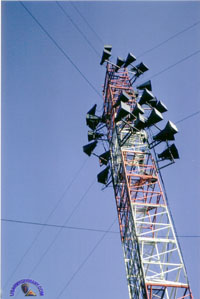
| I was a member of 26th Signal Battalion from Sept 1974 to 1976. I was in C Company, 26th Sig Bn, as Sgt, Team Chief of Microwave Platoon. My MOS was 31M and worked as 26L in LOS Microwave. My Company commander was Cpt James Dooley when I arrived there but Cpt Crawford became it later, whom I finished up with in C Co. When I was there I knew welding and worked with a Lt from Motor Pool in C Co; we welded up all our M35A2 (deuce and half) trucks that had been in the Germany for years and were eaten up from salt from snow or rust. We used old Grey metal wall lockers to replace the holes in trucks. We only had acetylene torches to weld with and used coat hangers as welding rods. In my platoon we received the AB-216 towers and learned how to put them up and take them down. We built towers all over the place in Germany. Back then when AB-216 towers came to Germany I was a Tower Rat. I went up with the first section and didn't come down till we reached the designated height we were scheduled to build (120-150ft generally). Then I took on getting all the AN/GRC-50 horns mounted and all our LOS Microwave dishes mounted for all AN/TRC-138's. I was married at the time and my whole family was there with me in Heilbronn. I stumbled on this site by accident looking up AB-216 Towers and decided to add my 2 cents in about the 26th Sig. Actually I believe they where good times as I remember just lots of field time. |
||||
| (Source: Email from Frank Olson, B Co, 26th Sig Bn, 1974-1976) | ||||
| I was assigned to B Company, 26th Sig Bn from 1974-76. MOS 31M and 26L…. I was assigned to remote Site 261, a location as a relay site. We lived at the site and had a lot of German friends. The town Stocksberg was really small, more of a farming village. I do remember the towns of Sulzbach and Spiegelberg also. I looked it up and the town has a large radio tower. I have a buddy who lives in Germany and he said the site is still there but empty and fenced off. When we talked there was another site we think was in Schwabisch Gmund and were relay sites for the Pershing Missiles at the time. Again we lived there, with a security fence, weapons etc... It was a Microwave shot with TRC 143/144's, with 524's also. We would during the week go to Heilbronn Wharton Barracks for fuel, water etc... Still remember you could not have a spouse while assigned there. We were stationed there as a team of 4 with a Spec 4 in charge and a Team chief that would visit the site for duty requirements, inspections, etc. Our site Chief was Sgt Christenson and Sgt Hicks. Our LT was Lt Nichols (and another LT whose name I can’t remember) and Cpt Dooley. We had two 30 Kw generators that ran the site and two 10 KW backup generators. We had two 2.5 ton trucks and a 5/4. Every 3 days we would drive to Wharton Barracks to fill the water pod. I was there for a little over a year then went to Site 29 until my PCS. At Site 29 we had SFC Abbott, I cannot remember the Site chief at "29." |
||||
| 1978 | ||||
| (Source: Email from Maria Anthony, D Co, 26th Sig Bn, 1978-1981) | ||||
| I was looking up my "Weather or Not" insignia to try and recall the unit number and found your site.
I enlisted at age 17 in 1978, as a 36 Delta, Antennas and Towers, for a tour with Delta Company, 26th Signal Battalion in Heilbronn. It was a rare Army MOS so I went to Wichita Falls AFB for training, where I was the only woman. To prove myself I had to be able to climb better than the guys. During my six months training we spent about two days covering the "obsolete" sectional towers which turned out to be the ones my unit used on their "field problems". The green 585 and the signal orange and white 216. In Germany, my job during maneuvers was to inventory, load, drive, unload, clear the ground, erect the tower usually 150 to 200 feet, install antennas, and get the coax cable into the radio van. Mostly this was in the deep woods, and the towers had to be guyed every three sections which meant a never ending battle to establish straight lines through the trees. We had a fellow with a bow and arrow, for really dense woods -- he would shoot a string from the tower corner, then we would tie the guy cable to it and pull it back through the trees. It was often winter and the ground would be frozen and we would have a rough time getting the guy stakes in the ground. The tower parts would be frozen together and ice everywhere, especially up high! The woods were awesome though, and us few fools who worked on towers had a special love for the trees. And I guess we had some need to risk our lives against gravity. We lived rough in tents, and partied like young people did in the 1970s. Tower crew would be there for weeks sometime before the rest of the unit arrived, and we were always the last to leave. After a month or two we'd pack it back up, go back to Wharton Barracks, clean and count everything and start all over again. Once in a while we would go to places where they already had towers and use them for our antennas, that was easy. There were like nine men to every one woman soldier. We (females) were in one downstairs wing of the unit's barracks building. In the field we, or usually just I, had a separate tent. When it was really freezing and I was the only girl, before the main unit arrived, I would crash in the guys tent. In the beginning we heated the tents with mo-gas but then someone blew themselves up and we switched to wood. Plenty of that around and much nicer, but it meant little sleep for one person trying to stay warm. Upon reflection, between the climbing and stoves and the actual fear of freezing to death, it was kind of a really dangerous life. Today I think it would either lead to a reality show or lawsuit, but this was the 1970s. And I must say although I was verbally sexually harassed pretty much nonstop, no one ever pressured me to do anything, and there was none of the predatory rape culture that seems to be prevalent now in the armed forces. When we weren't in the field we did tedious busy work back home, but off duty I was away on my 10 speed down the trails along the Neckar River, or hiking in the vineyards and wooded hills, taking day trips to castles and towns, or the occasional weekend to Bavaria or Amsterdam. At the time what we did in Signal Corps seemed pointless and endlessly repetitious, but I was young and dumb, not even 21 when I got out (with money for college which is why I joined.) Since then I have come to see the value of our presence there, and the lines of communications we maintained. |
||||
| ADDITIONAL INFORMATION | ||||
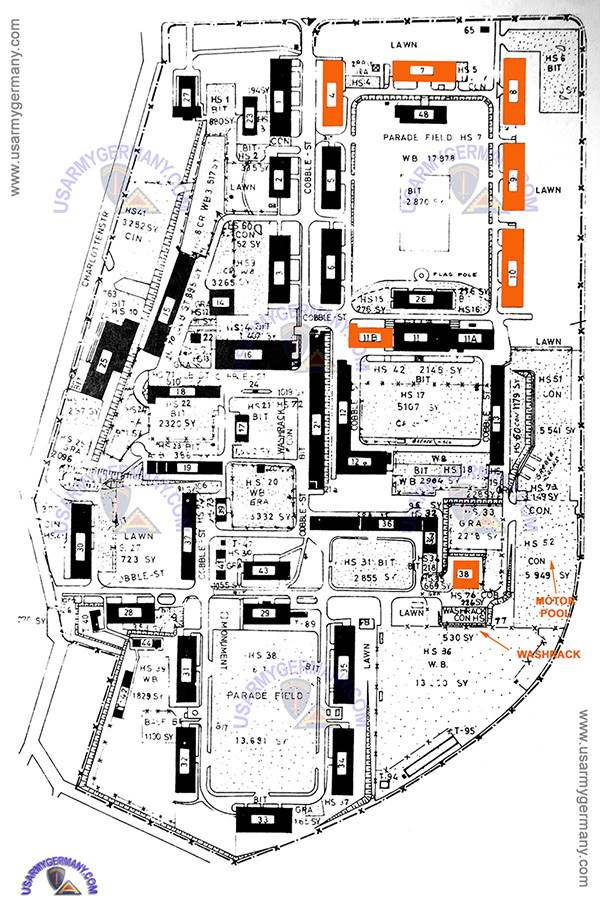 26th Signal Battalion at Wharton Barracks, late 1970s |
||||
| We were in Building #8. If I recall correctly #8 was D, #9 was C, and #10 was A. I may be mistaken but I remember it didn't make sense at the time. B was either #5 or #4, I had a friend over there. Parade field HS 7, the Quad, was the center of activities, where we had formations, and general hanging out. Sometimes we would have visitors like German and Dutch platoons, and events, like mini Octoberfest, on the quad. #7 was the Mess. The HS 6 area was the main motor pool we shared with some of the other companies. I always thought we were lucky to have all that green lawn and our vehicles parked right out back. When we came back from the field really filthy in the spring we would get our vehicles washed at that washrack by 77, which was in the land of mechanics, and some serious motor bays at what must be #38. By the way all the shapes that look like snake parts are curbs/curbed walls. I should know, I spent two months with a cast on my arm on curb painting duty. It actually made me miss the field. That is all I can say for sure. There was an HQ that might have been #11A and #11B. There was a snack bar, maybe #43, movie theatre maybe what looks like.#8, and a banking facility, supply bldg at maybe #15. The closest Gasthaus was Heinrich Blind, I think on Charlottenstrasse, or around a corner. The barracks buildings were massive. You know how GIs throw their boots when they leave? One of our wilder tower monkeys went out the attic window, scaled the roof, climbed the Lightning rod and tied his boots to the top. Our quiet straight laced sergeant whom I had never even seen in the air, disapproved, and climbed up and took them down. While at home us tower rats would volunteer for any duty that involved messing around in the top of the building. For New Year's Eve 1980 we cleared out the attic garret that ran the length of the barrack and had a party, with wild German fireworks going off outside all night. I never even knew or speculated about the Nazi history of the building. We were oblivious. |
||||
| 1986 | ||||
| (Source: Heilbronn Eagle, November 24, 1986) | ||||
| Site 96 soldiers
run 'secure' operation
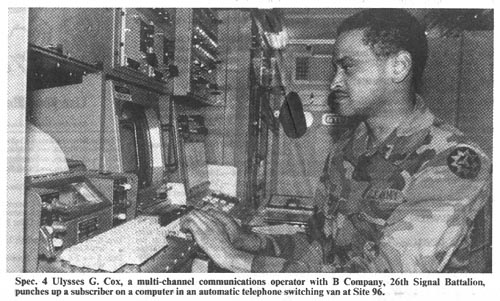
by Mike Novogradac Soldiers at the 26th Signal Battalion's Emergency Deployment Communications Network (EDCN) Site 96 go to work each day with the understanding that they are the vital link to Army communications in Europe. Site 96, one of five fixed, remote communications sites in Germany (Webmaster Note: probably one in five active EDCN sites; there were obviously several dozens of 'fixed, remote' signal sites in operation during this period), operates 24 hours a day, 365 days a year. "Basically," said site chief Staff Sgt. Billy W. French, "the sites are set up so that any unit in Germany can talk to any other unit in Germany at any time in a secure radio network, by means of encoded transmissions that are received by decoding receivers. "In simpler terms, it's a secure telephone system which is operated through radio waves." French doesn't use the term "secure" lightly. "For an enemy to break into the system," he said, "he would first have to gain access to one of the system's telephones. "Then, he must have a transmitter and receiver that are compatable to our system," he continued. "But that's all virtually impossible, because if this site was overun by an enemy during war, we'd first destroy all our equipment. "Second, the other four sites still in operation would just ignore our system, which would make it useless to the enemy. "In addition, other mobile sites operated by signal units throughout Germany would be providing the vital communications link," French said. With automated switchboards routing system users through encoded microwave and ultra high frequency (UHF) radio broadcasts, system failures are few. "Our main job is to monitor all functions of the system for equipment failures and possible commercial power outages," French said. "In times of equipment failure, pull-out circuit boards or even entire pieces of equipment can be replaced. In cases of power failure, backup generators are engaged." Sgt. Bryan L. Watkins, a radio section sergeant at Site 96, says the facility offers a lot of training to the soldiers who work there. "When it comes to hands-on training, we don't do very much installing, because this is a fixed station that is in operation constantly," he said. "What we're mostly concerned with is maintaining the equipment we use. The system is good and the only chance we get to install equipment is when it goes down. "But," he continued, "there's many advantages. At this site we're mostly all privates, specialists four and sergeants who are actually learning the job of a sergeant first class. "I feel good about my job here," Watkins said. "If USAREUR didn't have this site, USAREUR wouldn't have secure communications -- and that makes you feel good about being behind it all." |
||||
|
|
||||
| (Source: Heilbronn Eagle, June 9, 1986) | ||||
| Signal site
provides vital message link
by Mike Novogradac During command post exercise Able Archer, units of all kinds are spread out all over Germany, doing what the VII Corps commander wants them to do. If the general wants an artillery unit to destroy an enemy town here, his unit does it. If he wants a nuclear, biological and chemical unit to spray some tree killer there, he does that, too. |
||||
|
||||
| A fixed, semi-mobile,
secure and expandable communications area, Site 96 is the vital link
between the VII Corps directing element and all the maneuver units
throughout Germany that it controls. "This site exists throughout the year to link VII Corps to major subordinate commands with secure, encrypted, digital telephone communications," explained 1st Lt. Richard A. Solchenberger, executive officer of B Company, which operates the site. "But during Able Archer, we can build on our existing network to cover a greater geographical area, because now, those subordinate units are spread throughout Germany. And with our added communications links, we can support other divisional headquarters units and their subordinate units as well." Solchenberger explained that while other maneuver units are training, Site 96's part in Able Archer is a real mission. "If it weren't for our communications, those other units wouldn't be able to train during this exercise," he said. "If we didn't provide commo, their training wouldn't go anywhere. "And, it's the same situation during war," he continued. "Without us, they can't orchestrate their movements on the battlefield." If they must, personnel at Site 96 can quickly mobilize and set up the same communications coverage in a safe place. "If this site were in danger of the enemy during war," Solchenberger said, "we'd just disconnect from the network, move to a more survivable location and begin communications again. "Also, if our Army is advancing or falling back from the enemy, we have to be able to perform a `leap frog' to the front or the rear to provide that needed commo." |
||||
|
|
||||
| 1987 | ||||
| (Source: Heilbronn Eagle, March 30, 1987) | ||||
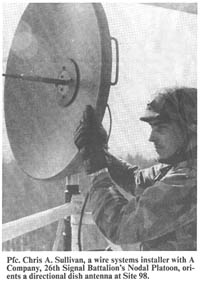
| Nodal Platoon signals throughout Germany by Mike Novogradac If the Army's average soldier were to visit EDCN (Emergency Deployment Communications Network) Site 98 near Wuerzburg, he'd run to the nearest reenlistment NCO and ask for another hitch in a job specialty that would assign him there permanently. Tucked peacefully away, a few miles into the woods 25 miles west of Wuerzburg, A Company, 26th Signal Battalion's Nodal Platoon is the hub of tactical communications in Germany. |
||||
|
||||
| 1991 | ||||
| (Source: Heilbronn Eagle, July 29, 1991) | ||||
| 26th bids
farewell to long years of service and pride by Michelle Sarver The sun shined on more than 600 soldiers assembled to bid farewell to the long tradition of dedication that has made up the 26th Signal Battalion. In a parade July 18, soldiers from the battalion, as well as their German and French partnership units showed the precision and discipline that has made NATO a powerful influence on world peace. LTC Robert C. Zelazny, battalion commander, shared his feelings with the soldiers of his unit, "Let me say how proud I am of each of you and what you've accomplished both individually and as a unit. I hope you share that pride and take it with you to your next assignment." The source of this battalion's esprit de corps can be traced to its initial activation in 1941 as the 26th Signal Construction Battalion. The organization distinguished itself participating in five major campaigns during World War II. For its efforts fighting in Northern France, the Rhineland, Ardennes-Alsace and Central Europe it was awarded a Meritorious Unit Commendation. |
||||
|
||||
| "In 1961 the
Berlin Wall went up and we were called to fight the Cold War. Since
then, many have been surprised how fast communism has fallen - no
one is surprised that has fallen. The seeds to its downfall were within
the system. (During the Cold War) our mission was to ensure communism
didn't spread beyond its borders. Our hard work and training were
effective in deterring them from making a move." Soon after the Berlin Wall crumbled to the ground, the 26th Signal Battalion was called upon to tackle a new mission on a new battle field. In the beginning of December, 1990 the unit deployed to Southwest Asia to provide the `Voice of the Corps.' Zelazny commended his soldiers for their accomplishments through Operations Desert Shield and Storm. "The battalion's ability to provide communications support during Operation Desert Shield/Storm was a major factor in the success of VII Corps. . . " Three soldiers were recognized for their extraordinary performance during the deployment with Bronze Stars. Zelazny pointed out, ". . . these soldiers are certainly not the only soldiers that have or will receive an award for their heroic action in combat. There are 44 Bronze Star medals pending and 267 Army Commendation medals have been approved... The mission could not have been accomplished without the brave commitment of every soldier standing before you." The battalion commander recognized the value of the unit's German and French partnership units, the Luftlande Fernmelde Lehr Battalion 9, and the 42nd Regiment de Transmission. "This is our last opportunity to enjoy a day with these two outstanding military units. The professional exchanges, joint training ventures and friendly international competitions shared with them in the past have meant a great deal to our soldiers and we will miss them in the future." In conclusion, Zelazny praised the hard work and dedication of the battalion. "You are the best soldiers I have worked with. If I had one wish, it would be that there were no more wars, but if there were, I would want to be with you, the soldiers of the 26th Signal Battalion." At the conclusion of the commanders' remarks each unit passed in revue, showing discipline and dedication in each crease and shined boots as they marched in perfect step. The 1st Armored Division Band then fired the hearts of all with a stirring rendition of the Army song, "As the Army goes Rolling Along." The 26th Signal Battalion is scheduled to deactivate October 15, 1991, as part of USAREUR force reductions. According Zelazny all of the 600 soldiers will have been reassigned tostateside or other USAREUR units by the deactivation date. |
||||
|
||||
|
|
||||
| Related Links: The Hill "Bad Duerkheim" - Site 09, part of the Emergency Deployment Communications Network (EDCN), was located just west of Bad Duerckheim and operated by 1st Signal Battalion |
||||