Click here to open 'USArmyGermany' frameset
|
|||||||||
For additions, corrections, or suggestions please contact the webmaster |
|||||||||
|

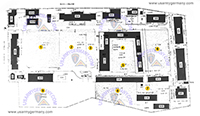 1. Bismarck Kaserne, 1974 |
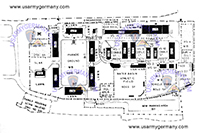 2. Hardt Kaserne, 1974 |
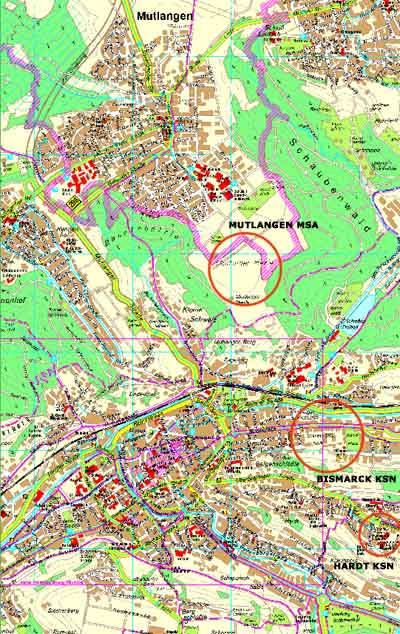
| 2000 Map shows former locations of US Army installations in Schwäbisch Gmünd & Vicinity. |
 |
 |
|
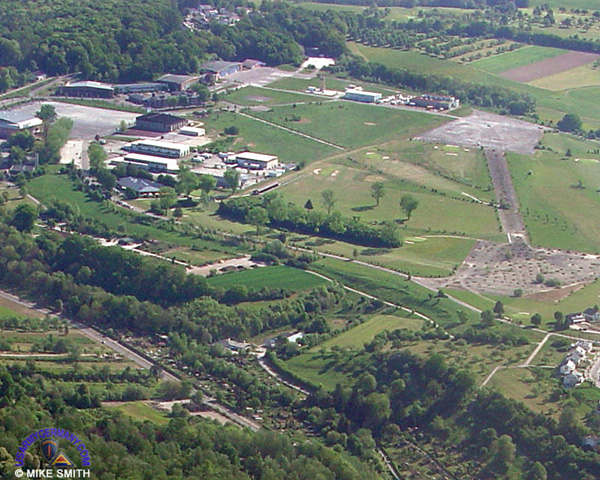 Aerial of former Goeppingen Army Airfield (Mike Smith) |
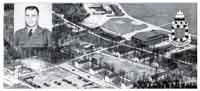 1. Aerial of Cooke Bks, 1950 |
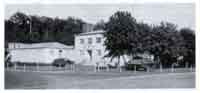 2. Hqs Bldg, 4th Armd Div, 1960 |
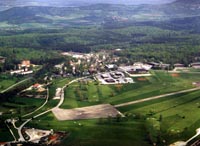 3. Aerial of Cooke Bks, 1980s Click here to supersize |
|
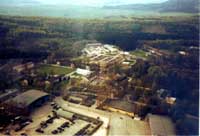 4. Partial of Cooke Bks, around 1982 |
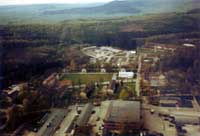 5. Partial of Cooke Bks, around 1982 |
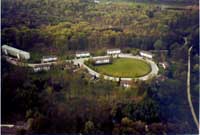 6. Partial of Cooke Bks, around 1982 |
|
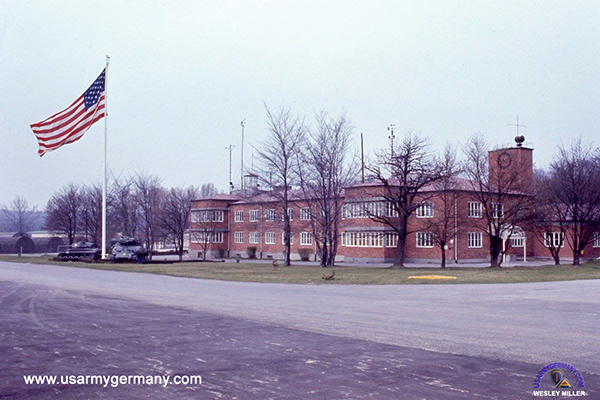 4th Armored Division headquarters, Cooke Bks, ca. 1971 (Wesley Miller) |
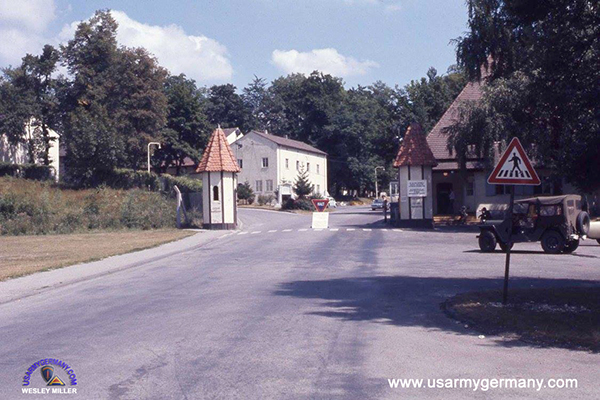 Main gate at Cooke Barracks, Göppingen, ca. 1971 (Wesley Miller) |
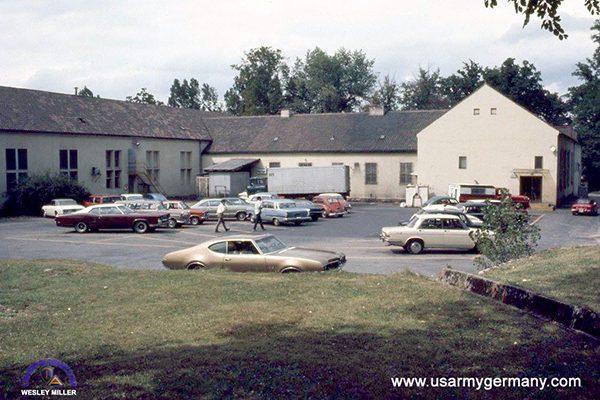 Bldg #160: Snack Bar and movie theater, Cooke Bks, ca. 1971 (Wesley Miller) |
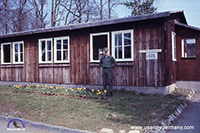 7. Installation Coordinator's Office |
%20and%20BOQ%20(behind)%20-%20Wesley%20L%20Miller%20sm.jpg) 8. BOQ in background |
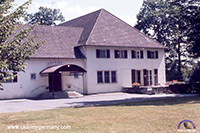 9. Officers Club |
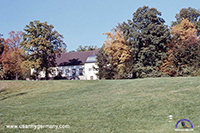 10. Officers Club on the hill |
|
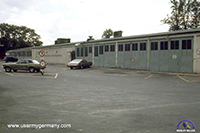 11. PX building |
||||
|
||||
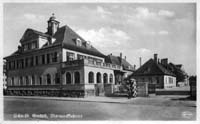 A. Bismarck Kaserne, Schwäbisch Gmünd |
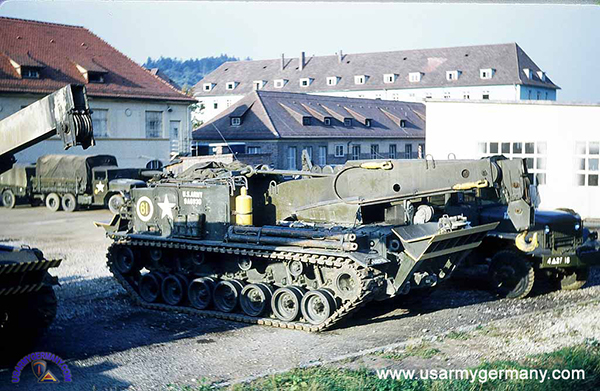 Heavy tank recovery vehicle in the motor pool at Bismarck (Ed Myers) |
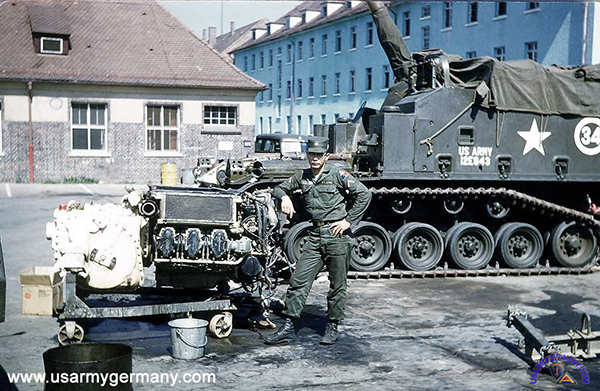 Maintenance area, 126th Ordnance, Bismarck Kaserne (Ed Myers) |
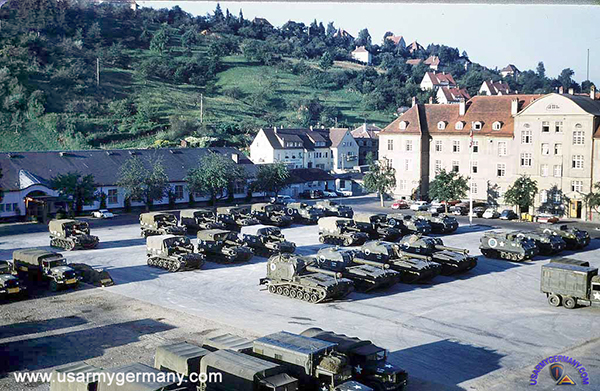
 1. Bismarck Ksn, 1960 |
 2. Bismarck Ksn, 1958 |
|||
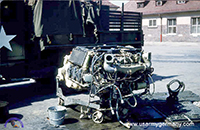 3. Engine replacement |
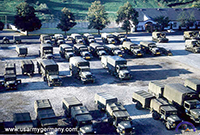 4. Motor park |
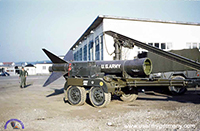 5. 762 Millimeter Rocket |
||
|
||||
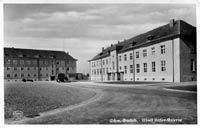 A. AH Kaserne, Schwäbisch Gmünd |
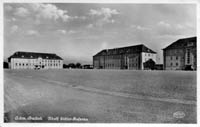 B. AH Kaserne, Schwäbisch Gmünd B. AH Kaserne, Schwäbisch Gmünd |
|||
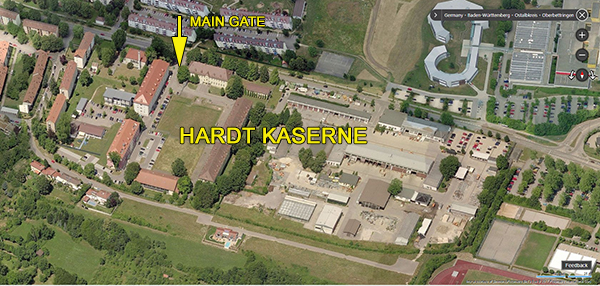 Former Hard Kaserne, recent (BING) |
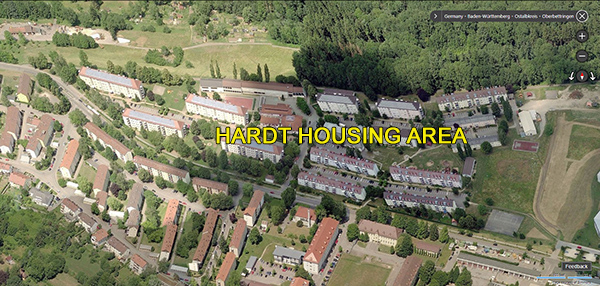 Former Hardt Housing Area, recent (BING) |
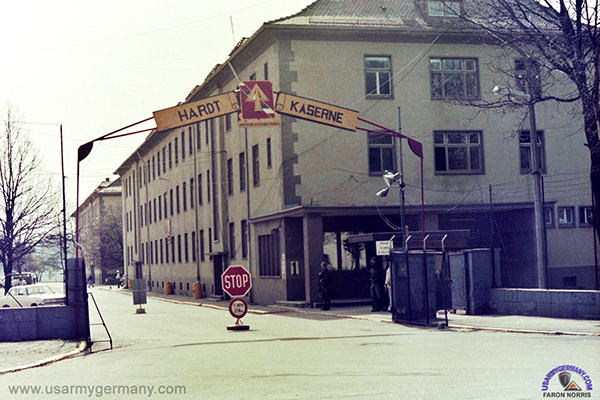 Main gate, Hard Kaserne, mid-1970s (Faron Norris) |
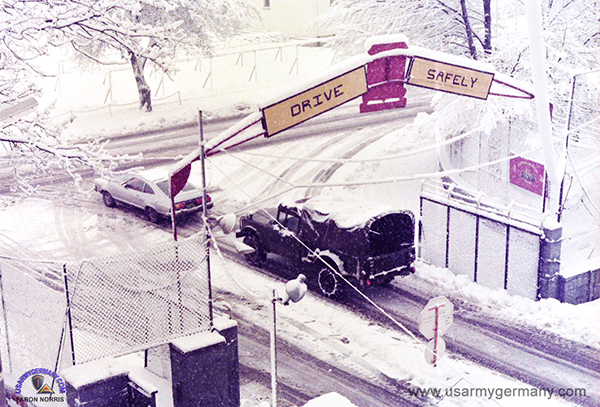 Looking down on main gate from Bldg 401, mid-1970s (Faron Norris) |
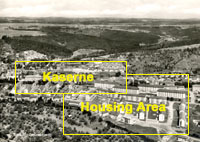 1. Hardt Housing Area, prob 1960s  |
|
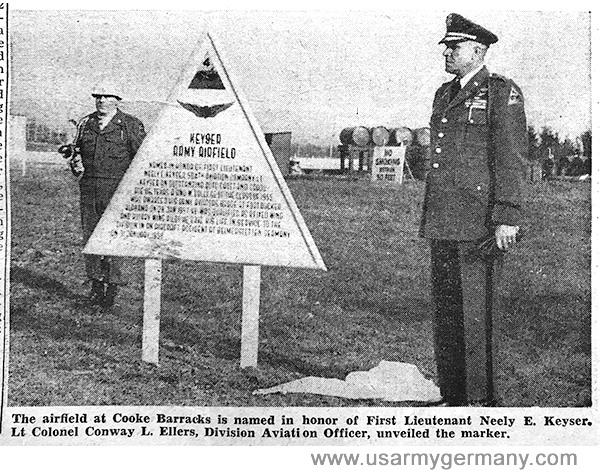 The Göppingen airfield is named after 1st Lt Neely E. Keyser. |
The official party participating in the brief and dignified ceremonies memorializing former members of the division was headed by Major General Andrew P. O'Meara, the Division Commander, and included Colonel Eugene A. Trahan, Chief of Statf, Colonel Eugene C. Orth, Commanding Officer, Division Trains, Major Malcolm Broadus, Goeppingen Sub Section Commander, the Chiefs of the Division General Staff, the Division Aviation Officer and the Division Inspector General, Lieutenant Colonel Risden L. Fountain who, during World War II, served as a Battery Commander and Staff Officer in the 22nd Armored Field Artillery Battalion, 4th Armored Division, Master Sergeant Frank J. Norman and Sergeant First Class William Faulkner.
One street was named in honor of Sergeant Joseph J. Sadowski, who during World War II served with the division as a member of the 37th Tank Battalion. He was awarded the Congressional Medal of Honor for conspicuous gallantry at Valhey, France, 14 September, 1944.
The street leading to the division headquarters building was named Whitson Drive. Private William H. Whitson, who served with the 53rd Armored Infantry Battalion, was awarded the Distinguished Service Cross, the first to an enlisted man of the division, for outstanding valor at Avranches, France, 29 July, 1944.
A third street was dedicated in honor of Captain William F. Pieri, "B" Company, 24th Engr Bn, who was awarded the Distinguished Service Cross for outstanding gallantry near Courtenay, France, 22 August 1944.
In the senior officers' quarters area, Colonel Eugene A. Trahan, Chief of Staff, uncovered the marker naming the street in the area Kleitz Circle in honor of Colonel Anthony F. Kleitz. Colonel Kleitz was a former commander of CC "C" and later Chief of Staff of the 4th Armored Division. He gave his life in service to the division in an aircraft accident at Beimerstetten, Germany, on 31 January 1958.
The airfield was named in honor of 1st Lieutenant Neely E. Keyser, 504th Aviation Company. Lieutenant Keyser, gave his life in service to the division in an aircraft accident at Beimerstetten, Germany, on 31 January 1958.
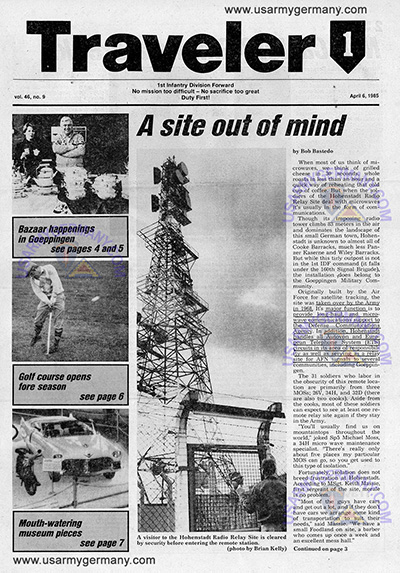 Hohenstadt Radio Relay Site (TRAVELER, April 6, 1985) |
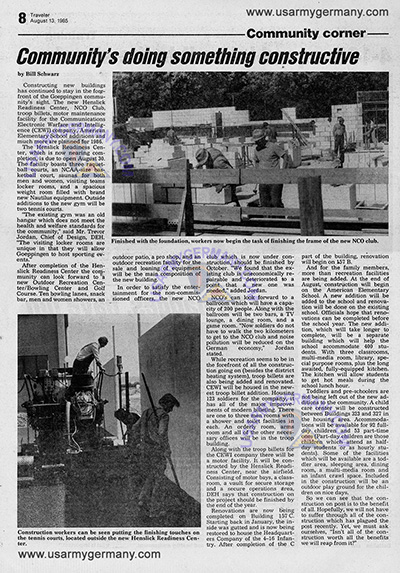 Construction projects in GMC (TRAVELER, Aug 13, 1985) |
Finance Office Schw. Gmund: The office was established in the spring of 1976. Prior to that the Goppingen and Schw. Gmund communities, and their units, were serviced by the finance office located at Nellingen. CPT Rogers established the office and was the commander for its first six months before I transferred from 38th Finance Section in Heilbronn, where I was deputy, and assumed command. The office supported the 56th Brigade HQs and its units in Schw. Gmuend. In Goppingen we supported the 1st Div. Fwd and its units.
I was there from Oct 76 thru Dec 77. When I left the unit became a B office to the Finance Unit in New Ulm.
Thanks for all you have and are doing to maintain your site.
ADDITIONAL INFORMATION
A couple of additional notes on Schw.Gmünd and Göppingen in 1976-77:
Bismarck Kaserne
Ref. the map of Bismarck Kaserne (1974) top of the page, and Photo #1, Aerial of Bismarck Kaserne section, this page:
In Photo #1, along the left edge just above Bldg 526, is located a one story (Bldg 502B) and a two story (Bldg 502A). In 1976-77 Bldg 502A contained the Personal Det. (RPAC) on the first floor and Schw. Gmd. Finance Section on the second floor. The third floor was used by Finance for their unit clerk and first sgt., plus one room contained IBM machines for key punch and key verify. In the basement was the vault for finance, supply rooms for both finance and RPAC, and the western third was made into a day room for finance and RPAC.
#501 still MPs
#504 was offices for HQ 56th FA Bde. Also contained enlisted billets. Finance and RPAC male enlisted were billeted there.
#511 Post Engineers
#515 Dental/Medical Clinic
#516 PX
#523 Officers' Club
# 526 contained one of the Pershing Bn. firing batteries
Theater and EM club were still in #519
Color photo (bottom) of 126th Ordnance is the area just west of bldg. #511 looking north to the billets housing Signal unit in late 70's.
Hardt Kaserne
In first color photo (BING): Building to the right of the arrow marking the main gate contained dining facility, American Express Military Bank (2nd fl.) and Postal Office. Directly opposite across the quad was the Gym.
Located to the right of the label Hardt Kaserne, up against the fence line, was the PX and Class VI store.
Located under the label were the bowling alley and a small building containing Stars and Stripes.
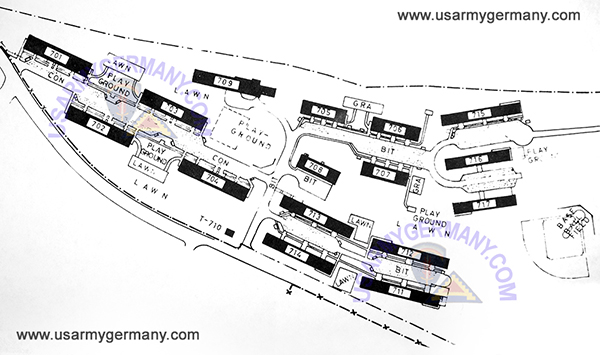
Hardt Housing Area plan, 1974 (Webmaster's collection)
The BOQs were buildings #716 and #717 with the parking between the two buildings. Entry for each building was on the side facing the parking.
The DYA building is not on this map, but was to the right of the BOQs at the east end of the parking area between the BOQs. It is the building with the white roof just above the sports court in the photo of Hardt Housing Area.
The commissary was building #708 and the school was #709.
The rest were family housing. #701 thru #704 were four stories and I believe contained 24 apartments per building.
 -- #711 thru #715 were three story buildings that I believe contained 18 apartments per building.-- #705 thru #707 were four story buildings that I believe contained 16 apartments per building.
Housing for the senior officers (56th commander and deputy commander) were just outside of Hardt Kaserne. Just south/southwest of the Gym. Bottom left of the color photo titled Hardt Ksn. I believe you can see one of these houses in the black and white photo of Hardt Housing
The BOQ buildings each contained 16 units (8 per floor). Each unit contained two rooms (living room and bedroom) with the bathroom located between. In the middle of each building opposite the entrance was common space, that contained laundry and common cooking areas. The design of the BOQs in Hardt Housing were same as those in Patrick Henry Village, by the o'club, in Heidelberg and several other communities
Cooke Barracks
In Photo A-1 you can see in the upper right corner family housing units and the BOQ.
In fact Photo #8 shows that area looking west. As you can see the BOQ was a four story building. The side shown in the photos contained 5 sets of quarters. Made up two rooms with a bath(single window) and short hall between them. You entered each unit from the main central hall into the short hall in each set of quarters. The other side of the building contained 4 sets of quarters and the two stairwells. So there was 9 sets of quarters on each floor except the first, which had 7 plus a common lounge across the south end. The BOQ in Goppingen was of the same design as those in Heilbronn (located across the street from the O'Club) and other communities.
If I remember correctly the accounting/billing office was in the rear (east side) of the building on an upper floor.
Photo #9 shows the west side of the O'Club with the main entrance.
Photo #10 of the O'Club would be just off to right of photo A-1. This photo shows the south side of the building. The O'Club contained an office for central or club accounting and billing. Which prior to 1977 worked for the senior club manager (normally the manager of the O'Club). In 1977 all club accounting was placed under the finance office and LT was placed in charge of the civilians who performed the work. This was a continuation that had started in other communities in 1976.
Final note - Schw. Gmd. was a sub community of Goppingen and the commander of the 56th Bde. was the Sub Community Commander. During 1976-77 the Commander of 56th FA Bde. was BG Hankins.
Commander of Goppingen Community and 1st Div. Fwd. Commander at that time was BG R.L. Wetzel. Deputy Community Commander was COL. Burton Walrath (who ran day to day operations of the community).
Again appreciate the work you have done with the website.
|
A Chronology of Cooke Barracks (Göppingen) Prehistory In a meadow north of Göppingen, where cows grazed and the people celebrated May Day, the entrepreneur Carl Hommel built a Flugplatz (airfield) for civilian use, opening it in April 1930. During the summer of 1935, the airfield was acquired and expanded by the Luftwaffe into a 300-acre garrison and facility called the Fliegerhorst Kaserne (in effect, air force base). An air reconnaissance group was based there from 1936 until the outbreak of war in 1939, and from 1941 through 1944 Luftwaffe pilots were trained there. April 20, 1945: Göppingen surrenders to U.S. Army troops It may have been the 63d Infantry Division that accepted the city's surrender. Adolf Hitler killed himself on April 30, and Germany's unconditional surrender followed on May 7. 1945 - 1949: Occupants of the Fliegerhorst Kaserne Displaced persons were housed in the barracks by the United Nations Relief and Rehabilitation Administration and the International Refugee Organization: homeless Jews, former slave laborers, refugees from eastern Europe. The 54th Field Hospital, a unit of the 36th Infantry Division, and other American units passed through Göppingen after Germany's surrender but did not occupy the Kaserne. Cooke Barracks August 18, 1949: Cooke Barracks receives its name European Command (EUCOM) General Orders Number 81 renamed the Fliegerhorst Kaserne, also known as the "Luftwaffen Kaserne," in honor of CPT Charles H. Cooke, Jr., Battery B, 32d Field Artillery Battalion. He was posthumously awarded the Silver Star and Soldier's Medal for gallantry in action during his unit's landing at Gela, Sicily on July 11, 1943. 1949 - 1951: U.S. armed forces at Cooke Barracks Which American unit, if any, occupied Cooke Barracks during this period is not known. If displaced persons were still housed there, they would have been moved out to another camp no later than 1951. There was such a camp near the Cooke Barracks main gate as late as 1963. November 24, 1950: 7th U.S. Army reactivated in Stuttgart By the end of 1951, 7th Army included two corps and five divisions (four infantry, one armored), one of the divisions having its HQ at Cooke Barracks. 1951 - 1953: Cooke Barracks built up for use as a Division HQ In addition to the headquarters, barracks, a garage and motor pool, and other military necessities, reconditioned from Luftwaffe buildings or newly built, other facilities such as the post theater, PX, and photo lab were built when the first American units arrived. The officers' and family housing areas, as well as the chapel, service club, NCO and EM Clubs, snack bar, bowling alley, and the 9-hole golf course, were added during the 1950s to create a "little America" for servicemen and their dependents. Here is an aerial photograph of Cooke Barracks as it was at the end, and here is a map showing its streets (named) and buildings (not named). November 26, 1951 - May 25, 1954: 28th Infantry Division The first division-level HQ at Cooke Barracks, deployed there from Camp Atterbury, IN. At the end, 28th Infantry Division was redesignated as the 9th Infantry Division. May 25, 1954 - October 9, 1956: 9th Infantry Division Activated at Cooke Barracks with the personnel and materiel of the 28th Infantry Division. At the end, 9th Infantry Division was rotated to Fort Carson, CO in "Operation Gyroscope." October 9, 1956 - December 13, 1957: 8th Infantry Division Rotated to Germany from Fort Carson, CO, in "Operation Gyroscope," replacing the 9th Infantry Division at Cooke Barracks. At the end, 8th Infantry Division moved to Hindenburg Kaserne, Bad Kreuznach, renaming it Maurice Rose Kaserne. December 13, 1957 - May 10, 1971: 4th Armored Division Rotated to Germany from Fort Hood, TX, in "Operation Gyroscope," replacing the 8th Infantry Division at Cooke Barracks. At the end, 4th Armored Division was redesignated as the 1st Armored Division and deactivated. May 10, 1971 - March 1972: 1st Armored Division Activated at Cooke Barracks with the personnel and materiel of the 4th Armored Division. At the end, 1st Armored Division moved to Hindenburg Kaserne, Ansbach; the exact date of the move is not known. March 1972 - August 15, 1991: 1st Infantry Division (Forward) Moved from Augsburg, replacing the 1st Armored Division at Cooke Barracks; exact date of arrival is unknown. Notice of inactivation was received in summer 1990. Members of the 4th Battalion 16th Infantry, Detachment 1 of the 101st Military Intelligence Battalion, and others were sent to Saudi Arabia in December for Operation Desert Storm, returning to Göppingen on May 8, 1991. Meanwhile the 1st Infantry Division (Forward) transferred its equipment to other units in Europe and to units deploying to the Gulf, and was inactivated at Cooke Barracks on August 15. August 15, 1991 - February 27, 1992: Closing down the base HQ & HQ Co., Goeppingen Military Community, commanded by LTC Jon Goodman, readied Cooke Barracks for inactivation. About 30 military personnel remained on post until the end. February 28, 1992: Cooke Barracks handed over to the German government LTC Goodman turned over the base to the Stuttgart office of the Bundesvermögensamt, which administers German government property. Göppingen's Oberbürgermeister (mayor) Hans Haller attended the ceremony. The property was eventually acquired by the city of Göppingen. Postmortem February 29, 1992 - present: Redevelopment of the Flugplatz The troop barracks were first used to house asylum seekers from eastern Europe and elsewhere. These and others of the military buildings have since been demolished. Those that remain, most of them renovated, include the family and officers' housing, post engineers' buildings, hangars, chapel (now a cultural center), and MP gatehouse (soon to be a Gasthaus called Die Wache, "The Guard"). The Flugplatz is now a new Göppingen district named Stauferpark where high-tech commercial installations, three residential areas, and recreational facilities are growing among the familiar streets. But the Göppingers haven't forgotten their former neighbors: they still celebrate "American Days" every August. This History was compiled by John Francis, 504th Admin Co., 1966-1968. Please send corrections and improvements to jfrancis51(at)nyc.rr.com or to the webmaster. (NOTE: remember to replace (at) with the @ symbol when you create the email to John.) |
Source: Schwäbisch Gmünd ACS Welcome Packet, 1982?
| BISMARCK KASERNE | ||
| WWII | Built between 1911-1913, the kaserne housed German infantry and anti-tank units. Shortly before the arrival of American forces, the kaserne was vacated by the Germans. | |
| Post VE-Day | The kaserne was occupied by French troops. Later Russian, Polish, French and Romanian POW's were moved into the kaserne. | |
| mid 1945 | US troops took over the kaserne as the French retured to their Zone of Occupation. The Americans moved out shortly thereafter and the kaserne was again used for housing Russian and Polich POW's. | |
| 1951 | The kaserne was occupied again by US Army units | |
| June 1958 | ||
| Aug 1958 | ||
| HARDT KASERNE | ||
| WWII | Construction of the kaserne, which was named Adolf Hitler Kaserne, was completed in 1937. During the war the kaserne was used as billets for cadets of the German Officer's Corps, then it housed French POWs. It also served as an important POL dump, supplying gasoline to front line units. | |
| post VE-Day | For some months immediately following the end of the war, the kaserne was used as a clearing house for refugees from all over Europe. Within a few months, the administration of the DP camp was taken over by the United Nations Refugees Relief Administration (UNRRA). The kaserne was also renamed Hardt Kaserne. | |
| end of 1948 | By the end of 1948, almost all of the war refugees had left the kaserne. Only those too old or too sick to move remained there. | |
| 7 Nov 1951 | The kaserne was occupied by American troops. The 35th Field Artillery Group, 599th and 272nd Field Artillery Battalions arrived in Schw. Gmünd and made the kaserne their new home station. | |
| May 1952 | The 272nd FA Bn moved to Neu Ulm. | |
| 1 June 1952 | The 567th Field Artillery Battalion, located at Bismarck Ksn, relocated to Hardt Kaserne and occupied the facilities previously vacated by the 272nd. | |
| 20 Sept 1954 | The 599th FA Bn changes home station by relocating to Erlangen. | |
| April 1963 | The 56th Field Artillery Group arrives at Hardt Ksn. | |
| Dec 1963 | 3rd Battalion, 17th Artillery (former 802nd FA Bn) transfers from Hardt Ksn to Nürnberg | |
| spring 1964 | 4th Battalion, 41st Artillery (PERSHING) deploys from the US and makes Hardt its new home station. This unit introduces the Pershing Missile to the European theater. | |
| Sept 1970 | 56th Field Artillery Brigade is activated at Hardt. | |
| Jan 1986 | 56th FA Bde is redesignated as the 56th FA Command. |
Related Links: Bismark Kaserne (Schwäbisch Gmünd) History Page - This page shows photos of the decommissioned BISMARK KASERNE and HARDT KASERNE. Cooke Barracks Photo Page - (Website taken down July 2017) David Wisniewski's web page with many great historical photos of Cooke Barracks dating back to the 4th Armored Division days. |
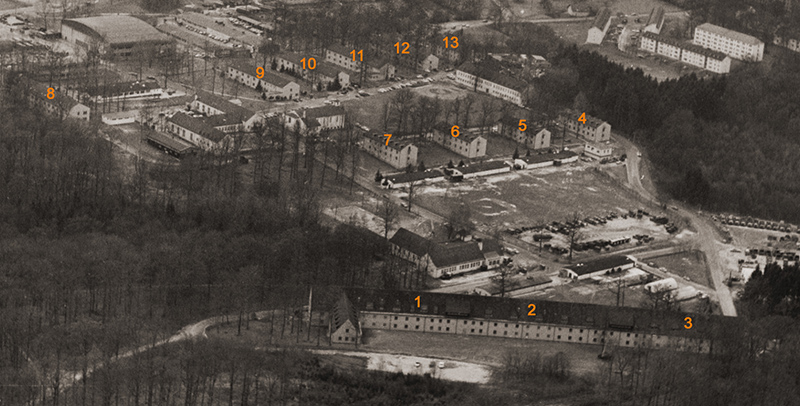 Enlisted Quarters at Cooke Barracks in the 1970s (Linda Ellen Gandy) |
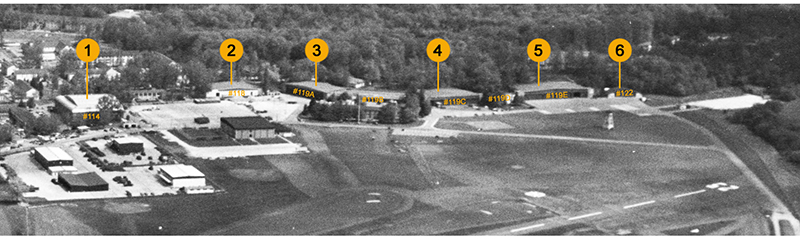 Hangars at Cooke Barracks (Mike Smith) |