| If you do
NOT see the Table of Contents frame to the left of this page, then
Click here to open 'USArmyGermany' frameset |
||||||||||||||||||||||||||||||||||||||||||||||||||||||||||||||||||||
|
US Army Communciations Zone, Europe |
||||||||||||||||||||||||||||||||||||||||||||||||||||||||||||||||||||
|
|
||||||||||||||||||||||||||||||||||||||||||||||||||||||||||||||||||||
|
||||||||||||||||||||||||||||||||||||||||||||||||||||||||||||||||||||
|
|
||||||||||||||||||||||||||||||||||||||||||||||||||||||||||||||||||||
|
||||||||||||||||||||||||||||||||||||||||||||||||||||||||||||||||||||
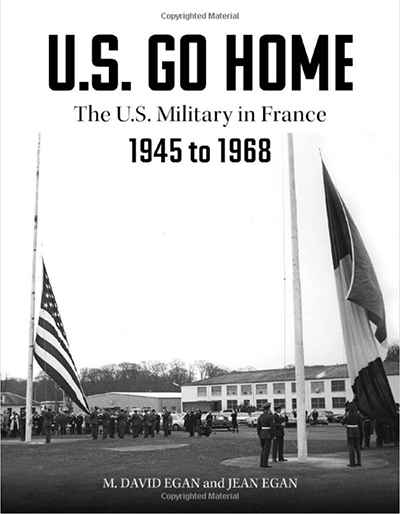 U.S. GO HOME - a history of the US military presence in France, 1945 - 1967 by David and Jean Egan |
||||||||||||||||||||||||||||||||||||||||||||||||||||||||||||||||||||
David and Jean Egan have completed their book project regarding the history of the American military presence in France from 1945 to 1967. Click here [Schiffer] or here [Amazon] for more information on the book. The Amazon website provides a "Look Inside" with quite a few sample pages from the book. |
||||||||||||||||||||||||||||||||||||||||||||||||||||||||||||||||||||
| 7966th EUCOM Detachment History | ||||||||||||||||||||||||||||||||||||||||||||||||||||||||||||||||||||
| 1950 - 1951 | ||||||||||||||||||||||||||||||||||||||||||||||||||||||||||||||||||||
 |
||||||||||||||||||||||||||||||||||||||||||||||||||||||||||||||||||||
| Communications Zone History | ||||||||||||||||||||||||||||||||||||||||||||||||||||||||||||||||||||
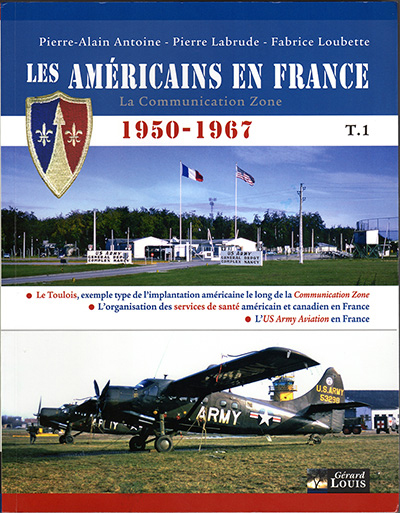 Les Américains en France - La Communication Zone, 1950-1967 (Volume 1 - Toul; Medical Services; Army Aviation) (Click here for some information on the book) |
||||||||||||||||||||||||||||||||||||||||||||||||||||||||||||||||||||
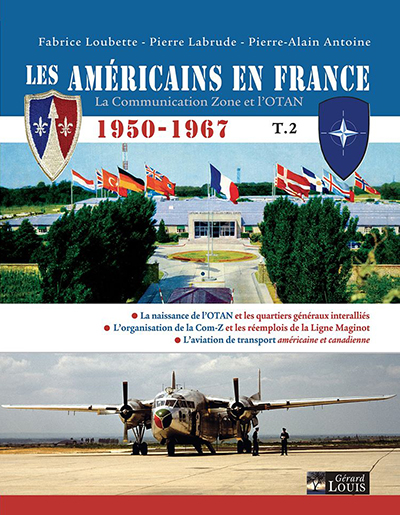 Les Américains en France - La Communication Zone, 1950-1967 (Volume 2 - The birth of NATO & Allied headquarters; re-use of the Maginot Line in the Cold War; USAF & RCAF transport aircraft) (Click here for some information on the book) |
||||||||||||||||||||||||||||||||||||||||||||||||||||||||||||||||||||
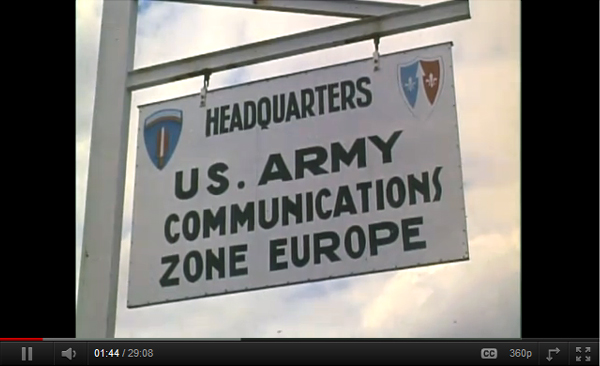 Communications Zone (COMZ) video in color (Source: Big Picture) |
||||||||||||||||||||||||||||||||||||||||||||||||||||||||||||||||||||
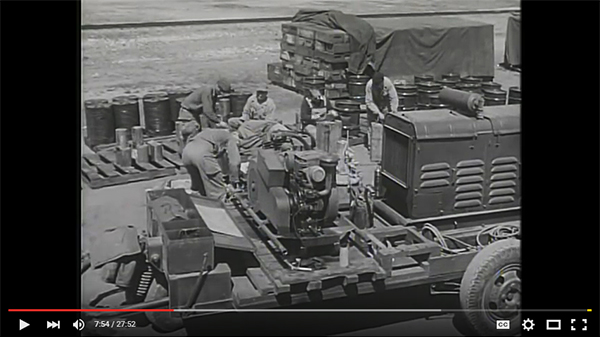 Soldier in France (Source: Big Picture) |
||||||||||||||||||||||||||||||||||||||||||||||||||||||||||||||||||||
| Commanding generals, US Army Communications Zone, Europe | ||||||||||||||||||||||||||||||||||||||||||||||||||||||||||||||||||||
1950 - 1969 (1)
(2) In April 1969, the Communcations Zone, Europe was discontinued and replaced by the newly formed Theater Army Support Command, Europe (TASCOMEUR). Maj Gen Vaughan assumed command of TASCOMEUR upon its activation. |
||||||||||||||||||||||||||||||||||||||||||||||||||||||||||||||||||||
| The Com Z Shoulder Patch | ||||||||||||||||||||||||||||||||||||||||||||||||||||||||||||||||||||
| (Source: STARS & STRIPES, March 12, 1964) | ||||||||||||||||||||||||||||||||||||||||||||||||||||||||||||||||||||
The "Lifeline to the Frontline"  shoulder patch has recently been reinstated as the Communications Zone shoulder patch. shoulder patch has recently been reinstated as the Communications Zone shoulder patch.The patch was originally worn by members of Com Z between 1953 and 1960. In January 1960, the patch became the official symbol of Theater Support Command (TASCOM). TASCOM was organized on March 1 of that year to take over responsibility for all depots in France and Germany. Concurrently, Com Z was reorganized as USAREUR (Rear) Com Z and wore the USAREUR shoulder patch. On 1 July 1961, TASCOM was redesignated as the 4th Logistical Command and the "Lifeline" patch became the official insignia for the 4th Log Comd. In Dec 1963 or early 1964, the 4th Log Comd returned to the US. |
||||||||||||||||||||||||||||||||||||||||||||||||||||||||||||||||||||
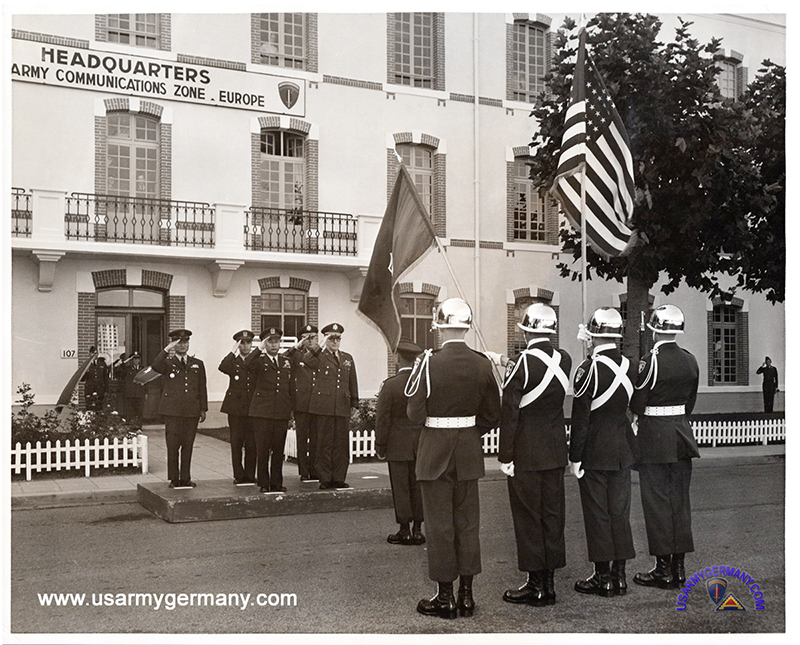 Retreat ceremony held in front of Headquarters COMZEUR in honor of visiting Republic of Korea generals (September 23, 1958) |
||||||||||||||||||||||||||||||||||||||||||||||||||||||||||||||||||||
| 1951 - 1969 | ||||||||||||||||||||||||||||||||||||||||||||||||||||||||||||||||||||
| 1951-1967 COM Z LOCATED IN FRANCE | ||||||||||||||||||||||||||||||||||||||||||||||||||||||||||||||||||||
|
(Source: D.J. Hickman's " The US Army in Europe, 1953 - 1963", Hqs, USAREUR, 1964.)
|
||||||||||||||||||||||||||||||||||||||||||||||||||||||||||||||||||||
| Introduction
to the history of the whole LOC through France: The 7966th EUCOM Detachment 1), with headquarters in Orleans, was responsible for the LOC across France. On July 15 1951, the 7966th Det was replaced by EUCOM ComZ (with a change of mission), primarily concerned with the establishment, conduct, and supervision of the LOC across France. The 7966th was redesignated 7966th Headquarters Group and assigned directly to the ComZ. All units previously assigned or attached to the 7966th were now reassigned or reattached to ComZ. The establishment of EUCOM ComZ led directly to the activation of depot and warehouse facilities of all EUCOM technical services. Almost all of these installations remained in Class II status during the rest of the year and were therefore under the direct control of the chief of EUCOM technical service concerned rather than ComZ (Class I status- installation under direct ComZ control). 1) The two major subordinate units of 7966th were: 7964th Area Command at La Rochelle, France, and 7965th Area Command at Verdun, France. During the 15 July 1951 reorg the subord commands 7964th Area Command 7965th Area Command were redesignated - 7964th Hqs Gp, Base Sec, EUCOM ComZ - 7965th Hqs Gp, Adv Sec, EUCOM ComZ The ComZ Adjutant Sec was responsible (at this time) for the administration of: Hqs, 7965th Area Command Hq Det, 7965th Area Command 565th Ord Co (Medium Automotive Maint) 99th Labor Supervision Co |
||||||||||||||||||||||||||||||||||||||||||||||||||||||||||||||||||||
| (Source: COM Z, USAREUR Information Bulletin, Vol. II, No. 1, via Sam Lietz) | ||||||||||||||||||||||||||||||||||||||||||||||||||||||||||||||||||||
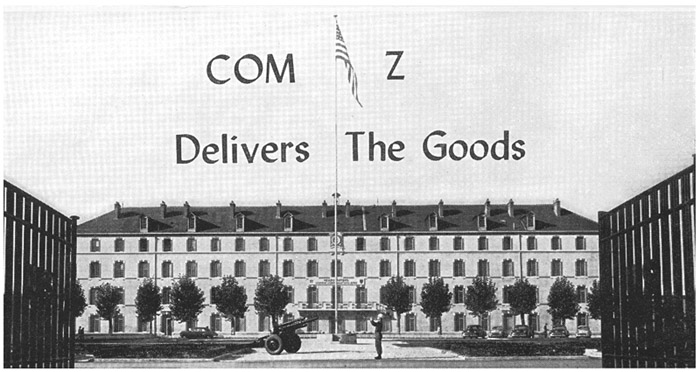 |
||||||||||||||||||||||||||||||||||||||||||||||||||||||||||||||||||||
| INTRODUCTION An army without supplies is no longer an army, but a defenseless body of men, put out of action and inevitably destroyed by the enemy. A piece of artillery without shells is nothing but junk. A tank without gasoline or oil cannot move. In many an action during past wars, armies have lost the chance of victory because vital supplies had been expended and new supplies had not yet reached the front. In order to fight, men must have food and clothing, weapons and ammunition. One of the most critical situations that can arise in armed conflict is when a commander finds his supply lines broken. Let us look for a moment at the situation of our American Forces in Europe -- where they are, why they are here, and how they, are supplied. I. PICTURE OF FRANCE Whether you are stationed in England, Germany or France, it is almost certain that some time during your European tour you will find yourself traveling to some of the cities or installations in the USAREUR Communications Zone -- COM Z. It will be to your advantage, naturally, to know something about the nature and purpose of COM Z, the events leading up to its establishment, and its remarkable accomplishments. It is equally unportant to know something about the country in which it is located. You should know, for instance, that although Paris is French, it is not "France." Paris is a concentrated essence of French history, art, music and drama -- and the French flair for life. One of the most popular music hall ballads of this century calls her "reine du monde" -- queen of the world. She is also known as the City of Light and if, some evening, you look down from Montmartre to the Place de la Concorde, you will understand why. |
||||||||||||||||||||||||||||||||||||||||||||||||||||||||||||||||||||
|
||||||||||||||||||||||||||||||||||||||||||||||||||||||||||||||||||||
| Orleans, a quiet town in the now peaceful Loire valley, has another claim upon our interest. Here Joan of Arc broke the English seige of this Loire stronghold and began her triumphant campaign to restore the French throne to France. But the roots of Orleans go still deeper than 15th Century history. It was a well-known trading post in Roman times. It led a revolt against Julius Caesar 52 years before Christ was born. Attila, the Hun, tried to capture it in 451 -- and was defeated by its stout-hearted citizens. Orleans is the site of COM Z headquarters. Wherever you go in France, past history rises up to capture your interest and stimulate your imagination. Poitiers, where 1200 years ago, Mohammedan armies were halted in their march through western Europe; La Rochelle, the little harbor that for centuries has sheltered courageous fishermen and explorers; Bordeaux, center of a great wine-growing country and of gracious living. The list is endless. THE LESSON OF KOREA Five years ago, when the Communists launched their armed aggression against the Republic of Korea, one vital aspect of the worldwide conspiracy centering in the Kremlin became clear: If Communism cannot win by its customary intrigue, subversion and trickery, it will be quite willing to use armed force-particularly its stooge armiesto gain its ends, even at the risk of another world war. When the Communists' purposes began to be clear to the free world, steps were taken to halt further aggression. The Communist world, behind its iron curtain, is arrayed in a semicircle that stretches down through the Balkans. On this side of the curtain is the new -- but still unarmed -- Federal Republic of Germany, France, Belgium, Luxembourg, The Netherlands, the United Kingdom, Norway and Denmark. Germany is at the center of this arc. In 1949 the United States, the UK, France, Belgium, The Netherlands, Canada, Luxembourg, Italy, Norway, Iceland, Portugal and Denmark signed the Atlantic Pact. In the fall of the same year the North Atlantic Treaty Organization (NATO), the implementing mechanism of the pact, came into being. NATO is pledged to a mutual protection of the North Atlantic area. It established the European military force of which we are a part. Turkey and Greece were added to NATO in 1952, and West Germany in 1955. Because this bulletin is concerned only with the USAREUR Communications Zone, a description of the elaborate organization set up to meet the defensive needs of the Atlantic Pact nations is not necessary here. COM Z is a highly important subordinate command of the United States Army, Europe. Its mission is to support that Army, the bulk of whose combat forces are in Germany. |
||||||||||||||||||||||||||||||||||||||||||||||||||||||||||||||||||||
| II. THE ORIGIN OF COM Z The Need for a Change In 1945 United States troops in Germany received their supplies almost entirely through our Bremerhaven line of supply. The port of Bremerhaven is on the North Sea at the mouth of the Weser River. Bremerhaven, with its excellent port facilities and lines of communications to the south, across the flat plains of North Germany, was quite adequate for our needs in times of peace, or when no apparent threat from the East existed. But these flat plains, with no mountain barriers to protect them, have from the earliest times been the natural route of invaders from the East, who swept across them through the Low Countries (Belgium, The Netherlands and Luxembourg) to the sea, where they could control Atlantic seaports. The Bremerhaven supply line to our forces in Germany is right in the path of these historic invasions. It is a long line and a thin one, and it could easily be cut in the event of a strong attack from the East. The Communist blockade of Berlin in 1948-49, which was defeated only by the magnificent Berlin Air Lift operated around-theclock by American and British airmen, made clear the necessity for larger supply channels and alternate routes of supply. In November 1950, when Soviet activities made it apparent that Communist pressure would relentlessly continue against the West, the French and American governments reached an agreement under which the United States is permitted to organize and maintain a line of communications (LOC) in France. This line of communications is COM Z. Why COM Z Is In France The reasons leading to the choice of France as the USAREUR Communications Zone are these: A defense force such as ours must naturally be stationed as near to the zone of threatened attack as possible. Since 1948 -- or even before that yea -r -the only threat to the free European nations has been from the East, from behind the Iron Curtain countries. This, in turn, has required strong defense forces in Germany. It must also be pointed out that the new German Federal Republic, without any means of defending itself, and at a time when it was struggling to win back its economic health, was faced with another threat --from East Germany. The Soviets had set up their customary puppet government in East Germany, and to support it established a German "police force." A "police force" armed with machine guns, rifles, mortars and even tanks! In view of the Communist record in Korea, where the Soviettrained North Korean army opened its aggression against the free Republic of South Korea in 1950, there could be no guarantee that similar aggression might not spring from the same source in Europe -- Communism -- and throw Central Europe again into war, with West Germany the first victim. For those reasons, it will be seen why the bulk of our strength in Europe must be stationed where it is. Forces at the front not only need supplies in vast quantities, but also a constant flow of supplies and equipment. The roads over which these supplies travel must be kept open. They must be, if possible, located to the rear of any battle line so that they cannot easily be cut off by the enemy. France is the ideal location for the communications zone that serves our forces. All of its neighbors, with the exception of Switzerland and Spain, which are neutral, are partners with us in NATO. France's 2,000 miles of coastline have many excellent harbors bordering the English Channel and the Atlantic Ocean in the north and in the west, and the Mediterranean in the south. Winters, which are seldom severe, never block French ports, and in the south, along the Mediterranean, the climate resembles that of Florida. France's excellent port facilities are a vital factor in building a good supply line. They are on well-established shipping lines and so numerous that, without complete mastery of the Atlantic Ocean, an enemy would never be able effectively to deny our fleets access to them. France's land area is slightly smaller than Texas. Through the central part of the country unbroken plains range to the northern borders. Over these plains stretch some 85,000 miles of highways and 55,000 miles of railroads. World War Il destroyed a considerable part of France's highways and bridges, but within four years after the close of the war almost every damaged bridge in the country had been rebuilt and dense traffic was again proceeding over the highway network. The task of restoring the nation's transportation system was all the more remarkable because of the lack of road-building supplies and equipment after the war. France Joins Hands With Us The working out of an agreement, a treaty, or the "protocols" under which a foreign force -- even though a friendly one -- may be permitted to live and work on the soil of another sovereign nation is a highly delicate task. In this instance the agreement is a triumph of patient diplomacy, grounded on the fact that France and the United States are on the same team-working together in the cause of world peace. The unity of purpose and friendship between the United States and France, our partnership with the other nations of NATO, and a realization of the ceaseless aggression of Communism were the great factors leading to the agreement by which COM Z was finally established. Six months of negotiations between US and French representatives resulted in the signing of this agreement on 6 November 1950 in Paris. Under its terms the United States received port facilities, storage depots and the space to build more, and transportation rights on highways and French national rail lines to the German border. Thanks to the excellent advance planning of the USAREUR Logistics Division, the agency in charge of organization and policy for overseas lines of communication, work on the new project began five days after the Paris agreement had been signed. Approximately 1,000 American troops from technical service units moved into France with 300 trucks and 100 trailers. Most of this convoy headed for Bordeaux and La Pallice, the two major ports in the LOC on the way from the Atlantic, across France, to Germany. In record time the new LOC was already in operation. At Captieux we succeeded in building a depot despite the fact that it was necessary to improve 36 square miles of land before actual construction could begin. Docking and local transportation arrangements were completed at Bordeaux while storage and control points were set up on rail routes to the Rhine River. By mid-November 1950 the first ships docked at Bordeaux, and supplies began to roll along the 500-mile supply line across France. Since that time COM Z has grown into a complex operation with a huge responsibility to shoulder in sending supplies to our combat forces. High quality in the performance of each man's job in COM Z is essential to the maintenance of a strong, well-prepared bulwark against any aggression from the East. III. COM Z TODAY So We Are In France The headquarters of USAREUR COM Z is in the historic city of Orleans, about 70 miles south of Paris. There are four subordinate commands. Base Section (BASEC) is in southwestern France with headquarters in the coastal city of La Rochelle. A beautiful highway runs through the famous chateaux district of the Loire Valley from La Rochelle to Orleans. Advance Section (ADSEC) is in northeastern France, with headquarters in Verdun, the famed fortress city which was renowned in World War I for its resistance to the German armies. Seine Area Command (SAC) has its headquarters in Paris, and the Orleans Installation (ORIN) is established with headquarters at Orleans. Most American personnel in COM Z are service troops -- the builders and operators of the new supply line. Skilled transportation personnel move, unload and examine incoming materiel. Signal men are required to operate and keep in running order an extensive communications system. Quartermaster and ordnance corps personnel in great numbers must handle huge quantities of supplies and equipment. From one end of this great communications zone to the other thousands of skilled men in the technical services are required for smooth operation. Personnel of COM Z are constantly busy. In addition to technical tasks, combat training has its part in the normal life of a man assigned to the Communications Zone. Practical experience in wartime operation is gained through the over-the-beach unloading exercises known as NODEX. During these exercises tonnage records have been made and broken constantly by different units working day and night to transfer the cargoes of heavily loaded ships to docks and shores, and sending them expeditiously on their way to the "front". COM Z is already in excellent shape to fulfill its important functions. Better American-French Relations -- A Valuable Goal The continual improvement of relations between American personnel and their French hosts in COM Z-a task in which each serviceman shares an equal responsibility-represents a desirable goal to enhance the successful accomplishment of our common mission as NATO partners. The relative success or failure of each individual in promoting better relations reflects directly upon himself and his unit, and indirectly upon the entire American Nation. A recent survey by the US Air Force Personnel and Training Research Center of French attitudes, particularly towards Americans in COM Z, cites some reasons for past difficulties in achieving mutual understanding between the Americans and the French. The survey points out that the average Frenchman's first interest centers about his own family and immediate relatives. He does not always share the American trait of informal "neighborliness." "A Frenchman's first reaction to strangers," it notes, "is to judge them unfavorably rather than favorably. The outsider is an unknown individual who might threaten the values the Frenchman holds close. This does not mean to imply that in his initial contacts with a stranger he would look upon the latter with hostility." To the French, all unknown people are "strangers", even fellow countrymen. Preoccupation with his own family, different working hours from those of the American, the great distance which the average worker must travel to and from work, and a lack of free time -- all of these reduce the Frenchman's opportunities to make social contacts with Americans. A French public opinion group recently surveyed the French population around an American military installation and found that although a fair proportion of the people were either very friendly or moderately friendly to the American personnel, only a few of the group interviewed had entertained Americans in their homes. This figure is not quite so startling when one realizes that the average Frenchman seldom invites anyone but relatives or intimate friends to his home. Friendship is a very serious concern to the French and not something to be entered into rashly. Close friends are few in number, and most of them are the product of associations formed during school days. Nevertheless, the French enjoy making acquaintanceships which do not call for close emotional ties. This trait can often open the way for the gradual formation of more lasting associations, once a mutual understanding has been reached. Despite outward differences in attitude, the Frenchman shares many American traits. Like the American, he is a great individualist, who believes in the rights of others and who respects those rights. The French are noted for their oft-demonstrated love of country, liberty, equality and independence-qualities that are also inherent in the American character. They combine a deep respect for tradition, learning and religion with a strong sense of tolerance and logic, blended with a pronounced artistic nature and a fondness for gracious living. The Frenchman's politeness, tact and courtesy have earned him the admiration of the world. He deserves an equal display of these qualities on the part of the American. The Frenchman will be happier with the American who shows sincere respect for the French people, their history, traditions and customs. A bit of effort on the part of each serviceman and woman towards the attainment of good relations with the French will result in a more pleasurable and profitable tour of duty in COM Z on the individual level, and will make common objectives at command level easier to achieve. Americans, incidentally, should never forget that a large part of their own political heritage stems from France. French love of liberty and freedom found expression in the American Revolution when men like Marquis de La Fayette took up arms in the American cause. A French army fought side by side with American patriots and distinguished itself particularly at the battle of Yorktown. Famous French writers like jean Jacques Rousseau (1712-1778) and Voltaire (1694-1778) kindled the fires of liberty that burst into full flame in the French Revolution of 1789. Their political writings stimulated the thoughts of the authors of our own Declaration of Independence. A Good Record Under Foreign Law Throughout our association with the French people in building and operating the Communications Zone, all personnel attached to the American Armed Forces have lived under the same criminal and civil laws that apply to the French population -- and that apply equally to any foreigner residing in France. Although in many respects these laws differ from our own, and court procedures are not like ours, French and American authorities have been highly gratified over the American serviceman's understanding and acceptance of this situation. "Incidents" and misunderstandings have been remarkably few, and generally of a minor nature. The record of COM Z for respecting and obeying the law has been an impressive tribute to American character and integrity, and is in keeping with the "highest traditions" of our Armed Forces. Life in COM Z Living in COM Z during the early months of its construction was, to put it mildly, no bed of roses for the American serviceman. France did not have the resources for building adequate housing. It had not enough housing for its own people. We could not requisition property or materials or labor. We were friends and partners -- not an army of occupation. The cost of living was high, in common with all France . Conditions have slowly but surely improved, and the year of 1955 was one of particular progress in all four of the subordinate commands, especially in the matter of troop living conditions. For the first time since the Communications Zone was established there is now no necessity for troops being billeted permanently in winterized tents. During 1955, 2,000,000 square feet of permanent-type troop housing, and 200,000 square feet of Bachelor Officers' Quarters were constructed. Construction in progress during the winter months will provide housing for more of those troops still occupying hutments. Although family housing continues to be a problem in France, the Rental Guarantee Housing Program, similar to Wherry Housing in the States, is now beginning to make quarters available to US personnel. Three hundred units in the Orleans area have been occupied for some time, and families are moving into the project at Verdun as units become available. Because of the ever-growing supply mission of COM Z, additional storage and warehouse facilities are constantly in demand. In 1955 alone, warehouses containing some 5,000,000 square feet of floor space were constructed. These new facilities, coupled with those available previously, make it easier for the American troops and 16,000 French artisans and workers to carry out the tremendous tasks of handling the mountains of supplies processed by the Communications Zone. During 1955 the scope of recreational facilities and activities in the Command continued to increase. An extensive athletic program offers 13 different sports to the COM Z serviceman and provides entertainment for many spectators. COM Z provided the company level basketball champions for the 54-55 season in the USAREUR-wide championship tournaments, and in baseball the fine Little League team from COM Z won the USAREUR championship. Off-duty time can be used more profitably now that more Special Service libraries, craft shops and photo labs have become available. New theaters at Orleans, Camp de Loges and Verdun offer COM Z personnel increased opportunities for indoor entertainment. Toul and Verdun have attractive new chapels. The broad educational program in COM Z is flourishing. Some type of educational activity is open to all personnel. Twenty-eight Education Centers, located at major troop installations, offer functional and formal education programs, and of these all but two have wellorganized college level programs. USAFI courses are, of course, available within a few days time at the most isolated of installations. A Brief Summary COM Z is engaged in a mission that is vital to the United States Army in Europe. COM Z provides a swift and sure means of delivering supplies to our troops in Germany. It is accomplishing its mission with thoroughness and skill. Each man's job in COM Z is essential in fulfilling our mission in Europe. COM Z is rapidly overcoming the earlier hardships and trials that accompanied the building of such an extensive system of communication in a land that was, itself, hard at work rebuilding its shattered economy. |
||||||||||||||||||||||||||||||||||||||||||||||||||||||||||||||||||||

Headquarters, Communications Zone, July 1954 |
||||||||||||||||||||||||||||||||||||||||||||||||||||||||||||||||||||
| US ARMY IN FRANCE -- STATION LIST, 16 AUG 1954 | ||||||||||||||||||||||||||||||||||||||||||||||||||||||||||||||||||||
|
||||||||||||||||||||||||||||||||||||||||||||||||||||||||||||||||||||
| COMMUNICATIONS ZONE -- 1955 | ||||||||||||||||||||||||||||||||||||||||||||||||||||||||||||||||||||
| (Source: USAREUR Annual Historical Report 1954-55) | ||||||||||||||||||||||||||||||||||||||||||||||||||||||||||||||||||||
| The USAREUR Communications Zone
a. Mission. The mission of the Communications Zone was based upon Concept C, a plan approved by the Departmeat of the Army during FY 1954. According to this concept, as soon as COMZ became fully operational, only the nonwar risk supplies -- post exchange supplies, household goods for dependents, and items of a similar nature --- would be shipped through the Bremerhaven Port of Embarkation. Individual units and personnel would continue to move through Bremerhaven, but military supplies would arrive at COMZ ports on the west coast of France and be processed through COMZ depots. (26)
b. Organization.
The Base Section, with headquarters at La Rochelle, was responsible for receiving water shipments from the United States or elsewhere. For this purpose BASEC operated three ports -- St. Nazaire, La Pallice, and Bordeaux. It also operated most of the COMZ depots in which the required 60-day level of wartime stocks were stored, and was responsible for moving the supplies forward to the Advance Section. To fulfill its responsibility for the port operations on the west coast of France, BASEC had the 11th Port Command with headquarters at Rochefort. The mission of this organization was to command all units engaged in the operation of COMZ water terminals, including offshore discharge. Under the 11th Port Command there were three provisional port battalion headquarters with a port company assigned to each. The port companies were organized to supervise vessel discharge and loading operations, although the actual stevedoring operations were performed by indigenous labor under contract. In addition, a provisional terminal service battalion headquarters was assigned to the 11th Port Command. Organized to perform unconventional terminal operations such as offshore discharge and clearance over the beach or through small, shallow draft ports, this battalion consisted of a provisional terminal service company, an amphibious transportation truck company, and a transportation boat company equipped with landing craft to provide lighterage from ship to shore. (30) The Advance Section, located along the east boundary of France, had the responsibility of operating the forward depots where ammunition and petroleum products were stored, and of supporting combat forces on forward boundaries. (31)
Most functions of the depots fell under stock control, storage, or maintenance. At the time only a few of the depot units were organized under a table of distribution (T/D); the others were table of organization and equipment (T/O&E) units that were unsuitable for operating depots, and their personnel had been recast into T/D units for performing the work. Since the administration continued to be done according to the T/O&E unit organization, this resulted in a double layer of organizations -- one for administrative purposes, another for the operation of the depots. It also wasted manpower and frequently resulted in having men working for officers who had no command authority over them, and in other awkward administrative situations. The ad hoc committee recommended that no T/O&E unit should be used to cut across the functional lines of the depots and that no personnel of T/O&E units should be wasted. (34) On the basis of this recommendation, CINCUSAREUR decided to proceed with the reorganization. Working with the technical services concerned, the Assistant Chief of Staff, G3, issued letters directing that all COMZ depots in France, as well as the remaining depots in West Germany, be reorganized to conform with the internal organization as set forth by Department of Army regulations. More specifically, the depots were to be organized under a T/D reflecting all military and civilian spaces; T/O&E units were to be employed only in activities for which they had been organized and where they could operate efficiently; and military spaces. required for the T/D's were to be provided by inactivating the T/O&E units then engaged in depot operations; and the tables of allowances were to include equipment for both peacetime operational and emergency requirements. (35) At the same time, another ad hoc committee was formed to screen the T/D's when they were submitted. This committee consisted of representatives of the Assistant Chiefs of Staff, G3 and G4, the Office of the Comptroller, as well as a representative from the technical service divisions concerned. Under G3 chairmanship, this committee examined all the facts, including both current and emergency requirements for depot operation, and then recommended an appropriate organization for each depot. When the members of the committee could not reach agreement, the divergent proposals were submitted to the Chief of Staff for a decision. The reorganization of the 35 depots affected was completed by the end of the fiscal year. Of this number, 21 depots in France were under COMZ jurisdiction while the rest were under the direct command of the technical services. Although the main changes occurred in the COMZ depots, all were affected by the reorganization and all former T/O&E units were converted to T/D units. Approximately 1,500 personnel spaces were saved as a result of the reorganization. (36) |
||||||||||||||||||||||||||||||||||||||||||||||||||||||||||||||||||||
| US ARMY IN FRANCE -- STATION LIST, 15 AUG 1957 | ||||||||||||||||||||||||||||||||||||||||||||||||||||||||||||||||||||
|
||||||||||||||||||||||||||||||||||||||||||||||||||||||||||||||||||||
| COMMUNICATIONS ZONE -- EXPANSION OF MISSION | ||||||||||||||||||||||||||||||||||||||||||||||||||||||||||||||||||||
| 1958 | ||||||||||||||||||||||||||||||||||||||||||||||||||||||||||||||||||||
| (Source: USAREUR Annual Historical Report 1957-58) | ||||||||||||||||||||||||||||||||||||||||||||||||||||||||||||||||||||
| The primary mission of operating a line of communications through France was expanded (April 1958?) to include providing logistical support for all USAREUR units, installations, and activities located in Germany except for the support provided by the area commands. In addition to this change, USACOMZEUR also provided technical guidance and assistance to USASETAF in the execution of supply and maintenance functions and was responsible for supply and stock contgrol for stock assets as well as procurement in support of SETAF. USACOMZEUR's other primary missions remained unchanged. Most of the secondary missions assigned to USACOMZEUR during FY 1958 were transferred with the unit or agency charged with their performance. In an effort to reduce the logistical operating functions of USAREUR headquarters, a variety of tasks -- such as procurement; the staff supervision of field maintenance operations; the support of MAAG's, missions, and unified commands; and the over-all responsibility for the supply of materiel to MAP (Military Assistance Program) recipients -- were transferred to USACOMZEUR. The command structure of USACOMZEUR underwent no basic change. The Orleans Installation was redesignated Orleans Area Command. Effective 15 June 1958, Advance Section (ADSEC) and Base Section (BASEC) were converted to TOE status and redesignated 4th and 5th Logistical Commands "C", respectively, At the same time these two headquarters, as well as Headquarters, USACOMZEUR, were reorganized along functional lines by the formation of directorate-type staffs. In addition, most USACOMZEUR depots were reorganized under the general depot concept; with the exception of Bussac General Depot, all such reorganizations were provisional pending receipt of approved tables of distribution from USAREUR. |
||||||||||||||||||||||||||||||||||||||||||||||||||||||||||||||||||||
| 1960 USAREUR (REAR) COM Z | ||||||||||||||||||||||||||||||||||||||||||||||||||||||||||||||||||||
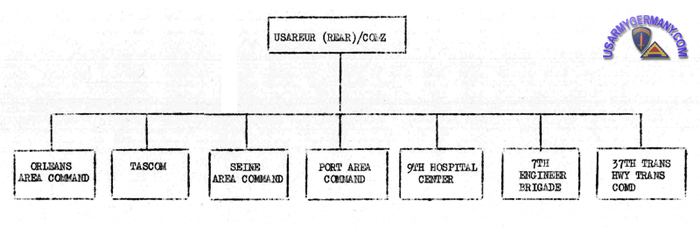 USAREUR (REAR) / Communications Zone Organization, mid-1960 |
||||||||||||||||||||||||||||||||||||||||||||||||||||||||||||||||||||
| 1960 | ||||||||||||||||||||||||||||||||||||||||||||||||||||||||||||||||||||
| (Source: STARS & STRIPES, Jan 30, 1960) | ||||||||||||||||||||||||||||||||||||||||||||||||||||||||||||||||||||
| Effective March 1 1960, Headquarters US Army Communications Zone, Europe will be reorganized and redesignated as Headquarters USAREUR (Rear) Communications Zone. This reorganization encompasses a major realignment of Com Z's command structure: -- Headquarters will remain at Orleans, France -- Com Z CG will retain the same role at USAREUR (Rear) Com Z but will also acquire the title of USAREUR Deputy CINC -- Advance Section, Com Z will be reorganized & redesignated as Theater Army Support Command (TASCOM). -- Base Section, Com Z will be reorganized & redesignated as Poitiers Post. -- The Port Area Command will report directly to HQ USAREUR (Rear) Com Z. -- Port operations of Bremerhaven POE will be assigned to HQ USAREUR (Rear) Com Z. -- A Military Post System will be formed with four main military posts and twelve (12) sub-posts. -- Signal, Medical and Chemical Supply Control Agencies will be relocated from Orleans to Poitiers. -- Orleans and Seine Area Commands will be under direct command of HQ USAREUR (Rear) Com Z. TASCOM TASCOM will command all depots in France and Germany. HQ TASCOM will be located in Verdun, France. The Military Post System will be under direct command of HQ TASCOM.  Bussac PostBraconneCaptieuxFontenetPerigueuxPoitiers PostChinonIngrandes SaumurToul Post Metz
NancyVerdun Post EtainTrois FontainesVitry-Le-Francois Bussac PostBraconneCaptieuxFontenetPerigueuxPoitiers PostChinonIngrandes SaumurToul Post Metz
NancyVerdun Post EtainTrois FontainesVitry-Le-FrancoisPort Area Command Port Area Comd will be headquartered at La Rochelle, France and will command the port areas of St. Nazaire La PalliceBordeaux as well as the installations at La Rochelle RochefortCroix Chapeau |
||||||||||||||||||||||||||||||||||||||||||||||||||||||||||||||||||||
|
||||||||||||||||||||||||||||||||||||||||||||||||||||||||||||||||||||
| 1961-1962 BERLIN CRISIS AND AUGMENTATION | ||||||||||||||||||||||||||||||||||||||||||||||||||||||||||||||||||||
| (Source: STARS & STRIPES, Feb 16, 1962) | ||||||||||||||||||||||||||||||||||||||||||||||||||||||||||||||||||||
| In 1961, the Communications Zone, Europe was involved in Operation Roundabout, an augmentation program ordered by President Kennedy to beef up US forces in Europe during the Berlin Crisis. The first of the 44,000 additional troops to arrive in Europe debarked at the port of Cherbourg, France on Oct 11, 1961. Com Z port and movement personnel handled their arrival and dispatched them to their scheduled bases. At the same time, the command itself received several thousands of augmentation troops to beef up its logistical support strength. The article provides a brief overview of the Com Z organization in early 1962: The Communications Zone comprises five major command and various special headquarters that handle specific phases of the command's supply, logistical and administrative functions: 1st Logistical Command Headquarters are at Poitiers, France. The organization is responsible for the operation of all supply depots in western France. Port Area Command Port Area Comd, headquartered at La Rochelle, is a subordinate command of the 1st Log Comd. The command receives incoming supplies through French ports at St Nazaire, La Pallice and Bassens. From there the supplies are shipped to widely separated depots in France and Germany for storage and issue to troops. Port of Embarkation, Bremerhaven POE, Bremerhaven is under the direct control of HQ Com Z. 4th Logistical Command Headquarters area at Verdun, France. The command operates all of the Com Z supply depots in eastern France and Germany. It furnishes direct supply for tactical units further forward. Seine Area Command SAC provides logistical support for major US headquarters in the Paris area, including the US elements of EUCOM, SHAPE and NATO. Orleans Area Command OAC provides logistical support for US units in the Orleans area, including Headquarters Communications Zone. |
||||||||||||||||||||||||||||||||||||||||||||||||||||||||||||||||||||
| 1967-1969 COM Z LOCATED IN GERMANY | ||||||||||||||||||||||||||||||||||||||||||||||||||||||||||||||||||||
 The COMZ Chronicle, Nov 2, 1967 (Click on the above image to view the entire issue) |
||||||||||||||||||||||||||||||||||||||||||||||||||||||||||||||||||||
| 1968 | ||||||||||||||||||||||||||||||||||||||||||||||||||||||||||||||||||||
| (Source: STARS & STRIPES, Feb 17, 1968) | ||||||||||||||||||||||||||||||||||||||||||||||||||||||||||||||||||||
| The Communications Zone (Com Z) is located at Taukkunen Barracks in Worms, Germany. The command serves as the logistics base for US Forces in Europe (some 420,000 military personnel and their dependents). It comprises a complex of ports, depots, pipelines, truck fleets, railways and barges that reach from the Atlantic to the Iron Curtain, and from England to Bavaria. Com Z is one of the largest administrative and logistics organizations in the world, with a supply and inventory value of about $6 billion (1969 dollars). More than 50,000 military and civilian personnel work for Com Z and are organized into 39 separate commands and activities. STORAGE SYSTEM 2,027,000 short tons of supplies and equipment are kept at 59 depot storage sites which provide nearly 7 million square feet of covered storage and 5 million square feet of open improved storage space. EQUIPMENT OVERHAUL Major overhaul of equipment is performed at 14 depots, plants and activities. Annually, Com Z overhauls more than ¾ million items at a cost of $56.7 million. DS AND GS MAINTENANCE 88 Com Z facilities perform direct support and general support maintenance - averaging 1¾ million job orders per year. PETROLEUM PIPELINES Com Z uses 444.6 miles of pipelines to pump nearly 23 million barrels of petroleum products per year. (Construction of the pipeline system cost $71 million, but the savings for the US government in transportation and handling costs of petroleum products has been many times that.) TRANSPORTATION Using railways, highways and waterways, the Com Z transports nearly 2 million short tons of supplies and equipment per year. Com Z operates 63 motor pools (8,476 Army motor vehicles)a rail fleet of 1,700 pieces of rolling stock41 fixed and rotary-wing aircraft
COMMISSARY STORES Com Z operates 58 commissary sales stores (generating more than $60 mission in sales) and 33 troop issue commissaries (providing more than $57 million worth of food to unit messes). Com Z supports in all about 112 commissaries (these generate a little more than $179 mission in sales annually) with 2,400 different items. SURPLUS PROPERTY The Com Z operates 27 collecting points where surplus property is collected and disposed of by sales (nearly $6 million in a year). PROCUREMENT The command operates 18 major procurement offices which contract for about $270 million worth of goods and services annually. MEDICAL SERVICES Com Z's medical services include the following: six dental clinicsfive dispensariestwo hospitalsfive small animal clinicsone veterinary detachmentthree medical services areasLAUNDRY AND DRY CLEANING There are 14 laundry and dry cleaning plants in the Com Z area. They handle over 85 million pieces of laundry and 1¾ million pieces of dry cleaning annually. POSTAL SERVICES There are six base post offices, twelve Army postal units and one postal regulating detachment within the Com Z area. They handle 6.1 million mail sacks, pouches and outside pieces of mail annually and sell $23.1 million in postage stamps and money orders. SPECIAL SERVICES Com Z operates a total of 1,691 special services facilities including motion picture theaters, craft and hobby shops, and libraries. FINANCE & ACCOUNTING Com Z operates nine finance and accounting offices and seven Class B finance disbursing offices. MISCELLANEOUS FACILITIES Other types of facilities operated by the Com Z include 164 post chapels and 648 youth activities (e.g. Boy Scouts, Girl Scouts, AYA). In addition to all of the above, the Communications Zone also has 29,179 buildings with 256.5 million square feet of floor space; nearly a quarter-million acres of grounds; and provides and maintains 42,573 family housing units. |
||||||||||||||||||||||||||||||||||||||||||||||||||||||||||||||||||||
In April 1968, US Army Communications Zone announced the redesignation of five of its installations:
|
||||||||||||||||||||||||||||||||||||||||||||||||||||||||||||||||||||
|
||||||||||||||||||||||||||||||||||||||||||||||||||||||||||||||||||||
|
|
||||||||||||||||||||||||||||||||||||||||||||||||||||||||||||||||||||
| 1952 EUCOM / USAREUR Supply Distribution Plan | ||||||||||||||||||||||||||||||||||||||||||||||||||||||||||||||||||||
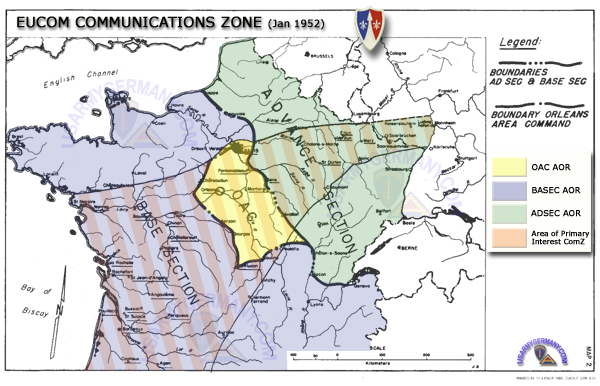 Original modified by Walter Elkins (webmaster) |
||||||||||||||||||||||||||||||||||||||||||||||||||||||||||||||||||||
| (Source: Command Report Headquarters, EUCOM/USAREUR, 1952) | ||||||||||||||||||||||||||||||||||||||||||||||||||||||||||||||||||||
| THEATER SUPPLY & MAINTENANCE (1952) A major factor in planning for EUCOM supply operations in 1952 was the scheduled movement of technical service stock control operations to France, beginning approximately 1 October 1953 and scheduled for completion by 1 February 1954, and the transfer of depots and warehouses from the U.S. Zone to locations west of the Rhine River. The distribution of supplies in EUCOM was governed during 1952 by a revision of the EUCOM Supply Distribution Plan which was published on 4 January 1952. This plan provided for:
Previous supply plans had not provided for EUCOM operation of depots in either ADSEC or BASEC, since depots were considered as being static once they were filled. In November 1951 the EUCOM chief of staff had approved plans to make ordnance depots in ADSEC operational for the support of COMZ troops and Air Force units located in COMZ, and to retain the major portion of the general strategic or special reserves in BASEC, rather than dividing them equally between BASEL and ADSEC. The revised EUCOM Supply Distribution Plan of 4 January 1952 extended the policies approved for the Ordnance Division to the other technical services, making the technical service depots located in ADSEC operational insofar as supply of U.S. forces in COMZ was concerned. Peacetime or operating stocks of Class II, III, and V supplies, as well as bulky shipments, such as vehicle replacements, were, as before, to be received through Bremerhaven for shipment to depots in Germany and France. However, special reserve supplies, project items and Class II and IV combat supplies were to be received through French LOFC ports and moved to EUCOM troop units under the same procedures in wartime. Although the plan was approved by the chief of staff, he warned against the possibility of overbuilding in ADSEC for the support of Air Force units, since most EUCOM support of the Air Force in France was to be phased out by 1954 and EUCOM would then be confronted with surplus facilities. Movement of Certain Support & Maintenance Facilities West of the Rhine In accordance with the EUCOM Supply Distribution Plan for 1952, the Ordnance, Quartermaster, Signal, Engineer, and Medical Divisions of EUCOM headquarters scheduled movement of their depots in the U.S. Zone of Germany to the Rhine Military Post (later, the Western Area Command) in the French Zone of Germany. The facilities for this transfer of operations were scheduled for completion by 1 August 1952, subject to such factors as the availability of labor, shortages of critical materials, and weather conditions. The depots to be located in the Rhine Military Post during 1952 were as follows:
The work completed and in progress on these facilities during GFY 1952 amounted to DM 67,770,000. In addition to these depots in Germany, the Transportation Division had located a depot at Landes de Bussac in BASEC and the Chemical Division had established depots in both ADSEC and BASEC to serve COMZ as well as the U.S. areas of responsibility in Germany. Primarily because of the lack of storage space along the LOFC, it became apparent in the late summer of 1952 that target objectives for the movement of stockage tonnages west of the Rhine might not be met by 31 December 1952. As construction progressed, however, the program for the relocation of stocks from depots in the U.S. Zone of Germany to locations west of the Rhine was greatly accelerated. During October General Ridgway, than US CINCEUR, queried USAREUR as to the status of USAREUR plans to move the chiefs of the technical services to France in connection with the movement of stocks west of the Rhine and directed that this project be implemented at the earliest possible date. USAREUR replied that its plans called only for the movement of technical service stock control agencies to France and that USAREUR did not plan to move the technical services proper to France short of an emergency. By the end of the year depot construction west of the Rhine for the Signal, Quartermaster, Engineer, Medical, and Ordnance Divisions was complete except for the dependent housing portion of the installations, in some cases. Communications Zone Supply Facilities The development of the COMZ supply facilities had begun in November 1950 when an agreement was signed with the French for the establishment of an LOFC through France. In July 1951 the LOFC organization had been designated the EUCOM Communications Zone (EUCOM COMZ), a designation changed on 1 August 1952 to that of USAREUR Communications Zone. The purpose of the COMZ was to provide an adequate base through which to supply all the materials necessary to maintain the organization of USAREUR, estimated at approximately 300,000 personnel in 1952, in the event of an emergency. The COMZ depots were planned to stock the following types of supplies: the Special Theater Reserve; all excess combat serviceable items over a 1-year level; operational supplies for the support of Army and Air Force troops in France; a 30-day level of the EUCOM stockage objective; and several special projects among which were MDAP storage and stocks for the noncombatant evacuation operations (NEO) for removing EUCOM/USAREUR dependents. The development of the COMZ supply facilities continued throughout 1951, but mainly in the preliminary construction stage. By the end of 1951, however, a number of the supply depots had became operational and had begun to receive supplies for stockage. Of the entire stockage objective of 700,000 tons, as of 1 January 1952 307,000 tons (44 percent) had been moved into the EUCOM COMZ. The COMZ supply facilities at the beginning of 1952 were located throughout three commands: BASEC (  ) and ADSEC ( ) and ADSEC ( ) containing strategic storage and depot maintenance facilities, and the Orleans Area Command ( ) containing strategic storage and depot maintenance facilities, and the Orleans Area Command ( ) containing command and command support installations. These commands as well as the lateral boundaries of the area of primary interest ( ) containing command and command support installations. These commands as well as the lateral boundaries of the area of primary interest ( ) to COMZ are shown in the map above. ) to COMZ are shown in the map above.In January 1952 the EUCOM director of logistics reported that the entire supply program !n COMZ BASEC was stalled pending completion of the construction program, which in some cases had not yet been initiated. He made the following recommendations: (1) an over-all construction engineer with competent help and full EUCOM support should be placed in charge; (2) competent repair and utilities (R&) engineers should be assigned to the major depots; (3) stockpiles of R&U materials should be immediately procured and located centrally in each area; (4) local labor should be procured through direct hire and the use of contract services; and (5) the chiefs of the EUCOM technical services should supervise their depots more closely. The situation in ADSEC early in the year was comparable to that in BASEC; the same difficulties were encountered, and in some cases the facilities were not as far advanced as in BASEC, because they had been started at a later date. By the and of 1952, of 19 supply depots in process of construction in COMZ, only 3 were more than 50 percent complete. It was expected that 3 would be completed between 1 March and 1 July 1953, 6 more would be completed by 31 September 1953, an additional 3 would be completed before 31 December 1953. The remaining 7 would be completed same time in 1954. Class II Installations in France In August 1951 EUCOM had prescribed three phases for the development of depot installations in France, as follows:
The second phase of the development of the LOFC depots, during which they were in Class II status, involved a complicated organization, designed primarily to insure the proper build-up of the specific installations by the technical service concerned with its operation and having the practical experience and the technical skill to accomplish this task most efficiently. As of 1 January 1952, 32 major installations were in temporary Class Il status under the complete control of the EUCOM technical services. In addition 2 signal installations in COMZ were in permanent Class lI statuse. During the development phase of these installations new projects were in progress involving construction and enlargement of existing facilities, stockage of the required equipment and supplies, and the staffing of the installations with adequate personnel. Between 1 January and 30 November 1952, an additional 10 installations were placed in Class lI status by EUCOM/USAREUR, and 3 Class II installations, 2 quartermaster POL subdepots, and 1 engineer depot were discontinued. As of 30 November 1952, a total of 39 installations in USAREUR COMZ were in temporary Class II status. In June 1952 the Commanding General, EUCOM COMZ, recommended that all Class II depots in France be returned to Class I status and placed under his command. Effective 1 December 1952, 35 USAREUR supply depots and subdepots in France were returned to Class I status and responsibility for them was transferred to the Commanding General, USAREUR COMZ, with the exception of certain responsibilities to be retained by USAREUR, as follows: (1) over-all planning for the technical services; (2) theater stock control functions; (3) procurement within the theater for depot stocks; and (4) assignment of depot missions. Only a small number of installations remained in Class II statue in COMZ as of 31 December 1952. Supplies on Hand in EUCOM Depots The EUCOM Logistics Division early in 1952 changed its reporting criteria to reflect the logistical state of readiness of the command relative to stocks on hand in EUCOM depots. The first reporting period, covering the month of February 1952, showed over one million short tons of serviceable stocks on hand in EUCOM depots, comprising all categories. Approximately 749,000 tons (70 percent) of this total were stored in EUCOM depots in Germany. The EUCOM Stockage Objective for this period amounted to 614,000 tons and the Special Reserve No. 1 totaled over 351,000 tons. Most of the special reserve, 78 percent, was stored in L0FC depots in France. In addition to these two categories of supplies, the total serviceable stocks on hand included MDAP stocks, consisting of Stockpile A and World War II vehicles, of approximately 44,000 tons. Stockpile A was located partly in Austria, partly in EUCOM, and partly in the United States. By the end of the year the total tonnage on hand had increased to approximately 1,500,000 tons. USAREUR Special Reserve No. 1 had reached 517,800 tons, an increase of approximately 159,000 tons over the 31 December 1951 figure but, because of the increase in the target objective for this category, represented only 54 percent of the 1 July 1954 target objective. The tonnages on hand in the USAREUR Stockage Objective reached 936,000 tons in December or approximately 97.5 percent of the 1 July 1954 target objective for this category. As of 31 December 1952, quartermaster stocks of 384,600 tons comprised 41 percent of the total stocks on hand. |
||||||||||||||||||||||||||||||||||||||||||||||||||||||||||||||||||||
| (Source: Email from Bryan Hackett, 69th Trans Co, 1958-59) | ||||||||||||||||||||||||||||||||||||||||||||||||||||||||||||||||||||
|
||||||||||||||||||||||||||||||||||||||||||||||||||||||||||||||||||||
 |
||||||||||||||||||||||||||||||||||||||||||||||||||||||||||||||||||||
| Operation FRELOC (Fast Redeployment of the Lines of Communication) | ||||||||||||||||||||||||||||||||||||||||||||||||||||||||||||||||||||
| (Source: Email from Basil Hobar) - UPDATED 10-28-2003 | ||||||||||||||||||||||||||||||||||||||||||||||||||||||||||||||||||||
|
A Personal Story of Operation FRELOC
"Fast Redeployment of the Lines of Communication" by Basil J. Hobar, Colonel QM, USA (Ret) |
||||||||||||||||||||||||||||||||||||||||||||||||||||||||||||||||||||
|
While
serving as a captain with the 5th Special Forces Group (Airborne)
in Vietnam in 1965-66, I applied for inter-theater transfer to Europe
for family reasons and to avoid a quick turnaround to Vietnam. The
Army approved that. My instructions assigned me to the "US Army Supply and Maintenance Agency (S&MA), Verdun,
France, with duty station in Zweibrücken, Germany." (That's Deux-Ponts
in French as shown on some maps. Zweibrücken is very near
France in southwest Germany.)
I received these instructions (or the ensuing orders) while on an operation in a Special Forces camp near the Cambodian border in September 1966. When I saw them, I surmised that my instructions must have something to do with the Army -- and all other NATO forces -- having to leave France by April 1967. I had read something about that in the Stars and Stripes. The Army dubbed the operation FRELOC. Fast forward to Veterans Day 1966, in Würzburg, Federal Republic of Germany. Having departed RVN, I found myself back in "the world" and reunited with my German-born wife and our two children. They had spent that year of my first Vietnam tour with my wife's parents in Würzburg. After arriving, I tried to reach S&MA by telephone. Even though it was Veterans Day, I wanted to let them know that I was "in-country" and ask them what to do. |
||||||||||||||||||||||||||||||||||||||||||||||||||||||||||||||||||||
|
||||||||||||||||||||||||||||||||||||||||||||||||||||||||||||||||||||
|
The duty officer was flummoxed by my orders and asked if the orders
were classified. It seemed that the Army had not yet made an official
announcement that S&MA would be going to "Sunny Zwei." As I learned
later, the other parts of S&MA -- the command group (brigadier),
half of the IBM mainframe computers and operators, computer programmers,
financial managers, and supply managers were in Orleans, France.
Only the Stock Control Division was in Verdun with its share of
S&MA's IBM 7010 computers, a 0-6 division chief, and an attroupement
of U.S. civilians, French nationals, assorted Army officers and
enlisted men (this was prior to the influx of women into the Army
that came in the 1970's).
After a day or two I received a call from my sponsor, a Department of the Army Civilian (DAC) named Tex Tatum, Chief of the Stock Control Division's "Customer Service Branch." He told me to go to Zweibrücken, get settled and call back. After a struggle with the blasted housing office, my wife and I landed a small, two-bedroom, but nice, Army stairwell apartment in the Kreuzberg Kaserne with a great view of the city. I had to fight to get this because the family housing office in the Kaiserslautern Army Community would not believe that I was assigned to S&MA and that S&MA was, in fact, on the way to that community. (Note that this is only six months before the deadline to be out of France.) I soon drove to France and Verdun to check in and get started. This was in late November or early December 1966. Given my interest in military history, it was a melancholy thing for me to drive over ground marched over and soaked in blood in 1870, 1914-1918 and 1939-1945. In Verdun, I swear I could hear moaning from the dead lying in Douaumont over the despicable decision of the French government to pull out of the military side of NATO (where France remains to this day, a fact unknown and unappreciated by most Americans). Due to the deadline set by President Charles de Gaulle, SHAPE headquarters, USEUCOM headquarters, military units and organizations such as the Army's array of supply depots, USAREUR's marine fleet then in coastal France, and all supplies and equipment in storage, had to be out of France by April 1, 1967. Thus organizations and units had not been able to complete much planning due to the lack of "troop leading time" offered by La Grand Charles. (1) After an orientation in Verdun where I was introduced to a new world of computers and computing, Colonel MacDonald, Chief of the Stock Control Division, and LTC Robert Wyanski, Chief of the Document Processing Branch, took pity on me. Since I just endured a one-year separation from my family, Colonel MacDonald assigned me to be his point man in Zweibrücken before I assumed my position in the Document Processing Branch after the move. In Zweibrücken, I was to work with a senior lieutenant colonel who was the advance man for the entirety of S&MA, a relatively large and complex outfit. The plan was that Headquarters, U.S. Army Communications Zone Europe (USACOMZEUR) would move from Orleans, France to Worms, Germany. Supplies in the depots were to be moved in an orderly fashion all over the place, including the UK. The entirety of S&MA would consolidate in Zweibrücken by moving its headquarters, supply management policy and operating divisions, and financial managers from Orleans; and the Stock Control Division from Verdun. Computer service centers from both places would also consolidate in Zweibrücken. S&MA would take over all the buildings at the Kreuzberg Kaserne including those of the Bundeswehr Parachute Battalion and 7th ICC. (I do not know where the Germans went, but the ICC moved to Karlsruhe, Germany.) (2) For the next month or so I assisted the lieutenant colonel in surveying the buildings and allocating space to the various divisions of S&MA as well as doing the detailed leg work for the Stock Control Division. However, working for this man became very unpleasant. Things went downhill beginning on Christmas Eve (very important evening for Germans and my family) when he called me at home with some nonsense concern about something. Later, after discussions with my wife and before I got into trouble, I asked to work in Verdun and commute home on weekends. Then I could avoid trouble, learn my job (of which I knew zippo) before the move, and be "ready for combat" when April 1 rolled around. The division chief approved my request. So for about two months I commuted between Zweibrücken and Verdun over two-lane highways, the principal one in France being N3 running from the international frontier at Saarbrücken to Verdun. Negotiating this two-hour drive each weekend in these pre-superhighway days, I learned quickly the meaning of the French road signs including the legendary "Passage Protégé." It was an interesting, but dicey, stretch of road. N3 took me from the frontier in the vicinity of Saarbrücken, through the large town of St. Avold, directly through the major city of Metz, France, close by one main battlefield of the Franco-Prussian War at Metz, and through numerous small towns straddling the highway. On my way back to Germany on Fridays, I would stop in some French grocery store along the way and buy a few bottles of wine for a couple of New Francs (3) that my wife and I could enjoy in Germany. One vivid remembrance of that trip was that the border towns on the German side looked much better and cleaner than those on the French side. Also during this period I saw a steady stream of G.I. tractor-trailers making their way out of France carrying supplies to depots in Germany and elsewhere. (Later I would learn that this controlled movement of supplies failed from the stock control perspective since the Stock Accounting Branch was a part of my division in S&MA. I heard all the problems in staff meetings.) During the months just prior to April 1, 1967, as move operations intensified, the tension level in the organization went out of sight for at least two reasons. First, the impending move would involve the families and children of Army officers and senior enlisted men, together with the motley group of U.S. civilians and French Nationals holding very good jobs with the U.S. Army. Remember, some of these U.S. civilians had been working in France for the Army since the end of WW II! With their French wives, some were more French than American by this time, and Germany was anathema. Second, S&MA had in the works a major software and hardware conversion for its large computer system. This conversion to a new set of programs called CS4 (as I recall) and IBM 360 computers could not have been more poorly timed due to the "minor" inconvenience of the relocation. So between searching for quarters and schools while trying to keep the organization operating in support of the entire Army in Europe, we were conducting a pitiful training program for the new system. During my months in Verdun, I learned that in my position in the Document Processing Branch I was a major user of the computer system and very dependent upon it. I struggled to learn the new language of data processing and MILSTRIP and to make sense out of the "cycle." (A cycle was the running, from start to finish, of the complete set of computer programs to process thousands of (80-column) documents: supply and equipment receipts at the depots, shipments from depots to units throughout Europe and the Middle-East, requisitions from units, materiel release orders, financial stuff, status reports and all the other things that made up the infamous MILSTRIP, (4) governed by the well-known regulation numbered AR 725-50.) The goal was one cycle per day. As I recall, S&MA was generally achieving the goal in France. I will tell you later about the abject grief we experienced after the move and the conversion. Since the Army, and everyone else, had only one year to execute FRELOC, and since it took longer than that to design and construct a major data processing center, someone came up with the idea of (1) placing a different set of IBM 7010 computers on passenger-type rail cars; and (2) locating this "service center on a train" to wherever the Army decided to send S&MA. Of course, there would have to be a rail siding near the new place. This was not done to make the computers and peripherals mobile! Au contraire, this was to be a temporary set up to be used until the new IBM 360 computers could be installed in a fixed service center. I guess the fixed service center would be all right since attacking Soviets and East Germans could not reach Zweibrücken before being turned back. Could they? (5) In the end, six rail cars were used. I visited the site once or twice. One contained the computer(s) and operator's console; another contained the tape drives; others had supporting equipment such as card sorters and workspace. One contained large 60-kilowatt backup generators. There probably was a transceiver station there as well although I do not know how transceiver traffic reached the train. The "computer on a train" and a gaggle of computer programmers were set up at the U.S. Army Medical Depot, Einsiedlerhof, Germany, about a 30 kilometer road trip from Zweibrücken. The programmers were in a rail-side warehouse converted into workspace. Input and output in the form of punched cards and printouts had to be transported by a messenger (i.e., a G.I. driving a truck). Yes, we had cardpunch machines. This turned out to be a hard row to hoe. On or about April 1, 1967, after the moving trucks departed the Stock Control Division building, several NCOs and I were the last soldats Américain to leave the old French kaserne in Verdun. We all helped to get the trash out and sweep the place down before making our way to Germany. It was bittersweet having to depart France under such conditions. The IBM 7010 computers remained in the building. Rumor had it that the Army was to ship them to Vietnam (where, alas, I would hear of them again in the 1st Logistical Command's lash-up). The plan to ship supplies and equipment in storage to new locations in an orderly and controlled fashion was not succeeding. So just before the deadline to be out of France, someone made a decision to have the depots in France ship materiel on their own according to generalized guidance, e.g., vehicles to Kaiserslautern; general supplies to Nabollenbach, etc. The depots in France were to make these shipments to depots in Germany, Italy and the UK without "pre-posting" supply directives (a MILSTRIP document) issued by the item managers in Orleans. The new plan called for "post-posting" shipments to the computer file after the fact, an OK, but dangerous, procedure. Rumor had it that someone lost a box or two of punched cards (2,000 per box and one card could represent a large amount of a given item). The cards never got to the computer meaning the accountable records on the computer files were not updated. Then towards the end of FRELOC, for reasons not known to me, much materiel was "dumped" on the Kaiserslautern Army Depot at the last minute. It took a very long time for "K-town" to sort through the pile and figure out what it had. As S&MA operations commenced in Zweibrücken, our computer files continued to show units and supplies in France long after the move due to the post-posting and other failings. In turn, these caused beaucoup problems for years in accounting for stock and in the combat readiness of units. One notorious problem occurred when we made a shipment of supplies by rail to a long-gone customer in Paris! The whole system failed on this including the dunces at the depot who shipped the supplies. I remember getting a call from our embassy on this fiasco. Driven by problems such as this one, the S&MA leadership took a drastic preventive measure at some point to head off such problems. Using specially written data processing routines, they had the computer files stripped of all records with codes indicating units and supplies in France. This "meat axe" solution resulted in more loss of control and accountability. Basically, S&MA, the theatre inventory control point, did not know what it had nor where! In the wake of FRELOC and this action, we had GAO and Army Audit Agency auditors in our offices for a long time after the move. Also, we endured much internal grief at S&MA due to this problem. More importantly, we caused many problems for our thousands of Army and foreign military customers. Another interesting problem I remember was the loss of an Army tug boat when it sank in the English Channel! You see, that part of the Army's marine fleet in French ports had to be moved and at least some of it went to the United Kingdom. We heard about it when the Report of Survey (i.e., the investigation) reached our Stock Accounting Branch. Shortly after the move, another colonel showed up to take over the Stock Control Division. Colonel McDonald moved to the one of the commodity divisions. Colonel John A. Frago (6), QM, came from commanding the 3rd S & T Battalion, 3rd Infantry Division, then located in my wife's hometown of Würzburg. (Incidentally, I had served in one of that battalion's predecessor units a few years earlier when I met my wife.) Colonel Frago walked into a set of problems (i.e., a mess) caused by the move, loss of control of stocks, poorly functioning computer system, and some poor and/or inexperienced managers. He struggled long and hard to get things straightened out. Colonel Frago and I got along well and he coached me quite a bit on the job and with respect to my career. We are in contact to this day even though he lives on the "left" coast and I on the east coast. After some time passed, some of the lower ranking French employees began drifting back to France. While working in Germany, a few of them lived in the town of Bitsche, just south of Zweibrücken in France. The higher paid French employees tended to remain in their jobs. We had to hire Germans to do our mostly clerical jobs in Stock Control. The pickings were slim. Few of them spoke English and we had to start them from scratch. Due to the German labor laws, they had German holidays off and worked on our holidays. This caused problems when the holidays did not coincide. We always had to have American supervisors working on the 4th of July, Memorial Day and Labor Day. Then on Corpus Christy Day, for example, the Germans were off and we worked. Crazy. The lack of good clerical employees to interact with the computers contributed to the problems we had. I used to complain to the GAO (to no avail) that we had a million dollar computer system and ten cent help. It would have been great to be able to hire some of those smart and well-educated auditors to do the work. The officers and NCOs with families lived all over the area in government housing or on the economy in places ranging from Saarbrücken to Kaiserslautern. By and large these were good people and with the better DACs, they held the organization together during this very difficult period. I remember a particularly good DAC, Irv Burch, who worked on policy matters related to the computer system. When in doubt, call Irv. Jack Smart was the DAC in charge of the data processing division. Mr. Smart had a terrific problem to overcome and he took a lot of heat. These men were GS 14's or 15's as this was prior to the SES program. (I remember one supply manager in an S&MA meeting whining about her problems with "Mr. Smart's computer.") By the time LTC Wyanski rotated later in 1967, I had been promoted to major and was given the Document Processing Branch chief's job and continued my adventure in the world of supply and computers. I had some very smart and good NCOs in the branch and a set of new lieutenants who rose to the occasion. We worked hard, did our best, and also took a lot of heat from customers and supply managers over this and that. We made a good social life and had some fun too. Basically the branch military and civilian workers processed requisitions and other MILSTRIP documents received by mail and telephone, and the associated computer system exceptions (called "Redlines" at S&MA). Mistakes turned into Redlines. In those days before real time processing and online cathode ray tube workstations, we could not see into the computer files nor work on a real-time basis. We interacted mainly by punched card. We had real trouble meeting MILSTRIP standards even for the highest priority requisitions (0h 2's as we called them). Our 24-7 High Priority Section could not meet the standards because the computer system was not always available nor was it responsive or accurate. It was a lose-lose situation between the computer people and us. I learned there that I could not count on a computer programmer to do what I asked or needed. But that's another story. Later the computer service center was completed in Kreuzberg Kaserne and S&MA converted to new hardware and its new set of software programs called CS4. We had a lot of trouble with this too. I think at the beginning of the conversion a month passed without a cycle. That was, for example, 100,000 supply requisitions waiting to be processed. Later, we would be lucky to be running one cycle a week. Our lament at the time was, "We are dead in the water." By the time I departed for Vietnam again in March of 1969, long after FRELOC was over, S&MA was at best limping along and the FRELOC hangover was still dogging the organization. My FRELOC story ends here. My time in Zweibrücken (about two years after FRELOC) was educational, exasperating, and exciting. I believe I made a contribution to keeping S&MA afloat through tough times. Moreover, I saw the end of an era in France. Eventually things smoothed out for S&MA and later it morphed into a different name and command structure. My last contact was by telephone in 1976 when I returned to Germany for an assignment in the 3rd Armored Division and called my old colleague Irv Burch just to say hello. Sometime later I learned that he passed away. I visited Kreuzberg Kaserne in 1985 just to look around when I was visiting Germany to attend a son's wedding. One of my friends, a brigadier, what used to be S&MA in Zweibrücken and my best friend was commanding the Kaiserslautern Army Depot (7). By that time I had checked out of the net (i.e., retired from the Army). Here are some closing comments. The Army did not get everything out of the France in time! Months after April 1, 1967, I had to detail one of my lieutenants to an Army ammunition depot or supply point way down in the southwest corner of France at Captieux (I think). There, Class V supplies were still being shipped out in late 1967 or early 1968. How many other situations like this came up? I will bet that if we look closely enough, we would find something in France this very day! Finally, we must never forget the dirty deed that France pulled on NATO and the U.S. back then. It was the height of the Cold War and the middle our own war in the former Indochine. La Grande Charles knew full well that NATO would be forced to defend France once again if war broke out due to the geography. Nevertheless, he pulled France's military forces out of the deal and kicked us out of his country. Talk about having your cake and eating it too. And the French are still doing it to us today--witness Iraq. Sacré bleue |
||||||||||||||||||||||||||||||||||||||||||||||||||||||||||||||||||||
|
FOOTNOTES:
|
||||||||||||||||||||||||||||||||||||||||||||||||||||||||||||||||||||
| (1)
In visiting Fort Douamount and the other battlefields at Verdun, I
cringed at the outrageous number of soldiers killed there in WW I.
To this day I have great feeling for those poor devils who suffered
and died in the trenches. (What would the TV reporters do with those
casualties today?) (2) There was also French army unit in Zweibrücken and a Canadian air force base. With the American 7th ICC and the German airborne unit at Kreuzberg Kaserne, the town was known as "Little NATO." (3) New francs vs. old francs. France converted sometime in the late 1950's or early 1960's to get prices to more manageable levels. It was on the magnitude of something like ten new francs (NF) for 1,000 old francs (F). (4) MILSTRIP -- Military Standard Requisitioning and Issue Procedures, the S&MA bible. (5) In retrospect, perhaps the Army leadership knew more than they told us. When the Berlin Wall collapsed in 1989, the Red Army was in poor shape. Perhaps it was the same in the 1960's. The summer of 1967 would have been a good time for them to try an attack. The draw down in USAREUR for Vietnam left it seemed, only full colonels, some senior NCOs, some new and lucky second lieutenants, and few people like me who already had a tour in Vietnam. I understand that life in the USAREUR combat units was particularly grim in those days. (6) Colonel Frago and his wife live in Carmichael, California today. They showed up in Sunny Zwei with five children including a newly born son! I had a visit with him in the fall of 2003 and asked him to read this report. (7) Commanding K-town was Colonel F. B. Kish who is now the director of The College Football Hall of Fame in South Bend, Indiana. |
||||||||||||||||||||||||||||||||||||||||||||||||||||||||||||||||||||
| (Source: Email from John L. Wilson) | ||||||||||||||||||||||||||||||||||||||||||||||||||||||||||||||||||||
| DAC assigned to TASCOMEUR, Worms, GY 1969-1972 1. I was a GS-11 DAC Computer Systems Analyst assigned to the Information and Data Systems Agency (IDSA) from August, 1969 to January, 1972, subsequent to COMZ's transfer from Verdun. Reading Col. Basil Hobart's article (above) I definitely can confirm two years later computer problems still existed although perhaps to a lesser degree. One of my first assignments was a project to automate TASCOM's Property Book. Our state of the art computer at the time was a Univac 1005. It qualified as a computer only because it had a small operating system but not much memory. In the fall of 1969 I and another Systems Analyst drove to K-Town to discuss the Property Book manual processes with specific units I do not recall. What I do recall is when we spot checked several vehicles and asked who "owned" them the conclusion was nobody was sure. Each assumed the vehicles belonged to another unit. Needless to say I was shocked. No matter what we tried the 1005 computer really was not worthy for the detailed tasking and in time the project was shelved for a higher priority project. These were the times when a tank retriever was found in a junk yard in Holland and apparently never reported stolen. Sidewinder missiles were being stolen and literally thrown over a fence to awaiting criminals. Col Hobart's article helps explain the poor state of TASCOM logistics accountability in the late 60s. 2. I definitely can confirm his comments regarding Americans and non-Americans working for TASCOM. There was one "Local National", a Belgian, who solely maintained the TASCOM automated budget process via punched cards. Documentation, such as it was, mainly resided in this individual's brain. When he was sick or on vacation everything in the budget area basically stopped until he returned. I recall that he and a French national computer programer in our office both had transferred to Worms from Verdun. Both of these individuals were high end salaried employees who received extra monthly allowances for speaking English, and having children. The more children one had the more the monthly allowance. Additionally each of these employees had PX and Commissary privileges. The German government was very smart in regard to controlling unemployment. When needed "Guest workers" would be granted a work visa. IDSA for a period in 1970 hired two Local National Computer Programers. He was born in South Africa of British parents who left before the various uprisings of native peoples and had a British passport. The second was Indonesian and had a Dutch passport. Approximately 6 months later both were gone. They were given less than a week to leave the country. The German government wanted the Computer Programer positions open to German citizens because of the unemployment rate. Such practice was common in the manufacturing sector. 3. Col. Hobart is 100% correct about some of the "homesteader" Dept. of Army (DAC) civilians. If you were employed by the US forces in Europe before a previous date which I do not recall but believe it was in the 1950s, you did not have a 3 year with a possible extension to 5 years end of tour and subsequently have to return stateside. I either met or was aware of approximately 10 DACS, most of whom were in senior civilian positions, who had been in France/Germany since the end of WW2. I recall one "homesteader" showing me pictures of his yacht, his home in France and his French wife and children. He also received a monthly housing allowance for his Worms area home. Although more than one TASCOM CG tried to change the policy first using threats and then financial incentives, nothing worked. These "homesteaders" either eventually retired or died in Germany/France. 4. We also had a German national who worked for IDSA as a Computer Programer. Due to the stupidly of a few senior US Army military in the 1960's to punish the Germans, the German Army was not allowed to occupy some facilities such as Worms. So the German Army built new facilities and the US Army occupied the 19th century barracks at Worms. My office was a shared shower room on the second floor. The multi-story building previous had been an enlisted barrack built in the 1870s. 5. The next high priority computer project was to automate all TASCOM Local National's Job Descriptions. What a nightmare! I spent months researching and coordinating with our Civilian Personnel Office and others. The more I learned the more a morass and quagmire developed. For example, a "Warehouseman" was not just a "warehouseman:. You have "Warehouseman refrigerated,, warehouseman refrigerated classified, warehouseman ammunition, warehouseman level 1, level 2, etc. Additionally, these job descriptions varied within different Army sites. Further problems compounded the situation of various holidays being German only and other US only. Even worse, as Col. Hobart discussed, German holidays could vary within each German district such as differences in Bavaria and Hanover, etc. Although not mentioned all "Local National" salaries were paid for eventually by the U. S. taxpayers and those salaries were given as credit to Germany for its WW2 debt to the US for losing the war. This plus the fact that the US was paying for 30% of West Germany's defense while the Germany was planning to double its autobahn construction and the German Finance Minister lobbying to lower the value of the dollar was an additional source of frustration and irritation to a number of military and DACs in my workplace. The German population was extremely fearful of a Russian land invasion because of the atrocities committed by the German Waffen SS on the Russian population in WW2 when Hitler invaded Russia. They remember what the Russians did to the civilian population when capturing Berlin and surrounding areas. 6. In early 1971 IBM 360 computers were installed at the US Army facility in Karlsrhue. Logisitics efficiencies improved and in late 1971 I was offered a GS-12 Systems Analyst position with the Army Computer Systems Command, Ft. Belvoir, VA and left Germany in January, 1972. The only other thing I remember was a renovation/expansion of the computer room was wanted and performed by a German contractor. The modification cost was about $25,000. The only problem was the work was never previously approved before being performed. Of course the German contractor got his money and no one was punished for the violation. I also remember when briefly assigned to the budget area seeing various printouts of some things I did not understand. I recall one being "Project Live Oak". I was told it basically was a command "special fund" for purposes that were better left alone for specific identification of their actual names. In order words don't ask questions. |
||||||||||||||||||||||||||||||||||||||||||||||||||||||||||||||||||||
| ADDITIONAL COMMENTS (Source: Email from John Leonard, Budget Analyst, DCS Comptroller, HQ TASCOM, Nov 1970 - May 1973.) I have just read the e-mail from John L. Wilson (see above), who was a DAC at TASCOM in Worms from 1969-1972. In Mr Wilson's second paragraph, he writes:
Yes! His name was Pierre van Hoeteghem. He was from Liege, Belgium. He was as legendary as Mr Wilson describes. As a very young DAC, I was Mr van Hoeteghem's colleague — in the Budget Division of the Office of the Deputy Chief of Staff, Comptroller (DCS, Compt). To clarify what Mr Wilson has written about Mr van Hoeteghem's salary status with the US Forces, I must state that technically, "Van" was not a 'Local National', meaning that he was not paid under the Local National (LN) tariff that existed between the US Forces and the Federal Republic of Germany. I cannot remember the name of the salary schedule under which he was paid, but I believe that there were fewer than two dozen, perhaps fewer than a dozen European nationals who were paid, in US dollars, under that scheme. Mr Wilson, having jogged my memory, causes me to confirm that those European nationals who were paid under that salary schedule did indeed have PX and commissary privileges. In the long term, however, that salary schedule proved not to be such a great deal. With so few people, of varying nationalities, being paid under that schedule, there was no political clout to maintain economic parity for them. Even worse—there was no retirement component in the compensation scheme, and they were below the radar of their respective national social security retirement systems. Finally, when the US $ lost a third of its value against the DM between 24 October 1969 and May 1973, there was no adjustment mechanism to protect the purchasing power of those salaries. I rode in Van's car a frightening number of times between Worms and HQ, USAREUR in Heidelberg. He was my introduction to Autobahn culture as practiced by a European at 180 km per hour (112 mph)! Mr Wilson, in a later paragraph, also commented on the US civil servant 'homesteaders'. Yes. They were grandfathered, not subject to the five-year rule that brought me and my wife to HQ TASCOM. I worked with two of the homesteaders, Miss Jo Pintozzi, originally from Chicago, and Mr John Reish, who had a French wife and a house in France. They had come from HQ ComZ in Orleans, France, presumably on or before 1 April 1967, which was Charles de Gaulle's deadline for NATO forces to leave. There was also a 'homesteader' in the Accounting Division, and two in the Management Division, all of whose names I do not remember. Mr van Hoeteghem performed superhuman efforts at budget submission time, regularly working 24 or more hours without rest in those punch-card days. I know, because more than once, I was with him, checking printouts and pulling bad cards. |
||||||||||||||||||||||||||||||||||||||||||||||||||||||||||||||||||||
MISCELLANEOUS INFORMATION - (1964) The Command Control Information System-1970 (CCIS-70) Project was activated in August 1962. The project is a major effort of the US Army Materiel Command geared toward giving the battlefield commander the tool of automation as an aid in decision-making. The MOBIDIC-7A project (Mobile Digital Computer), which is being used by the Stock Control Center of Seventh Army in Europe, is now part of the CCIS-70 project. - (1964) The US Army has acquired a COBOL Compiler and will used it in preparing programs for one of the CCIS-70 Project's MOBIDIC's in Europe. The Compiler is the first of its type developed for use with military equipment in tactical units of the field army. |
||||||||||||||||||||||||||||||||||||||||||||||||||||||||||||||||||||
|
||||||||||||||||||||||||||||||||||||||||||||||||||||||||||||||||||||
|
|
||||||||||||||||||||||||||||||||||||||||||||||||||||||||||||||||||||
| The Com Z Cadence Weekly Newspaper | ||||||||||||||||||||||||||||||||||||||||||||||||||||||||||||||||||||
| The Com Z Cadence - Some of the issues published in France | ||||||||||||||||||||||||||||||||||||||||||||||||||||||||||||||||||||
|
||||||||||||||||||||||||||||||||||||||||||||||||||||||||||||||||||||
|
||||||||||||||||||||||||||||||||||||||||||||||||||||||||||||||||||||
(1) The complete issue of the Com Z Cadence is presented in a PDF (Adobe) file format - large file! These scans have been submitted by Lynnette Spratley who's father, MSgt Albert W. Spratley, was the first editor of the Com Z newspaper. (See article on Page 2, Oct 2 1953 issue.) |
||||||||||||||||||||||||||||||||||||||||||||||||||||||||||||||||||||
|
|
||||||||||||||||||||||||||||||||||||||||||||||||||||||||||||||||||||
| ISSUES IN COLLECTION | ||||||||||||||||||||||||||||||||||||||||||||||||||||||||||||||||||||
|
||||||||||||||||||||||||||||||||||||||||||||||||||||||||||||||||||||
|
||||||||||||||||||||||||||||||||||||||||||||||||||||||||||||||||||||
|
|
||||||||||||||||||||||||||||||||||||||||||||||||||||||||||||||||||||
| Newspaper articles | ||||||||||||||||||||||||||||||||||||||||||||||||||||||||||||||||||||
| (Source: Army, Navy and Air Force Journal, 5 September 1953) | ||||||||||||||||||||||||||||||||||||||||||||||||||||||||||||||||||||
|
Orleans,
France
|
||||||||||||||||||||||||||||||||||||||||||||||||||||||||||||||||||||
| The Seine
Area Command (SACCZ), a new major subordinate command of
the USAREUR Communcations Zone, has been established. With headquarters in Paris, it will be commanded by Col Alexander Kirby and will have the responsibility and mission formerly held by the 7961 USAREUR Detachment, of providing logistic support to elements of International Headquarters in the Paris and Fontainebleau areas. |
||||||||||||||||||||||||||||||||||||||||||||||||||||||||||||||||||||
|
||||||||||||||||||||||||||||||||||||||||||||||||||||||||||||||||||||
|
|
||||||||||||||||||||||||||||||||||||||||||||||||||||||||||||||||||||
| (Email from Millard Collins, with Orleans Det, 7784th Sig Svc Co from 1952-54) | ||||||||||||||||||||||||||||||||||||||||||||||||||||||||||||||||||||
| I was with the
7784 Sig Svc Co. I worked in Orleans
at the Caserne Calogny in the message center from 1952 to 1954. The train coming out of the gate was done by the photo outfit. Our barracks (at Orleans, France) had 4 little coal stoves to keep warm by. The weather was like Pa. in the winter. I worked in the message center. The line was Verdun, Orleans and La Rochelle. We were supposed to handle communications if the Russians started something. Looks a little bit like MASH 4077. The pic taken from the tower has my barracks and mess hall. Where the circle and the flag pole there was an open field. We had an Angry 26 set up for Radio Teletype to Verdun and La Rochelle. I believe the barracks in the lower right hand corner was the 7774 Sig Svc Co.. They took care of the cable. Just think that was over 50 years ago. I understand when De Galle threw us out our outfit went to Belgium. PS The airfield in the background is where I pulled guard duty with a Polish Guard on either side of me. |
||||||||||||||||||||||||||||||||||||||||||||||||||||||||||||||||||||
|
||||||||||||||||||||||||||||||||||||||||||||||||||||||||||||||||||||
|
||||||||||||||||||||||||||||||||||||||||||||||||||||||||||||||||||||
|
|
||||||||||||||||||||||||||||||||||||||||||||||||||||||||||||||||||||
| (Source: Army, Navy and Air Force Journal, 6 October 1956) | ||||||||||||||||||||||||||||||||||||||||||||||||||||||||||||||||||||
|
USAREUR
Slashes Logistics Overhead, Bolsters ComZ By Thousands of Spaces
|
||||||||||||||||||||||||||||||||||||||||||||||||||||||||||||||||||||
| The Army is trimming
and slimming its logistics overhead throughout Europe in a supply
reorganization that will see the command shift of more than 20,000
(?) spaces. It's part of a drive being directed by General Henry I. Hodes, USA, C-in-C of USAREUR, to streamline his support units at all levels in order to boost combat effectiveness and conserve manpower. In essence, the USAREUR Logistics Reorganization will see important responsibilities - previously executed under supervision of the USAREUR Technical Services Chiefs - placed under direct control of Maj. Gen. Robert W. Coleglazier, Jr., USA. He commands the Communications Zone from headquarters at Orleans, France, 350 miles away. By 1 January, it is anticipated here that about 85 percent of the reorganization will be completed. Before the end of the fiscal year on 30 June 1957, the job will be completed. When that is done, General Coleglazier will have virtually complete responsibility for theater logistics support of all US Army combat forces in Europe, centered, of course, in the Seventh Army. Heretofore, a considerable part of this responsibility has, in fact, been carried out by Supply Control Agencies of USAREUR Headquarters, working under direction of the Chiefs of the Technical Services - Signal, Chemical, Transportation, Engineer, Medical, Ordnance and Quartermaster, The Signal, Transportation and Chemical Supply Agencies came under General Coleglazier with the start of this fiscal year and, on 1 October, the Engineer and Medical units will be shifted. The master plan calls for the transfer of the Ordnance and Quartermaster agencies at the start of 1957. "When we finish this job," says a planning officer at General Hodes' headquarters, "we will have a logistics set-up that will be ready for any emergency." One major factor that hamstrung the Army in efforts to streamline the logistics organization has been the lack of adequate facilities in France, including decent housing for military men and their families. USAREUR officials point out, however, in connection with the implementation of the new plan that small numbers of military men and civilian employees will be required to move because of the changeover. Despite the fact that his direct control over military personnel will be increased by approximately 50 percent, General Coleglazier, as CG of ComZ, is being called upon to discharge his substantially increased duties with only a small increase in the overhead at his headquarters. At USAREUR, General Hodes' people say that the reorganization could mean a savings of several hundred spaces at Heidelberg. These savings would be utilized to fill billets in combat units. Normal attrition will take care of the reduction. ComZ obviously must tighten its overhead belt at the same time that it takes on large numbers of operating personnel at depots, procurement centers, distribution points and hospitals. That is in line with General Hodes' campaign to achieve manpower reductions in staff activities at all echelons, including, of course, his own headquarters at Heidelberg. But even more important than the savings in manpower, experts here under Maj Gen A.T. McNamara, USA, Assistant Chief of Staff, G-4, stress that the fundamental result of the reorganization will be the creation of a single direction of all logistics activities. They say that this stregthened ComZ organization will be able to act quickly and decisively to meet any situation. |
||||||||||||||||||||||||||||||||||||||||||||||||||||||||||||||||||||
|
||||||||||||||||||||||||||||||||||||||||||||||||||||||||||||||||||||
|
|
||||||||||||||||||||||||||||||||||||||||||||||||||||||||||||||||||||
| (Source: Orleans Item (Orleans military community newspaper), Special Com Z Anniversary Edition, February 16, 1961) | ||||||||||||||||||||||||||||||||||||||||||||||||||||||||||||||||||||
|
ComZ
Marks Its 43d Birthday
Supply System Moves Forward Units Geared For Action In Peace Or Combat |
||||||||||||||||||||||||||||||||||||||||||||||||||||||||||||||||||||
|
Three times
on the continent of Europe the United States of America has allied
with France to thwart aggression. |
||||||||||||||||||||||||||||||||||||||||||||||||||||||||||||||||||||
|
||||||||||||||||||||||||||||||||||||||||||||||||||||||||||||||||||||
|
|
||||||||||||||||||||||||||||||||||||||||||||||||||||||||||||||||||||
|
(Source: Army Information Digest, December 1962)
|
||||||||||||||||||||||||||||||||||||||||||||||||||||||||||||||||||||
|
Delivering
supplies, weapons and administrative services to US Forces across
Europe is the task of
U.S. Army Communications Zone, Europe By MG Henry R. Westphalinger MG Westphalinger was Commanding General of US Army Communcations Zone, Europe at the time this article was written |
||||||||||||||||||||||||||||||||||||||||||||||||||||||||||||||||||||
| SINCE the beginning
of warfare armies have required some type of organization to provide
men, equipment and supplies to their combat forces at the time and
place needed. In the United States Army this procedure of furnishing
logistical support to forces overseas has undergone a remarkable evolution
since World War II, culminating in the present organization of U.
S. Army Communications Zone, Europe (USACOMZEUR). With the advent of the era of atomic warfare, the huge depot complexes and concentrated port operations -- familiar features of World War II campaigns -- were no longer feasible and it became necessary to adopt new procedures. Since its establishment in 1950 COMZ has undergone many changes to improve efficiency and provide better support to the combat forces with fewer people. As constituted today, it represents the very latest doctrine and concepts in logistical support. THE unprecedented decision to set up a peacetime line of communications was the result of changing world conditions. During the fast years following World War II, U. S. forces in Europe were supplied mainly through the north German port of Bremerhaven. However, with the build-up of Soviet satellite forces in East Germany, provocative warnings from the Kremlin, and the Berlin blockade, it became apparent that less vulnerable supply lines were needed. The approach across France was the logical choice for an alternate system of supply. Negotiations with our NATO ally were started in 1950 and an agreement, reached in six months, permitted use of port facilities, storage depots, spaces for depots, airfields, and transportation rights on French roads and rail lines to West Germany. For the next five years, COMZ personnel worked to build, improve and expand the capabilities of this logistical net. By mid-1956, COMZ was able to assume the major burden of logistical support for the United States Army, Europe - a fighting force comparable in size to the population of Syracuse, New York. Responsibilities were subsequently extended to include the operation of U. S. supply systems in the German Federal Republic. Over the past twelve years there has been built a support organization of depots, hospitals, barracks and equipment repair shops costing over $300 million. With headquarters at Orleans, France, and 50 depots dispersed over 700 miles from the Atlantic to the Rhine, COMZ is completely operational today with some $1.5 billion of combat-ready materiel on hand to support U. S forces in Europe. The mission of the Communications Zone, is "to establish, maintain and operate a line of communications capable of furnishing administrative and logistical support as directed by the Commander in Chief, United States Army, Europe." This job includes all functions of supply from procurement to salvage plus construction, transportation and communications. The support mission encompasses, among other things, all U. S. Army forces in France and Germany, Military Assistance Programs, United Nations Emergency Forces, Headquarters EUCOM and SHAPE, and the provision of certain supplies for the Navy and Air Force. Perhaps the most significant feature of the USACOMZEUR organization is the ease with which it can be expanded or contracted to meet changing situations. When the Berlin crisis developed in 1961, the 1st Logistical Command, together with additional support units, was rapidly deployed from continental United States to COMZ where it was assigned to control depots and ports in western France. The unit recently returned to its home station in the United States. A long-drawn-out build-up is no longer necessary to expand Communications Zone support capability. The present streamlined organization is tailored for fast reaction. Improvements and innovations THE logistical task of supporting U. S forces in Europe is by to means a routine undertaking lacking in excitement. The introduction of new ideas, techniques, and electronic methods presents a constant challenge. A vital part of the COMZ supply system is the 37th Transportation Command (Motor Transport), heir to the famed "Red Ball Express" of World War II. The 37th employs the line haul relay system in which a series of locally based trucks and truckers take turns pulling the same loaded trailers through separate one-day "legs" of the longer haul from port to user. This 4300-man unit is completely flexible to absorb extra peacetime workloads or to convert quickly to wartime operations. |
||||||||||||||||||||||||||||||||||||||||||||||||||||||||||||||||||||
|
||||||||||||||||||||||||||||||||||||||||||||||||||||||||||||||||||||
| Roll-0n/Roll-Off
is also more adaptable to modern warfare, in which a single nuclear
bomb or missile could wipe out a major port in a matter of seconds.
Trailers can be unloaded from offshore ships into amphibious vehicles
and run in over the beaches without the use of permanent dock or port
facilities. Only recently, the SS Transglobe joined the Roll-0n/Roll-Off fleet, making a total of three in operation. With its converted C-4 hull, the ship has a stern ramp and two side ports with ramps, plus a 60-ton heavy lift boom; it is 520 feet long and can maintain speeds over eighteen knot. Fully loaded trucks and trailers are driven aboard in Brooklyn and driven off in France where they immediately depart for West Germany. Still another idea pioneered by COMZ is the New Offshore Discharge Exercise (NODEX) system wherein supplies are unloaded from ships without the use of fixed ports. The operation is geared to transport supplies in small craft and amphibious vehicles to a beachhead from ships anchored one or two miles offshore. Since the first exercise ten years ago, the command has conducted over three dozen NODEX operations, ranging from the Quiberon area on the Brittany peninsula to the flat shores of St-Jean-de-Luz, ten miles from the Spanish border. Much of the current Army doctrine in this field has been developed through lessons learned at NODEX exercises. Inventory Controls SUPPLY needs for a modern army are of such magnitude and complexity that only the most up-to-date methods, high-speed electronic machine and thoroughly trained personnel are capable of successfully handling the numerous documents which assure the flow of material to using agencies. During the past year the COMZ supply control centers and technical service agencies introduced a new series of data processing machines and other electronic equipment. For example, the Transportation Supply Control Agency at Maison Fort, near Orleans, installed an Electronic Manifest System to expedite delivery of essential cargo from CONUS. A small panel records from two electronic accounting machines a coded transcript of everything appearing on a ship's manifest This is transmitted to Maison Fort from the far-distant loading point two hours after actual loading. The electrically dispatched manifest is decoded by a facsimile device which reproduces the manifest back to its original form and then transmits it to the discharge terminal. The process cuts five days from the time required to send the information to Europe through routine channels. Handling and storing a two-million-ton stockpile, about three-fourths of which is stored for wartime use, is a major management undertaking. Of the million separate line items in the Army's entire inventory, ranging from nuts and bolts to finished missiles, COMZ actually stocks about 320,000. Experience has shown that stockage lists are not static. If less than five demands for an item are received in a year, the item is dropped from the list and depots stop requisitioning in the U. S. for replenishment. (This standard varies with the technical service. Ordnance, for instance, uses an eight-count demand.) Conversely, if more than the given number of demands come in during a year, an item goes on the list and depots stock it. Repair parts inventory control has always been a problem to management experts. Since many repair part requisitions may often represent dollar values far less than the actual processing and shipping costs involved, the Economic Order Quantity (EOQ) concept has been introduced. Under this procedure, selected items with unit value under $1 are ordered in quantities up to 12 months' supply, or total order value of $1,000, whichever is less. More than 30,000 items are handled in this way, and although the idea is relatively new it already promises to reduce the number of requisitions some 5O to 60 per cent. On the other hand, high-cost items which represent a significant dollar portion of inventory, are pulled from routine automatic processing and given close personal attention by management. Such items are inventoried often to insure record accuracy and prompt delivery to customers; also, their supply control is continually studied to insure that standard requirements are valid and current. This management technique permits frequent personal attention to a high percentage of the COMZ dollar inventory, while actually dealing with only four-tenths of one per cent of the items routinely stocked. A new direct requisitioning process has been instituted to provide spare parts for Seventh Army. Ninety-five per cent of the parts available can be delivered in three and one-half days, and all parts can be in the hands of the customer in seven days. Besides dollar savings, the new system contributes to improved combat readiness. By Air and Pipeline IN ADDITION to moving supplies by ship, train and truck, COMZ is providing supplies for air-drop when necessary to support U. S. Forces. The U. S. Army Aerial Support Center processes a wide variety of items of equipment for air delivery and has developed many advanced air-drop techniques and rigging methods. Fuel to power the aircraft and vehicles of U. S. forces in Europe is furnished by another unusual COMZ unit - the U. S. Army Petroleum Distribution Command. Through its network of pipelines flow aviation gas, jet fuel, motor gas, diesel ad and kerosene. Petroleum products comprise the largest item of supply in the COMZ system. Not only does this pipeline system supply U. S. forces, but it also feeds our Canadian allies, the Royal Canadian Air Force, and the German Federal Republic Army, in part, who in turn reimburse the United States. The pipeline and its chain of pumping stations, tank farms, distribution points and communications begin at an Atlantic port where tankers unload their wares. The main line extents across France and ties in with a NATO line extending into West Germany. Besides saving the Army about $2 million a year in commercial storage charges, the pipeline moves petroleum products at approximately one-twelfth the cost of rail and one-third the cost of water shipment. Readiness Test WHILE COMZ's primary mission is to furnish logistical support for any U. S. combat forces committed by the United States or NATO to fight aggression anywhere in Europe, this headquarters must plan for any contingency, while maintaining a balance between funds, personnel, materiel and facilities. An authentic test of COMZ readiness came in mid-July 1961 with President Kennedy's decision to counter Soviet aggression in Berlin with a substantial build-up of U. S. combat-ready troops in Germany. COMZ faced a threefold challenge: -- pre-stocking equipment in Europe to facilitate the deployment of additional combat forces; -- preparing for heavy reinforcements; and -- continuing the COMZ mission of transporting, feeding, clothing and equipping the largest peacetime army the U. S. has ever put in the field. With pre-positioning of supplies in Europe is a major COMZ undertaking, the plan called for assembling at selected sites several thousand tons of materiel ranging in size from tanks to transistors. Concurrently with this task, Operation Roundout was launched, to bolster U. S. forces in Europe by some 40,000 men. On extremely short notice COMZ not only supplied the housing, clothing, food and medical care needed for these soldiers, but it carried out a formidable job of receiving and making ready the organizational equipment for their units. All preparations were completed by the time the first troops arrived early in October. A total of more than 475,000 tons of supplies and equipment was received during the last three months of 1961, and quarters were provided for the nearly 12,000 troops who arrived to augment the COMZ command. Engineer units working around the clock constructed some 160 prefab quarters in record time. All Roundout troops were living in comfortable quarters by Christmas 1961. In recent years, COMZ personnel have been called upon for logistical support to U. S. forces taking part in emergency action - in Lebanon in 1958; at Agadir, Morocco, after that city sustained a disastrous earthquake; and in the wake of the 1961 North Sea tidal waves and hurricane winds which lashed the northern coast of Germany, leaving hundreds dead and over 400,000 homeless. In the latter relief action, COMZ installations and depots provided 50,000 blankets, 8,000 suits of winter underwear, mattresses, food, water, and medical supplies. Over 250,000 sandbags were made available, and engineers with cranes, bulldozers and clam-shovels played a major role in the disaster relief operation in the Hamburg area. THESE actions highlight an important aspect of USACOMZEUR operations not found in any organization manual - namely, the fostering of friendly relations with the people of the host countries. In the case of France, where most COMZ personnel are located, a successful community relations program is underway. It includes soldiers who serve as individual ambassadors, members of wives clubs, dependents and others who foster goodwill through volunteer efforts. COMZ is particularly proud of its French and German employees whose technical and administrative skills enlarge the scope of effectiveness of military personnel in support activities. Amid the wide-ranging COMZ activities, the role of the individual soldier has not been forgotten. The wise dispersion necessary to survive on the atomic battlefield means that support forces can no longer expect the protection of the continuous fronts which characterized World War II. Training in the use of individual weapons and small unit tactics is emphasized as well as proficiency in a technical specialty. COMZ units are prepared to contribute to area defense in dealing with enemy air-drop or infiltration tactics. The acid test of any communications zone operation is how well the combat forces are supported. USACOMZEUR is extremely proud of its service support role, in doing the job with minimum manpower, with a speedier, more efficient, supply system more responsive than ever before. COMZ now delivers repair parts in four to seven days which formerly took 23 days. The needs of tactical units are being met with a minimum of paperwork, leaving them free to concentrate on the forward areas while the supplies are kept moving up from the rear. In every aspect of its operations, USACOMZEUR is proving out as the finest logistical supply system in the history of the U. S. Army. Its efforts have been instrumental in keeping modern Army logistics aligned with new tactical doctrine and organization. |
||||||||||||||||||||||||||||||||||||||||||||||||||||||||||||||||||||
| (Source: USAREUR Orientation Edition of an unidentified Com Z newspaper; submitted by Mme. Martine Dernoncourt, France) | ||||||||||||||||||||||||||||||||||||||||||||||||||||||||||||||||||||
| 'COMZ' Administers Sprawling Supply Net in France, Germany During the early months of 1960, the US Army Communications Zone received a face-lifting which completely changed the command and technical setup of the supply network. Redesignated US Army, Europe (Rear), Communications Zone, the organization was broken down into a series of subordinate commands and post complexes. Five major commands remain subordinate to COMZ, whose headquarters is located in the city of Orleans. In the immediate area of the headquarters is the Orleans Area Command, whose responsibility is the maintenance and support for the headquarters and elements within this area. The Seine Area Command, with headquarters near Paris, is responsible for the support of the headquarters of the US European Command (EUCOM), Camp des Loges, Supreme Headquarters Allied Powers, Europe, and for the operation of facilities in the Paris area. Port Area Command, with headquarters in the port city of La Rochelle, France, has charge of the port operations through which supplies and materials are brought into the supply chain supporting the combat troops of the Seventh United States Army. Theater Army Support Command (TASCOM), with headquarters in Verdun, France, is the largest subordinate command of the Communications Zone, and controls the vast chain of depots, where storage and maintenance are carried out. TASCOM is subdivided into a series of four main posts, with subposts in the various depot areas. Verdun (Post) is made up of the depots located at Trois Fontaines and Vitry-le-Francois, in addition to the depot at Etain. The second post complex is Toul Post, composed of the sub-posts and depots of Nancy and Metz. Poitiers Post, in western France, includes the depots of Ingrandes, Saumur and Chinon. Bussac Post maintains supervision of the sub-posts of Braconne, Fontenet, Perigueux and Captieux. The Bremerhaven Port of Embarkation (Germany) is assigned to COMZ Headquarters. |
||||||||||||||||||||||||||||||||||||||||||||||||||||||||||||||||||||
| |
||||||||||||||||||||||||||||||||||||||||||||||||||||||||||||||||||||
|
|
||||||||||||||||||||||||||||||||||||||||||||||||||||||||||||||||||||
| Les Américains en France - La Communication Zone, 1950 - 1967, by Pierre-Alain Antoine, Pierre Labrude and Fabrice Loubette, published by Gerard Louis, March 2017. (Book is in French with photo captions in French and English.) The present-day French do not know much about the former presence of US military forces in France between 1950 and 1967. U.S. troops were stationed at many installations between the Atlantic ports and the German border, and operated a Communications Zone (COM-Z) in support of its military forces in Germany. In this book, the first of a planned multi-volume series, the authors present three specific aspects of this COM-Z history: the city of Toul and its surroundings, presented as a typical U.S. garrison; the American and Canadian medical service organization in France; and the Army Aviation units which, concurrent with the US Air Force, maintained a network of airfields and airstrips in France, where more than 300 light aircraft and helicopters were operated. I have just started to read the book (slow going as my French language skills leave a lot to be desired) so I can't say much about the historical content yet. However, the book is printed on a semi-gloss paper which works very well for the very many black & white and color photos (photo captions are in French and English) and maps. At first glance, I am impressed! And the price is right - € 25 (Euros) + postage. Click here to view a French website where you can purchase the book. (I was sent a copy of the book by a friend, so I did not order through this website nor do I have any previous experience with this website. If anyone has additional questions, I can direct your email to one of the authors.) Volume 2 The only information I have so far is that Volume 2 of this multi-volume series is scheduled to be released in February 2020. From what I understand, the text will be in French (as was the case in Volume 1) and the photo captions will be in French and English. As soon as I get more details, I will be able to provide additional information. |
||||||||||||||||||||||||||||||||||||||||||||||||||||||||||||||||||||
| Related Links | ||||||||||||||||||||||||||||||||||||||||||||||||||||||||||||||||||||
|
 .
.

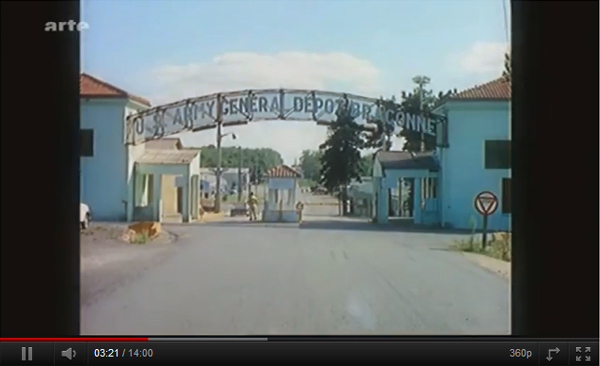

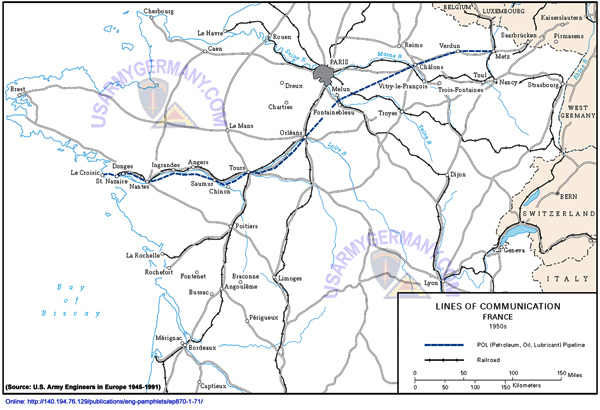
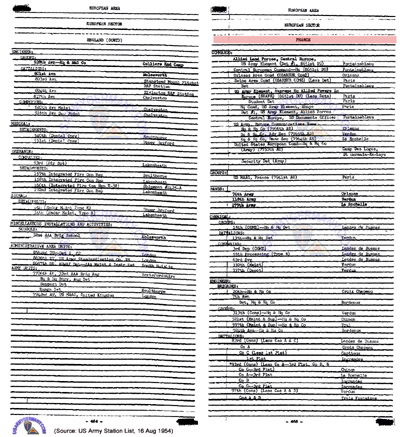
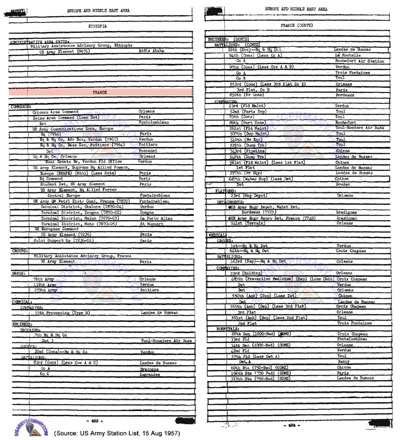


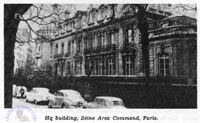
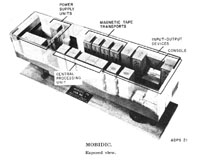
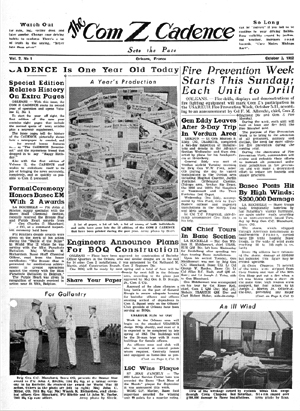
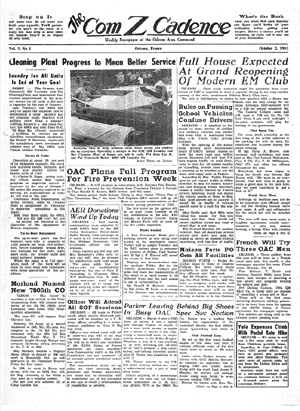
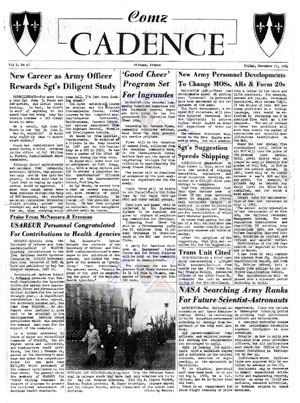
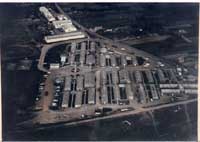


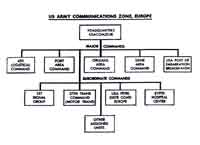


 - A website for soldiers, familiy members and others who were stationed at or involved with the Fontenet Ordnance Sub-Depot in the Communications Zone in France.


