Click here to open 'USArmyGermany' frameset
MILCOM HQ BLDG |
|||
AFN BUILDING |
OFFENBACH KASERNE |
||
ENGINEER COMPOUND |
KENNEDY KASERNE |
REBSTOCK AIRFIELD |
|
BETTS KASERNE |
|||
DENTAL COMPOUND |
| MAPS |  |
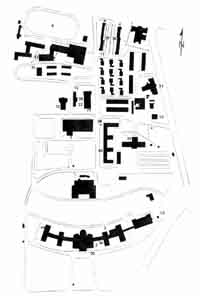 1. Creighton W. Abrams Complex, 1970s |
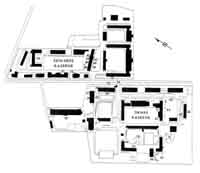 2. Drake and Edwards Kasernes, 1970s |
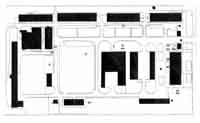 3. Gibbs Barracks, 1970s |
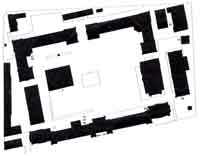 4. Gutleut Kaserne, 1970s |
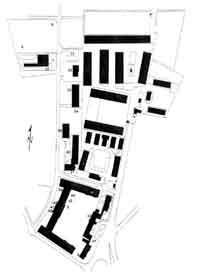 5. McNair and Michael Barracks, 1970s |
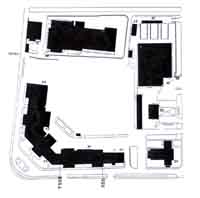 6. Frankfurt Shopping Center, 1970s |
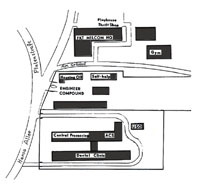 7. Frankfurt MILCOM Headquarters, 1980s |
|
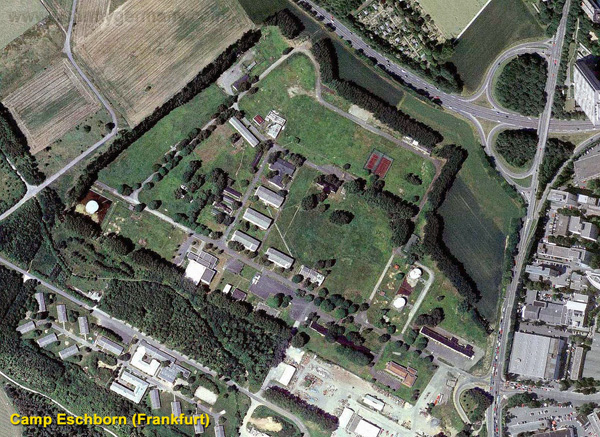
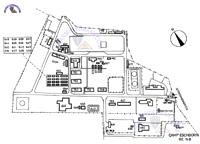 8. Camp Eschborn, 1976 |
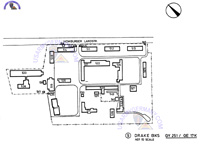 9. Drake Kaserne, 1976 |
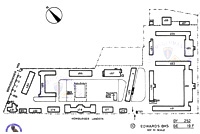 10. Edwards Barracks, 1976 |
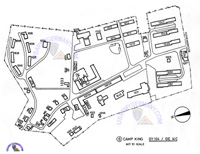 11. Camp King, 1976 |
 12. Creighton W. Abrams Complex, 1976 |
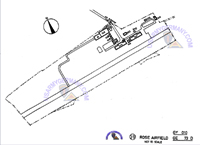 13. Rose AAF, Bonames, 1976 |
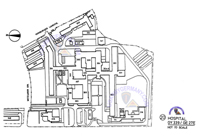 14. USAH Frankfurt, 1976 |
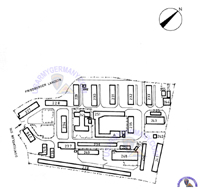 15. Atterberry Area, 1976 |
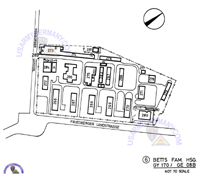 16. Betts Area, 1976 |
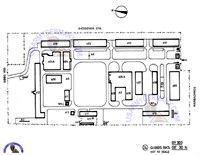 17. Gibbs Bks, 1976 |
| 1945 Map of the Army Transportation System in Frankfurt & Vicinity. This map and the others marked 2 through 8 were included in the "Handbook - USFET Headquarters Command", published by the Information and Education Section, Headquarters Command, USFET, 1945. Click on the thumbnail to view a larger format of the same map. |
 1. Army Transportation System in Frankfurt & Vicinity |
 |
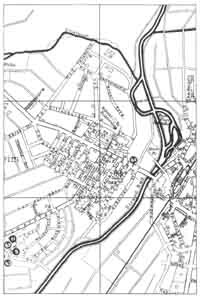 2. Map "A" - Heddernheim |
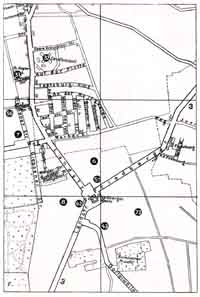 3. Map "B" - 97th Gen Hosp area |
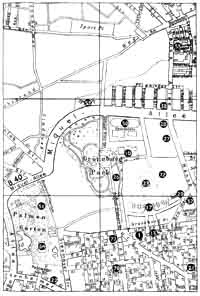 4. Map "C" - I.G. Farben Hochhaus area |
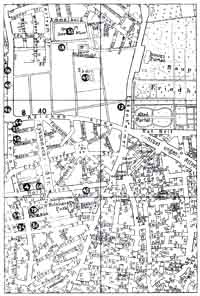 5. Map "D" - WAC Circle area |
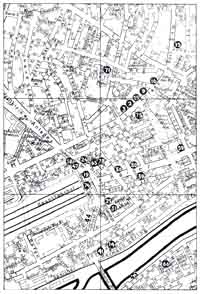 6. Map "E" - Frankfurt Hauptbahnhof area |
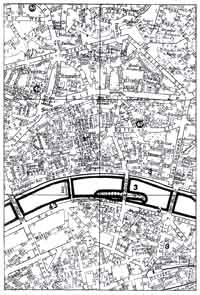 7. Map "F" - Hauptwache/Zeil area |
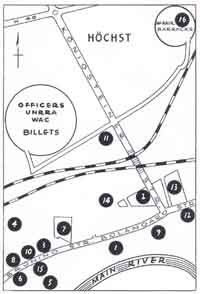 8. Map - Höchst area |
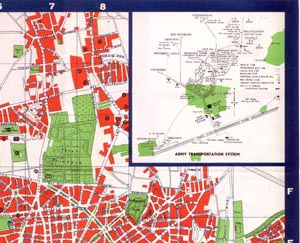
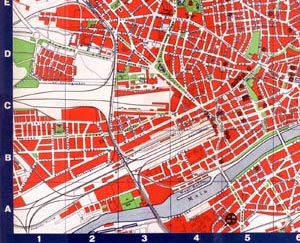
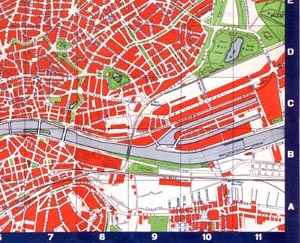
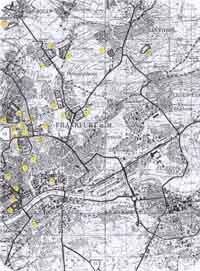
| 1946 Map of the Frankfurt am Main. This map was prepared by the 655th Engr TOPO Bn under the direction of the Chief of Engineers, HQ USFET. Click on the thumbnail to view a larger format of the same map. Click here for a facilities list. |
Frankfurt am Main Map has been divided into four separate sections for faster download. Click on the area of interest for a larger view |
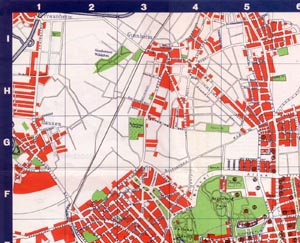
| 1947 Map of the Frankfurt Military Post area. The map was included in Volume V of the "Third Year of the Occupation", OCCUPATION FORCES IN EUROPE SERIES, 1947-1948, published by the Historical Division, European Command, in 1948. Click on the thumbnail to view a larger format of the same map. |
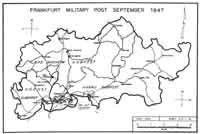 Frankfurt Military Post and Facilities |
|
| 1949 Map of facilities in the Hq Frankfurt Military Post area. The map was included in the "Guide to Frankfurt Military Post" published by the Command Section, Hqs FMP in 1949. Click on the thumbnail to view a larger format of the same map. |
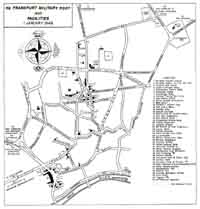 Frankfurt Military Post and Facilities |
|
| 1951 Map of facilities in the Hq Frankfurt Military Post area. The map was included in the "Guide to Frankfurt Military Post" published by the Command Section, Hqs FMP in 1951. (Shows some additional detail compared to the 1949 map.) Click on the thumbnail to view a larger format of the same map. Click here to see the List of facilities. |
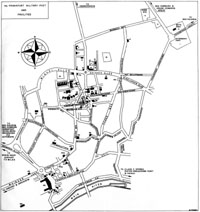 Frankfurt Military Post and Facilities |
|
| 1952 Map of facilities in the Hq Frankfurt Military Post area. The map was included in the "Frankfurt In Your Pocket" guide edited by Ruth Rutledge, Druck- und Verlagshaus Frankfurt a.M., 1952. Click on the thumbnail to view a larger format of the same map. |
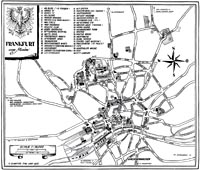 Frankfurt Military Post and Facilities |
|
| 1980 Topographical maps of Frankfurt am Main and surrounding area. These maps are reproduced from the "U.S. Military Installation Atlas" published by the 37th Transportation Group in 1980. Click on the thumbnail to view a larger format of the same map. Click here for a list of the installations. |
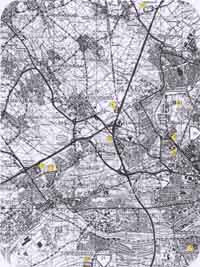 Frankfurt West |
 Frankfurt East |
 1. ROUNDUP Telephone Directory, 15 July 1945 |
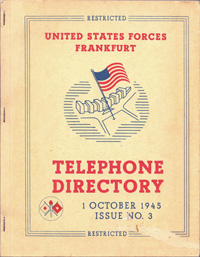 2. Frankfurt Telephone Directory, 1 October 1945 |
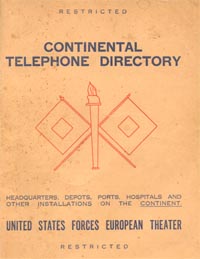 3. Continental Telephone Directory, 1 October 1945 |
|
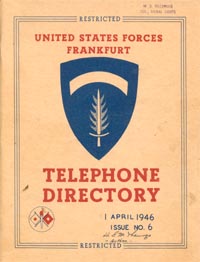 4. Frankfurt Telephone Directory, 1 April 1946 |
 5. Frankfurt, 15 September 1949 |
 6. Frankfurt, 1 March 1952 |
|
 7. NACOM Telephone Directory, 15 February 1956 |
 1. Occupation Chronicle - page 1, Oct 9 1946 (2 MB - PDF!) |
|
|

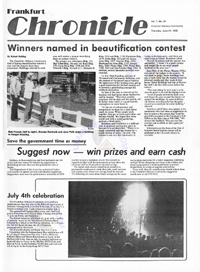 1. Frankfurt CHRONICLE - June 24 1982 |
|
|
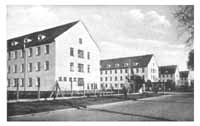
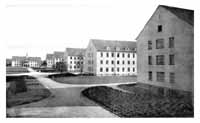
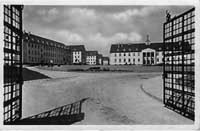
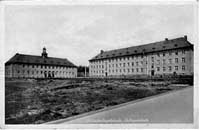
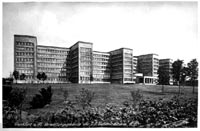
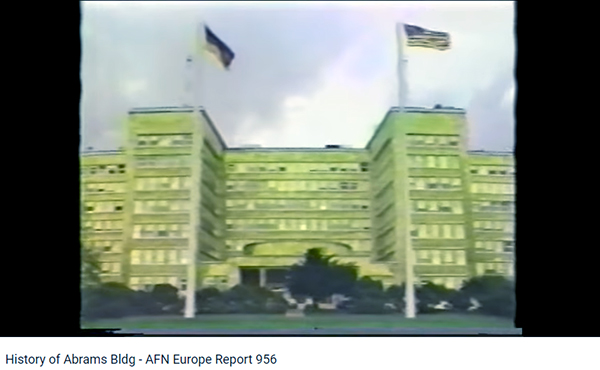 A 5-part series on the history of the IG Farben Building produced by AFN in the early 1990s |
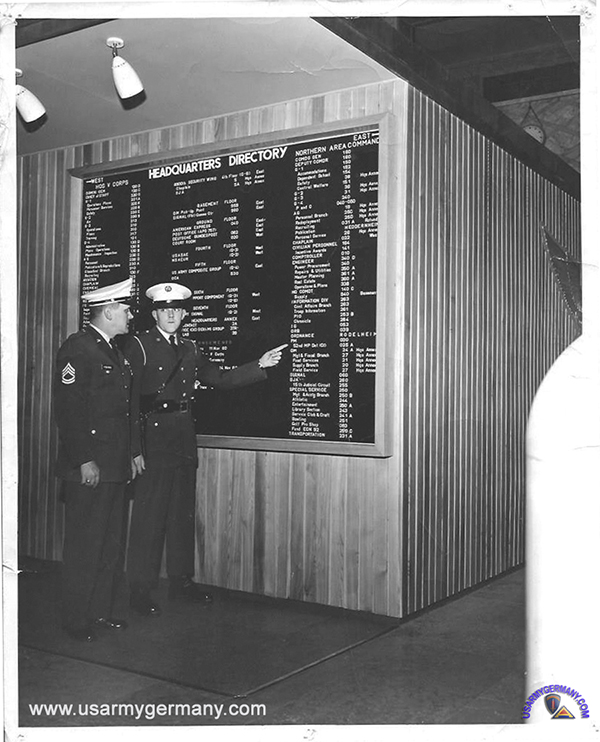
 1. SHAEF Hqs, mid-1945 |
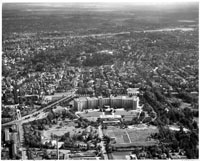 2. SHAEF Hqs from the rear Click here to supersize |
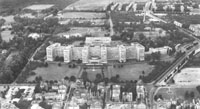 3. USFET HQ, Frankfurt, prob 1946 Click here to supersize |
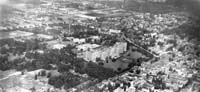 4. IG Farben Bldg, prob 1950 Click here to supersize |
|
 5. IG Farben, around 1950 |
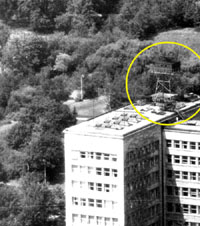 6. CPS-5 area control radar, around 1950 |
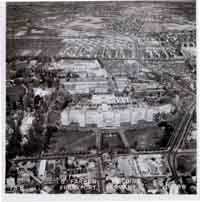 7. Aerial view of Headquarters Building, V Corps, prob. 1954 |
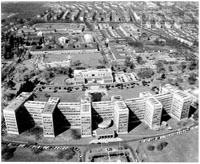 8. IG Farben Hochaus, 1959 Click hier to supersize |
|
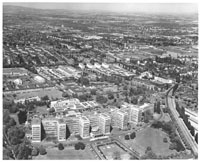 9. IG Farben Hochaus, towards the east Click hier to supersize |
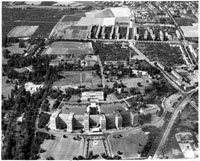
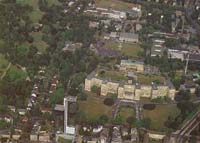 10. Aerial view of the Abrams Complex |
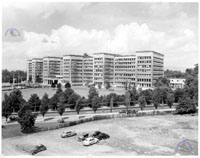 11. IG Farben Building, around 1950 |
||
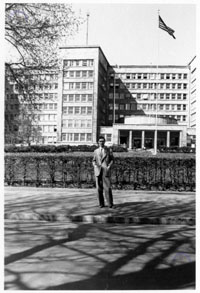 12. IG Farben, mid 1951 |
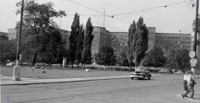 13. IG Farben, mid 1951 |
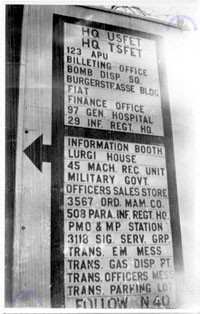 14. HQ US Forces, European Theater sign, prob late 1945 |
||
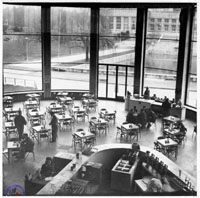 15. Rotunda Snack Bar, 1948 |
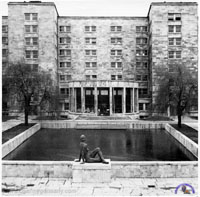 16. Back of IG Farben Bldg, 1948 |
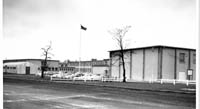 17. Frankfurt HS, 1959/60 |
||
|
||||
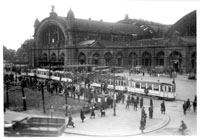 1. Frankfurt Hauptbahnhof, 1946 |
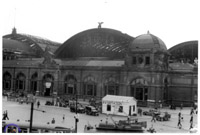 2. Frankfurt Hauptbahnhof, 1946 |
 3. RTO, Frankfurt Hauptbahnhof, around 1947 |
 4. Frankfurt Hauptbahnhof, late 1940s |
|
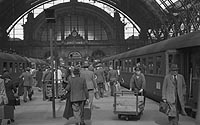 5. Inside the busy Hauptbahnhof, 1950 |
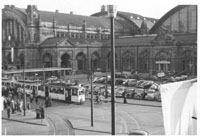 6. Frankfurt Hauptbahnhof, 1954 |
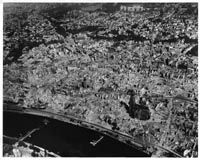 7. Frankfurt devasted, 1945 |
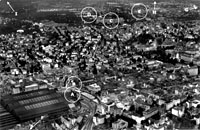 8. Frankfurt a.M., 1958 |
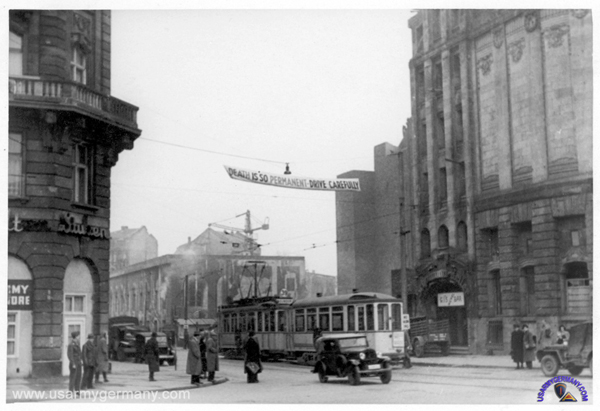 The special street car #39 (reserved for use by US personnel) turns into the Karlstrasse in downtown Frankfurt on its way to the Headquarters Compound (IG Farben Building) in this photo from around 1946. Building on the right is the Schumann Theater; the one on the far right is the Carlton Hotel (Webmaster's collection) |
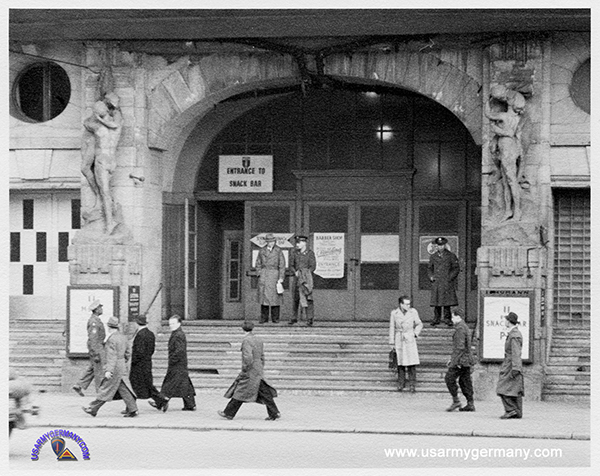 The entrance to the Schumann Post Exchange and Snack Bar across the street from the Frankfurt Hauptbahnhof (main railroad station), 1949 (Webmaster's collection) |
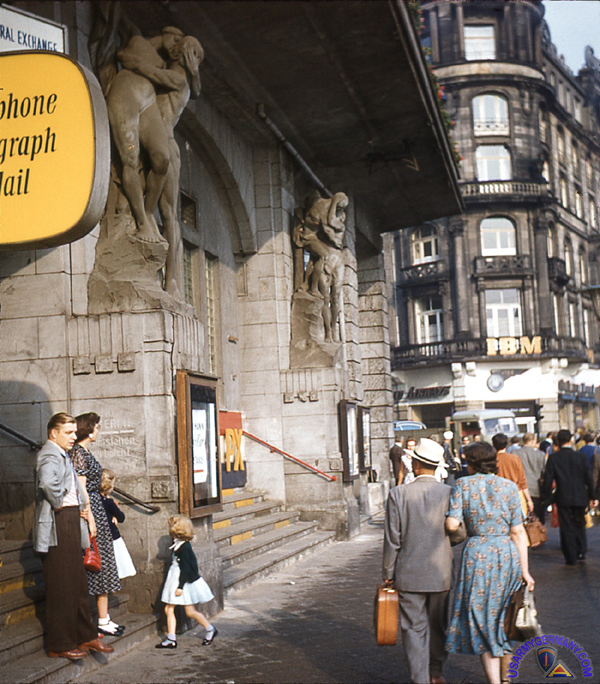 An American serviceman and his family stand at the entrance to the Schumann Building, 1950s (Webmaster's collection) |
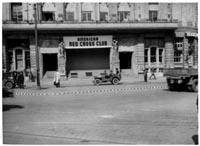 9. American Red Cross Club in the Schumann Theater building, 1945 |
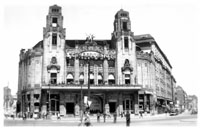 10. Schumann ARC, 1946 |
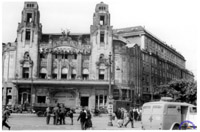 11. Schumann Theater, 1946 |
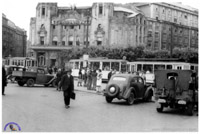 12. Schumann Theater, 1946 |
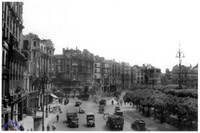 13. View of Bahnhofsplatz, 1946 |
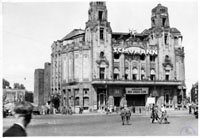 14. Schumann ARC, 1947 |
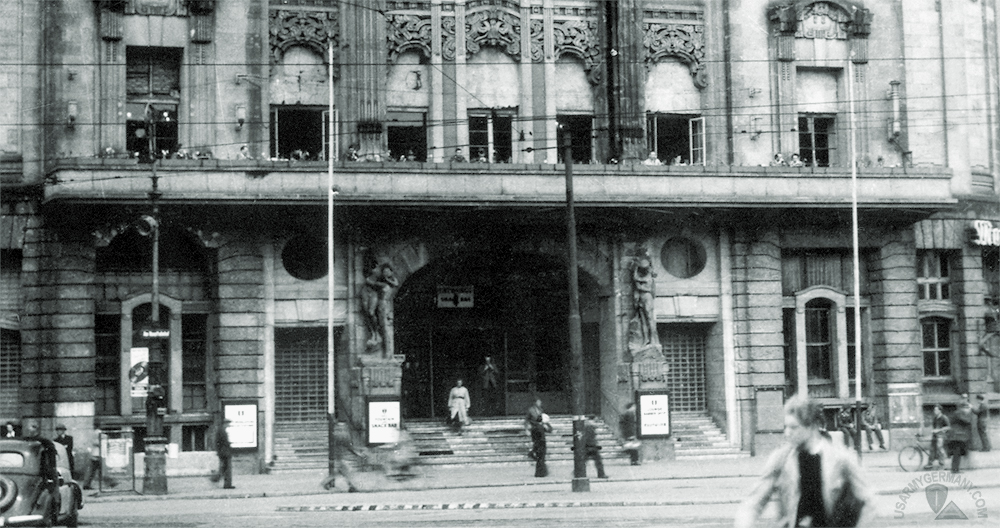 15. Schumann Snack Bar, 1949 |
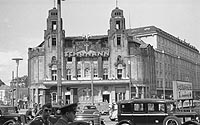 16. Schumann Club and Crossroads PX, 1950 |
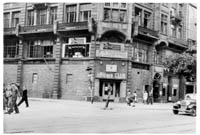 17. Rendezvous Club, 1947 |
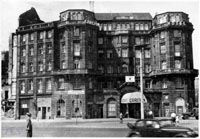 18. Carlton Hotel, 1947 |
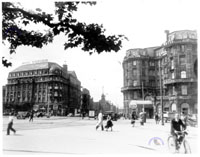 19. Carlton and Excelsior Hotels, late 1940s |
|
| |
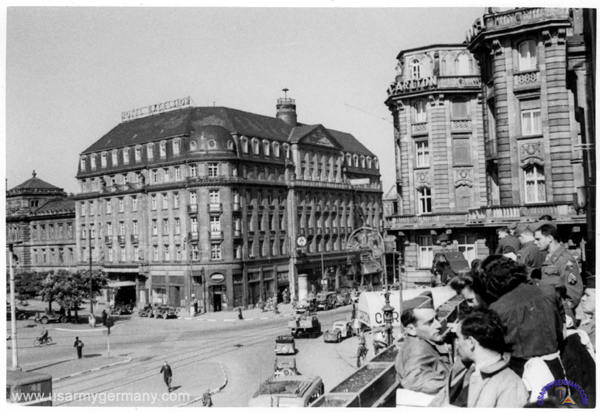 American servicemen enjoy the view from the Terrace Cafe at Schumann Theater across the street from the main train station. Hotel Excelsior (left) and Hotel Carlton (right) were requisitioned and used by the US Army. Photo from the immediate post-war period. |
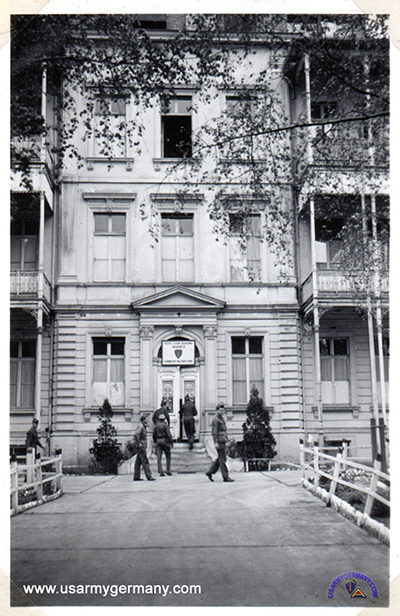 Four Seasons Hotel Annex, 1952 (Webmaster's Collection) |
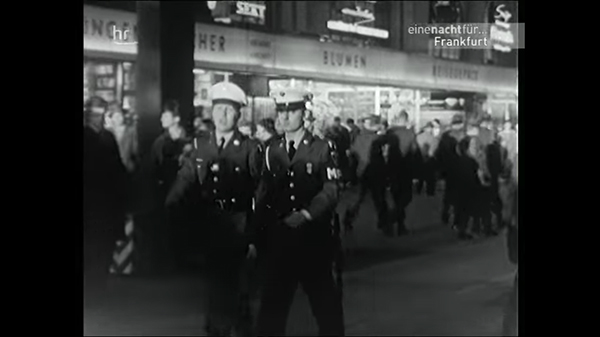 Hessischer Rundfunk: Frankfurt Hauptbahnhof, 1962 (YouTube - in German) A "behind the scenes" look at the operation of one of the largest & busiest train stations in Europe. |
| In and Around Frankfurt 2002-2003 Helmut Knauthe |
For additional photos of Frankfurt City and former US facilities - check out the Frankfurt Bilder website! (see comments below in the Related Links section) |
|||
 1. 97th General Hospital, 2002 |
 2. 97th General Hospital, 2002 |
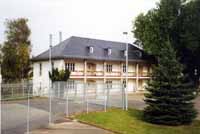 3. 97th GH guard house, 2002 |
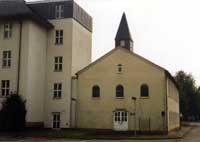 4. 97th GH chapel, 2002 |
|
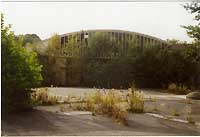 5. TMP No. 2, 2002 |
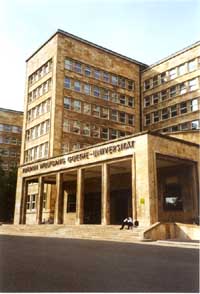 6. Goethe University, former IG Farben Hochhaus |
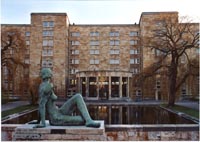 7. Back of IG Farben Hochhaus with Rotunda, 2003 |
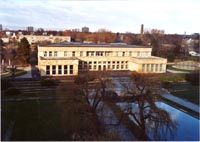 8. Former Officers Club, 2003 |
|
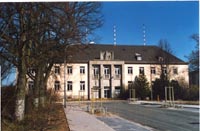 9. Bldg on former Gibbs Barracks, 2003 |
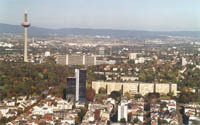 10. Former Abrams Bldg, 2004 |
|||
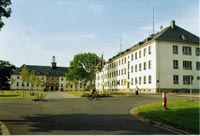 11. Hqs Bldg, Drake |
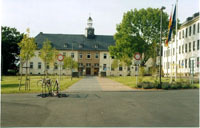 12. Hqs Bldg |
|
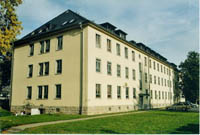 14. Bldg 513 |
|
 15. Former 3rd AD Museum |
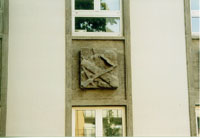 16. Wehrmacht relic |
|||
| |
||||
|
|
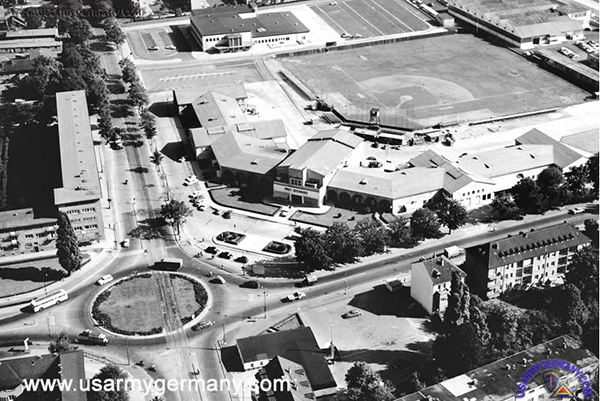 WAC Circle with Frankfurt Shopping Area, August 1955 (Hank Johnson) |
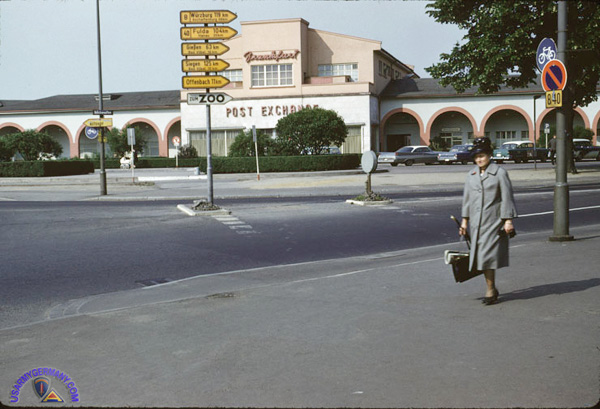 Main PX at WAC Circle, c. 1959 (Frank da Cruz - website) The main snack bar was the big meeting place Sunday mornings. The PX after school too... You used to be able to listen to records through big earphones before deciding whether to buy them. |
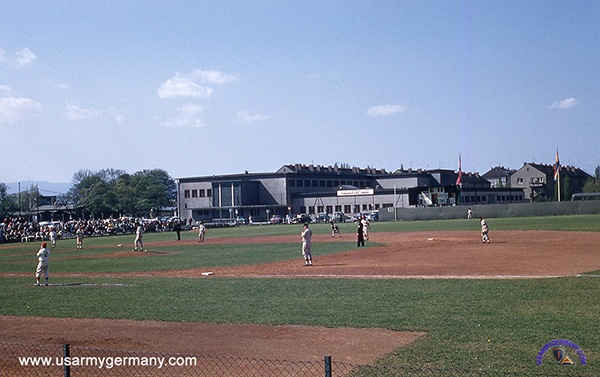 Baseball field at WAC Circle, 1958 (Webmaster's collection) |
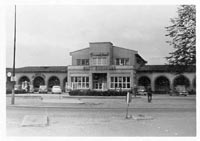 1. Frankfurt PX |
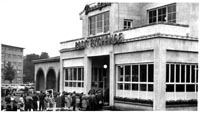 2. Frankfurt PX, prob late 1940s |
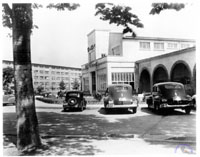 3. Frankfurt PX, 1949 |
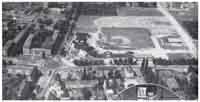 4. Aerial view of WAC Circle with Shopping Center, probably early 1950s |
|
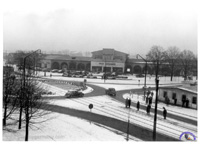 5. Frankfurt PX, 1951 |
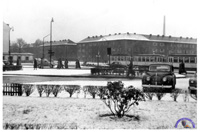 6. WAC Circle, 1951 |
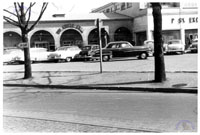 7. Frankfurt PX, 1953 |
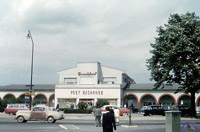 8 . WAC Circle PX, 1956 |
|
 9. Strassenbahn passes WAC Circle, 1955 |
|
|||
| |
||||
|
||||
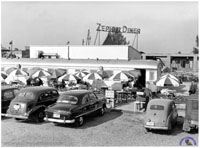 1. Zephyr Diner, 1950 |
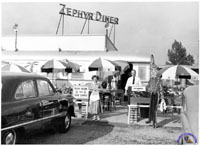 2. Entrance, 1950 |
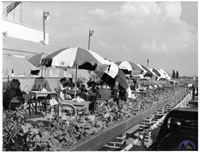 3. Sitting outside, 1950 |
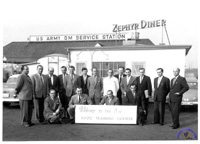 4. 3rd Food Training Course participants, 1950 |
|
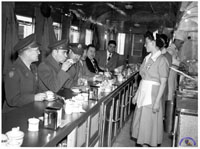 5. Inside the diner, 1950 |
 6. Mr. Heinrich Fischer receives an award |
|
||
| |
||||
|
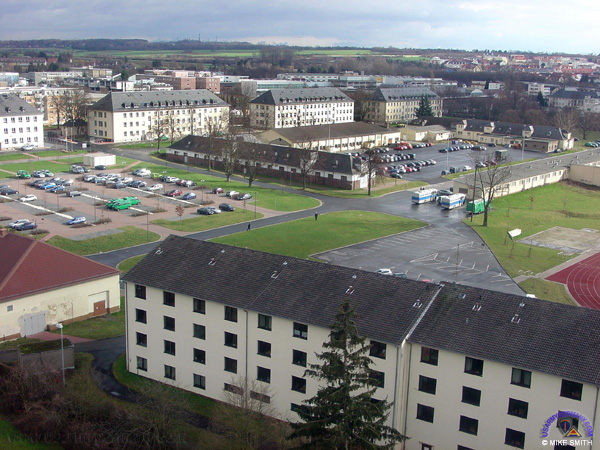 Former Drake Kaserne, recent (Mike Smith) |
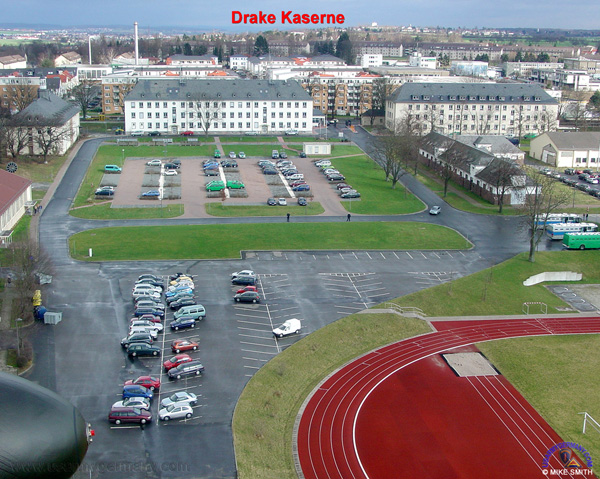 Former Drake Kaserne, recent (Mike Smith) |
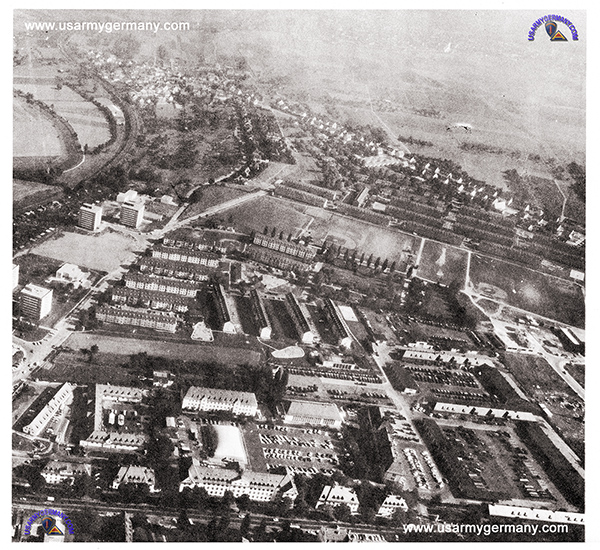 Edwards Kaserne, 1973 (Webmaster's collection) |
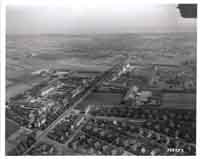 1. Aerial view of Drake Kaserne (center) and Edwards Kaserne (right), May 1950 |
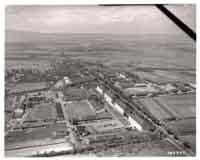 2. Aerial view of Drake Kaserne (center) with Edwards in the background, May 1950 |
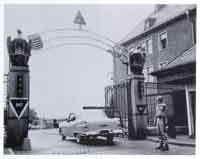 3. Drake Kaserne, Main Gate 1958 |
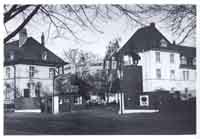 4. Edwards Ksn, Main Gate 1963 |
|
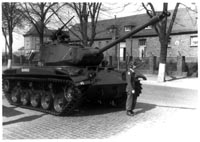 5. Saturday Review at Drake Ksn, April 1956 |
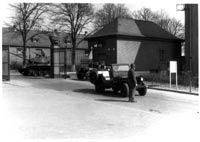 6. Drake Ksn, April 1956 |
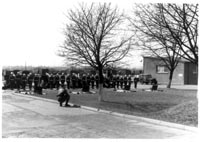 7. Drake Ksn, April 1956 |
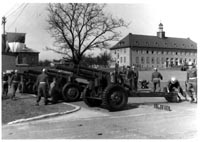 8. Drake Ksn, April 1956 |
|
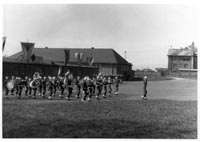 9. Drake Ksn, April 1956 |
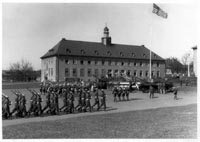 10. Drake Ksn, April 1956 |
|||
|
||||
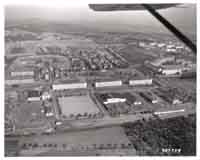 1. Aerial view of Gibbs Barracks, May 1950 |
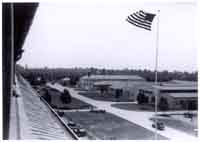 2. View towards Main Gate, Gibbs Barracks, 1952 |
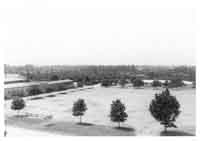 3. View of parade ground on Gibbs Barracks, 1952 |
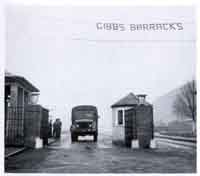 4. Gibbs Bks, Main Gate 1954 |
|
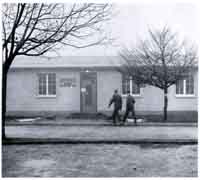 5. 19th Armor Gp Headquarters Building, Gibbs, 1954 |
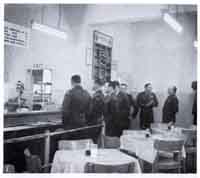 6. EES Snack Bar, Gibbs Bks 1954 -- see recent pic |
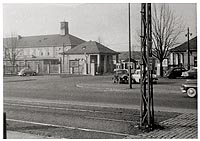 7. Main Gate, Gibbs Kaserne, 1958 |
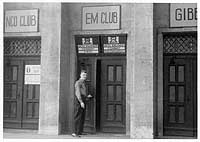 8. NCO & EM Club, Gibbs Kaserne, 1958 |
|
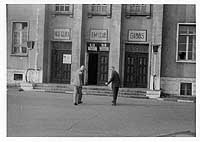 9. Clubs, Gibbs Kaserne, 1958 -- see recent pic |
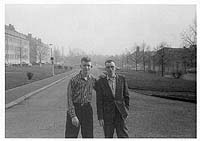 10. Main street, Gibbs Kaserne, 1958 -- see recent pic |
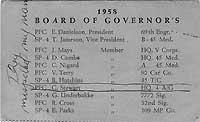 11. Gibbs EM Open Mess membership card |
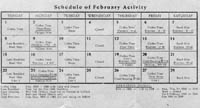 12. Gibbs EM Club schedule |
|
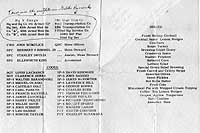 13. Gibbs EM Open Mess Christmas Menu |
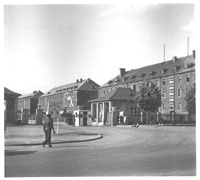 14. Main Gate, Gibbs Bks, 1945 or 1946 -- see recent pic |
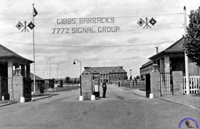 15. Main Gate, Gibbs Bks, 1947 |
||
|
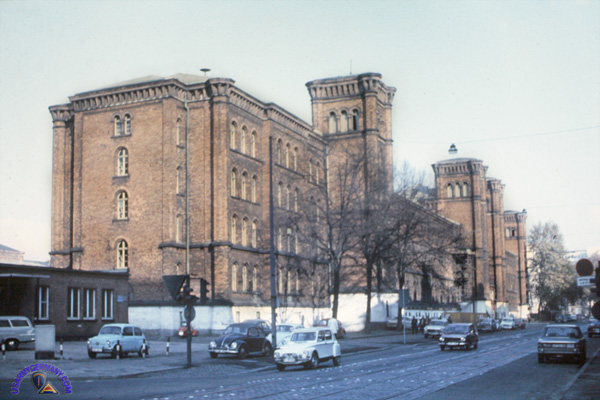
1. Gutleut Strasse and Kaserne, 1970
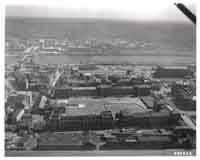 2. Aerial view of Gutleut Kaserne, May 1950 |
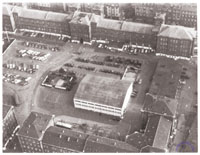 3. Gutleut Ksn, 1976 |
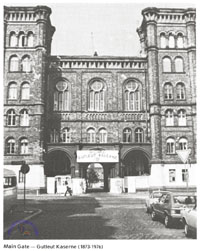 4. Main Gate, Gutleut Ksn, 1976 |
|
|
||||
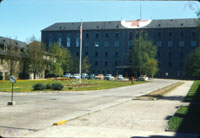 36. USAH Frankfurt, around 1956 |
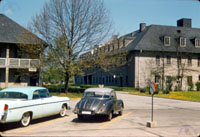 37. USAH Frankfurt, around 1956 |
|||
|
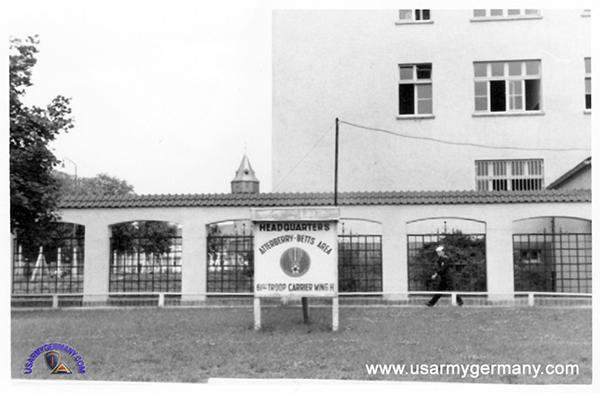
Atterberry Kaserne during the Berlin Airlift, 1948-49 (Webmaster's collection)
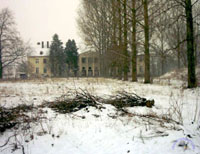 1. Atterberry Ksn, 2004 |
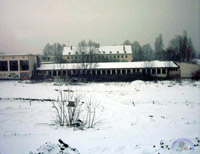 2. Atterberry Ksn, 2004 |
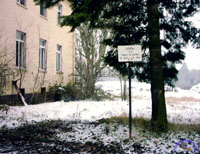 3. Atterberry Ksn, 2004 |
 4. TMP #2, 2004 |
|
|
||||
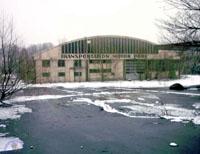 42. TMP #2, 2004 |
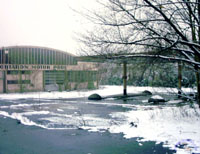 43. TMP #2, 2004 |
|||
|
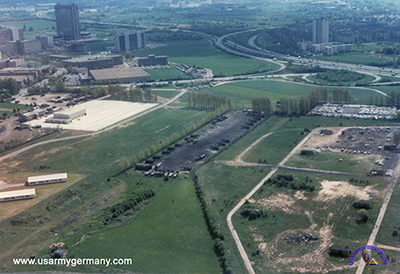
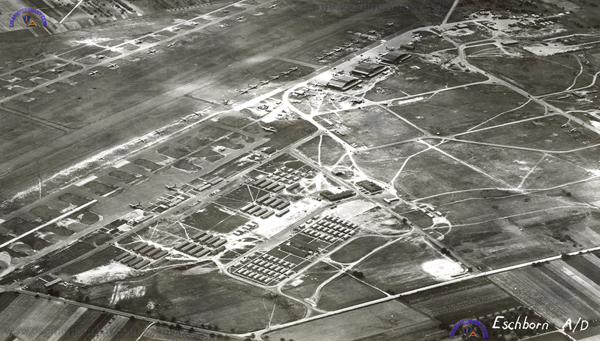 Eschborn Airfield, 1946 |
||||
(Click on any of the thumbnails to view a higher resolution copy) |
||||
 317th Engr Bn headquarters building, Camp Eschborn (Steve Martinez) |
||||
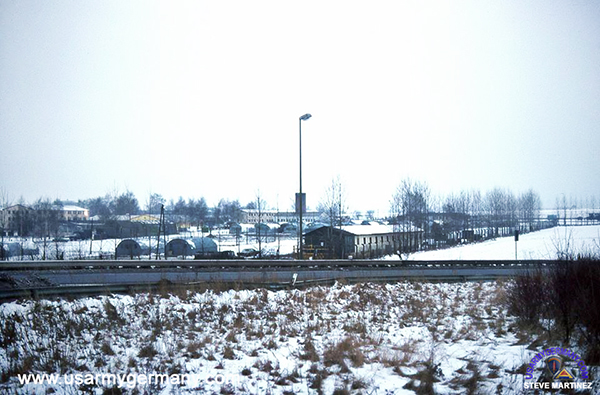 Camp Eschborn, looking southwest (Steve Martinez) |
||||

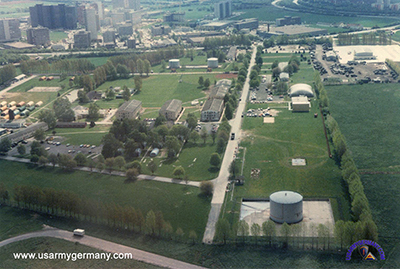

 1. Quonset huts near the mess hall, 1962 |
 2. Mess Hall, 1962Heading towards the mess hall |
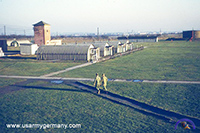 3. Heading towards the mess hall |
|
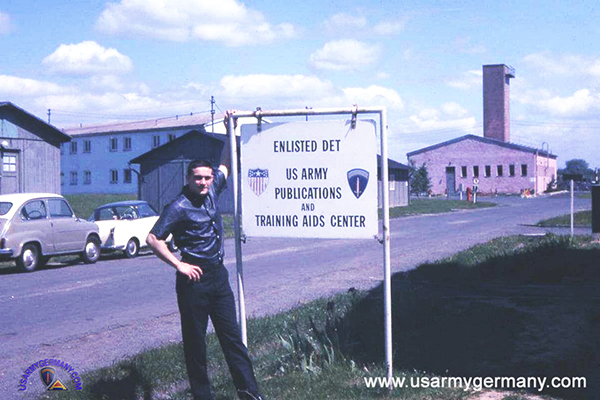 Camp Eschborn, 1962 (Bill Westland) |
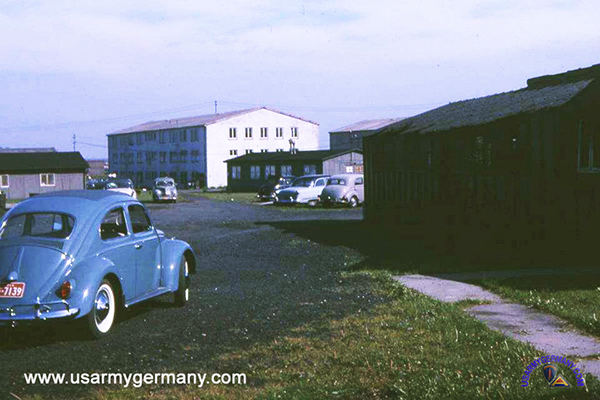 Barracks bldg 751 in the background, Camp Eschborn, 1962 (Bill Westland) |
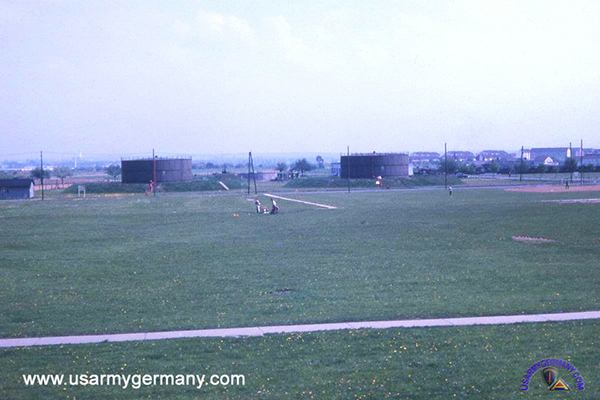 Two of the three bulk fuel storage tanks at Camp Eschborn, 1962 (Bill Westland) |
|
||||
 1. McNair Bks, prob 1950s |
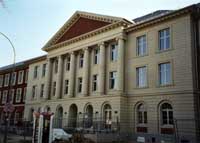 2. North entrance, McNair Bks, 2003 |
 3. Höchst, mid 1960s |
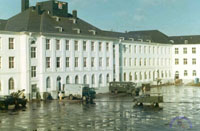 4. McNair Bks, 1974 |
|
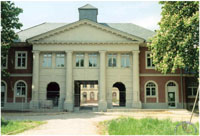 5. Main gate, McNair Bks, 2002 |
||||
|
General Board, APO 807 |
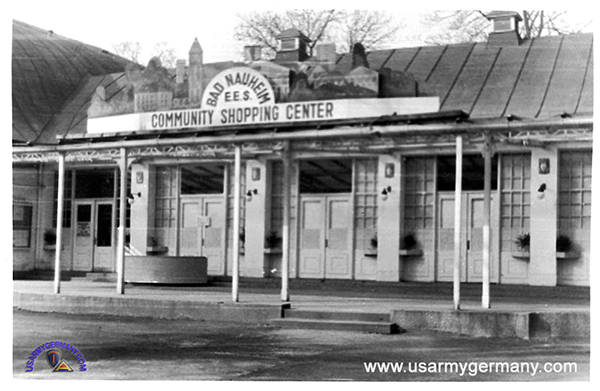 Bad Nauheim EES Shopping Center, 1948 (Webmaster's collection) |
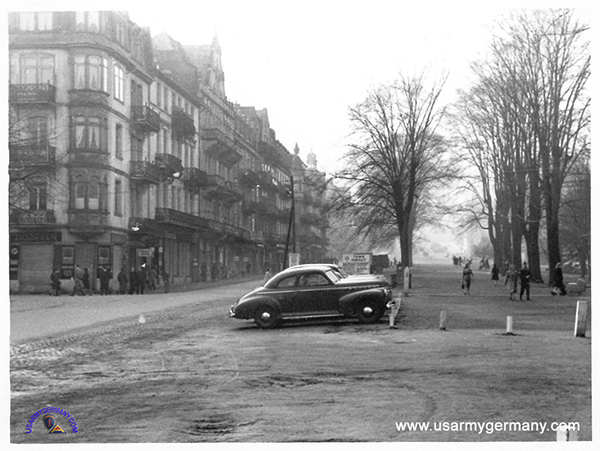 US Parking lot in front of Shopping Center, 1948 (Webmaster's collection) |
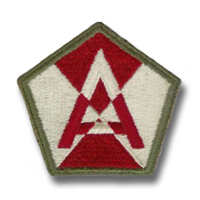 Fifteenth US Army patch |
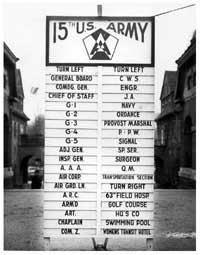 1. Sign in town pointing out direction to Hqs 15th Army offices |
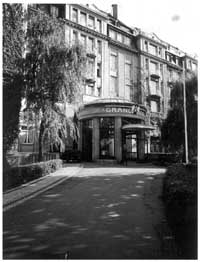 2. Grand Hotel, Bad Nauheim, 1945 |
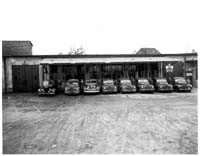 3. 15th Army motor pool, Friedberg, 1945 |
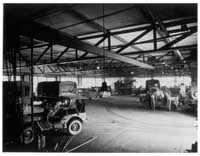 4. Inside motor pool shop, Friedberg, 1945 |
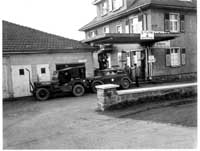 5. Service station, Bad Nauheim, 1945 |
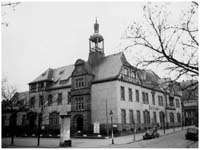 5. APO and message center, Bad Nauheim, 1945 |
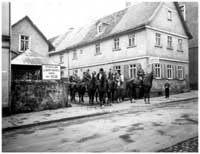 6. 15th Army riding stables, Bad Nauheim, 1945 |
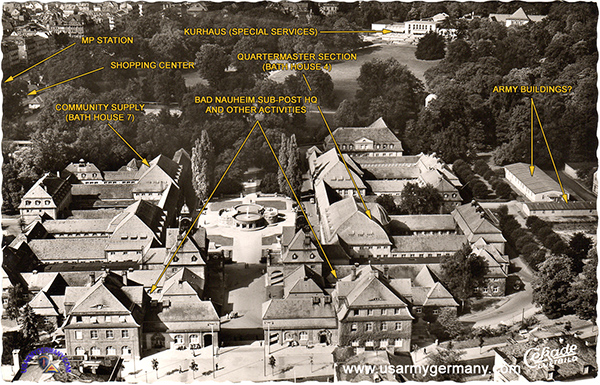 Former Bad Nauheim Sub-Post Headquarters, 1940s (Webmaster's collection) (Can anyone provide additional information about the Bad Nauheim Sub-Post) |
%201950s%20600.jpg) Location of former Shopping Center, 1950s (Webmaster's collection) |
|
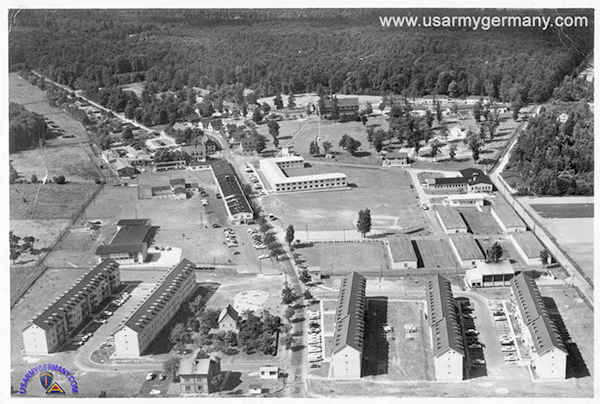 Aerial photo of Camp King, probably late 1950s (Webmaster's collection) |
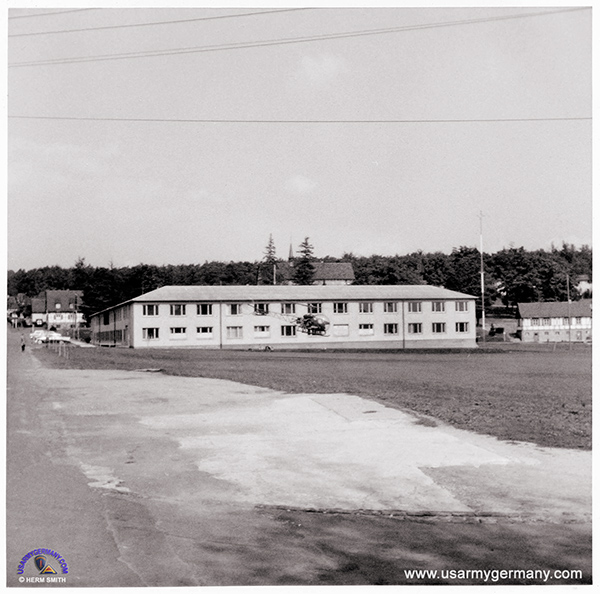 H-13 helicopter lifts off from helipad at Camp King, mid-1960s (Herm Smith) |
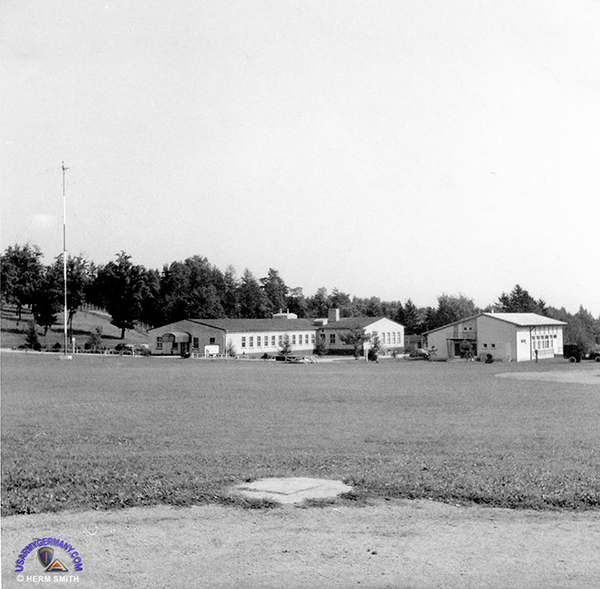 Mess hall (left) and Teen Center, mid-1960s (Herm Smith) |
 1. Former Officers Club, Bldg 1027, 2003 |
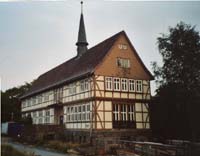 2. Rear view of O'Club, 2003 |
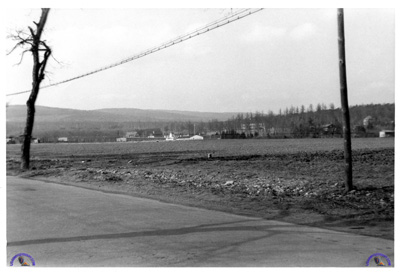 3. Camp King in 1953, as seen from the Hohemarkstrasse |
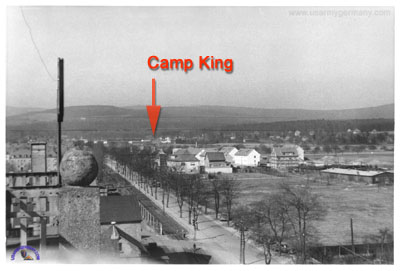 4. Camp King as seen from the Maschinenfabrik, 1953 |
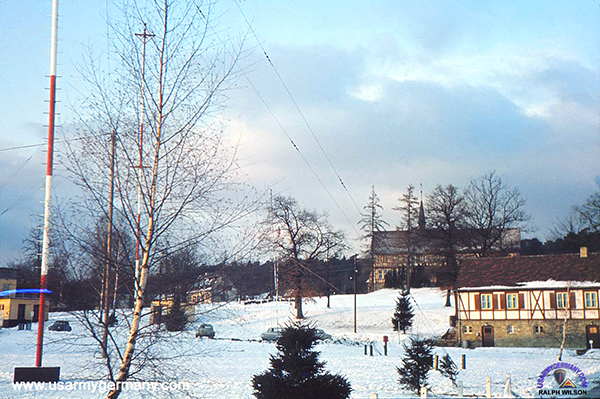 Looking up the hill from the mess hall, 1967 (Ralph Wilson) |
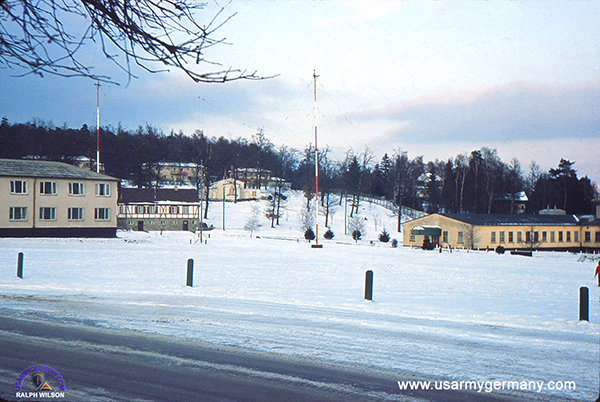 Photo taken from the bowling alley (Bldg #1005B), 1967 (Ralph Wilson) |
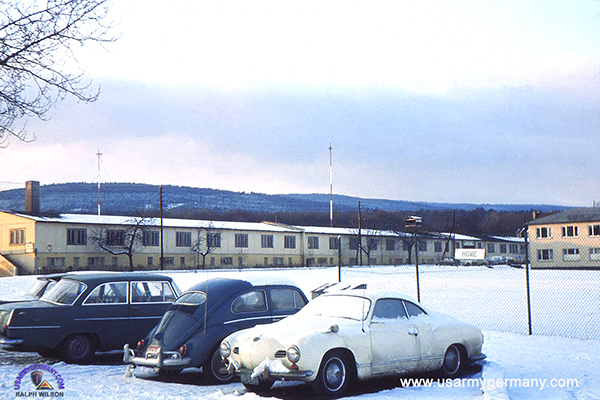 Looking across the parade field towards Bldg #1005B (on the left), 1967 (Ralph Wilson) |
 5. Looking towards the main gate (far left) |
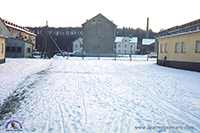 6. Looking south from the EM barracks |
|||
|
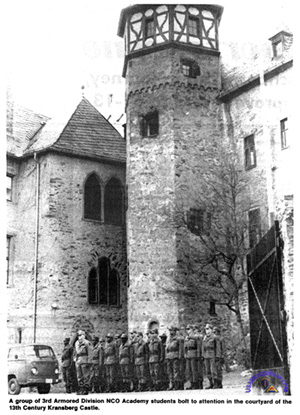 Kransberg Castle, 3rd Armd Div NCOA |
|---|
| |
||||
|
|
|||
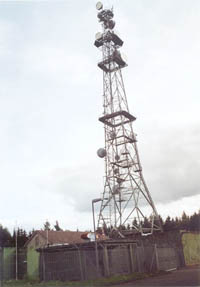 1. Feldberg Radio Relay site, 2004 |
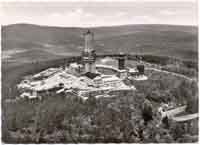 2. Communications complex on top of Grosser Feldberg, prob 1950s |
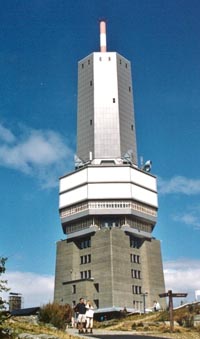 3. Grosser Feldberg Tower 2003 |
||
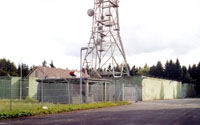 4 Feldberg Radio Relay site, 2004 |
||||
|
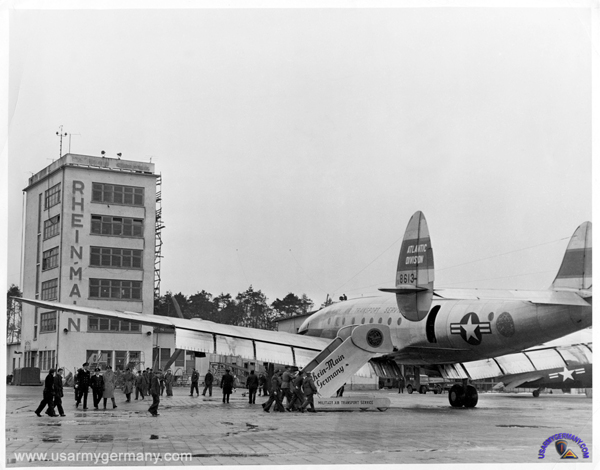 A C-121 "Connie" of the Atlantic Division, MATS at Rhein Main AB, 1950 (Walter Elkins) |
|---|
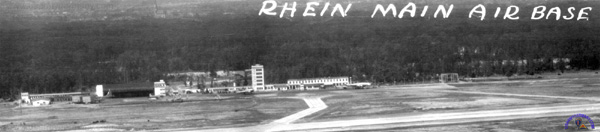 Northern portion of Rhein-Main AB used by USAFE and civilian airlines, prob 1950 |
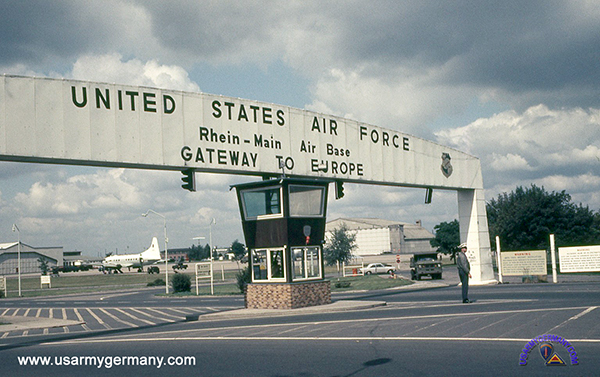 Main gate, Rhein-Main Air Base, 1974 (Webmaster's collection) |
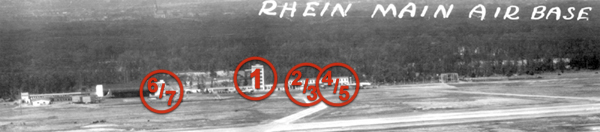 Approximate location of next seven photos |
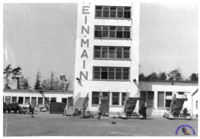 1. Rhein-Main AB tower |
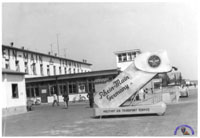 2. Passenger terminal |
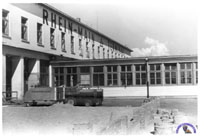 3. Passenger terminal |
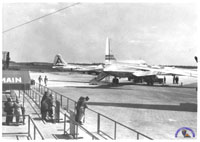 4. Rhein-Main AB |
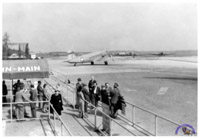 5. Rhein-Main AB |
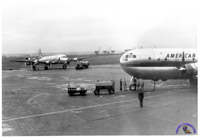 6. Boeing 377 Stratocruiser |
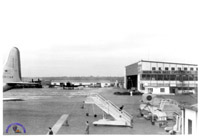 7. Base ops |
|
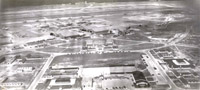 8. Rhein-Main AB, prob 1950 Click here to supersize |
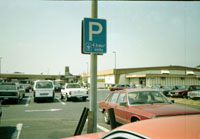 9. Rhein-Main BX, 1990 9. Rhein-Main BX, 1990 |
||
|
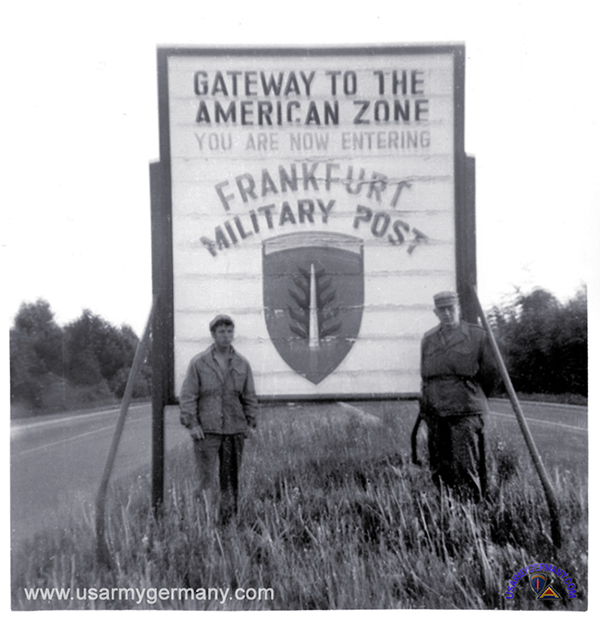
Frankfurt Military Post sign on the Autobahn, ca. 1948 (Webmaster's collection)
Links to FMP Subpost Pages: |
Bad Nauheim Subpost | |
| Darmstadt Subpost | ||
| Griesheim Ordnance Depot | ||
| Hanau Subpost | ||
| Hanau Signal Depot | ||
| Höchst Subpost | ||
| Rhein-Main Air Base |
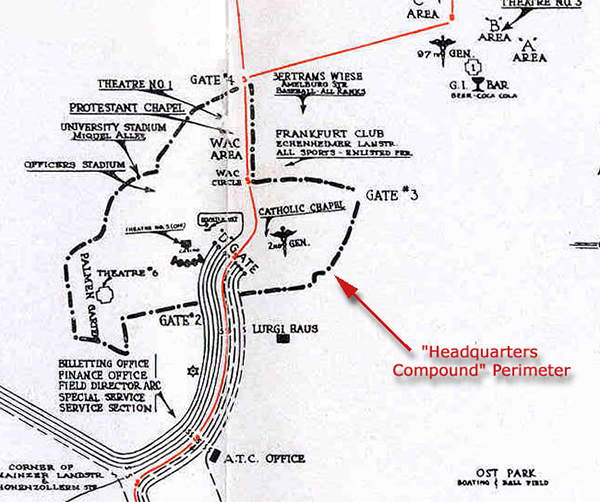
Headquarters Compound in Frankfurt, 1945-1948
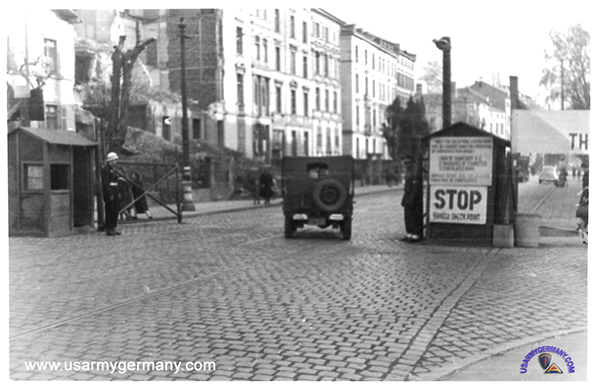
One of the gates into the Headquarters Compound, around 1947 (Webmaster's collection)
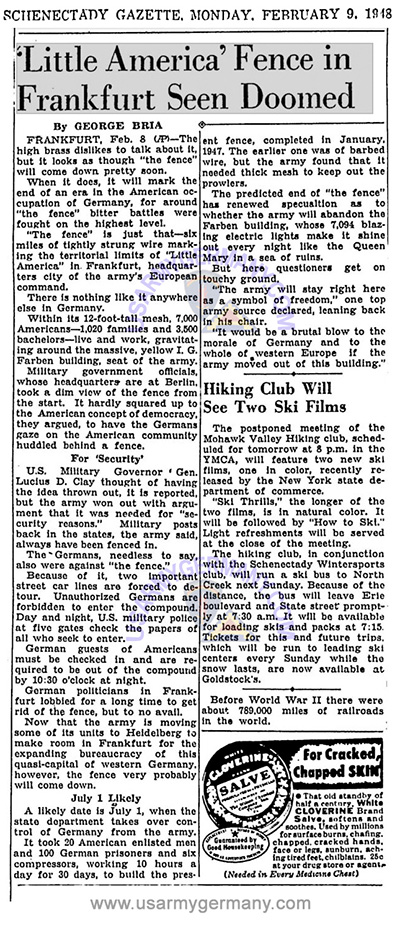
Article from the SCHENECTADY GAZETTE, Feb 9, 1948
 Air-To-Air Intercept |
|
The ordnance service center is located in Heddernheim, in what was formerly a German aircraft motor plant.
The center is operated by the 7865th Ordnance HAM Company.
| Three Big Office Buildings Returned to Germans Three large office buildings were recently derequisitioned and returned to German authorities. The structures are the Allianz Building, the Holzhausen School Building and the Commando Building. The derequisitioning was possible due to a joint effort by the Frankfurt Military Post, HICOG, EUCOM and German officials to fund the construction of two new office annexes behind the Headquarters (= IG Farben) Building - at the rear of the Frankfurt Casino. The Allianz Building on Mainzerlandstrasse (or Taunusanlage 18?) has housed at various times (since the beginning of the Occupation) the Frankfurt Screening Board; MG (= Military Government) historical division; US Army Air Lift Support Command; comptroller, FMP (= Frankfurt Military Post); FMP provost marshal section; US Displaced Persons Commission; International Refugee Organization (IRO); and HICOG units. Approx. 3,500 square feet of the entire 74,411 sq ft of floor space will be retained for use as FMP's central police station; the remainder will revert back to its original owners - the Allianz Insurance Company. |
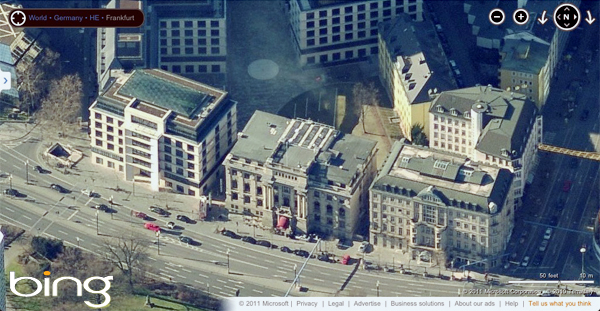
Allianz Building (center), recent (Bing Maps)
| The Holzhausen School at Reuter Weg and Eschersheimerlandstrasse will be turned over in its entirety and will continue to be used as a school by the Germans. Agencies formerly located in the school included the Accommodations Agency; FMP billeting section; Post Quartermaster; Central Clearing Agency; Post Signal section and a British commissary. |
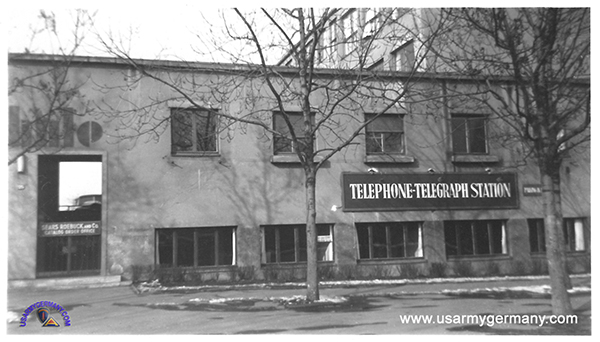
Among other activities, the Telephone-Telegraph station was located at the Holzhausen
Schule on Eschersheimer Landstrasse, Frankfurt, around 1947 (Webmaster's collection)
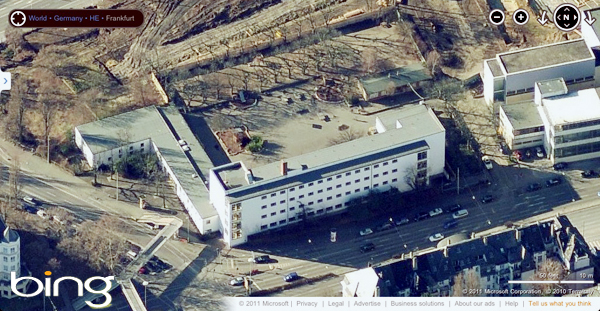
Holzhausen School Building, recent (Bing Maps)
The Commando Building (1) (Bertramstrasse - located behind the Main Post Exchange) was formerly a German women's teachers college. During the war it was used by the German Luftwaffe as a recruiting center. In the immediate post-war period the building housed US Naval Affairs, Germany; later it was occupied by the 66th CIC, the EUCOM provost marshal; and the Joint Export-Import Agency. About 1,000 square feet of the total 47,457 sq ft of the building will be retained as storage space for the JEIA. |

Commando Building (a.k.a. Academy Building?), recent (Bing Maps)
(Another S&S article in July 1950 reported that the Lurgi Haus, another office building requisitioned by the US Army after the war, was returned in July 1950 to the Germans. Agencies/offices located in that office building most likely moved into Annex "A" which was scheduled to be completed by August 1 1950.) (A Dec 15 1950 article in the STRIPES reports that Annex "B" has been completed and several Frankfurt Military Post offices have started to move into the new building. Already located in Annex "B": the Post Signal section (moved from the Holzhausen School building); the Comptroller section (formerly at the Allianz Bldg); the Billeting section (from the Holzhausen School); the Civilian Personnel section, formerly at the Elizabethan School building.) |
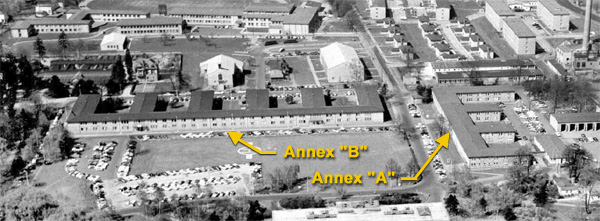
Annexes "A" & "B" - office buildings on the Headquarters Compound, late 1950s
(1) The Handbook USFET (1945) places the headquarters of US Naval Forces, Germany in the Bertram Strasse, just north of what would later become the Main Shopping Center. The USFET Frankfurt Telephone Directory of April 1946, identifies that location as the "Academy" Building. I believe that what was initially known as the Academy Building was at some point (probably only a few years later) redesignated as the "Commando" Building. |
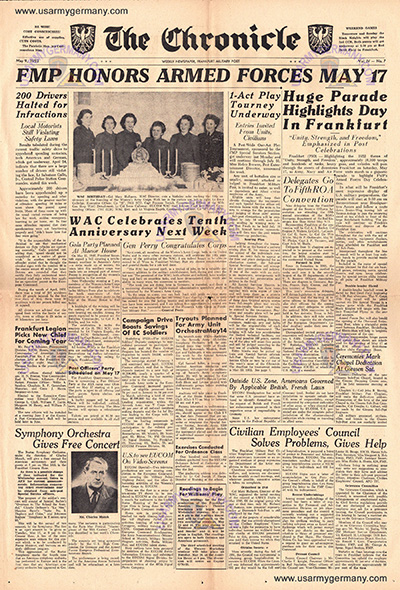 The Chronicle, Frankfurt Military Post, May 9, 1952 |
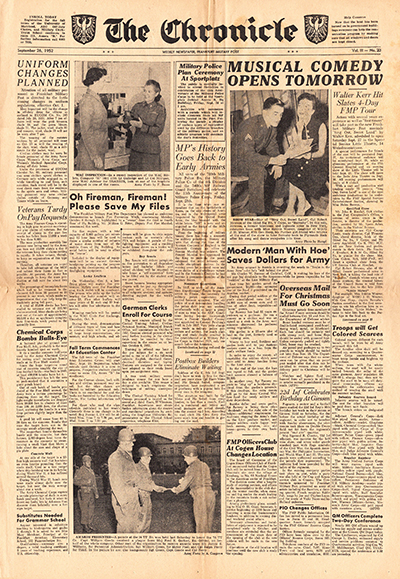 The Chronicle, Frankfurt Military Post, Sep 26, 1952 |
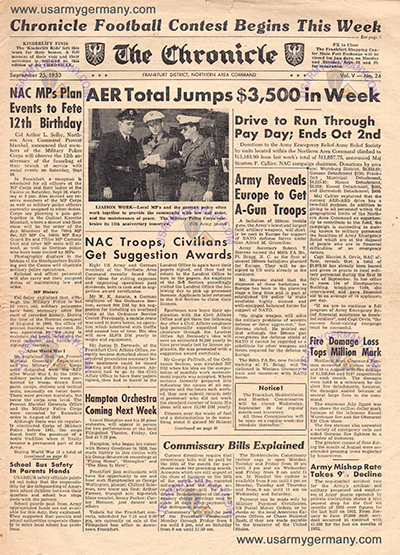
What's new in the District, September 25, 1953
(Click on the image to read the 8-page newspaper - PDF file)
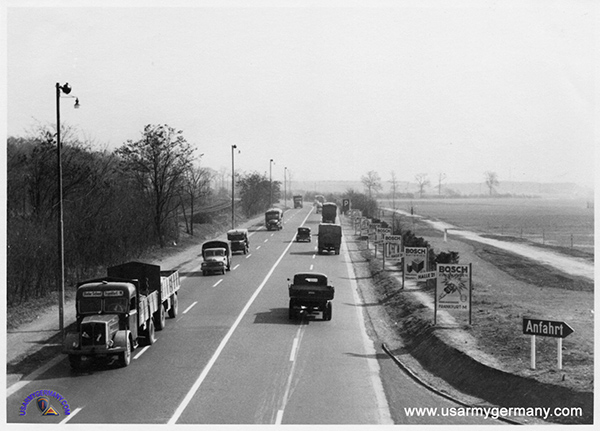
US military & German civilian traffic in the Frankfurt area, 1953 (Webmaster's collection)
With the large increase of US military troops and installations in southern Germany after the military build up of the early 1950s and the exponential increase of German civilian traffic resulting from the post-war economic recovery in Germany (Wirtschaftswunder), the main roads around southern German cities and towns with an American military presence began to experienced heavy traffic congestion and its associated problems (noise, pollution, accidents, etc.).
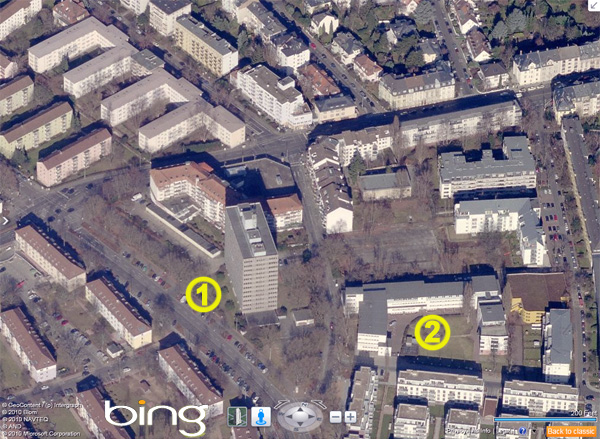
Hansaallee - (1) Headquarters Taunus District (1960s) and (2) Fankfurt MILCOM Hqs (1970s-80s) (Bing Maps)
NACom engineer construction officials state that the new housing units will be completed in 1955.
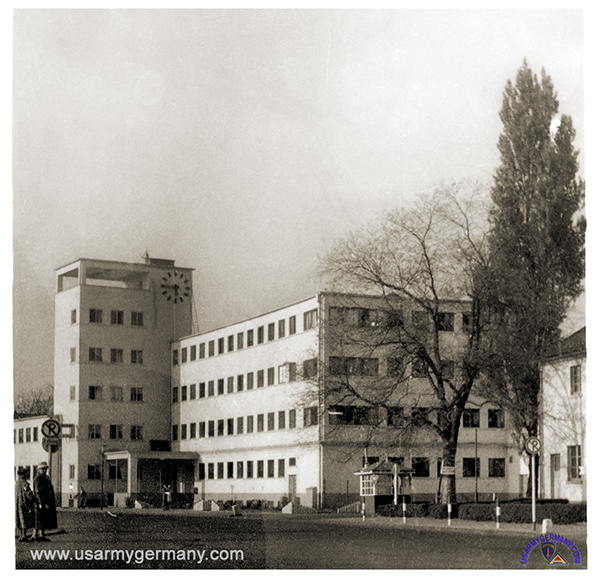
7811 Kaserne, Frankfurt Garrison headquarters (Webmaster's collection)
MILCOM HQ, 1980s |
|
ADDITIONAL INFORMATION:
Thanks for your response. I do recall the engineering unit (Webmaster: Engineer Compound in the 1980s) as well as the dental area (Webmaster: Dental Compound). Last week I met with three others who were stationed there. One actually worked in the engineering unit and lives in Lansing, Il. The other two live in East Moline and Effingham, Ill. Know of two others (one living in St. Louis area and one in West Palm Beach) also in my unit. They couldn't make it. This was sort of a 50th reunion as we all were sent stateside in 1956. Actually, that was my job. Cutting orders and sending people home. We came up with about 20-25 more names.
Where you show the gym on the map there also was another long building to the East on the street. This is where the engineers had their billets. Also the guard was posted from a lower room of this building. I worked for Capt. Yakerson in the redeployment section of NACOM. Our CO was Capt. Wiggins. During my first night in the compound, probably in March of 1955, (and for several days later) two of us had to escort a Pvt. Verdeen everywhere he went. He had defected to the East/Russians and was part of an exchange. Except for daily work routine, the only other event was two planes carrying paratroopers crashing together in the Black Forest and they moved the remains to QM refrigeration warehouses outside of Frankfurt and I had guard duty at night for a week or more. Sort of a lasting impression for a 19/20 year old. |
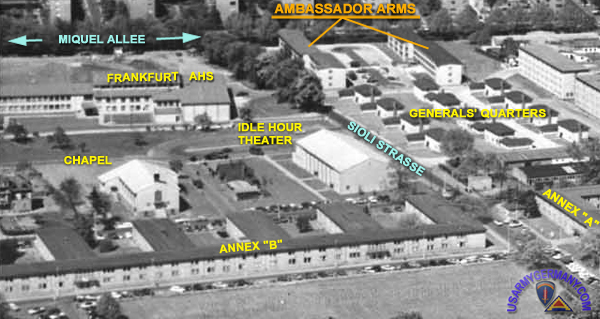
Northern end of Headquarters Compound with Ambassador Arms Hotel, 1959
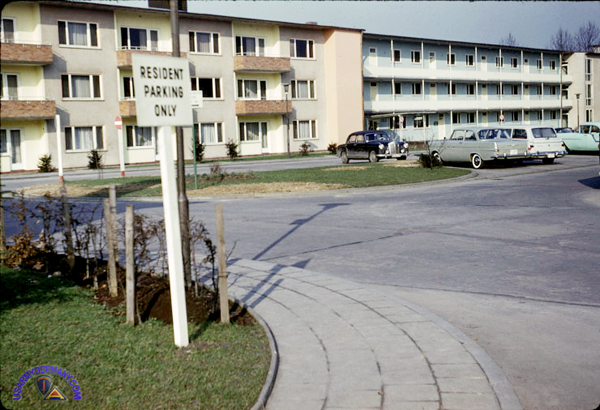
A two-building, three-story transient hotel for American personnel was opened on April 17, 1956 with a traditional ribbon-cutting ceremony led by Maj Gen Richard W. Stephens, NACOM CG. The new transient quarters, known as the Ambassador Arms, is located on the corner of Miquel Allee and Siolistrasse, near the Frankfurt American High School. The hotel will be used by American families awaiting housing or shipping space back to the States. In addition to family quarters, the 96-room hotel has two VIP suites, a nursery and a lobby in each section. A central hotel parking court separates the two buildings. The completion of the Ambassador Arms (a brick-and-cement-block structure that has been under construction since March 1955) allows Frankfurt Sub-area to release three German hotels back to the local economy. The hotels being returned are the Park Hotel and Vier Jahreszeiten Hotel (both in downtown Frankfurt near the main train station/Hauptbahnhof) and the Park Hotel Sanatorium in Bad Homburg. |
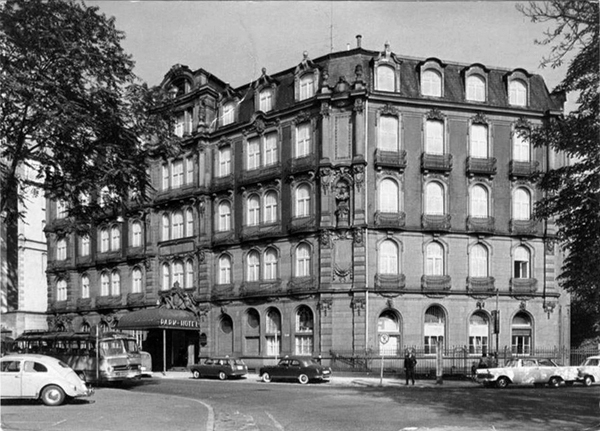
Park Hotel in the Wiesenhüttenstrasse near the Hauptbahnhof -
several years after being returned to its original German owners (German postcard)
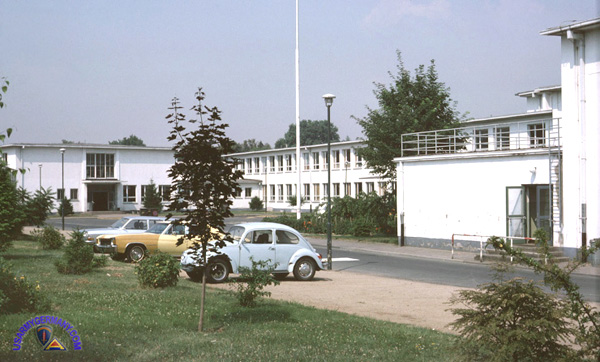
Frankfurt American High School, 1975 (Frank da Cruz)
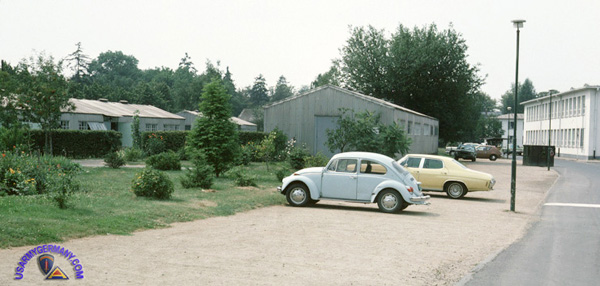
Frankfurt American High School, 1975 - two rows of "Butler" huts
behind the school provided extra classroom space (Frank da Cruz)
When my family arrived in Frankfurt (we crossed by ship to Bremerhaven and drove down in our car which was stowed in the ship's hold), we stayed for a few days in the Ambassador Arms. I think that's when some of those pictures were taken. The first morning I woke up there I could look out the window and see the kids arriving at the high school where I would start within a few days. Having grown up in rural (and then later suburban) Virginia, which was still segregrated, it was the first time I had seen a diverse student body. The experience of going to school there changed my life in many ways. For example, in Virginia in junior high school (I left in the middle of 9th grade), if you wanted to be cool, you had to do everything in a certain way -- dress, talk, act, etc, and if you didn't you would be an outcast. At Frankfurt HS, on the other hand, since there were people of all races and backgrounds from all over the country, not to mention Puerto Rico, and even some Germans. There was no one style to conform to; everybody could be themselves. What's more, there was no stigma attached to doing well in school, and some of the coolest people could also be some of the best students. I enjoyed most of my classes, and had several of the best teachers there I ever had or would have. Going back to Virginia for senior year was a real comedown. Anyway, back to the Ambassador Arms... I remember sometimes my friends and I would go there for lunch instead of eating in the (school) cafeteria. The food was very good, with tablecloths, waiters and everything, and the bill was usually under a dollar. |
 1. FAHS, 1959 |
 2. FAHS, 1959 |
 3. Teen Club, 1959 |
Baseball field behind the Frankfurt Shopping Center, mid 1950s
Years later I met a communications individual who was stationed in Frankfurt (I.G. Farben building) in the 1980s and told me there was not a baseball field by the PX! Your picture proves me right.
My father was a German linguist (US Army CIC.) In the early 1950s we were in Augsburg. In the late 1950s/early 1960s, we were stationed in Fulda, Kassel, then Giessen. Baltimore was our yoyo string. All I was told is that he worked with displaced persons in Germany.
Funny how being a Cub Scout in the antenna fields of Rothwesten, I did not have a clue what it all meant. Being in the USASA later it all became clear! Thankfully the antenna fields were not the T-site!
Taunus District headquarters, previously located in Annex B, behind the IG Farben Building, in Frankfurt, has been moved to a newly constructed 12-story building at the juncture of Hansa Allee and Am Dornbusch (just north of the IG Farben bldg.) (See the Bing Maps bird's eye view image with link above.) The District hqs occupies the top three floors of the new office building. District commander is Col James J. Hatch. His command offices are located on the 11th floor. The other two floors occupied by the District contain administrative offices. An EES cafeteria is planned for the ground floor. |
Annex "B" - The office building in the I.G. Farben complex known as Annex "B" was partially destroyed (over 75 percent of the building) by a fire on November 13, 1968. At the time, the building housed the headquarters of the US Army Engineer Command, Europe and the 18th Finance Section (Hessen Support District). One wing (Wing C) of the six-wing annex was completely gutted; three others and the main front section of the two-story structure were heavily damaged. The 386 personnel of HQ ENGCOMEUR and the 140 personnel of the 18th Fin had to be moved to temporary quarters in the IG Farben building and the nearby gymnasium. (Webmaster note: 18th Finance would soon move into new permanent quarters in Annex "A." ENGCOMEUR would seek funding from DoD to build a new structure to replace the fire-ravaged old headquarters. The new building would be constructed on the site of the old Annex "B.") |
 Frankfurt MILCOM insignia
 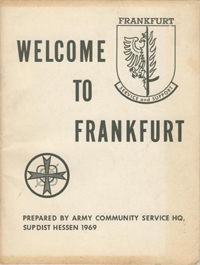 ACE Welcome Guide |
|
 ACE Welcome Guide |
|
| HISTORY
OF THE ABRAMS BUILDING Source: Public Affairs Office, V Corps, (1987?) Occupied by the US Forces at the end of World War II, the General Creighton W. Abrams Building in Frankfurt am Main, West Germany, has been used continuously by the US Army for the past forty-two years. The tract of land on which the Abrams Building is situated (the Abrams Complex) has been in continuous use for 600 years. In the 14th century, a fortress, the Grüneburg ("Green Fortress"), was constructed in the area of the present-day Grüneburg Park. Over the ensuing three centuries the need for a fortress on this site declined, and it was abandoned. In 1851, the City of Frankfurt purchased the landeventually developing the larger part into a municipal park, Grüneburg Park. The City selected the smaller part to become a location for a facility for the mentally ill. In the summer of 1927, the board of the powerful "I.G. Farbenindustrie" voted on buying additional property from the Rothschilde in Frankfurt for the construction of their office imperium. Mr. Hans Poelzig, the then already famous architect, having designed various noted buildings in his home of Berlin and the League of Nations Palace in Geneva, Switzerland, was chosen to design the entire complex.
Although the I.G. Farben building in its vastness was the largest aerial target in the Frankfurt area, the structure was spared bombing. When US troops occupied Frankfurt, General Dwight D. Eisenhower requisitioned the building for his headquarters after the US Army's 5th Division captured Frankfurt on 29 March 1945. It remained the headquarters for the US Army in Europe for several years. From 1945 to 1947, the I.G. Farben Building was the location of the Supreme Headquarters, Allied European Forces as well as the headquarters for the US occupation forces and the Military Governor. On 10 May 1947, permanent orders prohibited further reference to the building as "I.G. Farben" and designated it as the Headquarters Building, European Command. In January 1952, Headquarters V US Army Corps assumed control of the building. In December 1955, the I.G. Farben Industry in Receivership sold the building and grounds to the German government, which in turn granted US Forces indefinite use of the complex. The original office used by General Eisenhower has been refurbished and dedicated in honor of the former Supreme Allied Commander as the Eisenhower Conference Room. In a ceremony on 16 April 1975, the building was officially named in honor of General Creighton W. Abrams: the General Creighton W. Abrams Building. (Deceased) Gen Abrams was former Army Chief of Staff, the last commander of US Forces in Vietnam, and for a period of one year, July 1963-July 1964, commander of V Corps. |
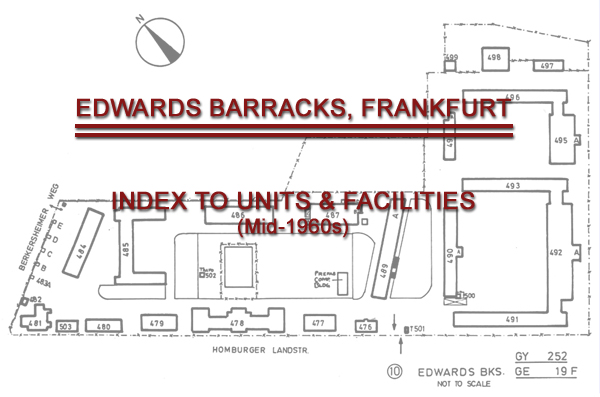
| Click on image to view a larger resolution of the map and access information on the location of units and facilities at Edwards Barracks in the mid-1960s. Webmaster requests additional information on units and activities at Edwards and other Frankfurt installations during the 1945-1990 period. |
HISTORY OF GIBBS KASERNE (Source:Email from John Decker) I was assigned to the 92nd Trans. Co. during this period (1966-1968) at Gibbs K. Other companys stationed at this kaserne were:   CO C 308th S&S BN the V CORPS HQ CO (which worked downtown at the I G Farben Building) the 109th MPs an airborne ranger company an Air Force unit CO C 308th S&S BN the V CORPS HQ CO (which worked downtown at the I G Farben Building) the 109th MPs an airborne ranger company an Air Force unitI don't remember the names of the ABN or Air Force units. Hope this info is of some use or help to you. |
HISTORY OF GUTLEUT KASERNE
Gutleut Kaserne has been part of the city of Frankfurt's history since the early middle ages. It is depicted as a site for billeting military troops with knights in armor galloping to and from the Gutleut Complex. Gutleut's name dates back to these very early days; to the street that passes in front of it. At the time, it was named "tauten Leute" for it was a path to a religious monastery. A translation of "tauten Leute" represents good people. At this point in time, the "tauten Leute Haus," run by monks was a sanitorium for the ill I and aged. In 1776, Germany's 81st Infantry Regiment was billeted on what is now referred to as Gutleut Kaserne. These Germans, known also as Hessens, were the allies of the British during the United States Revolution of 1776. These hired soldiers were led from Gutleut to the United States by Count Frederick I I of Hessen, and fought until 1784. Almost one hundred years after the American Revolutionary War, the original Gutleut Kaserne was torn down, in 1870. New plans were drawn between 1877 and 1879 by the Royal War Minister of Germany under Kaiser Wilhelm I. The Kaserne was constructed by the Architectural Engineer Association of Frankfurt. Upon completion, the Kaserne was divided into three individual kasernes, each occupied by German Army Battalions. The present transient detachment, building #1164 and #1162, housed the 31st Infantry Battalion and the 21st Replacement Battalion Headquarters, now located in Building #1163, housed the German 2nd Artillery Battalion. As of 1910 all three individual kasernes became one complex known as Gutleut Kaserne. During World War I, the Kaserne housed the District Commander of Frankfurt. Buildings not used by the Commander, were used as a stockade, Military Police Station, and Dining Hall. Military Police Detachment personnel were responsible for keeping the law and order within the Frankfurt Guard. After World War I, the German Army had no further use for the kaserne. It became a private family housing area for the handicapped people with a small income. In 1930 the German Police took over the ownership of the kaserne. Gutleut Kaserne was not used to any great extent during World War II by Hitler. He wanted his troops to have all new facilities so he ordered Gibbs, Betts and Atterbery Kasernes to be built. One of Hitler's requests was that no church or chapel be built on these kasernes. Above the archway to the entrance of Gutleut Kaserne is the original chapel. Today, this large room stands empty, but the vaulted ceiling, and cathedral windows hint of its former function. The present Stateside NCO/EM Club, at one time was nothing more than a supply room. Upon the close of World War II, in 1945, the United States Army confiscated Gutleut Kaserne and the Army Security Agency, Europe, occupied it. After the ASA moved from Gutleut US Army units moved in and out of the Kaserne. The stockade in the rear of the kaserne was used until 1972. In that year all confinement duties in USAREUR were taken over by Mannheim and Fuerth, Germany. Today, Gutleut Kaserne is occupied by Headquarters, 709th Military Police Battalion; Alpha Company, 709th Military Police Battalion; 570th Military Police Platoon (Railway Police); 21st Replacement Battalion Transient Detachment, and Headquarters, 21st Replacement Battalion. |
| HISTORY OF McNAIR BARRACKS Source: Welcome Issue, 22nd Sig Bde Voice of the Corps, 31 Oct 1989. McNair Kaserne, home of the 22d Signal Brigade, was named after General Leslie McNair, an American commander killed in the closing days of World War II after the arrival of the occupational Army. Originally built between 1919 and 1920, the buildings were designed for use by French occupational forces at the conclusion of the First World War. The French Army lived in the kaserne for 12 years when, with the resurgence of German military might and world prominence, it withdrew to French territory. The kaserne remained vacant for only one short year. Hitler's rise to power was reflected throughout Germany with increased military preparedness and the formation of special guard units. One such unit reoccupied the empty buildings of the kaserne and remained until 1937. With the possiblity of war increasing, the Special Guards were relocated and the kaserne again changed hands. That year, an anti-aircraft unit, whose purpose was defending Frankfurt from enemy bombs, took up residence in the kaserne. When open hostilities broke out in Europe in 1939, the anti-aircraft unit was removed and a unit of the German Highway Patrol Police moved into McNair. The Police force remained quartered at the kaserne until the end of the war, with the mission of controlling and supervising movement of military and civilian vehicles in the Frankfurt-Hoechst areas. The war ended and the occupational Army of the United States moved into Germany to deter further aggression and rebuild a shattered Germany. A unit of the Army of Occupation was moved into the kaserne which was then renamed after Gen. McNair. One year after wars' end, the 9th Artillery and 317th Engineer Battalion were assigned to McNair. Gradually, the emphasis in defense and rebuilding changed to defense of a revitalized Western Europe against the aggressive nature of the Communist governments of Eastern Europe and the Soviet Union. The North Atlantic Treaty Organization was formed in 1949 and Germany was welcomed back into the world community and rebuilt its defense forces. The mission of the units stationed at McNair Kaserne reflected these changing attitudes. Finally in 1964, the 317th moved to Camp Eschborn and the 9th Artillery relocated at Giessen and V Corps ordered the 32d Sig. Bn. (Corps) to take up residence at McNair. Company B of the 18th Service and Support Battalion was assigned to the kaserne also but was moved in late 1972. On March 16, 1981, the 22d Sig. Bde. (Corps) was activated and the 17th and 32d Sig. Bns. and Headquarters and Headquarters Company were located in Hoechst, while the 440th remained in Darmstadt. The rest is history. |
| HISTORY OF OFFENBACH KASERNE A brief history (in German) of the Kaserne on Bieberer Strasse in Offenbach -- Landser, Schupos und Agenten. Includes a photo of the area today. The kaserne was torn down and a large retail store built in its place. |
(Source: Rhein-Main Air Base - Gateway to Europe, Welcome Booklet published by Parade Publications in Germany, prob around 1964) |
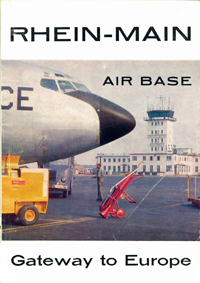 |
| Related Links: I.G. Farben Building V Corps History - to view the excellent History document, select Library, then History, and finally, V Corps History Revised November 2001. The file (over 3 MB; but worth it) is in PDF format and will require the Adobe Reader. Camp King, Oberursel - great site hosted by Sam Flynn; my home from 1957-1960 3rd Armored Division Association - in Frankfurt from 1956 to 1992 4th Infantry (IVY) Division Association - in Frankfurt from 1951 to 1956 Palmgarten Club - American Red Cross club (german-language) 12th Troop Carrier Squadron - Rhein Main Air Base, 1951-1954 McNair Kaserne - Late 1970s - Doug Otoupal's website dedicated to his tour with the 32nd Sig bn at McNair Kaserne Feldberg RRL Site - Veterans of the USAF communications site in the Taunus Mountains Frankfurt - Dokumentation zur Nachkriegszeit - a German web site (sorry, only auf Deutsch!) that focuses on the rebuilding of the beautiful city of Frankfurt am Main that had been significantly damaged during World War II. This is a "must see" for anyone stationed in or near Frankfurt between VE-Day and the 1970s. Lots of great photos! Frankfurter Bilder (photos) Website - the team of photographers working on this website has collected over 4000 great photos of the city since they started taking pictures in 1996. Currently they are working on documenting the former US military facilities and dependent housing areas. To find the US Army related pics, type the keyword "USARMY" into the textbox next to the SUCHEN button (top right hand corner). Another "must see" for anyone stationed in or near Frankfurt who wants to "walk down memory lane ..." Forgotten Memories  - Dan Nisto has created a wonderful Photo Page that he keeps updating as he visits abandoned, and now almost forgotten US military installations in Germany. - Dan Nisto has created a wonderful Photo Page that he keeps updating as he visits abandoned, and now almost forgotten US military installations in Germany. |